Where Can I Not Carry A Concealed Weapon – Restricted Places Explained
You can’t carry a concealed weapon in places like schools, daycare centers, courthouses, hospitals, casinos, large sports arenas, polling sites during elections, and most religious properties without explicit permission. Restrictions also apply to government buildings, entertainment venues seating over 2,500, and airport sterile areas.
Even parking lots have specific rules. Violating these laws risks fines, weapon seizure, and license suspension or revocation. Understanding these limits is essential to stay compliant and safe.
What Are Restricted Places for Concealed Carry?
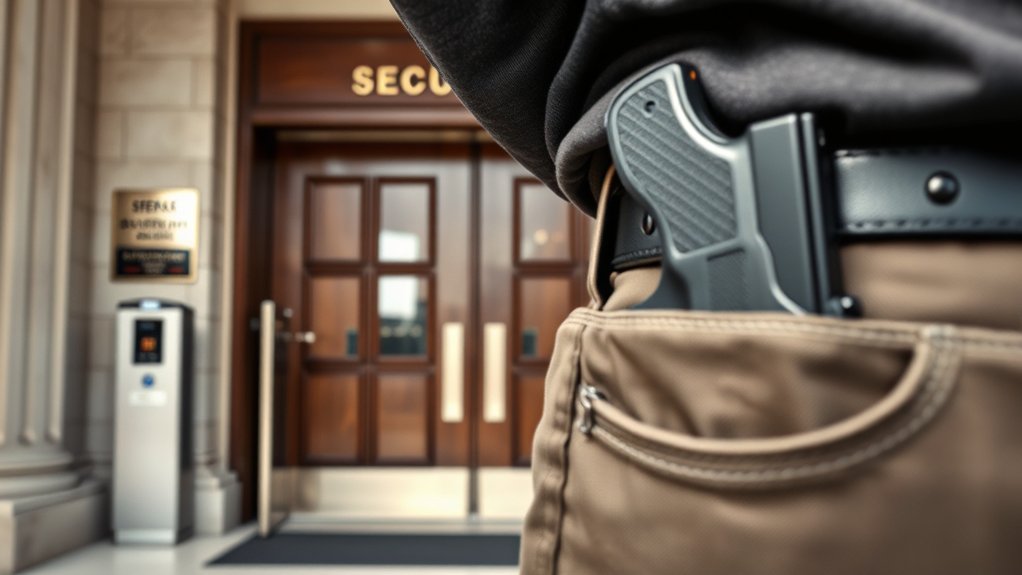
Where exactly can you not carry a concealed weapon? Restricted places include schools, daycare centers, hospitals, casinos, and courtrooms. Carrying is typically prohibited in these locations without explicit permission.
You also can’t carry concealed weapons in entertainment venues with seating for 2,500 or more. Religious institutions usually don’t allow it either, unless authorized by officials.
Police stations, detention facilities, and government buildings such as polling places and legislative meetings also ban concealed carry.
Moreover, certain public areas like sports arenas, stadiums, and airport sterile zones restrict carrying a concealed weapon, no matter your permit status.
Understanding these restricted places is really important to make sure you follow the law and avoid any legal trouble while carrying.
Always double-check specific local regulations to stay informed about where you can and can’t carry concealed. It’s better to be safe and know the rules!
Schools and Child Care Centers Where Concealed Carry Is Banned
You can’t carry a concealed weapon on school property. That includes all campuses and child care centers, with very few exceptions.
This ban isn’t just about classrooms or buildings—it also covers large sports arenas connected to schools.
If you break these rules, your weapon will be taken away, and you could face legal penalties.
School Property Restrictions
Although laws vary by state, carrying a concealed weapon on school property is almost always prohibited to guarantee the safety of students and staff. You’ll find these restrictions apply to elementary, middle, and high schools, including administration buildings, athletic fields, and school buses.
Even carrying in college classrooms, dorms, or campus facilities is typically banned unless expressly allowed by school officials.
Furthermore, concealed carry is often forbidden within 1,000 feet of a school zone during school hours, regardless of whether you’re on public property.
Exceptions usually apply only to law enforcement or authorized personnel.
As a civilian, you must adhere strictly to these school concealed carry restrictions to avoid legal consequences and help maintain a secure environment for everyone on school grounds.
Child Care Center Bans
Since child care centers and schools serve vulnerable populations, Michigan law strictly prohibits carrying concealed weapons on these premises. This prohibition applies to all public and private child care centers and day care facilities.
You can’t carry a concealed weapon inside these buildings, with very limited exceptions typically allowed only in vehicle drop-off or pick-up zones.
Also, property owned or operated by religious institutions such as churches or temples that provide child care is off-limits unless explicitly authorized.
Violating these restrictions results in immediate seizure of the pistol and potential legal penalties.
These laws are in place to keep kids and staff safe by preventing firearm-related incidents in these sensitive environments.
So, if you carry a concealed weapon, just know it’s not allowed in any child care center setting under Michigan law.
It’s all about making sure everyone stays safe where kids are involved.
Why Courthouses and Judicial Offices Prohibit Concealed Carry
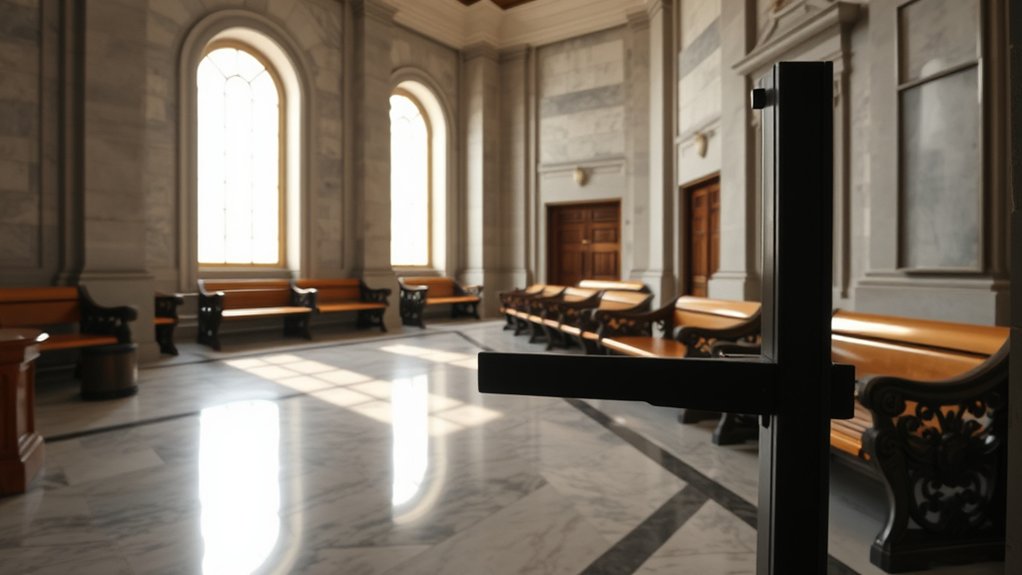
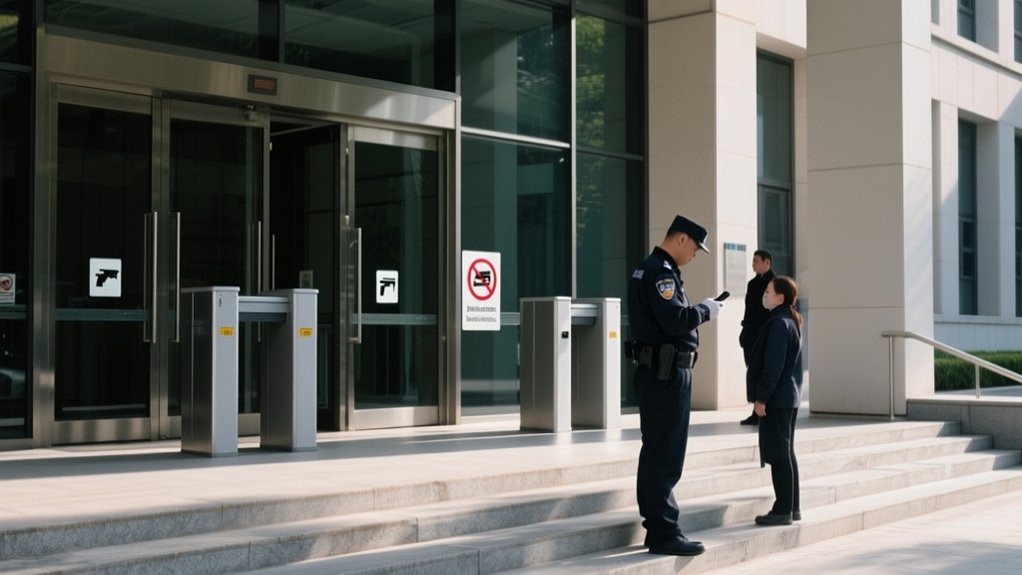
Because courthouses and judicial offices handle sensitive legal matters, they strictly prohibit concealed weapons to maintain safety and order. These locations are designated restricted premises, where carrying concealed weapons without prior approval is illegal. If you bring a firearm into a courthouse or judicial office without special permission, authorities will seize it, and you’ll face penalties.
This prohibition protects the integrity of court proceedings and prevents potential threats or disruptions. While law enforcement officers or individuals with specific court-approved permits may be exempt, the general rule forbids concealed carry in these spaces.
Understanding and respecting these restrictions is vital to guarantee the safety of all participants in the judicial process and to uphold the law governing restricted premises.
Concealed Carry Rules at Public Gatherings and Polling Places
When you attend public gatherings or head to the polls, you need to know that carrying a concealed weapon is strictly prohibited within 100 feet of polling places during voting and ballot counting. This restriction also applies to election-related locations like early voting sites, absentee ballot drop-off points, and central absentee precincts.
Concealed carry is banned at election board meetings, recounts, and provisional ballot validations as well. These rules are in place to protect election security and integrity. Breaking them can result in fines or other legal consequences.
| Location Type | Concealed Carry Allowed? | Notes |
|---|---|---|
| Polling Places | No | Applies within 100 feet |
| Early Voting Sites | No | Includes absentee ballot drop-offs |
| Election Board Meetings | No | Covers recounts and validations |
| Public Gatherings | Restricted | Depends on event-specific rules |
| Ballot Counting Sites | No | Strictly prohibited |
Hospitals and Healthcare Facilities: Concealed Carry Restrictions
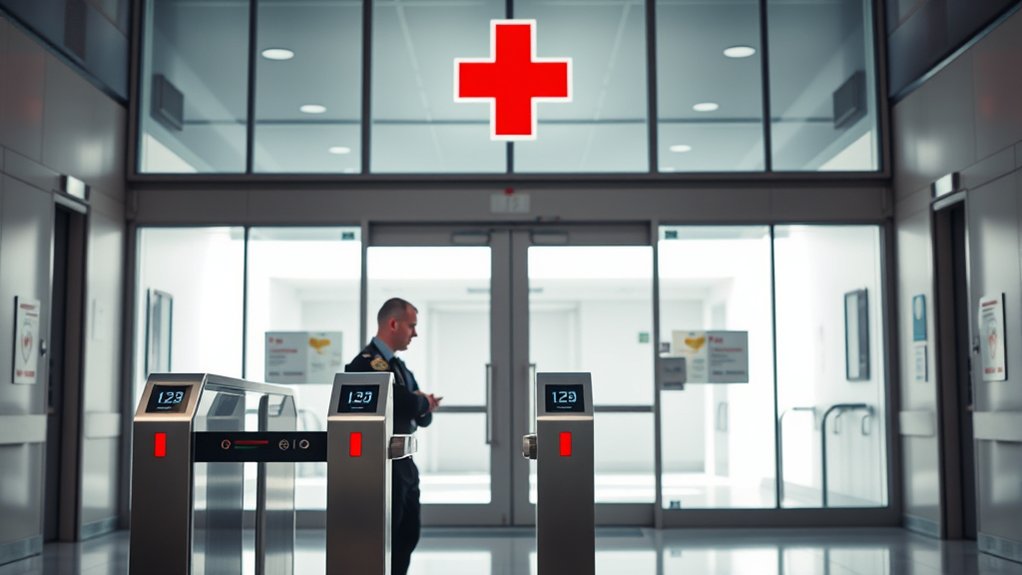
You can’t carry a concealed weapon inside most hospitals and healthcare facilities. That’s because strict rules are in place to keep everyone safe while they’re there.
There are a few exceptions, but they’re pretty rare and tightly controlled. So, it’s really important to know the specific rules before you go inside.
If you don’t follow these restrictions, you could face serious consequences like having your firearm taken away, paying fines, or even facing criminal charges depending on the laws where you live.
Hospital Firearm Prohibitions
Although hospitals serve as places of healing, they strictly prohibit carrying concealed weapons to protect patients, staff, and visitors. You cannot carry firearms into most hospitals unless explicitly authorized by officials. Violating these restrictions may result in firearm seizure and legal penalties.
Usually, healthcare facilities enforce these rules to maintain a safe environment. Security personnel or law enforcement may carry weapons when authorized. State laws typically require that firearms be disarmed or securely stored within hospital premises.
| Aspect | Details |
|---|---|
| Concealed Carry | Generally prohibited in hospitals |
| Authorized Personnel | Security and law enforcement exceptions apply |
| Legal Consequences | Firearm seizure and potential penalties |
You must comply with these prohibitions to avoid serious legal issues. It’s really important to follow these rules for everyone’s safety.
Concealed Carry Exceptions
Since hospitals and healthcare facilities prioritize safety, they generally prohibit carrying concealed weapons on their premises. However, concealed carry exceptions exist under strict conditions. You must understand these key points:
Concealed carry is typically banned in hospitals, clinics, and medical centers. Some healthcare facilities allow concealed carry only if explicitly authorized by official policies or laws.
Firearms must be securely stored or kept out of sight to comply with healthcare facilities’ rules.
Violating these restrictions can cause seizure of your weapon and lead to serious legal penalties, including misdemeanor charges and permit suspension. Always check the specific healthcare facility’s policies to avoid risking legal penalties while carrying concealed weapons.
Penalties For Violations
When carrying a concealed weapon in hospitals and healthcare facilities, understand that violations trigger strict penalties designed to uphold safety. If you carry a concealed weapon in these restricted areas, expect immediate pistol seizure.
A first offense results in a civil infraction, a $500 fine, and a six-month suspension of your Concealed Pistol License (CPL).
If you offend a second time, the violation escalates to a misdemeanor. This means a $1,000 fine and a 90-day CPL revocation.
It’s serious, so you definitely want to avoid getting to this point.
Third or subsequent violations are felonies with severe consequences. You’re looking at a $5,000 fine, a four-year prison term, and permanent revocation of your CPL.
These penalties show just how important it’s to follow the concealed weapon rules in healthcare facilities to keep everyone safe and stay on the right side of the law.
Concealed Carry in Casinos, Sports Arenas, and Entertainment Venues
Even if you’re licensed to carry a concealed weapon, casinos, sports arenas with seating for 2,500 or more, and large entertainment venues typically prohibit firearms on their premises. You need to understand these strict rules to avoid serious consequences.
Casinos ban all firearms, whether concealed or openly carried.
Casinos strictly prohibit all firearms, regardless of whether they are concealed or openly carried.
Sports arenas and stadiums of significant size enforce a no-firearm policy.
Entertainment venues hosting large crowds restrict weapons to safeguard public safety.
Violating these rules leads to firearm seizure and legal penalties, with rare exceptions only granted through official authorization.
As you navigate these places, remember that concealed weapons aren’t allowed, and enforcement is strict.
Your compliance helps maintain a secure environment for everyone.
When Is Concealed Carry Allowed on Religious Property?
Public venues like casinos and large entertainment arenas often restrict concealed weapons to keep things safe. Religious properties usually follow similar rules but with some specific considerations.
Generally, you can’t carry a concealed weapon on religious property unless authorized officials say it’s okay. This includes church leaders or designated security personnel who’ve the authority to allow concealed carry within places of worship.
Law enforcement officers might also carry concealed weapons if the law or church policy permits it. Without this kind of authorization, carrying a concealed weapon on religious property can lead to penalties or having your firearm taken away.
Michigan law recognizes the role of authorized officials in approving concealed carry on religious property. It really stresses the importance of getting explicit permission before carrying a concealed weapon there.
Always check local policies to stay on the right side of the law and avoid any legal issues.
Exceptions: Concealed Carry in Vehicles and Parking Lots
How does concealed carry work in vehicles and parking lots, especially near restricted premises? Understanding exceptions is vital. Here’s what you need to know:
You can carry concealed weapons in parking lots of restricted premises, even if entering the building is prohibited.
On school property, concealed carry in vehicles is allowed during drop-off or pick-up, but the weapon must remain secured and out of plain sight.
In Florida, firearms inside private vehicles on restricted premises must be inaccessible for immediate use.
Law enforcement and authorized individuals may carry concealed weapons in parking lots despite general restrictions on the property.
Knowing these exceptions helps you stay compliant while exercising your rights responsibly around restricted premises and parking lots.
Penalties for Carrying Concealed Weapons in Prohibited Areas
Understanding where you can legally carry a concealed weapon is only part of the equation. Knowing the consequences of violating these restrictions is just as important.
If you carry a concealed weapon in restricted premises, the penalties get more serious with each offense.
For a first violation, expect a $500 fine and a six-month suspension of your CPL permit.
A second offense raises the stakes to a 90-day misdemeanor, a $1,000 fine, and revocation of your CPL license.
If you keep getting caught, repeated violations turn into a four-year felony, with fines up to $5,000 and permanent CPL revocation.
On top of that, law enforcement will immediately seize your firearm when found in restricted premises, whether it’s concealed or openly carried.
These penalties really highlight how serious it’s to follow these laws.
How State and Local Laws Affect Concealed Carry Restrictions
Because concealed carry regulations vary widely, you need to pay close attention to both state and local laws when carrying a concealed weapon. State laws often prohibit concealed carry in restricted places like schools, courthouses, and polling sites.
Local laws can add layers of restriction, targeting government buildings, public parks, or event streets.
You must also consider federal regulations banning firearms in airports and federal facilities.
Here’s what you should keep in mind:
- Schools, courthouses, and polling places are nearly always off-limits.
- Alcohol-licensed venues like bars may have additional prohibitions.
- Local ordinances might restrict concealed carry in parks or during events.
- Federal laws override state and local permissions in certain locations.
Understanding these layers guarantees you carry legally and responsibly. Just be sure to stay informed, so you’re never caught off guard.
What to Do If You’re Arrested for Illegal Concealed Carry
If you’re arrested for illegal concealed carry, it’s vital to remain calm and cooperate fully with law enforcement. Don’t resist arrest, as this can escalate the situation. Remember, you have the right to remain silent and should exercise this right until you consult an attorney.
An arrest for illegal concealed carry can lead to fines, license revocation, or criminal charges, and this varies by jurisdiction. It really helps to understand your state’s specific prohibited areas to avoid accidental violations.
After your arrest, make sure to seek legal counsel promptly to review your case. You might have the chance to contest the charges or negotiate a defense strategy.
Acting responsibly during the arrest and getting professional legal advice are key to protecting your rights and minimizing potential consequences.
Frequently Asked Questions
Can I Carry a Concealed Weapon in My Own Home?
Yes, you can carry a concealed weapon in your own home without restrictions. The law generally allows you to possess and carry firearms within your private residence freely.
Just make sure your firearm is legally owned and complies with registration requirements if your state mandates them.
However, once you step outside your home, you’ll need to follow local and state laws regarding concealed carry. Always stay informed to avoid legal issues.
It’s better to know the rules than to get caught off guard.
Are There Restrictions on Carrying Concealed Weapons in Private Businesses?
Yes, you face restrictions carrying concealed weapons in private businesses. Business owners can prohibit firearms on their property through clear signs or policies, and you must obey these rules.
Ignoring such restrictions could lead to trespassing charges or other legal consequences.
Even if state law allows concealed carry, private businesses have broad discretion to ban weapons. So, always check and respect their policies before entering or carrying inside.
How Do Concealed Carry Restrictions Apply on Federal Land?
Carrying a concealed weapon on federal land is like traversing a minefield. You have to know where it’s safe.
You can’t carry in federal buildings, military bases, courthouses, or airports’ sterile areas. Federal parks are also off-limits without explicit permission.
These areas strictly prohibit concealed firearms, even if you have a permit. Unless you’re law enforcement or specially authorized, you must follow these federal restrictions closely to avoid legal trouble.
Is Open Carry Allowed Where Concealed Carry Is Prohibited?
Open carry isn’t always allowed where concealed carry is prohibited. While some places ban both, others might permit open carry even if concealed carry is restricted. But this really depends on the local laws.
You have to check those laws carefully because carrying openly in places where it’s not allowed can still get you into trouble.
Federal properties like airports and courthouses usually ban both open and concealed firearms. So, don’t just assume open carry is automatically okay.
Can Permit Holders Carry Concealed Weapons During Emergencies?
You can carry concealed weapons during emergencies only if local and state laws allow it.
You must follow emergency orders, comply with temporary bans, and respect restrictions in shelters or disaster zones.
You can’t ignore these rules, or you risk penalties like permit suspension or revocation.
So, it’s really important to stay informed, stay compliant, and stay safe.
That way, you avoid legal trouble during declared emergencies or disaster declarations.
Conclusion
Think of concealed carry laws like a clear road map. Ignoring restricted places is like driving blindfolded. Just one wrong turn can lead to a crash.
Carrying concealed weapons where they’re prohibited can land you in serious legal trouble. Nearly 60% of concealed carry violations happen unknowingly in banned locations.
So, stay informed and respect these boundaries. That way, you protect yourself and others while exercising your rights responsibly.