
Can You Carry A Concealed Weapon In Texas – Laws And Permit Rules
Yes, you can carry a concealed weapon in Texas without a permit if you’re 21 or older, thanks to permitless carry laws. You must follow specific rules, like using a proper holster and avoiding prohibited places such as schools and courts.
While permits aren’t required, getting a License to Carry (LTC) offers added benefits and reciprocity across states. Understanding eligibility, restrictions, and legal obligations is essential to stay compliant and safe in Texas.
More details can clarify your responsibilities and rights. So, it’s a good idea to know the ins and outs before carrying concealed.
Texas Permitless Carry Laws Explained
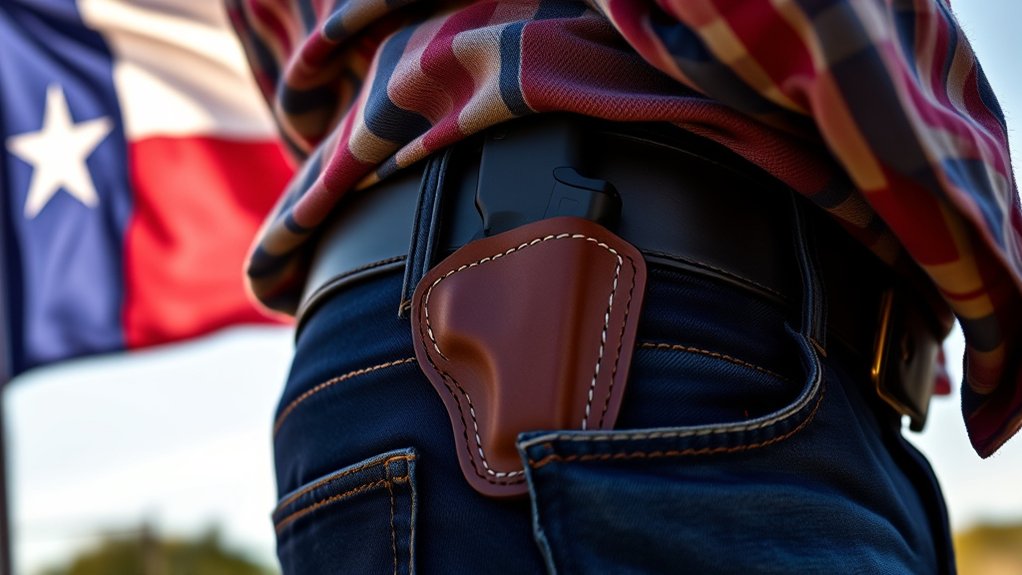
Although Texas has long allowed licensed concealed carry, since September 1, 2021, you no longer need a permit or training to carry a handgun concealed if you’re 21 or older. This permitless carry provision under Texas gun laws lets you carry a handgun without a license to carry, reflecting the state’s embrace of constitutional carry.
You can also openly carry a handgun in a holster without a license, as long as it’s done in public carry settings. But keep in mind, private property owners can restrict both open and concealed carry by posting clear notices.
State law still prohibits carrying firearms in certain places like schools and courts.
Also, Texas recognizes permitless carry from other states with similar constitutional carry laws, so visitors can carry without needing to get a Texas license.
Eligibility Criteria for Carrying a Concealed Weapon in Texas
If you want to carry a concealed weapon in Texas, there are some important requirements you need to know about. First off, you have to be at least 21 years old. However, if you’re currently serving in the military, the age requirement drops to 18.
Now, it’s also crucial to consider your legal background. Certain criminal convictions or protective orders can prevent you from getting a license. So, if you have any of those issues, you mightn’t be eligible.
Lastly, make sure you understand the entire licensing process and the rules for applying. This will help you carry your weapon legally and fully benefit from having a permit. Taking the time to get informed will definitely pay off.
Age And Legal Status
Since Texas law sets specific age and legal requirements, you must be at least 21 years old to carry a concealed weapon without special conditions. However, individuals aged 18 to 20 may obtain a License to Carry (LTC) if they meet certain LTC eligibility criteria, including protection by a qualifying protective order.
Texas firearm laws require all LTC applicants, regardless of age, to pass background checks, mental health assessments, and firearm safety training.
Your legal status also affects your ability to carry. Federal and Texas laws prohibit firearm possession for convicted felons and others disqualified under permit requirements.
Understanding these age requirements and legal restrictions is vital. It helps guarantee your concealed carry complies with Texas law and avoids violations related to minimum age and permit eligibility.
Prohibited Convictions Overview
Your eligibility to carry a concealed weapon in Texas depends not just on your age and legal status but also on your criminal record. Texas law strictly prohibits people with certain felony convictions from carrying a concealed weapon, even if they’ve a license.
For example, convictions related to firearm offenses, domestic violence, or violent misdemeanors within the past five years can stop you from getting a license to carry. Deferred adjudications for felonies usually mean you can’t legally possess a weapon until the case is fully resolved or overturned.
On top of that, federal rules come into play. Things like mental health adjudications and specific protective orders also prevent you from carrying concealed legally.
All these restrictions are in place to make sure that only those who meet strict eligibility criteria can carry concealed weapons in Texas. It’s really about keeping public safety and legal compliance front and center.
Licensing And Application Rules
Although carrying a concealed weapon in Texas is permitted under certain conditions, you must meet specific eligibility criteria to qualify. To obtain a License to Carry (LTC), you need to be at least 21 years old, or 18 if you’re a military member or veteran.
You also can’t be legally prohibited from possessing a firearm.
Your application requires completing state-approved training, including classroom and live-fire exercises, to show you’re competent.
Texas mandates a thorough background check and fingerprinting as part of the permitting process.
It’s essential to be truthful on your application and disclose any relevant criminal or mental health history.
Certain convictions and protective orders can disqualify you from eligibility.
If you meet all these requirements, you’re good to legally carry a concealed weapon in Texas under the LTC system.
What Age Restrictions Apply to Carrying Concealed Weapons?
When you consider carrying a concealed weapon in Texas, age plays a significant role in determining your eligibility. The minimum age for concealed carry is generally 21. However, individuals aged 18 to 20 can now apply for a License to Carry (LTC) following recent legal changes.
Despite permitless carry laws, federal law restricts firearm possession for those under 21, especially if they’ve certain criminal convictions. The Texas Department of Public Safety no longer denies LTC applications based solely on age for applicants between 18 and 20.
Still, age restrictions remain vital since federal and state laws may prosecute those under 21 in specific situations.
Understanding these age limits helps guarantee you comply with Texas concealed carry regulations and avoid legal issues related to firearm possession. So, it’s important to stay informed and make sure you’re following the rules before carrying concealed.
Benefits of Getting a License to Carry (LTC) in Texas

Meeting the age requirements is just one step toward carrying concealed legally in Texas. Obtaining a license to carry (LTC) offers significant benefits beyond permitless open carry.
With a Texas LTC, you can legally carry concealed in all areas where open carry is allowed.
You also get access to locations that are restricted to unlicensed carriers, including certain government buildings and private property with proper signage.
The LTC provides reciprocity with over 30 states, which means you can carry concealed across state lines legally.
Plus, holding a Texas LTC grants you legal protections and clarity during law enforcement encounters. This includes the duty to inform officers about your carry status.
Understanding these permit rules is essential for complying with firearm laws and securing your rights as a concealed carry license holder.
How to Apply for, Renew, and Maintain a Texas LTC
To get your Texas License to Carry (LTC), you’ll need to complete a state-approved handgun course, pass a background check, and meet the eligibility requirements. It’s a straightforward process, but make sure you follow each step carefully.
Your LTC lasts for five years, so you’ll want to keep track of when it’s set to expire. Before it does, you’ll need to renew it by submitting updated materials and reaffirming your knowledge of the relevant laws. Don’t wait until the last minute!
Also, staying compliant means keeping your personal information up to date with the Texas Department of Public Safety. If you move or change any details, be sure to update them so everything stays current.
Application Process Overview
Although the process of obtaining a Texas License to Carry (LTC) requires several steps, you can navigate it smoothly by completing a state-approved handgun proficiency course and submitting your LTC application online or by mail through the Texas Department of Public Safety.
You’ll need to provide personal information, application documentation, and disclose any disqualifying criminal history or mental health issues. The background check will verify your eligibility under licensing requirements.
The initial license lasts five years and expires on your birthday. To maintain your LTC, keep your personal information current and follow the renewal process.
Renewing requires updated documentation, fees, and proof of continued proficiency. Timely renewal guarantees uninterrupted legal carry privileges in Texas.
Renewal And Compliance
Since Texas Licenses to Carry (LTC) are valid for five years, you need to renew your license before it expires to keep your legal carry privileges. To complete the renewal, just submit a renewal application along with the required renewal fee to the Texas Department of Public Safety.
You’ll also need to show that you still know the laws and remain skilled, reaffirming your understanding of deadly force rules and places where carrying isn’t allowed. It’s important to update your personal information with the Texas Department of Public Safety whenever there are changes.
If you miss the expiration deadline, your license becomes invalid, and you’ll have to reapply and go through extra processing. So, staying on top of your renewal keeps your legal carry rights uninterrupted and ensures you stay compliant with Texas regulations.
Where You Can and Cannot Carry a Concealed Weapon in Texas
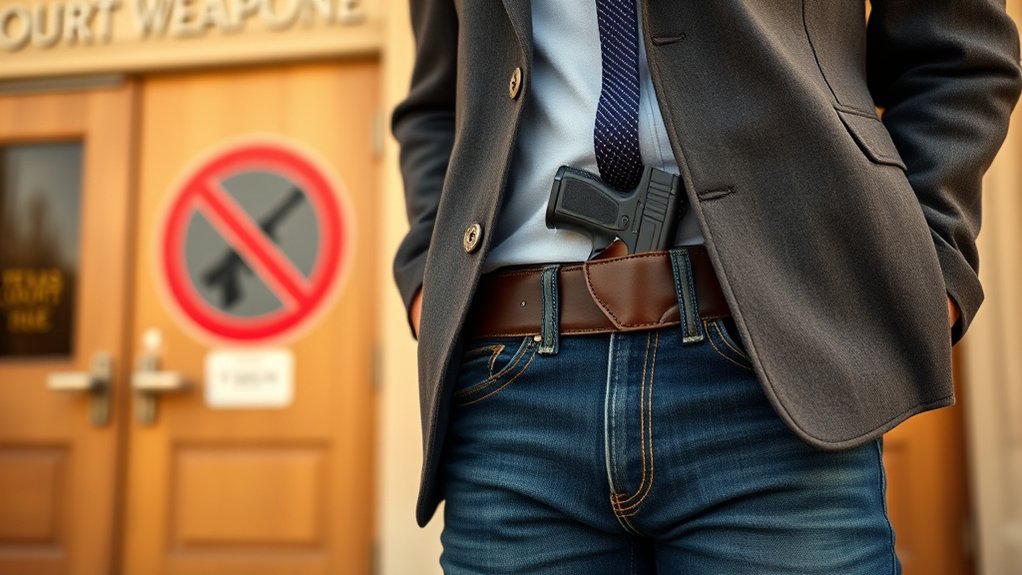
When carrying a concealed weapon in Texas, you’re allowed to do so in most public places unless the law or posted signs explicitly prohibit it. Texas law identifies several prohibited locations where concealed carry isn’t permitted, including courthouses, polling places, schools, and secure airport areas.
Private property owners can restrict concealed carry by displaying proper signage, such as “No Guns” notices. Even with a valid handgun license, you must respect these restrictions and the permit requirements tied to lawful possession.
Open carry without a holster is considered unlawful, so you must use a holster for concealed carry.
Furthermore, restricted areas like hospitals, amusement parks, and racetracks always prohibit concealed weapons, regardless of your license status.
Always verify signage and local laws to ensure compliance with Texas concealed carry rules. It’s better to be safe and double-check before carrying. This way, you can avoid any legal trouble and carry responsibly.
Proper Methods for Carrying a Concealed Handgun Under Texas Law
To carry a concealed handgun properly in Texas, you must keep it fully hidden from view and secured in a holster at all times. Texas law mandates that any concealed carry involves complete firearm concealment, with no visible firearm parts.
Since September 1, 2021, permitless carry allows those 21 and older to carry, but holstering requirements remain strict to ensure legal compliance. Proper holstering prevents unlawful display charges and helps maintain control over your firearm’s visibility.
Here are key points to remember:
- Always use a holster designed to securely hold your concealed handgun.
- Make sure no part of your firearm is visible while carrying, including in vehicles or watercraft.
- Follow all Texas law guidelines on firearm concealment to stay compliant with permitless carry rules.
Legal Disqualifications for Carrying a Concealed Weapon
Although Texas allows many people to carry a concealed weapon, certain legal disqualifications prevent specific individuals from doing so. Under Texas concealed carry law, you can’t obtain a Texas LTC or carry concealed if you have felony convictions.
Protective orders, especially those related to family violence, also bar you from possessing a concealed firearm.
Mental health disqualifications apply if you’ve been adjudicated mentally incompetent or hospitalized for issues affecting judgment or impulse control.
Recent misdemeanor convictions involving domestic violence or assault within five years can disqualify you, as can federal firearm restrictions tied to domestic violence offenses.
Moreover, you must avoid prohibited places where carrying isn’t allowed.
These rules ensure that only qualified individuals carry concealed weapons, promoting public safety and compliance with state and federal laws. It’s all about making sure things stay safe for everyone.
Penalties for Violating Texas Concealed Carry Laws
Understanding who’s legally disqualified from carrying a concealed weapon is only part of the picture. If you commit concealed carry violations in Texas, you face serious penalties. Carrying without a license or in prohibited areas can lead to criminal penalties, including a Class A misdemeanor with up to one year in jail and a $4,000 fine.
Concealed carry violations in Texas can result in up to one year jail and a $4,000 fine.
Moreover, discharging a firearm in a way that alarms others is unlawful and punishable. Consequences extend beyond criminal charges to administrative actions like license suspension or revocation.
Key penalties to keep in mind include:
- Class A misdemeanor charges for unlawful possession or carrying in prohibited areas.
- License suspension or revocation due to administrative consequences.
- Felony charges for carrying in locations such as schools or courthouses.
Frequently Asked Questions
How Do Texas Carry Laws Affect Private Property Owners’ Rights?
Texas carry laws give you the right to prohibit firearms on your private property by posting clear, legal signs. If you post proper notices, you can ban both open and concealed carry. License holders must respect your rules.
Ignoring them can lead to criminal charges. So, you control firearm access on your land, ensuring your property’s safety while abiding by state regulations.
Are There Specific Signage Requirements to Prohibit Firearms on Private Property?
Yes, you must follow specific signage requirements to prohibit firearms on your private property in Texas. Signs need to be clearly visible, posted at all entrances, and meet size and wording standards under Texas Penal Code Sections 30.05 and 30.06.
For example, a “No Guns” sign must be at least 10 by 10 inches with exact language.
Proper signage makes the restriction legally enforceable and helps avoid penalties.
How Do Texas Concealed Carry Laws Interact With Federal Firearm Regulations?
Federal firearm frameworks firmly frame your Texas concealed carry rights. While Texas lets you carry without a permit if you’re 21 or older, federal laws forbid firearm possession for felons, those with certain restraining orders, or mental health adjudications.
You have to follow both state and federal rules, especially in restricted zones like federal buildings. So, you can carry concealed, but federal restrictions always override state allowances. This ensures safety and legal compliance.
What Are the Ongoing Legal Debates Around Texas Permitless Carry?
You’ll find ongoing legal debates around Texas permitless carry focus on public safety versus individual rights. Critics worry removing licensing reduces accountability, potentially increasing firearm incidents.
Supporters argue it upholds Second Amendment rights and eases access for law-abiding citizens.
Courts are closely examining these laws under the *Bruen* historical tradition standard, which influences future rulings. Legislative challenges keep the debate alive.
It really reflects deep societal divisions over gun regulation and safety concerns.
Can Concealed Weapons Be Carried on Texas Public Transportation?
No, you generally can’t carry concealed weapons on Texas public transportation unless the agency explicitly allows it. Most buses and trains prohibit concealed carry, and violating this can lead to criminal charges.
Some providers might permit licensed concealed carry, but you need to check their specific rules beforehand.
Also, federal regulations restrict firearms on commercial flights. They require the guns to be declared and stored properly in checked luggage. So, always verify before you board.
Conclusion
If you’re considering carrying a concealed weapon in Texas, it’s vital to understand the laws and eligibility criteria. Did you know that since permitless carry began in 2021, over 1.7 million Texans have chosen to carry without a license?
While you don’t always need a permit, getting a License to Carry offers added benefits and legal protections. Stay informed, follow the rules, and carry responsibly to guarantee your safety and others’.