Where To Concealed Carry – Legal Places And Restrictions
You can carry a concealed weapon on most private properties in Florida unless the owner prohibits it. But you can’t bring firearms into schools, courthouses, police stations, athletic venues, bars, or airports.
Federal laws also restrict carrying near K–12 schools and in federal buildings. Violating these rules risks fines, license suspension, or criminal charges.
Understanding state and federal boundaries helps you stay compliant. Keep exploring for detailed locations, legal nuances, and helpful resources.
Key Takeaways
- Concealed carry is allowed on most private property unless the owner explicitly prohibits firearms.
- Firearms are prohibited in schools, courthouses, police stations, detention centers, and polling places without authorization.
- Carrying firearms is banned at athletic venues with 2,500+ seating, bars serving alcohol, and airport sterile areas.
- Federal law restricts firearms within 1,000 feet of K–12 schools and in federal facilities like post offices and military bases.
- Violations can lead to fines, license suspension, felony charges, firearm seizure, and imprisonment depending on offense severity.
What Is Concealed Carry And How Does It Work?
What does concealed carry mean, and how does it work in practice? Concealed carry refers to secretly carrying a firearm on your person or nearby, making sure it remains unseen by others.
Concealed carry means discreetly carrying a firearm on your person, keeping it hidden from view.
To carry legally, most states require you to obtain a permit or license, though some allow permitless carry. Laws vary greatly, so understanding your state’s requirements is vital.
Concealed carry aims to empower you to defend yourself while upholding public safety.
Mastering gun safety and completing thorough firearm training are essential before carrying concealed.
These skills help you handle your weapon responsibly, complying with legal restrictions on where and how you can carry. Proper preparation ensures you respect both the law and the safety of those around you.
Where Can You Legally Carry A Concealed Weapon In Florida?
Understanding where you can legally carry a concealed weapon in Florida is key to staying within the law and ensuring public safety. You may carry on most private property unless the owner explicitly prohibits it. However, concealed carry is strictly prohibited in places like police stations, detention facilities, courthouses, and polling places unless authorized.
You can’t carry in elementary or secondary schools, certain college buildings without permission, airports, alcohol-serving establishments, or federal restricted areas. Florida law also restricts carrying in administrative areas of schools, athletic facilities, and government meetings.
To comply fully, complete concealed carry training and familiarize yourself with firearm storage regulations. This knowledge guarantees you respect legal boundaries and protect yourself and others responsibly.
How Are Schools, Athletic Facilities, Bars, And Airports Restricted?
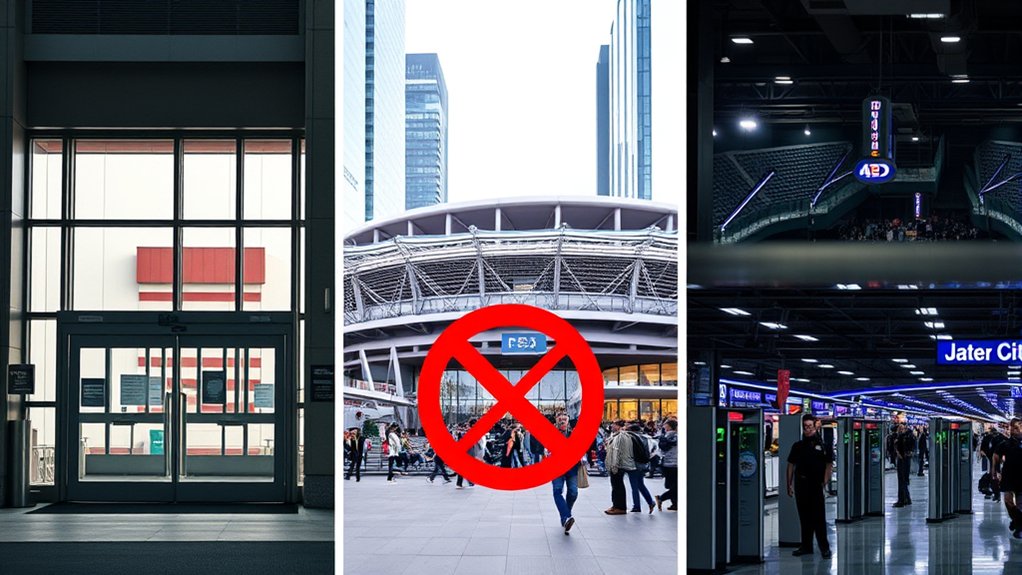
Although you may hold a concealed carry permit, Florida law strictly limits where you can carry firearms in schools, athletic facilities, bars, and airports. School policies prohibit concealed weapons in elementary, secondary, and postsecondary facilities unless you’re a student, employee, or faculty member with explicit authorization.
Florida law restricts carrying firearms in schools, athletic venues, bars, and airports despite concealed carry permits.
Venue restrictions also apply to athletic facilities, including professional sporting events and venues seating 2,500 or more, where firearms are banned.
Bars that primarily serve alcohol restrict carrying firearms in consumption areas, though you may transport encased firearms for shipment.
At airports, firearms are prohibited inside passenger terminals and sterile areas unless properly encased and checked as baggage.
Federal law further restricts firearms in certain locations, but this discussion focuses on Florida’s limits.
Understanding these school policies and venue restrictions is essential for lawful concealed carry. So, make sure you know where you can and can’t carry before heading out.
How Do State And Federal Laws Affect Your Concealed Carry Rights?
Carrying a concealed firearm doesn’t just depend on state-issued permits; federal laws also play a big role in defining where and how you can carry. You have to navigate both federal jurisdiction and state preemption because federal restrictions can either supersede or complement state laws.
For example, federal law bars firearms within 1,000 feet of K–12 schools under the Gun Free School Zones Act. Federal regulations also prohibit carrying in federal facilities like post offices and military bases, no matter what the state says.
States add their own restrictions too, in places like courthouses, airports, and government buildings. These rules can vary a lot depending on the local area.
What Penalties Apply For Violating Concealed Carry Laws?
If you violate concealed carry laws, you face a range of penalties that vary based on the nature and frequency of the offense. Penal consequences for legal infractions range from civil fines and license suspensions to criminal charges.
Violating concealed carry laws can lead to fines, license suspensions, and even criminal charges depending on the offense.
For a first-time violation at a prohibited location, you can expect a $500 fine and a six-month suspension of your concealed weapon license.
Repeated offenses or carrying in sensitive areas like schools or courthouses escalate the penalties to felony charges, fines up to $5,000, and permanent license revocation.
Additionally, your firearm may be seized, and you could face imprisonment depending on the severity.
Understanding these legal infractions is critical to avoid severe penal consequences and maintain your right to carry concealed.
How Do Multi-State Permits And Reciprocity Work?
You should know how multi-state permits can broaden your concealed carry options by covering several states through recognized reciprocity agreements.
Right now, in 2023, 18 states honor multiple permits, which impacts nearly 40 million people across the country.
To make things easier, you can use the online Multi-State Permit Tool. It helps you quickly find out which states recognize your permit and what specific restrictions might apply.
Permit Coverage Areas
Although concealed carry laws vary widely, multi-state permits and reciprocity agreements make it easier to carry lawfully across state lines. Understanding permit coverage areas is really important because permit restrictions and coverage limitations differ from state to state. You need to check where your permit is valid to avoid any legal trouble.
Here are some key points to think about:
States might require specific training, background checks, or have age limits that affect whether they recognize your permit. Coverage limitations often depend on each state’s laws, so a permit that’s valid in one state mightn’t cover all areas in another.
Using tools like the Multi-State Permit Tool can help you figure out which permits are accepted where, so you stay compliant. It’s always a good idea to double-check before you travel.
Reciprocity States Overview
Because concealed carry laws differ so much across states, reciprocity agreements play an essential role in allowing you to carry legally beyond your home state. Reciprocity means one state recognizes the concealed carry permits issued by another, based on state licensing standards.
As of 2023, 18 states honor permits from multiple states, greatly expanding where you can legally carry. However, permit recognition varies: some states require specific training or background checks, while others have broader acceptance.
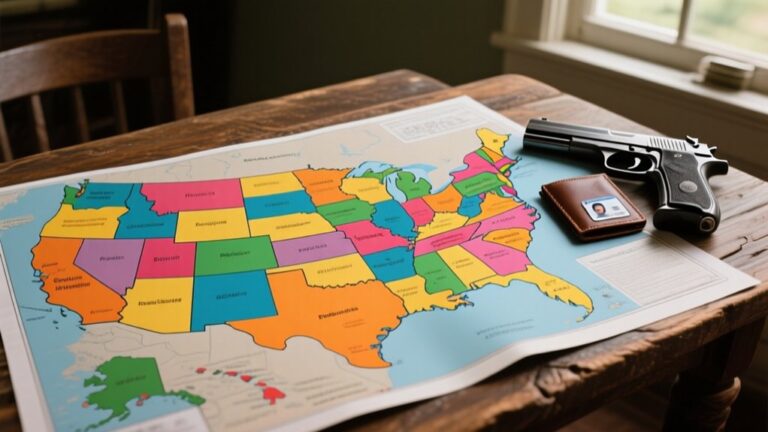
Nationwide, over 121,000 licenses have been issued, with reciprocity agreements covering nearly 40 million people. To navigate this complex landscape, many states support multi-state permit tools and online maps, helping you determine where your permit is valid.
Understanding reciprocity ensures you carry legally and responsibly across different jurisdictions. It’s a key part of staying informed and prepared when you’re on the move.
Where Can You Find Help And Resources For Concealed Carry Licensing?
When seeking concealed carry licensing, reliable help and resources are essential to navigate varying state requirements and legal complexities. You should start with official state websites, which provide detailed guidance on application procedures, training requirements, and license renewal processes.
National organizations also offer valuable support, helping you understand legal restrictions and stay updated on changes.
Key resources include:
- State departments, like Florida’s Department of Agriculture and Consumer Services, for direct licensing inquiries and state-specific rules.
- Online tools such as permit lookup services and reciprocity maps to verify where your license is valid.
- National networks like the USCCA, providing access to certified instructors and attorneys for training and legal advice.
Utilizing these resources guarantees you meet all requirements and maintain compliance with concealed carry laws.
Frequently Asked Questions
Can I Carry Concealed in Private Vehicles on Private Property?
You can carry concealed in private vehicles, but you have to follow private vehicle regulations and respect property owner permissions. If owners post restrictions or bans, carrying there could lead to legal trouble. Always check posted signs first.
It’s really important to be aware of the rules that apply to the place you’re on. Even if it’s your own vehicle, being on private property means you need to respect the owner’s wishes. So, stay informed and stay safe!
Are There Restrictions on Carrying Concealed During Protests or Public Demonstrations?
Better safe than sorry applies here. You’ll face strict protest restrictions in demonstration zones, and these often prohibit concealed carry.
Authorities enforce these rules tightly to keep things under control. So, it’s really important to check local laws before carrying during protests or public demonstrations.
Staying informed helps you avoid trouble and ensures everyone stays safe.
How Do Concealed Carry Laws Apply on Military Bases?
You must follow strict military regulations on concealed carry, as concealed carry restrictions are enforced rigorously on bases. Without explicit authorization from commanders, carrying concealed firearms isn’t allowed, regardless of state laws or personal permits.
Basically, even if you have a permit or the state law says it’s okay, you still can’t carry concealed on a military base unless your commander gives you the green light. The rules here are firm and not to be taken lightly.
Can Concealed Carry Be Prohibited in Federal Parks or National Forests?
Yes, federal land restrictions can prohibit concealed carry in certain federal parks or national forests. You have to follow public park regulations closely.
Specific areas like visitor centers or federal buildings often ban firearms for safety and legal reasons. So, it’s important to know the rules before you carry.
Are There Special Considerations for Carrying Concealed in Rental Properties?
When it comes to rental restrictions, you can’t just wing it. Always read your lease agreements carefully, since landlords often set firearm rules. Ignoring these can lead to eviction or legal trouble, so stay informed and compliant.
It’s really important to know what your lease says before carrying concealed in a rental property. If you don’t, you might find yourself in a tough spot. So, take the time to understand the rules and follow them closely.
Conclusion
Understanding where you can legally carry a concealed weapon is absolutely crucial. One misstep can feel like steering through a minefield. You’ve seen how state and federal laws, specific locations like schools and bars, and reciprocity agreements shape your rights.
Stay informed and follow every rule precisely. Doing this will help protect you from hefty penalties. Remember, concealed carry isn’t just about defense; it’s about responsibility.
Use the right resources to keep your knowledge sharp and your rights secure.