Is Concealed Carry Legal In All States – State Laws And Exceptions
You can legally carry a concealed firearm in all U.S. states, but laws differ widely. Some states require permits with background checks and training, while others allow permitless carry with minimal restrictions.
Federal rules bar certain individuals, like felons or minors, from carrying anywhere. Specific locations such as schools and government buildings often prohibit concealed carry.
Understanding these variations and exceptions is essential to carrying legally and safely. Exploring these details will help clarify your responsibilities and rights.
What Is Concealed Carry?

What does concealed carry mean in practical terms? It involves carrying a concealed firearm, hidden from view, typically in a holster or bag, while in public. You must understand that firearm laws vary markedly across states.
Some states require permits for legal carry, often involving background checks and safety training, while others allow permitless carry without these prerequisites.
State laws also dictate where you can legally carry a concealed firearm, restricting areas like schools or courthouses.
If you plan to carry concealed, you need to comply with your state’s specific requirements. Ignoring these rules risks legal consequences.
States Requiring Concealed Carry Permits
You’ll find that 21 states require a permit to carry a concealed weapon. These permits often involve background checks and safety training.
The rules for getting a permit can vary quite a bit. For example, some states have strict criteria, like needing to show good moral character.
Knowing these differences really helps make sense of how concealed carry laws work across different places.
Permit Requirements Overview
Although concealed carry laws vary widely across the country, 21 states require you to obtain a state-issued permit before carrying a concealed firearm. These states enforce specific permit requirements, including thorough background checks and mandatory firearm training.
This training often involves live-fire exercises and proficiency evaluations.
Typically, authorities follow “shall-issue” policies, meaning they must grant permits if you meet all criteria. Licensing mandates also include expiration dates, so you’ll need to renew your permit periodically. Renewals usually require updated background checks to keep everything compliant.
Unlike permitless carry laws in other states, carrying a concealed firearm without a valid permit in these jurisdictions is illegal and may result in criminal penalties.
State Permit Variations
When you plan to carry a concealed firearm, it’s essential to understand that 21 states require you to obtain a state-issued permit before doing so. These states, including California, New York, and New Jersey, enforce specific permit requirements under “shall-issue” licensing systems. That means authorities must grant a permit to carry if you meet legal criteria.
As part of state laws, you’ll undergo a background check and often mandatory firearm training or firing tests. Renewal processes typically occur every 1 to 5 years, with updated background checks to maintain your permit.
It’s important to note that out-of-state concealed carry permits generally aren’t recognized. So, you must comply with each state’s unique licensing rules for concealed weapons.
While open carry may have different regulations, permit to carry requirements remain strict in these states.
States Allowing Permitless Concealed Carry
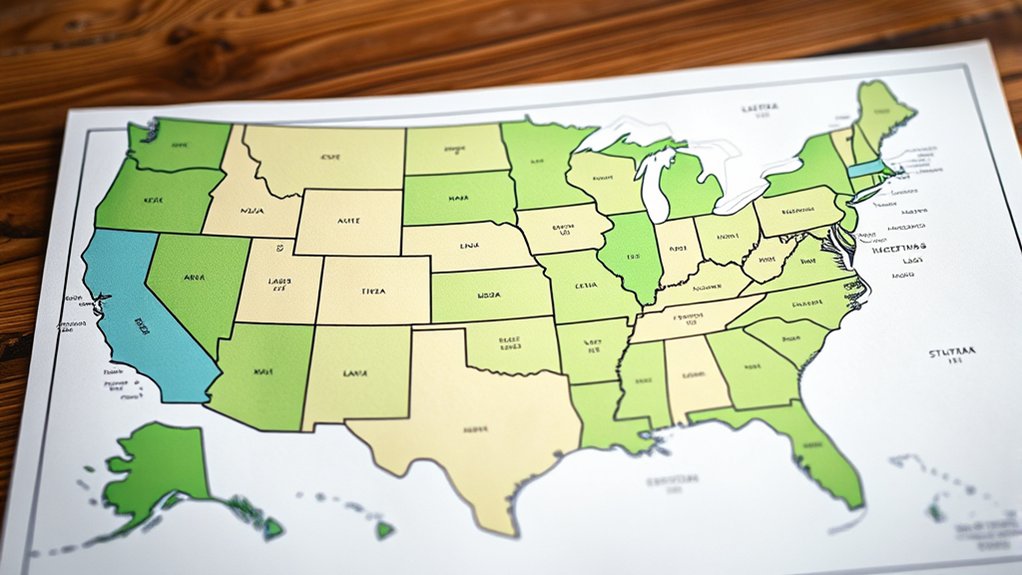
You can carry a concealed handgun without a permit in 29 states, but keep in mind that age and residency requirements still apply.
Even though you usually don’t need a permit or training, there are still legal restrictions on where you can carry.
Permitless Carry States
Since 2023, 29 states have allowed permitless concealed carry, which means you can carry a hidden firearm in public without getting a permit. In these permitless carry states, you don’t need a license or permit to carry a firearm, although the laws vary quite a bit from state to state.
Some states, like Alabama and Texas, don’t require background checks or firearm safety courses, which has raised some public safety concerns. Other states still issue permits mainly for reciprocity, so you can carry legally across state lines or get federal exemptions.
Permitless carry states often allow open carry along with concealed carry, but the details can be different depending on where you are. It’s important to understand each state’s rules, especially when it comes to wildfire carry restrictions and firearm safety measures.
Knowing the laws helps make sure you stay compliant while exercising your rights responsibly.
Age And Residency Rules
Although 29 states permit concealed carry without a license, they impose specific age and residency requirements to regulate who can legally carry concealed firearms. Permitless carry laws generally require you to be at least 18 or 21 years old, depending on state exceptions. Residency requirements vary; some states allow non-residents to carry concealed firearms permitlessly, like North Dakota starting August 2023.
Background checks often remain mandatory for firearm purchases, though permits and safety training aren’t required for concealed carry in these states. Understanding these nuances in concealed carry laws helps you comply with firearm laws and avoid legal issues.
| State | Minimum Age | Residency Requirement |
|---|---|---|
| Alaska | 21 | None (non-residents allowed) |
| Arizona | 21 | Resident or non-resident |
| North Dakota | 18 | Non-residents allowed |
| Vermont | 18 | None |
| Wyoming | 21 | Resident or non-resident |
Legal Carry Limitations
While 29 states have embraced permitless concealed carry laws as of 2023, these laws come with specific legal limitations you need to understand to carry responsibly. Permitless carry means you can carry a concealed firearm without a permit, but state restrictions vary quite a bit.
Some states, like Alaska and Arizona, have minimal licensing requirements and background checks. On the other hand, some still require background checks for private firearm sales even if they allow permitless carry.
Open carry rules are different too. Some states let you openly carry without a license, while others have restrictions.
It’s important to understand concealed carry laws and state restrictions because carrying without a permit doesn’t mean you’re free from following all gun laws. Always check local regulations to make sure you’re carrying legally and avoid any legal troubles.
Age and Residency Requirements for Concealed Carry
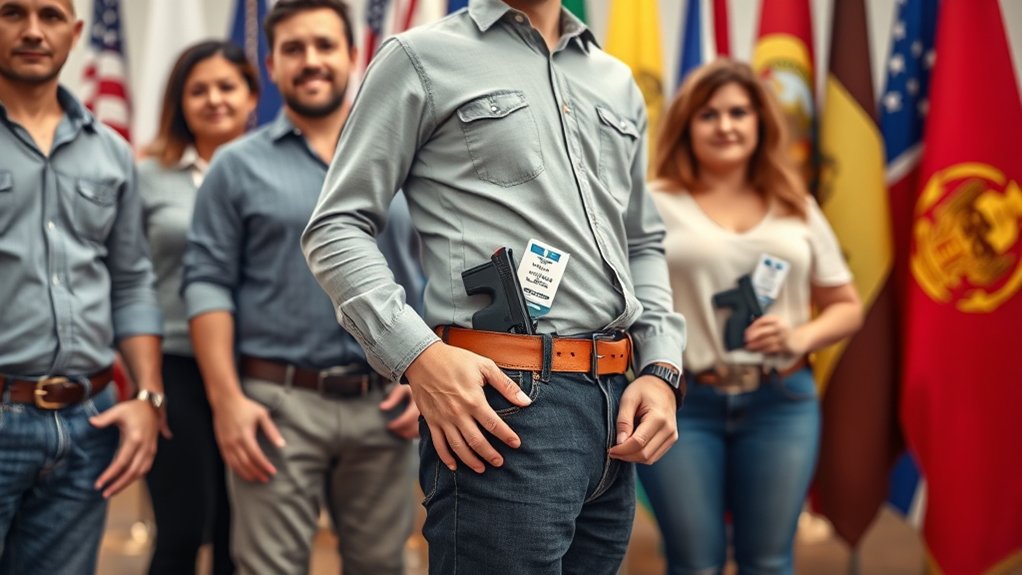
When you apply for a concealed carry permit, your age and residency status play essential roles in eligibility. Most states set age requirements at 21, aligning with federal firearm laws, though some, like Florida, issue permits at 18.
Residency laws vary: many states require you to be a resident, but places like North Dakota allow non-residents to carry concealed firearms, sometimes without permits.
Permitless carry states typically impose no additional age restrictions beyond federal minimums.
Licensing and permit processes reflect these variations, with legal exceptions emerging from court decisions, such as Tennessee lifting restrictions on younger adults.
Understanding these distinctions ensures compliance with state-specific concealed carry regulations and helps you navigate the complex landscape of firearm laws effectively. It’s important to know the rules for your state so you don’t run into trouble.
Federal Eligibility Rules for Concealed Carry
You should know that federal law bars certain people—like felons and those with domestic abuse convictions—from having firearms, including concealed weapons. Generally, most applicants need to pass background checks to qualify.
That said, retired law enforcement officers have the right to carry concealed weapons nationwide, as long as they’ve the proper credentials. These federal rules create a baseline for who’s eligible, and they apply no matter what individual state laws say.
Federal Possession Restrictions
Because federal law sets baseline eligibility requirements, you must meet specific criteria to legally carry a concealed weapon. Federal law (18 USC 922(g)) prohibits firearm possession by certain individuals, including felons, domestic abusers, and those dishonorably discharged.
To obtain concealed carry permits, you have to pass background checks conducted through the National Instant Criminal Background Check System (NICS). This process ensures you comply with federal eligibility standards.
Federal restrictions also disqualify people with certain court rulings from possessing concealed weapons.
These rules establish a minimum standard that applies nationwide and override conflicting local provisions. It’s important to understand these federal possession restrictions because they directly affect your legal ability to carry concealed weapons, no matter what your state laws say.
Following background checks and federal eligibility rules helps you carry concealed weapons lawfully and avoids unauthorized firearm possession.
Law Enforcement Carry Rights
Although state laws vary, federal regulations grant qualified law enforcement officers the right to carry concealed firearms nationwide, as long as they present proper agency identification. Under federal law, both active and certain retired officers have carry rights on or off duty. This includes carrying on private property and within government buildings, even if some state laws say otherwise.
These federal provisions generally take precedence over state laws that might limit concealed carry by law enforcement personnel. While there’s a background check exemption for officers authorized after November 30, 1998, proper investigation is still important.
That said, state laws can still add extra restrictions, especially about access to private property and government premises.
Knowing these federal eligibility rules helps clear up the concealed carry rights for law enforcement officers. This way, they can stay in compliance with both federal requirements and any relevant state laws. It’s all about understanding the balance between the two.
Background Check Exceptions
While federal law mandates background checks for firearm purchases from licensed dealers, it allows exceptions that affect concealed carry eligibility. The Gun Control Act of 1968 requires a federal background check via the National Instant Criminal Background Check System (NICS) for these transactions.
However, many states permit private sales without background checks. This creates background check exceptions that impact gun ownership and permitless carry policies.
States like Nebraska and Vermont diverge by enforcing background checks for certain private sales despite permitless carry laws.
It’s essential to understand that federal eligibility rules bar firearm possession for convicted felons, domestic violence offenders, and individuals with specific mental health adjudications, regardless of state permit status.
How Concealed Carry Reciprocity Works
When you carry a concealed weapon across state lines, understanding how concealed carry reciprocity functions becomes essential. Concealed carry reciprocity allows states to recognize out-of-state permits, but this recognition depends heavily on the issuing state’s training requirements and background checks.
Some states only honor permits from states with comparable standards, while others restrict reciprocity further.
Right now, 21 states require permits, and 29 allow permitless carry. This makes reciprocity tricky because permitless states may not issue permits that other states recognize. So, it’s not always straightforward when traveling with a concealed weapon.
The Federal Concealed Carry Reciprocity Act of 2025 aims to fix this by making all states recognize out-of-state permits, no matter what their own laws say. Until then, you’ll want to carefully check each state’s reciprocity policies to stay on the right side of the law.
Common Locations Prohibited for Concealed Carry
Since concealed carry laws vary considerably by state, you need to be aware that many common locations explicitly prohibit carrying concealed weapons. These restrictions aim to balance individual rights with public safety concerns.
Key areas where concealed carry is typically prohibited include sensitive locations such as schools, hospitals, and courthouses. In these places, safety risks are heightened, and state laws impose strict prohibitions.
Concealed carry is strictly prohibited in sensitive areas like schools, hospitals, and courthouses due to heightened safety risks.
Government buildings and polling stations also generally ban concealed carry to maintain secure environments during official functions.
Plus, private property without the owner’s permission is off-limits, reflecting varying state laws on property rights and concealed carry restrictions.
Understanding these common prohibitions helps you navigate the complex landscape of concealed carry regulations. It also helps you avoid legal issues while respecting state-specific restrictions.
Comparing Open Carry and Concealed Carry Laws
Although both open carry and concealed carry involve carrying firearms, their legal frameworks differ quite a bit across states. Open carry laws often allow permitless carry. But some states require permits or even ban open carry altogether.
Concealed carry usually means you need a license to carry. Though there are a few states that let you carry a concealed firearm without a permit. State restrictions vary too. Some states limit open carry in specific locations, while concealed carry restrictions mostly depend on permit requirements.
When it comes to reciprocity for carry permits, it’s more common with concealed carry than with open carry.
| Aspect | Open Carry | Concealed Carry |
|---|---|---|
| Permit Requirements | Varies; often permitless | Usually requires a carry permit |
| State Restrictions | Location-specific; some bans | Permit-based restrictions |
| Reciprocity | Limited across states | More widely recognized permits |
Recent Legal Changes in Concealed Carry Laws
Recent developments in concealed carry laws across the United States have altered the regulatory landscape considerably. You’ll notice significant shifts driven by court rulings and state legislation that impact permit requirements and firearm regulations.
Concealed carry laws nationwide are rapidly evolving due to key court rulings and new state legislation.
Key recent legal changes include: North Dakota adopting permitless carry for non-residents as of August 2023, reflecting a move toward constitutional carry.
Tennessee removed restrictions on 18-20-year-olds carrying concealed guns after courts found those limits unconstitutional.
Multiple states are revising laws to either expand or restrict concealed carry rights, signaling ongoing legislative activity nationwide. These changes highlight a trend toward broader access through permitless carry while maintaining varied regulatory frameworks.
Understanding these evolving laws is vital if you want to navigate concealed carry legality in different states effectively. It’s a lot to keep up with, but staying informed can really make a difference.
State Requirements for Safety Training and Background Checks
When you apply for a concealed carry permit, most states require you to complete safety training that covers firearm handling, relevant laws, and often live-fire exercises. States with strict permit requirements, like California and New York, mandate specific safety courses before licensing.
Furthermore, background checks are standard in these states to verify eligibility and compliance with firearm laws.
On the other hand, permitless carry states such as Alabama and Alaska generally don’t require safety training or background checks. They allow concealed carry without formal licensing.
Some states, including Connecticut and New Jersey, add further criteria. These states require applicants to prove “good moral character” alongside safety training and background checks.
Understanding these variations is essential because they directly affect your legal responsibilities regarding concealed carry, gun safety, and adherence to state-specific permit requirements.
Common Exceptions to Concealed Carry Rules
Because concealed carry laws vary widely, you need to understand the common exceptions that affect where and when you can legally carry a concealed firearm. These exceptions often come from firearm restrictions, legal carry rules, and permit requirements.
Concealed carry laws differ greatly, so knowing common exceptions is essential for legal and safe firearm carrying.
When it comes to locations, many states prohibit carrying in places like schools, courthouses, and hospitals. The penalties for breaking these rules can be very different depending on where you are.
Also, certain people aren’t allowed to carry at all. Federal firearm laws and domestic violence laws bar convicted felons, minors, and those under restraining orders from carrying.
Age is another key factor. Most states require carriers to be at least 21 years old. This aligns with federal standards aimed at preventing minors from carrying.
Frequently Asked Questions
How Do Concealed Carry Laws Impact Insurance Coverage?
Concealed carry laws directly affect your insurance coverage by dictating your eligibility and the extent of protection. If you violate state-specific concealed carry regulations, your insurer may deny claims or cancel your policy.
States with relaxed laws might offer less extensive coverage, which could increase your financial risk. To keep your protection in place, you need to comply with all relevant legal requirements.
Insurers closely watch legislative changes that might impact your coverage status, so staying informed is key.
Can Non-Citizens Obtain Concealed Carry Permits?
Think of concealed carry permits as locked doors. Only certain keys work. You generally can’t get a permit if you’re a non-citizen without legal status.
However, if you’re a legal resident or hold specific authorizations, some states allow you to apply. Laws vary, so you must check local regulations carefully.
Federal restrictions also limit permit eligibility, making sure only those with proper legal standing can carry concealed firearms.
What Penalties Exist for Violating Concealed Carry Laws?
If you violate concealed carry laws, you face penalties like fines, license suspension, or even jail time. The severity depends on the offense.
Carrying without a permit or in prohibited places like schools increases the consequences.
You could be charged with misdemeanors or felonies, risking hefty fines and imprisonment.
Repeat offenses or carrying with a revoked permit often lead to harsher punishments, including loss of gun rights.
Are There Specific Firearm Types Prohibited for Concealed Carry?
Think of concealed carry laws as a gatekeeper controlling which firearms you can carry discreetly. Yes, specific firearm types are prohibited for concealed carry. You can’t carry automatic weapons, assault rifles, or short-barreled rifles without special permits.
Many states also ban large-capacity magazines over 10 rounds and devices like silencers or bump stocks. These restrictions aim to balance public safety with your right to carry responsibly.
It’s all about making sure everyone stays safe while respecting your ability to carry.
How Do Concealed Carry Laws Affect Private Property Rights?
Concealed carry laws respect your private property rights by allowing you to restrict firearms on your premises. You can legally ban concealed weapons through clear policies or posted signs, even in states with permitless carry.
These laws balance public safety and ownership rights, making sure you’re not liable when prohibiting firearms.
Courts consistently uphold your authority to control firearm possession on your property. They emphasize the legal distinction between public and private spaces.
Conclusion
Understanding concealed carry laws is essential since 21 states now allow permitless concealed carry. This change reflects some significant shifts in the legal landscape.
However, you still need to meet federal eligibility and state-specific requirements like age, residency, and safety training in many places. Laws vary quite a bit depending on where you are.
Knowing these details helps you stay compliant and safe. Keep in mind that exceptions and recent changes can impact what’s legal where you live or travel. So, it’s important to stay informed to carry responsibly.