Is Wisconsin A Concealed Carry State – Laws And Permit Rules
Yes, Wisconsin is a concealed carry state allowing you to carry a concealed firearm with a state-issued permit. You must be 21 or older, a Wisconsin resident or active military, and complete approved firearm safety training. The $40 permit is valid for five years and must be renewed online with a background check.
Wisconsin restricts concealed carry in specific locations and recognizes permits from states with similar standards. Learn how to navigate permit rules, carry restrictions, and reciprocity for lawful concealed carry.
How to Get a Concealed Carry Permit in Wisconsin
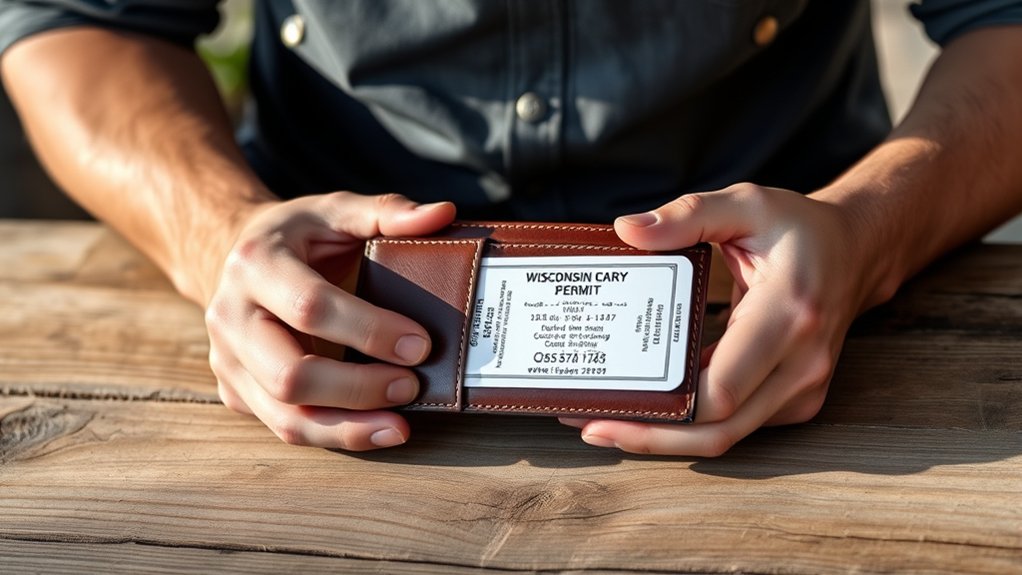
How do you obtain a concealed carry permit in Wisconsin? Start by submitting an online application with proof of firearm safety training. You must be at least 21 years old, a Wisconsin resident, and legally eligible to possess a firearm under federal and state law.
To get a Wisconsin concealed carry permit, apply online with firearm safety training proof and meet age and residency requirements.
Acceptable training includes hunter education, law enforcement courses, or certified firearm safety classes that show your proficiency.
The application fee is $40, which covers processing and a thorough background check.
Once approved, you’ll get a license that’s valid for five years. Remember, when carrying concealed, you need to have both your permit and a valid ID on you.
To keep your privileges, you’ll need to renew your license every five years. The renewal process follows the same standards set by Wisconsin law enforcement authorities.
Who Qualifies for a Wisconsin Concealed Carry Permit?
To qualify for a Wisconsin concealed carry permit, you need to be at least 21 years old. You also have to be either a resident of Wisconsin or an active military member stationed in the state.
On top of that, you can’t have any felony convictions or violent misdemeanors. Basically, if there are any legal restrictions that prevent you from owning a firearm, you won’t qualify.
Before you apply, you’ll also need to show proof that you’ve completed an approved firearm safety training course. It’s an important step to make sure you’re prepared and responsible.
Eligibility Requirements
Although Wisconsin allows many residents to carry concealed firearms, not everyone qualifies for a concealed carry permit. To meet eligibility, you must be at least 21 years old and either a Wisconsin resident or active military stationed in the state.
Federal law prohibits individuals with felony convictions or certain domestic violence misdemeanors from possessing firearms, so you mustn’t fall under these restrictions.
Wisconsin’s permit requirements also mandate proof of firearm safety training through an approved course. Furthermore, you can’t be subject to court orders that restrict firearm possession.
Non-residents holding valid concealed carry permits from states with reciprocity agreements may also qualify to carry concealed in Wisconsin.
Application Restrictions
Since Wisconsin enforces strict criteria for concealed carry permits, you must be at least 21 years old and a state resident to qualify. The permit application requires proof of firearm safety training and compliance with both state and federal law restrictions.
Those prohibited from possessing firearms, such as felons or individuals under restraining orders, cannot obtain a permit. Non-residents generally don’t meet the residency requirement unless they hold a valid out-of-state permit recognized by Wisconsin.
Below is a summary of key application restrictions:
| Restriction Type | Requirement/Condition |
|---|---|
| Age Restriction | Minimum 21 years old |
| Residency Requirement | Must be Wisconsin resident or hold recognized out-of-state permit |
| Eligibility Criteria | No federal/state prohibitions; firearm safety training required |
How to Complete Firearm Safety Training for Your Permit
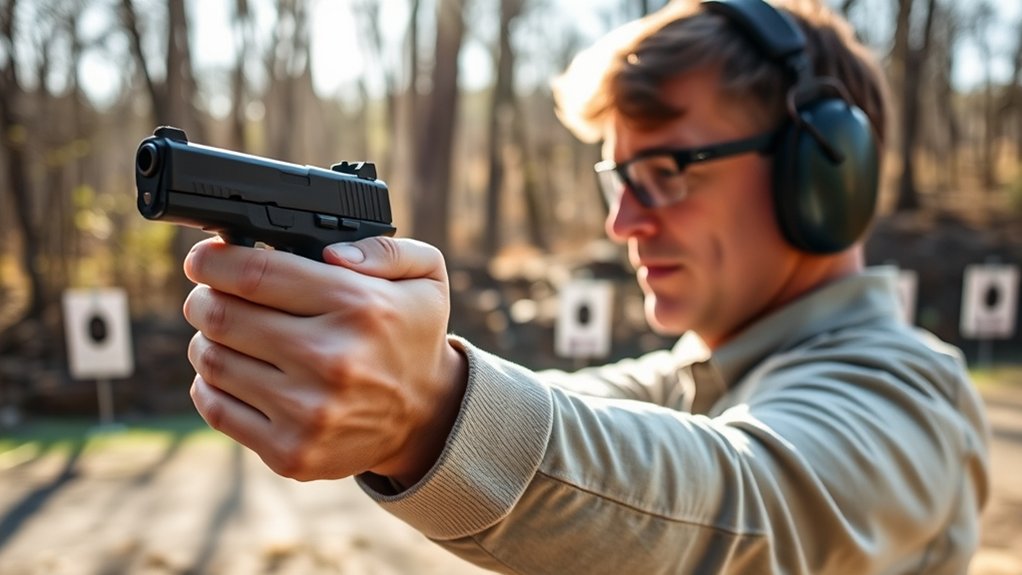
Completing firearm safety training for your Wisconsin concealed carry permit means attending an instructor-led course that covers everything you need to know. This includes firearm safety, legal possession, handling, transport, storage, and the use of deadly force.
You can meet this requirement through hunter education, law enforcement training, or other equivalent courses. Military or security firearm proficiency also counts, so there are a few ways to qualify.
Make sure your training documentation includes your name, the instructor’s details, and the course completion date. Also, it should verify that the course met Wisconsin’s legal and safety standards.
Accepted formats for submitting your proof are .jpg, .jpeg, or .pdf files. This helps ensure your firearm safety training meets Wisconsin’s permit regulations.
At the end of the day, this confirms your knowledge and responsibility when it comes to handling and legally possessing a firearm.
How Long Does a Wisconsin Concealed Carry License Last?
When you receive your Wisconsin concealed carry license, it’s valid for five years from the date it’s issued. You’ll find the expiration date printed right on your permit card, so you’ll always know when it’s time to renew.
To keep your legal right to carry, make sure you renew your license before it expires. The renewal process includes a background check but doesn’t require any additional training. If you don’t renew in time, your permit becomes invalid, and carrying concealed becomes illegal.
| Feature | Duration/Requirement | Notes |
|---|---|---|
| License Validity | 5 years | From issuance date |
| Expiration Date | Printed on permit | Must be monitored by holder |
| Renewal Process | Background check | No extra training required |
| Valid Carry Status | Requires timely renewal | Illegal if permit expires |
How to Renew Your Wisconsin Concealed Carry License

Although your Wisconsin concealed carry license lasts five years, you must renew it before it expires to keep your legal right to carry. The renewal process is pretty straightforward and doesn’t require any additional training.
To make the renewal go smoothly, just follow these steps:
- Submit an online application through the Wisconsin Department of Justice website and pay the $40 non-refundable fee.
- Undergo a background check conducted by the Department of Justice to confirm your eligibility.
- Make sure your contact information is up to date so you can get renewal notices on time before your license expires.
You can complete the whole renewal process online, which is super convenient. Staying on top of your renewal means you won’t have any gaps in your legal possession of your concealed carry license in Wisconsin.
Where You Can Carry a Wisconsin Concealed Carry Weapon
You can carry your concealed weapon on your person or keep it within immediate reach in most public places throughout Wisconsin. That means if you have a valid permit, you’re generally good to go in many spots.
That said, there are certain places where carrying a concealed weapon isn’t allowed. Think law enforcement offices, courthouses, schools, and bars. Those locations usually have strict rules against it.
Those locations usually have strict rules against it.
Authorized Carry Locations
Carrying a concealed weapon in Wisconsin is generally allowed in most public places if you have a valid permit. However, there are specific restrictions for certain sensitive areas. Wisconsin law excludes locations that have established firearm restrictions or posted signs prohibiting weapons.
You need to understand these carry restrictions to follow the permit rules properly.
Here are some key authorized locations where you can carry concealed:
- Most public areas without explicit prohibitions, like parks and retail stores.
- Inside private vehicles, as long as the firearm is concealed and your permit is valid.
- Licensed places where alcohol is sold, unless there are signs or laws that say otherwise.
Always double-check any posted signs and state rules to make sure you’re carrying legally in Wisconsin. It’s important to stay informed about sensitive area regulations.
Restricted Carry Zones
When you hold a Wisconsin concealed carry permit, certain locations remain off-limits for carrying your weapon. Wisconsin laws clearly define restricted zones where concealed carry is prohibited, including law enforcement offices, courthouses, correctional facilities, and schools.
You can’t carry a concealed weapon within 1,000 feet of school property unless authorized or if your firearm is unloaded and secured in a locked container inside a vehicle.
Firearm restrictions also extend to airports beyond security checkpoints and other secure areas where weapons are explicitly banned.
Moreover, some government buildings, such as licensing offices, restrict concealed carry unless specific permission is granted.
While local jurisdictions may impose further restrictions, you must always adhere to state firearm restrictions to ensure lawful concealed carry within Wisconsin’s designated restricted zones.
Wisconsin Concealed Carry Reciprocity With Other States
Although concealed carry laws vary across the country, Wisconsin recognizes permits from states with background check requirements comparable to its own, establishing reciprocity agreements. This means if you hold an out-of-state license from a state on Wisconsin’s reciprocity list, you can lawfully carry concealed firearms within Wisconsin’s borders.
Wisconsin honors concealed carry permits from states with similar background check standards, enabling lawful firearm carry across state lines.
The Department of Justice regularly updates this list to guarantee consistent firearm laws and license recognition.
Key points to understand include:
- Reciprocity allows non-residents over 21 with valid permits from designated states to carry concealed in Wisconsin.
- Wisconsin’s permit rules require that recognized states maintain similar background check and firearm safety standards.
- You should consult the official Wisconsin DOJ website to verify current reciprocity agreements before carrying.
This reciprocity framework ensures lawful concealed carry across state lines under aligned permit rules.
Privacy Rules for Your CCW License Info
Understanding how Wisconsin handles your concealed carry license information adds an important layer of protection beyond recognizing permits from other states. The Wisconsin Department of Justice maintains a secure, restricted database containing your license information, ensuring strict privacy rules govern access.
Law enforcement agencies can request your details only for authorized purposes, such as investigations. They can’t view your personal data without proper authorization.
Out-of-state officers may verify your CCW license status but can’t access detailed personal information.
The Department of Justice doesn’t disclose licensee names or personal data in public reports. Moreover, reproduction or unauthorized sharing of your CCW license information is prohibited without explicit consent.
These security measures and restrictions protect your privacy while allowing necessary law enforcement verification.
Frequently Asked Questions
What Types of Firearms Are Prohibited for Concealed Carry in Wisconsin?
You can’t carry fully automatic weapons, short-barreled rifles, or short-barreled shotguns concealed in Wisconsin.
Assault-style weapons and high-capacity magazines are also prohibited. Devices like machine guns and firearms with illegal modifications fall under this ban.
Furthermore, any firearm classified as a “dangerous weapon,” such as switchblades or explosives, is off-limits.
Carrying firearms without proper licensing or those not legal under state law is strictly forbidden for concealed carry.
Are There Any Restrictions on Carrying Firearms in Vehicles?
Yes, you must follow specific rules when carrying firearms in vehicles. Handguns need to be stored securely in a glove box, case, or locked container.
Open carry inside your car can lead to unlawful concealment charges.
Long guns must be unloaded and fully encased.
Also, transporting firearms while intoxicated or ignoring these storage rules can result in criminal penalties.
Always make certain your firearms are properly secured to avoid legal issues.
What Are the Penalties for Carrying Without a License in Wisconsin?
If you carry a concealed weapon without a valid license in Wisconsin, you face a Class A Misdemeanor charge. This can result in up to 9 months in jail and fines reaching $10,000.
On top of that, you risk having your firearm confiscated and gaining a permanent criminal record. These strict penalties are in place to discourage unlicensed concealed carry.
These penalties are designed to ensure everyone follows the legal requirements for carrying firearms in the state. It’s important to stay on the right side of the law when it comes to this.
Can Non-Residents Apply for a Wisconsin Concealed Carry License?
Yes, you can apply for a Wisconsin concealed carry license as a non-resident if you meet specific criteria. You must be at least 21 and hold a valid concealed carry permit from your home state recognized by Wisconsin’s reciprocity agreements.
You’ll also need to provide proof of acceptable firearms training and pass a background check.
However, if your state doesn’t issue permits or has conflicting rules, you may not qualify. It really depends on where you’re coming from and what their laws say.
How Does Wisconsin Handle Lost or Stolen Concealed Carry Licenses?
Losing your concealed carry license in Wisconsin isn’t the best way to practice responsibility, but the state’s got you covered. You must report the loss or theft within seven days to the Department of Justice.
Then, submit a written request with a $12 fee and prove your identity.
You might also need to swear a statement about the incident. If the license turns up, you’re required to return it promptly. It’s pretty straightforward once you know the steps to take.
Conclusion
If you live in Wisconsin and want to carry concealed, understanding the permit process is essential. For example, imagine Sarah, who completed her firearm safety training, applied for her permit, and now confidently carries her weapon within state guidelines. Knowing where you can carry and how to renew your license keeps you compliant and safe.
By following these detailed rules, you guarantee your rights are protected while respecting public safety. It’s really about staying informed and making smart choices. That way, carrying concealed becomes a responsible part of your everyday life.