Can You Buy A Gun Without Concealed Carry Permit – Purchase Rules Explained
You can buy a gun without a concealed carry permit, but owning one doesn’t give you the right to carry it openly or concealed in public without proper licensing. You’ll still need to pass a background check to make sure you’re eligible.
Federal and Texas laws set age limits and restrict sales to certain individuals like felons. Understanding purchase rules, carry requirements, and where you can legally carry will help you stay compliant and responsible with your firearm.
What Does Buying a Gun Without a Permit Mean?
Although having a concealed carry permit lets you carry a firearm in public, buying a gun without one just means you’re legally purchasing the weapon but don’t have permission to carry it concealed.
A concealed carry permit allows public carry; buying without one only permits legal ownership, not concealed carrying.
When you buy a firearm, you still have to complete a background check. This is required whether or not you have a concealed carry permit.
Buying a gun without a permit is legal in many states like Texas and Florida, but it only covers the act of buying the gun—not carrying it concealed.
This is an important distinction because a concealed carry permit has its own legal requirements that control how and where you can carry the firearm.
When Do You Need a License to Carry (LTC) in Texas?
Owning a gun without a permit lets you legally possess the firearm, but carrying it concealed in Texas requires a License to Carry (LTC).
Since 2021, you can openly carry a handgun without a license. But for concealed carry, an LTC is mandatory.
You also need an LTC to carry a handgun in vehicles, watercraft, or restricted areas where open carry isn’t allowed.
Texas firearms laws generally require you to be 21 or older to obtain an LTC. Though, 18-20-year-olds may carry without prosecution due to a 2022 court ruling.
Remember, prohibited places like schools and courthouses ban handgun carry regardless of LTC status.
Holding a license to carry grants you broader concealed carry privileges and certain exemptions under Texas law.
Who Can Legally Purchase Firearms in Texas?
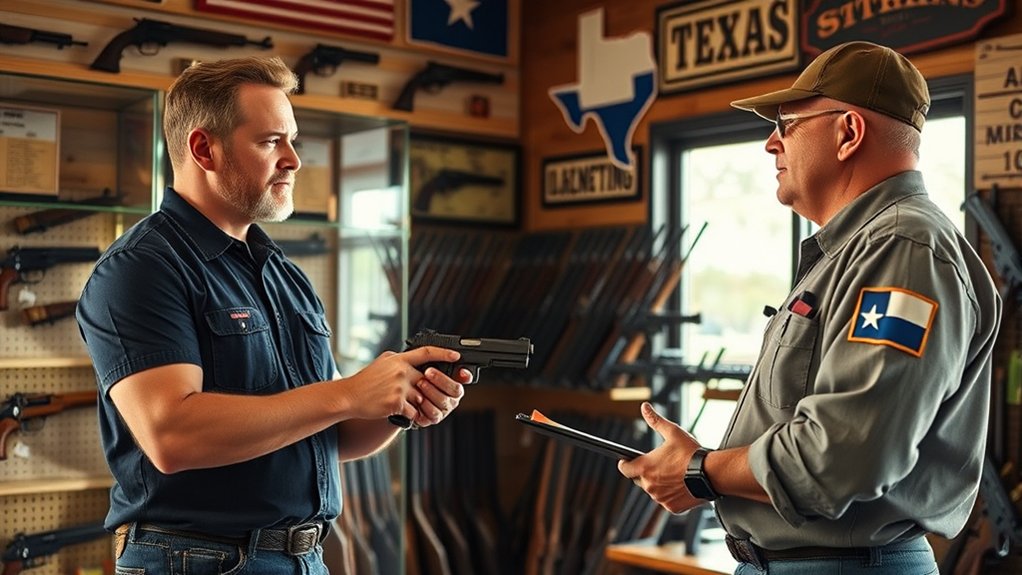
If you meet Texas and federal legal requirements, you can purchase firearms without a license. But carrying a concealed handgun in public still requires a License to Carry (LTC).
To legally purchase firearms in Texas, you must be at least 18 years old for long guns and 21 for handguns. You’ll undergo a background check through the National Instant Criminal Background Check System (NICS) to verify you’re legally eligible.
Federal law prohibits sales to felons, minors, or individuals with certain mental health issues, restraining orders, or recent convictions related to domestic violence or drug offenses. If you meet these criteria, you can legally purchase firearms in Texas.
Just remember, owning a firearm doesn’t replace the requirement for an LTC if you plan to carry concealed in public. So, make sure you have the proper license if you want to carry around town.
How Do Background Checks Affect Gun Purchases?
When you buy a gun, you’ll need to pass a background check that looks into your eligibility by using federal and state databases.
If something comes up during the check that disqualifies you, your purchase might be delayed, denied, or you could face a waiting period.
But don’t worry—you do have the right to appeal if your purchase is denied.
Just keep in mind, the transaction only goes through once the background check clears and you’ve signed all the necessary paperwork.
Background Check Requirements
Although background check requirements vary by state, most states, including California and Florida, require them for all gun purchases no matter if you have a concealed carry permit or not.
When you try to buy a firearm, a background check is done through federal databases like NICS to make sure you’re not prohibited from owning a legal firearm.
The system looks for things like felony convictions or domestic violence misdemeanors that would disqualify you. If any disqualifying factors show up, the sale is legally blocked.
Usually, this process takes anywhere from a few minutes to several days. It depends on the state’s procedures and whether more review is needed.
Passing the background check is key to completing your firearm purchase legally, whether or not you have a concealed carry permit.
Waiting Period Implications
Since background checks are mandatory in states like California and Georgia, you’ll often face a waiting period before you can complete your gun purchase. This waiting period, typically 3 to 10 days, allows authorities to thoroughly verify your eligibility. During this time, firearm purchases cannot be finalized, causing potential delays.
If background checks uncover disqualifying information, the sale is denied under current purchase rules. Understanding these waiting period implications helps you prepare for possible delays and ensures compliance with firearm purchase laws. It’s always good to plan ahead so you’re not caught off guard.
| Aspect | Purpose | Impact on You |
|---|---|---|
| Waiting Period | Allows background checks | Delays firearm possession |
| Background Checks | Verify eligibility | Prevents illegal sales |
| Disqualifying Info | Triggers denial | Requires resolution before purchase |
Denial and Appeals
If a background check flags disqualifying criminal or mental health records, authorities will deny your firearm purchase and provide a certificate or letter explaining the reason. This denial lets you know the specific issues affecting your eligibility.
But a denial doesn’t mean you’re permanently barred from buying a firearm. You can appeal the decision by submitting additional documents or fixing errors in your records.
Many states have procedures like hearings or reviews where you can challenge the denial. Going through these legal steps gives you a chance to regain eligibility.
Knowing how the background check process works and understanding your rights to dispute denials helps you handle firearm purchase restrictions better. It also lets you address any disqualifying records that impact your case.
What Firearms Can You Buy Without a Permit?
You can often buy rifles and shotguns without needing a permit.
Handguns, on the other hand, might require a background check, but not always a permit—it really depends on the state you live in.
Age and residency requirements also matter a lot when it comes to what firearms you can legally purchase.
Handguns And Long Guns
Although purchasing firearms without a concealed carry permit varies by state, many allow you to buy handguns and long guns under specific conditions.
For example, in Texas, you can buy long guns like rifles and shotguns without a permit. Handguns, on the other hand, require passing a background check through a licensed dealer.
Similarly, California requires a background check and completion of the DROS process for all firearm purchases but doesn’t mandate a permit.
Florida also mandates background checks for both handguns and long guns without requiring a permit.
Federal law prohibits sales to certain disqualified individuals regardless of state rules.
So, when you’re thinking about buying a firearm, you usually need to pass a background check through a licensed dealer.
But most of the time, a permit isn’t necessary for either handguns or long guns.
Age And Residency Limits
Age and residency requirements considerably influence which firearms you can purchase without a permit across different states. Your minimum age and proof of residency often determine eligibility to buy handguns or long guns without a license.
For example, Texas allows handgun purchases at 18 following a 2022 ruling, while Florida requires buyers to be at least 21, except for active military. California mandates a 21 minimum age for handguns plus residency proof.
Here’s a quick overview:
| State | Minimum Age to Purchase | Residency Requirement |
|---|---|---|
| Texas | 18 (handguns) | Resident or lawful presence |
| Florida | 21 | Resident |
| California | 21 | Resident |
| Georgia | 18 (rifles/shotguns), 21 (handguns) | Resident |
Check your state’s rules carefully before purchasing a firearm without a license.
Background Checks Required
Several states require background checks for all firearm sales, whether you’re buying a rifle, shotgun, or handgun. Federal law mandates licensed dealers to run background checks through the National Instant Criminal Background Check System (NICS) before completing any firearm purchase.
While you may not need a permit to buy rifles or shotguns in some states, you still must pass a background check. Handgun purchases often have additional requirements like residency proof or safety training.
Private sales may or may not require background checks, depending on state laws, but many states now enforce them for all transfers.
It’s important you understand these rules because attempting to purchase a firearm without passing a required background check can lead to criminal charges and penalties.
Always verify your state’s specific regulations before buying. It’s better to be safe and informed than to face unexpected trouble later.
How Do Age Restrictions Affect Buying Guns in Texas?
Two key age thresholds impact your ability to purchase firearms in Texas: 18 for rifles and shotguns, and 21 for handguns. Texas law generally prohibits firearm purchase by minors under 18, except for hunting, target shooting, or organized competitions.
While federal law bars selling handguns to anyone under 21, Texas allows individuals aged 18 to 20 to carry handguns without prosecution solely based on age, following a 2022 court ruling. These age restrictions aim to balance limiting firearm access to minors while accommodating lawful activities.
When buying a handgun, you must meet the age requirements set forth by both Texas and federal law. Understanding these age restrictions helps guarantee your firearm purchase complies with current Texas regulations.
Where Can You Legally Buy Guns Without a Permit?

Although you don’t need a concealed carry permit to buy guns in most states, including Texas and Florida, specific rules still apply depending on where you live and the type of firearm you want. When considering where you can legally purchase a firearm without a permit, keep these points in mind:
Federal law mandates background checks for all purchases from licensed dealers, regardless of permit requirements.
Private sales between unlicensed individuals often don’t require permits, but state law varies on background checks.
States like California and Washington require background checks and eligibility verification, but no permit for purchase.
Some states, such as Georgia, allow purchase without a permit but may impose rules on certain firearm types or transfers.
Always check your state law to guarantee compliance during your firearm purchase. It’s important to stay informed so you don’t run into any legal issues.
What Are the Rules for Private Gun Sales in Texas?
When you buy a gun privately in Texas, you don’t have to go through a background check or use a licensed dealer. That means the process can be quicker and more straightforward.
However, both you and the seller need to make sure that you’re legally allowed to own the firearm. It’s important to be responsible here.
Also, keep in mind that Texas doesn’t require registration or record-keeping for private sales, so there’s no official paperwork involved.
Private Sales Legal Requirements
Because private gun sales in Texas don’t require a background check or dealer involvement, you can legally buy or sell firearms without a license or permit.
However, you must still follow federal and state laws about transferring firearms to prohibited persons. When you’re doing private sales, keep these rules in mind:
No background check is required, but you should still verify the buyer isn’t a prohibited person.
You don’t need a license to purchase or own a firearm through private sales.
Private sellers aren’t required to keep records or report the sale.
Federal law prohibits transferring firearms to anyone you know is barred from possession.
Following these guidelines helps you stay within the law and avoid unlawful firearm transfers. It’s always best to be cautious and responsible when selling or buying privately.
Background Check Obligations
Even though federal law requires background checks for firearm sales through licensed dealers, private gun sales in Texas generally don’t mandate them. When you engage in a private sale, Texas laws don’t require a background check unless the seller is a licensed dealer.
However, you must avoid transferring a firearm to a disqualified person. Some local jurisdictions may impose additional rules, so it’s a good idea to check local laws.
Voluntary background checks through licensed dealers are an option if you want to guarantee compliance.
| Transaction Type | Background Check Required? | Notes |
|---|---|---|
| Licensed Dealer Sale | Yes | Federal and Texas laws apply |
| Private Sale (Statewide) | No | Unless local laws specify otherwise |
| Private Sale (Local) | Varies | Check county/city regulations |
| Sale to Disqualified Person | Prohibited | Illegal under Texas laws |
Seller and Buyer Responsibilities
Although private gun sales in Texas don’t require background checks or firearm registration, sellers must confirm the buyer’s legal eligibility to own a firearm. As a seller in a private sale, you’re responsible for ensuring the buyer meets all legal requirements.
Here’s what you need to know: verify the buyer’s age—it has to be at least 18 for long guns and 21 for handguns. Avoid selling to anyone disqualified under state or federal law, like felons or those under protective orders.
Background checks aren’t mandatory, but following legal restrictions is essential. Make sure to complete a bill of sale that documents the firearm sale details, including buyer and seller information.
Both seller and buyer share responsibility to conduct a lawful and transparent private sale without bypassing legal safeguards. So, it’s really about being careful and making sure everything’s above board.
What Federal and State Restrictions Apply to Gun Buyers?
When you decide to purchase a firearm, you must comply with both federal and state restrictions that govern eligibility and background checks. Federal law prohibits disqualified persons, such as felons or those convicted of domestic violence, from purchasing or possessing firearms.
Regardless of concealed carry permits, most states require a background check for all firearm purchases from licensed dealers.
While some states don’t mandate permits to buy firearms, federal restrictions still block disqualified persons from purchase. State laws may also restrict firearm sales to minors, individuals with certain mental health adjudications, or those under court orders.
So, even if no permit is needed, you still have to meet federal eligibility criteria and pass background checks.
Following these restrictions is important to make sure you comply with all applicable laws. It helps keep the process legal and safe for everyone involved.
How Do Vehicle and Public Carry Laws Affect Your Firearm?
How does carrying a firearm in your vehicle or public spaces affect your legal responsibilities? Understanding vehicle laws and public carry restrictions is essential to avoid legal issues.
In Texas, you must carry your firearm in a holster both in public and in vehicles. Displaying a handgun without a holster is illegal. Also, certain locations strictly prohibit firearm carry, regardless of your license status.
Keep these points in mind:
- Always carry your firearm holstered to comply with vehicle laws and public carry rules.
- Avoid displaying your handgun in plain view unless it’s holstered.
- Respect restricted areas like schools and hospitals where carrying firearms is banned.
- Secure your firearm to prevent unauthorized access and accidental discharge when in a vehicle.
Following these rules helps you stay compliant and protects your rights. It’s really about keeping things safe and straightforward.
What Are the Legal Limits on Displaying and Carrying Guns?
Because Texas law requires handguns to be carried in a holster, you can’t legally display a handgun openly without one. When you carry a firearm in public, it must remain holstered. Displaying it intentionally in plain view without a holster is prohibited.
Texas law mandates handguns be carried in a holster; open display without one is illegal.
This rule applies to handguns carried on your person, in vehicles, or watercraft. Any display outside a holster violates the law. Also, displaying a firearm in a way that alarms others can lead to disorderly conduct charges.
Long guns like rifles and shotguns have fewer restrictions on display. The law mainly regulates their ownership rather than carrying.
Understanding these limits helps you carry and display your firearm legally and responsibly in public under Texas law.
How to Avoid Legal Issues When Buying a Gun Without a Permit
Understanding the rules about carrying and displaying firearms naturally leads to the importance of following legal procedures when purchasing a gun without a permit. To avoid legal issues during a firearm purchase, stay compliant with all legal requirements and federal law.
Here’s how you can do that:
Always complete a background check when buying from licensed dealers, as mandated by federal law. Verify state-specific laws when purchasing from private sellers or at gun shows, since background check requirements vary.
Also, confirm you meet age restrictions and are free from disqualifications tied to criminal history or other federal prohibitions.
Avoid any illegal transactions or attempts to bypass background checks, as these can lead to criminal charges.
Following these steps helps you buy a gun legally and responsibly without a concealed carry permit.
Frequently Asked Questions
Can Non-Residents Buy Guns Without a Concealed Carry Permit?
No, you generally can’t buy handguns as a non-resident without a concealed carry permit or qualifying under specific exceptions. Federal law restricts handgun purchases for non-residents unless you’re law enforcement or military.
Some states allow rifle or shotgun purchases if you meet their requirements, but handguns are more strictly regulated.
You’ll need to check both federal and state laws carefully to understand what permits or licenses you must have before buying a gun.
How Long Does a Typical Gun Purchase Background Check Take?
Buying a gun is usually quicker than waiting for a coffee to brew. You’ll typically get your background check done within 1 to 3 minutes through the electronic system.
About 90% of checks finish instantly. But if there’s a red flag or extra review needed, the process can stretch out to several days or even weeks.
Dealers must hold the sale up to 3 business days if the check isn’t immediate.
Are There Waiting Periods for Gun Purchases Without a Permit?
Yes, you often face waiting periods when buying a gun without a permit. For example, Florida requires 3 to 5 days, California enforces 10 days, and Washington also has a 10-day wait.
Texas doesn’t mandate a waiting period but still runs background checks.
Georgia imposes a 3-day wait with some exceptions.
These waiting periods differ by state and help guarantee thorough background checks before you complete your purchase. So, it’s good to know the rules in your area before you buy.
Can You Return or Exchange a Firearm Bought Without a Permit?
About 70% of gun retailers allow returns or exchanges under certain conditions. Yes, you can return or exchange a firearm bought without a permit, but it really depends on the seller’s policy and state laws.
You’ll want to keep your receipt and make sure the firearm is in its original condition.
Also, all transactions have to be legal. Some states restrict returns if the gun was linked to illegal activity.
What Documentation Is Needed Besides the Background Check for Gun Purchases?
You’ll need to provide valid proof of identity, age, and residency, like a driver’s license or state ID. If you’re a non-citizen, bring your alien registration number or visa.
For handguns, you must prove California residency with documents such as utility bills or rental agreements. Dealers will verify your legal eligibility through the Department of Justice’s DROS system alongside these documents, in addition to the mandatory FBI background check.
It’s pretty straightforward once you have all the right paperwork ready.
Just make sure everything is current and matches your information to avoid any delays.
Conclusion
You can buy a gun without a concealed carry permit, but owning and carrying are different legal steps. While purchase laws may seem straightforward, carrying without a license can lead to serious consequences.
It’s important to understand when you need an LTC, know the background check rules, and recognize state restrictions. Doing this helps you stay compliant.
Managing these differences carefully lets you exercise your rights responsibly while avoiding legal pitfalls in Texas gun ownership and carry.