How Much Does A Container Shooting Range Cost – Pricing And Setup Guide
You can expect to spend between $10,000 and $40,000 for a container shooting range, depending on the container size and whether it’s new or used. Smaller 20ft containers suit pistols and cost less, while 40ft containers provide longer lanes for more extensive training but cost more.
Adding safety features like ballistic liners, ventilation, and bullet traps will raise expenses. Delivery, installation, and permits also add up. Keep exploring to understand all factors affecting your setup and ongoing costs.
What Is a Container Shooting Range and Why Use One?
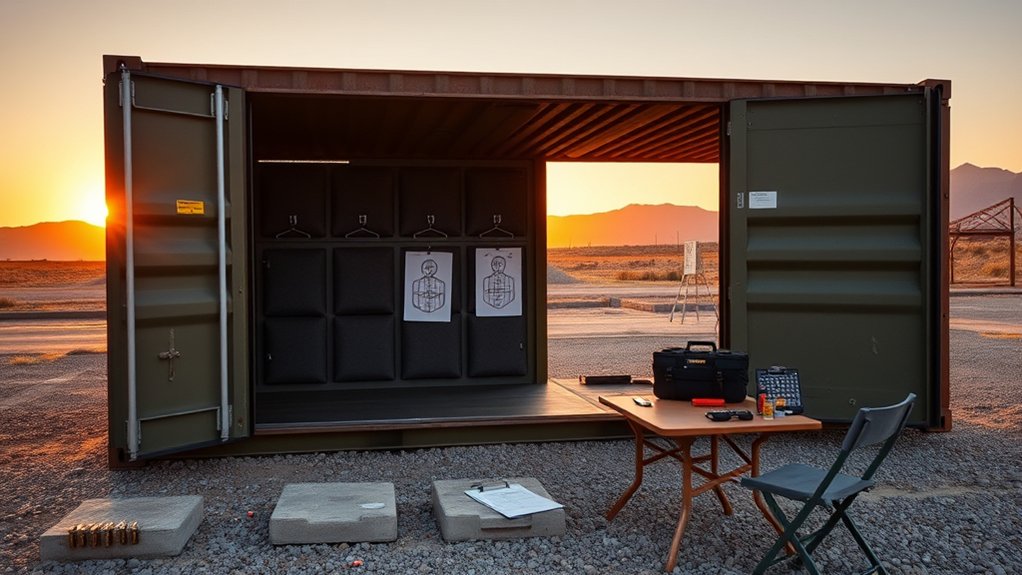
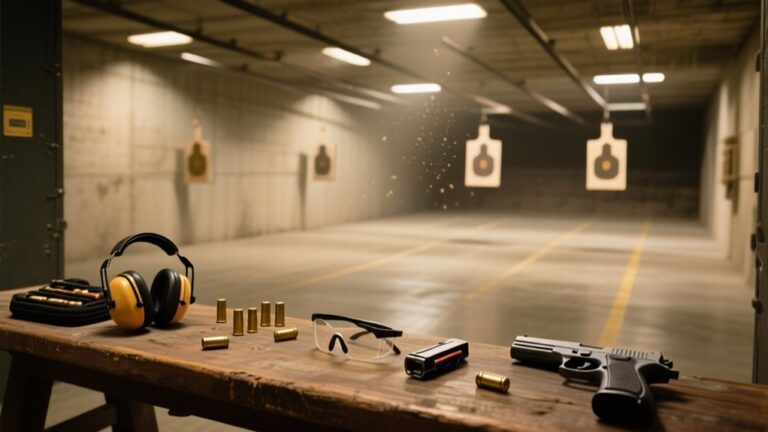
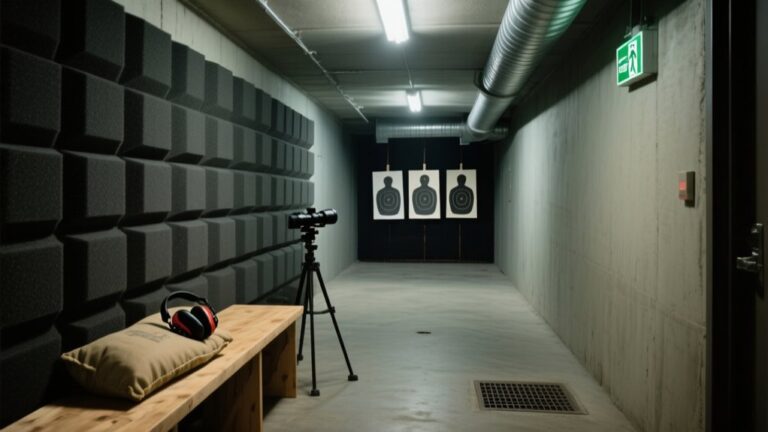
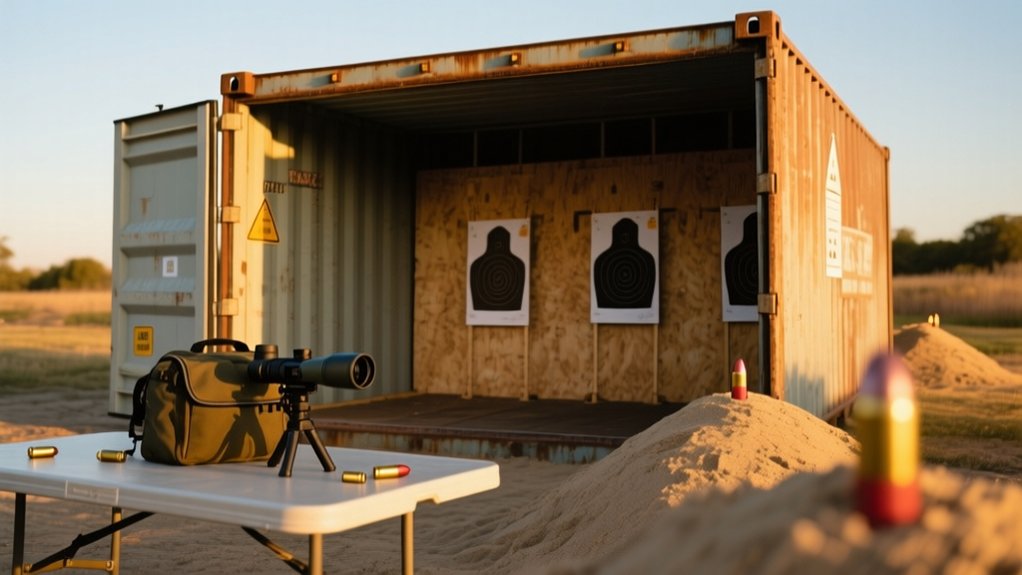
A container shooting range transforms a standard steel shipping container into a safe, enclosed space for target practice. You can set up this indoor shooting range on private property without the hassle of permanent building permits, making it a flexible and convenient choice.
Inside the container, ballistic liner panels, a bullet trap, ventilation, and lighting create a controlled environment that meets safety and health standards.
Ballistic liners, bullet traps, ventilation, and lighting ensure a safe, controlled shooting environment inside the container.
Whether you choose a 20ft or 40ft container, you get a compact, durable space designed specifically for shooting activities.
This setup not only provides safety but also allows for various shooting distances suitable for training or qualification.
Choosing a container indoor shooting range means you’re investing in a secure, efficient, and adaptable solution tailored to your shooting needs.
How Container Size Affects Shooting Range Cost and Use
The size of your container plays a big role in both the shooting lane length you get and how much it will cost. For example, smaller containers like 20ft models give you shorter lanes that work well for pistols, and they usually come with a lower price tag.
On the other hand, if you go for larger containers or even combine a few units, you can enjoy longer lanes and more features.
Of course, that means you’ll need to budget a bit more. So, it really depends on what you’re looking for and how much you want to spend.
Container Dimensions Impact
Because container size directly influences both cost and functionality, you’ll want to carefully consider which dimensions best suit your shooting range needs.
Smaller 20ft containers offer a compact range build ideal for pistol practice, usually costing between $10,000 and $22,000.
If you need more space, 40ft containers provide nearly double the length, supporting law enforcement qualification drills with price tags from $18,000 to $40,000.
High cube variants add ceiling height but can increase HVAC and overall costs.
Combining two 40ft containers creates a longer, multi-lane setup, though expect considerably higher expenses due to materials and labor.
Opting for one-trip containers guarantees better reliability and lower maintenance, impacting your initial investment and the durability of your container dimensions-based range build.
Usable Lane Length
When you select your container size, you’re also determining the usable lane length. This directly impacts both cost and range functionality. A shorter lane suits pistol practice, while longer lanes accommodate law enforcement training.
Keep in mind, longer lanes generally increase the total cost due to build-out and safety measures.
| Container Type | Usable Lane Length (ft) | Typical Use |
|---|---|---|
| 20ft Standard | 15–17 | Pistol practice |
| 40ft Standard | 33–36 | Law enforcement qualification |
| 40ft High Cube | 33–36 | Enhanced comfort & ventilation |
| Two 40ft Connected | 70+ | Multi-lane, advanced training |
Choose wisely; your container size sets your range’s usable lane length and total cost.
Size Versus Cost
Although selecting a container size depends largely on your shooting range needs, understanding how size affects cost and functionality is essential. The size directly impacts your project cost and the range’s usability.
Smaller 20ft containers, costing $10,000–$22,000, suit personal practice with shorter lane distances.
Larger 40ft containers increase project costs but offer longer lanes for law enforcement training. High cube variants add height, improving air management but raising ventilation expenses. Connecting two 40ft containers creates extensive multi-lane setups at prices above $55,000.
Consider these size versus cost factors:
- 20ft container: compact, cost-efficient, ideal for pistol practice
- 40ft container: longer lanes, suitable for qualifications, higher cost
- Two 40ft containers: multi-lane operation, premium project cost, expanded training options
New vs. Used Container Shooting Ranges: Price and Quality
Choosing between new and used shipping containers for your shooting range greatly impacts both cost and quality.
A new container, especially a one-trip unit, costs more, $3,000 to $5,000 for 20ft and $5,000 to $8,000 for 40ft, but arrives in near-new condition. This makes your build-out smoother and more reliable.
Used containers, priced lower at $2,000 to $3,500 for 20ft and $3,500 to $6,000 for 40ft, may seem like a bargain but often show wear, rust, and damage.
This can increase your setup costs by 20-30% due to necessary repairs and upgrades.
Choosing a new container helps you avoid unexpected refurbishment expenses and compliance issues.
It makes for a smarter investment for a hassle-free shooting range build.
How Permitting and Zoning Rules Affect Your Range Budget
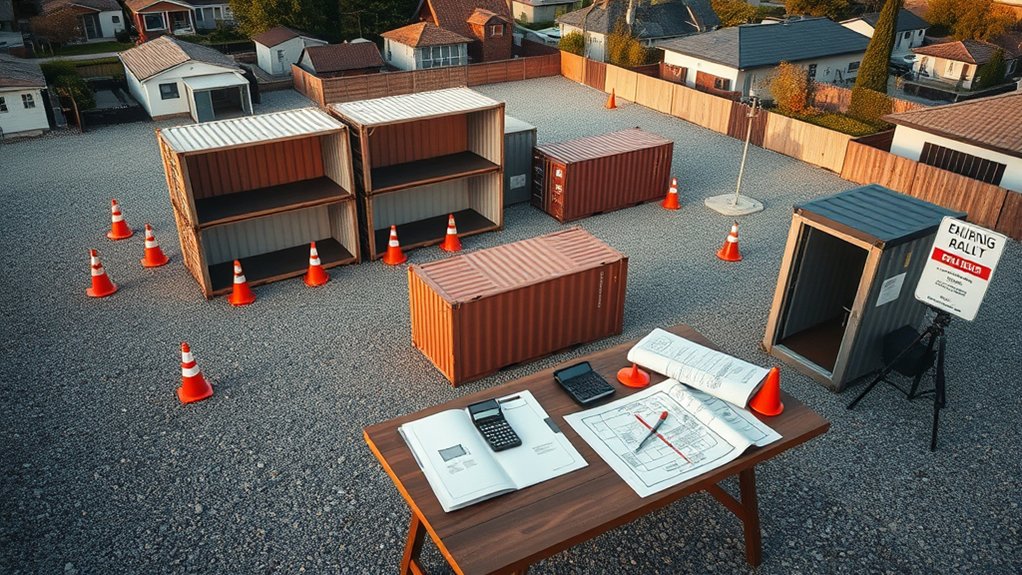
Because permitting and zoning rules vary widely by location, they play an essential role in determining both the feasibility and cost of your container shooting range project.
You’ll need to navigate local zoning classifications that allow firearms discharge and hazardous materials storage.
Navigating local zoning for firearms discharge and hazardous materials storage is essential for project approval.
Permitting processes can add costs and cause delays, especially if environmental or lead containment regulations apply.
Many municipalities restrict shooting ranges in urban areas due to noise and safety concerns, so compliance checks are critical.
Setback requirements also influence your range’s design by mandating minimum distances from property lines and buildings.
Here’s what you should consider:
- Local zoning restrictions on shooting ranges
- Permitting fees and timelines
- Setback and environmental regulations impacting layout
Understanding these factors helps you budget realistically and avoid costly surprises.
Which Interior Features Really Impact Your Build Cost?
Guiding zoning and permitting rules sets the stage, but the interior features you select will largely determine your container shooting range’s build cost.
Bullet traps, for example, vary widely in design and price. Rubber deceleration traps tend to be more affordable initially, while steel plate traps cost more upfront but may reduce maintenance expenses.
Ventilation systems are another significant factor. You’ll need a negative-pressure setup to manage lead particulate and meet OSHA standards, which can increase your budget considerably.
Sound attenuation and ballistic liners also influence costs, but focusing on bullet traps and ventilation systems is key since they affect both safety and ongoing expenses.
Choosing the right interior features guarantees your range is functional, compliant, and cost-effective from the start.
Why Ventilation, Ballistic Liner, and Safety Systems Cost More
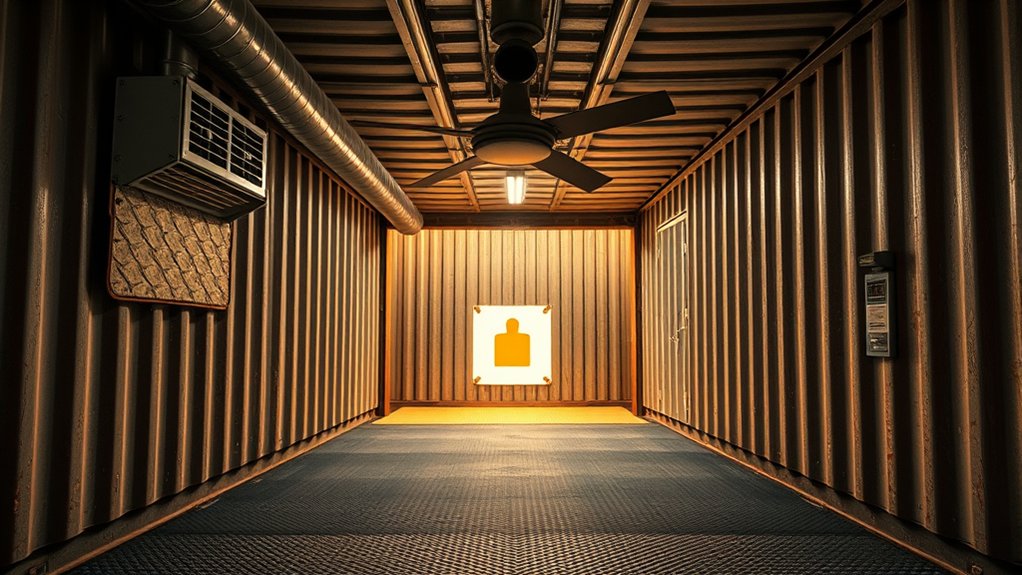
You’ll find that ventilation systems are essential for keeping the air safe by managing lead particulates. They do come with higher costs, though, because of strict standards that have to be met.
Ballistic liners, which are made from specialized materials, add to the expenses as well. They play a big role in protecting users and preventing ricochets.
On top of that, safety compliance means investing in things like bullet traps and noise control.
All of these factors together raise your overall build cost.
Ventilation System Importance
When setting up a container shooting range, you must prioritize a proper ventilation system to handle hazardous lead particles released during shooting. Without it, lead exposure risks rise sharply, endangering health and violating OSHA and NIOSH standards.
A well-designed ventilation system uses negative pressure, HEPA filters, and powerful exhausts to keep the air safe and clean. Although this adds $5,000 to $15,000 to your costs, it’s a vital investment that protects you and your users.
Key factors to take into account include:
- Negative-pressure airflow to trap airborne lead particles
- HEPA filtration for effective contaminant removal
- Exhaust systems that maintain air quality compliance
Proper ventilation enhances safety, guarantees compliance, and improves the overall shooting experience.
Ballistic Liner Materials
Although proper ventilation is essential for safety, the choice of ballistic liner materials plays an equally important role in protecting your container shooting range. Ballistic liners absorb and contain rounds, directly impacting setup costs and long-term durability.
For example, rubber granulate panels suit pistol-rated ranges, while steel baffle systems handle higher calibers but cost more upfront. Your selection affects maintenance needs and overall safety.
| Material Type | Application | Cost Impact |
|---|---|---|
| Rubber Granulate | Pistol-rated setups | Moderate |
| Steel Baffle System | High-caliber rounds | High |
| Composite Panels | General protection | Low to Moderate |
Choosing the right ballistic liner materials balances safety, durability, and setup costs effectively.
Safety Compliance Costs
Three key factors drive up the cost of safety compliance in container shooting ranges: ventilation systems, ballistic liners, and safety equipment.
Ventilation systems are essential to control hazardous lead particulate. They require negative-pressure setups to meet OSHA and NIOSH standards, which adds considerably to your expenses.
Ballistic liners vary in price based on materials, from affordable rubber granulate for pistols to pricier steel baffle systems for rifles.
Safety equipment like bullet traps also impacts costs, depending on the type and maintenance needs.
- Negative-pressure ventilation for air quality compliance
- Ballistic liners tailored to weapon type
- Bullet traps with varying durability and upkeep
These elements combined push safety compliance costs from thousands to tens of thousands of dollars, reflecting the complexity of a secure range.
Typical Delivery, Site Preparation, and Installation Costs
Delivery costs for a shipping container shooting range typically fall between $12,000 and $25,000, depending on distance and site conditions. Beyond delivery, site preparation like leveling and drainage is essential to guarantee stability and safety.
Installation costs, especially for interior elements such as ballistic liners and ventilation systems, greatly impact your budget. Ventilation is critical for lead exposure control and often requires professional installation, adding to overall expenses.
Coordinating with contractors helps streamline installation and avoid delays.
| Aspect | Typical Cost Impact |
|---|---|
| Delivery Costs | $12,000 – $25,000 |
| Site Preparation | Ground leveling, drainage expenses |
| Installation Costs | Ballistic liners, ventilation system installation |
Ongoing Operating Costs and Maintenance to Plan For
Once your container shooting range is up and running, you’ll need to budget for ongoing operating costs that average around $38,000 annually. These costs cover essential maintenance, utilities, and compliance with safety regulations.
Keeping your range safe and functional means monthly upkeep of HVAC and HEPA filtration systems to maintain air quality and manage lead reclamation. Noise restrictions can also affect your schedule, so plan accordingly to maximize revenue during quieter hours.
Regular inspections and maintenance of ballistic systems and safety equipment guarantee ongoing compliance and operational safety.
Key ongoing operating costs and maintenance include:
- Monthly HVAC and HEPA filter servicing for air quality and lead control
- Lead reclamation and potential hazmat fees
- Routine inspections and upkeep of ballistic and safety systems
Frequently Asked Questions
Can a Container Shooting Range Be Customized for Different Firearm Types?
Yes, you can customize a container shooting range with custom features to guarantee firearm compatibility.
For pistols, rubber granulate panels work well, while rifles need steel baffle systems for safety.
You can also add adjustable bullet traps and specialized ventilation to handle different calibers.
This flexibility lets you tailor the range to your specific firearms, ensuring both safety and peak performance for various shooting scenarios.
What Insurance Is Needed for Operating a Container Shooting Range?
You might think liability coverage alone is enough, but it’s not that simple.
When running a container shooting range, you need extensive liability coverage to protect against injury or property damage claims.
Don’t skip a thorough risk assessment to identify potential hazards like lead contamination. That means you’ll also need environmental liability insurance.
Plus, commercial property insurance safeguards your equipment and infrastructure.
Consult specialized agents who understand shooting ranges to get the right protection.
How Long Does It Take to Set up a Container Shooting Range?
Setting up a container shooting range usually takes 4 to 8 weeks.
You’ll want to focus on shooting range design to guarantee container safety, which involves installing ballistic liners, bullet traps, and proper ventilation systems.
Delivery of the container itself can take 1 to 3 weeks, and don’t forget about securing permits and passing final inspections.
These steps combined determine how quickly your range becomes operational and safe for use.
Are There Financing Options Available for Purchasing a Container Shooting Range?
They say, “Don’t put all your eggs in one basket,” and that’s true with financing options for container shooting ranges.
You can explore traditional bank loans, specialized equipment financing, or even payment plans offered by sellers.
Some companies provide in-house financing to ease your upfront costs. Leasing is another route.
Make sure you prepare a solid business plan to boost your chances of securing favorable terms tailored to your budget.
What Training Is Required for Staff to Manage the Shooting Range Safely?
You need to guarantee your staff complete thorough safety protocols training, including firearm handling, range operations, and emergency procedures.
Staff qualifications should include certification from recognized bodies like the NRA, plus regular updates on OSHA lead exposure standards and proper PPE use.
They must also understand ventilation system maintenance for air quality compliance.
Moreover, training in customer service, conflict resolution, and first aid/CPR is essential to manage the shooting range safely and effectively.
Conclusion
Choosing a container shooting range means balancing size, cost, and quality. You also need to understand permits and zoning, select essential interior features, and invest in safety systems like ventilation and ballistic liners.
You’ll need to plan for delivery, site setup, and installation, plus ongoing maintenance and operating expenses. By knowing what affects your budget at every step, you can build a range that’s safe, functional, and cost-effective, giving you control, convenience, and confidence.