How To Move A Gun Safe Upstairs – Step By Step Guide
To move a gun safe upstairs, start by measuring your safe and stairway to guarantee a clear path. Empty the safe and securely wrap it with blankets and straps.
Use a heavy-duty stair-climbing dolly and enlist at least two helpers to steady the load. Move slowly, communicate clearly, and use proper lifting techniques to avoid injury or damage.
It can be challenging, but with proper preparation and teamwork, it’s manageable. Keep going to discover detailed equipment tips and professional options.
Key Takeaways
- Measure the safe and stair dimensions to ensure a clear path and plan the route carefully.
- Empty the safe, secure the door, and wrap it with moving blankets and shrink wrap for protection.
- Use a heavy-duty stair-climbing dolly and secure the safe with strong straps before moving.
- Employ at least two helpers, communicate clearly, and use proper lifting techniques while moving upstairs.
- Consider hiring professional movers to ensure safety, prevent damage, and efficiently handle the relocation.
Measure Your Gun Safe and Stairs Before Moving
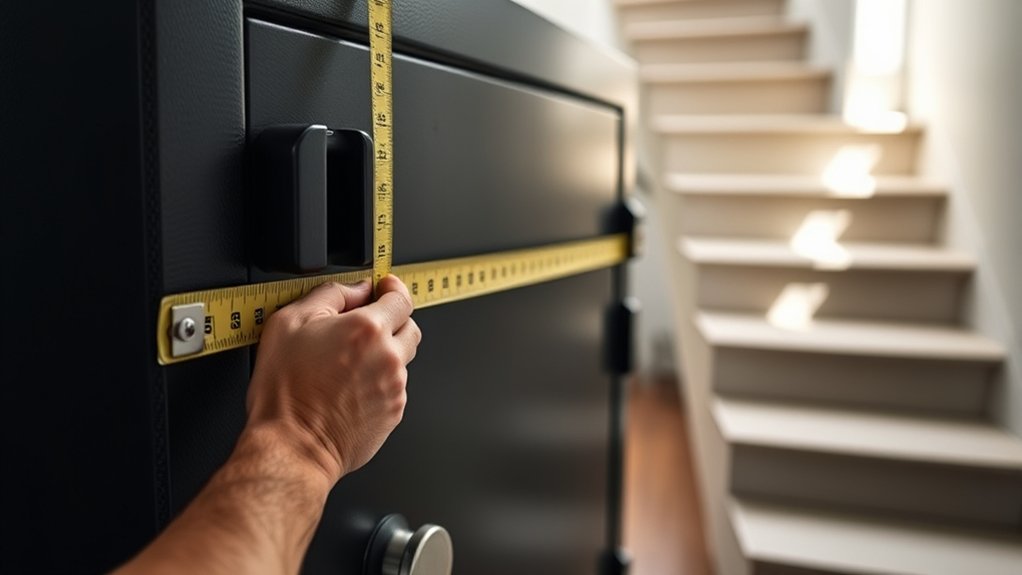
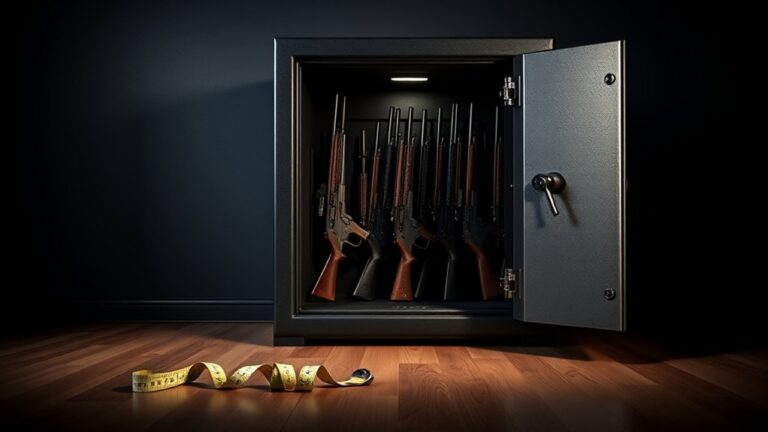
Before moving your gun safe upstairs, you need to measure its height, width, and depth carefully to make sure it will fit through all doorways, hallways, and stairwells. Start by taking precise measurements of the safe and then check the width of doorways and narrow passages against these numbers. Don’t forget to record the total weight of the safe; this will help you determine how many helpers and what equipment you’ll need.
Next, measure the stair dimensions, specifically each tread’s height and depth, to plan the safest route and avoid any obstacles. Creating a detailed diagram or list of all measurements ensures you avoid surprises during the move.
Accurate measurements and awareness of stair and doorway constraints are vital for a smooth, safe relocation.
Prepare Your Gun Safe: Empty, Secure, and Wrap It
While prepping your gun safe for the move, make sure you empty all valuables and contents to lighten the load and prevent damage. Emptying the safe reduces its weight, making it safer and easier to handle.
Before moving your gun safe, empty all valuables to lighten the load and ensure safer handling.
Next, secure the door firmly with tape or a latch to avoid accidental openings during transit. Properly securing the door is vital to avoid injury or damage.
Then, focus on wrapping the safe thoroughly using high-quality moving blankets or padding. This wrapping protects the surface from scratches and dents.
Once wrapped, use shrink wrap or stretch film to tightly secure the blankets in place, preventing them from loosening. Double-check all wrapping to confirm no loose edges remain that could catch or snag as you move the safe upstairs.
What Equipment You Need to Move Your Safe Upstairs
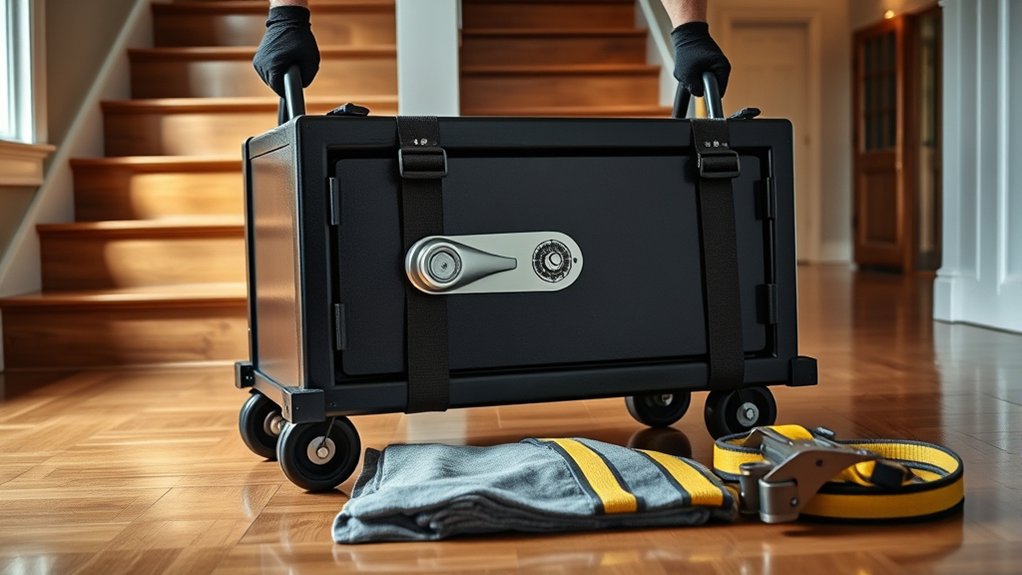
You’ll want a heavy-duty stair-climbing dolly that can handle your safe’s weight, along with some strong straps to keep it secure.
It’s a good idea to wrap the safe in thick moving blankets to protect it from any bumps or scratches during the move.
And don’t forget your safety gear—gloves, sturdy boots, and back supports will help keep you safe and comfortable throughout the whole process.
Essential Moving Equipment
Although moving a heavy gun safe upstairs is challenging, having the right equipment makes the job manageable and safe. Start with a heavy-duty stair-climbing dolly rated for your safe’s weight. This specialized equipment is essential for maneuvering stairs smoothly.
Make sure the dolly features durable, lockable wheels to handle uneven surfaces without slipping. Next, wrap your safe in thick moving blankets to prevent scratches and damage during transport. Use secure straps to tightly fasten the safe to the dolly, stopping any shifting that could cause accidents.
Investing in or renting heavy-duty equipment like this ensures stability and protection throughout the move. It helps minimize risks and physical strain. Proper gear is the foundation for a successful and safe upstairs relocation of your gun safe.
Safety Gear And Tools
Because moving a gun safe upstairs involves heavy lifting and tight spaces, you need the right safety gear and tools to protect yourself and guarantee a smooth process. Always wear sturdy shoes and heavy-duty gloves to shield your feet and hands.
Use a stair-climbing dolly rated for the safe’s weight, and secure the safe with strong straps to prevent slipping. Wrap it in thick moving blankets to avoid damage. Don’t forget goggles for eye protection.
Here’s a quick reference:
| Equipment | Purpose |
|---|---|
| Heavy-duty gloves | Protect hands from injury |
| Sturdy closed-toe shoes | Safeguard feet from heavy impacts |
| Stair-climbing dolly | Ease transport on stairs |
| Ratchet tie-downs | Secure safe during movement |
| Moving blankets | Prevent scratches and dents |
How to Load Your Gun Safe Safely Onto a Dolly
Before loading your gun safe onto a dolly, make sure it’s completely empty. This helps reduce weight and prevents any damage.
Next, wrap the safe securely in heavy-duty moving blankets. This will protect its surface from scratches and dents.
When you’re ready to load, tilt the safe carefully to one side. Then slide a heavy-duty, load-rated dolly underneath, making sure the wheels support the weight evenly.
Use strong securing straps or ratchet straps to fasten the safe tightly to the dolly. This stops it from shifting during the move.
Also, double-check that the dolly’s weight capacity is higher than your safe’s weight. You want to make sure it has sturdy, smooth-rolling wheels that work well with your moving surface.
Following these steps will help you load your safe safely and securely onto the dolly, which minimizes risks during transport.
How to Move a Gun Safe Upstairs Step-by-Step
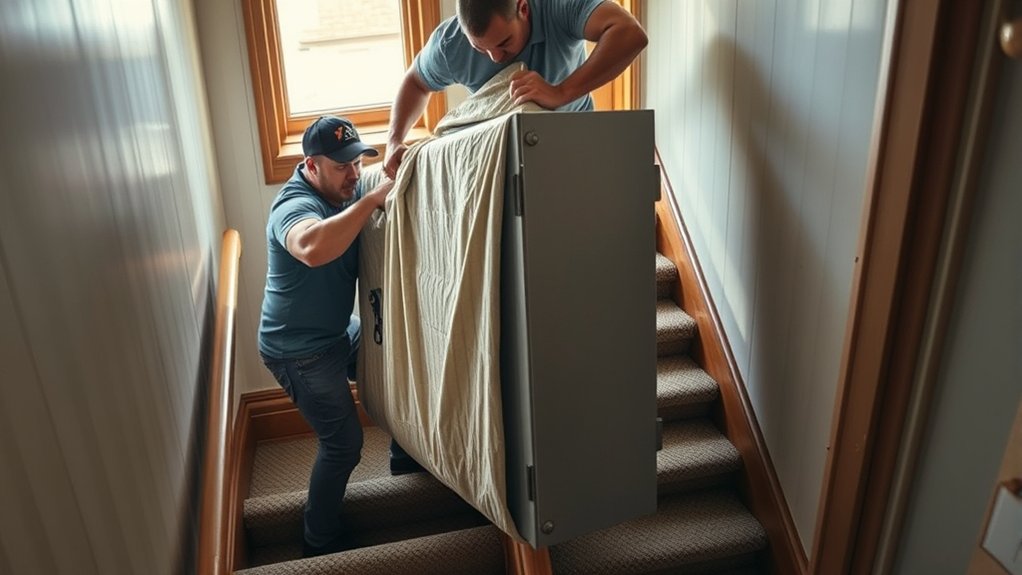
When you’re ready to move your gun safe upstairs, start by wrapping it securely in moving blankets and fastening it with straps. This helps protect both the safe and your home.
Next, tilt the safe slightly and slide a heavy-duty stair-climbing dolly underneath. Make sure it’s secured firmly to support the weight.
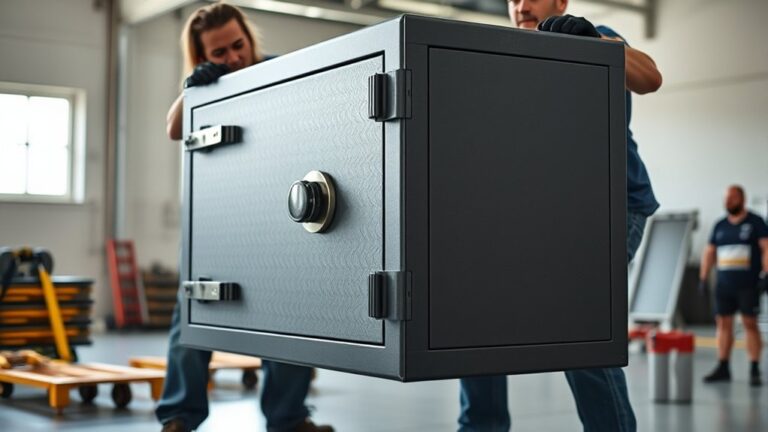
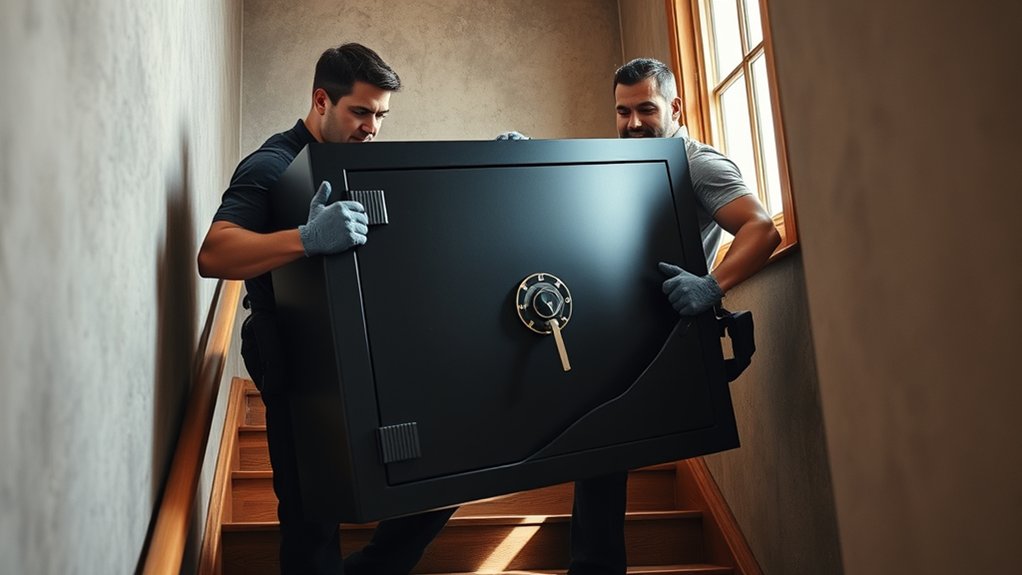
Get professional movers or at least two helpers to guide and steady the gun safe as you navigate the stairs. Move slowly and deliberately.
Use proper lifting techniques like bending your knees and keeping your back straight to avoid injury.
Take breaks at landings if you need to. Carefully maneuver each step to prevent slips or falls.
This methodical approach guarantees a safe, efficient move up the stairs without damaging the safe or your property.
Safety Tips and Team Coordination When Moving a Gun Safe
Although moving a gun safe requires physical strength, your team’s coordination and safety practices are just as important to prevent injuries and accidents. When moving a gun safe, follow these key safety tips to facilitate smooth execution and avoid mishaps.
Team coordination and safety are crucial to prevent injuries when moving a gun safe.
First, assign clear roles and signals to all team members beforehand. This setup really helps with team coordination and keeps everyone on the same page.
Next, maintain continuous communication, especially when steering stairs or tight spots. It’s important so everyone can anticipate movements and adjust safely.
Also, use spotters to guide the safe and stabilize it during lifts. Make sure everyone wears proper safety gear and uses correct lifting techniques. Safety first, right?
Moving a Gun Safe on Flat Surfaces Before Stairs
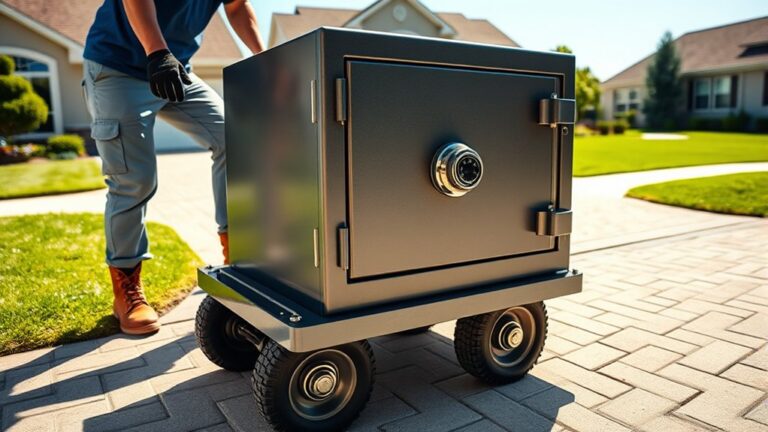
How do you guarantee a gun safe moves smoothly across flat surfaces before tackling stairs? Start by wrapping the safe in moving blankets to prevent scratches, then secure it tightly with straps. Use a heavy-duty appliance dolly with a secure strap to transport the gun safe steadily.
Before moving, clear the path of any obstacles and confirm the floor is stable and debris-free. When pushing or pulling, lift with your legs and keep your back straight to avoid injury. Move slowly and steadily, making wider turns at corners to maintain control and prevent tipping.
Taking these precise steps assures the safe reaches the staircase safely, ready for the next phase of moving your gun safe upstairs.
Should You Hire Pros to Move Your Gun Safe?
You might think moving your gun safe on your own will save you some money. But honestly, the risks of injury and damage are pretty high if you don’t have the right equipment.
That’s where professionals come in. They’ve the specialized tools and know-how to handle heavy safes safely and efficiently.
Hiring pros can actually save you a lot of time and effort. Plus, it helps you avoid costly mistakes, especially when you’re trying to navigate stairs.
Benefits Of Professional Movers
When moving a heavy gun safe upstairs, hiring professional movers can save you from potential injuries and costly property damage. These experts come equipped with stair-climbing dollies and lifts designed specifically to move a gun safe safely and efficiently.
Relying on experienced movers assures the job follows strict safety protocols, protecting both you and your home.
Here are three key benefits of hiring pros:
- Safety: Professional movers minimize injury risks during heavy lifting and stair navigation.
- Property Protection: They prevent damage to floors, walls, and stairs using the right tools and techniques.
- Peace of Mind: Licensed and insured movers cover any accidents, so you’re financially protected.
Choosing experienced moving teams guarantees a smooth, secure relocation of your heavy gun safe. It just makes the whole process easier and less stressful.
Risks Of DIY Moving
Although moving a gun safe upstairs yourself might seem like a cost-saving option, it carries significant risks that aren’t worth taking. DIY moving often lacks the proper tools and experience needed to handle the heavy weight of a professional safe. This increases the chance of injury or damage.
Without stair-climbing dollies or enough manpower, you risk dropping the safe or causing structural harm to your stairs and floors. Hiring pros ensures your safe and secure move. Plus, they follow safety protocols and carry insurance, so you’re covered.
| Risk | Impact |
|---|---|
| Personal injury | Severe harm from lifting or dropping |
| Property damage | Floor or stair structural issues |
| Lack of equipment | Unsafe handling and delays |
| Insufficient manpower | Increased accident risk |
Frequently Asked Questions
How Do I Maintain My Gun Safe After Moving It Upstairs?
After moving your gun safe upstairs, regularly check its locking mechanism and hinges to make sure everything works smoothly. Lubricate the moving parts with suitable lubricants to keep rust at bay.
Also, inspect the interior for any moisture. If you spot any, use desiccants or a dehumidifier to keep things dry.
Make sure the safe stays level and is securely anchored so it doesn’t shift around. It’s a good idea to schedule periodic maintenance and even professional inspections.
That way, you can catch any issues early and keep your safe reliable and secure over time.
Can Moving a Gun Safe Affect Its Locking Mechanism?
Yes, moving a gun safe can definitely affect its locking mechanism if you’re not careful. Sudden jolts or rough handling might misalign bolts or damage internal parts, compromising security.
Tilting the safe too much can cause electronic or mechanical locks to malfunction. To keep everything working, you need to handle the safe gently, avoid impacts, and make certain it stays upright throughout the move.
Proper care preserves the locking system’s reliability.
What Should I Do if My Safe Gets Scratched During the Move?
If your safe gets scratched during the move, don’t panic like it’s the Stone Age. First, assess the damage carefully to see if it affects the safe’s integrity or just the finish.
Clean the area with a mild cleaner, then use a touch-up paint or scratch repair kit designed for your safe’s material to fix it. Avoid harsh chemicals.
If the scratch is deep, consult the manufacturer or a professional for refinishing.
How Do Temperature Changes Upstairs Affect My Gun Safe?
Temperature changes upstairs can cause condensation inside your gun safe, which can lead to rust and corrosion on your firearms and valuables. Rapid fluctuations might also weaken the locking mechanisms or electronic components over time.
High heat can degrade the safe’s seal, making it less effective against fire and water damage.
On the other hand, cold temperatures can make locks and hinges stiff and harder to operate.
You’ll want to keep a stable indoor climate to ensure your safe functions properly and protects its contents from damage.
It really helps to avoid those big swings in temperature whenever possible.
Are There Insurance Considerations When Relocating a Gun Safe?
You absolutely can’t risk moving your gun safe without insurance. It’s like handing your valuables to a tornado!
You need to check if your mover’s insurance covers damage or theft during the move, especially when stairs are involved.
Standard homeowner policies usually fall short, so get supplemental coverage.
Make sure to document your safe’s value with appraisals to back up any claims if needed.
Protecting your investment isn’t optional; it’s essential.
Conclusion
Now, imagine the heavy safe inching up the stairs, every careful step echoing your steady control. With proper prep, the right gear, and a solid team, you’ll move your gun safe upstairs without a hitch.
Remember, patience and safety are your best allies. Whether you tackle it yourself or call in pros, you’ll protect both your investment and your home.
Ready to lift that weight? You’ve got this.