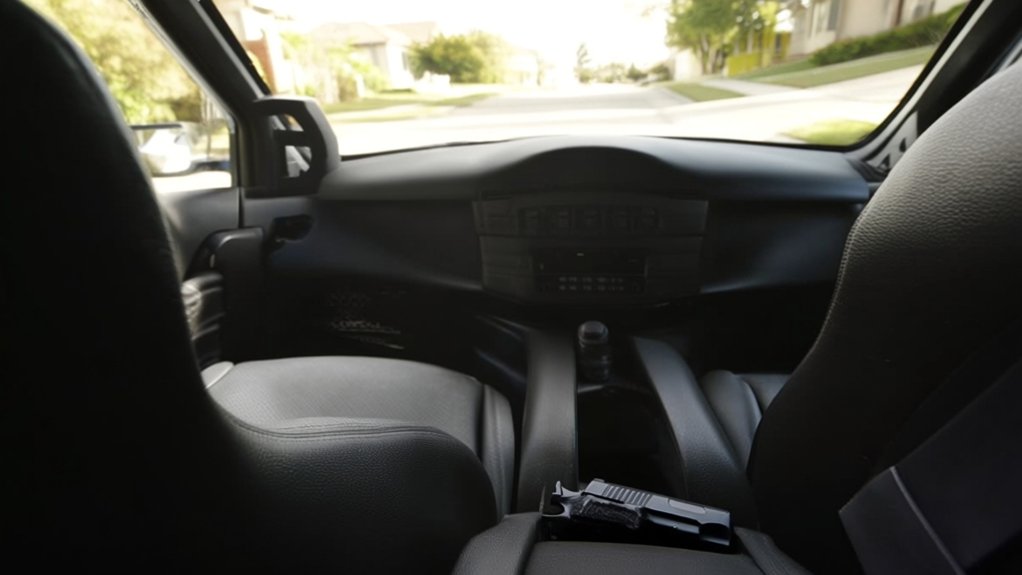
What Is Considered Concealed Carry In A Vehicle – Rules And Legal Guidelines
Concealed carry in a vehicle means your firearm isn’t visible without a search and is securely stored out of plain sight, usually in a locked container, glove box, or trunk.
You have to follow state laws, which often require the gun to be unloaded and in a locked case, especially when crossing state lines. Proper licensing and handling during traffic stops are essential.
Knowing these rules helps you stay legal and safe behind the wheel and beyond. It’s all about being responsible and aware of the laws where you’re driving.
Key Takeaways
- Concealed carry in vehicles means firearms are stored out of plain sight, typically in locked containers, glove boxes, or trunks.
- Firearms must be unloaded and secured in locked cases unless state laws explicitly allow loaded carry inside vehicles.
- Valid concealed carry permits are generally required, but laws vary by state regarding permits and storage requirements.
- When crossing state lines, comply with both federal and state laws, keeping firearms unloaded and locked during transport.
- During traffic stops, promptly and calmly inform officers about your concealed carry permit and firearm presence, following their instructions.
What Concealed Carry in a Vehicle Legally Means
While laws vary by state, concealed carry in a vehicle generally means you carry a firearm so it’s not visible to others without a search. This usually means storing the firearm out of plain sight, like inside a locked container or the trunk.
Firearms kept openly in a belt holster usually don’t count as concealed.
To follow the law, you need to make sure your firearm is secured and not easily accessible from the passenger area.
Also, carrying a firearm in your vehicle often means you need proper registration and a valid concealed carry permit, depending on where you live.
Knowing these details helps you avoid legal trouble and makes sure you carry responsibly within your state’s rules.
It’s always a good idea to double-check local laws before you transport a firearm concealed in your vehicle.
Who Can Legally Conceal Carry a Handgun in a Vehicle?
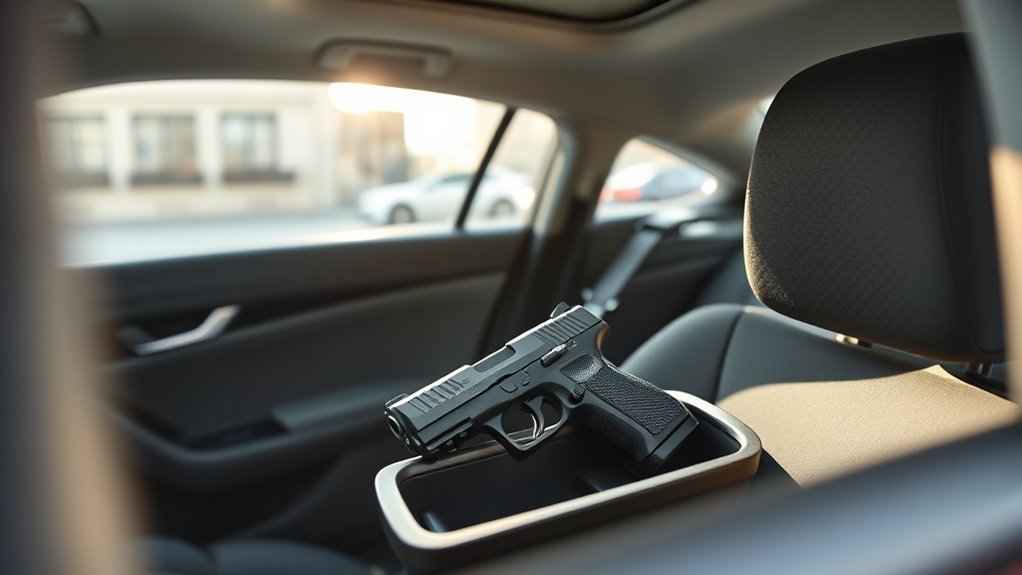
You can legally carry a concealed handgun in a vehicle, but only if you meet your state’s eligibility requirements and have the proper license or permit. It really depends on where you live.
Some states require that the firearm be stored in a locked container. Others might allow you to openly carry without a permit, but when it comes to concealed carry, they usually require you to be licensed.
Also, it’s important to know that if you’re involved in criminal activities or are a gang member, you’re generally not allowed to carry a concealed weapon in a vehicle anywhere.
Eligibility Requirements
Who qualifies to legally conceal carry a handgun in a vehicle depends on strict eligibility requirements set by state and federal laws. You must meet specific criteria including age, residency, and pass a thorough background check.
Those under 21 often face additional restrictions, especially when it comes to carrying a handgun outside a holster or without proper legal documentation.
You can’t legally carry if you’re involved in criminal activity or affiliated with criminal street gangs.
Completing approved firearm training is typically required to show you can handle a gun safely and understand the laws.
When carrying concealed in a vehicle, firearms usually must be stored in a secured container like a locked glove box or trunk.
Knowing and meeting these eligibility standards is really important before you try to conceal carry a handgun in your vehicle. It helps keep you on the right side of the law and ensures safety for everyone.
Licensing and Permits
Meeting eligibility requirements is only the first step in legally carrying a concealed handgun in a vehicle. You must obtain a valid concealed carry permit in most states to carry concealed, although some states allow permitless or “constitutional” carry.
If you don’t have a permit, you can often carry openly or keep your firearm in a secured container or the trunk without a license. Just remember, firearm registration and car insurance don’t replace the need for proper licensing.
Also, employers or property owners may restrict concealed carry in vehicles on their premises regardless of your permit status.
Restrictions and Exceptions
Although laws vary by state, only individuals who meet specific legal criteria can conceal carry a handgun in a vehicle. You must guarantee vehicle security by keeping the firearm out of sight or stored in a locked container, depending on local regulations. A valid concealed carry license is often required, and openly carrying a handgun inside a vehicle usually doesn’t count as concealed.
Individuals involved in criminal activity or gang members are strictly prohibited from concealed carry. Proper firearm maintenance and secure storage are essential to comply with legal standards and promote safety.
| Criteria | Details |
|---|---|
| Valid License | Required in many states |
| Visibility | Firearm must not be visible |
| Storage | Locked container or trunk in some areas |
| Prohibited Persons | Criminals and gang members |
| Vehicle Security & Maintenance | Essential for legal compliance |
How to Store Your Concealed Firearm Safely in Your Car
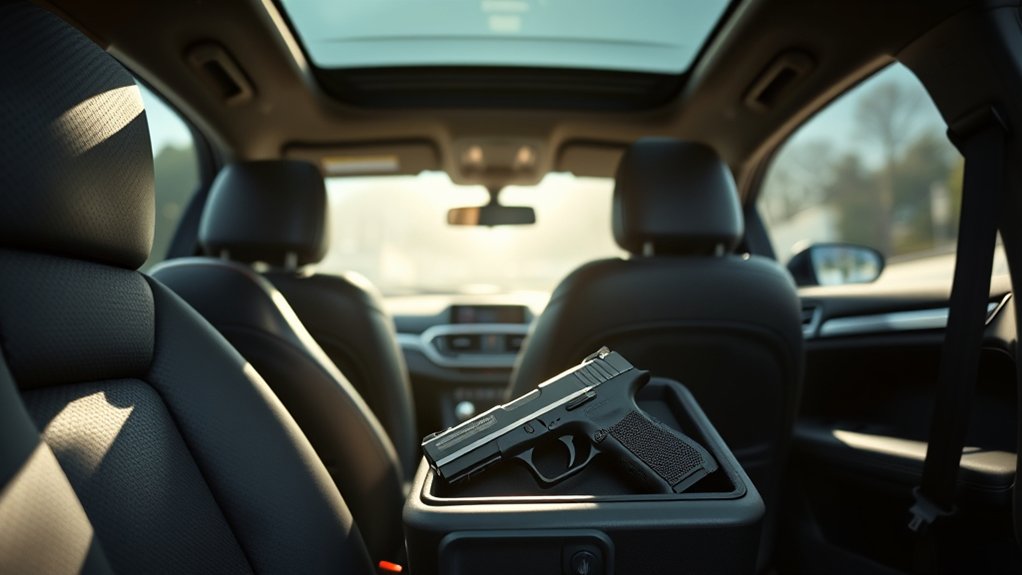
When storing your concealed firearm in a vehicle, you must keep it in a fully enclosed, locked container or trunk unless it’s in immediate use. This guarantees compliance with legal requirements and enhances vehicle security. Use lockboxes, locked glove compartments, or trunks to prevent unauthorized access.
Keep your concealed firearm in a locked, fully enclosed container or trunk to stay secure and legal.
Store ammunition separately or within the locked container to maintain safe ammunition storage practices. Avoid leaving the firearm unsecured or in plain sight to reduce theft risk and accidental discharge.
If the firearm is in plain view, it must be holstered and securely attached to prevent accidental exposure.
Always unload the firearm unless your jurisdiction explicitly permits carrying it loaded in the vehicle. These measures collectively safeguard your firearm and comply with legal guidelines while ensuring responsible vehicle security. It’s all about keeping things safe and following the rules.
Transporting Long Guns in Vehicles: What Concealed Carry Holders Should Know
When you’re transporting long guns in your vehicle, it’s important to know that laws can vary quite a bit from state to state. Some states require that your long guns be unloaded or stored in a locked case while in the car.
Now, unlike handguns, long guns typically aren’t considered concealed if they’re visible and unloaded. That said, keeping them properly stored not only helps with safety but also keeps you on the right side of the law.
Long Gun Transport Laws
You should know that transporting long guns in vehicles involves different rules than handguns, especially for concealed carry holders. Long gun regulations generally allow you to transport unloaded rifles or shotguns without the permits often required for handguns.
Federal and most state vehicle storage laws require these firearms to be unloaded and ideally kept in a locked container or case to prevent unauthorized access during transit.
While many states don’t impose special restrictions on transporting long guns, some mandate secure storage like a locked trunk. Complying with these vehicle storage laws minimizes legal risks and enhances safety.
Understanding these distinctions ensures you transport your long guns lawfully and responsibly, keeping you aligned with both state and federal regulations.
Storage And Accessibility
Understanding how to properly store and access long guns inside your vehicle is a key aspect of lawful transport for concealed carry holders. You must confirm your long gun is unloaded and stored in a secure case or container to maintain vehicle security.
Although long guns aren’t classified as concealed weapons, keeping them out of plain view is advisable to avoid unnecessary attention and legal complications. The law doesn’t mandate a specific storage location inside the vehicle, but prioritizing both vehicle security and safe firearm accessibility is essential.
You should arrange your firearm so you can quickly access it if needed, while preventing unauthorized handling.
Following these guidelines helps you comply with legal requirements and reduces the risk of violations during transport.
Crossing State Lines With Your Concealed Gun: What to Know
Although federal law permits transporting firearms across state lines under specific conditions, crossing with a concealed gun requires careful adherence to both federal and state regulations. You must confirm your firearm is unloaded and stored in a locked container, separate from the passenger area.
Make sure to verify that every state you pass through allows lawful possession, as restrictions can vary quite a bit. Keep in mind, extended stops might invalidate federal protections under the Firearm Owners Protection Act, so it’s important to plan your route carefully.
It’s also a good idea to carry documentation like your vehicle registration and think about travel insurance that covers firearm-related incidents. Federal law does provide an affirmative defense if you follow these rules, but the responsibility is on you to understand each state’s laws.
Staying informed and prepared is the best way to avoid legal complications when traveling with a concealed gun in your vehicle.
Employer and Parking Lot Rules for Concealed Carry in Vehicles
Managing concealed carry laws doesn’t end when you park your vehicle at work or on private property. In Texas, employer restrictions can’t prevent you from storing a firearm in your personal vehicle while on company property, as stated in Section 52.061 of the Texas Labor Code.
However, parking lot policies may vary on private properties, and some businesses post specific signage restricting firearm possession.
While schools must allow LTC holders to keep firearms in parked vehicles, those firearms must remain out of plain sight within school zones to comply with safety rules.
To stay compliant, always check local parking lot policies and employer restrictions before carrying or storing your firearm.
Understanding these nuances ensures you respect property rules while exercising your legal rights securely.
What to Do During a Traffic Stop When Concealed Carrying
When you’re stopped by law enforcement while carrying concealed, it’s vital to remain calm and immediately inform the officer of your concealed carry permit and firearm if asked. Maintaining vehicle security and practicing proper firearm maintenance are important during this interaction.
Follow these steps:
- Keep your hands visible on the steering wheel until requested otherwise.
- Disclose your permit and firearm calmly and respectfully when asked.
- Avoid sudden movements or reaching for your firearm unless the officer directs you.
- Provide documentation of your permit and firearm ownership promptly if requested.
- Stay cooperative and comply with all officer instructions to guarantee safety.
Common Concealed Carry Mistakes That Void Vehicle Rights
If you fail to follow specific concealment rules while carrying in your vehicle, you risk losing your legal rights. A common mistake is carrying a handgun openly in a belt holster or leaving it in plain view without a holster or proper container.
Leaving your firearm in an unlocked glove compartment or an easy-to-reach spot also puts your concealed carry protections at risk. Carrying a loaded handgun without a valid concealed carry permit or outside a locked container can break concealment laws.
Improper ammo storage, like keeping rounds loose and easy to grab, can also put your rights in jeopardy.
And don’t forget—if you get stopped by the police, not telling them you have a concealed firearm can cause serious legal trouble.
Avoid these mistakes to stay fully compliant with vehicle concealed carry rules. It’s worth the extra caution!
Best Cases and Gear for Safe Concealed Carry in Vehicles
Although concealed carry laws vary by jurisdiction, using a dedicated, lockable handgun case or container inside your vehicle is essential for safe and legal firearm transport. This practice guarantees compliance while enhancing vehicle security and protecting your firearm from damage or theft.
To optimize safety, consider these firearm accessories and gear: universal 5-pistol cases from reputable suppliers like USCCA store for secure, organized storage. Waterproof cases such as Pelican Vault or Stopbox Pro protect firearms from moisture and impact.
Lockable compartments or trunks keep firearms out of plain view and reduce theft risk.
You might also look into purpose-built holsters designed for vehicle concealment and quick access. Lockboxes that integrate seamlessly with your vehicle’s interior add an extra layer of security.
Using these options helps you maintain legal compliance and safeguard your firearm effectively. It’s all about keeping things secure and accessible when you need them most.
Frequently Asked Questions
Can Passengers in My Vehicle Also Carry Concealed Firearms?
Yes, passengers can carry concealed firearms as long as they follow concealed carry regulations and vehicle firearm storage laws.
You need to make sure their firearms are stored legally, which often means using locked containers. It’s important to comply with state-specific rules to avoid any violations.
Are There Restrictions on Concealed Carry in Rideshare or Rental Vehicles?
Oh, sure, just toss your firearm anywhere when ridesharing or renting! Actually, you must follow strict vehicle security rules and have concealed carry permits. Ignoring these can lead to serious legal trouble, so stay informed and compliant.
It’s really important to know the specific laws for the state or company you’re dealing with. Some rideshare services and rental companies have their own policies about firearms in vehicles. So, double-check before you hit the road to avoid any issues.
How Does Concealed Carry in Vehicles Apply to Motorcycles or ATVS?
When carrying concealed on motorcycles or ATVs, you need to follow the licensing rules for motorcycles and the specific regulations for ATVs. It’s important to make sure your firearm is secured properly, either in a holster or a locked container.
You also have to meet your state’s specific requirements for concealment and storage. Doing this helps you avoid any legal issues down the road. So, always double-check the laws that apply where you’re riding.
Is It Legal to Keep a Loaded Firearm in a Glove Compartment?
You can keep a loaded firearm in a glove compartment only if your state’s firearm storage laws and legal compliance requirements allow it. Always verify local regulations to guarantee proper and lawful firearm storage in your vehicle.
It’s really important to know the rules where you live because they can be quite different from place to place. When in doubt, checking with local authorities or legal experts is a smart move. That way, you stay safe and avoid any trouble.
What Are the Penalties for Accidental Exposure of a Concealed Handgun?
If your handgun visibility is accidental, you could face penalties like fines, license suspension, or even criminal charges.
If it happens more than once or is due to negligence, the consequences get more serious. You might lose your firearm privileges or be required to take safety training.
What exactly happens depends a lot on your state’s laws. So, it’s important to know the rules where you live.
Conclusion
So, you want to be a road warrior with a concealed carry, huh? Just remember, your car isn’t a magical safe. Knowing the rules and handling your firearm responsibly is non-negotiable.
Ignore them, and you’ll quickly learn that “concealed” doesn’t mean “confiscated.” Stay sharp, store smart, and follow the law. Maybe leave the “Wild West” fantasies for the movies.
Your vehicle and your freedom will thank you.