What Is A Concealed Carry Weapon – Meaning, Laws And Requirements Explained
A concealed carry weapon (CCW) is a firearm you carry hidden from public view, usually for personal protection. To carry legally, you typically must be at least 21, pass background checks, complete safety training, and obtain a permit in most states.
Laws vary widely, with some states allowing permitless carry and others imposing strict restrictions on locations and firearm types. Understanding these rules guarantees responsible use and compliance.
You can explore how eligibility, laws, and safety practices apply to you next.
Key Takeaways
- A concealed carry weapon (CCW) is a firearm carried hidden from public view for personal protection and quick access.
- Applicants must meet age, background, and training requirements, varying by state, to obtain a CCW permit.
- Laws differ widely on permit issuance, reciprocity, and restricted carry locations like schools and federal buildings.
- Special personnel such as law enforcement and judges may carry concealed without permits during official duties.
- Proper firearm transport, storage, and permit renewal protocols ensure legal compliance and responsible concealed carry.
What Is a Concealed Carry Weapon and How Does It Work
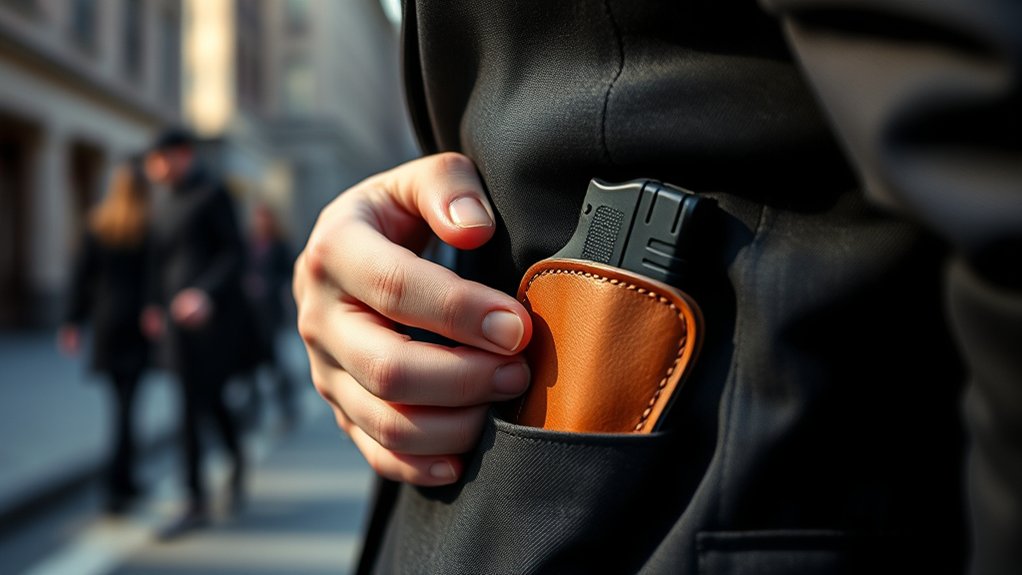
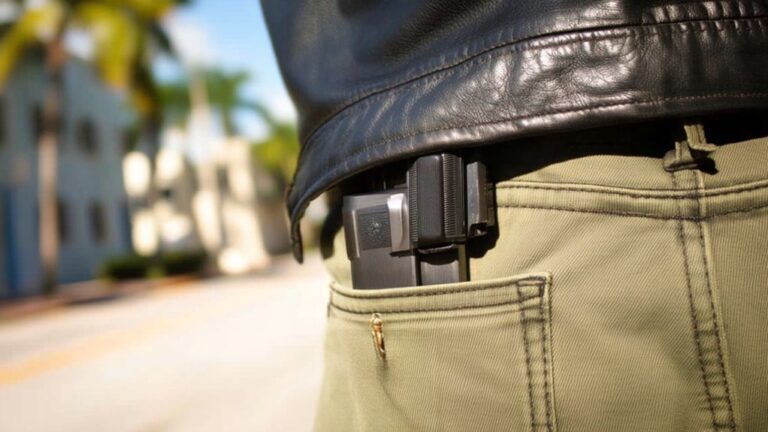
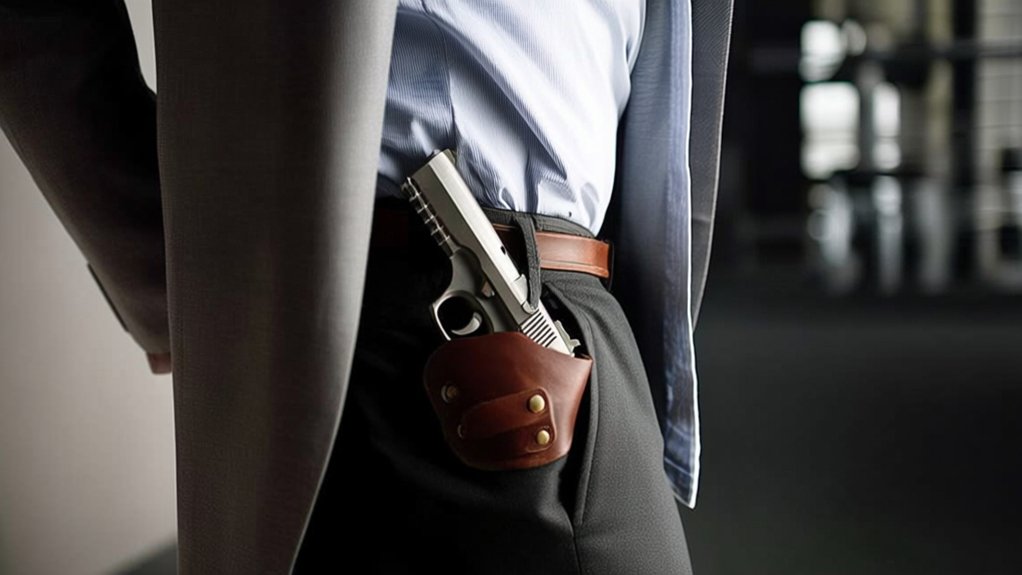
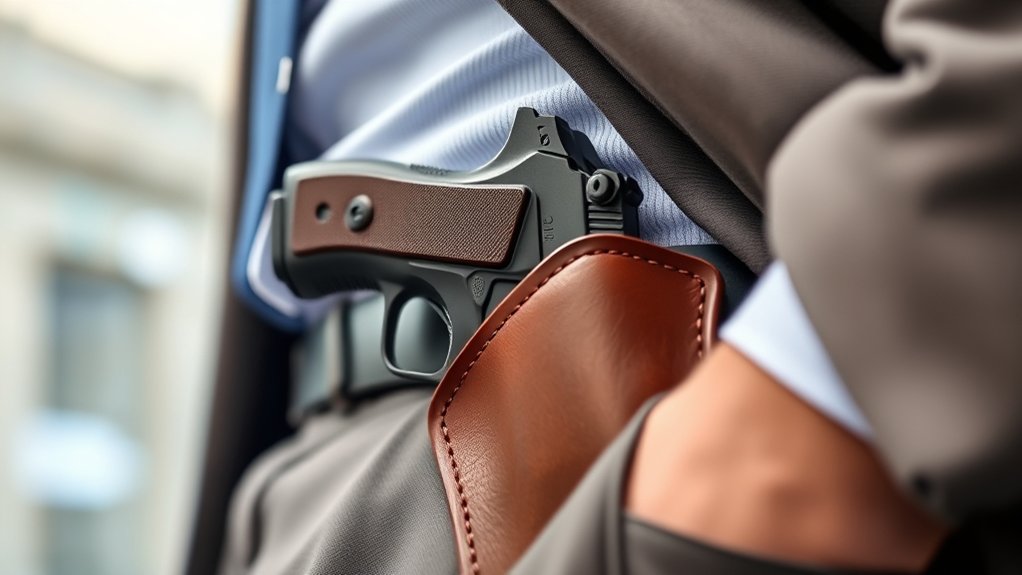
What exactly is a concealed carry weapon (CCW), and how does it function in everyday use? A CCW is a firearm you carry hidden from public view, typically under clothing or inside a bag. Its primary purpose is personal protection while maintaining discretion.
Firearm concealment relies on effective carry techniques, such as inside-the-waistband holsters or shoulder rigs. These keep the weapon accessible yet out of sight. Most CCWs are compact handguns like pistols or revolvers, designed for easy concealment.
You’ll often need a permit or license to carry legally, which involves background checks and safety training. Laws on CCW vary by location, so you must comply with specific rules for transportation and storage.
Mastering proper firearm concealment and carry techniques is essential for responsible and lawful everyday use.
Who Can Get a Concealed Carry Permit?
After understanding how a concealed carry weapon functions and the importance of proper handling, you might wonder who qualifies to carry one legally. Concealed carry regulations set specific permit eligibility criteria that vary by state.
Generally, you must be at least 21 years old, though some states allow younger applicants under certain conditions.
Most states require you to be 21 or older, but some allow younger applicants with specific conditions.
You’ll need to pass a criminal background check and often demonstrate good moral character. Many states also require completion of a firearm safety or training course before granting a permit.
If you’re a non-resident, you may still qualify if you meet the same eligibility requirements, depending on state reciprocity laws.
Knowing these criteria helps you determine whether you can lawfully pursue a concealed carry permit. It’s always a good idea to check the specific rules in your state since they can differ quite a bit.
That way, you’ll be sure you’re following the law and staying safe.
Applying for a Concealed Carry License
Although the application process for a concealed carry license varies by state, you’ll generally need to complete an in-person interview, submit proof of firearm safety training, and undergo a thorough background check.
Licensing procedures often require you to disclose household members and provide character references. In some states, especially those with “may-issue” laws, you must demonstrate a valid reason for carrying a concealed weapon.
After September 2022, many jurisdictions emphasize updated gun safety training as mandatory.
Your license typically lasts three years, with renewal involving recertification or updating personal information.
Some states add requirements such as online courses or shooting demonstrations before issuing a license.
Understanding and following these precise licensing procedures guarantees compliance and responsible concealed carry practice.
It’s really important to know the specific rules where you live to avoid any surprises down the road.
Taking these steps seriously helps ensure you carry safely and legally.
Important Concealed Carry Laws and State Variations
Once you secure your concealed carry license, understanding the various laws that govern concealed carry across states becomes essential. States differ widely: 40 require permits under “shall issue” laws, while 16 permit carry without one. Federal restrictions bar concealed weapons near schools and federal buildings.
When traveling, you must consider reciprocity agreements, as some states recognize your permit while others don’t. Additionally, state rules vary on firearm accessories and areas where you can carry.
Key points to remember:
- Confirm if your state mandates concealed carry training and what firearm accessories are legal.
- Understand permit recognition through reciprocity when crossing state lines.
- Note specific state variations, including permitless carry and local restrictions.
Being well-informed guarantees responsible and lawful concealed carry.
Legal Restrictions on Concealed Carry Locations
You can’t carry concealed weapons in many federal buildings, schools, airports, and other sensitive areas—unless specific laws or exemptions say otherwise.
On top of that, states have their own restrictions for places like Times Square, military bases, and certain parks.
Also, private property owners can prohibit concealed carry if they post clear signs.
Restricted Carry Locations
Because concealed carry involves public safety concerns, many locations impose strict legal restrictions on where you can carry a concealed weapon. Understanding these limitations is essential, especially if you use firearm accessories or have completed concealed carry training.
Here are common restricted carry locations:
- Federal buildings, schools, courthouses, and airports generally prohibit concealed weapons unless explicitly allowed by law.
- Private property owners can restrict carry through clear signage or explicit permission, varying by jurisdiction.
- Certain public parks and recreational areas may have restrictions, so check local regulations before carrying.
You must comply with these rules to avoid legal consequences. Exemptions usually apply only to law enforcement, military personnel, or those engaged in lawful activities like hunting or traveling.
Always stay informed about local laws and restrictions.
Sensitive Area Exemptions
Where can you legally carry a concealed weapon in sensitive areas despite common restrictions? Certain exemptions exist for law enforcement, military personnel, and individuals with specific permits or official duties. These exemptions allow them to carry firearms in locations like schools, government buildings, and airports.
Private property owners can restrict firearms unless they grant explicit permission or the area is publicly accessible. Furthermore, federal regulations prohibit firearms in places such as federal courthouses and post offices regardless of state laws.
Some jurisdictions also permit exemptions for lawful activities like hunting or traveling to shooting ranges near sensitive zones. Maintaining public awareness of these rules and practicing firearm safety is vital.
This helps guarantee compliance and responsible concealed carry within these exceptions.
Concealed Carry Exceptions for Law Enforcement and Officials
You’ll find that law enforcement officers and retired personnel generally have unrestricted rights to carry concealed weapons statewide. That means they don’t usually need a special permit to carry concealed firearms.
Officials like judges and attorneys can also carry concealed firearms, but typically only while they’re performing their official duties.
Then, there are certain special personnel who’ve specific permissions based on their unique roles.
Knowing these exceptions really helps clear up who can carry concealed without going through the standard permit process. It’s good information to keep in mind if you’re trying to understand how concealed carry laws apply to different people.
Law Enforcement Carry Privileges
Although most civilians need permits to carry concealed weapons, law enforcement officers and certain officials have specific exemptions. These exemptions allow them to carry concealed without getting extra permits.
These privileges focus on firearm safety and legal compliance. This way, authorized personnel can perform their duties securely and effectively.
Here are some key law enforcement carry privileges:
- Officers and retired officers can carry concealed statewide without permits.
- Officials like judges and attorneys carry concealed under legal exemptions related to their roles.
- Personnel such as mail carriers, correctional officers, and designated Department of Corrections employees may carry concealed while performing official duties or in transit.
These exemptions make it easier for authorized individuals to access concealed weapons. They balance public safety with the need to get the job done.
Understanding these privileges helps you see the bigger picture of concealed carry laws.
Official Capacity Exemptions
Building on the specific privileges granted to law enforcement officers, certain government officials also carry concealed weapons under official capacity exemptions. Attorneys, judges, and justices may carry concealed firearms while performing official duties without a permit.
Personnel such as mail carriers, correctional officers, and conservators of the peace can carry concealed weapons only during transit or work-related activities.
Noncustodial Department of Corrections employees designated by the Director are similarly authorized. However, notaries public, registrars, and vehicle carriers for hire must obtain proper permits before carrying concealed weapons.
When carrying under these exemptions, you must verify your concealed carry accessories comply with regulations, and you use authorized ammunition types appropriate for your weapon.
It’s important to understand these distinctions because knowing them helps you legally exercise your concealed carry rights in official capacities. So, always double-check the rules that apply to your role before carrying concealed.
Special Personnel Permissions
How do special personnel qualify for concealed carry exceptions? Certain law enforcement officers and specific officials are exempt from standard concealed carry permit requirements because of their roles and training.
Here’s how it breaks down: Active and retired law enforcement officers can carry concealed weapons statewide without permits. This is thanks to their extensive training requirements.
Government officials like judges, attorneys, and justices may carry concealed weapons when acting in their official capacity.
Personnel such as mail carriers, correctional officers, and designated Department of Corrections employees can carry concealed arms during official duties or while in transit.
However, notaries public, registrars, and vehicle carriers for hire must still get concealed carry permits to carry concealed weapons legally.
These permissions help ensure that only qualified individuals carry concealed firearms in sensitive roles.
How to Safely Handle and Store Your Concealed Carry Firearm
When you carry a concealed firearm, handling and storing it safely is essential to prevent accidents and unauthorized access. Always keep your firearm unloaded and secured in a locked, tamper-resistant container during transport. This helps make sure it stays safe and doesn’t fall into the wrong hands.
Use gun safes, lock boxes, or trigger and cable locks for storage. These options are great for keeping your firearm secure. Make sure minors and unauthorized individuals cannot access the weapon at any time.
Regular firearm maintenance and safety training are really important too. They help reinforce proper handling and storage habits so you stay safe and confident.
| Aspect | Best Practice |
|---|---|
| Transport | Firearm unloaded, in a locked case |
| Storage | Gun safe or lock box with security locks |
| Safety Measures | Keep out of reach from minors, regular inspections |
Renewing and Recertifying Your Concealed Carry Permit
Why is keeping your concealed carry permit current so important? Permit renewal guarantees you remain legally authorized to carry your firearm, avoiding suspension or revocation. Safety recertification confirms your ongoing competence and compliance with updated regulations.
Typically, renewal occurs every 3 to 5 years and demands submitting an application, paying fees, and completing background checks or fingerprinting as required by your state. Some jurisdictions require in-person appointments, while others allow online or mail-in renewals.
To stay compliant, focus on these key steps:
- Submit your renewal application and fee before the expiration date.
- Complete any mandated safety recertification, including updated training or education.
- Update personal information as required during recertification to prevent administrative delays.
Following these protocols keeps your permit valid and ensures you carry responsibly.
Frequently Asked Questions
Can I Carry a Concealed Weapon While Traveling Out of State?
You can carry a concealed weapon while traveling out of state only if your permit is honored through interstate reciprocity.
Travel restrictions vary widely, so always verify each state’s specific laws to avoid legal trouble. It’s better to be safe than sorry when it comes to firearms.
Make sure you check the rules before you hit the road. That way, you can enjoy your trip without any unexpected issues.
What Are the Penalties for Carrying Without a Permit?
If you carry without a permit, you face penalties including fines, jail, or felony charges. Licensing requirements and background checks exist to prevent this.
Repeat offenses increase severity, so always comply with your state’s laws to avoid prosecution. It’s really important to stay on the right side of the law to keep yourself out of trouble.
How Does Concealed Carry Affect Homeowner’s Insurance?
Carrying a concealed weapon can increase your homeowner’s insurance premiums and require additional liability coverage. Insurers may ask you to disclose your concealed carry status, so it’s important to be upfront about it.
If your firearm isn’t properly secured, it could lead to claim denials or even policy cancellations. So, make sure you follow all the safety guidelines to keep your coverage intact. It’s always better to be safe than sorry when it comes to insurance.
Are There Restrictions on the Type of Firearm for Concealed Carry?
Yes, you’ll face firearm restrictions based on weapon classification. Most states limit concealed carry to handguns, excluding automatic weapons or ballistic knives. You must know local laws, as some require specific firearm registrations or safety standards.
It’s really important to stay informed because these rules can vary a lot from one place to another. So, before you carry, double-check what’s allowed where you live or plan to carry. That way, you’ll avoid any surprises.
Can a Concealed Carry Permit Be Revoked or Suspended?
Like a fragile thread, your concealed carry permit can snap if you neglect gun safety or break laws. Authorities can revoke or suspend it, especially during permit renewal.
They do this to make sure you stay responsible and eligible to carry concealed. So, it’s really important to follow the rules and keep your permit in good standing.
Conclusion
Understanding concealed carry laws is essential for responsible firearm ownership. Did you know that over 19 million Americans held concealed carry permits in recent years? This really shows how important it is to know who qualifies, how to apply, and the specific legal restrictions in your state.
By staying informed and practicing safe handling and storage, you ensure your rights are respected while prioritizing public safety. It’s also important to always renew your permit on time to stay compliant and prepared. Keeping up with these details makes all the difference.