What Age Can You Get A Concealed Carry Permit – Age Rules By State
You generally need to be at least 21 to get a concealed carry permit, but some states allow 18-year-olds if you’re in the military or law enforcement. Federal law prohibits handgun possession under 18, though long guns may differ. Each state sets its own rules, often requiring proof of residency, background checks, and training.
Age exceptions and disqualifications vary widely, so knowing specific state and local laws is essential before applying. There’s more to explore about these regulations and exceptions.
Minimum Age Requirements for Concealed Carry Permits
Although age requirements for concealed carry permits differ across states, most require you to be at least 21 years old to apply. This minimum age requirement guarantees a baseline maturity for responsible firearm handling.
Some states lower this limit to 18, often extending this exception to military or law enforcement personnel.
A few states don’t specify a minimum age for concealed carry permits but enforce restrictions on minors carrying firearms. For example, California and Connecticut mandate applicants be at least 21, with few exceptions.
While federal law generally prohibits possession and concealed carry under 18, state laws vary, allowing some flexibility in setting the minimum age requirement for concealed carry permits.
Understanding these age thresholds is essential for compliance with state-specific firearm regulations. So, it’s always a good idea to check the rules in your state before applying.
That way, you’ll know exactly what’s expected and avoid any surprises.
Military Service and Age Eligibility for Concealed Carry
If you’re an active-duty service member or an honorably discharged veteran, you might be able to get a concealed carry permit at age 18 in some states. This is because certain states have military age exceptions that apply to you.
You’ll just need to show official documents that prove your military status to qualify.
Knowing about these special rules can really make the application process easier for you. So, if you’re interested, it’s a good idea to check what your state requires and gather the necessary paperwork ahead of time.
That way, you’ll be ready to go when you apply.
Military Age Exceptions
Because military service shows training and responsibility with firearms, many states let active duty or retired military members get concealed carry permits before the usual civilian age minimum. This means you might be able to carry at 18 or 19 years old, even if civilians have to wait longer.
Military age exceptions recognize your experience and often waive standard age limits.
Here are some key points about military age exceptions:
- Some states issue lifetime or free permits to military members regardless of age.
- Federal law restricts handgun possession under 18, but state laws may offer exemptions for military personnel.
- Military or veteran status may give you earlier access to permits through special provisions or reciprocity.
These exceptions make sure your military service can positively affect your concealed carry age eligibility.
Service Documentation Requirements
When applying for a concealed carry permit under military age exceptions, you’ll need to provide official documentation verifying your service status. This service documentation typically includes a DD-214 form for honorably discharged veterans or an active duty military ID.
Many states require this proof to waive the standard age requirement, allowing service members or veterans to apply at age 18.
Be aware that eligibility depends on your state’s specific laws. Some states only recognize active duty status, while others extend exceptions to honorably discharged personnel.
If your jurisdiction enforces a higher age requirement, submitting valid military service documentation can assure compliance with eligibility criteria.
Make sure your documents are current and accurate to avoid delays in processing your concealed carry permit application. It’s always a good idea to double-check what your state requires before submitting anything.
That way, you can keep the process smooth and stress-free.
Federal Age Rules: Firearm Purchase vs. Permit Issuance
You should know that federal law stops licensed dealers from selling handguns to anyone under 21.
On the other hand, long guns are usually available to people who are 18 or older.
But here’s the thing—federal rules don’t actually set a minimum age for concealed carry permits.
Instead, each state decides that on its own.
Federal Purchase Age
How old do you need to be to purchase a firearm under federal law? The minimum age to purchase depends on the type of firearm. You have to be at least 21 to buy a handgun from a licensed dealer. But for a long gun, you can purchase one at 18.
A background check is required for all purchases made through licensed dealers. It’s important to know that federal law makes a distinction between the age to purchase and the age to possess a firearm.
For long guns, there’s actually no federal minimum possession age.
Here are some key points to keep in mind. Handgun sales from licensed dealers require buyers to be 21 or older. Long guns can be sold to individuals who are 18 and up. Also, unlicensed transfers to minors are generally restricted, except if it’s for hunting or training purposes.
These rules help ensure you’re following federal firearm regulations.
Permit Issuance Rules
Although federal law prohibits licensed handgun dealers from selling handguns to individuals under 21, it doesn’t set a minimum age for obtaining a concealed carry permit.
Permit issuance rules vary by state, with most requiring applicants to be at least 21 years old.
However, some states allow individuals aged 18 to 20 to apply if they meet specific criteria or exemptions.
Federal regulations differentiate between firearm purchase age, typically 18 or 21 depending on the firearm type, and the age for permit issuance, which states determine independently.
States with stricter laws often align permit issuance minimums with the 21-year federal handgun purchase age, while others permit younger applicants under defined conditions.
Understanding your state’s concealed carry permit issuance rules is essential before applying.
States Allowing Concealed Carry Permits at Age 18
When you turn 18, several states like Colorado, Nevada, and Vermont allow you to apply for a concealed carry permit, provided you meet specific legal requirements. In these states, the minimum age aligns with federal long gun purchase laws, enabling younger adults to carry concealed firearms legally.
However, each state sets its own conditions to guarantee responsible permit issuance. For example, in Idaho and Illinois, you must satisfy additional criteria such as completing firearms training or passing background checks.
Each state requires specific steps like training or background checks to ensure responsible concealed carry permits.
To summarize, when applying for a concealed carry permit at 18, consider these key points:
- State-specific legal requirements, including training and background checks
- Alignment with federal firearms age regulations
- Variations in permit issuance procedures and exceptions across states
Understanding these distinctions helps you navigate the permit process effectively.
States Requiring Applicants to Be 21 or Older
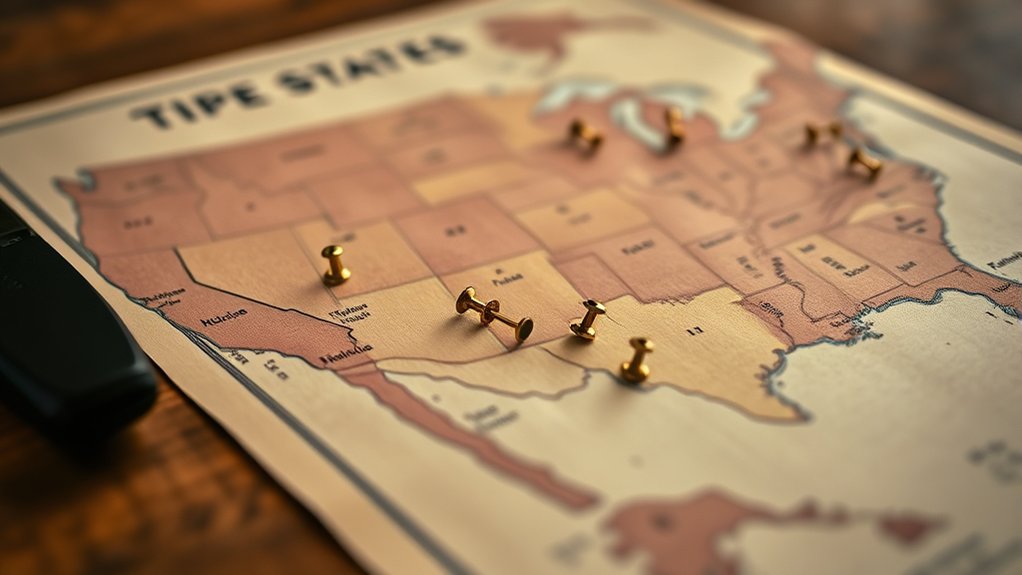
You’ll find that many states, like California and Maryland, require applicants to be at least 21 to get a concealed carry permit. This age limit often aligns with federal laws restricting handgun possession under 21.
But, some states do make exceptions for younger applicants if certain conditions are met. We’ll get into those details next.
Age Requirements Overview
Why do many states set the minimum age for concealed carry permits at 21? This age requirement aligns with federal law, which generally prohibits firearm possession by individuals under 21.
States like California, Connecticut, and D.C. enforce this to guarantee applicants demonstrate maturity and responsible firearm handling before obtaining a concealed carry license.
You’ll find that age requirements vary, but a common standard is 21 or older.
Key reasons for the 21-year minimum include:
- Compliance with federal firearm possession laws
- Promoting responsible and mature concealed carry permit holders
- Aligning state policies with safety and legal standards
Understanding these age requirements helps you navigate concealed carry laws effectively and ensures you meet eligibility criteria.
It’s always good to know what the rules are so you don’t run into any surprises.
Exceptions For Younger Applicants
While most states set the minimum age for concealed carry permits at 21 or older, some provide exceptions allowing younger applicants under specific conditions. If you’re below the minimum age, you might still qualify for a permit if you meet certain exceptions.
For example, states often allow applicants under 21 to carry if they’ve prior military service or hold law enforcement status. These exceptions are strictly regulated and usually require additional documentation or court approval.
Note that minors generally can’t apply for concealed carry permits unless they fall under these exceptions. Some jurisdictions permit firearm possession or use for hunting or training by minors, but this doesn’t extend to concealed carry permits.
Understanding these exceptions helps you navigate state-specific minimum age requirements effectively. It’s always a good idea to check your state’s specific rules before applying.
Exceptions and Special Cases for Younger Applicants
Although most states set the minimum age for concealed carry permits at 21, several provide exceptions allowing younger applicants to carry concealed firearms under specific conditions. You’ll find that minors may legally possess or handle firearms during hunting, training, or supervised activities.
Most states require 21 for concealed carry permits, but some allow minors under specific supervised conditions.
States like North Dakota and South Carolina allow minors to carry concealed weapons when under adult supervision or involved in lawful pursuits.
These exceptions also extend to minors in military or law enforcement training and organized shooting sports.
Key exceptions for minors include:
- Carrying concealed firearms under direct adult supervision
- Participation in lawful activities such as hunting or training
- Eligibility through special exemptions or parental consent
Understanding these provisions will help you navigate concealed carry rules for minors accurately.
Residency and Citizenship Requirements Affecting Eligibility
Because concealed carry permits involve legal responsibilities and state jurisdiction, you must meet specific residency and citizenship requirements to qualify. Generally, you need to be a U.S. citizen or a lawful permanent resident.
Acceptable proof includes a birth certificate, U.S. passport, Certificate of Citizenship, or a valid, unexpired Green Card if you’re a lawful permanent resident.
Note that some states reject Puerto Rican birth certificates issued before July 1, 2010, so you might need updated documentation.
Also, you have to establish residency by living in the state where you apply since permits usually require current state residency.
Meeting these criteria ensures you comply with state laws governing eligibility and helps keep the legal framework around concealed carry permits intact.
Proof of Firearm Competency and Age Criteria
To obtain a concealed carry permit, you need to provide proof of firearm competency and meet the age requirements.
Most states require applicants to be at least 21 years old, but some allow permits starting at 18.
Proof of competency usually means submitting firearm training certificates or similar documents that show your proficiency.
Without this proof, your application will be rejected.
The requirements can vary depending on where you live, but common ways to prove competency include completing state-approved firearm safety courses, demonstrating practical shooting skills through tests, or providing prior military or law enforcement firearm training records.
Sometimes, exemptions apply if you have relevant prior experience.
Just make sure you meet both the minimum age and competency requirements so you don’t get disqualified during the permit process.
Legal Disqualifications Affecting Concealed Carry Eligibility
When you apply for a concealed carry permit, certain legal disqualifications will immediately affect your eligibility. If you have felony convictions, you’re generally barred from obtaining a permit unless your rights have been legally restored.
Recent misdemeanor violence convictions within three years also disqualify you.
A history involving controlled substances or multiple drug-related arrests can prevent approval as well. Moreover, if you’ve been committed to a mental institution or adjudged mentally defective, you can’t qualify for a concealed carry license.
Active domestic violence or repeat violence injunctions automatically exclude applicants.
These legal restrictions make sure that individuals with certain criminal or mental health backgrounds are prohibited from carrying concealed firearms. This helps maintain public safety and keeps things in line with federal and state laws.
Age Rules for Handguns vs. Long Guns
Legal disqualifications set clear boundaries on who can carry concealed firearms, but age also plays a significant role in eligibility, especially when comparing handguns and long guns. You’ll find that most states set the minimum age to purchase or possess a handgun at 18, yet federal law generally prohibits those under 18 from buying handguns, with some states raising this to 21.
For long guns, the minimum age is often 18, but some states allow minors supervised possession for activities like hunting or training.
Key points to contemplate include:
- Federal law restricts handgun purchases from licensed dealers to those 18 and older, with no federal minimum age for long guns.
- States vary widely, with some requiring 21 for handgun possession but permitting 18-year-olds to own long guns.
- Supervised long gun possession by minors is common for lawful use.
This distinction impacts your concealed carry eligibility. So, it’s important to know how age rules differ between handguns and long guns in your state.
How State and Local Laws Shape Concealed Carry Age Policies
Although federal law sets foundational restrictions, state and local governments play a crucial role in defining the minimum age for concealed carry permits.
You’ll find that many states set the minimum age at 21 for handgun concealed carry. Others, like Idaho and Illinois, allow 18- or 19-year-olds to carry under specific conditions such as hunting or training.
Moreover, local jurisdictions may impose stricter age restrictions. For example, New York City limits eligibility for certain age groups beyond state requirements.
Federal law prohibits handgun possession under 18, but state and local age restrictions for concealed carry vary considerably.
You should also note exceptions exist in many states, permitting minors to carry firearms for military service, hunting, or with parental consent. These exceptions influence overall age policies in concealed carry regulations.
Tips for Navigating Age Restrictions When Applying
Since age requirements for concealed carry permits vary widely, you’ll need to carefully research your state’s specific laws before applying. Understanding the minimum age to carry a concealed weapon is essential.
Many states set it at 21, while others allow younger applicants under certain conditions.
To navigate age restrictions effectively, start by verifying if your state offers exceptions for military personnel, law enforcement, or hunters. It’s also important to confirm the exact minimum age and any additional eligibility criteria for your permit.
Don’t forget to review local regulations too, since they may impose stricter age rules than state laws. Taking these steps will help you avoid surprises and make the application process smoother.
Frequently Asked Questions
Can Age Requirements for Concealed Carry Permits Change After Issuance?
Age requirements for concealed carry permits generally don’t change after issuance. Once you have your permit, your eligibility usually stays fixed based on your age at the time you applied.
If state laws update age limits, your existing permit typically remains valid unless you decide to renew or reapply under the new rules. Any changes usually mean you’ll have to go through a new application process, including background checks and training.
Are There Age-Specific Training Courses Required for Concealed Carry Permits?
You might think training is the same for everyone, but many states require age-specific courses for concealed carry permits.
If you’re under 25, you often need specialized firearm safety training tailored to your age group.
These courses focus on responsible handling and may differ in content and length compared to those for older applicants.
How Do Age Restrictions Affect Concealed Carry Permit Renewals?
Age restrictions impact your concealed carry permit renewals by determining how often you must renew and the requirements you must meet. If you’re under 21, you may face shorter renewal periods and additional background checks or training.
States often require younger permit holders to recertify more frequently to verify ongoing eligibility.
Older applicants typically experience longer renewal intervals with fewer extra mandates. Your age directly influences the renewal process’s complexity and frequency.
Do Age Limits Differ for Concealed Carry Permits in Public vs. Private Property?
Yes, age limits often differ between public and private property. You’ll typically need to be 21 to carry concealed in public.
But on private property, younger individuals can sometimes carry with the owner’s permission or supervision.
Some states allow exceptions for minors or under-21 applicants if they’re law enforcement or military.
Always check your state’s specific laws since private property rules can vary.
Also, owners can restrict concealed carry regardless of age.
Can Minors Attend Concealed Carry Safety Classes Without Applying for a Permit?
Think of firearm safety classes as a garden where young plants can grow knowledge without bearing fruit yet. Yes, you can attend these classes as a minor in many states without applying for a permit.
These courses focus on education and training, often supervised, ensuring you build a solid foundation before legal carry eligibility.
However, attending doesn’t grant you a permit, since age restrictions for concealed carry remain separate from training access. So, while you can learn and prepare early, the legal permission to carry comes later.
It’s all about building your skills first, then meeting the legal requirements when you’re ready.
Conclusion
Exploring concealed carry age laws can feel like walking a winding path through a dense forest. Each state’s rules are unique trails you must follow carefully. You’ll need to know whether you’re stepping forward at 18 or waiting until 21.
Also, consider how military service or local laws might clear or block your way. By understanding these precise age requirements and legal nuances, you’ll confidently find the right path to obtaining your permit. It helps you avoid getting lost in the legal thicket.