What Caliber Is A Glock 23 – Complete Caliber Guide
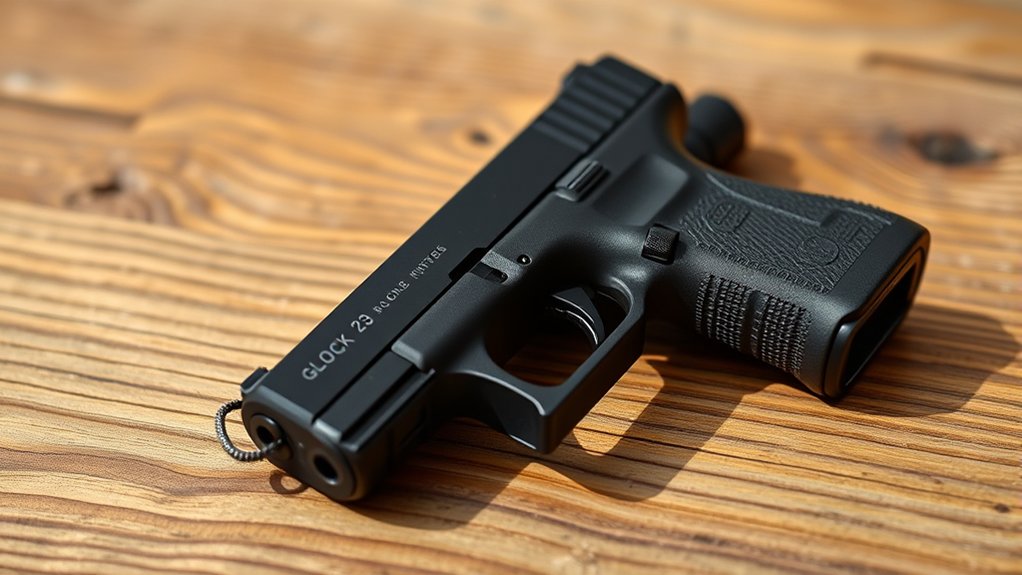
Your Glock 23 is chambered by default in .40 S&W, which is designed to offer a good balance of power, recoil, and compactness. It packs around 400 ft/lbs of muzzle energy, giving it solid stopping power.
The recoil can be a bit snappy, so proper handling is important to stay accurate. You can convert your Glock 23 to 9mm or .357 SIG by swapping out the barrels and magazines.
Each caliber change affects performance, capacity, and recoil differently. Understanding these differences helps you get the most out of your Glock and tailor it to your shooting style.
Knowing how each caliber impacts your firearm’s function is key to making the best choice for your needs.
What Caliber Does the Glock 23 Use By Default?
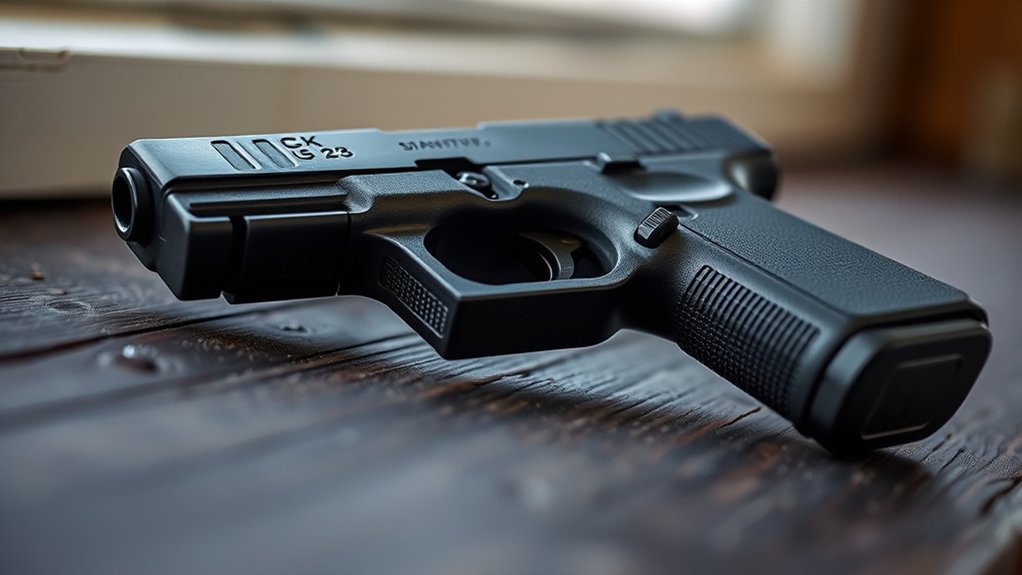
Although the Glock 23 can be adapted to other calibers, it comes factory-chambered in .40 S&W.
The Glock 23 is originally chambered in .40 S&W but can be adapted to other calibers.
This firearm’s barrel and magazine are specifically designed and optimized for the .40 S&W caliber, ensuring reliable feeding and consistent chambering.
As the factory-caliber, .40 S&W balances stopping power with manageable recoil, making the Glock 23 versatile for various applications.
When you handle the Glock 23, you’ll notice its components are precisely engineered to accommodate this cartridge without modification.
While conversion kits are available to switch the caliber to 9mm or .357 SIG by replacing the barrel and magazine, the Glock 23’s default chambering remains the .40 S&W.
This factory-caliber setup offers a dependable platform optimized for performance and durability in a compact firearm.
How Does the .40 S&W Affect Glock 23 Performance?
The Glock 23’s factory chambering in .40 S&W directly influences its handling and performance characteristics. This caliber offers a good balance of stopping power and manageable recoil, which impacts your shooting experience quite a bit.
When firing, you’ll notice the snappy recoil. It requires some practice to control well for accurate follow-up shots. The .40 S&W delivers approximately 400 ft/lbs of muzzle energy, giving you extra stopping power.
Keep in mind, the magazine capacity is slightly reduced compared to a 9mm. This can affect your reload strategy in a shootout or practice session. Despite the increased recoil stresses on the firearm, the Glock 23 maintains its reliability during firing.
The round fires a 180-grain FMJ at about 990 fps. This setup challenges your accuracy and follow-up speed but rewards you with better muzzle energy.
The Glock 23’s design helps optimize performance while keeping reliability intact.
All in all, if you can handle its recoil dynamics, the Glock 23 with .40 S&W is a solid, powerful choice.
Can You Shoot Other Calibers in the Glock 23?
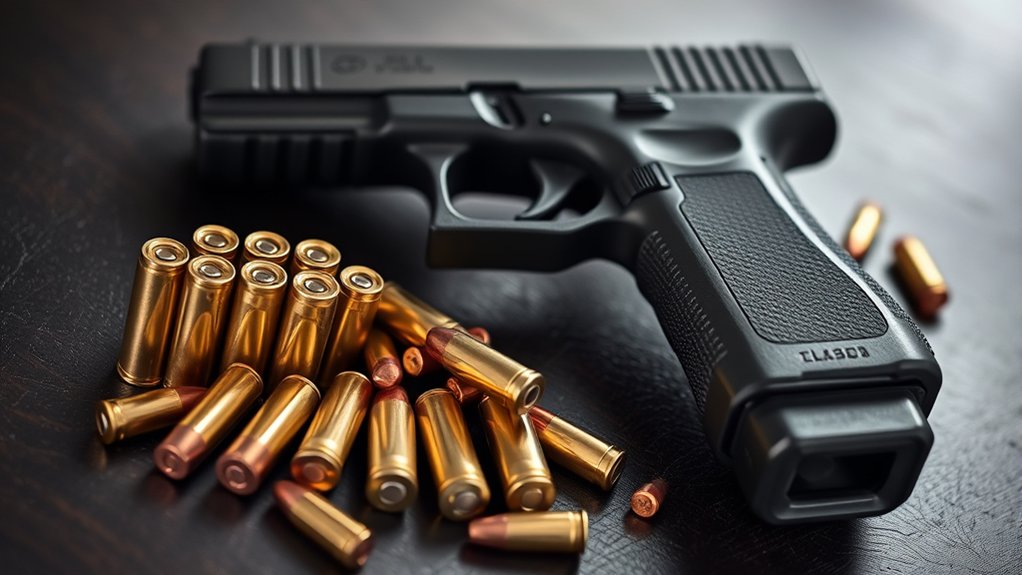
Yes, you can shoot other calibers in the Glock 23, but it’s not as simple as just switching out the barrel. Typically, you can convert it to shoot 9mm or .357 SIG by swapping the barrel and using magazines designed for those specific calibers.
Just a heads up, though—since the frame and slide are built to handle the pressures of .40 S&W, it’s really important to use the right conversion parts to keep everything safe and functioning properly.
And don’t forget to double-check that your magazines match the caliber you’re shooting, so you get reliable feeding and operation every time.
Caliber Conversion Options
When you’re looking for versatility in your Glock 23, changing the barrel and magazines allows you to convert it to fire different calibers. This kind of caliber conversion makes it easier to switch up your ammunition and customize your firearm to fit your needs.
Common options include converting to 9mm with a specific conversion kit. This involves swapping out the barrel and using compatible magazines, which is a cost-effective way to train with a different caliber.
You can also switch to .357 SIG by replacing the barrel. This gives you higher velocity and increased stopping power, perfect for more demanding situations.
If you prefer, you can stick with the original .40 S&W configuration for a good balance of performance.
Just make sure the magazines are compatible with each caliber to keep your firearm reliable and ensure you get the right capacity.
These conversion options really make the Glock 23 a versatile handgun. They’re great for shooters who want flexibility without having to buy multiple guns.
Magazine Compatibility Considerations
Three key factors determine whether you can safely shoot other calibers in your Glock 23: the barrel, the magazine, and their compatibility with the chosen caliber.
While the Glock 23 is chambered in .40 S&W, converting it to 9mm or .357 SIG requires specific barrels and magazines designed for those calibers.
Magazine compatibility depends on the magazine’s design, capacity, and whether it’s rated for the new caliber. Using magazines not rated or made for your conversion can cause feeding issues and safety concerns.
This can also affect the overall reliability of your firearm. Always choose magazines that match the caliber you’re converting to, to ensure proper feeding and functioning.
Ignoring these factors can lead to malfunctions and safety risks.
How Do .40 S&W, 9mm, and .357 Sig Compare in the Glock 23?
When you’re deciding between .40 S&W, 9mm, and .357 Sig for your Glock 23, it’s all about how recoil impacts your shooting. The 9mm is pretty friendly — it has less recoil, making it easier to shoot accurately and comfortably, plus it’s more budget-friendly.
Plus, switching to a 9mm is pretty straightforward if you want to try something different later on.
On the other hand, both .40 S&W and .357 Sig pack a punch with more energy and better penetration, which can be a real plus for self-defense. But keep in mind, they tend to have snappier recoil, so they might be a bit tougher to control, especially if you’re shooting quickly or trying to stay accurate shot after shot.
Knowing these differences can help you find the right balance between versatility and ease of handling based on what you need from your Glock 23.
Recoil And Performance
Although the Glock 23 chambered in .40 S&W offers more stopping power than 9mm, it produces a noticeably snappier recoil that demands proper training to manage effectively.
The .40 S&W delivers around 400 ft/lbs of energy with a 180-grain FMJ at approximately 990 fps. This impacts firearm dynamics and requires refined recoil management for consistent shot accuracy.
Compared to 9mm, its increased velocity and energy enhance performance but also challenge follow-up shots.
The .357 SIG, fired via a conversion barrel, pushes velocity and recoil beyond .40 S&W levels, changing ballistics and the overall shooting experience.
- .40 S&W provides balanced energy and manageable recoil with training.
- 9mm has lower recoil, allowing for faster follow-up shots and less energy.
- .357 SIG delivers the highest velocity and recoil, demanding precise control.
Recoil management is critical for optimizing shot accuracy across all calibers.
Conversion And Versatility
Because the Glock 23 is originally chambered in .40 S&W, it makes switching to other calibers pretty simple. You can convert it to 9mm or .357 Sig just by swapping out the barrel and magazines. This kind of flexibility really boosts the platform’s versatility, letting you customize your gun for training, self-defense, or duty use.
Converting to 9mm is especially cost-effective. You only need a new barrel and compatible magazines, making it an easy upgrade.
If you want to switch to .357 Sig, you’ll also need a barrel swap. Sometimes you’ll need new magazines too, because of the different bullet diameters.
Using a caliber conversion kit is a smart way to expand your options without having to buy multiple guns. It streamlines the customization process and keeps things simple.
Whether you’re looking for more affordability, power, or versatility, the Glock 23 has options to suit your needs.
What’s Unique About the Glock 23’s .40 S&W Recoil?
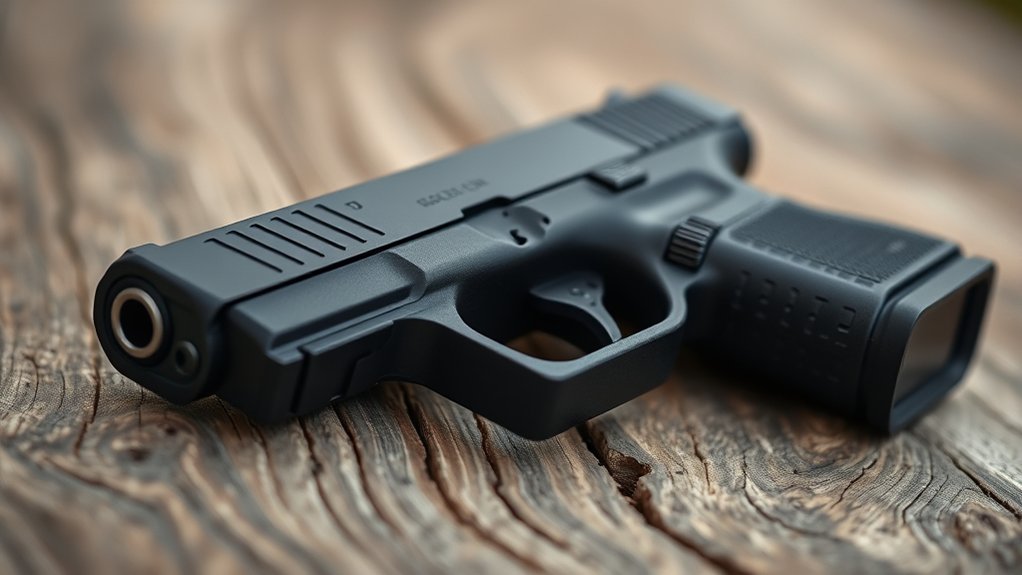
Since the Glock 23’s .40 S&W round traces its lineage to the powerful 10mm cartridge, you’ll experience a distinctive snappy recoil characterized by a sharp, quick pushback.
The Glock 23’s .40 S&W round delivers a sharp, snappy recoil rooted in the powerful 10mm cartridge.
This recoil delivers roughly 400 ft/lbs of energy, which is comparable to lower-end .357 Magnum loads. It’s strongly felt in your hand, making it quite noticeable.
The firearm design channels this energy, influencing how you manage follow-up shots. To stay on target, it helps to focus on your grip and stance.
The snappy recoil demands precise control to shoot accurately. Pushback occurs quickly, so you need to recover fast for multiple shots.
Practicing consistently will improve your ability to handle recoil dynamics. Understanding how the firearm behaves can also help you anticipate and reduce its effects.
How Do Caliber Choices Affect Glock 23 Concealability and Handling?
When selecting a caliber like the .40 S&W for the Glock 23, it directly impacts both concealability and handling.
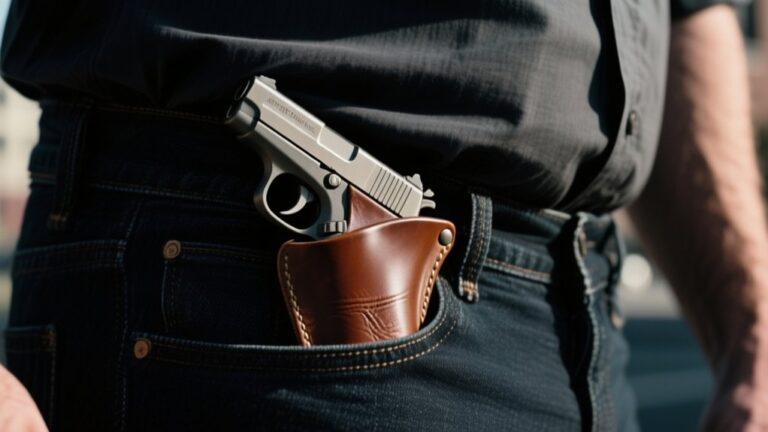
The .40 S&W offers a compact size that helps with discreet carry, making it easier to hide under clothing. It strikes a good balance between size and ballistic performance.
However, its snappy recoil means you’ll need proper training to shoot accurately and handle the gun comfortably.
Caliber choices also affect magazine capacity, which is important for managing your ammunition during use.
For the .40 S&W, you’ll typically get around 13 rounds in the magazine, offering a balanced capacity.
Keep in mind, this is a trade-off with the power of the caliber.
Understanding these factors can help you optimize your Glock 23 for concealed carry and overall performance.
How Do You Choose the Best Ammo for Your Glock 23?
Although selecting the right ammunition for your Glock 23 involves several factors, the most critical is ensuring the ammo matches the .40 S&W chambering precisely.
Proper caliber alignment guarantees safe operation and ideal performance. When choosing ammo, consider:
- Bullet type: hollow point for self-defense, full metal jacket for target practice
- Load weight: typically 165 to 180 grains, balancing recoil and effectiveness
- Reliable ammunition: select reputable brands known for consistent velocities and penetration
- Compatibility: verify ammo suits your specific Glock 23 model per manufacturer guidelines
Your ammo selection directly impacts accuracy, recoil management, and terminal performance.
Prioritize reliable ammunition that matches the Glock 23’s chambering and your intended use. Doing so will help maximize safety and effectiveness every time you shoot.
Frequently Asked Questions
What Is the Magazine Capacity of a Glock 23?
The Glock 23’s magazine capacity typically holds 13 rounds.
However, you can also use Glock 22 magazines, which give you 15 rounds.
For those wanting more, there are extended magazines available that hold up to 22 rounds.
Its ammunition compatibility helps balance recoil energy well.
This is supported by a moderate trigger weight and a precise barrel length.
The grip texture is designed to improve handling and control.
Safety features, an accessible magazine release, and an optimized slide design all help boost reload speed and reliability.
Plus, sight options further support accuracy when shooting.
How Often Should You Clean a Glock 23?
You should clean your Glock 23 every 200-300 rounds or at least once a month, which is a good maintenance schedule.
Focus on choosing the right solvent and using proper cleaning tools during disassembly. Taking your time to do it right makes a big difference.
Make sure to remove dirt and prevent corrosion to keep your firearm reliable.
Follow lubrication tips carefully to avoid mistakes that could affect its performance.
Keeping your gun clean also helps control odor, so it stays in top shape over time.
Are There Aftermarket Accessories for the Glock 23?
Yes, you’ll find plenty of aftermarket accessories for the Glock 23. You can upgrade with trigger upgrades and recoil springs to enhance performance.
Sight replacements, including laser sights and flashlight attachments, improve target acquisition.
Grip enhancements and magazine extensions boost handling and capacity.
Slide modifications allow customization, and concealed carry holsters offer secure, comfortable options.
These holster options cover IWB, OWB, and tactical rigs, letting you tailor your Glock 23 precisely.
What Is the Typical Lifespan of a Glock 23 Barrel?
You can expect the typical lifespan of a Glock 23 barrel to be between 5,000 and 10,000 rounds. This mainly depends on the barrel material and how durable the rifling is.
Proper maintenance is key to extending this lifespan. Regular cleaning helps prevent corrosion and reduces heat buildup, which can damage the barrel and affect accuracy.
It’s also important to inspect your barrel regularly for signs of wear. If you notice erosion or a drop in precision, it might be time to replace it.
Barrel threading and length usually don’t impact how long the barrel lasts. However, they do influence customization options and how well heat dissipates during shooting.
Can the Glock 23 Be Used for Competitive Shooting?
You can use the Glock 23 for competitive shooting, but it’s like steering a powerful ship through choppy waters. Its grip texture and recoil management require focus.
Trigger safety and trigger pull also affect your precision. Making some adjustments can really help improve your performance.
Optimizing sight options, grip customization, and magazine compatibility can boost your accuracy.
Pairing it with the right holster and concealment strategies is also important.
Finally, adopting a solid shooting stance will help you handle its snappy recoil better. This leads to improved control and overall accuracy during competitions.
Conclusion
When you grip your Glock 23, chambered in .40 S&W, you feel a good balance of power and control. Each shot delivers a sharp, confident recoil that helps you stay on target.
Choosing the right caliber isn’t just about ballistics. It also influences how you handle the gun, how easy it is to conceal, and your overall shooting experience.
Whether you stick to .40 S&W or explore 9mm or .357 Sig, your ammo choice really transforms your Glock 23. It turns it from just a firearm into an extension of your skill and intent.