How To Concealed Carry With A Tucked In Shirt – Practical Carry Tips
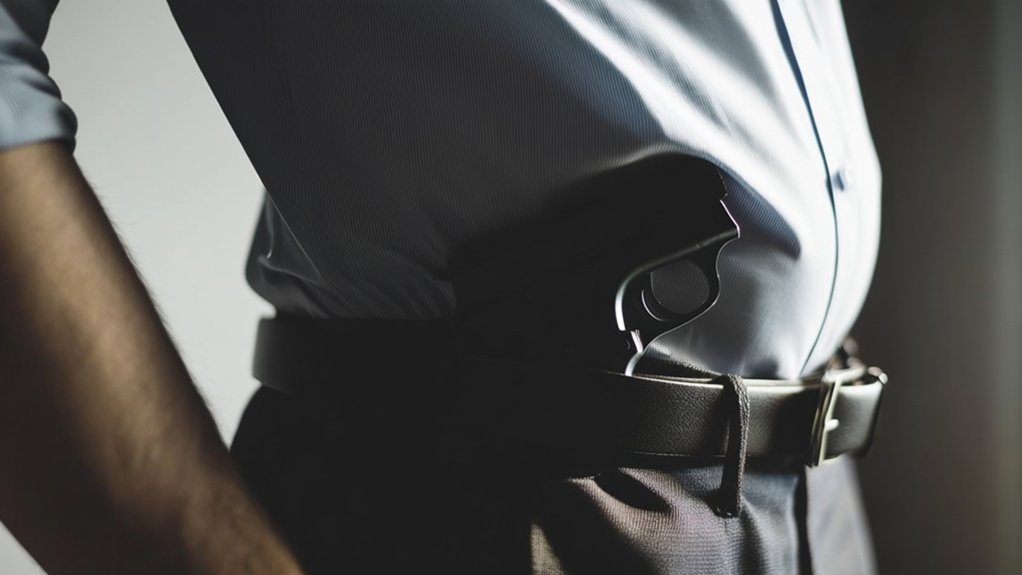
To concealed carry with a tucked shirt effectively, choose a tuckable holster with low-profile clips and a reinforced gun belt for secure, comfortable carry. Pick heavier, patterned shirts that mask printing and drape smoothly during movement. Position your holster for easy access. Appendix carry often works best.
Practice drawing by clearing fabric with your support hand. Move naturally and maintain good posture to keep your firearm concealed. Mastering these basics sets the foundation for more advanced carry techniques and gear choices. Just take your time and get comfortable with the process.
Understand Challenges of Concealed Carry With a Tucked Shirt
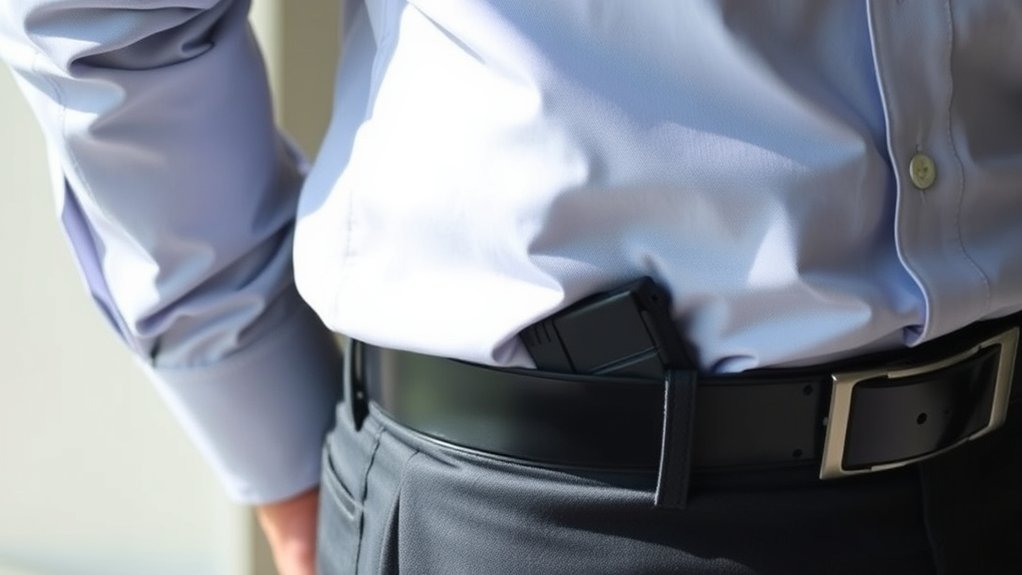
Although carrying a firearm concealed with a tucked-in shirt offers a polished appearance, it poses unique challenges that you need to master. Tucked shirt concealment demands careful attention to shirt fabric tension, as body movement can easily cause firearm printing.
Bending at the waist tightens the fabric, exposing the gun’s outline, so you should bend at the knees instead to maintain concealment.
Reaching overhead or sideways shifts the shirt, risking exposure if you’re not cautious. Sitting often bunches or lifts the shirt, requiring quick adjustments to avoid printing.
Your draw technique must also adapt to this setup. You have to efficiently clear the fabric without revealing the firearm.
Understanding these challenges helps you carry confidently without compromising concealment or readiness. Once you get the hang of it, a tucked shirt can look great and keep you prepared.
Just remember to move smart and stay aware of how your shirt behaves throughout the day.
Choose the Right Tuckable Holster for Concealed Carry
When you tuck your shirt in for concealed carry, choosing the right tuckable holster becomes essential to maintain both concealment and quick access. Select a holster designed with a gap between the body and holster clips, allowing shirt fabric to pass through smoothly.
Opt for discreet clips like J-clips or Ulticlips that keep the firearm secure but low-profile. Adjustable ride height and cant help you optimize concealment and accessibility. Slim, flexible materials with strong retention prevent printing and accidental exposure.
Always confirm clip compatibility with your belt for a secure fit.
| Feature | Benefit | Tip |
|---|---|---|
| Gap for Shirt Fabric | Ensures smooth concealment | Avoid bulky holsters |
| Holster Clips | Secure and discreet | Choose J-clips or Ulticlips |
| Ride Height | Custom concealment & draw | Adjust to your comfort level |
| Material | Slim, flexible, strong retention | Prevents printing and exposure |
Pick the Best Shirt Fabrics for Tucked Shirt Carry
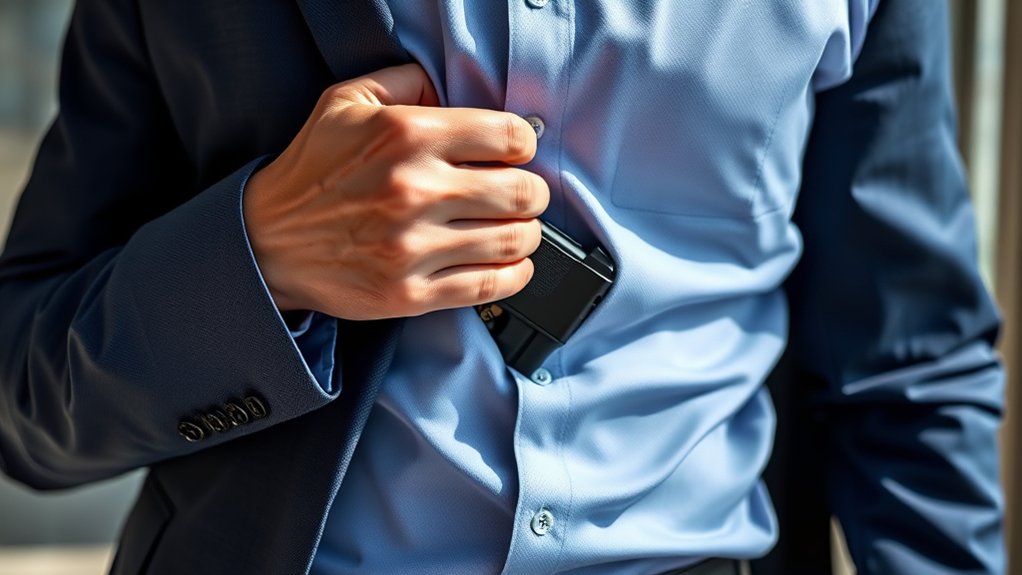
Selecting the right shirt fabric plays a crucial role in effectively concealing your firearm while maintaining comfort and style. Choose fabrics with moderate to heavyweight weight like oxford, flannel, or herringbone to reduce transparency and printing.
Look for textured materials featuring patterns such as plaid or micro-dots, which create visual noise that masks your firearm’s outline.
Opt for matte finishes to avoid unwanted shine and reflections, keeping your concealed carry discreet. Avoid lightweight, thin, or clingy fabrics as they tend to reveal your firearm’s shape under your shirt.
Wrinkle-resistant fabrics also help maintain a smooth appearance throughout the day.
Choose a Gun Belt for Tucked Shirt Concealed Carry
A sturdy gun belt is essential for maintaining proper holster position and concealment with a tucked-in shirt. When you choose a gun belt for concealed carry, prioritize holster stability to keep your tuckable holster secure and discreet.
A reinforced belt, ideally 1.5 inches wide with a stiff core, prevents sagging and shifting during movement.
Look for durable materials like reinforced leather or nylon, and a secure buckle with minimal stretch to guarantee consistent retention.
Also, matching your belt’s color and style to your clothing helps reduce visibility.
Opt for belts with interior reinforcement or steel cores to resist bending.
Make sure the belt width fits your holster for proper support.
And don’t forget to regularly inspect for wear and replace sagging belts promptly.
Choose a reinforced belt compatible with tuckable holsters for effective concealment.
This way, you’ll keep your carry discreet and comfortable all day long.
Appendix vs. Strong-Side Carry Positions Explained
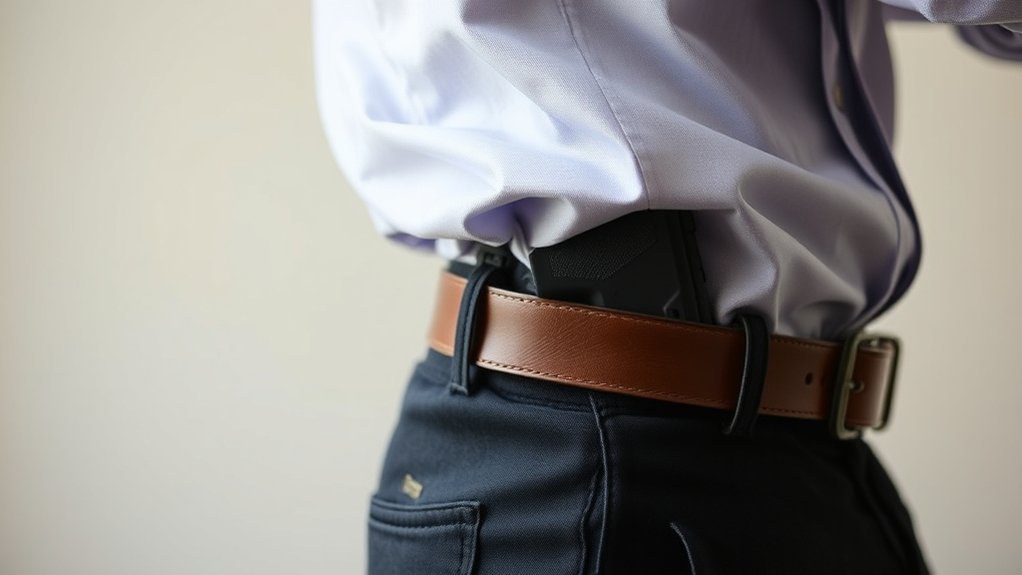
Although both appendix and strong-side carry positions offer effective concealed carry options, understanding their differences is key to choosing what works best for you. Appendix carry places the firearm at the front, near 12 to 2 o’clock, enabling quicker draw speed and better concealment with a tucked-in shirt.
Strong-side carry situates the gun between 3 and 4 o’clock on your hip. It’s often more comfortable but sometimes harder to conceal neatly with tucked clothing. Your choice depends on how you balance concealment, draw speed, and clothing styles.
| Feature | Appendix Carry | Strong-Side Carry |
|---|---|---|
| Position | Front (12-2 o’clock) | Hip (3-4 o’clock) |
| Draw Speed | Faster, natural motion | Slightly slower |
| Concealment | Better with tucked shirts | Needs looser clothing |
| Comfort | Can be less comfortable | Generally more comfortable |
| Clothing Styles | Ideal for slim, tucked styles | Works better with loose fit |
Find the Best Holster Position for Tucked Carry
When you tuck your shirt in, finding the best holster position becomes essential to maintain both concealment and quick access. The right holster position minimizes printing and optimizes your draw, especially with an IWB holster designed for tucked carry.
Appendix carry (12 to 2 o’clock) often provides a natural draw and excellent concealment with a tucked shirt.
Strong-side carry at 3 o’clock works well but may require a tuckable holster and clothing designed for concealment.
Consider these tips for your holster position:
- Choose a lower ride height with a slight forward cant
- Position holster slightly forward or behind the hip for comfort
- Use an IWB holster designed for tuckability
- Prioritize appendix carry for natural draw and concealment
This approach guarantees your tucked shirt stays smooth and your firearm stays concealed. It’s all about finding that sweet spot where comfort meets practicality.
Shirt Clearance Techniques to Improve Your Draw
Since a smooth and efficient draw depends heavily on clearing your shirt properly, mastering shirt clearance techniques is essential for concealed carry with a tucked-in shirt.
Use your support hand to firmly grip and lift the shirt away from your holster before drawing. Pull the fabric upward in one smooth motion to avoid snagging or delays.
Aim to clear the shirt fully above the firearm’s slide or grip, ensuring an unobstructed, secure hold during your draw technique. Maintain control of the shirt throughout the movement to prevent it from collapsing back over the gun.
Consistently practice these shirt clearance drills with an unloaded firearm to build muscle memory. This disciplined approach guarantees faster, safer draws and optimizes your concealed carry performance.
It really pays off to keep at it!
How to Safely Re-Holster When Your Shirt Is Tucked
Mastering shirt clearance during your draw sets the foundation for safe firearm handling, but re-holstering demands equal attention to prevent accidents.
Ensuring proper shirt clearance during both drawing and re-holstering is essential for safe firearm handling.
When your shirt is tucked, always fully untuck and lift it clear of the holster before re-holstering. This prevents fabric from catching in the trigger guard.
Use your support hand to hold the shirt away from the firearm, keeping fabric out of the way.
Before you re-holster, visually or tactilely confirm the firearm is properly seated and that no fabric obstructs the trigger guard.
Practice slow, deliberate re-holstering motions to minimize risk.
In tight spaces, consider adjusting or temporarily removing your shirt to maintain safety and proper retention.
- Fully untuck and lift your shirt before re-holstering
- Use your support hand to hold fabric clear
- Confirm no fabric interferes with the trigger guard
- Re-holster slowly and deliberately for safety
Move Naturally to Keep Your Gun Hidden
To keep your firearm concealed while moving, you need to adopt natural, deliberate motions that prevent fabric from shifting or bunching. Move naturally by bending at the knees instead of the waist when reaching for objects; this reduces fabric tension and helps maintain concealment.
Use your support hand to reach across your body, minimizing pulling on your shirt and avoiding exposure of your firearm.
Maintain good posture with a slight forward lean when seated to prevent shirt bunching.
Throughout all movements, stay deliberate and controlled to avoid sudden shifts in fabric that could reveal your gun.
Using Concealment Shirts to Enhance Tucked Carry
You’ll want to go for concealment shirts made from thicker, textured fabrics like oxford or herringbone. These materials help minimize printing and add some visual noise.
Plus, shirts with a longer length and a relaxed fit are great because they keep your firearm and holster well hidden when tucked in.
Adding patterns like plaid or micro-dots is another smart move. They break up your outline even more, making your concealed carry way more effective.
Shirt Fabric Choices
Why settle for a standard dress shirt when you can choose one designed to enhance concealment? Selecting the right shirt fabric is vital for effective tucked carry. Opt for heavyweight, wrinkle-free fabrics like oxford or herringbone to prevent printing.
Patterned shirts, like plaid or micro-dots, help break up your silhouette with visual noise.
A loose fit gives you room for your firearm without tightness that reveals its shape.
Don’t forget longer length; it guarantees full coverage of your holster even when you move.
- Choose wrinkle-free, heavy fabrics to reduce printing
- Pick patterned designs to mask firearm outlines
- Go for a loose fit to accommodate your tucked carry setup
- Select shirts with longer length for consistent coverage
These choices help you carry confidently and discreetly every day.
Concealment Shirt Benefits
Choosing the right shirt fabric sets the foundation for effective concealed carry, but specialized concealment shirts take your tucked carry to the next level. These shirts use carefully selected fabric thickness and textures, like plaid or micro-dot patterns, to break up your firearm’s outline and reduce printing.
Their heavier, wrinkle-resistant fabrics combined with longer shirt tails offer superior print prevention by providing consistent coverage. A proper shirt fit is essential, snug enough to drape smoothly without clinging tightly, to minimize bulges and maintain a clean appearance.
Train Your Draw and Access With a Tucked Shirt
You need to train your draw so it smoothly clears the tucked shirt before you access your firearm. Try practicing by pulling the fabric up with your support hand while keeping a steady grip. This helps build muscle memory.
It’s also a good idea to work on drills from different positions and with various types of fabric. That way, you’ll be ready for quick, reliable access no matter the situation.
Drawing Techniques Practice
Although mastering your draw with a tucked-in shirt takes deliberate effort, practicing proper techniques will guarantee quick and smooth access when it matters most. Focus on developing consistent drawing techniques tailored for concealed carry under a tucked shirt.
Prioritize shirt clearance to prevent printing or fumbling during your draw.
Make sure to incorporate these key practice drills into your routine. Use both hands to clear the shirt deliberately before drawing your firearm.
Establish a firm, repeatable grip on your firearm to build muscle memory.
Perform dry-fire drills while wearing your actual carry gear and clothing. Only reholster after confirming full control of your firearm and shirt clearance.
Keep practicing, and it’ll become second nature before you know it.
Shirt Clearance Methods
Mastering your draw involves more than just your grip and speed. It requires efficient shirt clearance to make sure nothing slows you down. When concealed carrying with a tucked-in shirt, your draw technique must include a quick, controlled shirt clearance.
Use your support hand to grip the shirt at the top and pull it upward. This exposes the firearm grip clearly and keeps fabric from interfering.
Consistency is key here. Train with a set grip point and motion to build muscle memory, so your draw is smooth and reliable under pressure.
Pay attention to fabric tension by practicing with various shirt materials and fits. Tighter fabrics may require a stronger pull, while looser ones might fold into the trigger guard if you’re not careful. Proper shirt clearance is essential for safe and practical concealed carry when wearing a tucked-in shirt.
Maintain Your Holster and Gear for Tucked Carry
When carrying concealed with a tucked-in shirt, maintaining your holster and gear is essential to ensuring both security and quick accessibility. Regular holster maintenance helps prevent slippage and mechanical failure.
Focus on belt support by choosing a reinforced belt with a stiff core. This keeps your concealed carry gear stable and reliable throughout the day.
Make it a habit to inspect and tighten holster clips and belts frequently. This secures the firearm’s position during movement and gives you peace of mind.
Adjust your holster’s ride height and cant to accommodate shifts in shirt fabric. This way, you maintain optimal concealment and easy access at all times.
- Inspect and tighten holster clips and belt regularly
- Use a stiff, reinforced belt for reliable belt support
- Adjust holster ride height and cant as needed
- Keep all concealed carry gear clean and well-maintained
Consistent gear upkeep ensures safety and confidence throughout your day. It’s worth the effort to stay prepared and comfortable.
Frequently Asked Questions
Can I Legally Carry Concealed With a Tucked Shirt in All States?
No, you can’t legally carry concealed with a tucked-in shirt in all states. Laws vary widely.
Some states like Texas and Ohio allow it as long as the firearm stays hidden, but others like California have stricter rules.
Always check your specific state’s concealed carry regulations before deciding how to carry.
Don’t assume one method works everywhere. Staying informed keeps you legal and safe.
What Are Common Mistakes Beginners Make When Carrying Tucked?
Carrying tucked is like walking a tightrope. You need balance. Beginners often slip by choosing bulky holsters that print or expose the gun like a flag waving in the breeze.
You’ll also want a strong, reinforced belt to keep your rig steady. Otherwise, sagging ruins your concealment.
Avoid tight, stiff shirts that cling like clingy shadows.
Practice your draw regularly or you’ll fumble when it counts. Stay smooth, stay safe.
How Does Body Type Affect Tucked Concealed Carry Comfort?
Your body type directly impacts tucked carry comfort. If you’re muscular or larger, the shirt may stretch and print more. So, you’ll want a holster that minimizes bulk and a shirt with some give.
If you’re slim, you’ll find it easier to conceal without distortion. Curvier shapes might need tailored shirts or strategic holster placement to avoid pulling.
Taller folks should pick longer shirts to keep concealment consistent when you sit or bend. It’s all about finding what works best for your unique shape and movements.
Are There Specific Cleaning Tips for Tucked Carry Holsters?
Like sharpening a blade before battle, you need to clean your tucked carry holster regularly. Use a damp cloth and mild soap to wipe away sweat and dirt. Avoid harsh chemicals that can damage leather or Kydex.
Don’t forget to clean clips and attachment points to keep everything secure.
For leather holsters, apply conditioner to maintain flexibility.
Always remove your firearm first to clean thoroughly without risking damage.
Can I Carry Concealed Tucked While Sitting or Driving Comfortably?
Yes, you can carry concealed tucked while sitting or driving comfortably. Choose a longer shirt or wear an undershirt that stays tucked in to prevent printing.
Practice sitting and drawing in your usual environment to get used to how your firearm shifts.
Keep your movements deliberate and avoid excessive twisting or leaning to maintain concealment.
With proper gear and regular practice, you’ll stay comfortable and discreet throughout your day.
Conclusion
Carrying concealed with a tucked-in shirt takes more than just slipping on your holster. It’s an art you can master. With the right gear, smart positioning, and consistent practice, you’ll move like a shadow, unseen and ready.
Remember, your setup is only as strong as your training and maintenance. Keep your equipment sharp and your draw smooth. You’ll carry confidently, blending protection seamlessly into your daily routine.