Can You Bring Your Own Targets To Shooting Range – Rules And Tips
You can bring your own targets to most shooting ranges, but you’ll need to follow their specific rules on target designs and materials. Avoid using targets with real people, and opt for paper or cardboard instead.
Secure your targets properly and place them at designated distances, usually at least five yards. Always check the range’s policy beforehand to guarantee compliance.
If you want to boost your shooting skills and understand all the best practices, there’s more useful info ahead.
Can You Bring Your Own Targets To a Shooting Range?
Wondering if you can bring your own targets to a shooting range? Yes, you can, but you need to follow the range rules closely.
Most shooting ranges require that targets don’t depict real-life images of people, so stick with generic shapes or designs.
Avoid targets with real-life people; opt for simple shapes or designs instead.
Before you head out, check if the range provides target stands or if you should bring your own to secure your targets properly.
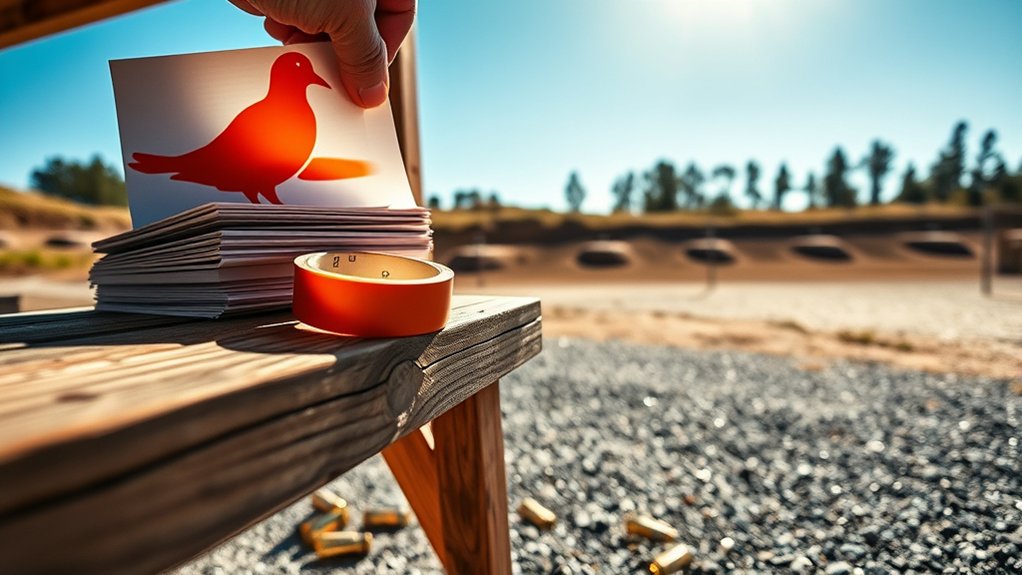
Also, be aware of target placement guidelines to guarantee safety and compliance. Bringing tape or staples can help you affix targets easily and adjust them during your session.
How To Verify Your Range’s Target Policy
Before bringing your own targets to the range, it’s important to verify the facility’s specific target policy. Start by checking the range’s website or calling ahead to confirm if you can use your own targets.
Each range has unique target requirements, including restrictions on size, material, and imagery. Many prohibit targets depicting real people. Make certain your targets match the approved targets list and fit the type of shooting you plan to do, such as paper or cardboard for standard lanes.
Also, ask if the range provides necessary range equipment like tape or staples to secure your targets. If not, bring your own.
Taking these steps guarantees you comply with the rules and avoid surprises when you arrive at the shooting range.
What Types Of Targets Are Allowed At Most Ranges
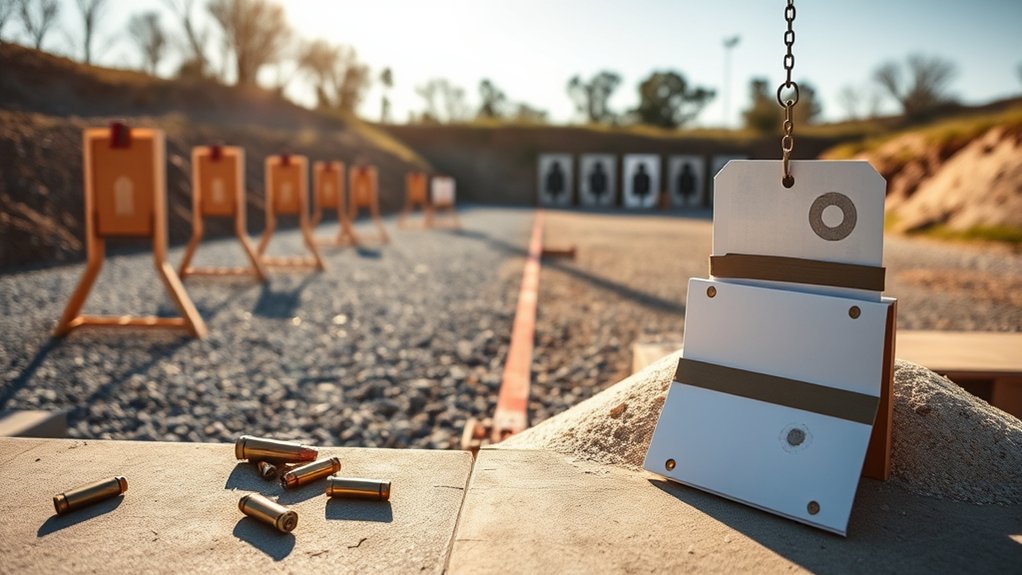
Although target policies vary, most ranges allow paper or cardboard targets designed specifically for shooting practice. These targets meet safety standards and align with common range rules.
You’ll usually find that:
- Targets showing real-life people are prohibited to maintain safety and avoid emotional triggers.
- Some ranges permit reactive targets like exploding or color-changing ones, but you’ll need prior approval.
- You must secure your targets properly to prevent them from falling or blowing away during shooting.
Always verify the allowed targets with range staff before your session to stay within the safety guidelines.
Check with range staff about approved targets before shooting to ensure safety compliance.
Following these rules guarantees a safe environment for everyone and helps you focus on improving your shooting skills without complications. Remember, abiding by range rules regarding targets protects both you and others.
What Materials Are Safe For Personal Targets?
You should stick to approved materials like paper, cardboard, and wood for your personal targets because they help minimize ricochet risks.
It’s best to avoid metal targets and anything that depicts real people since most ranges don’t allow those.
Also, try to pick durable targets that can handle multiple shots without falling apart.
And of course, always check your range’s specific rules before you start shooting.
Approved Target Materials
Several safe materials work well for personal shooting targets, including paper, cardboard, and certain biodegradable options.
When selecting approved target materials, you want to prioritize safety and compliance with range rules.
Before you head out, check your range bag for appropriate targets and always consult range safety officers if you’re unsure.
Here are three safe choices:
- Paper targets: Easy to use and replace, perfect for most ranges.
- Cardboard: Durable and affordable, ideal for multiple shots.
- Biodegradable targets: Environmentally friendly and safe for outdoor ranges.
Avoid materials like metal or glass that cause ricochets or dangerous fragments.
Secure your targets properly to prevent them from falling or blowing away.
Sticking to these guidelines keeps your shooting experience both safe and enjoyable.
Prohibited Target Types
When selecting targets, avoid any that depict real-life images of people, as ranges prohibit these to maintain a safe and respectful environment. Prohibited target types also include those made from wood, metal, or other materials prone to ricochets.
For your personal targets, stick to safe materials like paper or cardboard, which most ranges accept without issue. Avoid targets with explosive or incendiary features, as they pose significant safety risks.
Before your session, check the range’s specific guidelines on target size and placement, since some facilities have restrictions you’ll need to follow. Always confirm with range staff that your personal targets meet their rules.
Target Durability Considerations
Selecting the right materials for your personal targets plays a big role in maintaining safety and effectiveness at the range. When choosing targets, you need to prioritize target durability while complying with safety regulations. Here’s what to keep in mind:
Use paper targets for clear visibility and easy attachment; they’re widely accepted and safe. Cardboard targets work well if sturdy enough to hold up against shots without falling apart.
Avoid wood or metal targets unless the range explicitly allows them, as they can cause dangerous ricochets.
Always check with your shooting range on allowed materials to guarantee your personal targets meet their safety regulations. Staying within these guidelines helps keep the range safe and your shooting experience enjoyable.
Proper Placement And Setup Of Personal Targets
When you’re setting up your personal targets, make sure you follow the range’s rules about where to place them. Usually, you need to keep your targets at least five yards away.
It’s a good idea to secure your targets firmly using tape or staples so they don’t fall down while you’re shooting.
And don’t forget to double-check with the Range Safety Officer to make sure your setup meets all the safety requirements.
That way, everyone stays safe and things run smoothly.
Target Positioning Guidelines
Although setting up your targets might seem straightforward, proper positioning is essential for safety and compliance at the range. Following target positioning guidelines helps you stay within Gun Safety Rules and protects everyone wearing eye protection.
Here’s what you need to keep in mind:
Position targets beyond a minimum shooting distance of 5 yards to meet range regulations and maintain safety. Attach targets securely to stands or backers using tape or staples to prevent movement or falling.
Always aim so rounds hit the backstop, never the floor, ceiling, or walls, and avoid targets depicting real-life images of people.
Check with the Range Safety Officer if you’re unsure about any specific placement rules. Proper setup guarantees a safe, enjoyable shooting experience for everyone.
Securing Targets Safely
Before setting up your personal targets, make sure they meet the range’s safety standards and suit your shooting type.
Follow range rules by avoiding targets with real-life images of people.
When securing targets, use tape or staples to firmly attach them to the backer so they don’t fall during use.
Pay close attention to target placement, positioning them at the designated height and beyond the minimum shooting distance, usually at least 5 yards.
Always check with the Range Safety Officer for any specific instructions to guarantee compliance with safety protocols.
After your session, clean up all targets and any securing materials to maintain respect for the range environment.
Properly securing targets and following range rules keep everyone safe and make the shooting experience smooth.
What To Do If You Can’t Bring Your Own Targets
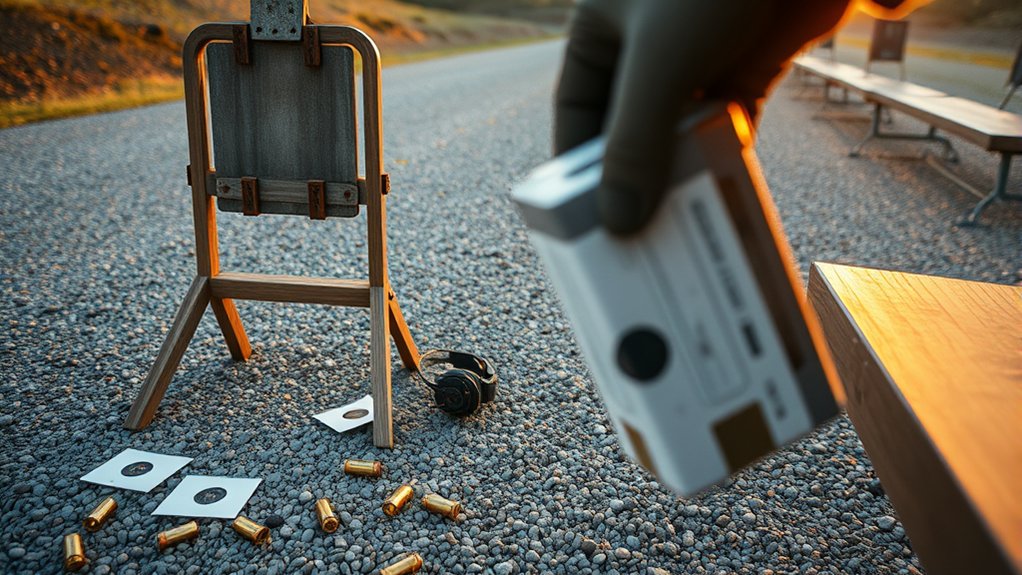
If you can’t bring your own targets to the range, start by checking whether they provide targets for purchase or use on-site. Many shooting ranges offer a variety of targets, including paper and reactive types, so you won’t miss out on practice.
Before you arrive, ask about any restrictions on target types to avoid surprises.
When you get there, consider these tips:
- Arrive early to select and set up your targets without rushing.
- Share targets with a companion if the range allows, cutting costs and boosting your shooting session.
- Choose from the available target options offered by the range to guarantee they meet safety and range rules.
Following these steps keeps your shooting experience smooth, even without bringing your own targets.
Tips For Picking Durable, Range-Approved Targets
Choosing the right targets can make a big difference in your shooting practice. You want to pick durable, range-approved targets made from materials like thick paper or reinforced cardboard. Avoid targets with real-life images of people since many ranges prohibit them.
Also, check the size limits your range enforces to guarantee your targets fit properly. Targets with clear scoring zones help you track accuracy better. Don’t forget to bring tape or staples to secure your targets firmly during your session.
| Feature | Recommendation | Benefit |
|---|---|---|
| Material | Thick paper/cardboard | Durability |
| Design | Clear scoring zones | Improved accuracy tracking |
| Range Compliance | Size & content rules | Safety and approval |
Why Bringing Your Own Targets Boosts Your Shooting Skills
When you bring your own targets to the range, you tailor your practice to focus on the skills you want to improve most. Custom targets let you hone specific drills that boost your shooting proficiency and build confidence.
Bringing your own targets sharpens specific skills, enhances proficiency, and builds shooting confidence.
You can choose varying sizes and shapes to sharpen your accuracy and adaptability. Familiar targets ease anxiety, helping you perform better during live fire.
Plus, personalized targets track your progress over time, giving clear feedback on your improvements.
Here’s how bringing your own targets benefits you:
- Enhances precision by using diverse target designs
- Builds confidence through consistent, familiar practice
- Motivates improvement with measurable progress tracking
Frequently Asked Questions
Can I Use Reactive Targets I Made at Home?
You shouldn’t use reactive targets you made at home because target materials mightn’t meet safety protocols or have the durability needed to prevent hazards.
Homemade targets can create unpredictable risks, like flying debris, which ranges strictly forbid.
Instead, stick to commercially made reactive targets designed with safety and durability in mind.
Always check with the Range Safety Officer before bringing any targets to confirm you follow all safety protocols and range rules.
Are There Fees for Bringing Personal Targets?
Yes, some ranges charge fees for bringing your own targets, so you should check ahead.
Fees often depend on the target materials, sizes, and designs you use since ranges want to guarantee safety and compatibility.
If your targets meet their guidelines, you might avoid extra costs.
Always confirm the rules to avoid surprises, especially if you bring reactive or homemade targets with unique designs or unconventional materials.
How Do I Dispose of Used Personal Targets Safely?
When the dust settles, you need to dispose of your used targets with care, like closing a chapter responsibly.
Always check disposal regulations at your range to handle target material safety properly. Don’t toss them haphazardly. Use designated bins to minimize environmental impact.
If your targets are biodegradable, think about composting them at home.
Avoid burning targets, as it risks fire hazards and often breaks rules. When in doubt, ask range staff for guidance.
Can Personal Targets Be Used in Indoor Ranges?
Yes, you can use personal targets in indoor ranges, but you need to follow target regulations closely.
Make sure your target materials are approved, usually paper or cardboard, and avoid prohibited images.
Also, check the allowed target sizes to fit the range’s guidelines. By sticking to these rules, you’ll keep the environment safe and enjoyable.
Always confirm specifics with the range staff before bringing your own targets to avoid any issues.
Do Personal Targets Affect Range Insurance or Liability?
Personal targets usually don’t affect your shooting range’s insurance implications if you follow their rules.
You need to use approved target materials and avoid images that raise liability concerns, like real people.
If your targets cause damage or safety issues, you could be held responsible.
Conclusion
Bringing your own targets to the shooting range isn’t just about convenience; it’s a game-changer for your skills. By choosing the right materials and following range rules, you turn practice into precision.
Remember, the target you pick shapes the shooter you become. So, check policies, pick wisely, and watch your aim sharpen with every shot. After all, the perfect target isn’t just a destination; it’s the compass guiding your progress.