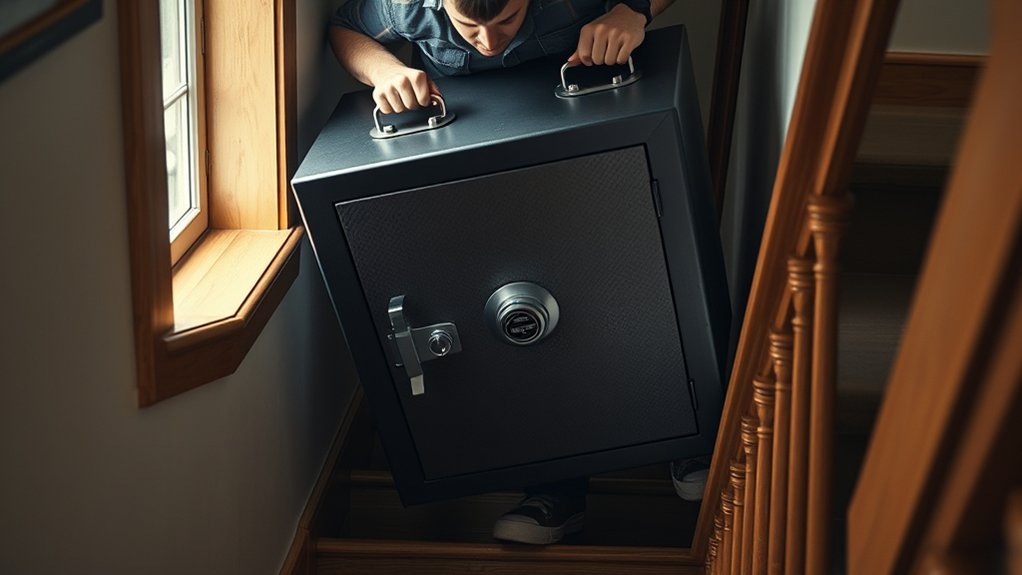
How To Move A Gun Safe Down Stairs – Step By Step Guide
To move a gun safe down stairs, start by knowing its weight and size. This will help you decide if you need professional help, especially for safes over 400 lbs or if your stairs are tricky.
Get the right gear before you start. You’ll need a heavy-duty stair-climbing dolly, ratchet straps, and moving blankets. These will make the job safer and easier.
Next, clear the stairway of any obstacles. Measure the route to make sure everything fits and plan your path carefully.
Secure the safe to the dolly with the ratchet straps. Make sure it’s tightly fastened so it doesn’t shift during the move.
It’s a good idea to work with a prepared team. Clear communication is key to avoid accidents. Take your time and move slowly, step by step.
Always prioritize safety and control. Moving a heavy safe can be tricky, but with patience and the right tools, you can do it smoothly and without damage.
Know Your Gun Safe’s Weight and Size Before Moving
Before you move your gun safe, it’s important to know its exact weight and size. This helps you plan safely and avoid any surprises during the move.
Start by checking the manufacturer specifications. You can also use the serial number and model information to find the precise weight online. If that’s not an option, weigh the safe with a bathroom scale or ask the seller for the weight.
Next, measure the dimensions—height, width, and depth. This will help you see if the safe can fit through doorways, hallways, and stairwells.
Keep in mind that small safes usually weigh between 200 and 600 pounds, while larger ones can be over 2,000 pounds.
Choose support equipment like a heavy-duty dolly or a stair-climbing cart that can handle the weight of your safe. Having the right tools makes the move safer and easier.
Getting accurate measurements and knowing the weight are key steps. They help you avoid damage to your home and prevent injuries during the move.
Decide When to Hire Professional Movers for Stair Moves
You want to think about how heavy your gun safe is and how tricky the stairs are before you decide to do it yourself.
If the safe is really heavy or the stairs are narrow, steep, or have low clearance, then it’s probably best to be cautious. The risks of injury or damage go up quite a bit in those situations.
In those cases, it’s a smart idea to hire professional movers who’ve the right tools and experience. They can make the move safer and quicker, giving you peace of mind that everything will go smoothly.
Assess Weight And Complexity
When moving a gun safe down stairs, it’s really important to assess its weight and how tricky the staircase is. This helps you avoid injuries and prevent damage to your home.
Safes that weigh over 400 pounds usually need professional movers. Trying to handle these on your own can be risky.
For safes under 400 pounds, DIY might be possible if you have the right tools.
If your safe weighs between 400 and 800 pounds, it’s best to think about hiring professional movers. They’ve the experience and equipment to do the job safely.
For safes over 800 pounds, professional help is definitely the way to go. They know how to handle such heavy loads without risking injury or damage.
Stairs that are narrow, steep, or complex make moving even more challenging. When stairs are tricky, always consider professional movers with the right gear.
Proper assessment of both weight and staircase complexity is key. By doing this, you’ll ensure safe handling of the weight and a smoother navigation of the stairs.
It also helps prevent any damage or injuries during the move.
Don’t overlook the importance of professional movers and specialized equipment, especially when the move is complicated. It’s better to be safe and prepared than risk problems later on.
Evaluate Safety And Risks
Evaluating the weight and complexity of your gun safe helps you understand the safety risks involved in moving it down stairs.
If your safe weighs over 400 pounds or your stairs are narrow, steep, or structurally compromised, it’s a good idea to hire professional movers. They’ve specialized equipment like motorized stair-climbing dollies and secure straps that make the process safer.
Without this expertise, trying to move a heavy safe yourself can lead to serious injuries or damage to your property. Proper lifting techniques alone aren’t enough to prevent accidents such as falls or back injuries.
Prioritizing injury prevention and protecting your home’s structure means weighing the benefits of professional help against the potential hazards.
Investing in professionals ensures a safer, more controlled move with minimal risk.
Gather the Right Equipment for Moving a Gun Safe Down Stairs
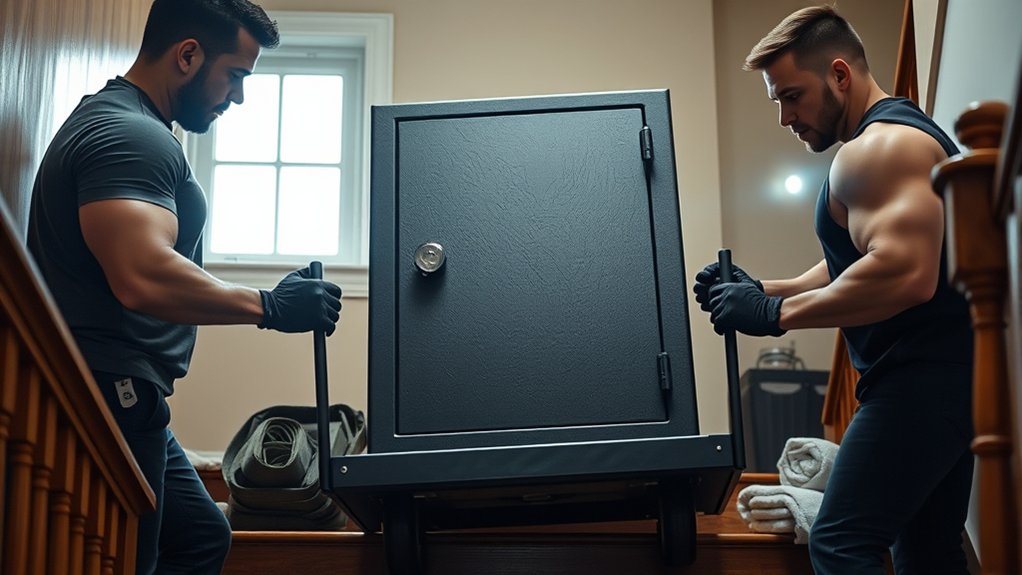
When you’re moving a gun safe down the stairs, the first thing you’ll want to do is find a heavy-duty stair-climbing dolly that’s rated for the weight of your safe. This kind of equipment makes the whole process much safer and easier because it’s built to handle heavy loads and navigate stairs smoothly.
Next up, make sure you secure the safe tightly with ratchet straps. Wrapping it in moving blankets is also a smart idea — it helps protect both the safe and your stairs from scratches or dents during the move. It’s all about keeping everything safe and stable.
Finally, don’t forget to use some extra support tools if you have them, like sliders or lifting straps, and lay down protective floor coverings if possible. These little touches really help keep everything steady and prevent any damage to your floors along the way.
Essential Moving Equipment
Although moving a gun safe down stairs can be tricky, having the right equipment makes it safer and easier. Start with a heavy-duty stair-climbing dolly that can support the safe’s weight, which can be 1,000 pounds or more.
Make sure to secure the safe firmly with ratchet straps so it doesn’t shift during the move. Use moving blankets and padding to protect both the safe and your floors or walls from scratches and dents.
Incorporate ramps, sliders, and skid plates to help move over stair edges smoothly and reduce the effort needed. Don’t forget safety gear like sturdy gloves to improve your grip and protect your hands.
Using the right equipment and techniques helps you control the safe’s descent better. It also minimizes risks and keeps everyone involved safe.
Protective Padding And Straps
Two vital items for moving a gun safe down stairs are protective padding and sturdy straps.
Start by wrapping the safe completely with thick moving blankets or furniture blankets. This helps prevent scratches and dents on all surfaces. It’s a simple step that can save a lot of damage later on.
Next, secure the safe with heavy-duty straps. Wrap the straps around the safe at multiple points to spread out the tension evenly. Make sure to tighten the straps firmly to keep the safe stable during the move.
It’s also a good idea to check the strap tightness regularly as you go down the stairs. This way, you can be confident everything stays in place and the safe doesn’t shift unexpectedly.
Using protective padding along with properly tightened straps is key for a safe, controlled move. It helps prevent damage and makes the whole process much easier.
Stair-Climbing Dolly Use
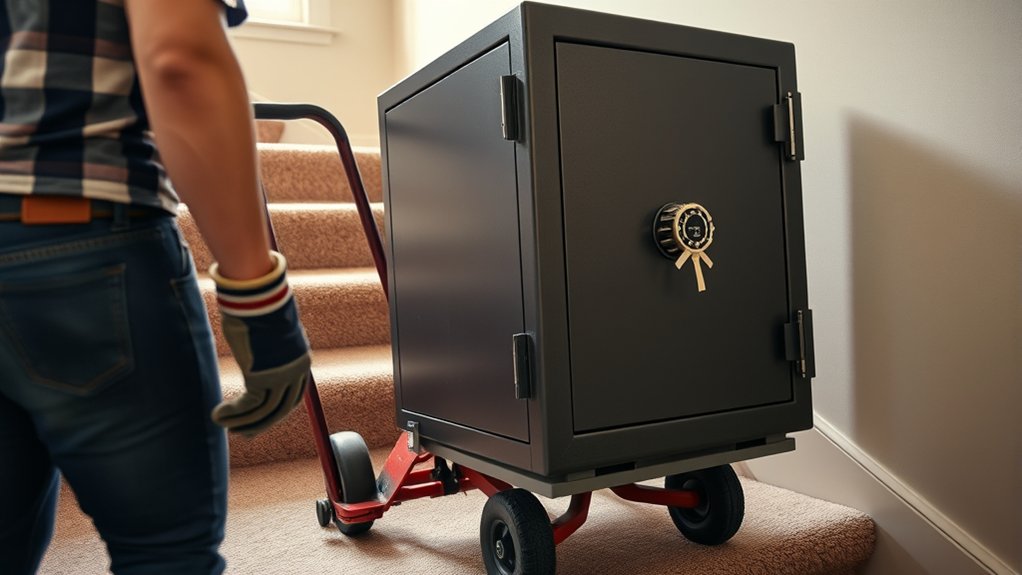
After wrapping and securing your gun safe with protective padding and straps, the next step is to get the right tool for the job—a stair-climbing dolly.
Choose a dolly designed specifically for heavy safes, capable of supporting over 1,000 pounds. It’s important to select a model with multiple wheels and a durable frame that can handle stairs smoothly while evenly distributing the weight.
When placing the safe on the dolly, tilt it slightly backward. This helps improve balance and gives you better control during the move.
Use heavy-duty ratchet straps to secure the safe firmly to the dolly. Make sure it’s tightly strapped to prevent any shifting while navigating stairs.
Before you start moving the safe down the stairs, double-check that all wheels are functioning properly.
Proper equipment and preparation will keep you safe and protect your safe during the move.
Prepare and Secure Your Gun Safe for Safe Transport
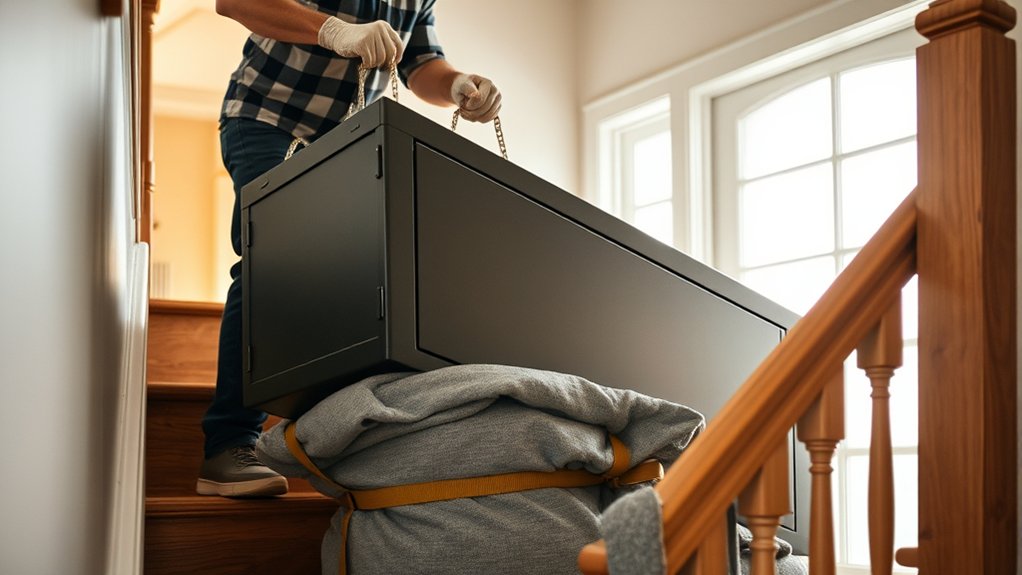
Before moving your gun safe, make sure to empty it completely. This helps reduce weight and prevents the contents from shifting during transport.
Next, lock the door and secure handles with tape or straps. This will help avoid any accidental openings while you’re on the move.
Wrap the safe with moving blankets or protective padding to shield its surface from scratches and impacts.
To make sure everything goes smoothly, remember to measure doorways, hallways, and stairways. You want to confirm the safe will fit without any trouble.
Use sturdy straps to fasten the safe securely to your dolly or moving equipment. This keeps it stable during the move.
Adding extra padding around corners and edges can also prevent damage.
Lift Gun Safe Safely and Gear up With Your Team
When lifting your gun safe, make sure to use proper techniques. Bend your knees, keep your back straight, and avoid twisting your body. This helps prevent injuries and makes the move safer.
Lift your gun safe safely by bending your knees, keeping your back straight, and avoiding twists.
Gather a team of at least two to four people, depending on the weight of your safe. Having enough help makes lifting and moving much easier.
Equip everyone with protective gear like gloves, sturdy footwear, and back braces for added safety.
Secure the safe firmly to a heavy-duty dolly using ratchet straps. This keeps the safe stable and prevents it from slipping during transport.
Communication is key—coordinate every step carefully, especially when going down stairs.
Following these steps will help you move your gun safe confidently and safely.
Plan a Clear, Obstacle-Free Gun Safe Stair Route
Although moving a gun safe down stairs can be tough, it’s really important to plan a route that’s clear and free of obstacles. This helps keep everything safe and makes the process easier.
Start by measuring your stairway’s width, depth, and height. You want to make sure the safe will fit comfortably without any issues. Once you’ve done that, clear the entire stair route of rugs, debris, or any objects that could cause slips or block your way.
It’s a good idea to install support planks and padding on surfaces to protect both your stairs and the safe. This prevents damage during the move.
Focus on these key steps: check that the stair route is completely obstacle-free and safe. Identify a clear path, and if your current stairs aren’t suitable, consider using an alternative stairway.
Using supports and padding helps protect the structure and the safe itself. With careful planning, you’ll ensure a safer, smoother descent.
Move a Gun Safe Down Stairs Step-by-Step
Since moving a gun safe down stairs requires careful control, start by securing it firmly to a stair-climbing dolly using ratchet straps. Tilt the heavy safe slightly backward to slide it onto the dolly, then tighten the straps to secure it.
Equip yourself and helpers with safety gear. Communicate clearly throughout the process to avoid any confusion or accidents.
Move the safe down stairs one step at a time. Keep a slow, controlled descent to maintain safety and control.
Have helpers positioned both in front to guide and behind to support. This helps prevent tipping and distributes the weight evenly.
Focus on proper technique by making sure each step is stable before moving to the next. Avoid rushing and always keep a constant hold on the safe.
This approach minimizes the risk of injury and damage when moving a heavy safe down stairs.
Frequently Asked Questions
How Do I Maintain My Gun Safe’s Security During the Move?
To keep your gun safe secure during the move, start by double-checking all the locking mechanisms. Make sure everything is locked tight before you start transporting it.
Activate any alarm systems you have in place. If your safe has biometric security or secure access controls, use them to limit who can open it.
Follow strict security protocols, like anchoring the safe properly to prevent theft. It’s also a good idea to plan where you’ll place the safe during the move—preferably away from high-traffic areas.
Don’t forget to enable emergency access procedures just in case.
Consider using surveillance measures, such as cameras or monitoring systems, to keep an eye on the safe throughout the process.
These steps will help reinforce theft prevention and keep your safe secure during the move.
What Are the Best Cleaning Tips After Moving a Gun Safe?
Use effective cleaning techniques like surface dusting with a soft cloth and scrubbing essentials to remove stubborn dirt.
Focus on interior maintenance by wiping down with a mild cleaner for stain removal and deodorizing methods to keep it fresh.
Apply rust prevention sprays and moisture control to metal surfaces.
Finish with polishing tips and sealant application to protect the safe’s finish.
Regular care guarantees durability and maintains security after every move.
Can Moving a Gun Safe Affect Its Locking Mechanism?
Imagine your safe’s locking mechanism as the heart of a fortress. Moving it roughly can jar its mechanical parts, which might weaken the lock’s durability and compromise the safe’s integrity.
After relocating your safe, it’s a good idea to inspect the lock. Check for any signs of damage or misalignment.
Applying lock lubrication can also help keep everything functioning smoothly.
If you notice any issues, don’t hesitate to call a locksmith. They can replace or upgrade the lock if needed.
Taking these steps helps protect your investment and keeps your safe’s defenses strong.
How Do I Handle Insurance for Moving a Gun Safe?
You should review insurance options carefully, focusing on coverage requirements and policy exclusions. It’s important to check what your current policy covers when moving a heavy item like a gun safe.
Make sure the moving company’s insurance and liability policies are clear. Ask for proof of coverage and verify that their policies align with your valuation methods.
Take detailed photos of the safe’s condition before the move. This documentation can be really helpful if you need to file a claim later on.
Also, consider the deductible amounts and any recommendations from your insurer for added protection. Knowing these details upfront can help you avoid surprises.
What Should I Do if the Gun Safe Gets Damaged During the Move?
If your gun safe gets damaged, start by carefully assessing the damage. Focus on checking the structural integrity and security features.
Take plenty of photos of the damage and keep all padding and packing materials as proof. This documentation will be helpful later on.
Next, contact your insurance provider to file a claim. Review your warranty coverage to see if repairs might be covered.
Avoid attempting DIY repairs. Instead, reach out to a professional for restoration. They’ve the expertise to fix the safe properly.
Finally, analyze what went wrong during the move. Learning from the experience can help you improve damage prevention and safety measures in future moves.
Conclusion
Moving your gun safe down stairs is like walking a tightrope—one wrong move can lead to trouble.
Knowing your safe’s size and weight is key before you start. Gather the right gear and plan your route carefully.
If the load feels too heavy or tricky, don’t hesitate to call in professionals.
With teamwork and caution, you can get that safe downstairs safely.
And when you’re done, it’ll be ready to protect what matters most.