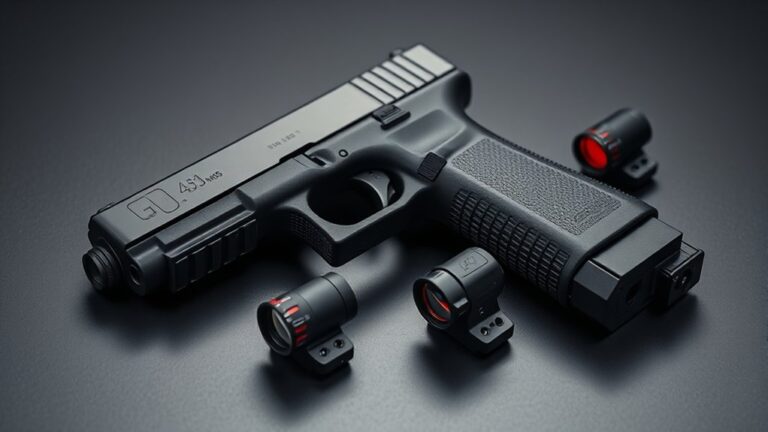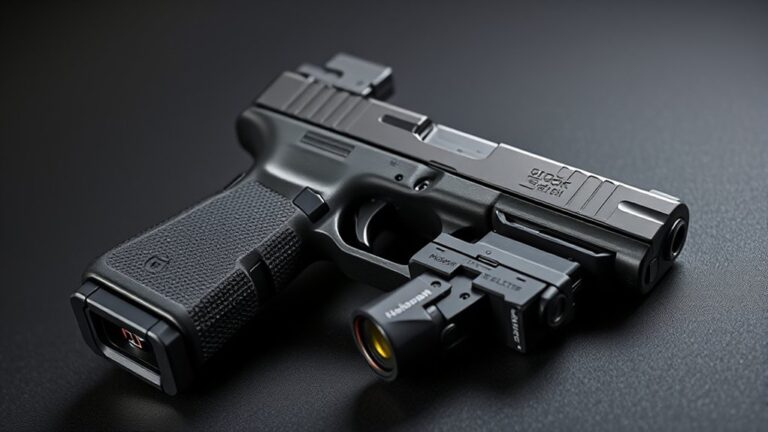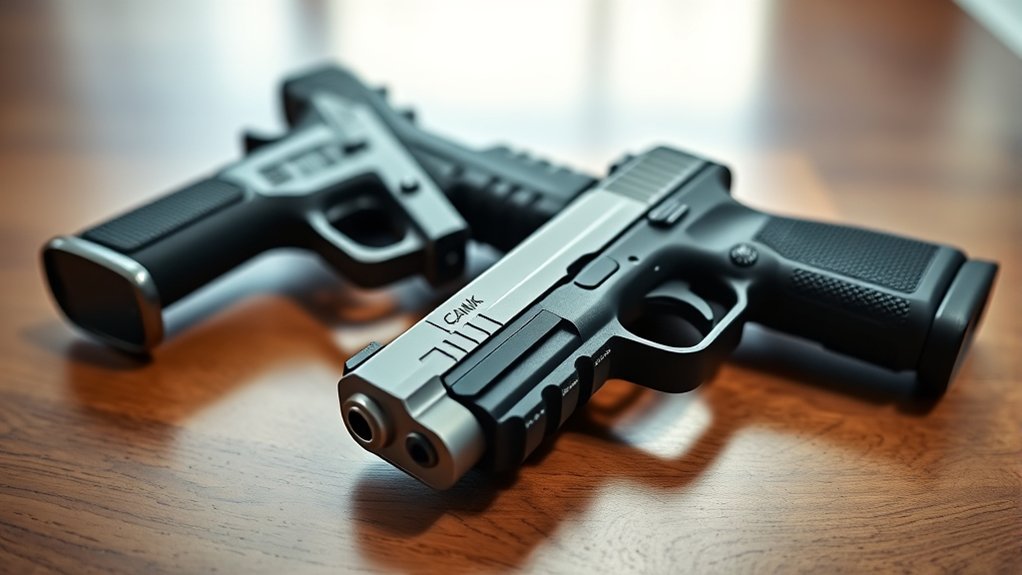
Is Canik Better Than Glock – Detailed Comparison Guide
If you’re looking for reliable and durable handguns, Glock is a proven leader. It’s especially popular for tactical and law enforcement use because of its long service record and extensive aftermarket support.
Canik offers strong reliability and accuracy at a more affordable price. Its ergonomic designs and added safety features make it a good choice for civilian carry.
Glock excels in customization and performs well in high-stress scenarios. Canik, on the other hand, provides great value and solid performance for the money.
Keep exploring to find out which one fits your specific needs best.
How Does Canik Compare to Glock in Reliability and Durability?
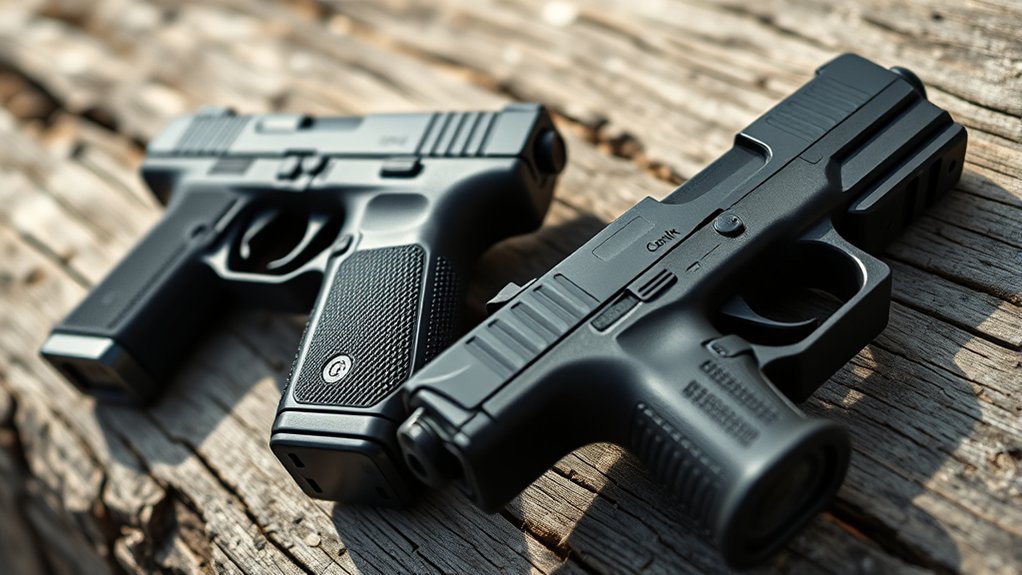
Although both Canik and Glock deliver reliable performance, Glock has established itself as the industry standard for durability through decades of rigorous use in military and law enforcement settings.
Both Canik and Glock offer reliability, but Glock sets the durability standard through extensive military and law enforcement use.
You’ll find Glock’s proven reliability unmatched, thanks to its optimized manufacturing process and design that minimize malfunctions even under extreme conditions.
Canik pistols, such as the NATO-certified TP9 series, show solid durability and reliability. They’ve completed 1,500 rounds without lubrication or failure in testing.
However, Canik’s shorter service record means it just trails Glock when it comes to long-term dependability.
While Canik offers strong performance at a lower cost, Glock remains the benchmark for consistent reliability and durability.
If you need a firearm that performs flawlessly with minimal maintenance in demanding environments, Glock is usually the safer choice.
Which Pistol Offers Better Accuracy?
When it comes to accuracy, both the Canik TP9SA and Glock 17 perform pretty similarly at 25 yards, no matter what kind of ammo you’re using.
The Canik does have a tiny edge when shooting Winchester NATO-spec 124gr +P rounds, but honestly, the difference isn’t huge.
It’s interesting to see how different types of ammo can affect precision, so knowing that can help you decide which pistol might be the better fit for your needs.
Accuracy Performance Comparison
Since accuracy is really important for both defensive and competitive shooting, we looked at how the Glock 17 and Canik TP9SA perform at 25 yards. Both guns showed pretty similar accuracy because they’ve similar barrel lengths and locking mechanisms, which help keep velocities consistent.
We tested with different types of ammo and saw only small differences in accuracy. The Canik TP9SA just slightly edged out the Glock 17, especially with Winchester NATO-spec 124gr +P rounds.
Both pistols are accurate enough for serious and self-defense use without spreading shots all over the place. The Canik TP9SA has a slight advantage, which could be helpful in competition scenarios.
Since their performance is pretty close, either firearm can be a reliable choice. The decision might come down to personal preference or specific ammunition.
Keep in mind, accuracy is just one factor. You should also consider other aspects when making your choice.
Ammunition Impact on Accuracy
The slight accuracy edge the Canik TP9SA showed over the Glock 17 becomes clearer once you consider the type of ammunition used.
Both pistols were tested at 25 yards with various brands, including defensive loads. The results showed comparable accuracy overall.
However, the TP9SA demonstrated marginally better accuracy with Winchester NATO-spec 124gr +P ammunition. This suggests that the quality of ammo can influence performance quite a bit.
Despite their different designs, both models showed minimal shot spread, which supports precise shooting at medium ranges.
The accuracy advantage of the TP9SA seems to be most noticeable with high-quality ammunition. This could be especially useful for competition shooters looking for that extra edge.
Ultimately, your choice between these pistols should consider how specific ammo types impact accuracy. Both offer reliable precision, but small differences can depend on the ammunition used and shooting conditions.
How Do Glock and Canik Differ in Ergonomics and Handling?
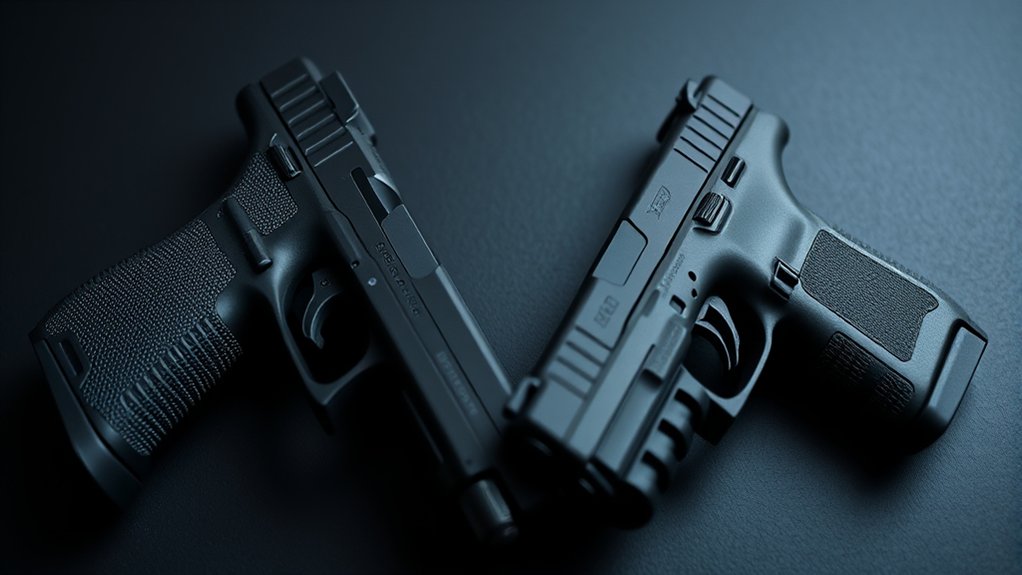
Although Glock and Canik both offer reliable handling, they differ noticeably in ergonomics. Canik puts a strong emphasis on ergonomic design with a checkered backstrap that boosts grip comfort and control. This is especially helpful during rapid or extended firing sessions.
Canik’s aggressive checkering improves control, but it might cause discomfort if you shoot for long periods. Glock’s grip feels smoother, which can be more comfortable during extended use even though its dimensions are bulkier.
Smaller-handed shooters might find Glock’s grip size a bit challenging. They often need extended magazines to get a better grip and handle the firearm more comfortably.
How Do Canik and Glock Safety Features Compare?
When you look at Glock, you’ll see it mainly relies on passive safeties like the trigger safety and firing pin safety. It doesn’t have manual safeties you need to flip on or off, which keeps things simple and reliable. This design is all about making sure the gun is safe to carry and easy to use without extra steps.
On the other hand, Canik takes a different approach. It includes manual safeties, decockers, and even loaded chamber indicators. These features give the user more direct control over the firearm’s safety functions.
So, while Glock emphasizes straightforward safety mechanisms, Canik offers more options for those who want to actively manage safety features.
Understanding these differences can really help you see how each brand balances security and ease of use. Glock’s approach keeps it simple and quick, while Canik’s provides more control if that’s what you prefer.
Safety Mechanism Differences
When comparing Canik and Glock safety mechanisms, you’ll notice some key differences. Canik offers more manual control options, including manual safeties, decockers, and loaded chamber indicators.
Glock mainly relies on integrated safety features like the trigger safety, firing pin safety, and drop safety. These are passive safeties that work without any manual intervention, emphasizing simplicity and reliability.
Canik’s safety features provide extra layers of control. They require deliberate actions to disengage, giving you more control over your firearm’s safety.
Here’s a quick breakdown:
- Glock uses passive safeties built into the trigger and firing system. It doesn’t have manual safeties.
- Canik includes manual safeties that need intentional action to turn off.
- Canik also offers decockers and loaded chamber indicators, which help with situational awareness.
Both brands meet strict safety standards. But Canik’s manual safeties give you more options for nuanced safety management.
Manual Versus Passive Safety
Since safety is a top priority in firearm operation, it’s important to understand the differences between manual and passive safety systems when comparing Canik and Glock pistols.
Glock mainly uses passive safeties, like the trigger safety and internal mechanisms such as the firing pin safety. These safeties don’t require any manual action from the user. Instead, they keep the firearm safe until you deliberately pull the trigger to fire.
On the other hand, Canik includes additional manual safeties and decockers. These allow you to actively engage or disengage safety features based on your preference.
While Canik’s manual safeties give you more direct control, Glock’s passive safeties focus on simplicity and reliability.
In the end, your choice depends on whether you prefer active safety controls you manage yourself or a streamlined system that works automatically.
How Does Aftermarket Support Influence Glock vs. Canik?
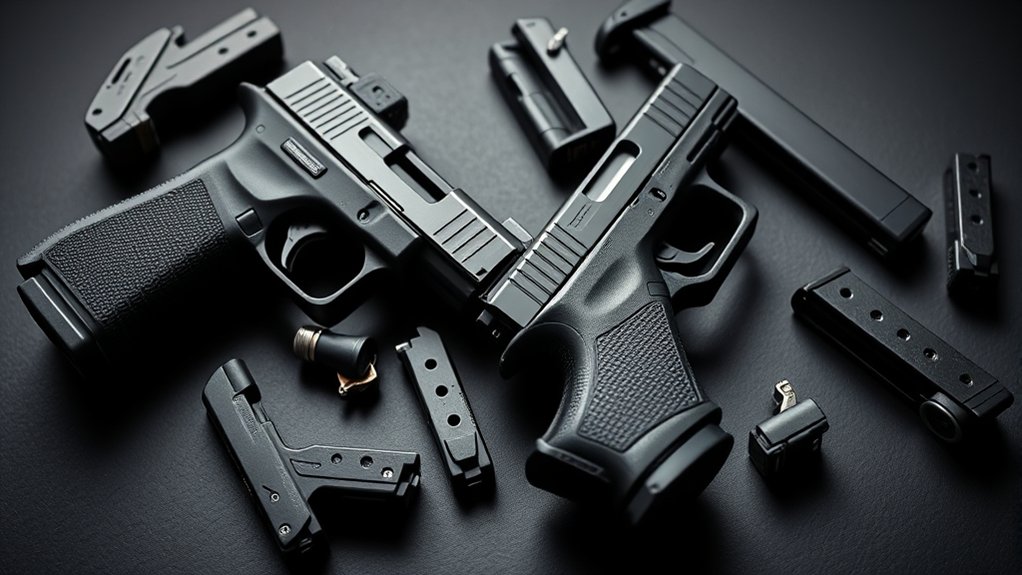
Although both Glock and Canik offer reliable firearms, the level of aftermarket support really impacts how much you can customize them.
Glock has a huge aftermarket support network that has been built since the 1980s. This means there are tons of upgrade options and customization possibilities available. You can easily find parts and accessories to tailor your Glock to your preferences.
Glock’s extensive aftermarket network offers countless upgrade options for easy, personalized customization.
On the other hand, Canik’s aftermarket support is still developing. There are fewer parts and upgrade options currently available, which limits how much you can modify the gun. While the ecosystem is growing, it hasn’t reached the same level as Glock’s.
With Glock, you can enhance your pistol by choosing from a wide range of sights, triggers, and magazines. There are also many suppressor-ready components and third-party accessories that are compatible.
Canik offers fewer options at the moment, which can be a restriction if customization is important to you. Overall, Glock’s established aftermarket presence gives it a clear advantage for those looking to upgrade and personalize their firearm.
Which Brand Offers Better Value for Budget Buyers?
If you’re shopping on a tight budget, Canik offers a more accessible entry point without sacrificing essential quality or performance.
With MSRP typically between $300 and $500, Canik pistols are more affordable compared to Glock’s $500–$700 range.
Canik delivers exceptional value by including feature-rich designs that meet NATO certification and strict military standards, ensuring reliable operation.
While Glock commands higher prices, that cost reflects its well-established reputation for durability and extensive aftermarket support.
This mightn’t be practical for budget buyers who are looking for more cost-effective options.
Ultimately, Canik balances quality, reliability, and affordability effectively.
It’s the preferable choice when value is your top priority.
If you want a dependable firearm without breaking the bank, Canik stands out as the better option.
What Are the Best Use Cases for Glock and Canik?
When choosing a firearm, it’s helpful to know the best use cases for Glock and Canik. Both are great for personal defense, but they’ve different strengths that suit different needs.
Glock is perfect for law enforcement and military use. Its reliability is unmatched, and it has a huge aftermarket support. This makes it a top choice for tactical situations and competitive shooting.
Glock’s unmatched reliability and extensive aftermarket support make it ideal for law enforcement, military, and tactical use.
Canik offers budget-friendly options that work well for civilians. They’re great for carry and home defense. Their ergonomic designs appeal to new shooters who want a dependable firearm for personal protection.
For concealed carry, Canik’s affordability and NATO-standard durability make it a practical option. Glock, on the other hand, is often preferred for those who need proven reliability in high-stress situations.
Understanding these differences can help you pick a firearm that fits your specific carry and defense needs.
Frequently Asked Questions
What Is the History and Origin of Canik and Glock Brands?
You’ll find Glock, founded in 1963 in Austria, revolutionized handgun design with polymer frames and striker-fired mechanisms. It focused on durability and ease of maintenance from the start.
Canik was established in 1997 in Turkey under the Sarsilmaz brand. It offers affordable pistols that are known for solid ammunition compatibility.
While Glock emphasizes minimalist design aesthetics and commands higher prices, Canik provides competitive pricing without sacrificing reliability.
Both brands serve a diverse range of users but have different design philosophies and market positions.
How Do Canik and Glock Pistols Perform in Extreme Weather Conditions?
When you face extreme weather, both Canik and Glock handle ammunition durability and cold weather operation with impressive resilience.
You’ll appreciate their corrosion resistance, thanks to quality polymers and treated steel.
Canik’s NATO-tested pistols perform reliably, giving you confidence in tough conditions.
Glock’s extensive field history also provides added assurance when things get harsh.
While both brands stand strong, Glock has a slight edge in consistent performance when the environment pushes your gear to its limits.
What Are the Differences in Magazine Capacity Between Canik and Glock Models?
You’ll find Glock full-size models usually hold 17 to 33 rounds, while Canik magazines range from 12 to 20, depending on the model.
Holster compatibility varies since Glock’s widespread use offers more options.
Magazine compatibility also favors Glock, with broader aftermarket support.
Aesthetic differences include Glock’s minimalist design versus Canik’s ergonomic styling.
These factors can influence your choice, along with magazine capacity and accessory availability.
Are There Notable Differences in Trigger Systems Between Canik and Glock?
Imagine you’re at the range comparing trigger mechanisms. Canik’s TP9 allows you to adjust trigger weight and travel, which can improve firing reliability and let you customize safety features like trigger stops.
Glock’s safe action system is more straightforward. It uses internal safeties that activate seamlessly with each pull, making it simple and reliable.
How Do Warranty and Customer Service Compare Between Canik and Glock?
You’ll find Glock’s warranty offers longer coverage on manufacturing quality defects. It’s backed by a global network that ensures reliable customer service.
Canik’s warranty is shorter, usually one to two years. Support is provided through dealers, which can sometimes slow down response times.
While Canik builds solid products and maintains good ammunition compatibility, Glock’s popularity and reputation give you more consistent service.
Conclusion
So, you’re wondering if Canik outperforms Glock? Well, both deliver solid reliability, accuracy, and ergonomics. But neither really reinvents the wheel.
Glock’s massive aftermarket support and proven track record are big advantages. Canik, on the other hand, offers budget-friendly innovation that’s hard to ignore.
If you’re looking for groundbreaking superiority, you might want to keep waiting. Both brands serve their roles well, though.
At the end of the day, your choice depends less on “better” and more on what fits your needs, budget, and preferences.
Ironically, perfection remains elusive in this head-to-head.