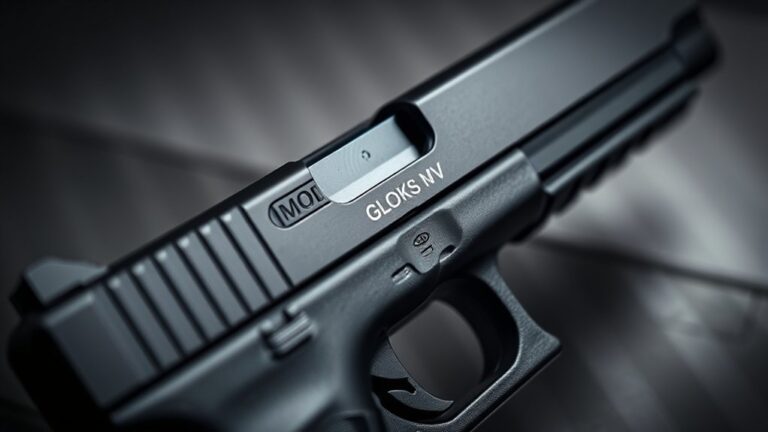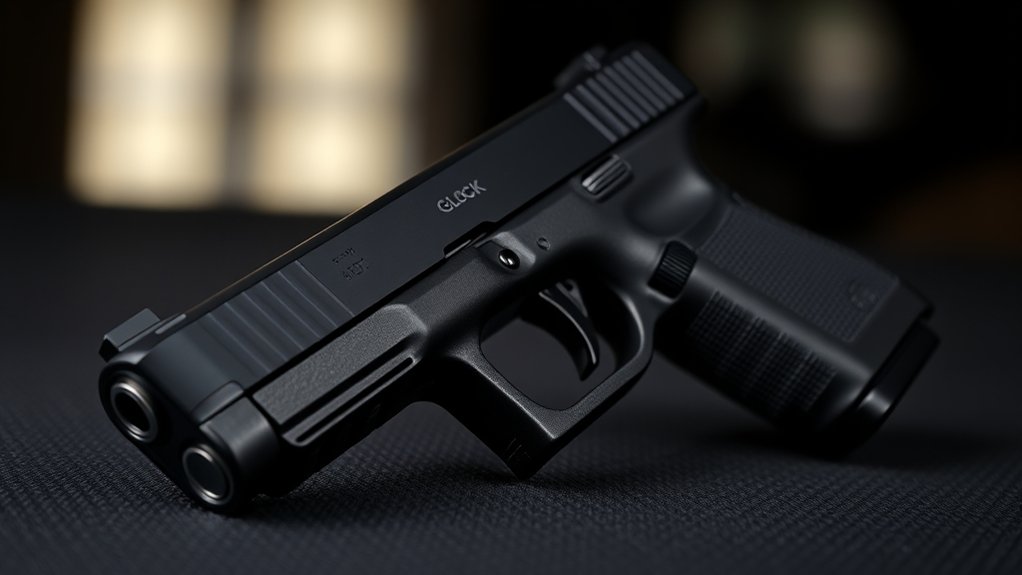
What Is A Glock Gun – Definition And Overview
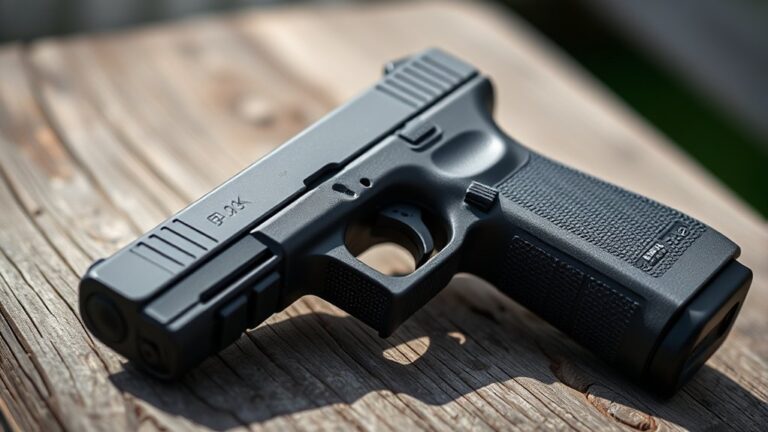
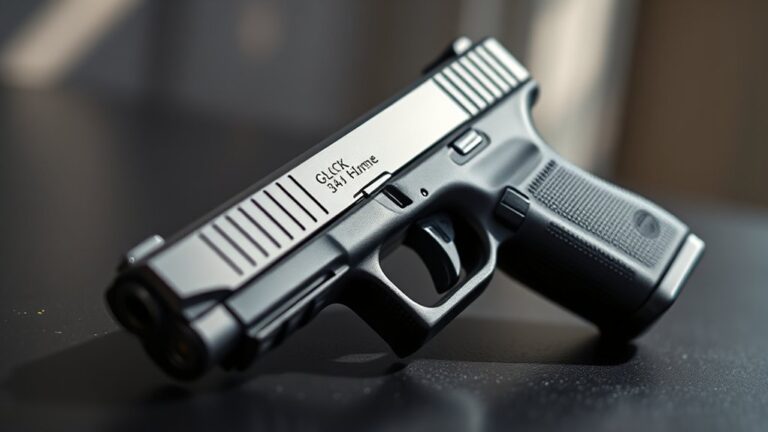
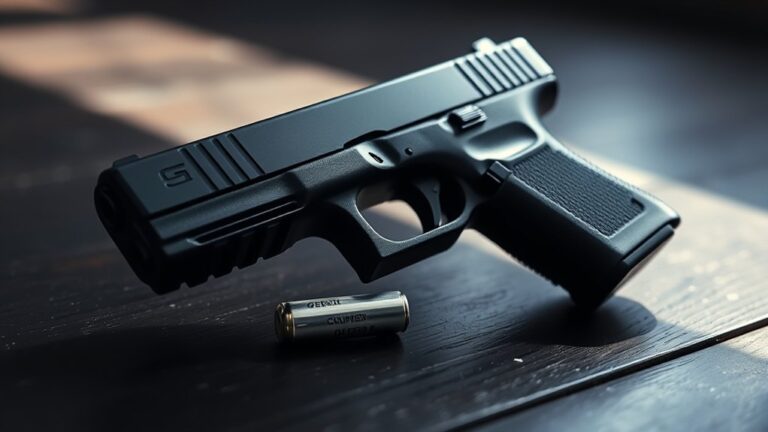
A Glock gun is a semi-automatic pistol that’s well-known for being reliable, durable, and easy to handle. It’s built with a lightweight polymer frame and a modular design, which means you can customize it quite a bit.
This makes it perfect for different uses, whether you’re carrying it concealed or using it for duty. One of its key features is the Safe Action system, which provides internal safety without the need for external safety levers. This helps ensure secure handling and quick access.
Glocks come in various models, tailored to different needs. When you look at the design and safety features, it’s easy to see why law enforcement and military personnel all over the world trust it.
What Is a Glock Gun and Why Is It Popular?
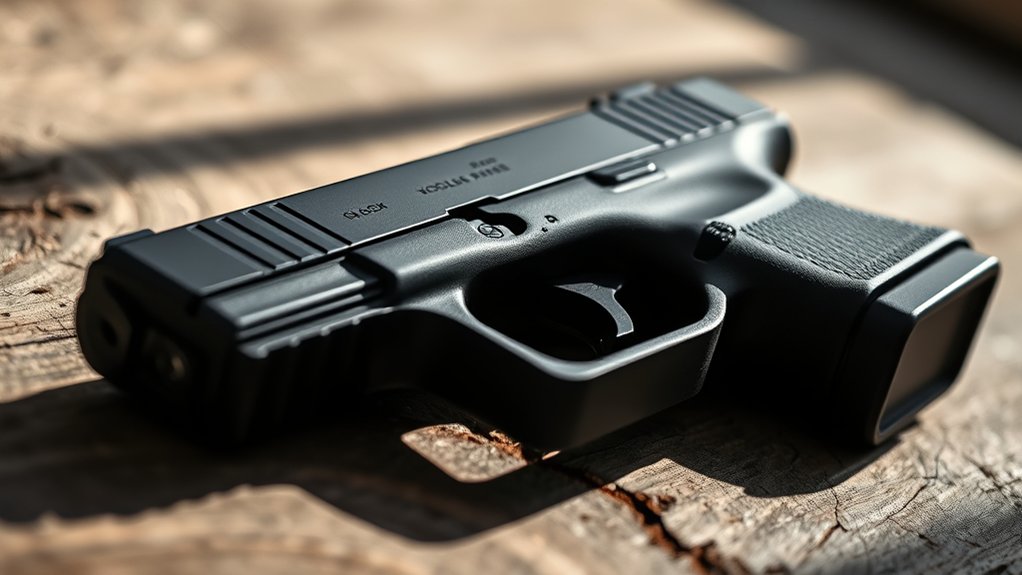
What makes a Glock gun stand out in the world of firearms? You’ll find that the Glock is a semi-automatic pistol designed for reliability and efficiency.
Its polymer frame reduces weight without sacrificing durability, making it easier to handle during extended use.
The polymer frame cuts down weight while maintaining strength for comfortable, extended handling.
The Glock’s high magazine capacity means you can fire more rounds before needing to reload, which is a big advantage in tactical situations.
The innovative Safe Action trigger system combines multiple safety mechanisms, so you can fire confidently without manual safeties.
Introduced in 1982, this pistol quickly became a favorite for military and law enforcement because of its ruggedness and consistent performance under tough conditions.
When you choose a Glock, you’re getting a precisely engineered firearm known for its modularity, easy maintenance, and proven reliability.
How Do Glock Pistols Work?
Glock pistols work using a short recoil, locked-breech system. Basically, when you fire the gun, the slide and the barrel move together for a short distance before unlocking. This helps cycle the slide smoothly and chambers the next round efficiently, making the gun reliable and easy to handle.
When you pull the trigger, Glock’s Safe Action system kicks in. It’s pretty clever because it has three internal safeties that work together to prevent accidental discharges. These safeties only deactivate when you intentionally pull the trigger, so you get a safe and reliable firing experience.
Getting familiar with these operating principles and safety features is key to understanding how Glock pistols work and ensuring safe handling.
Operating Mechanism Explained
Although Glock pistols might seem simple at first glance, their operation is based on a sophisticated short recoil, locked-breech system.
This mechanism helps manage recoil effectively by tilting the barrel backward during firing. When you pull the trigger, it releases the firing pin. The firing pin then strikes the primer, igniting the cartridge.
Next, the slide moves backward. It releases from the barrel, ejecting the spent casing and chambering a new round as it moves forward again.
Here’s a quick look at the key components and their functions:
| Component | Function |
|---|---|
| Trigger | Releases the firing pin to ignite the cartridge |
| Firing Pin | Strikes the primer to start firing |
| Slide | Moves back to eject the casing and load a new round |
| Barrel & Chamber | Tilt backward to absorb recoil and lock the breech |
This precise system ensures the gun is reliable and can fire rapidly, shot after shot.
Safety Features Overview
How does Glock guarantee safety without external safeties? It uses the Safe Action system, which includes three internal safety mechanisms: trigger safety, firing pin safety, and drop safety.
The trigger safety blocks the firing mechanism unless you fully press the trigger. This helps prevent accidental discharges.
At the same time, the firing pin safety physically stops the firing pin from moving forward unless the trigger is pulled intentionally.
This means the pistol won’t fire if it’s dropped or mishandled. The drop safety also prevents the firing pin from releasing during sudden impacts or drops.
All these safety features work together in sequence with the trigger pull. This design makes it safe to carry a loaded Glock without needing manual external safeties.
It’s a reliable system that doesn’t compromise safety during handling or use.
What Makes Glock’s Design Unique
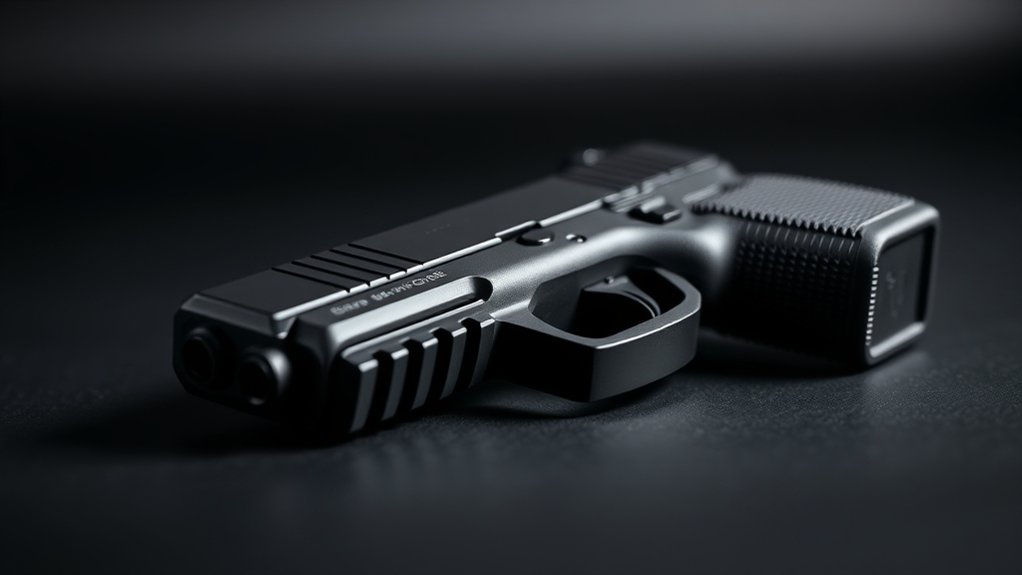
What makes Glock’s design so special? Well, for starters, it’s got that polymer frame that keeps the gun lightweight but still super durable. It’s like getting the best of both worlds—easy to carry around but built to last.
Then there’s the Safe Action system, which packs three internal safeties into the gun. This means you don’t need external manual safeties, making the gun more reliable and quicker to draw when needed.
Plus, Glock’s modular design makes it easy to customize and swap parts, so you can modify your gun to fit your exact needs. And because of its compatibility across different models and generations, it’s pretty versatile too.
Safe Action System
What sets Glock’s design apart is its innovative Safe Action system. It relies on three internal safeties instead of external manual safeties.
This safe action system combines the trigger safety, firing pin safety, and drop safety to ensure safe handling and prevent accidental discharges.
The trigger safety has a built-in lever that blocks trigger movement unless you intentionally press it. This design helps eliminate the chance of unintentional firing.
The firing pin safety keeps the firing pin immobilized until the trigger is fully depressed. That means the gun won’t fire if it’s dropped or mishandled.
The drop safety adds an extra layer of protection by preventing the firing pin from releasing if the pistol experiences impact.
Polymer Frame Innovation
Why does Glock’s polymer frame stand out in firearm design? Its use of Polymer 2, a high-strength nylon-based material, delivers unmatched durability and corrosion resistance.
This polymer frame is a game-changer because it drastically reduces weight compared to traditional metal frames. That means easier handling and better portability for you. Plus, the modular construction makes maintenance and customization simple without sacrificing performance.
Integrated hardened steel guide rails ensure smooth slide operation and help extend the lifespan of key components.
| Feature | Benefit |
|---|---|
| Polymer 2 Material | Exceptional durability |
| Lightweight Design | Easier to handle and carry |
| Modular Construction | Quick and simple customization |
| Hardened Steel Rails | Longer-lasting slide |
| Corrosion Resistance | Reliable even in tough conditions |
All of these features make Glock pistols reliable, resilient, and user-friendly in a variety of environments.
Modular Generation Features
Building on the polymer frame’s modular construction, Glock’s overall design is all about adaptability through interchangeable parts.
Its modular setup makes it easy to swap out frames, slides, and barrels. This means you can customize the firearm to suit your specific needs.
Generation features, especially in Gen5 and newer models, include a redesigned frame and slide with a flared magazine well. They also ditch finger grooves, which improves ergonomics and makes accessory compatibility simpler.
You’ll find that interchangeable parts help streamline repairs and upgrades. This minimizes downtime, so you’re ready to go faster.
The Glock MOS variant takes it a step further with the Modular Optic System. It allows you to attach a red-dot sight directly to the slide without extra modifications.
Glock’s building-block approach keeps a consistent core operating system across all models. This makes extensive customization possible while still maintaining reliability and performance.
All these features—modularity and generation upgrades—make Glock a versatile and user-centric choice.
Glock Safety Systems
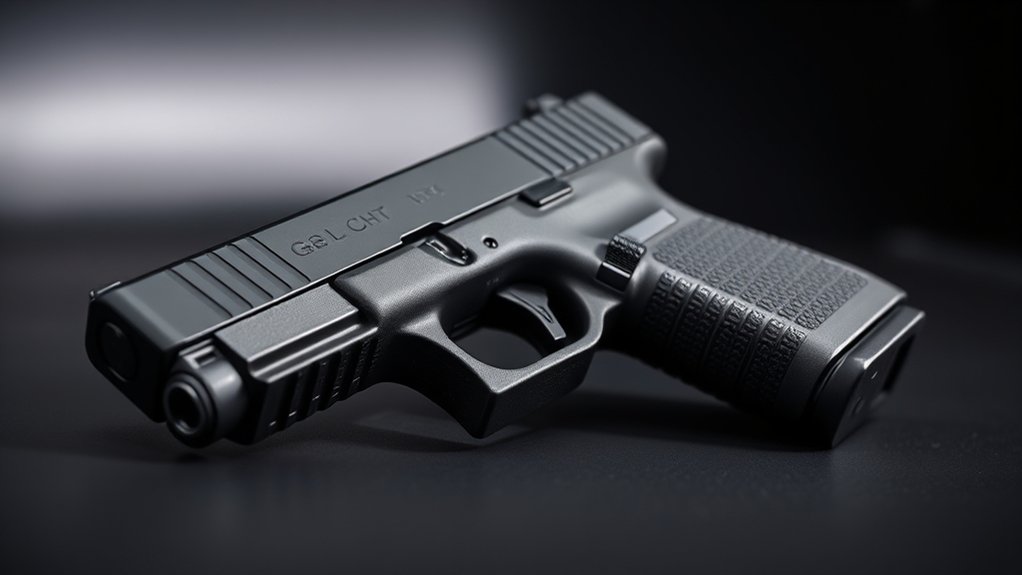
Although Glock pistols don’t have external manual safeties, they use a proprietary Safe Action system with three internal safety mechanisms. These include the trigger safety, firing pin safety, and drop safety. Together, they work to prevent accidental discharge.
The trigger safety is a spring-loaded lever inside the trigger itself. It blocks any movement unless you fully press the trigger. This means the gun won’t fire if it gets bumped or dropped.
The firing pin safety is a physical barrier that stops the firing pin from moving forward unless you intentionally pull the trigger. This prevents the gun from firing unexpectedly from impacts.
Finally, the drop safety ensures the firing pin can’t hit the primer if the pistol is dropped or experiences a sudden shock. These internal safeties are key to Glock’s design, making the gun safe to handle without external safeties.
Glock Models: Sizes and Use Cases
What size Glock fits your needs best really depends on how you plan to use it and your carry preferences.
Glock models come in full-sized, compact, subcompact, and slimline variants, each designed for specific roles. The full-sized Glock 17 has a 4.5-inch barrel and 17-round magazine. It’s ideal for duty use and home defense.
The compact Glock 19 strikes a good balance between concealment and firepower. It features a 4-inch barrel and a 15-round capacity, making it popular for both duty and concealed carry.
If you need deep concealment, the subcompact Glock 26 is a solid choice. It has a 3.43-inch barrel and 10-round magazine, which helps with maneuverability.
Slimline models like the Glock 43 series are specifically made for concealed carry. They’ve a slim, single-stack design with 6 to 10 rounds capacity.
Take a look at these Glock models to see which one matches your tactical needs and how you prefer to carry.
Glock Generations: How the Design Evolved
As you explore Glock pistols, understanding how their design has evolved across six generations helps clarify improvements in ergonomics, safety, and functionality.
The Glock generations started with Gen 1, which had a smooth pebble grip and no finger grooves.
Gen 2 brought checkered grips and an integrated recoil spring assembly, making the pistol more durable.
Gen 3 introduced accessory rails, finger grooves, and a larger locking block.
These changes strengthened the frame and added more versatility.
By the time we reach Gen 5 and Gen 6, Glock focused on ergonomic improvements and ambidextrous controls.
They also incorporated the Glock Marksman Barrel to boost accuracy.
Each iteration added advanced safety features and refined handling, showing a clear design evolution.
All these updates reflect Glock’s commitment to meeting user demands for performance and reliability.
Knowing these changes helps you appreciate how Glock pistols continually enhance operational effectiveness.
Why Military and Police Choose Glock
Understanding the continuous improvements across Glock generations shows why military and police forces around the world trust these pistols.
Glock pistols are known for their unmatched reliability and durability. They perform flawlessly even in tough conditions. Their polymer frame helps keep the weight down and resists corrosion, which is perfect for long shifts in law enforcement.
The striker-fired mechanism reduces the number of parts, lowering the risk of failure during critical moments. Plus, Glock’s modular design makes it easy to customize and maintain the pistol. This is essential for staying operational and prepared in the field.
All these features combine to meet the high standards of military and police agencies worldwide.
| Feature | Benefit |
|---|---|
| Reliability | Functions flawlessly under stress |
| Durability | Withstands harsh environments |
| Polymer Frame | Lightweight and corrosion-resistant |
| Modular Design | Easy customization and maintenance |
| Law Enforcement | Widely adopted by global agencies |
Frequently Asked Questions
How Do I Properly Clean and Maintain a Glock Pistol?
To properly clean and maintain your Glock, start with safety precautions. Unload the firearm and remove the magazine before you begin.
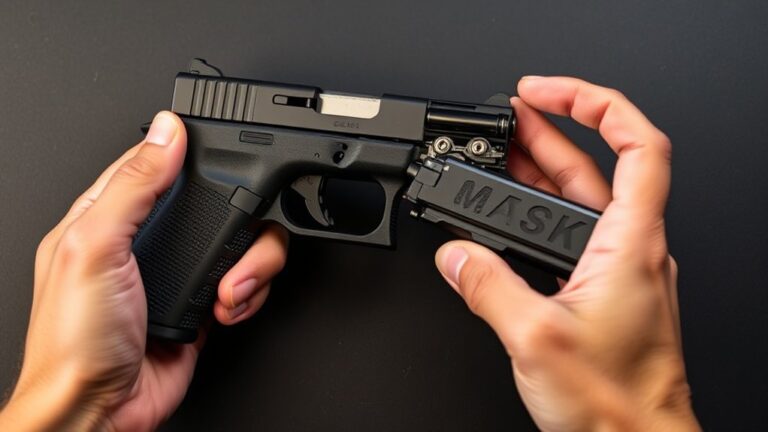
Next, follow the disassembly steps to separate the slide, barrel, and recoil spring. This makes it easier to clean each part thoroughly.
Use the right cleaning tools and solvents. Make sure to clean all the dirt, residue, and carbon buildup from each component.
When applying lubrication, lightly oil the slide rails, barrel lugs, and recoil spring assembly. Be careful not to overdo it—less is more.
Stick to a regular maintenance schedule. It’s a good idea to clean your Glock after every 200-300 rounds or sooner if you’re in harsh conditions.
Finally, regularly inspect all parts for signs of wear or damage. Catching issues early can help keep your pistol in top shape.
What Accessories Are Compatible With Glock Handguns?
You’ll find a wide range of accessories compatible with Glock handguns. Holster options vary from leather to Kydex, ensuring secure carry.
Sights and optics, including MOS-compatible red-dot mounts, can really improve your accuracy.
Flashlight attachments fit on integrated rails, making tactical use straightforward.
Magazine extensions are available to boost capacity, and trigger upgrades can enhance feel and reset.
Sling compatibility allows for hands-free carry with proper mounts.
These options let you customize your Glock exactly how you want it.
Can I Customize the Grip Size on a Glock?
Yes, you can customize the grip size on a Glock to make it more comfortable and improve your hand placement.
Glock offers interchangeable backstraps and custom grip panels that let you make ergonomic adjustments based on your hand size.
You can also add aftermarket finger grooves and enhance the grip texture for better control.
These modifications help you find the perfect fit, giving you a secure hold and more consistent trigger pulls.
In the end, this customization can really improve your handling and accuracy when you’re shooting.
What Are the Common Troubleshooting Tips for Glock Malfunctions?
To troubleshoot Glock malfunctions, start by checking the Glock safety to make sure it’s properly engaged. This is a quick step that can often prevent many issues.
Next, inspect the magazine for problems like improper seating or damage. These issues are common and can cause cartridge feeding problems. If the magazine looks fine, move on to the trigger. Verify that the trigger bar and connector are in good condition and functioning correctly.
Don’t forget to examine the firing pin. Look for any signs of wear or debris that could cause misfires. If you find any, clean or replace the firing pin as needed.
If your slide gets jammed, try cleaning and lubricating the slide rails. Keeping these parts well-maintained helps prevent jams and ensures smooth operation.
Regular maintenance of these components will keep your Glock reliable and ready when you need it.
How Do Glock Magazines Differ From Other Handgun Magazines?
You’ll notice Glock magazines differ in magazine capacity, magazine release, and magazine compatibility.
They feature a double-stack design for higher magazine capacity, which means more rounds in a compact size. A consistent magazine release notch ensures a secure fit and quick reloads, making your shooting experience smoother.
Glock magazines also have broad compatibility across different models, so you don’t need to worry about interchangeability. Their magazine spring and follower work together to ensure reliable feeding and easy loading.
The reinforced polymer bodies add durability, so your magazines can handle everyday use without issues. These elements combine to make Glock magazines reliable and user-friendly, standing out compared to other handgun magazines.
Conclusion
When you grip a Glock, you’re holding more than just a pistol. You’re holding a legacy of precision engineering and unwavering reliability.
Its unique design and advanced safety systems make it a trusted tool in high-stakes situations. It’s trusted by military and police forces around the world.
Like a finely tuned instrument, a Glock delivers consistent performance under pressure. It proves that innovation and simplicity can go hand in hand.
All of this comes together to shape the future of firearm technology right in your hands.