How Much Is A Glock 30 – Price And Cost Guide
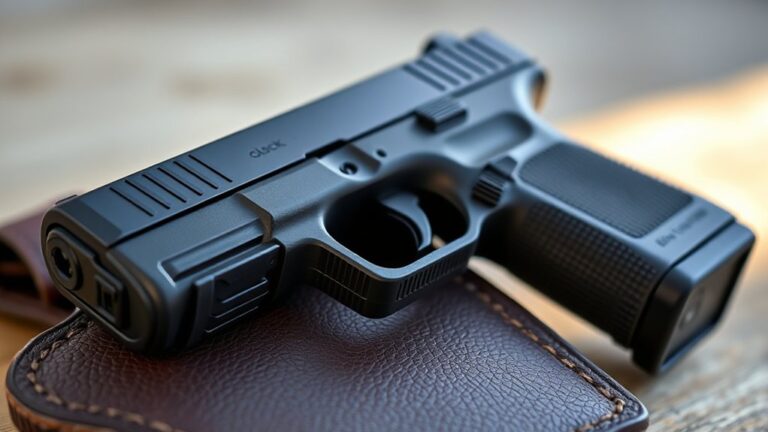
You can expect to pay between $300 and $650 for a Glock 30, depending on condition, generation, and included accessories.
New models with warranties usually cost $550 to $650, while used ones range from $300 to $500. Excellent condition used guns are closer to the top of that range.
Accessories like extra magazines or optics can bump up the price. On the other hand, modifications might actually reduce the value.
Regional laws and background checks also play a role in the pricing and availability of the Glock 30.
Exploring these factors gives you a better idea of how they shape the overall cost.
Current Glock 30 Market Prices
The current market prices for a Glock 30 typically range between $300 and $500. This depends on factors like condition, generation, and included accessories.
You’ll notice that the Glock 30’s value varies quite a bit with its condition. Models in excellent shape usually sell for $400 to $500. If the gun is in fair condition, prices tend to drop to around $150 to $225.
Accessories can also boost the firearm’s market value. Things like original packaging, extra magazines, and optics make a difference. Limited edition or vintage Glock 30s in pristine condition often fetch higher prices.
When you’re evaluating the Glock 30’s worth, consider demand, configuration, and whether the original documentation is included. These variables help you get a better idea of the resale price in today’s market.
How Condition and Generation Affect Glock 30 Prices
Although many factors influence Glock 30 prices, condition and generation are the most important ones.
Newer generations like Gen4 and Gen5 tend to sell for higher prices. That’s because they come with better features and improved ergonomics.
If your Glock 30 is in excellent, like-new condition, you can usually expect to get between $400 and $500.
On the other hand, heavily used or damaged models can drop below $200.
Including original accessories such as extra magazines or optics can also boost resale value.
Keeping the original packaging and showing minimal wear makes a difference too.
Modified Glock 30s with aftermarket parts often have lower resale value, depending on what buyers prefer.
Limited edition or vintage models in pristine condition might fetch a premium price.
This reflects their rarity and appeal to collectors within the Glock 30 market.
New vs. Used Glock 30 Prices
How much should you expect to pay when choosing between a new or used Glock 30?
New Glock 30 models typically cost between $550 and $650. The exact price depends on accessories included and the retailer’s pricing strategy. These firearms are factory-fresh and come with warranties and the latest features, which justifies their higher price.
New Glock 30 models range from $550 to $650, offering warranties and the latest features.
On the other hand, the price gap between new and used Glock 30 pistols is quite noticeable. Used Glock 30s usually range from $300 to $500. The price varies based on the firearm’s condition, age, and any modifications.
A used Glock 30 in excellent condition with minimal wear can be closer to the higher end of that range. When comparing new vs. used prices, it’s important to consider the firearm’s condition and whether accessories are included. These factors significantly impact the overall value and cost.
Accessories That Affect Glock 30 Prices
Which accessories truly impact the price of a Glock 30? When you’re looking at aftermarket upgrades, some additions can really influence how much the firearm sells for and its resale value.
Consider these key accessories:
First, original packaging and documentation. Keeping these in good condition can significantly boost resale value.
Next, optics upgrades like red dot sights. They not only improve functionality but also tend to raise the market price.
Tactical lights and extra magazines are also popular. They’re valued for their practical utility and can increase the gun’s overall worth.
Limited edition or rare custom finishes and engravings are another big factor. These unique features often command premium prices.
While custom grips and night sights are quite popular, they generally don’t have a big impact on the Glock 30’s value.
Understanding how specific accessories influence pricing can help you make smarter decisions when buying or selling your firearm.
How Magazine Capacity Influences Glock 30 Price
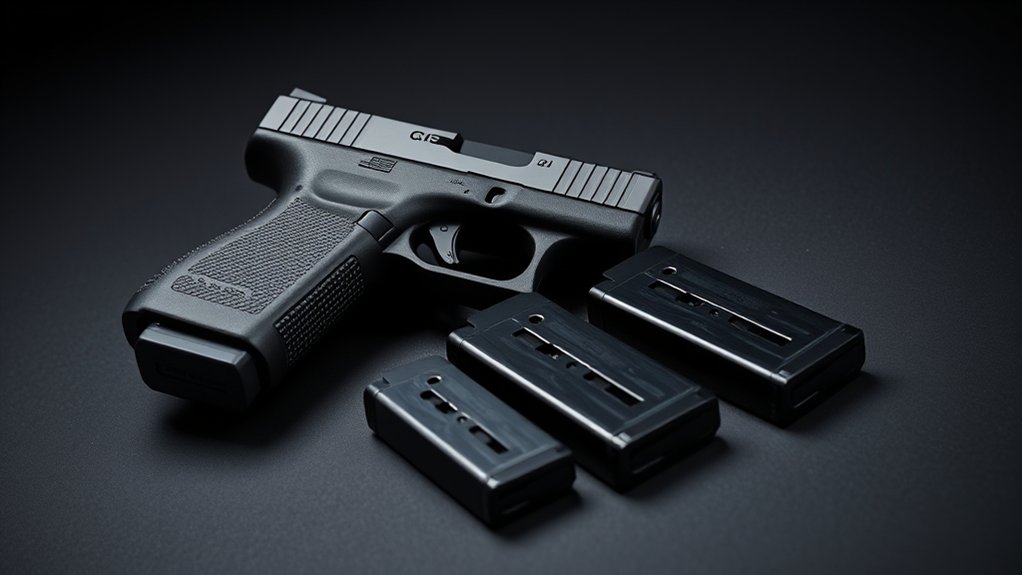
You’ll notice that the Glock 30 usually comes with a standard 10-round magazine, and that helps set its basic price.
But when you start looking at extended or higher-capacity magazines, the costs tend to go up. That’s because these magazines offer more functionality and are in higher demand.
Models that come with 13-round magazines often cost more, too. That’s because they give you extra firepower and are more popular in the market.
Standard Versus Extended Capacity
Why does magazine capacity matter when considering the price of a Glock 30? Well, the capacity of the magazine directly impacts both the firearm’s cost and how it functions. This means it influences not just what you pay upfront but also its resale value down the line.
The standard Glock 30 comes with a 10-round magazine. Many people prefer this for concealed carry because it’s more compact and usually less expensive.
On the other hand, extended magazines typically hold about 13 rounds, which is a significant boost in capacity.
Adding extended magazines will usually cost an extra $20 to $50 per unit. This increases the initial price of the firearm if you opt for the larger capacity.
Plus, models with higher capacity tend to have better resale value because they appeal to a broader range of buyers.
Demand for extended magazines also affects their prices. When more people want them, prices can go up.
Understanding these factors can help you make a better-informed decision when choosing the right Glock 30 setup for your needs.
Capacity Impact On Value
Magazine capacity plays a big role in setting the Glock 30’s price and overall market value. The standard 10-round magazine gives a baseline for resale value and how desirable the firearm is.
When you look at extended magazines that boost capacity beyond 10 rounds, you’ll see the firearm’s cost and appeal go up. These higher-capacity options are often preferred for self-defense, making the Glock 30 more attractive in the secondary market.
However, restrictions on magazine capacity in certain areas can limit availability. This can affect both the price and how much people want to buy it.
Including multiple magazines or higher-capacity versions in a sale can also increase the Glock 30’s overall value.
Understanding how magazine capacity impacts pricing can help you better judge the real worth and market position of any Glock 30 you’re interested in.
Magazine Size And Demand
How does magazine size directly influence the demand and pricing of the Glock 30? The standard 10-round magazine capacity sets a baseline for its firearm price. But variations in magazine size can significantly impact resale value and demand.
Extended magazines with 13-round capacity tend to increase demand. This often drives higher prices on the secondary market. People see the extra firepower as a big plus.
Jurisdictional restrictions on magazine capacity can limit availability. When certain magazines aren’t legal in some areas, it can negatively affect the firearm’s price and desirability.
Larger magazine capacity also appeals to users. It offers a good balance between firepower and concealability, which boosts demand.
Models that feature higher capacity magazines usually command a premium resale value. That’s because they provide operational advantages that many shooters value.
Understanding these factors helps you get a clearer picture of how magazine capacity shapes the Glock 30’s market dynamics and pricing trends.
Where to Buy a Glock 30
Several reliable options are available for buying a Glock 30, including authorized firearms dealers both in-store and online. You can check out local gun stores or sporting goods retailers, where the Glock 30 typically costs between $550 and $650.
Online marketplaces like Guns.com and GunBroker also have Glock 30 models for sale. Just keep in mind you’ll need to go through a background check and arrange for an FFL transfer to stay compliant with regulations.
Always make sure the dealer you’re buying from is verified and authorized. It’s a good idea to confirm their credentials before making a purchase.
And remember, shipment should always be guaranteed to a licensed dealer for safety and legality.
Legal and Regional Factors Affecting Glock 30 Prices
When you’re looking into Glock 30 prices, it’s important to keep in mind that different states have their own firearm laws that can really influence what you’ll pay.
For example, some places have strict age and residency requirements, which can make buying one a bit more complicated or costly.
Plus, the background check process isn’t the same everywhere. Some areas might’ve longer delays or higher fees, which can add to the overall cost and time it takes to get your hands on a Glock 30.
State Firearm Regulations
State firearm regulations play a critical role in shaping the retail price of a Glock 30. You’ll find that firearm costs vary due to specific state laws and legal restrictions impacting availability and transaction procedures.
Four key factors influence the Glock 30 price. First, additional permits and mandatory background checks required by state firearm regulations can add to the overall cost.
Second, restrictions on private firearm sales limit supply and can affect resale values.
Third, licensing obligations such as firearm registration and waiting periods also contribute to higher costs.
Lastly, regional demand fluctuations driven by local legal frameworks and enforcement play a role in pricing differences.
Understanding these elements helps you anticipate price differences across states like California or New York, where stricter regulations tend to increase Glock 30 price points.
Your purchase cost closely aligns with how complex the state laws governing firearms are.
Age And Residency Requirements
While federal law requires background checks for all firearm purchases from licensed dealers, there are additional rules to consider.
Age restrictions usually mean you have to be at least 21 years old, which aligns with most state laws.
Residency requirements vary a lot from state to state. Some states need you to have permits or licenses before you can buy a gun, which can affect when and if you’re eligible.
States like California and New York have their own rules, adding extra steps and costs for compliance.
All these state regulations, along with residency-based background check rules, make the legal landscape pretty complex.
Understanding these factors is important because they impact both whether you can buy a Glock 30 legally and how much it will cost.
Background Check Procedures
Because background check procedures differ quite a bit depending on where you are, it’s important to understand these differences when you’re thinking about buying a Glock 30.
Federal law requires licensed dealers to run a background check through the National Instant Criminal Background Check System (NICS). But beyond that, state-specific firearm rules and restrictions can really change how the process works and how much it costs.
Some key things to keep in mind are:
- The methods for background checks can vary—some are instant, others require fingerprinting, or there might be waiting periods.
- You might need extra licenses or complete safety courses depending on your location.
- There could be regional restrictions on owning or registering a Glock 30.
Fees and how long the process takes can also impact the total cost and how quickly you can get your hands on the firearm.
All these factors can influence your chances of actually getting a Glock 30, its availability on the market, and even its resale value.
Frequently Asked Questions
What Is the History and Development of the Glock 30?
You’ll see the Glock 30’s historical evolution began with early models focusing on compactness and .45 ACP power.
Glock incorporated design innovations like enhanced recoil management and grip ergonomics.
The manufacturing process uses advanced polymer frames and steel slides, ensuring durability and lightweight handling.
Material selection prioritizes corrosion resistance and strength.
Over time, these technical improvements have refined the Glock 30 into a reliable, concealable handgun favored for personal defense and law enforcement.
How Does the Glock 30 Compare to Other Glock Models?
You’ll find the Glock 30 excels in concealed carry suitability, thanks to its compact size and ergonomic design tailored for .45 ACP recoil.
While its ammunition efficiency is lower than 9mm models like the Glock 19, it delivers greater stopping power. This makes it a solid choice if you prioritize power over capacity.
Accessories compatibility is broad but slightly limited by its thickness.
Reloading techniques demand more skill because of the increased recoil.
Despite these challenges, the Glock 30 remains a reliable, powerful choice among Glock pistols.
What Calibers Are Available for the Glock 30?
Surprisingly, you won’t find a buffet of calibers for the Glock 30—it’s exclusively chambered in .45 ACP.
This means you’re limited to just one caliber, which actually helps with reliable recoil management and ensures you get that solid stopping power.
While the magazine capacity is a bit lower compared to smaller calibers, the G30 offers a good balance between size and firepower.
Sight options and customization possibilities are still solid, but if you want to upgrade or modify your Glock 30, you’ll need to stick with the .45 ACP framework.
What Are the Common Maintenance Tips for a Glock 30?
You should follow strict cleaning routines, using solvent and brushes to remove carbon buildup from the slide, barrel, and recoil spring assembly.
Make sure to apply lubrication techniques by oiling slide rails, recoil spring, and barrel lug. This helps guarantee smooth cycling and prevents unnecessary wear.
Always practice safety by unloading the Glock 30 before you start any maintenance. It’s a simple step that can prevent accidents.
Inspect the recoil springs regularly and replace them every 3,000 to 5,000 rounds. Worn springs can affect the gun’s performance and reliability.
Finally, store your firearm in a dry, cool place to prevent corrosion. Proper storage helps maintain your Glock 30’s reliability for years to come.
How Does the Glock 30 Perform in Self-Defense Situations?
The Glock 30 performs like a legend in self-defense, delivering unmatched ammunition effectiveness with its powerful .45 ACP rounds.
You’ll handle recoil management effortlessly, allowing rapid follow-up shots.
Mastering quick draw techniques is simpler thanks to its slim profile and lightweight frame.
This makes it easier to conceal and carry comfortably.
Its consistent target accuracy ensures every shot counts under pressure.
Conclusion
When considering how much a Glock 30 will cost you, keep in mind that condition, generation, accessories, and magazine capacity all play a big role.
New models tend to be more expensive, while used ones can be a good deal if you carefully check their condition.
Regional laws also affect pricing and availability, so it’s smart to shop around and compare options.
Don’t put all your eggs in one basket—looking at different sellers and regions can help you find the best price.
By understanding these factors, you’ll be able to make a smart purchase that fits your needs and budget exactly.