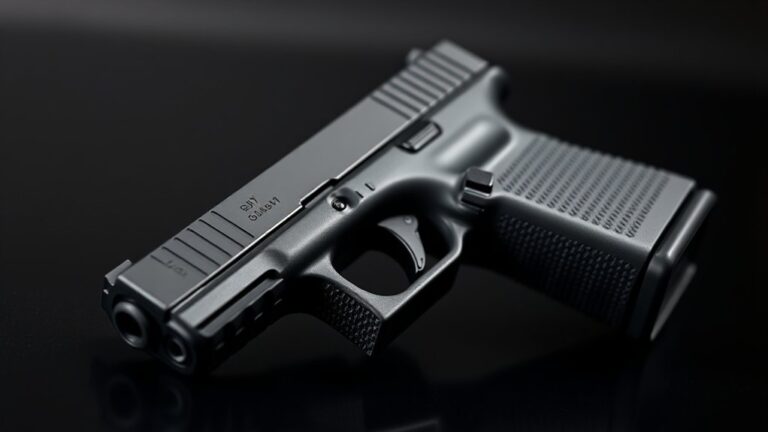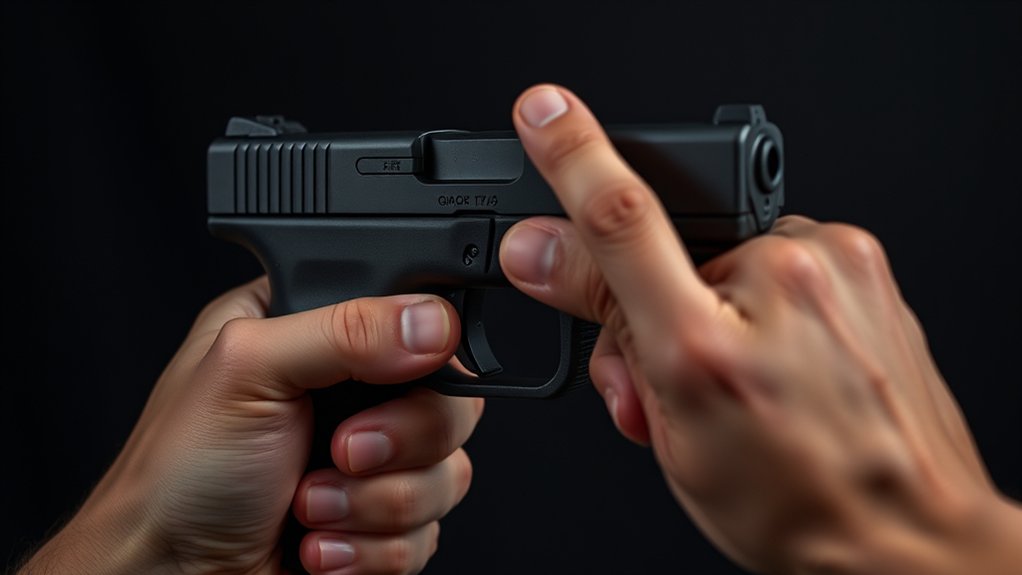
How To Hold A Glock – Proper Grip Guide
To hold a Glock properly, start by placing your dominant hand high on the backstrap. Make sure to fill the web between your thumb and index finger for maximum control.
Wrap your fingers fully around the grip, and keep your wrist straight and locked. It’s important that your wrist stays aligned with the slide to absorb recoil efficiently.
Your support hand should firmly wrap around your dominant hand. Thumbs can either overlap or run parallel to each other.
Avoid gripping too low or having a limp wrist. These mistakes can affect your accuracy and safety.
Keep this foundation strong, and you’ll be on your way to improving your shooting skills.
Why Proper Glock Grip Improves Accuracy and Safety
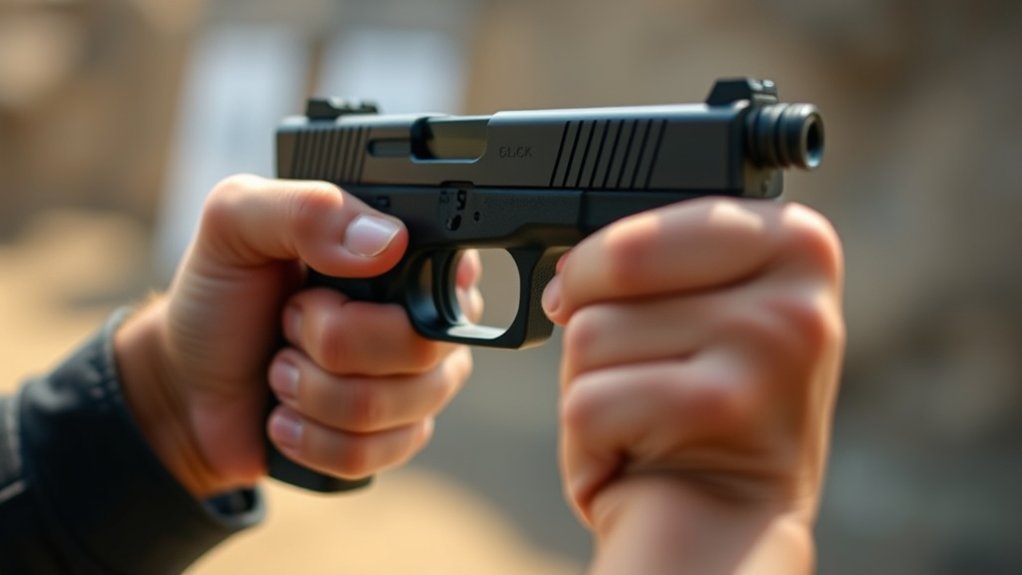
When you hold a Glock with a proper grip, you maximize contact with both the backstrap and front strap. This stabilizes the firearm and directly improves your shot accuracy.
A firm, consistent grip also reduces muzzle flip. This helps you recover your sights quickly, allowing for faster and more precise follow-up shots.
Using a high grip stance minimizes limp wristing, which can cause malfunctions and compromise safety.
Applying the right grip pressure prevents accidental discharges by giving you better trigger control.
Developing muscle memory through consistent proper grip technique enhances your overall handling skills. This makes each shot safer and more accurate.
How To Position Your Dominant Hand On A Glock
How exactly should you position your dominant hand on a Glock to maximize control and accuracy?
Start by placing your dominant hand high on the backstrap, as close to the slide as possible. The web of your hand should fill the corner between your thumb and index finger, ensuring firm contact with the back of the slide.
Wrap your fingers around the grip so your palm makes maximum contact with the backstrap. This improves control and stability.
Maintain a slight upward grip angle in your wrist to absorb recoil efficiently and prevent limp wristing. Grip as hard as possible without losing trigger control or causing shake.
This dominant hand position directs recoil straight back, minimizing muzzle flip. It helps you maintain better control and improves overall shooting performance.
How To Position Your Support Hand And Wrap Your Fingers
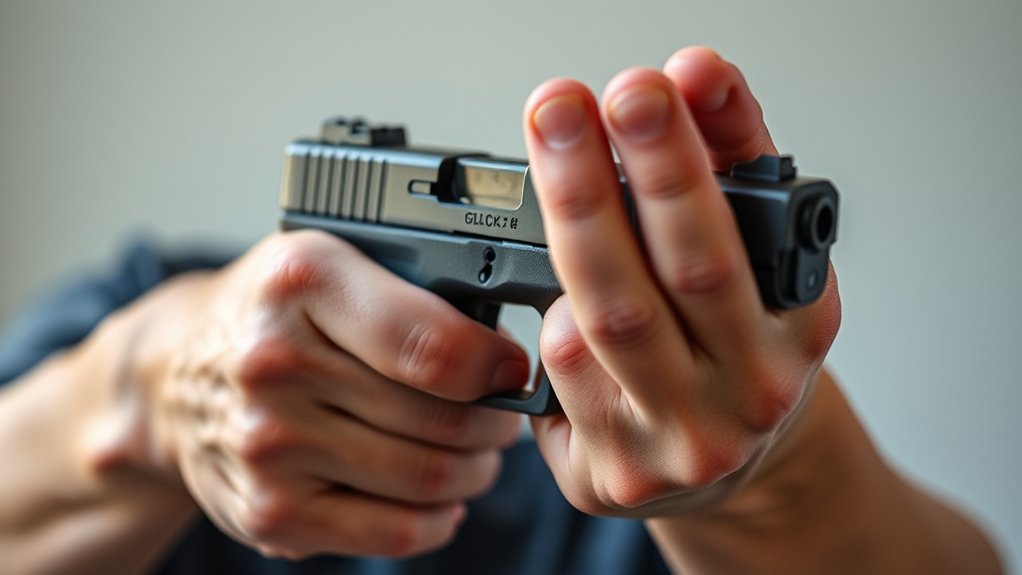
First, position your support hand firmly against the grip, making sure it fills the space between your dominant hand and the backstrap. This helps create a solid foundation.
Next, wrap your support fingers tightly around the front of your trigger hand’s fingers. This helps lock the grip in place and keeps everything secure.
Finally, ensure your palm makes good contact with the grip. When your palm is fully engaged, it boosts your stability and gives you better control during recoil.
Support Hand Placement
Although many shooters focus on their dominant hand, positioning your support hand high on the backstrap—right up against the slide—gives you better control over recoil.
Make sure your palm firmly contacts the back of the grip. This stabilizes the firearm, which helps improve shot consistency.
Wrap your support fingers tightly around your dominant hand’s fingers, filling any open spaces. This prevents gaps that can reduce your control.
Holding tightly with both hands increases grip strength and keeps your wrists aligned correctly. This is key for managing recoil and making follow-up shots more accurate.
Finger Wrapping Techniques
When you wrap your support fingers around the front of your dominant hand’s fingers, you create a solid, unified grip that boosts stability.
Position your support fingers so they fill the gap between your fingers and the gun’s frame. Make sure they contact the palm well without squeezing too hard.
Apply even pressure with your support fingers to keep the grip steady and control recoil better.
Your support thumb should rest comfortably either over or across your trigger thumb, depending on what feels natural and secure for you.
Keep a firm, wrapping grip with your support hand throughout shooting. This helps stabilize the firearm, especially during rapid or extended sessions.
Practicing these finger wrapping techniques regularly will help improve your overall control and shooting accuracy.
Maximizing Palm Contact
Building on your finger wrapping technique, maximizing palm contact helps solidify your grip and gives you better control.
Position your support hand so its fingers fill the space between your trigger finger and palm, wrapping firmly around the front of the grip. This ensures your palm stays in consistent contact with the backstrap, which is key for grip stability and managing recoil.
Wrap your support fingers over the firing hand’s fingers to keep a secure hold.
Place your support thumb either over the trigger thumb or parallel below the slide—pick whichever feels most comfortable, but make sure the grip stays tight.
Maximizing palm contact creates more friction, which helps absorb recoil. This makes it easier to recover quickly and stay accurate, especially during rapid fire.
Getting this positioning right is crucial for handling your Glock effectively.
How To Align Your Wrists For A Proper Glock Grip
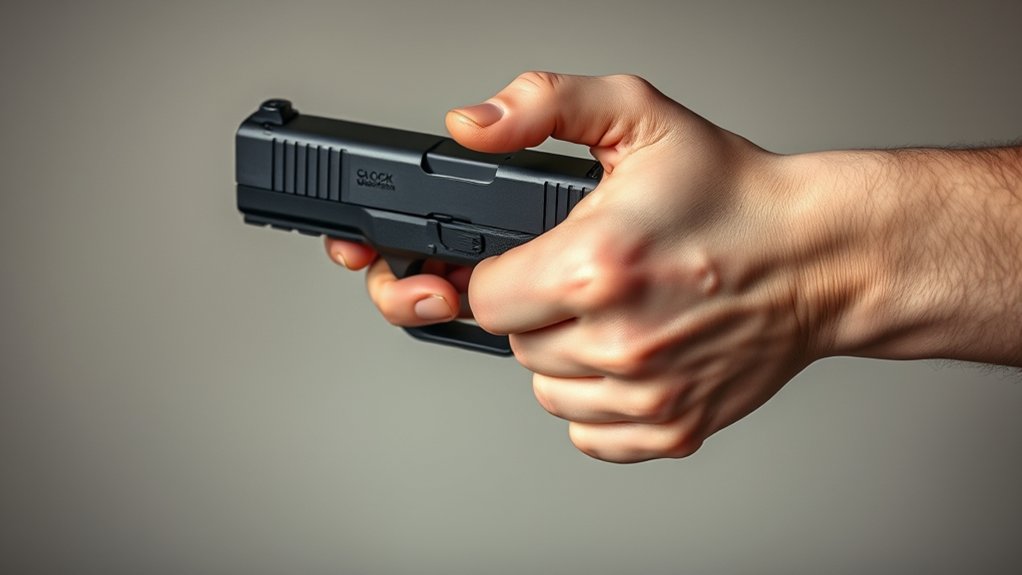
To get the best grip on your Glock, make sure your wrists are straight and aligned with the slide. This helps create a solid platform for shooting and makes aiming more consistent. If your wrists are bent or shaky, it can throw off your shot, so keep them firm and steady.
Avoid limp wristing — that’s when your wrists aren’t locked in place, which can cause the gun to jam or recoil badly. Lock your wrists firmly but comfortably, so you can absorb the recoil smoothly and keep control of the gun.
A little tip: try tilting your wrists outward just a bit. This small adjustment can really improve your grip stability and help reduce muzzle flip. That way, you’ll have better control and be able to shoot more accurately.
Wrist Alignment Basics
Although it might seem minor, aligning your wrists correctly is essential for a proper Glock grip. Focus on keeping your wrists straight and firm, with a slight downward cant.
This natural angle helps improve grip stability and makes it easier to transfer recoil energy into your arms. Avoid bending your wrists excessively; aim for a neutral, locked position to keep your wrists aligned.
Staying consistent with wrist position prevents common issues and makes recoil management much easier. Proper wrist tension stabilizes the pistol, allowing you to recover your sights faster between shots.
It also boosts your overall accuracy. Mastering these wrist basics helps you control muzzle flip better and maintain a solid grip throughout your shooting session.
Preventing Limp Wristing
Maintaining firm, straight wrists not only stabilizes your grip but also helps prevent limp wristing, which is a common cause of malfunctions when firing your Glock.
To keep your wrists properly aligned, slightly cant them forward and engage your wrist muscles to create tension.
This firm grip directs recoil straight back, which improves recoil control and minimizes muzzle flip.
Avoid over-bending or relaxing your wrists, as either can reduce your control and increase the chances of jams.
By keeping your wrists aligned and firm, you reduce unwanted gun movement during firing.
This leads to more consistent shot recovery and better overall control.
Balancing Grip Pressure And Trigger Control
When you balance your grip pressure with trigger control, you improve both stability and accuracy. Apply a firm but controlled grip to keep your Glock steady without causing fatigue or tremors.
Maintain consistent pressure throughout each shot. This helps with recoil management and ensures precise shot placement. Grip tightly enough to prevent hand movement during trigger pull, but don’t squeeze so hard that it interferes with trigger control.
Consistent grip pressure controls recoil and steadies your shot without hindering trigger movement.
Finding that sweet spot where your grip absorbs recoil but still allows smooth, deliberate trigger operation is key. Too much tension can cause shaking and reduce your accuracy.
On the other hand, too little grip can compromise your stability.
Practicing this balance will help you optimize your shooting performance. It allows you to maintain control and accuracy with every pull of the trigger.
Common Glock Grip Mistakes To Avoid
Even experienced shooters can fall into common grip mistakes that hurt control and accuracy with a Glock.
One key error is gripping too low on the frame. This increases muzzle flip and makes rapid-fire control more difficult.
Avoid teacupping your support hand under the magazine well. Doing so reduces stability and makes recoil management harder.
Pay close attention to your hand positioning. A limp wrist or a support thumb that’s misaligned—especially if you’re placing it on the slide or too far forward—can cause slide bite or malfunctions.
Also, don’t apply too much grip pressure. Excessive tension can lead to hand tremors and makes trigger control more challenging.
Mastering proper grip pressure and hand positioning will greatly improve your shooting performance. It also helps prevent common grip mistakes that can undermine your Glock handling.
Practice Tips To Improve Your Glock Grip
Although mastering your Glock grip takes time, regular practice will help build muscle memory and improve your control a lot. Start by dry firing with an unloaded Glock in a safe area. Focus on consistent hand placement and smooth trigger control.
Pay close attention to your grip around the trigger guard. Make sure your finger placement is precise and avoid touching the trigger prematurely.
Using grip strengtheners can also help boost your grip strength and hand endurance. This makes it easier to keep a firm hold during rapid firing.
Incorporate drills that emphasize high hand placement and correct support hand positioning. These are great for improving recoil management.
Regularly check your grip pressure too. You want the right balance between control and comfort.
Finally, watch instructional videos and practice slowly. Reinforcing proper thumb and finger placement will lead to lasting improvement.
Frequently Asked Questions
What Type of Glock Holster Best Complements a Proper Grip?
You’ll want a holster that guarantees safety while still allowing quick access so you can maintain your proper grip.
An inside-the-waistband (IWB) holster is a great choice for concealed carry. It offers a good balance of comfort and secure retention.
Tactical placement around the strong side hip helps you draw smoothly without messing up your grip.
Look for a holster with adjustable cant and retention. These features keep your Glock stable and ready to go.
This way, you can confidently draw and shoot with proper technique every time.
How Often Should I Clean My Glock to Maintain Grip Texture?
Imagine your Glock’s grip like the tread on a tire—crucial for control. You should clean your Glock on a regular schedule, ideally after every range session or at least once a month.
This keeps grip maintenance consistent and prevents dirt buildup that erodes texture.
Proper cleaning helps preserve the texture, so your hold stays firm and reliable. Don’t wait for grime to dull your control. Stay proactive and keep that grip’s integrity intact.
Can Different Glock Models Affect Grip Technique?
Yes, different Glock models can affect your grip technique. You’ll want to keep your grip consistent, but that might mean adjusting finger placement to fit the frame size and shape.
Smaller models may require you to modify your grip slightly to stay in control.
Larger models, on the other hand, give you more surface area to hold onto, which can make a difference.
How you position your fingers directly impacts recoil management.
What Accessories Enhance Grip Comfort and Control?
You want grip texture options, ergonomic modifications, and a holster concealment that complements your setup. Start with grip sleeves or stippling to boost traction.
Add backstraps or extended controls for ergonomic modifications that fit your hand perfectly. These small changes can make a big difference in how comfortably and securely you hold your Glock.
Choose a holster designed for concealment but also easy access. This way, you can maintain control without sacrificing comfort.
These accessories work together to enhance your grip comfort and control. They make your Glock handle more reliable and user-friendly, so you can focus on your shooting.
How Does Hand Size Impact Glock Grip Adjustments?
Your hand size directly impacts how you adjust your grip on a Glock, which really affects how you handle the firearm.
If you have smaller hands, you might need to hold the gun a bit higher on the backstrap or consider using grip sleeves. This helps ensure you have full trigger control and a secure hold.
On the other hand, larger hands can grasp the Glock more naturally and firmly. Still, it’s important to focus on maintaining consistent grip pressure.
Making proper adjustments based on your hand size can lead to better recoil management and improved accuracy every time you shoot.
Conclusion
Gripping your Glock is like planting firm roots—steady, balanced, and ready to grow precision. When your hands align correctly and pressure flows evenly, your shots become branches reaching true.
Avoid shaky grips that wilt accuracy and safety. Practice consistently to cultivate confident control. Turning every grip into a strong foundation is key.
Remember, a proper hold isn’t just technique; it’s the seed of mastery. This ensures your aim blossoms with every pull of the trigger.