When Was The Glock Invented – History And Origins
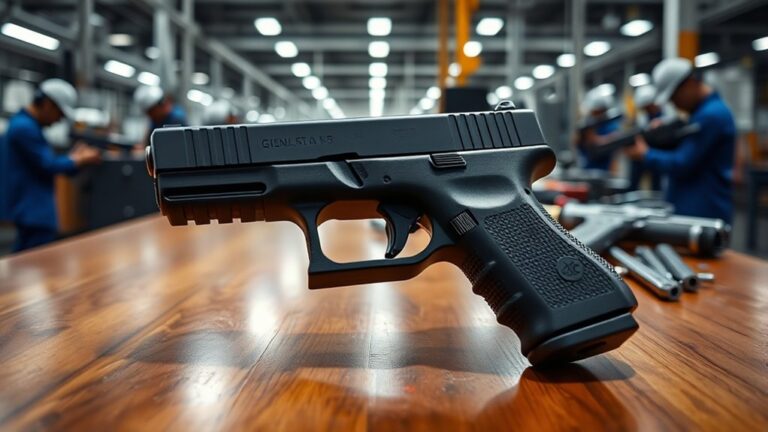
You’ll find that the Glock was invented in 1982 by Austrian engineer Gaston Glock. Interestingly, he had no prior experience with firearms but still managed to develop the Glock 17 in just three months.
His design was pretty revolutionary. It introduced a lightweight polymer frame and some innovative safety features that changed how handguns are made.
The Austrian military adopted the Glock in 1983, and it didn’t take long for the gun to gain trust worldwide among military and law enforcement agencies.
Looking deeper, you can see how these features sparked a big shift in firearm design and usage across the globe.
When and Where Was the Glock Invented?
Although many firearms have evolved over decades, the Glock stands out for its rapid development and focused design.
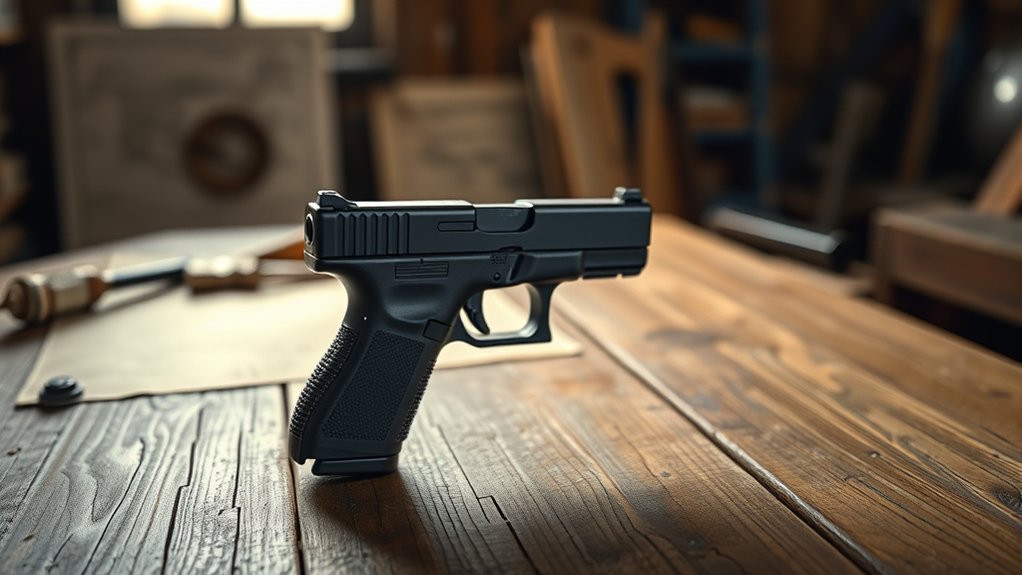
The Glock’s invention took place in 1982 when Austrian engineer Gaston Glock, based in Deutsch Wagram, created a revolutionary design aimed at improving pistols’ reliability and capacity.
Responding to Austria’s 1980 tender for a new duty pistol, Glock developed the Glock 17. He completed and patented it within just three months.
This quick design process emphasized modern features and dependability, setting it apart from predecessors.
By 1983, the Austrian military adopted the Glock 17 as the P80, marking its official inception.
You can see how this precise, efficient invention reshaped firearm standards with its innovative approach and solid engineering.
Gaston Glock: The Man Behind the Design
The rapid development and groundbreaking design of the Glock 17 show the vision and ingenuity of its creator, Gaston Glock.
Even though he’d no prior experience in firearm design, Gaston Glock used his engineering background from curtain-rod manufacturing to lead an engineering team in the early 1980s.
Their goal was simple: create an innovative pistol that focused on simplicity, durability, and safety.
The result was the semi-automatic Glock 17, which features a sturdy polymer frame that boosts reliability without sacrificing safety.
Glock’s unconventional approach challenged traditional firearm design norms and made a big impact.
Gaston Glock’s legacy is all about crafting a pistol that combines practicality with innovation.
This has cemented his place in firearms history and influenced generations of firearm design to come.
How Glock’s Polymer Frame Changed Handgun Design
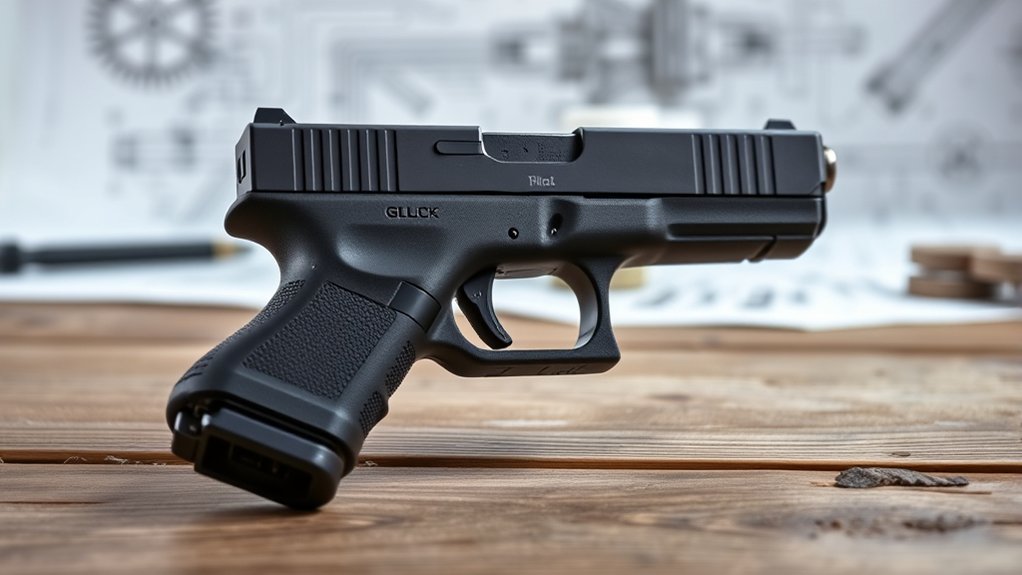
When you handle a Glock pistol, you immediately notice how its polymer frame sets it apart from traditional steel-framed handguns. It significantly reduces weight without sacrificing strength. Glock’s use of high-strength polymer revolutionized handgun design.
This change delivers a lightweight firearm that’s easier to maneuver and causes less fatigue for the shooter. The frame is also incredibly durable, able to withstand impacts without damage. Plus, it offers superior corrosion resistance, protecting the gun from the elements and helping it last longer.
Another big benefit is that the same compact frame can hold more magazines, boosting firepower without adding bulk. This innovation set new standards for reliability and performance. Glock’s polymer frame reshaped what we expect from modern handguns.
It’s a perfect example of how lightweight materials combined with strength can change firearm design forever.
Key Glock Features That Set It Apart
Because Glock firearms combine innovative design elements, they stand out clearly in the handgun market.
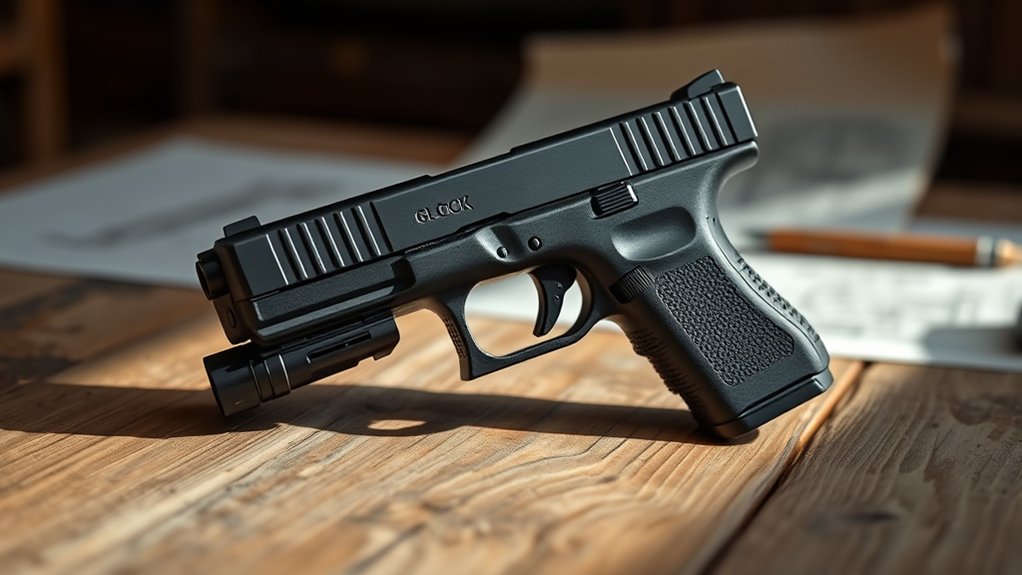
First off, you’ll notice the polymer frame. It keeps the gun lightweight and increases magazine capacity, which is a big plus whether you’re carrying or in a combat situation.
The SAFE ACTION system is another key feature. It has three internal safeties that help prevent accidental discharges without needing manual safeties.
Glock uses a short recoil system with a locked-breech and a tilting barrel. This setup makes the gun reliable and ensures smooth cycling every time.
The modular design allows you to customize the grip with interchangeable backstraps. This improves ergonomics and makes the gun more comfortable to hold.
Plus, the accessory rail adds tactical flexibility by letting you attach lights, lasers, or other accessories.
Glock’s Marksman Barrel, or GMB, enhances accuracy thanks to improved rifling.
With only about 35 parts, maintenance is simple, which helps keep the gun durable and reliable over time.
All these features come together to make Glock a leader in reliability and user-focused innovation.
Early Military and Law Enforcement Adoption
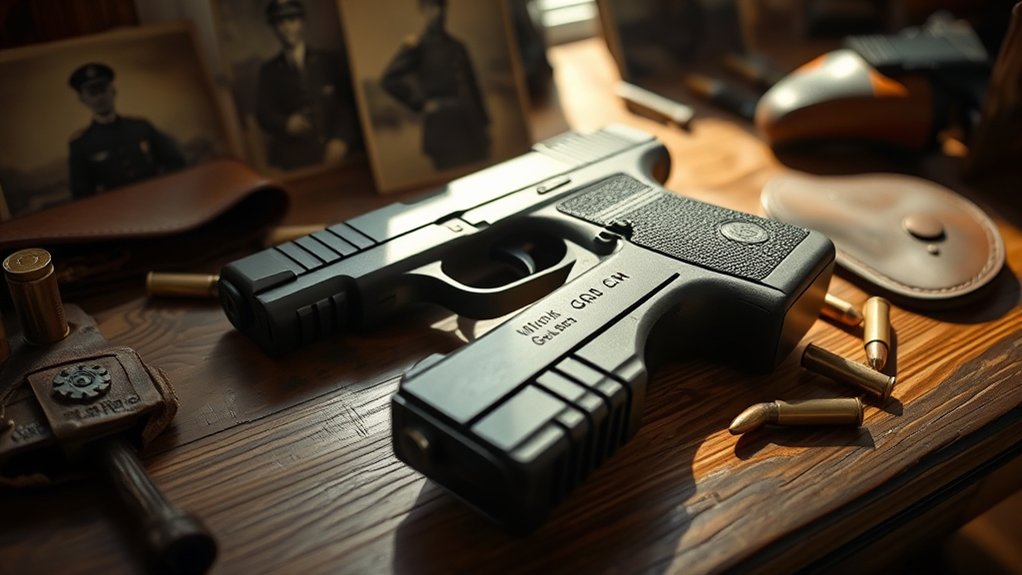
Glock’s innovative design quickly caught the attention of military and law enforcement agencies looking for reliable sidearms. The Glock 17 emerged as a revolutionary duty pistol, first adopted by the Austrian military after a tough 1980 tender process.
Key milestones in its early adoption include the completion and patenting of the Glock 17 in 1982. It was officially adopted by the Austrian Army as the P80 service pistol in 1983. This move helped boost its credibility as a serious military firearm.
The Glock 17’s 1982 patent and 1983 Austrian Army adoption marked its rise as a trusted military firearm.
The Glock 17 also gained NATO standardization, which further solidified its reputation as a dependable military product. By 1986, it had expanded into law enforcement, with countries like Norway, Sweden, and various U.S. police forces adopting it.
You can see how the Glock 17’s sturdy design and reliability made it a top choice for both military and police. Its reputation as a leading duty pistol worldwide was well and truly cemented.
How Glock Evolved Through Its First Generations
Although the original Glock 17 set a high standard, the pistol’s design evolved a lot through its different generations to keep up with changing user needs and new technology.
The first-generation Glock 17 had a simple, smooth grip without finger grooves. It was straightforward but lacked some of the comfort features seen in later models.
Moving on to the second-generation, Glock added checkered grips and an integrated recoil spring. These tweaks improved reliability and gave users a better grip, especially during rapid fire.
By the time the third-generation rolled out, Glock introduced accessory rails and thumb rests. These features made the gun more versatile and easier to customize for different users.
The fourth-generation focused on ergonomics with interchangeable backstraps. It also added a reversible magazine release, making it more comfortable for both right- and left-handed shooters.
Each new generation has brought improvements in user control and customization, making the Glock more adaptable to various needs.
Why Glock Remains a Leader in Modern Firearms
When you look at what keeps a firearm leading the industry, innovation and reliability are key. Glock consistently delivers on both.
You can see this in their polymer frame combined with the SAFE ACTION® System. This combination revolutionized safety and durability in firearms.
Their polymer frame and SAFE ACTION® System transformed firearm safety and durability standards.
Glock keeps pushing the envelope with continuous innovation. They’ve added features like modular optics-ready slides and customizable backstraps to meet different needs.
Their reliability and durability are proven. Law enforcement, military, and security agencies worldwide trust Glock.
Plus, the minimalist design with only about 35 parts makes maintenance easy. It also ensures better performance, even under extreme conditions.
Glock’s focus on user-friendly features and strategic presence keeps it at the top of modern firearms. Its polymer frame and SAFE ACTION® System set new standards, making Glock a go-to choice in demanding environments.
Frequently Asked Questions
What Calibers Are Glock Pistols Available In?
You’ll find Glock pistols available in calibers like 9mm, .40 S&W, .45 ACP, 10mm, .357 SIG, and even .22 LR.
These options affect your shooting accuracy and ballistic performance.
Grip ergonomics and recoil management can vary depending on the caliber you choose.
Different ammunition types also influence how the trigger feels and how many rounds you can fit in a magazine.
Glock’s design makes it easy to maintain your firearm and includes safety features for added security.
Plus, tactical accessories can be adapted for your preferred caliber, making your Glock versatile for different uses.
How Do Glock Safeties Work?
When it comes to Glock safeties, you can’t judge a book by its cover.
Glock’s safety mechanisms don’t rely on a manual safety. Instead, they use three internal safeties: trigger safety, firing pin safety, and drop safety.
The trigger safety blocks movement until the trigger is fully pressed.
The firing pin safety prevents accidental firing if something bumps the gun.
And the drop safety stops the discharge if the gun is dropped.
These safety features disengage one after another, not all at once.
There are no safety overrides, so everything works smoothly and reliably.
This design helps keep the gun safe to carry without sacrificing quick access when you need it.
Can Glock Pistols Be Customized With Aftermarket Parts?
Yes, you can customize Glock pistols extensively with aftermarket parts. There are options for trigger upgrades, slide modifications, barrel enhancements, and sights adjustments to boost performance.
Custom grip sleeves and ergonomic designs can improve comfort, making the gun easier to handle. You can also add magazine extensions to increase capacity, which is handy in many shooting scenarios.
Internally, parts can be swapped out for recoil reduction and improved reliability.
Finish options are available too, so you can tailor the appearance to your personal style.
What Is the Average Lifespan of a Glock Pistol?
You can expect a Glock pistol’s average lifespan to exceed 100,000 rounds, thanks to its rigorous manufacturing process and durability tests.
Its slide material and barrel length help ensure it keeps performing well over time. The safety mechanisms and trigger design also play a big role in making sure it stays reliable.
Grip ergonomics and recoil management make it easier to control, especially during extended shooting sessions.
Plus, the magazine capacity and sight options tend to stay consistent even after lots of use.
All in all, Glocks are built to last, remain user-friendly, and hold up well with regular maintenance and heavy use.
Are Glock Pistols Suitable for Concealed Carry?
Think of carrying a Glock like wearing a well-tailored suit—it fits seamlessly with your lifestyle.
You’ll appreciate its slim profile for holster concealment and clothing compatibility, ensuring ambient concealment without printing.
Its lightweight design eases weight considerations, making it easier to carry around all day.
This also helps improve your draw speed and overall user comfort.
Glock’s accessibility options and manageable training requirements make it a solid choice for everyday carry.
Just remember to check and respect the legal restrictions in your area for responsible concealed carry.
Conclusion
When you look at Glock’s history, you see more than just a gun. You see a real revolution in firearm design.
Gaston Glock’s innovative polymer frame and groundbreaking features changed the industry forever. They set a new standard that others still try to reach today.
Like a spark that starts a wildfire, Glock’s impact spread quickly through military and law enforcement circles worldwide. Its evolution shows that staying sharp and adaptable keeps Glock leading the way.
Glock remains a true leader in modern firearms, always pushing forward.