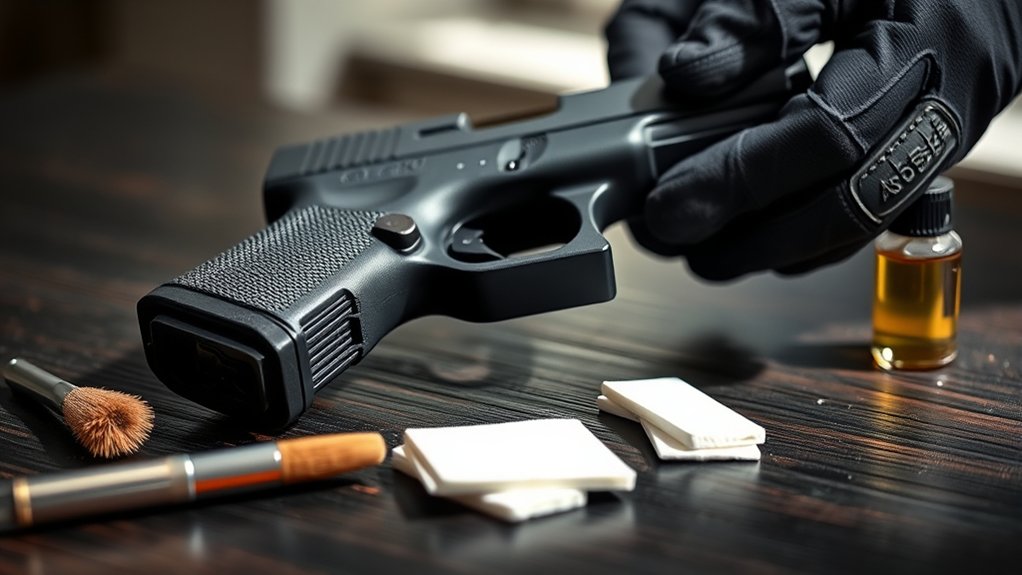
How To Clean A Glock 19 – Maintenance Guide
To clean your Glock 19, first make sure it’s completely unloaded. Always wear eye protection before you start.
Disassemble the gun by locking the slide back. Remove the takedown lever, recoil spring, and barrel.
Use a bore brush and cleaner like Ballistol to scrub the barrel and other components. Take your time to get rid of any dirt or residue.
After cleaning, dry all parts thoroughly. Apply a light layer of lubricant on the slide rails, recoil spring, and barrel contact points.
Reassemble everything carefully. Once it’s back together, perform a function check. This helps confirm that everything is safe and operates smoothly.
Keep exploring for more detailed tips on maintenance and avoid common mistakes.
Verify Safety and Gather Cleaning Tools
Before you start cleaning your Glock 19, make sure it’s completely unloaded. Remove the magazine and visually check the chamber, receiver, and magazine well for any ammunition.
Lock the slide to the rear to double-check that the chamber is clear. Wear safety gear, like eye protection, to keep debris from getting into your eyes during cleaning.
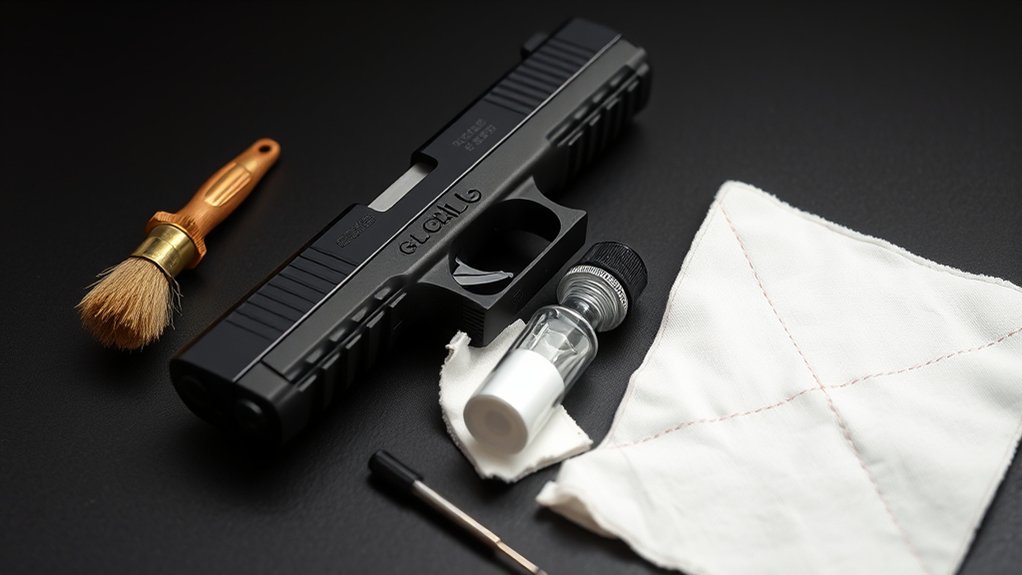
Next, gather all your cleaning tools. You’ll need a bore brush, cleaning rod, patches, jag, nylon brushes, and a good gun cleaner like Ballistol.
Set up your workspace in a clean, well-lit area. Use a mat or towel to catch small parts and prevent losing anything.
Take Apart Your Glock 19 Step-by-Step
How do you safely and efficiently take apart your Glock 19 for cleaning? First, make sure the firearm is unloaded. Remove the magazine and check the chamber, receiver, and magazine well to be sure.
Next, pull the slide back just a little and lock it in place with the slide stop. With the slide secured, push down the takedown lever on the left side of the frame. This will release the slide from the frame.
Pull the slide back slightly, lock it with the slide stop, then press the takedown lever to release the slide.
Carefully remove the recoil spring assembly by compressing it slightly and lifting it out. Then, slide the barrel out of the slide.
By separating the slide from the frame, removing the recoil spring, and extracting the barrel, you’ve fully disassembled your Glock 19.
This is a great way to prepare it for a thorough cleaning.
Following this method ensures safe and precise disassembly every time.
Cleaning Your Glock 19: Techniques and Tips
While making sure your Glock 19 is unloaded, you’ll want to clean each part carefully using the right tools and products.
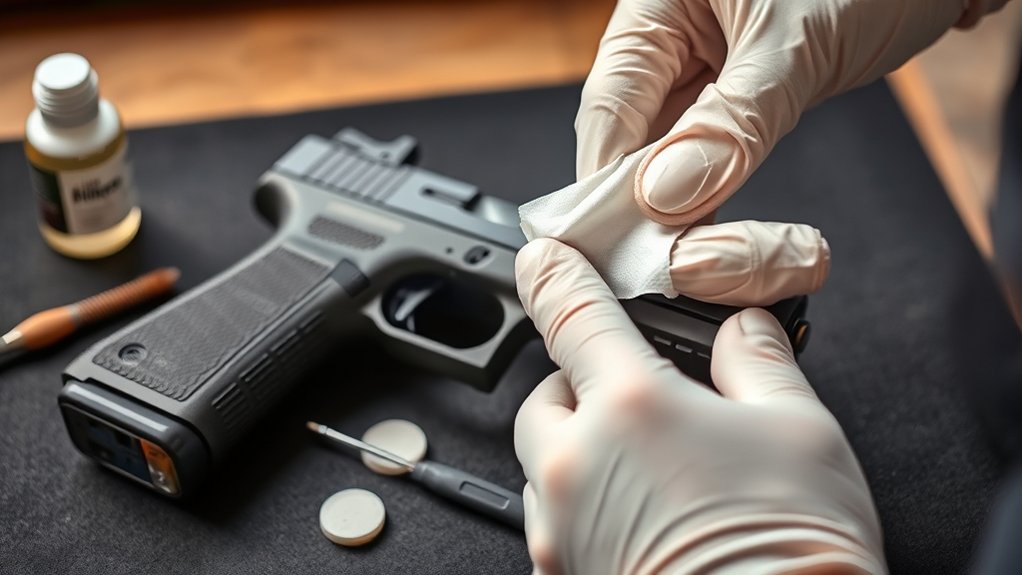
Start by scrubbing the barrel with a bore brush and cleaning rod. Use a gun-safe cleaner like Ballistol for the best results. Pay special attention to the slide grooves, recoil spring, and frame notches. Spray them thoroughly and let the lubricant sit for a bit.
Next, use patches, brushes, and dry cloths to wipe away carbon buildup and dirt. Focus on the slide, recoil spring, frame, and barrel surfaces.
Disassemble the Glock 19 carefully so you can clean all the parts thoroughly.
Cleaning each component properly helps keep your gun working well and lasts longer. Once everything is clean and dry, reassemble your Glock 19 carefully.
Finally, do a function check to make sure everything cycles smoothly and safely before you go shooting again.
Proper Lubrication of Your Glock 19
When you’re lubricating your Glock 19, it’s best to focus on those key spots like the slide rails, barrel contact points, and the trigger connector.
Just a little bit of a good-quality lubricant goes a long way—no need to go overboard. Using too much can actually attract dirt or mess with how your gun functions.
So, when you’re applying the lube, aim for a thin, even layer. That way, your Glock will run smoothly and stay protected for a long time.
Just take your time, and you’ll keep your firearm in top shape!
Lubrication Points Overview
Although proper cleaning is essential, making sure your Glock 19 is well-lubricated is just as important for its performance and lifespan.
Start by putting a drop of oil on the slide rails. This helps the slide move smoothly and reduces wear over time.
Next, lubricate the recoil spring and guide rod. Doing this minimizes friction and helps manage recoil better.
Don’t forget about the barrel contact points, especially around the chamber and locking lugs. Keeping these well-lubricated ensures consistent operation.
Lightly oil the trigger connector and other internal metal parts. This helps keep the trigger functioning reliably.
Be careful not to over-lubricate. Too much oil can attract dirt and debris, which can cause issues.
Applying Correct Lubricant Amount
Proper lubrication is key to keeping your Glock 19 operating smoothly, but applying the right amount of lubricant is just as important as knowing where to put it.
When you apply lubricant, focus on the slide rails. Coat contact points with a small, thin layer to ensure smooth movement without excess buildup.
Use only a little oil on recoil springs and other moving parts—just enough to prevent corrosion and keep things running nicely.
Lightly oil the barrel’s contact areas like the chamber and trigger bar. Be careful not to overdo it inside the bore.
Too much lubricant can attract dirt and cause malfunctions, especially in dusty environments.
Remember to wipe away any excess lubricant during reassembly. This helps your Glock 19 perform reliably and prevents debris from gathering.
Reassemble Your Glock 19 Correctly
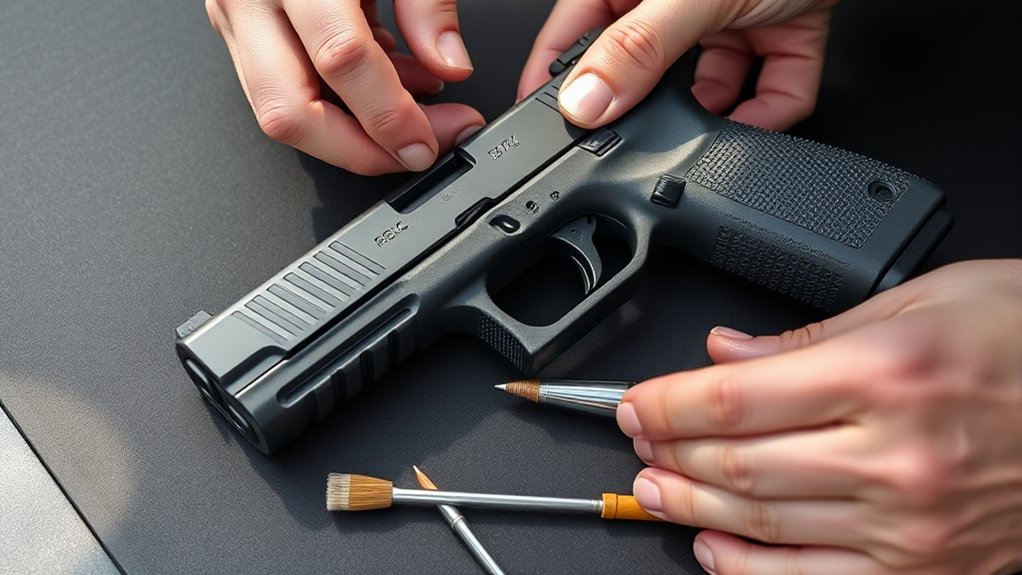
First, you’ll want to align the barrel properly and slide it into the slide, making sure it seats all the way into the locking lugs. It’s a pretty straightforward step, just take your time to get it seated correctly.
Next up, you’ll need to compress the recoil spring assembly and carefully place it inside the slide. Once that’s in place, you can attach the slide back onto the frame.
Just be gentle and make sure everything lines up smoothly.
Finally, don’t forget to do some thorough function and safety checks. Rack the slide a few times, check the trigger, and make sure everything is working smoothly and safely before you’re done.
Align Barrel And Slide
How do you guarantee your Glock 19 functions flawlessly after cleaning? To reassemble your pistol properly, start by aligning the barrel with the slide grooves.
Insert the barrel into the slide first, making sure it seats fully into the recoil spring assembly. This alignment is super important for smooth operation.
Next, position the slide correctly onto the frame, ensuring the locking lugs engage properly. Push the slide all the way forward until it clicks into place, confirming everything is aligned correctly.
After reassembly, do a quick function check. Make sure the slide moves smoothly and the barrel stays aligned within the slide during operation.
Getting the alignment right during reassembly is key for reliability and safety. Take your time with this step every time to keep your Glock in top shape.
Secure Recoil Spring Assembly
Once the barrel is correctly aligned and seated in the slide, focus on securing the recoil spring assembly.
Make sure the recoil spring assembly is fully compressed and properly seated into the slide before you reassemble the frame.
Align the spring correctly with both the barrel and slide rails to avoid misfeeds or malfunctions.
As you attach the slide to the frame, verify that the recoil spring assembly clicks securely into place and sits flush with the slide.
Proper installation of the recoil spring assembly is essential for reliable cycling.
Avoid over-compressing or forcing the spring during this process, as it can damage the spring or impair firearm performance.
After reassembly, manually cycle the slide to confirm smooth operation and that everything is properly seated.
Perform Function And Safety Checks
Why is performing function and safety checks so important after reassembling your Glock 19? Well, these checks make sure your firearm works reliably and, more importantly, safely.
Start by making sure the slide assembly is properly seated and locked in place. Pull the slide back just a little and then let it go. It should move smoothly and without any obstructions.
Next, do a function check. With the slide locked back, pull the trigger. The trigger should reset correctly, and the striker must snap forward as it should.
Now, insert an empty magazine and rack the slide. This tests the slide lock and makes sure everything is interacting properly between the magazine and slide.
Finally, rack the slide several times and pull the trigger. This step helps verify that all safety features are engaged and functioning as designed.
How to Do a Glock 19 Function Check
Before you finish cleaning your Glock 19, it’s important to do a function check. This helps make sure everything is working safely and reliably. After you’ve reassembled the firearm, start by racking the slide several times. This will help you feel if the slide moves smoothly and if the trigger resets properly.
Next, pull the trigger with the slide forward. If the safety is engaged, the trigger should stay rearward.
Then, insert an unloaded magazine and rack the slide. The slide lock should engage and hold the slide open.
Release the slide and check if it returns forward smoothly. With the slide locked back, pull the trigger. This tests the drop safety—the trigger shouldn’t move unless you pull it on purpose.
Finally, do a final trigger pull. If you hear a “click,” it means the striker has reset properly.
This simple function check ensures your Glock 19’s slide, trigger, and slide lock all work correctly and safely.
Common Glock 19 Cleaning Mistakes and Tips
Although cleaning your Glock 19 might seem straightforward, common mistakes can hurt its performance and lifespan.
One mistake is using too much lubrication. Excess lubricant can attract dirt and debris, which can impair how your gun functions.
Make sure to fully remove bore cleaner after soaking. Leaving any residue can lead to corrosion over time.
Thorough cleaning is key. Don’t forget to clean the slide rails and grooves. Neglecting these areas can cause malfunctions and wear down parts faster.
Use the right cleaning tools. Metal brushes on sensitive parts can scratch or damage surfaces, so be careful.
When applying lubrication, cover not just external surfaces but internal components too. Remember to lubricate parts like the recoil spring and firing pin.
Following these tips will help protect your Glock 19 and keep it running smoothly.
Being precise and attentive during cleaning can prevent costly damage and extend your firearm’s service life.
Frequently Asked Questions
How Often Should I Clean My Glock 19?
You should set your cleaning frequency based on how often you shoot and the conditions you’re in.
For most shooters, it’s a good idea to clean your Glock 19 after every range session or roughly every 200 to 500 rounds.
It’s also smart to stick to a maintenance schedule that includes inspecting for wear and applying lubrication every 2,000 rounds.
If you notice any performance issues, it’s a good sign you might need to clean and service it sooner.
Regular cleaning helps maintain shot accuracy and prevents malfunctions, especially if you’re shooting in tough environments.
If you’re firing a lot or exposing your gun to dirt and moisture, consider cleaning it more often.
Can I Use Household Cleaners on My Glock 19?
You shouldn’t use household cleaners on your Glock 19 because chemical compatibility is essential. These cleaners can damage your firearm’s finish and reduce its durability.
Instead, use gun-specific solvents that match your cleaning frequency and ensure safe storage. It’s important to choose products designed for firearms to keep everything functioning properly.
Also, think about temperature. Extreme heat or cold can affect how well your cleaning products work.
Sticking to approved solutions helps preserve your Glock’s performance and longevity. It also prevents corrosion and malfunction over time.
What Is the Best Storage Method After Cleaning?
The best storage method after cleaning your Glock 19 focuses on safety. Always choose a lockable storage or a secure gun safe with protective cases. This helps prevent unauthorized access and protects your firearm from physical damage.
Control humidity by placing silica gel packs inside the storage area. This helps avoid corrosion and keeps your gun in good condition. Make sure to maintain proper temperature regulation too, as it prevents moisture buildup.
Before storing, ensure your firearm is completely dry and properly lubricated. Keep it separate from ammunition unless both are securely locked together for maximum safety.
This way, you can store your Glock safely and keep it in top shape.
Are Aftermarket Cleaning Kits Safe for Glock 19?
Think of your Glock 19 as a finely tuned instrument; aftermarket kits can be safe if you choose wisely. Always prioritize cleaning safety by verifying kit components for compatibility with OEM standards.
Non-abrasive brushes and proper solvents are essential. Don’t overlook brand reviews—they reveal real-world performance and reliability.
Avoid cheap kits with rough edges that could cause damage. When you select reputable aftermarket kits, you help maintain your Glock’s precision and longevity.
How Do Temperature Changes Affect Glock 19 Maintenance?
Temperature effects cause metal expansion and contraction in your Glock 19, which can impact how it fits and functions. When the temperature changes, it can cause parts to loosen or tighten slightly, affecting overall performance.
These fluctuations also create lubrication challenges. Cold temperatures tend to thicken oils, making it harder for the gun to operate smoothly. On the other hand, heat can cause lubricants to dry out, which isn’t ideal for smooth cycling.
Material degradation can happen if moisture isn’t managed properly. Condensation and rust may develop, especially in humid or fluctuating climates. This can lead to corrosion and damage over time.
To keep your Glock 19 running reliably, it’s important to adjust storage conditions. Using temperature-appropriate lubricants can also help prevent issues caused by temperature swings.
Proper care and maintenance will ensure your firearm stays in good shape, no matter the climate.
Conclusion
Regular cleaning of your Glock 19 is essential. Studies show that over 70% of firearm malfunctions happen because of improper maintenance.
By following this guide, you’ll keep your pistol reliable and safe to use. Remember, thorough cleaning, correct lubrication, and proper reassembly are key to maximum performance.
Stay diligent with your Glock 19 maintenance. Doing so will help you avoid common problems that can affect both how well it works and your safety.