Are Hollow Points Legal For Concealed Carry – Ammo Laws Explained
You can carry hollow point ammo for concealed carry in most U.S. states, but regulations vary widely depending on where you live. Federal law doesn’t restrict them, yet some states like New Jersey or Massachusetts have tighter limits or require special licenses.
Hollow points are popular for self-defense due to their stopping power and safety benefits. Knowing your local laws, complying with licensing rules, and verifying current restrictions help you avoid legal trouble.
Explore further to understand specific state rules and exceptions. It’s always a good idea to stay informed so you can carry responsibly and confidently.
Is Hollow Point Ammo Legal for Concealed Carry?
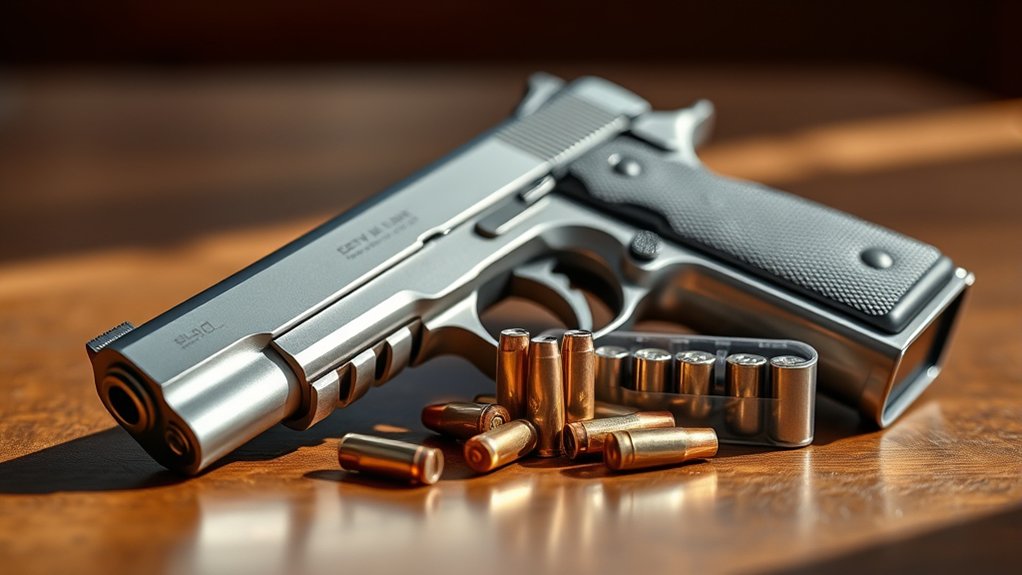
Wondering if you can legally carry hollow point ammunition concealed? In most U.S. states, hollow point ammo is legal for concealed carry because it’s widely accepted for self-defense.
While laws vary by state, there generally aren’t restrictions against carrying hollow point ammunition concealed for personal protection.
Some jurisdictions may have specific rules on ammo types, but hollow points are typically classified as legal self-defense rounds. Law enforcement rarely enforces restrictions on hollow point possession when you carry legally concealed firearms.
However, you should always verify local laws since some states or municipalities might impose restrictions or require permits for certain ammunition types.
Comprehending your jurisdiction’s stance on hollow point ammo ensures your concealed carry remains fully legal and compliant. It’s always better to double-check so you’re not caught off guard.
Staying informed helps you carry with confidence.
Hollow Point Ammo Laws Across U.S. States
You need to understand that hollow point ammo laws vary quite a bit from state to state. Some places let you carry them without any restrictions, while others have strict rules or even require special permits.
It’s really important to pay close attention to local restrictions and exceptions because these can affect your legal right to carry hollow point rounds.
Also, enforcement and penalties aren’t the same everywhere, so knowing how your area treats this type of ammunition is essential.
State-by-State Legality
Although federal law permits hollow point ammunition, state regulations vary widely. So, you really need to understand local laws before carrying them concealed.
Most states allow civilians to carry hollow point bullets with proper firearm licensing. The focus is usually on who can carry rather than specific ammo restrictions.
However, some states like New Jersey restrict hollow point possession to law enforcement or approved uses. This makes them effectively illegal for general concealed carry.
California allows hollow points for self-defense but requires you to comply with state firearm and ammunition laws.
Meanwhile, Illinois and Massachusetts have stricter regulations that might limit hollow point possession or use.
To be sure your concealed carry ammo is legal, always check the specific state laws where you plan to carry. These laws directly affect the lawful use of hollow point bullets.
Restrictions and Exceptions
While hollow point ammunition is widely used for self-defense, its legal status carries numerous restrictions and exceptions that vary by state. Some states, like New Jersey, restrict hollow points for concealed carry but allow exceptions for lawful self-defense or hunting.
Other states permit hollow points broadly, except for designs classified as armor-piercing or explosive.
| State Category | Restrictions | Common Exceptions |
|---|---|---|
| Permissive States | No explicit hollow point restrictions | Self-defense, sport shooting |
| Restricted States | Ban or limit hollow point carry | Hunting, law enforcement |
| Conditional States | Restrictions on modifications/designs | Specific lawful uses |
You must understand your state’s specific laws and exceptions to carry hollow points legally. It’s always a good idea to double-check before you carry.
Enforcement and Penalties
Enforcement of hollow point ammunition laws differs markedly across U.S. states. Some impose strict regulations and penalties, while others treat it as lawful for civilian use. You need to understand that legality and possession rules vary, so knowing your state’s stance is essential.
Penalties for illegal possession can be severe, including fines, confiscation, and criminal charges. It’s important to stay informed about these rules to avoid trouble.
Key points to bear in mind: enforcement often targets illegal use linked to crime, not lawful possession. Most states allow hollow points for self-defense without penalties.
Illegal possession of specialized rounds, like armor-piercing, triggers harsher penalties.
Always verify your local laws to guarantee compliance. Proper awareness of enforcement and penalties helps you carry hollow point ammo responsibly and legally.
Hollow Point Ammo Restrictions by Jurisdiction
You need to understand that hollow point ammo laws vary widely depending on where you are. Some states allow their use freely, while others have strict restrictions or even outright bans.
On top of that, federal regulations can also affect whether you can carry hollow points legally. And don’t forget, international rules might come into play if you’re traveling abroad with them.
State-Specific Hollow Point Laws
Because laws about hollow point ammunition vary widely across the United States, you need to understand the specific regulations in your state before carrying them concealed. Some states impose strict hollow point laws, while others have no special restrictions for concealed carry.
Key considerations include:
- New Jersey generally prohibits hollow point possession except for hunting or range use.
- Texas and Florida allow hollow point ammo for concealed carry without extra permits.
- Some states require licenses for ammunition types, but hollow points are rarely restricted.
Always verify your state’s law carefully. Violating hollow point regulations can lead to fines, criminal charges, or loss of gun rights.
Knowing your state’s stance ensures you carry compliant and avoid legal trouble with your concealed carry ammo.
Federal Regulations Overview
When it comes to hollow point ammunition and concealed carry, federal law doesn’t explicitly ban their use or possession. Federal regulations mainly focus on firearm types and accessories. They leave the legality of hollow point ammo up to state laws.
The United States didn’t ratify the Hague Convention of 1899, which restricts expanding bullets in warfare. So, this treaty doesn’t affect civilian use. While federal rules don’t prohibit hollow points for concealed carry, state laws vary a lot.
Some states, like New Jersey, restrict hollow point ammo to law enforcement or specific situations. Because of that, you really need to understand your state’s rules before carrying hollow point ammo concealed. Following the law depends mostly on where you live, not federal law.
Always check the current state laws to make sure you’re carrying and using hollow point ammo legally. It’s better to be safe and informed!
International Ammo Restrictions
State laws in the U.S. shape the legality of hollow point ammunition, but understanding international regulations offers additional perspective on how jurisdictions approach these bullets. You’ll find that hollow point restrictions vary widely across countries, influencing the firearm laws and legality of these rounds.
In the United Kingdom, hollow point ammo is generally banned under the Firearms Act 1968. It requires strict licensing for any legal use.
Germany permits hollow point handgun ammunition for civilian hunting and sport shooting since lifting its ban in 2003.
Italy allows hollow points for target shooting and hunting but restricts their self-defense use without special licensing.
Knowing these international ammo restrictions helps you grasp how hollow point legality depends heavily on local firearm laws and licensing requirements.
Concealed Carry Permits and Hollow Point Legality
How does hollow point ammunition fit into concealed carry permit regulations? In most U.S. states, hollow point ammo is legally permitted for concealed carry. This reflects its status as the standard self-defense ammo.
Federal law doesn’t restrict civilians from carrying hollow points, but you do need to consider state laws, which can vary a lot. Some places have limits on specific ammo types, but hollow points are generally accepted when you have a concealed carry permit.
While federal law allows hollow points, always check state laws as regulations on ammo types can differ.
It’s really important to verify your local regulations before carrying, so you stay within the legal boundaries.
Since law enforcement widely uses hollow points, their acceptance highlights their lawful role in self-defense. Always take the time to review your state laws carefully to keep your use of hollow point ammo legal under your permit.
Law Enforcement Exceptions for Hollow Points

Because law enforcement agencies prioritize officer safety and effective threat neutralization, they widely use hollow-point ammunition. This type of ammo offers superior stopping power while reducing the risk of over-penetration. That makes it a legal and practical choice for law enforcement.
When considering law enforcement exceptions for hollow points, keep in mind a few things. Most jurisdictions legally permit officers to carry and use hollow-point rounds. Police departments often have explicit policies authorizing hollow-point ammo for duty use.
Hollow points are standard issue because they’re reliable and effective at stopping threats. If you’re in law enforcement, understanding these legal exceptions is essential.
Civilian laws on hollow points vary, but law enforcement use is generally accepted and supported by clear regulations focused on safety and operational effectiveness.
How Hollow Point Ammo Laws Differ: U.S. vs. Abroad
Understanding hollow point ammo laws means recognizing the big differences between the United States and many other countries. In the U.S., hollow point ammunition is generally legal for concealed carry. However, state regulations can vary quite a bit. Some states impose restrictions or require permits.
On the other hand, many European countries like the UK and Germany have strict rules or outright bans on hollow points for civilian use. International laws and treaties, such as the Hague Convention, restrict expanding bullets in warfare but don’t control civilian firearm laws. This creates a patchwork of legality around the world.
Abroad, hollow points often need licenses or are limited to law enforcement and specific hunting purposes. Soft point ammo tends to be more common for hunting outside the U.S.
Knowing these differences helps you stay on the right side of the law and navigate the rules no matter where you are.
What Are Hollow Point Bullets and How Do They Work?
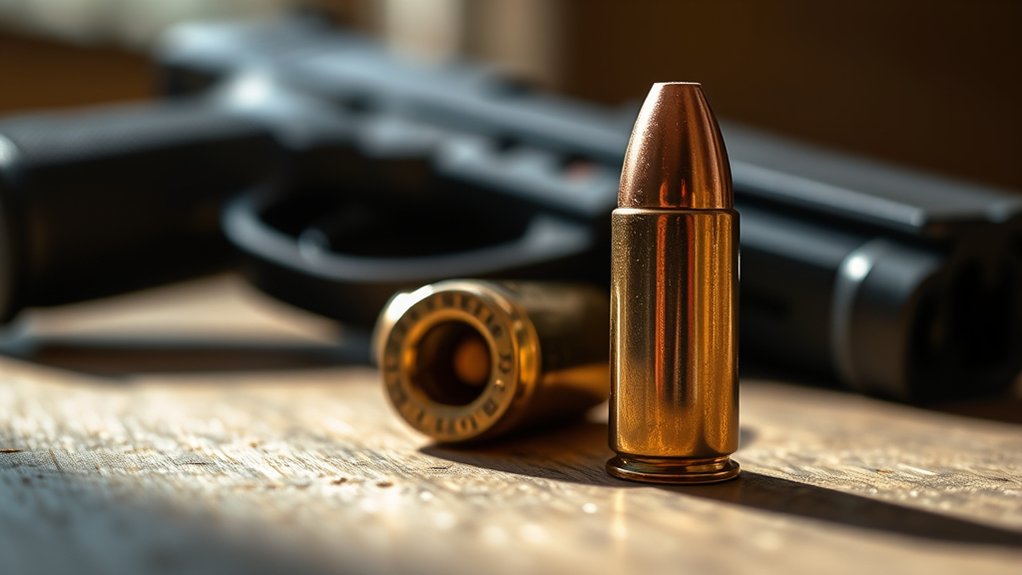
Although hollow point bullets might look similar to regular ammunition, their unique design considerably impacts their performance. When you fire a hollow point, the cavity in the bullet’s tip causes rapid expansion upon hitting soft tissue. This expansion increases the bullet’s diameter, creating a larger wound channel and enhancing stopping power.
Hollow point bullets expand on impact, creating larger wound channels and significantly boosting stopping power.
Here’s the cool part: the cavity fills with soft tissue, which makes the bullet’s rim mushroom outward. Expansion usually grows to about 1.7 times the original diameter, maximizing damage.
They’re designed to reduce over-penetration by using energy during expansion, so the bullet doesn’t just pass through the target.
This precise engineering helps hollow point bullets deliver controlled penetration while boosting stopping power. It’s all about making every shot count.
Why Hollow Points Are Popular for Concealed Carry
You choose hollow points for concealed carry because they pack a bigger punch when it counts. When they hit, they expand, which means more stopping power right where you need it.
And here’s the thing—this expansion helps prevent the bullet from going too far, so you’re less likely to accidentally hurt someone nearby or damage property.
On top of that, hollow points are usually compact, so they fit nicely in your firearm without losing any effectiveness. It’s a smart choice all around.
Enhanced Stopping Power
Because hollow point bullets expand upon impact, they deliver markedly greater stopping power compared to standard rounds. This expansion creates larger wound channels, increasing tissue damage and the likelihood of quickly incapacitating a threat during self-defense.
When you choose hollow point ammo, you benefit from controlled expansion that increases the chance of hitting vital organs, rapid energy transfer to stop an attacker effectively, and enhanced stopping power that reduces the risk of an ongoing threat.
The hollow point’s expansion to about 1.7 times its original diameter ensures maximum energy is delivered precisely where you need it most.
This makes hollow points a preferred choice for concealed carry, as their design maximizes stopping power and improves your chances of neutralizing a threat swiftly and safely.
Reduced Over-Penetration Risk
Hollow point bullets not only deliver enhanced stopping power but also considerably reduce the risk of over-penetration. When a hollow point strikes a target, its design causes controlled expansion, or mushrooming. This dissipates energy within the target and limits penetration depth, typically between 12 to 18 inches.
This expansion increases the wound size, allowing you to incapacitate a threat more quickly while minimizing the chance of the bullet passing through and harming unintended bystanders.
By restricting over-penetration, hollow points promote safety in concealed carry situations. They help ensure your rounds stay within the intended target.
Their ability to expand reliably makes hollow point ammunition a preferred choice for those prioritizing both effectiveness and the protection of others in close-quarters defensive encounters. It’s a smart option when you want to be effective but also responsible.
Compact Ammunition Design
While selecting ammunition for concealed carry, you’ll find that compact hollow point rounds stand out for their efficient design. Their ammunition design guarantees reliable expansion, maximizing stopping power without risking over-penetration. This balance makes hollow point bullets ideal for close-quarters self-defense.
Plus, their streamlined compact ammunition profile fits easily into smaller handguns, enhancing concealability.
Here’s why hollow points are popular for concealed carry:
- Controlled expansion increases energy transfer and stopping effectiveness
- Hollow cavity ensures consistent mushrooming for accuracy and predictability
- Compact size allows discreet carry without sacrificing performance
Alternatives When Hollow Points Are Restricted
If your jurisdiction restricts hollow point ammunition, you can consider alternatives like soft point (SP) or jacketed hollow point (JHP) rounds. These often face fewer legal limitations, making them a good option.
Full metal jacket (FMJ) rounds also serve as common alternatives to hollow points, especially where expanding bullets are prohibited.
Some areas permit specialty rounds such as frangible or non-expanding ammunition for self-defense. These offer lawful ammunition options when hollow points aren’t legal.
Wadcutters or semi-wadcutters may provide additional lawful choices depending on local restrictions.
Remember, the legality of hollow point and its alternatives varies greatly by location. To stay compliant, always verify your jurisdiction’s specific ammo laws before selecting your concealed carry rounds.
This way, you ensure you carry lawful ammunition suited to your legal environment.
How to Find Out If Hollow Points Are Legal Near You
How can you determine whether hollow point ammunition is legal for concealed carry in your area? Start by researching your local firearm laws through official government websites or trusted legal resources. These sources often clarify the legality of hollow point ammo for concealed carry purposes.
You can also contact local law enforcement or firearms licensing authorities for up-to-date regulations. Review state or city-specific statutes that specify allowed ammunition types.
Another good idea is to consult licensed firearm dealers or shooting ranges for practical guidance.
Keep in mind that firearm laws evolve, so it’s important to verify any recent changes affecting hollow point use. Taking these steps helps ensure you stay compliant with concealed carry regulations and understand the legality of hollow point ammunition where you live.
Risks of Illegal Hollow Point Possession and Safe Carry Tips
Because possessing illegal hollow point ammunition can lead to serious legal consequences, you need to understand the risks involved. Carrying an illegal hollow point may result in criminal charges, fines, or even jail time, depending on your jurisdiction’s firearm regulations.
To stay on the safe side, always verify that your hollow point ammo is permitted and properly licensed before carrying. Practice safe carry by storing and transporting hollow points separately in a locked container to avoid accidental violations.
Also, carry proof of legal ownership and stay aware of specific local laws to protect yourself during stops or firearm checks. Prioritizing these precautions helps you avoid penalties and confidently comply with evolving firearm regulations.
Frequently Asked Questions
How Do Hollow Points Affect Firearm Maintenance and Barrel Wear?
Hollow points increase bore fouling because their expanded jacket fragments and lead residue build up faster. So, you’ll need to clean your barrel more often.
The larger diameter and higher friction also speed up barrel wear and rifling erosion, especially with high-velocity rounds. This means your barrel might take a bit more of a beating than usual.
To protect your firearm, make sure you follow proper cleaning protocols and use quality lubricants. Regular maintenance really helps keep your accuracy sharp and extends your barrel’s lifespan, even if you use hollow points often.
Can Hollow Point Ammo Be Used in All Types of Handguns?
You can use hollow point ammo in most semi-automatic and revolver handguns designed for that caliber, but not all. Some older or niche models might’ve feeding issues because hollow points expand differently than full metal jackets.
To guarantee reliable function, check your firearm’s specifications and test the ammo. Manufacturers often make hollow points tailored to specific handguns, which helps prevent malfunctions and keeps everything running smoothly.
What Training Is Recommended for Effectively Using Hollow Point Bullets?
Using hollow point bullets effectively is like mastering a dance. You need precision and confidence. You should train for proper shot placement and understand how ballistics affect expansion.
Practice firing under stress to simulate real situations. Get familiar with your firearm’s reliability using hollow points.
Work on drawing and target shifts to improve speed and accuracy.
Regularly review legal and safety rules to stay responsible and prepared for self-defense.
Do Hollow Point Bullets Have Different Shelf Lives Than Other Ammo?
No, hollow point bullets don’t have a different shelf life than other ammo types. If you store them properly in a cool, dry place, they can last just as long as full metal jacket or soft point rounds.
The key factors are packaging quality and storage conditions, not bullet design.
Make sure you regularly inspect your ammo and avoid exposure to moisture or heat. This helps maintain reliability and performance over time.
Taking these simple steps goes a long way in keeping your ammo in good shape.
Are There Environmental Concerns Related to Hollow Point Ammunition?
Think of hollow point ammo as a double-edged sword. While effective, it can leave a toxic footprint. Yes, you should be aware that these bullets release tiny lead fragments that can seep into soil and water, contaminating ecosystems.
If you care about the environment, consider switching to copper or non-lead alternatives. By choosing eco-friendly ammo, you protect wildlife and reduce pollution without sacrificing performance.
Conclusion
Think of hollow points like a specialized tool in your concealed carry kit. They’re effective but not always allowed everywhere. Just like you wouldn’t use a wrench where a screwdriver is needed, knowing your local laws keeps you both legal and safe.
Remember, 43 states permit hollow points, but some restrict them. Staying informed guarantees you carry responsibly. It helps you avoid legal pitfalls while protecting yourself effectively.
Always check your jurisdiction before choosing your ammo. It’s the best way to make sure you’re doing things right.