How To Choose The Best Concealed Carry Gun – Practical Buying Guide
To choose the best concealed carry gun, prioritize reliability, safety, and fit over brand or looks. Pick a proven model in 9mm or above. It’s all about balancing caliber with manageable recoil and enough capacity for your needs.
Focus on comfort. Choose lightweight, ergonomic guns that suit your hand and daily carry style.
Test accuracy with stress drills and track malfunctions. Also, consider quality accessories to enhance performance.
Keep these practical steps in mind, and you’ll confidently select the ideal firearm designed for real-life scenarios.
Key Criteria for Choosing a Concealed Carry Gun in 2026
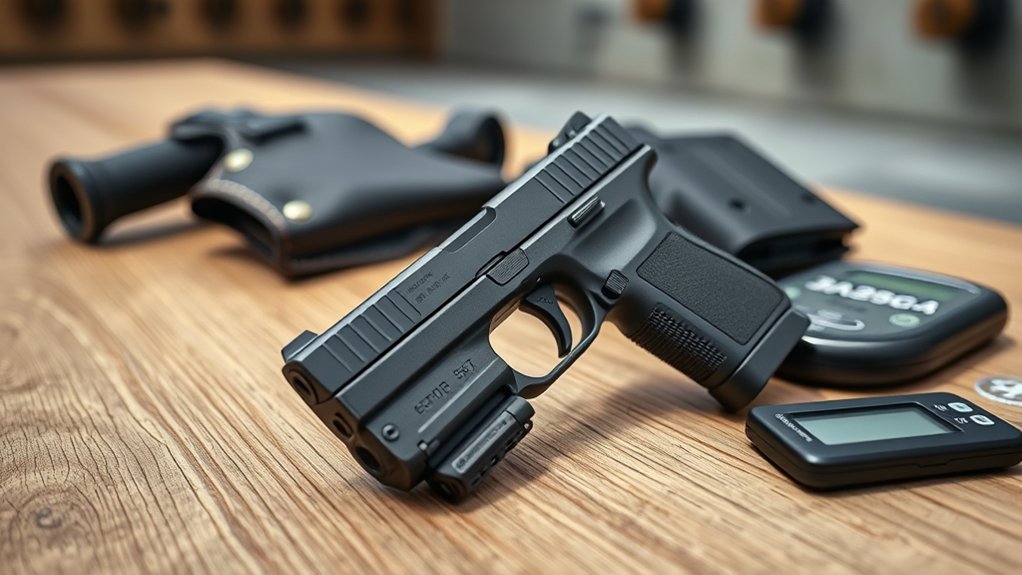
When choosing a concealed carry gun in 2026, you should prioritize reliability, safety, and accuracy above brand loyalty or aesthetics. Start by selecting a proven, mature model with extensive testing and strong industry support to guarantee consistent performance.
Your firearm’s size must balance concealment and comfort. Compact or subcompact often works best for everyday carry without sacrificing control.
Finding the right size ensures your concealed carry is both comfortable and easily controlled daily.
Caliber plays a critical role. 9mm remains the ideal choice, offering manageable recoil, sufficient stopping power, and widely available ammunition.
Evaluate safety features carefully to make sure they enable quick, confident handling under stress.
Finally, prioritize ergonomics. Grip texture, trigger reach, and control placement influence your ability to draw and fire effectively.
This precise focus on reliability, concealment, size, caliber, safety, and ergonomics sets a solid foundation for your concealed carry selection.
How to Match Caliber and Capacity to Your Needs
How do you determine the ideal balance between caliber and capacity for your concealed carry firearm? Start by selecting a caliber of at least 9mm to guarantee effective stopping power. Smaller calibers sacrifice reliability, while larger calibers like .45 ACP offer more stopping power but challenge recoil control.
Capacity impacts how many rounds you carry. Higher capacity means more rounds before reloading but often reduces concealability and compact size. Match your firearm’s capacity to your comfort and typical scenarios for superior performance.
| Caliber | Pros |
|---|---|
| 9mm | Balanced stopping power, manageable recoil |
| .45 ACP | Superior stopping power, higher recoil control needed |
| Compact Size | Enhances concealability, may limit capacity |
Balance is key for effective concealed carry.
Size and Weight Considerations for Daily Concealed Carry
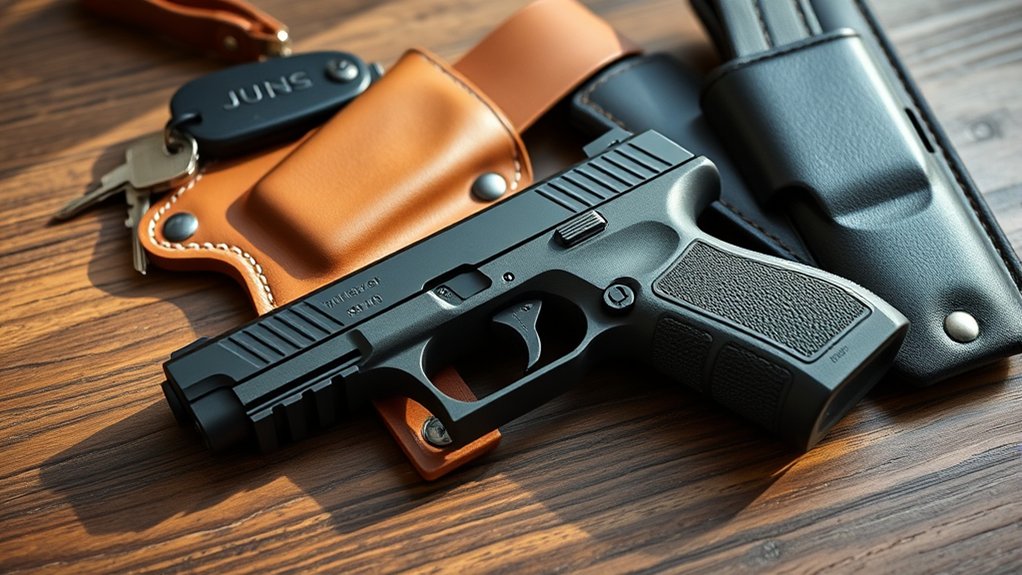
If you’re looking for a concealed carry gun, you want something that balances weight and size so it stays comfortable all day without drawing attention. Ideally, aim for a firearm that weighs under 25 ounces.
Also, consider a compact barrel length of about 3 to 4 inches and keep the overall length under 7 inches. This makes it much easier to conceal.
Slim, lightweight designs are key—especially those with polymer frames. They help reduce carry fatigue and fit seamlessly under your clothing.
Optimal Weight Balance
Although many factors influence your choice of a concealed carry gun, achieving the ideal balance between size and weight is crucial for daily comfort and practicality.
You want a firearm light enough, typically under 25 ounces, to avoid fatigue during extended wear while maintaining durability and control.
Compact firearms with barrel lengths around 3 to 3.5 inches usually weigh between 15 and 20 ounces. This strikes a solid balance between ease of carry and effective shootability.
Heavier guns may reduce recoil and improve accuracy but can become cumbersome and less discreet over time.
Ultimately, the weight and balance must suit your daily concealed carry needs, fitting comfortably in your preferred holster style without compromising reliability or comfort throughout the day.
Compact Dimensions Matter
Why do compact dimensions play such a critical role in daily concealed carry? Because they directly impact concealability and ease of carry. When choosing your firearm, aim for a barrel length around 3 inches and an overall size under 7 inches in total length. This balance guarantees your gun remains discreet without sacrificing necessary firepower.
Lightweight models, like the Glock 42 at roughly 14 ounces, reduce fatigue and enhance comfort throughout the day. Firearms similar in size and weight to the Sig Sauer P365, about 5.8 inches long and 17.8 ounces, offer an ideal compromise between capacity and concealability.
Prioritizing smaller overall size and lightweight construction improves your ability to carry comfortably and access your weapon swiftly in everyday situations. Compact dimensions are fundamental for practical, reliable concealed carry.
It’s all about finding that sweet spot where your firearm is easy to carry yet ready when you need it. So, keep those compact sizes in mind when making your choice.
Comfort During Extended Carry
Beyond just compact dimensions, comfort during extended carry plays a big role in your daily concealed carry experience. You want a firearm that weighs less than 20 ounces, so it doesn’t tire you out. Polymer frames are a great choice because they keep the weight down and reduce fatigue.
The balance between size, weight, and grip comfort is key. You want to avoid any hot spots that can get uncomfortable during long wear. Compact or subcompact pistols minimize bulk, but they still need to be reliable and hold enough rounds.
It’s important to consider the overall length and height carefully. This way, you get all-day comfort without giving up function. Finding that sweet spot makes carrying easier and less noticeable.
Why Ergonomics and Grip Matter More Than You Think
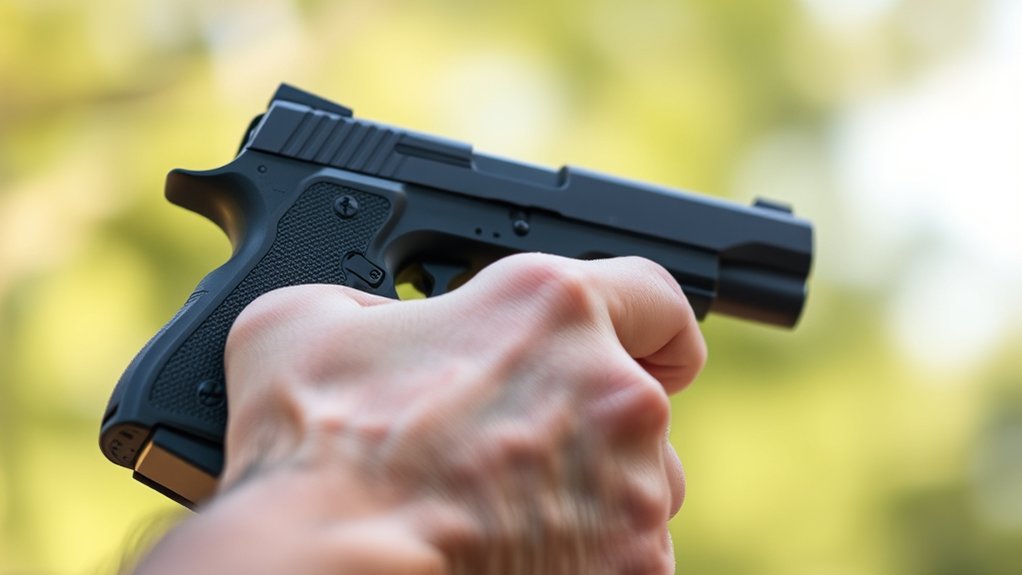
You want a grip texture that feels secure but doesn’t irritate your hand, especially since everyone’s hands are different sizes.
Because no two hands are the same, picking a gun that naturally fits your grip makes handling quicker and more dependable.
Focusing on these ergonomic details can really boost your shooting accuracy and confidence when it counts.
Grip Texture Importance
Although many focus on caliber and capacity when selecting a concealed carry gun, the grip texture and ergonomics play a crucial role in firearm control and accuracy. Proper grip texture enhances your control by reducing recoil and preventing slippage during rapid fire or stressful conditions.
It also improves handling comfort, minimizes hot spots, and allows quicker holster draws. This combination boosts your confidence and shooting precision, making it indispensable for self-defense use.
| Grip Texture Benefit | Impact on Performance |
|---|---|
| Improved Control | Reduces recoil, prevents slip |
| Enhanced Accuracy | Consistent hold in wet/sweaty |
| Comfort & Handling | Minimizes hot spots, fatigue |
| Faster Holster Draw | Quicker, smoother access |
| Boosted Confidence | Better performance under stress |
Hand Fit Variability
Grip texture sets the foundation for control, but the way a gun fits your hand can make or break your shooting experience. Proper hand fit enhances recoil management, ensuring you maintain control and accuracy even during extended use.
Ergonomics directly impact how comfortably you manipulate critical controls like safety switches and slide releases, influencing both speed and safety. Choosing the right grip size reduces hot spots and prevents slide bite, which significantly improves shooting comfort.
Testing multiple firearms helps you find the model that feels most natural. This fosters consistent shooting habits and boosts your confidence.
- Experience superior control tailored to your unique hand shape
- Minimize discomfort and fatigue for longer shooting sessions
- Enhance recoil management to stay on target faster
- Gain confidence with a grip that feels like an extension of you
Testing Reliability and Accuracy of Concealed Carry Guns
When testing the reliability and accuracy of a concealed carry gun, you need to run a minimum of 500 rounds using both target and defensive ammunition to identify any malfunctions.
Carefully document every failure, noting if ammo, magazines, or user technique caused it.
Meticulously record each malfunction, identifying whether ammo, magazines, or handling contributed to the issue.
Employ standardized range drills like the Bill Drill and Draw-to-First-Shot to measure accuracy at time and speed under realistic conditions.
Test the firearm in various carry configurations to confirm consistent performance.
Prioritize reliability over extended shooting, ensuring the gun is proven, tested, and carried for self-defense.
This way, you can carry with confidence knowing your firearm will perform when it matters most.
Features That Make a Concealed Carry Gun Great
Since you’ll be carrying your gun daily, choosing a concealed carry firearm with specific features is essential for both comfort and effectiveness. Prioritize a compact size under 7 inches to ensure easy concealment without sacrificing performance. Reliable safety mechanisms, like manual or trigger safeties, are non-negotiable to prevent accidental discharges.
Seek an ergonomic design that offers a comfortable grip and intuitive controls so you can handle your weapon confidently under stress. Manageable recoil paired with suitable caliber options like 9mm or .380 ACP ensures stopping power without compromising control.
Also, make sure your gun is holster compatible with various styles such as IWB or pocket holsters. This guarantees versatile and comfortable carry.
- Feel confident every time you draw
- Trust your gun’s safety under pressure
- Enjoy seamless comfort all day long
- Carry discreetly without sacrifice
Top Concealed Carry Gun Models in 2026
Choosing the right features sets the foundation, but identifying the best concealed carry gun models in 2026 will help you make an informed decision tailored to your needs.
The Sig Sauer P365 X-Macro leads with its compact size and high capacity, providing an excellent balance of concealability and firepower.
The Springfield Hellcat excels as an optics-ready option with a 13-round extended magazine. It’s ideal for those valuing versatility.
Walther’s PDP Compact offers reliability and a 15+1 round capacity, paired with an exceptional trigger.
For ultra-compact needs, the Smith & Wesson Bodyguard 2.0 delivers lightweight, effective performance in .380 ACP caliber.
If you want premium craftsmanship, the Staccato HD P4 stands out with ultra-crisp triggers and top-tier reliability.
These compact models represent the best in concealed carry for 2026.
Balancing Budget With Quality and Longevity
Although the appeal of the latest firearm models is strong, you should focus on reputable brands like Glock, Sig Sauer, and Ruger that offer proven durability and reliability.
Balancing your budget means prioritizing quality and reliability over flashy features or untested innovations. Consider used pistols with low round counts to save money without sacrificing performance.
Don’t overlook investing in quality holsters and magazines, as these accessories contribute considerably to your firearm’s longevity.
Aim for a reasonable price point that aligns with your realistic budget, avoiding high-end models that exceed it.
You’ll gain confidence knowing your firearm won’t fail when it matters. Plus, there’s satisfaction in smart spending without compromising quality.
You’ll also enjoy peace of mind knowing your investment lasts years.
And comfort and security come from well-fitted holsters and gear. It all adds up to a better experience with your firearm.
Concealed Carry Gun Accessories to Improve Performance and Comfort
When you equip your concealed carry gun with the right accessories, you not only boost its performance but also enhance your comfort and confidence. Choosing the proper holster, whether IWB or OWB, optimizes concealment and draw speed. Night sights improve low-light target acquisition, while extended magazines increase capacity without sacrificing concealability.
Weapon lights with ambidextrous controls help enhance accuracy and target identification. Regularly maintaining your accessories guarantees consistent performance and comfort. It’s all about finding the right balance that works for you.
| Accessory | Benefit | Consideration |
|---|---|---|
| Holster | Better concealment, faster draw | Select IWB or OWB style |
| Night Sights | Improved low-light aiming | Choose fiber optic or tritium |
| Extended Magazines | More rounds available | Match with holster for concealment |
| Weapon Lights | Enhanced accuracy at night | Prefer ambidextrous controls |
Frequently Asked Questions
How Do Local Laws Affect Concealed Carry Gun Choices?
Local laws directly shape your concealed carry gun options by restricting firearm types, calibers, and magazine capacities you can legally carry. You’ll need to check if permits or licenses are required and if specific features like threaded barrels or adjustable sights are prohibited.
Some areas mandate registration or safety features, which can influence how practical your choice is.
To stay compliant and avoid legal trouble, you’ve got to thoroughly research and follow all the local regulations that apply before picking your concealed carry firearm.
What Training Is Recommended After Purchasing a Concealed Carry Gun?
After buying your concealed carry gun, you should get professional firearm training to master handling, safety, and shooting skills.
Practice regularly at the range to build muscle memory and accuracy.
Enroll in defensive shooting courses to sharpen situational awareness, quick draw, and malfunction drills.
Focus on proper reholstering, drawing, and movement techniques. These skills are crucial for safe and effective carry.
Finally, commit to annual refresher courses to maintain proficiency and stay updated on best practices.
Keeping your skills sharp is key, so make training a regular part of your routine.
How Often Should Concealed Carry Guns Be Cleaned and Maintained?
Think of your concealed carry gun as a finely tuned engine. It needs a thorough cleaning every 200-300 rounds to run smoothly.
You should lubricate moving parts every 100-200 rounds to prevent friction wear.
Always inspect for corrosion, wear, or damage during these sessions.
Staying on top of this maintenance keeps your firearm reliable and safe.
That way, it’s ready to perform flawlessly when you need it most.
Don’t skip this essential routine.
Can Concealed Carry Guns Be Insured for Theft or Damage?
Yes, you can insure concealed carry guns for theft or damage, but coverage depends on your policy. Many insurers treat firearms as personal property, letting you add them as scheduled or unscheduled items.
You might need an endorsement or rider, which could raise premiums.
Always check for exclusions, especially regarding illegal use or improper storage. It’s important to review your policy carefully.
And don’t hesitate to talk to your insurance provider to confirm your firearm’s protection.
What Are the Best Practices for Safely Storing a Concealed Carry Gun?
Studies show that nearly 80% of accidental shootings involve unsecured firearms. To store your concealed carry gun safely, always use a locked, childproof safe or lockbox.
Choose a holster that fully covers the trigger guard to prevent accidental discharge.
Keep ammunition stored separately in a secure place.
Regularly check your storage for moisture or corrosion.
For quick access during emergencies, consider a biometric or keypad lock. This way, you balance safety and readiness effectively.
Conclusion
Choosing the best concealed carry gun isn’t as simple as picking the flashiest model or the biggest caliber. You’d think it would be, right? But ironically, the perfect gun balances size, reliability, comfort, and budget in a way that feels almost too practical.
So, while you might dream of carrying a full-sized battle rifle in your pocket, your best option is a thoughtfully chosen, well-tested sidearm. It should fit your daily life and keep you prepared without the circus.