What States Honor Concealed Carry Permits – Reciprocity Guide
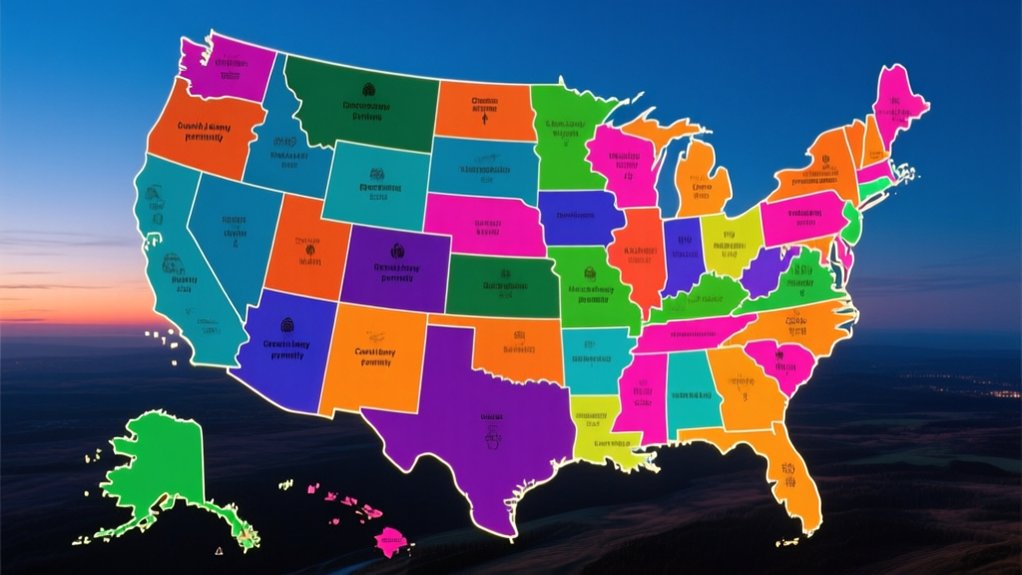
You’ll find that many states honor concealed carry permits through reciprocity agreements, but rules vary widely. Some states recognize permits only from select states or restrict based on residency, permit type, or conditions like age and background checks.
Others, like California and New York, reject all out-of-state permits. Military members and veterans often have special considerations. Since these agreements frequently change and local laws matter, understanding specifics is essential to carry legally and confidently across state lines.
More detailed nuances await below.
How Reciprocity Agreements Affect Carry Rights

Although concealed carry laws vary widely across states, reciprocity agreements play a crucial role in defining your ability to carry firearms legally when traveling. These formal or statutory arrangements recognize out-of-state concealed carry permits, directly impacting your carry rights beyond your home state.
States with reciprocity agreements or unilateral recognition allow you to carry concealed firearms legally within their borders. But the scope depends on whether the agreement is mutual or one-sided, and the type of license you hold.
For example, Florida and Missouri broadly acknowledge permits from all issuing states, considerably expanding your options.
However, keep in mind that reciprocity agreements don’t override local laws or restrictions. These may impose additional limits on where and how you can carry your firearm.
Which States Allow Concealed Carry With Out-of-State Permits
Which states allow you to carry concealed firearms using out-of-state permits depends largely on their reciprocity policies and permitless carry laws. Twenty-nine states permit permitless carry, allowing both residents and visitors to carry concealed weapons without a permit. This simplifies legal carry across borders.
Many states rely on reciprocity agreements, recognizing out-of-state permits to varying degrees. For example, Florida and Ohio have broad reciprocity, honoring permits from numerous states. This benefits permit holders traveling through these states.
On the other hand, states like California and New York reject all out-of-state permits. They require local permits regardless of your home state’s credentials. So, understanding each state’s stance on reciprocity and permitless carry is vital.
Make sure you know the rules before you travel to ensure you comply with local laws. That way, you can carry concealed firearms legally and avoid any trouble.
States Unilaterally Recognizing Concealed Carry Permits
You should understand that unilateral recognition means a state accepts out-of-state concealed carry permits without a formal reciprocity agreement.
States like Pennsylvania, Michigan, and Ohio use this approach, which allows for broader legal carry options.
That said, your permit still has to meet each state’s specific conditions to remain valid and compliant.
Definition Of Unilateral Recognition
When a state unilaterally recognizes concealed carry permits, it accepts licenses issued by other states without requiring formal reciprocity agreements. This means you can carry a concealed firearm in that state solely based on the validity of your home state’s permit, regardless of any negotiated treaties.
Unilateral recognition streamlines the process by eliminating the need to verify specific reciprocity arrangements before carrying.
In practice, if your permit meets the recognizing state’s criteria, such as age or residency requirements, you gain immediate legal carry rights there.
This approach contrasts with bilateral reciprocity, where mutual agreements are necessary.
Understanding unilateral recognition is essential because it directly affects where you can legally carry without additional licensing or approval.
Basically, it simplifies concealed carry permit acceptance across state lines.
States With Unilateral Recognition
Although reciprocity agreements vary widely, several states adopt unilateral recognition policies that allow you to carry concealed firearms with permits issued by any other state. This means that even without formal reciprocity, your out-of-state permit may still be valid.
States with unilateral recognition simplify permit acceptance but often exclude certain licenses, such as those issued to non-residents or individuals under 21. Pennsylvania is a great example of this approach. It recognizes all valid permits under both statutory reciprocity and unilateral recognition policies.
| State | Recognition Type |
|---|---|
| Pennsylvania | Unilateral Recognition |
| Vermont | Unilateral Recognition |
| Arizona | Unilateral Recognition |
| Utah | Unilateral Recognition |
| Alaska | Unilateral Recognition |
Knowing which states have these policies helps you navigate reciprocity and unilateral recognition more effectively.
Conditions For Permit Validity
Since states with unilateral recognition rely on their own statutes rather than formal reciprocity agreements, the validity of your concealed carry permit depends on meeting specific state-imposed conditions.
Understanding these conditions is essential for compliance with concealed carry laws and ensuring your permit’s recognition.
Your permit must conform to the issuing state’s standards, including age and background checks.
Recognition may be limited to resident or non-resident permits, so verify the status your permit holds.
Some states exclude certain categories, such as minors or specific permit types, from recognition.
Also, continuous compliance with your home state’s permit validity, including renewals, affects recognition in these states.
Common Restrictions on Concealed Carry Permit Recognition
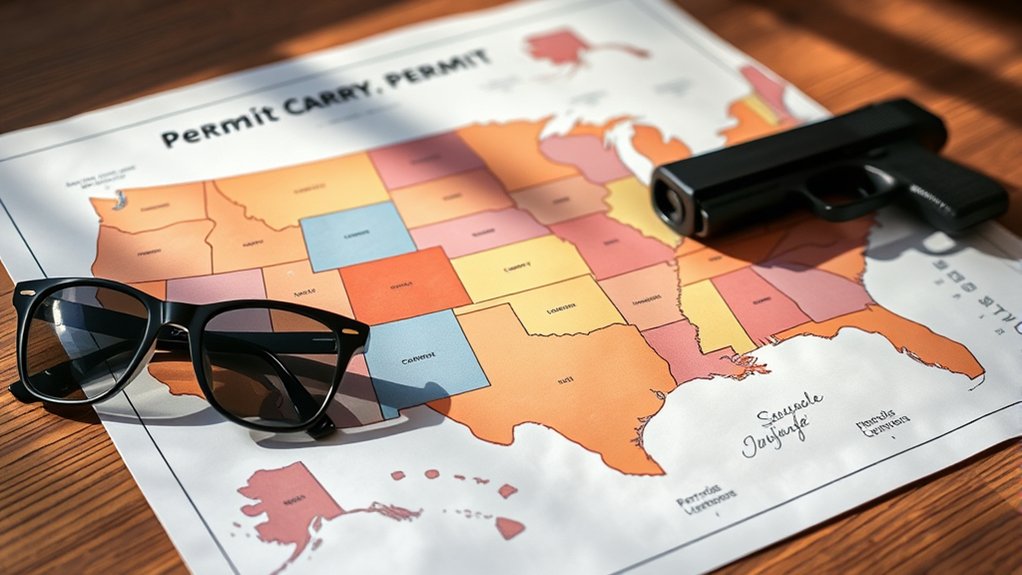
Because states enforce varied criteria, you’ll often encounter common restrictions on recognizing concealed carry permits. License recognition depends heavily on reciprocity agreements, but many states limit recognition to specific license types or exclude non-resident and under-21 permits. Some states reject out-of-state permits altogether, regardless of reciprocity.
Recognition may also fail if the issuing state has less strict requirements. Moreover, even recognized permits often face location-based restrictions within the state. Reciprocity agreements often require permits to be valid and current to apply.
| Restriction Type | Description |
|---|---|
| License Type | Only certain permits are recognized |
| Residency | Non-resident permits often excluded |
| State Policy | Some states don’t recognize any out-of-state |
| Licensing Standards | Permits from less strict states may be denied |
| Location Restrictions | Limits on where carry is allowed despite recognition |
How Age and Residency Affect Concealed Carry Permit Validity
When determining the validity of concealed carry permits, age and residency play crucial roles that directly impact recognition across states. Understanding these factors helps you navigate permit reciprocity more effectively.
Most states require you to be at least 21, though some allow younger applicants, like service members, to carry at 18 or older.
Most states set the minimum concealed carry age at 21, with exceptions for service members aged 18 and older.
Permits issued to non-residents often face limited recognition, as many states restrict validity to resident permits or qualified non-residents. Even if your state issues a permit regardless of age, other states may not honor licenses held by minors under 21.
Non-residents generally need a valid home-state permit, but some states refuse to recognize any non-resident permits at all.
Your permit’s age and residency conditions considerably influence where you can legally carry concealed. So, it’s important to know the rules that apply to you before you carry.
How Different License Types Affect Reciprocity
Although concealed carry reciprocity depends heavily on state agreements, the type of license you hold plays a critical role in determining where your permit is recognized. Different states recognize various license types, like resident, non-resident, or restricted permits. Reciprocity is often limited to specific categories.
For example, states like Illinois or Florida may honor only certain license types. They might exclude those issued to non-residents or individuals under 21.
Also, licenses issued for concealed carry may receive reciprocity, but open carry or restricted licenses might not.
Some states explicitly require fully valid, unrestricted licenses. They reject provisional or restricted permits in reciprocity agreements.
Understanding these distinctions in license types is essential because they directly affect your ability to carry across state lines and the extent of reciprocity protections you can rely on.
Special Rules for Military Members and Veterans
States often apply unique rules to military members and veterans regarding concealed carry reciprocity, reflecting their service status. If you hold military permits or are a veteran, here’s what you need to know:
Many states recognize concealed carry permits issued to active-duty military and veterans. Sometimes, they even offer expedited or simplified processes to make things easier.
Active-duty military members with valid home-state permits typically carry in other reciprocity states without needing extra permits.
Veterans may benefit from reduced application requirements or broader recognition under state reciprocity agreements. Some states allow carrying without additional permits if your military or veteran status is verified. This usually depends on training and background checks.
Understanding these distinctions helps you navigate reciprocity effectively while honoring your service credentials. It’s definitely worth knowing the details to make the most of your rights.
Verifying Reciprocity Before Traveling
Before traveling with a concealed carry permit, you should verify the specific reciprocity agreements between your home state and the destination state. To do this accurately, consult official state government websites or reliable reciprocity maps to confirm if your permit is recognized.
Keep in mind that some states honor only permits from certain states or require specific license types for reciprocity to apply.
Reciprocity agreements can change frequently, so verify the latest information shortly before your trip. Even if the destination state recognizes your permit, you still have to comply with all local laws and restrictions.
It’s always better to double-check than to assume.
Verifying reciprocity in advance is essential to avoid legal issues and ensure responsible concealed carry while traveling. Taking a few minutes to check the rules can save you a lot of trouble down the road.
What to Know About Concealed Carry in States Without Reciprocity
When you enter a state that doesn’t have reciprocity with your permit, chances are your out-of-state permit won’t be recognized. So, you’ll need to understand the local permit requirements before carrying.
You might also come across legal carry restrictions that are stricter or even rules that prohibit concealed carry altogether in certain places.
That’s why it’s super important to do your homework and follow these regulations closely to avoid any legal trouble.
Permit Recognition Challenges
Although many states recognize out-of-state concealed carry permits through reciprocity agreements, some enforce strict policies that refuse to honor any permits issued elsewhere. This lack of concealed carry reciprocity creates several challenges you need to understand.
First, you must obtain a local permit to carry legally if your permit isn’t acknowledged. Carrying concealed without a valid in-state license can lead to criminal penalties.
Even recognized permit holders may face restrictions in states without reciprocity agreements.
Also, variability in state laws demands thorough research before traveling or carrying concealed. Navigating these permit recognition challenges requires precise knowledge of each state’s policies to avoid legal risks and ensure compliance with concealed carry reciprocity rules.
Legal Carry Restrictions
Since many states refuse to recognize out-of-state concealed carry permits, you must understand the specific legal restrictions that apply when carrying firearms without reciprocity. In such states, carrying without a valid local permit is illegal and may lead to criminal penalties. Restrictions often include bans in schools, government buildings, and private properties.
Some states require open carry if concealed carry is prohibited, while others ban carry entirely for non-residents. Knowing these variations helps you comply and avoid fines or confiscation.
| Restriction Type | Common State Policies |
|---|---|
| Permit Recognition | Not recognized without reciprocity |
| Carry Location Limits | Schools, government, private properties banned |
| Carry Method | Open carry required if concealed prohibited |
| Penalties | Criminal charges, fines, firearm confiscation |
Where to Check for the Latest Reciprocity Agreements
Because reciprocity agreements can change frequently, you should always verify the latest information through official state government websites or the state’s firearm licensing authority. These sources provide the most accurate and current data on permit recognition.
To stay informed, consider these steps:
- Visit the official state government or Department of Public Safety websites for updated reciprocity maps and lists.
- Consult the state’s firearm licensing authority for detailed explanations of reciprocity agreements.
- Use national organizations like the NRA or LegalHeat, which compile regularly updated reciprocity guides.
- Confirm whether reciprocity is based on formal treaties or statutory recognition, which is usually outlined on official sites.
Following these practices helps make sure you have precise, reliable information about concealed carry permit reciprocity agreements. It’s always better to double-check before you travel or carry in a new state.
Frequently Asked Questions
How Do Concealed Carry Permit Fees Vary by State?
Concealed carry permit fees vary widely depending on the state. You’ll find some states charging as little as $10, while others exceed $200. Fees often include application, background checks, fingerprinting, and sometimes mandatory training.
You might qualify for reduced fees if you’re military, a senior, or a resident.
Renewal fees also differ, reflecting each state’s licensing procedures and administrative costs. You should check your state’s specifics to budget accurately.
Can Permit Holders Carry Firearms in National Parks?
Yes, you can carry firearms in many national parks if your state law allows it and you hold a valid concealed carry permit.
However, specific park policies or state laws might restrict this, especially in places like California or New York.
Always check the particular national park’s regulations and your state’s reciprocity rules before carrying.
Some parks managed by the National Park Service have designated areas where firearms remain prohibited, regardless of your permit.
What Are the Penalties for Carrying Without a Permit?
If you carry without a permit, you risk penalties ranging from fines to felony charges, depending on the state. For example, some states impose fines up to $1,000 for first offenses, while others treat illegal carry as a felony, which can mean jail time.
Repeat offenses often lead to harsher consequences, including license suspension and firearm confiscation. You’ll also face mandatory court appearances, especially if caught in restricted areas or if you have prior convictions.
Are There Training Requirements for Obtaining a Concealed Carry Permit?
Yes, you’ll often need to complete specific training to get a concealed carry permit. Requirements vary by state but usually include firearms safety, handling, and legal use instruction.
Some states require live-fire practice or a shooting proficiency test, while others have minimal or no training mandates, relying mostly on background checks.
It’s important to check your state’s rules since training standards impact permit reciprocity across states. So, make sure you know exactly what your state requires before you apply.
That way, you’ll be prepared and won’t face any surprises.
How Do State Laws Regulate Carrying Firearms in Vehicles?
State laws regulate carrying firearms in vehicles by specifying storage methods, permit requirements, and permitted locations. You often have to keep your firearm secured, like in a locked container or trunk.
Some states allow open carry without a permit, while others require concealed carry licenses.
Many classify vehicles as extensions of your home, but they restrict carrying in sensitive areas like school zones or federal property.
It’s always a good idea to check local regulations to make sure you’re following the rules. That way, you can avoid any trouble while carrying in your vehicle.
Conclusion
Before you hit the road, picture your concealed carry permit as a key. Some states welcome it, others don’t. Reciprocity agreements form a shifting mosaic shaped by age, residency, and military status. Each piece alters your rights.
Knowing which states recognize your permit isn’t just smart; it’s crucial. Stay sharp, verify current rules, and navigate this complex landscape with precision. That way, you can guarantee your carry rights remain secure wherever you go.