What Magnification For Long Range Shooting – Scope Power Guide
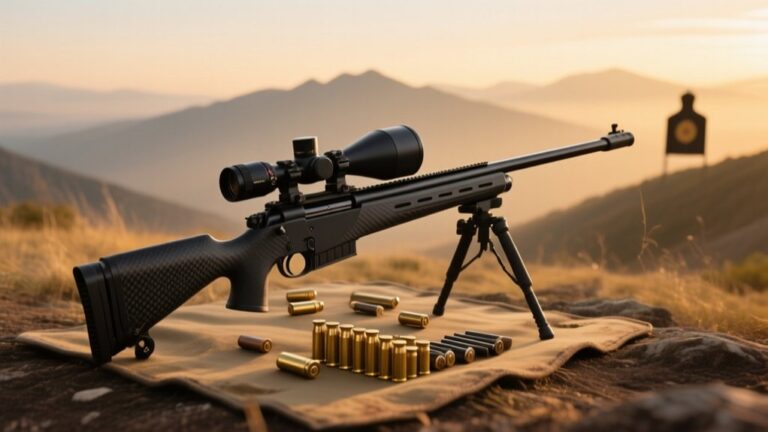
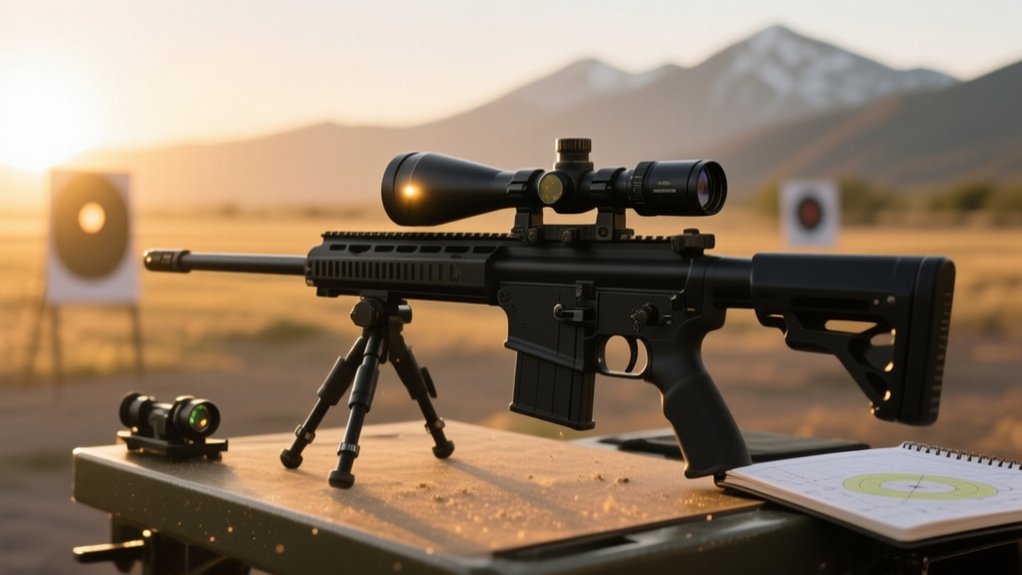
For long-range shooting, you’ll want a scope with 10x to 20x magnification to clearly see and precisely engage distant targets. Higher magnification improves detail but narrows your field of view, so finding a balance is key.
Larger lenses help maintain clarity, especially in low light. Features like precise turrets and illuminated reticles boost accuracy at these powers. Keep these factors in mind, and you’ll better understand how to optimize your setup for long-range success.
How Magnification Impacts Accuracy and Visibility at Long Range
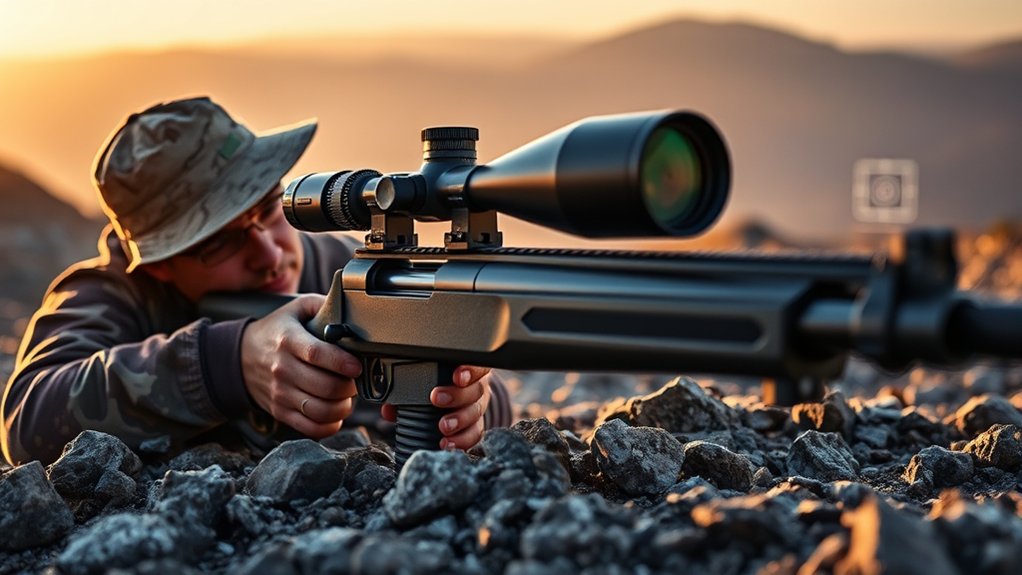
When you increase magnification, you get a clearer, more detailed view of your target, which helps improve accuracy at long distances.
In long-range shooting, choosing the right magnification range is essential because higher magnification lets you identify targets better but often reduces your field of view. This narrower view can make tracking moving targets or scanning the environment more challenging.
Selecting the right magnification is crucial; higher zoom improves target clarity but limits your field of view.
Most long-range shooters prefer a magnification range between 10x and 20x, as it strikes a balance between precision and maintaining enough field of view to spot targets effectively.
On the other hand, lower magnifications offer a wider field of view and reduce reticle movement, helping with stability and quicker follow-up shots, especially in denser environments where visibility matters.
Choosing Scope Magnification Based on Shooting Distances
When you’re picking out your scope’s magnification, a good place to start is by thinking about how far away you’ll be shooting.
You want to find the sweet spot where you get a clear view of your target but still have enough field of view to follow any movement.
It’s all about balance. If your target is small or really far off, you might want to crank up the magnification a bit.
But if it’s closer or larger, dialing it down can help you keep everything in sight without losing track.
Just adjust based on what you’re aiming at and how far away it is.
Distance Determines Magnification
Although choosing the right magnification depends on your shooting distance, understanding how distance affects your scope selection is key to improving accuracy.
For targets between 100 and 300 yards, a magnification of 3-9x or 4-12x offers a solid balance between visibility and field of view.
As distance increases past 400 yards, you’ll want to step up to 6-24x magnification to place rounds precisely.
Long-range shooting typically requires scopes with 10x to 20x power to clearly identify targets while maintaining situational awareness.
If you’re competing or shooting beyond 1,000 yards, a 5-25x scope is ideal for precision.
Matching magnification to distance guarantees you get the best performance, whether you’re hunting or engaging distant targets.
Balancing Field Of View
Since your shooting distance directly influences your scope choice, balancing magnification with field of view is essential. Lower magnification ranges like 3-9x offer a wider field of view, helping you track moving targets and spot impacts more easily during long-range shooting.
As you increase magnification, your field of view narrows, making it harder to maintain situational awareness and follow-up shots. For distances beyond 200 yards, a 4-12x range often strikes the right balance between clarity and field of view.
Many shooters prefer 3-15x for long-range hunting since it provides enough power for target identification without sacrificing too much visibility.
Adjusting For Target Size
Choosing the right magnification depends heavily on how far away your target is and how large it appears through your scope. When adjusting for target size in long-range shooting, your scope’s magnification must match the distance to maintain precision without sacrificing situational awareness.
Here’s a quick guide:
For targets at 100-200 yards, use 3-9x magnification for fast target acquisition and decent accuracy.
Between 200-400 yards, 4-12x magnification balances detail and field of view.
Beyond 400 yards, especially over 1,000 yards, opt for 6-24x or even 10-20x magnification to clearly see small targets and place shots precisely.
Comparing Popular Magnification Ranges for Long-Range Scopes
When you’re picking out a scope, it’s all about balancing magnification with field of view to suit how far you’re aiming.
For shots beyond 400 yards, something like a 10-20x magnification usually hits the sweet spot.
On the other hand, lower magnifications keep your view wider, which is great when you’re out hunting and need to track moving targets.
Knowing the differences between these options makes it easier to choose the right scope for what you need.
Common Magnification Options
Three popular magnification ranges dominate the long-range shooting scene: 3-9x, 4-12x, and 6-24x. Each offers distinct advantages for rifle scopes tailored to long-range shooting. You’ll find that:
- 3-9x magnification works well up to 1,000 yards, balancing clarity and field of view.
- 4-12x provides a versatile middle ground, suitable for various distances and shooting conditions.
- 6-24x excels in extreme accuracy, perfect for competitive shooters and varmint hunters beyond 400 yards.
Choosing the right magnification depends on your shooting style and typical engagement distances. Many prefer staying between 10x to 20x to keep a wider field of view, improving target tracking.
Quality optics like the Razor HD Gen II guarantee your scope maximizes precision at any chosen magnification.
Balancing Field Of View
Understanding how magnification affects your field of view is essential for long-range shooting success. Lower magnification ranges like 3-9x or 4-12x offer a wider field of view, making it easier for you to track moving targets and spot impacts.
Higher magnification scopes, such as 6-24x or 8-32x, narrow your field of view, enhancing target detail but potentially complicating quick follow-up shots. Many shooters find that staying between 10x to 20x balances detail and field of view well, allowing precise aiming while maintaining situational awareness.
For big game hunting, a 12-14x magnification is often preferred since it keeps the target visible enough to notice reactions.
Ultimately, your choice depends on shooting conditions, target size, and your comfort with varying distances in long-range shooting.
Magnification And Target Distance
Choosing the right magnification depends heavily on how far you plan to engage your target. In long-range shooting, selecting the proper magnification helps you balance clarity and field of view based on target distance.
For example:
3-9x magnification works well up to 1,000 yards, offering a broad field of view for moving targets. Higher magnifications like 6-24x or 8-32x are best for precision shots beyond 400 yards, common in competition.
Mid-range scopes (4.5-27x) provide versatility but may be limited by stability at max power.
Keep in mind, lower magnifications improve low-light performance and reduce reticle movement during recoil. Your choice of magnification should always match your target distance and shooting conditions for ideal results.
Lens Size and Light for Long-Range Clarity
When you pick a scope for long-range shooting, the size of the lens plays a key role in how clear and bright your target appears. A larger lens size, like 50mm or 56mm, gathers more light, boosting light transmission and improving clarity, especially in low-light conditions.
This bigger lens diameter also helps maintain a wider field of view, which is essential when tracking distant, moving targets.
To get the best results, choose a scope with high-quality lens coatings that reduce glare and enhance light transmission.
Understanding how lens size affects brightness and clarity lets you select a scope that balances these factors with magnification, ensuring you get a clear, bright sight picture for precise long-range shooting.
Why Turret and Reticle Features Matter at Higher Magnifications
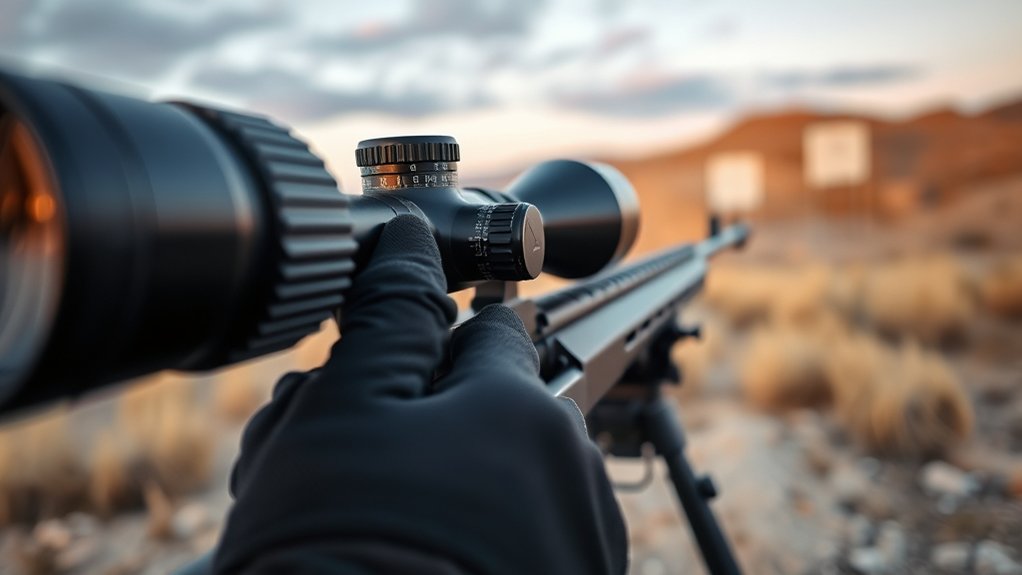
Because small adjustments matter more at higher magnifications, turret and reticle features become essential tools for long-range shooters. Precise turret features, like exposed elevation and windage adjustments with tactile feedback, let you quickly dial in corrections for magnification distance changes.
Small, precise turret adjustments with tactile feedback are crucial for accurate corrections at high magnifications.
Meanwhile, reticle design enhances your ability to estimate range and holdovers, which is vital when every fraction counts.
Key reasons turret and reticle features matter include:
- Turret features provide clear markings and tactile clicks for accurate, repeatable adjustments.
- Reticle design options, such as illuminated or FFP reticles, improve visibility and proportional holdover accuracy at any magnification.
- Specialized reticles like mil-dot or BDC simplify distance estimation and bullet drop compensation.
Mastering these features helps you maintain precision and confidence in long-range shooting scenarios.
Balancing Field of View and Magnification for Target Tracking
Turret and reticle features give you the precision needed at higher magnifications, but they can also narrow your field of view, making it tougher to keep up with moving targets.
When you increase magnification, your field of view shrinks, which complicates target tracking during long-range shooting.
Using a lower magnification, like 3-9x, offers a wider field of view, helping you acquire and track targets faster.
Balancing magnification and field of view guarantees you maintain situational awareness and easily spot impacts.
For follow-up shots, lower magnification reduces perceived reticle movement during recoil, improving accuracy.
Many shooters prefer around 12-14x magnification to strike a balance between precision and keeping enough of the target area visible for effective target tracking.
Recommended Scope Magnifications for Long-Range Hunting
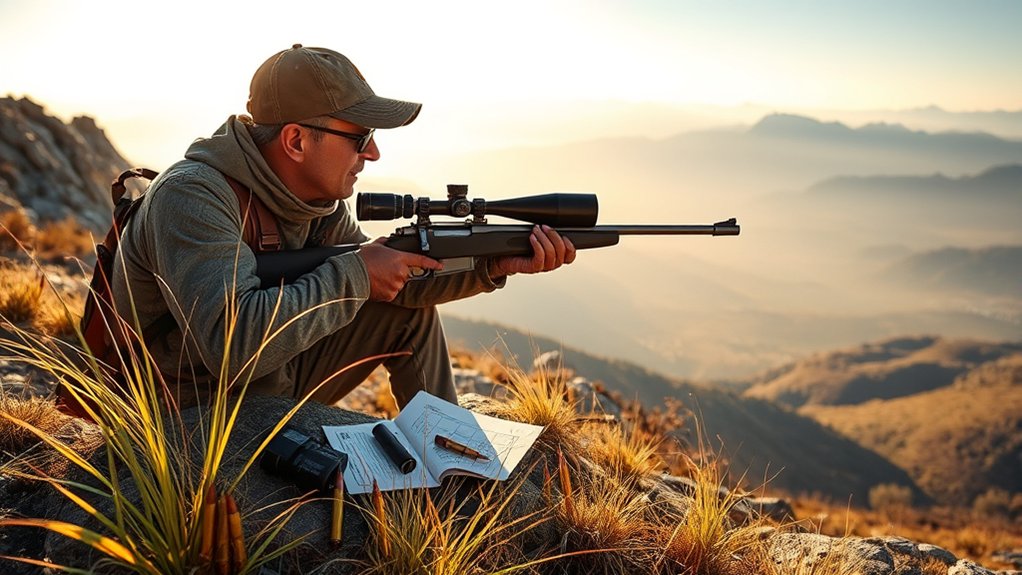
Choosing the right scope magnification is essential for long-range hunting success. You want a scope magnification that balances clarity and field of view, allowing you to engage targets effectively beyond 400 yards.
Here are the recommended scope magnifications to take into account:
- 2.5-10x scopes provide a solid baseline for long-range hunting, combining decent magnification with a wide field of view.
- 4-16x and 6-24x scopes offer versatility for varying distances and conditions, making them popular choices.
- A 3-9×40 scope works well for shots up to 1,000 yards, balancing magnification and target visibility.
Selecting the right magnification guarantees you maintain precision without losing sight of your target during dynamic long-range hunting scenarios.
Frequently Asked Questions
How Does Eye Relief Affect Comfort During Long-Range Shooting?
Eye relief directly impacts your comfort during long-range shooting by preventing scope bite and allowing a natural shooting position.
With proper eye relief, you can smoothly use parallax adjustment without straining, which enhances accuracy.
It also helps you keep a clear field of view and align reticle options effortlessly.
If eye relief is too short, you’ll feel discomfort, lose focus, and struggle with target acquisition.
That slows you down and reduces shooting precision.
What Maintenance Is Required for High-Magnification Scopes?
You need to clean your lenses regularly using proper lens cleaning techniques, like a microfiber cloth and lens cleaner, to keep clarity sharp.
Don’t forget scope calibration tips. Recalibrate your zero after transport or temperature changes to stay accurate.
Check mount stability factors by tightening and aligning rings and bases to prevent shifting.
Also, inspect the internal mechanism for wear and store your scope in a protective case to avoid damage.
Can Weather Conditions Impact Scope Magnification Effectiveness?
Yes, weather conditions can impact your scope’s magnification effectiveness.
Atmospheric distortion and mirage effects often blur your target, especially at higher magnifications. That’s just when you need precision most.
You’ll notice light transmission drops in fog or humidity, reducing clarity and forcing you to lower magnification for a clearer view.
Are Illuminated Reticles Necessary for Long-Range Shooting at Night?
You don’t necessarily need illuminated reticles for long-range shooting at night, but they can boost your shooting accuracy considerably.
Night vision helps, but illuminated reticle types provide a clear aiming point against dark backgrounds, making target acquisition easier.
You’ll find adjustable brightness settings useful to match ambient light, ensuring your reticle stays visible without overpowering your night vision.
How Do Scope Mounting Options Influence Accuracy at Long Distances?
Your mounting techniques directly impact accuracy by ensuring the reticle stays aligned with the bore. Using a one-piece mount increases rigidity, which reduces shifts that affect parallax adjustment and target precision.
Proper scope height and consistent torque prevent movement, keeping your eye relief steady.
This stability lets you effectively use different reticle types without distortion, which is essential for precise shot placement at long distances.
Conclusion
When you’re choosing magnification for long-range shooting, you want the right balance between clarity and field of view. Too much zoom can narrow your sight and make tracking harder, while too little might leave you guessing.
So, how do you find that perfect power? By considering your typical shooting distances, light conditions, and scope features, you’ll pick a magnification that keeps your shots precise and your targets in sight every time.