What Is Considered Concealed Carry – Legal Definition And Examples
When you carry a firearm hidden from plain sight, usually on your body or in a bag, you’re practicing concealed carry. This means the weapon isn’t visible to others and complies with laws requiring secure, discreet carrying methods like inside-the-waistband holsters or purse carry. Common concealed weapons include compact handguns such as 9mm pistols and small revolvers.
Keep in mind, permits typically govern where and how you carry, with exceptions for officials and lawful activities. Understanding these rules helps clarify your legal responsibilities and options. It’s important to know what’s allowed so you can carry safely and within the law.
Key Takeaways
- Concealed carry means keeping a firearm hidden from plain sight, typically on the person or in a bag, using holsters or special clothing.
- Firearms must be disguised so they are not visible to others, meeting legal requirements for concealment.
- Common concealed weapons include compact handguns like 9mm pistols and small revolvers carried in inside-the-waistband holsters or purses.
- Concealed carry laws require permits in most areas and differ from open carry, which displays the firearm openly.
- Exceptions to concealed carry restrictions include transporting unloaded firearms to ranges, lawful hunting, and official duties by law enforcement.
What Concealed Carry Means Legally
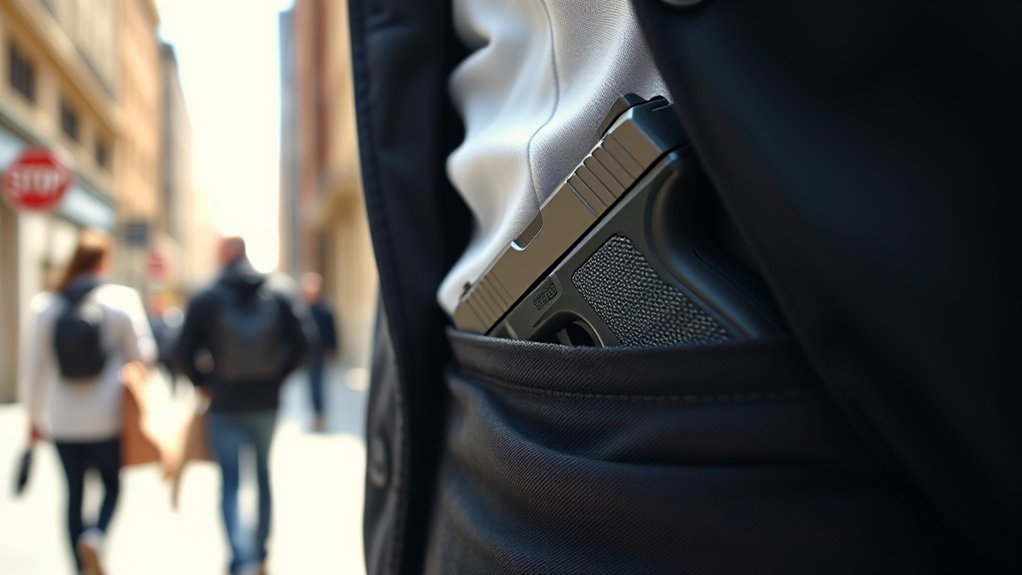
Although concealed carry laws vary, carrying a firearm legally means keeping it hidden from plain sight, typically on your person or in a bag. You must understand that concealed carry regulations require the firearm to be disguised so others can’t readily identify it as a weapon. This means the firearm mustn’t be visible to the casual observer.
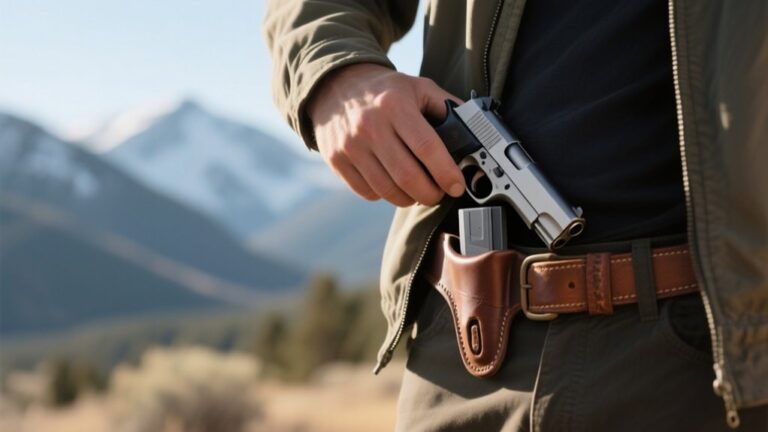
Firearm concealment techniques include using inside-the-waistband holsters under clothing or placing a handgun in a purse where it remains out of view.
Openly carrying a weapon differs legally from concealed carry and often involves separate licensing rules.
Common Concealed Carry Weapons
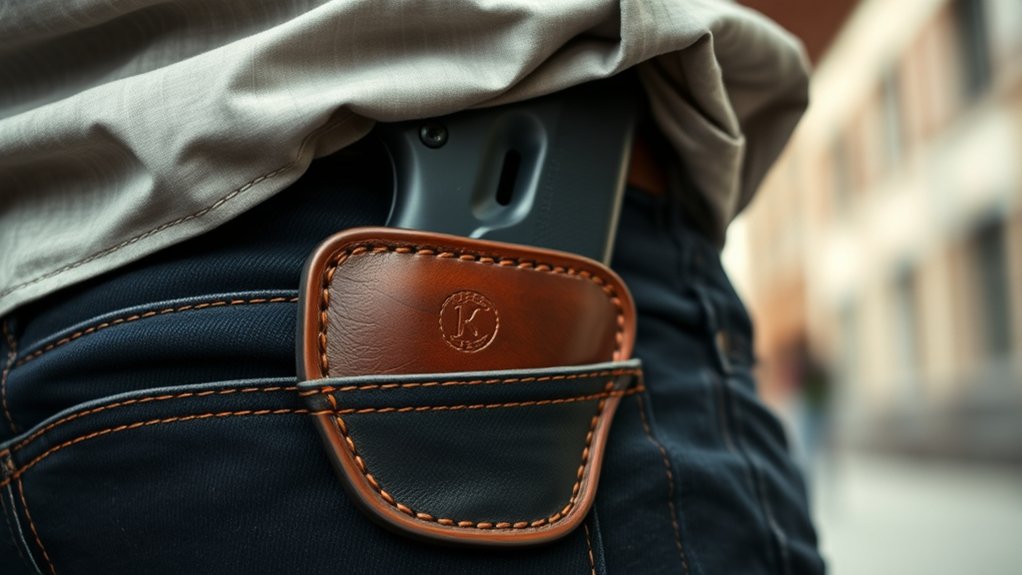
You’ll find that handguns—especially semi-automatic pistols and revolvers—are the most popular concealed carry weapons because of their compact design. They’re easy to carry and conceal, which makes them a go-to choice for many people.
It’s also really important to understand how concealment works, not just for comfort but to make sure you’re following the law. Knowing the rules helps you carry effectively without running into legal trouble.
Plus, different places have different laws about what counts as a weapon. For example, items like spring sticks and ballistic knives might be classified differently depending on where you are. So, it’s a good idea to be aware of those differences to stay on the right side of the law.
Popular Concealed Weapons
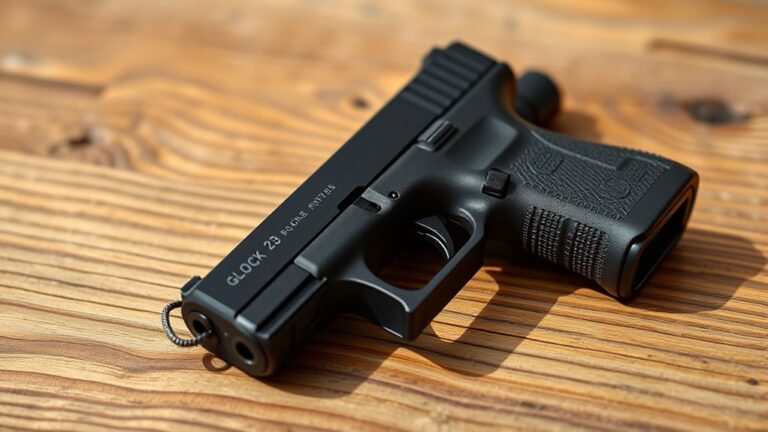
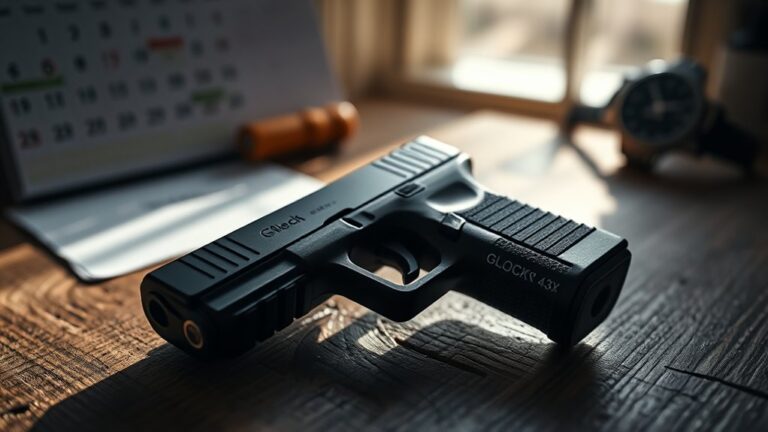
What makes a firearm suitable for concealed carry often comes down to size, ease of concealment, and reliability. You’ll find popular choices include compact or subcompact semi-automatic pistols like the Glock 43, Smith & Wesson M&P Shield, and SIG Sauer P365.
Revolvers and smaller handguns such as derringers also remain favored for their discreet profiles. Your holster choices and concealment clothing directly impact how effectively you can carry these weapons. Common calibers like 9mm, .380 ACP, and .38 Special balance power with manageability, enhancing practical use.
| Firearm Type | Popular Models | Typical Calibers |
|---|---|---|
| Semi-automatic | Glock 43, SIG Sauer P365 | 9mm, .380 ACP |
| Revolver | Small-frame revolvers | .38 Special |
| Pocket pistols | Derringers | .22 LR, .25 ACP |
Concealment Mechanisms Explained
When carrying a concealed weapon, you rely heavily on effective concealment mechanisms to keep the firearm hidden from view. Common holster styles like inside-the-waistband (IWB) and pocket holsters provide practical concealment by minimizing print and guaranteeing the weapon remains out of casual sight.
Purse carry also serves as a viable concealment technique, especially for smaller handguns.
These methods are designed to comply with legal standards, requiring the weapon to be observable only with significant effort or when intentionally exposed. Firearms unsuitable for concealment, such as ballistic knives or spring sticks, are generally excluded due to their size or design.
By selecting appropriate holster styles and concealment techniques, you ensure your carry remains discreet and legally compliant.
This way, you keep both safety and functionality in check during everyday activities. It really comes down to choosing what works best for you and your situation.
Legal Weapon Classifications
Understanding the types of weapons legally classified for concealed carry helps you make informed decisions about what you can carry discreetly and lawfully. Common concealed carry weapons include handguns such as pistols and revolvers. These are designed specifically for weapon concealment because of their portability and compact size.
Beyond firearms, ballistic knives with their spring-propelled blades and spring sticks, which are metal telescoping devices activated by buttons, also fall under legal classifications for concealed carry in some places. However, legal restrictions vary widely.
Often, specific knives or firearms are regulated to prevent unauthorized concealed possession. You need to be aware of these distinctions because lawful concealed carry usually means the weapon has to stay hidden from view. It also has to comply with local laws that govern weapon concealment and any permit requirements.
Staying informed helps you carry safely and legally.
How Concealed Carry Is Different From Open Carry
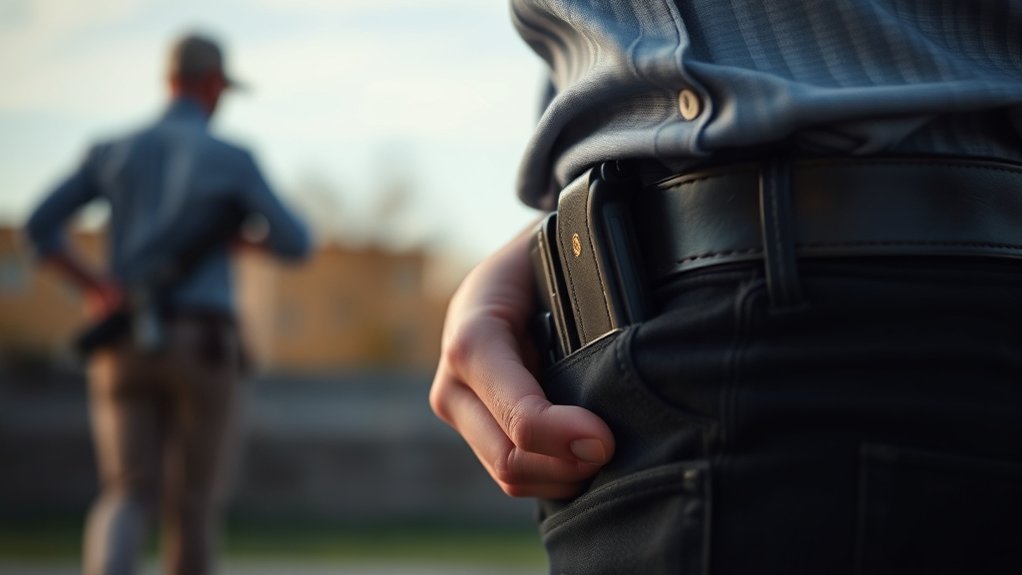
When you carry concealed, your weapon stays out of sight, usually tucked inside your clothing or a bag.
On the other hand, open carry means your firearm is visible, like when it’s in a holster on your hip.
It’s important to get these differences because the laws and permits often handle each one differently.
Concealed Carry Explained
How do concealed carry and open carry differ in practice and legality? Concealed carry means carrying a firearm in a way that hides it from public view, usually under clothing or inside a bag. You need good concealment techniques to make sure the weapon stays undetectable during daily activities.
You also want to prioritize holster safety by choosing holsters that keep the firearm secure but still allow for quick access.
Legally, concealed carry often requires permits and following strict rules about where and how you can carry.
Open carry, on the other hand, means showing the firearm openly, so there’s no need to hide it. But the laws around open carry can vary a lot depending on where you are.
Knowing these differences helps you follow local laws and practice responsible firearm handling.
When it comes to concealed carry, safety and discretion are key.
Open Carry Contrast
Why do concealed carry and open carry differ so much in both practice and legal requirements? The key is visibility.
With concealed carry, you use clothing and special holsters designed to keep your firearm out of sight, often under jackets or inside bags.
Open carry, on the other hand, means showing your firearm openly, usually on a belt or outside holster.
Legally, this difference affects permit requirements. Concealed carry almost always needs a permit, while open carry might be allowed without one in some places.
The law mainly focuses on whether the firearm is obvious to others.
Knowing these differences helps you follow the rules and pick the right method based on where you live and what you prefer.
Legal Requirements for Concealed Carry
Several key legal requirements govern the ability to carry a concealed weapon, and you must meet these to comply with the law. Typically, you need a permit or license unless your jurisdiction allows permitless carry. You’ll face background checks, firearm safety training, and possibly prove a legitimate reason for carrying concealed.
Weapon storage rules and carry restrictions are critical to follow.
Key requirements include:
- Completing background checks and firearm training
- Obtaining proper permits unless constitutional carry applies
- Carrying firearms unloaded and securely stored during transit
- Avoiding carry in restricted areas like schools or government buildings
Disqualifying factors, such as felony convictions or restraining orders, generally prohibit concealed carry eligibility.
Understanding and adhering to these legal requirements ensures responsible, lawful concealed carry.
It’s really important to know the rules in your area and follow them closely. That way, you stay safe and stay on the right side of the law.
Exceptions to Concealed Carry Laws
Although concealed carry laws are strict, they include specific exceptions that allow you to carry weapons without a permit under certain conditions. For instance, you can carry firearms openly or concealed within your own residence or on private property without needing concealed carry permits.
Concealed carry laws are strict but allow permit-free carrying on private property or within your own home.
Transporting unloaded and securely wrapped weapons, along with proper ammunition storage, is permitted when moving to shooting ranges, repair shops, or exhibitions. Lawful hunting activities also serve as exceptions, allowing carrying firearms under regulated conditions.
Additionally, officials such as law enforcement officers and judges are exempt while performing official duties. Carrying weapons between your residence and places of purchase, repair, or firearms training typically falls under these exceptions.
Understanding these nuances helps you navigate concealed carry laws without violating permit requirements. It’s always good to know where the lines are so you can stay safe and legal.
Everyday Examples of Concealed Carry
Understanding exceptions to concealed carry laws sets the stage for recognizing common ways people carry weapons daily. Your choice of holster selection and concealed carry attire plays a vital role in effectively hiding a firearm while maintaining accessibility.
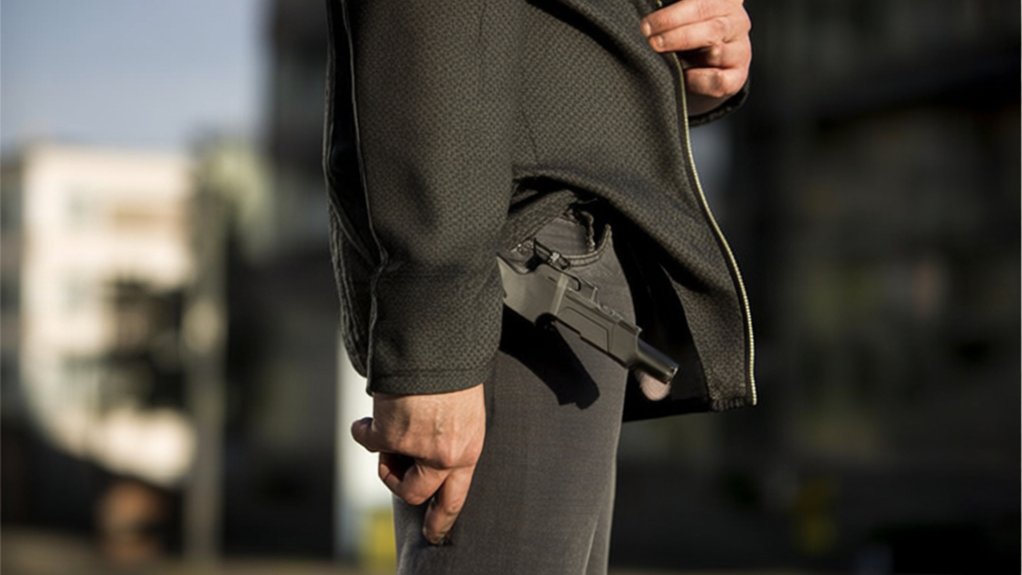
Typical everyday examples include wearing an inside-the-waistband (IWB) holster under a shirt or jacket for discreet retention. You might also carry a handgun inside a purse, backpack, or briefcase to keep it out of sight.
Utilizing concealed carry clothing like belly bands or specialized shirts helps secure the weapon on your body.
Another common method is concealing a small revolver or semi-automatic pistol in a jacket pocket during colder months. Each approach balances concealment with practicality.
This ensures compliance with legal definitions of concealed carry while accommodating personal comfort and situational demands.
How Concealed Carry Permits Impact Your Rights
When you obtain a concealed carry permit, you get legal authorization to carry a hidden firearm in public, but it comes with specific state laws and restrictions. This permit doesn’t just let you carry; it also gives you an important legal defense if you’re ever charged with unlawful concealed carry, especially in states with strict rules.
Plus, many states recognize permits from other places through reciprocity agreements. That means you can carry legally in more areas than just your home state.
Without a permit, carrying a concealed firearm can lead to criminal penalties because local laws and definitions vary a lot.
Having a valid permit usually also lets you transport and conceal your firearm lawfully, which boosts your personal self-defense rights within the law.
Frequently Asked Questions
Can Concealed Carry Be Revoked Without a Criminal Conviction?
Yes, your concealed carry permit can be revoked without a criminal conviction if you fail to meet license requirements or permit renewal criteria. Authorities may act based on administrative issues or public safety concerns.
It’s not always about having a criminal record. Sometimes, missing paperwork or not following the rules can lead to losing your permit. So, it’s important to stay on top of all the requirements.
How Does Concealed Carry Affect Self-Defense Insurance?
Carrying a concealed firearm without proper licensing can wreck your insurance coverage faster than a tornado.
You need valid firearm licensing and strict legal compliance to guarantee your self-defense insurance covers concealed carry incidents effectively.
Basically, if you’re not following the rules, your insurance might not have your back when you need it most. So, it’s really important to stay legal and keep your paperwork in order.
Are There Psychological Evaluations Required for Concealed Carry Permits?
You generally won’t face psychological evaluations for concealed carry permits, as most states focus on background checks.
Mental health assessments may only occur if your history raises specific concerns tied to firearm eligibility requirements.
What Are the Penalties for Accidental Exposure of a Concealed Weapon?
If you cause accidental exposure of your weapon concealment, you could face fines, misdemeanor charges, or even felonies. Penalties escalate with repeated incidents or exposure in sensitive areas. This could possibly lead to license suspension or revocation.
It’s important to handle your concealed weapon carefully to avoid these consequences. Remember, even unintentional exposure can have serious legal repercussions. Staying aware and cautious is the best way to stay on the right side of the law.
How Do Concealed Carry Laws Impact Travel Between States?
Concealed carry laws impact your travel by imposing travel restrictions based on interstate reciprocity agreements. You must verify if your permit is recognized in each state to avoid legal issues, as reciprocity varies widely across jurisdictions.
It’s a good idea to check the specific rules before you hit the road. That way, you won’t run into any unexpected problems while traveling between states. Staying informed keeps you safe and compliant.
Conclusion
Understanding concealed carry is like steering a modern-day Pandora’s box. It holds both protection and responsibility. You need to grasp the legal definitions, weapon types, and permit requirements to carry confidently and lawfully.
Unlike open carry, concealed carry demands discretion and awareness of exceptions. By knowing these details, you guarantee your rights are respected while minimizing legal risks. Stay informed, comply with regulations, and carry wisely to maintain both safety and legality.