How To Keep A Gun Safe At Home – Storage And Safety Tips
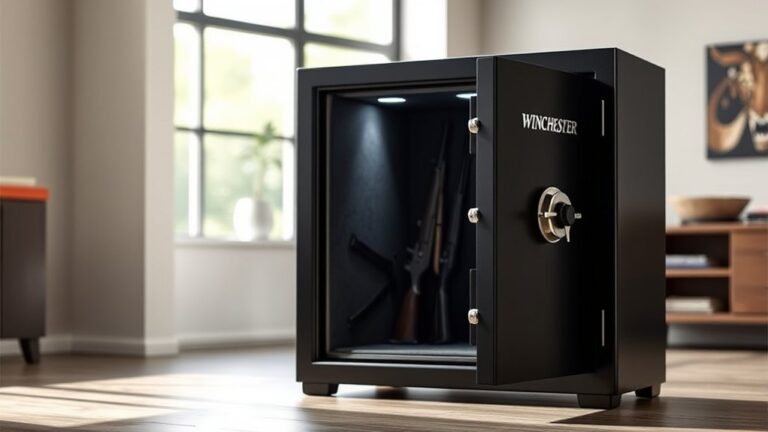
To keep your gun safe at home, always store it unloaded and locked in a sturdy safe or lockbox made of steel or fire-resistant material. Separate your ammunition in a locked container away from the firearm. Use reliable locks like biometric or combination types for quick but secure access.
Regularly check your storage and unloading procedures to maintain safety. You’ll also discover how to handle gun storage during travel and teach family safety practices that protect everyone responsibly. It’s all about being cautious and prepared.
Key Takeaways
- Store unloaded firearms separately from ammunition in a locked, fireproof safe placed in a cool, dry, and hidden location.
- Use biometric or electronic lock safes for quick, secure access while preventing unauthorized entry.
- Regularly verify that the safe’s locking mechanism works properly and that firearms remain unloaded before storage.
- Educate family members on gun safety, emphasizing secure storage and keeping keys or codes out of children’s reach.
- Follow legal requirements for firearm storage and ensure safes are robust, made of steel, and resistant to theft and fire.
Why Safe Gun Storage Matters at Home
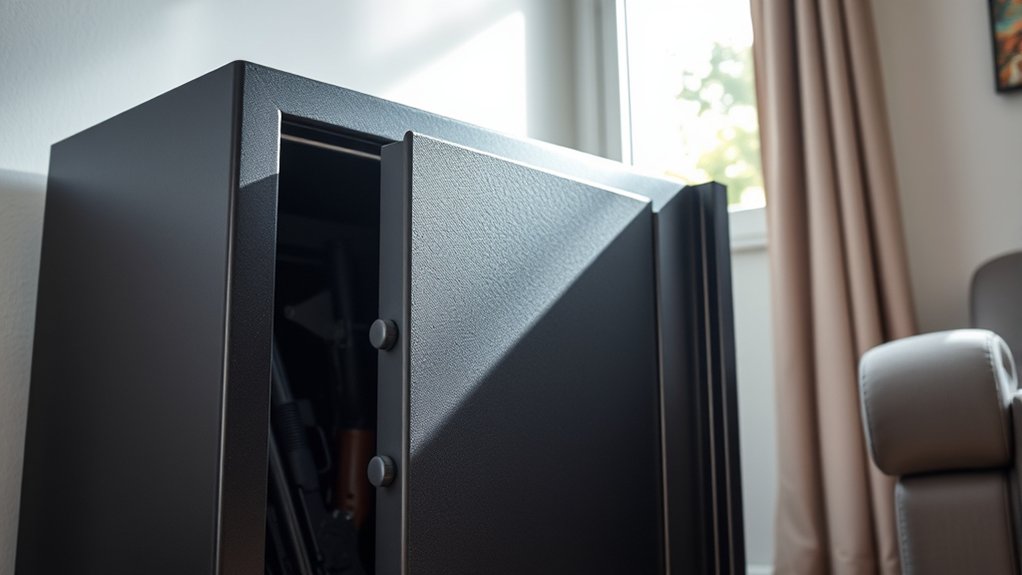
Although owning a firearm comes with responsibility, you can greatly reduce risks at home by storing your guns safely. Safe gun storage is essential to prevent unintentional shootings, especially since children and teens are involved in over 3,500 such incidents annually.
By using secure storage methods like locked safes or lockboxes, you minimize the chance of unauthorized access and theft, which affects hundreds of thousands of firearms each year.
Plus, keeping guns unloaded and separate from ammunition lowers the risk of impulsive harm even more.
Laws support these precautions by mandating secure storage to protect children and prohibited persons.
How to Unload Your Firearm for Safe Storage
How exactly do you unload your firearm safely for storage? First, point the muzzle in a safe direction. Next, remove the magazine if your firearm has one. Then, check the chamber to confirm it’s empty.
Always treat the gun as if it’s loaded during this process. Triple-check to verify you have an unloaded firearm before moving it to safe storage. Following manufacturer-specific unloading steps preserves your firearm and enhances firearm safety.
| Step | Action | Safety Tip |
|---|---|---|
| 1 | Point muzzle safely | Avoid pointing at people |
| 2 | Remove magazine | Prevent accidental feeding |
| 3 | Check chamber | Confirm no rounds remain |
| 4 | Triple-check | Guarantee unloaded firearm |
Use a trigger lock for added security after unloading.
Picking the Best Gun Lock for Your Firearm
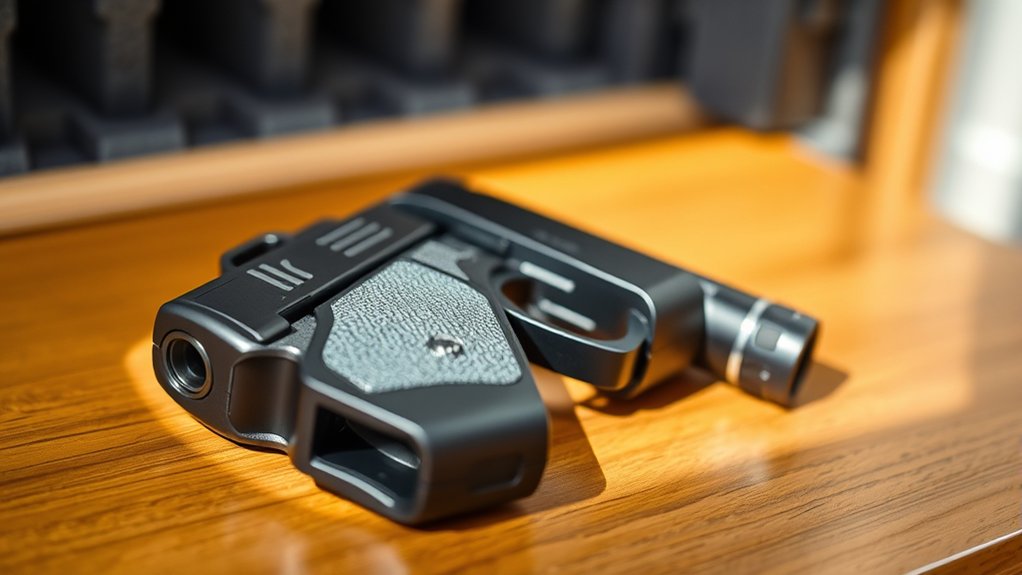
When you’re picking out a gun lock, it’s important to know about the different types you can choose from. There are biometric and electronic locks, as well as trigger and cable locks. Each one offers different features, so it’s good to understand what they bring to the table.
You’ll want to focus on things like tamper resistance and whether the lock works well with your specific firearm. These details really matter if you want to make sure your gun stays secure.
In the end, choosing the right lock is all about finding a balance. You want something that keeps your gun safe but also lets you get to it quickly when you need to. It’s about making sure safety and convenience work hand in hand.
Lock Types Overview
Which lock type suits your firearm and lifestyle best? For secure gun storage at home, think about your access needs and the level of security you want.
Trigger locks are a simple and affordable way to prevent accidental discharge by covering the trigger guard.
Gun safes with combination or digital locks offer strong protection. They’re great for long-term storage and keeping firearms out of reach of children.
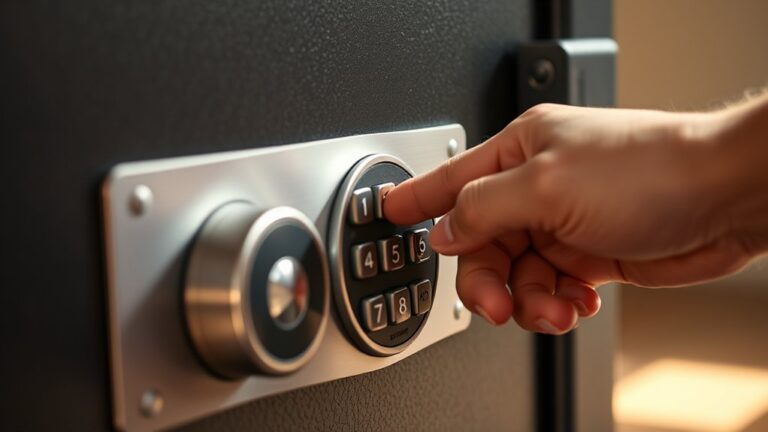
Biometric locks use fingerprint recognition, giving you quick, keyless access without losing security.
Electronic locks with programmable codes and battery backups make sure you can get in even during power outages.
Portable options like cable locks are perfect for securing firearms when you’re traveling or in vehicles.
Take a good look at these lock types and find the right balance between convenience and safety that fits your daily routine and ensures responsible firearm storage.
Choosing Secure Features
Selecting the right gun lock means balancing security with convenience to fit your specific firearm and lifestyle. For optimal gun safety, choose a lock that ensures a secure gun while allowing quick access when needed. Biometric locks provide fingerprint recognition for fast, authorized use, which is ideal for emergency situations.
Electronic locks with programmable codes and alarms add layers of protection. Trigger locks are affordable and straightforward, preventing the trigger’s movement but may be less versatile. Cable locks offer portable firearm storage across various models but require threading through the barrel or action.
Always consider durability, ease of use, and compliance with local regulations to avoid leaving an unsecured gun in your home. Prioritize a lock that maintains security without sacrificing accessibility for responsible firearm storage.
It’s all about keeping your firearm safe while making sure you can get to it when it counts.
Safe Gun Storage: Locking and Unloading Tips
You should always unload your firearms completely before storing them. That means checking to make sure the chamber, magazine, and cylinder are all empty.
It’s a good idea to use secure locking devices, like biometric safes or trigger locks, to keep your guns safe from unauthorized access.
Also, remember to store your ammunition separately in a locked container. Doing this helps minimize risks and makes your home a lot safer overall.
Unload Firearms Properly
Although handling firearms demands constant vigilance, unloading them properly is the essential first step in safe gun storage. To unload firearms safely, always remove the magazine first, then check the chamber multiple times to verify it’s completely empty. Familiarize yourself with your specific firearm’s unloading procedure to avoid mistakes.
Even after unloading, treat the gun as if it’s loaded to maintain safety awareness. Store unloaded guns separately from ammunition to minimize the risk of accidental discharge or theft.
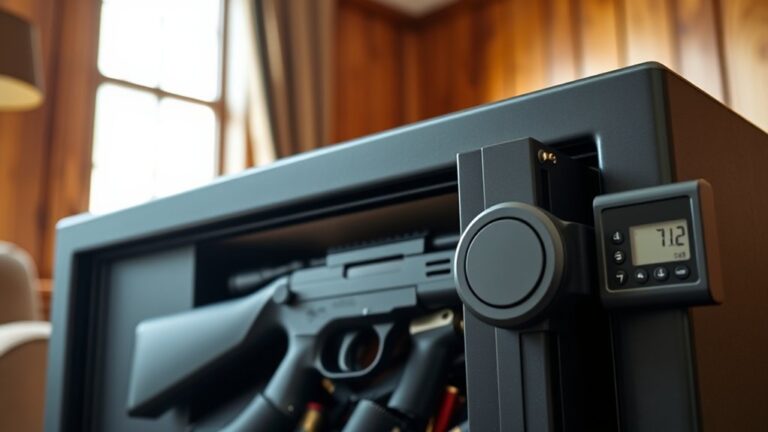
Use a secure storage container, like a gun safe or lockbox, to keep firearms out of reach of children and unauthorized persons.
Prioritizing these steps ensures your firearms remain safe, reducing hazards and enhancing overall safety in your home. It might seem like a lot, but taking the time to do it right really makes all the difference. Stay safe and stay smart!
Use Secure Locking Devices
When protecting your firearms at home, securing them with reliable locking devices is essential to prevent unauthorized access and accidents. Gun safes equipped with biometric or electronic locks offer quick, secure access for you while keeping others out.
Portable or bolted-down lockboxes are great for keeping guns away from children.
Trigger locks fit snugly over the trigger guard, effectively blocking trigger pulls and reducing accidental discharge risks.
Cable locks, threaded through the barrel or action, physically prevent firing and provide an affordable safety option.
Using these secure locking devices considerably lowers the chances of unintentional shootings and firearm theft.
Separate Ammunition Storage
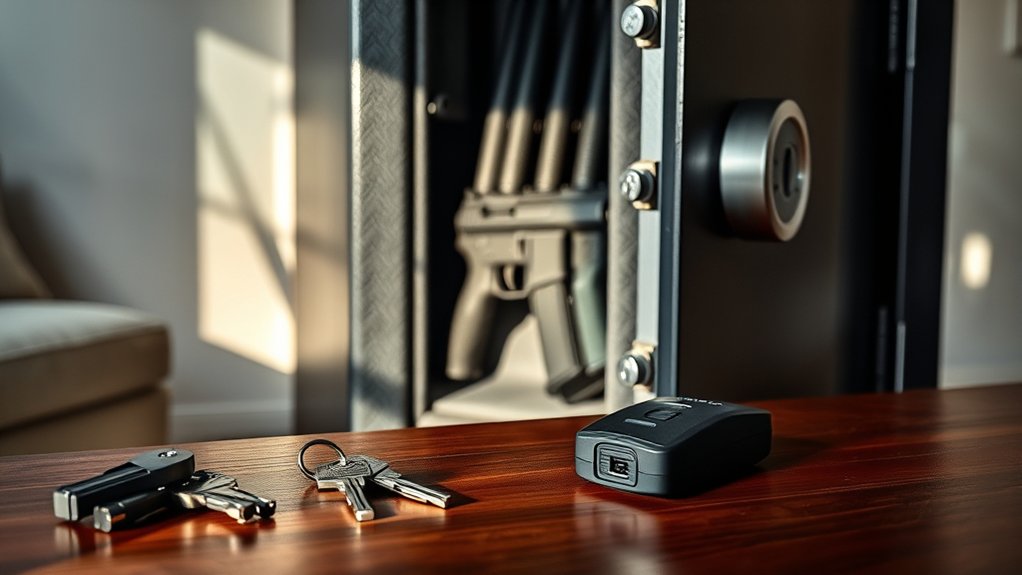
How should you store ammunition to maximize safety at home? Always keep ammunition separate from your unloaded gun. Securely store it in a locked container to prevent unauthorized access.
This practice reduces accidental discharge risks and impulsive use, especially in homes with children. It’s a simple step that can make a big difference.
Follow these steps for effective separate ammunition storage:
- Use a dedicated lockable compartment or safe for ammunition.
- Store the unloaded gun in a different locked location.
- Make sure both storage areas are out of sight and reach of unauthorized individuals.
- Regularly check locks and storage conditions to maintain security.
Storing Ammunition Separately for Added Safety
Because storing ammunition separately from your firearms reduces the risk of accidental discharge and theft, it’s essential to keep them in a locked, fireproof container dedicated solely to ammunition. You should store ammunition in a cool, dry place away from heat and humidity to maintain safety and prevent deterioration.
Label the container clearly so only responsible individuals access it. This simple step makes a big difference in keeping everything secure and safe.
| Storage Tip | Reason | Recommendation |
|---|---|---|
| Locked Container | Prevents unauthorized access | Use a firearm safe or box |
| Fireproof Material | Protects against fire damage | Choose steel or fireproof box |
| Cool, Dry Location | Maintains ammunition integrity | Avoid basements or attics |
Securing Guns in Vehicles and Travel
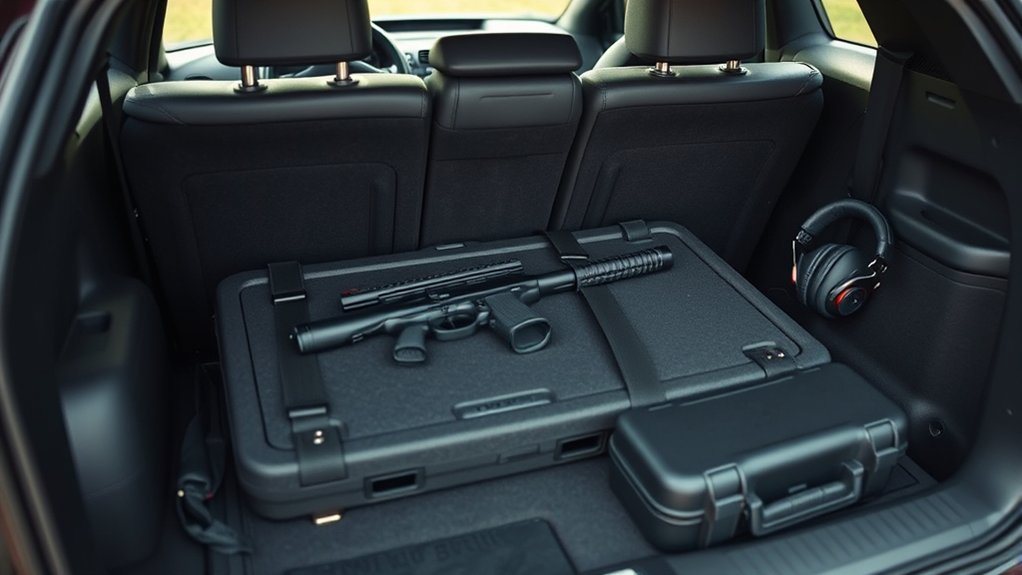
Where should you keep your firearms while on the road to guarantee maximum safety? Never leave an unsecured gun in your vehicle. Make sure to secure your firearm using proper storage to prevent theft and unauthorized access.
Here are some essential tips to keep in mind:
- Always lock firearms in a vehicle-specific lockbox or safe, keeping them out of sight.
- Remove your firearm from the vehicle during extended stops or overnight stays.
- Lock your vehicle doors and consider extra security measures like alarms or steering wheel locks.
- Never leave a loaded gun unsecured; keep it inaccessible to children and unauthorized persons.
Following these simple steps can really make a difference in keeping your firearm safe while traveling.
Teaching Gun Safety to Your Family
Although owning a firearm comes with responsibilities, teaching your family about gun safety is essential to preventing accidents. Start by educating children early on the importance of never touching guns without adult permission. Reinforce that firearms must always be kept unloaded and stored securely, separate from ammunition.
Use proven programs like NRA’s Eddie Eagle to help children understand what to do if they encounter a gun.
Consistently demonstrate secure storage by locking guns in safes and keeping keys out of reach. This shows your family that safety is a priority.
Finding Safe Gun Storage Away From Home
When you’re away from home, securing your firearm properly is just as important as it’s inside your house. To guarantee safe gun storage and prevent unauthorized access, follow these key steps:
Always store unloaded firearms in lockable safes, cases, or lockboxes designed for transport. Avoid leaving firearms in vehicles. But if you have to, make sure they’re secured in a locked, hidden container out of sight.
Using biometric or electronic lock safes is a great way to have quick yet secure access when storing guns away from home.
And don’t forget to check local laws to make sure your transportation and storage methods are compliant with regulations.
Frequently Asked Questions
How Often Should I Inspect My Gun Safe for Security Issues?
You should inspect your gun safe at least every three months to make sure the locks and mechanisms are working properly. Doing a quick check every month is also a good idea. This helps confirm it’s securely bolted down and that your keys or combinations are accounted for.
Regular inspections let you catch any signs of tampering, wear, or damage early on. That way, you can prevent lock failures and make sure you have quick access when you need it.
It’s also helpful to keep a record of when you inspect your safe. This makes it easier to stick to a consistent safety routine and stay on top of maintenance.
What Materials Are Best for Fireproof Gun Safes?
When it comes to fireproof gun safes, thick steel or composite materials are your best friends. Inside, look for insulation like intumescent gel or mineral-based fireboard. They act like a heat shield, keeping the inside cool.
A safe with a 1- or 2-hour fire rating means it’s built tough enough to keep internal temperatures below 350°F. This protects your firearms and ammo from heat damage.
Don’t settle for less when safety’s on the line.
Can Storing Guns in a Dehumidifier Prevent Rust?
Yes, storing guns in a dehumidifier can help prevent rust by reducing moisture around your firearms. But don’t rely on it alone.
You should clean and oil your guns before storage and use rust-inhibiting products for extra protection.
Combining these steps with a dehumidifier creates the best environment to keep your firearms in top condition and free from corrosion.
It’s all about layering your protection to make sure your guns stay safe and ready to use.
Are Biometric Locks More Secure Than Traditional Keys?
Yes, biometric locks are generally more secure than traditional keys because they rely on unique biological features like fingerprints, which are nearly impossible to duplicate. You won’t risk losing a key or having it copied.
However, you should pick a reliable model with strong sensors and backup access since biometric systems can malfunction or be hacked. This way, you maintain quick yet secure access while minimizing unauthorized entry risks.
How Do Insurance Policies Cover Firearms Stored at Home?
Insurance policies often cover firearms stored at home only if you follow strict security measures. You’ll need to store guns in a certified safe or lockbox to qualify for coverage or discounts.
If your firearms get stolen, insurers may deny claims if you didn’t use proper storage.
Always report theft promptly and provide proof of secure storage. Skipping these steps can limit your coverage and increase your liability.
Conclusion
Keeping your gun safe at home isn’t just about locking a metal box. It’s like planting a sturdy tree that shields your family from harm. By unloading, locking, and storing ammunition separately, you build a strong foundation of safety.
Remember, each careful step you take is a branch that protects those you love. Treat gun safety as a responsibility you nurture daily. This way, you ensure your home remains a sanctuary, not a source of danger.