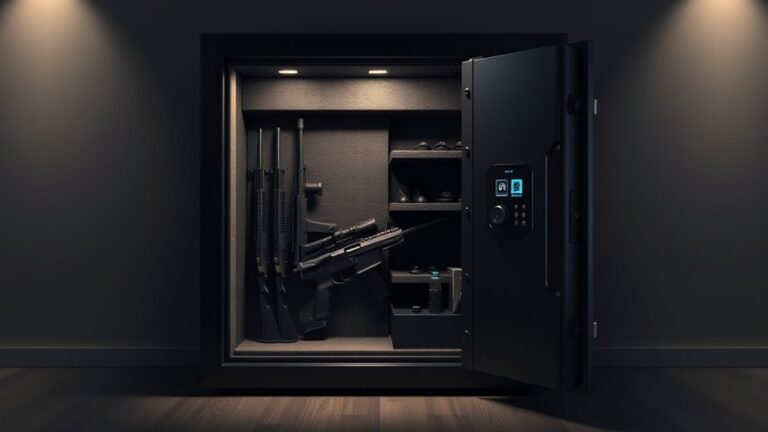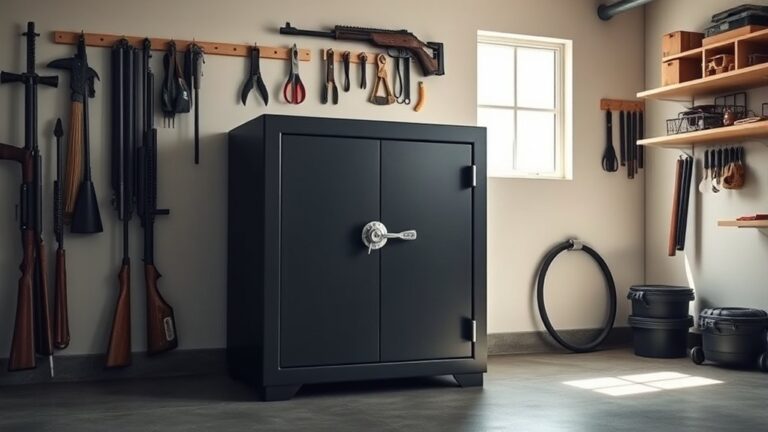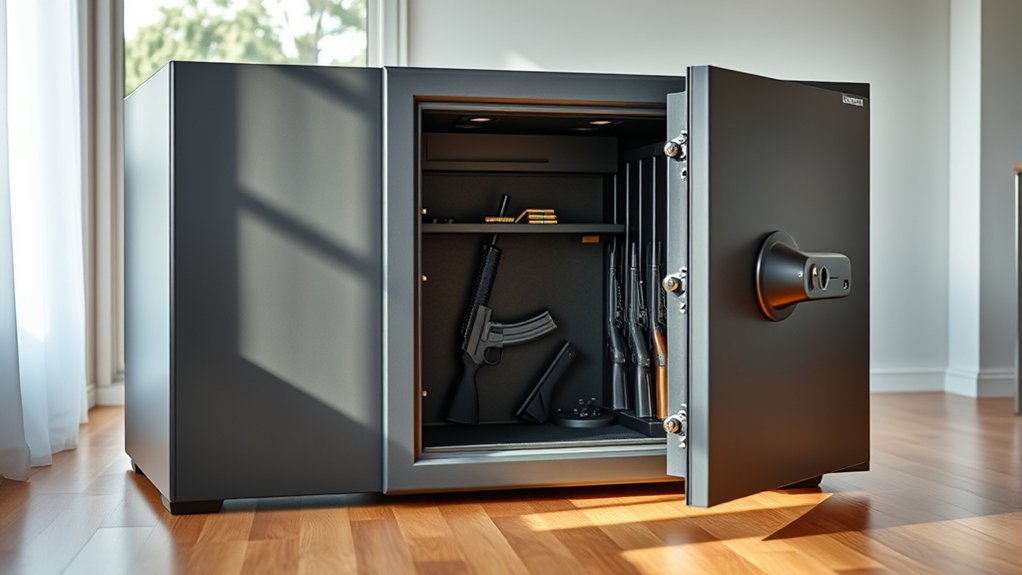
What Gun Safe Should I Get – Buying Guide And Recommendations
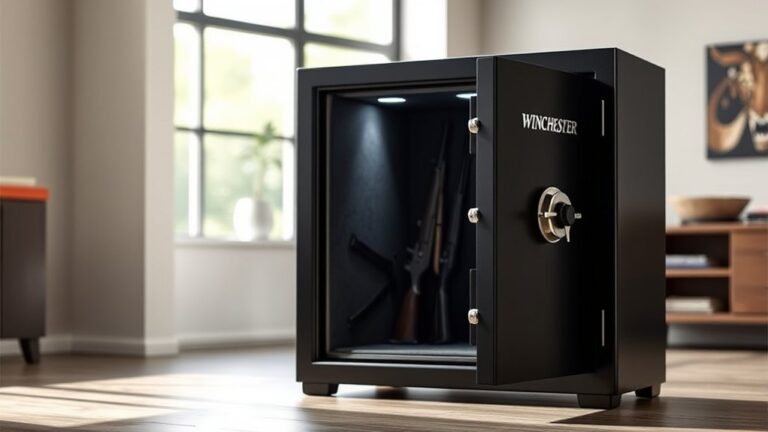
You should get a gun safe that combines certified security ratings like UL 1037 RSC-I, thick steel walls (at least 1/4 inch), and verified fire protection such as UL 72 Class 350 insulation to protect your firearms and valuables.
Make sure it’s roomy enough for your current collection plus future growth, and install it securely anchored to wall studs or concrete floors. Balancing durability, fire resistance, and budget will maximize your investment.
Learn which features truly matter for long-term safety and convenience.
Key Takeaways
- Choose safes with certified security ratings like UL 1037 RSC-I for reliable burglary and forced entry resistance.
- Opt for safes with verified fire ratings (e.g., UL 72 Class 350) and at least 1.5-inch insulation to protect contents from heat.
- Measure interior dimensions carefully to ensure adequate space for current firearms and future collection growth.
- Prioritize thick steel construction (minimum 1/4 inch outer steel, 7 gauge walls) and quality welds for maximum durability.
- Securely bolt the safe to wall studs or concrete floors using heavy-duty anchors to prevent theft and forced removal.
Gun Safe Security Ratings and Steel Construction Explained
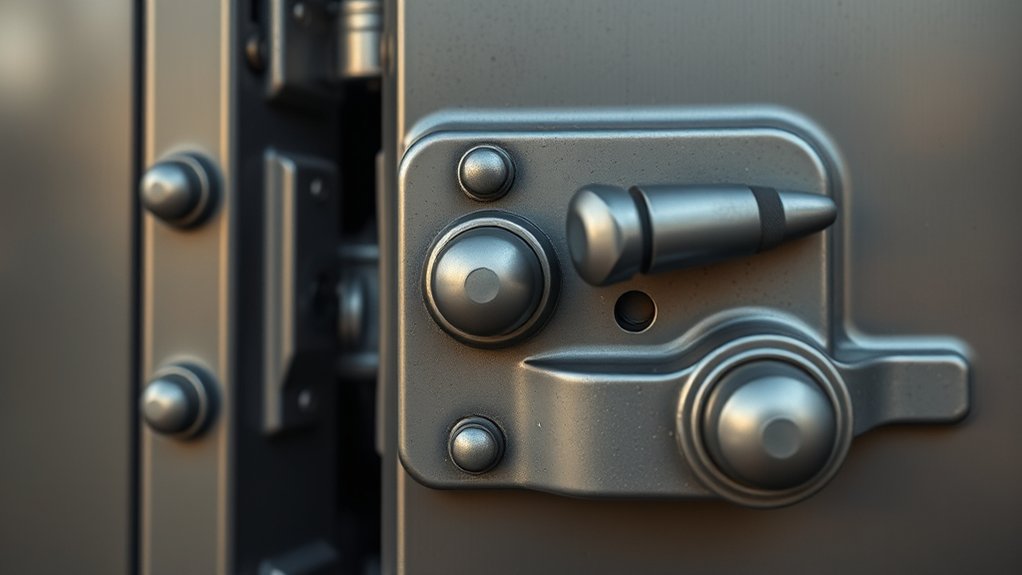
How can you be sure your gun safe will withstand a break-in? Start by checking out its security ratings, like UL 1037 RSC-I, which measure how well it resists burglary. Higher ratings basically mean better protection against forced entry.
Check your gun safe’s security ratings like UL 1037 RSC-I to ensure strong burglary resistance.
You want to pay close attention to the steel construction. Look for thick outer sheets that are at least 1/4 inch thick and walls made from 7 gauge steel or thicker.
Be careful of misleading claims about door thickness. Some safes sandwich drywall between steel layers, which actually lowers their security.
The quality and layering of steel really matter, and full penetration welds help keep the structure strong.
Heavier safes usually offer better durability because they’re made with more robust materials.
While fire resistance is important too, your main focus here should be on verifying the safe’s burglary resistance through solid steel layering and trusted security ratings.
Fire Resistance and Insulation for Gun Safes
Although burglary resistance is crucial, you shouldn’t overlook fire protection when choosing a gun safe. Fire-resistant gun safes with verified fire ratings, like UL 72 Class 350 for 30 minutes or one hour, offer reliable fire resistance.
These safes use advanced insulation materials such as fiberglass, ceramic wool, or poured concrete, with a minimum thickness of 1.5 inches to limit heat transfer.
Many models also incorporate steel inner fire liners to boost fire insulation. Beware of manufacturer claims and rely on established certifications rather than marketing.
Proper fire protection depends on quality construction and effective insulation to shield your firearms from intense heat.
Prioritizing safes with trusted fire ratings ensures your gun safe not only deters theft but also safeguards your valuables against fire damage effectively. It’s worth taking the time to choose a safe that protects your firearms from both fire and theft.
Choosing the Right Size for Your Gun Safe
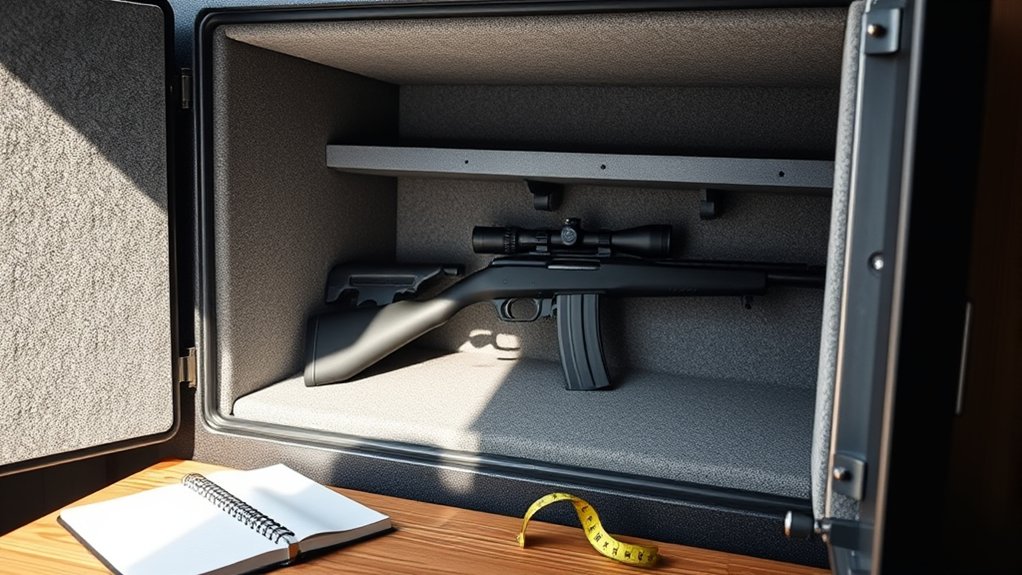
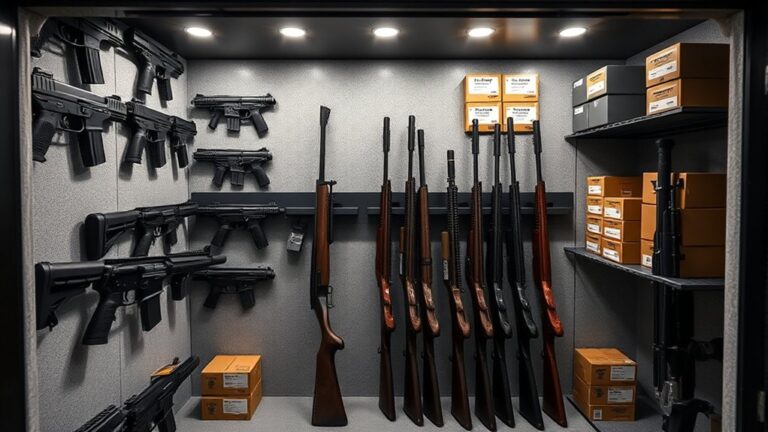
While fire resistance protects your firearms from heat damage, selecting the right size safe guarantees you have adequate space for your entire collection and accessories. Start by evaluating the total number of firearms and valuables you plan to store to determine the minimum storage capacity needed.
Choosing the right safe size ensures ample space for your firearms and accessories while protecting them from heat damage.
Always measure the safe’s actual interior dimensions rather than relying on advertised size, as design elements can reduce usable space.
Since most gun owners fill their safes within two years, consider acquiring a safe with additional space to accommodate your future collection and allow for proper organization.
If size becomes a constraint, dividing your collection into multiple safes is a practical solution.
Balancing Cost, Weight, and Value of Gun Safes
Because gun safes vary widely in cost, weight, and construction quality, you need to weigh these factors carefully to find the best value for your security needs. Larger safes offer more storage capacity and often better cost per square foot, but they also come with increased weight. That makes them harder to move.
Prioritize steel gauge and overall weight over cosmetic features. Thicker steel (7 gauge or more) and heavier construction provide superior resistance to brute force entry.
While heavier safes cost more upfront, their enhanced security justifies the investment by better protecting your firearms long term.
Focus on safes built with robust steel and concrete amalgamates. Balance your budget against the level of security you require without compromising on construction quality or storage capacity.
It’s all about finding the right mix for your needs.
Essential Features That Enhance Gun Safe Security and Use
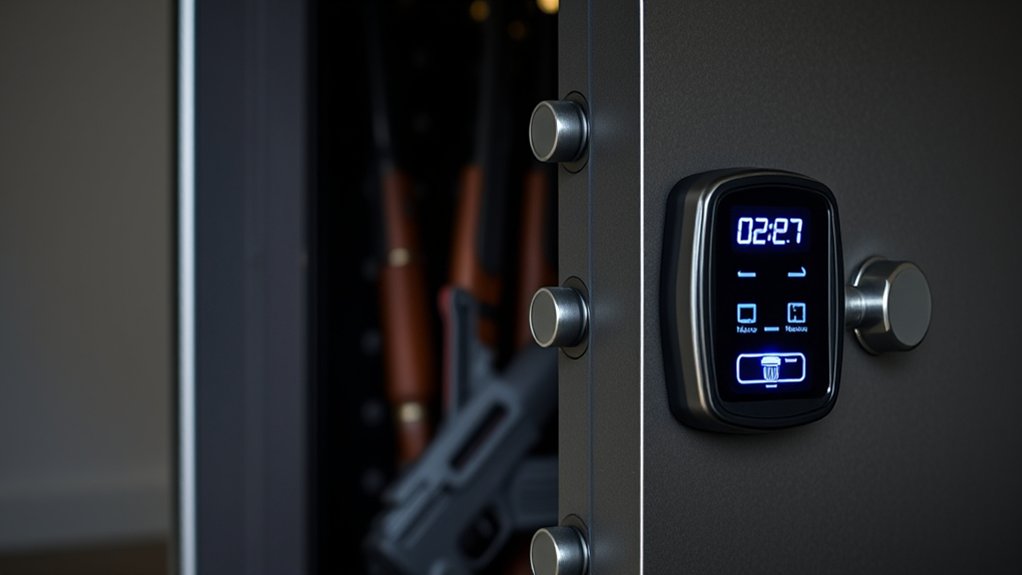
When it comes to choosing a gun safe, you really need to prioritize the lock types and their quality. Strong steel bolts and impact-resistant locks play a big role in keeping your safe secure.
But that’s not all— the construction of the safe matters just as much. Thicker steel walls and solid welds make it much harder for anyone to force their way in.
Lock Types and Quality
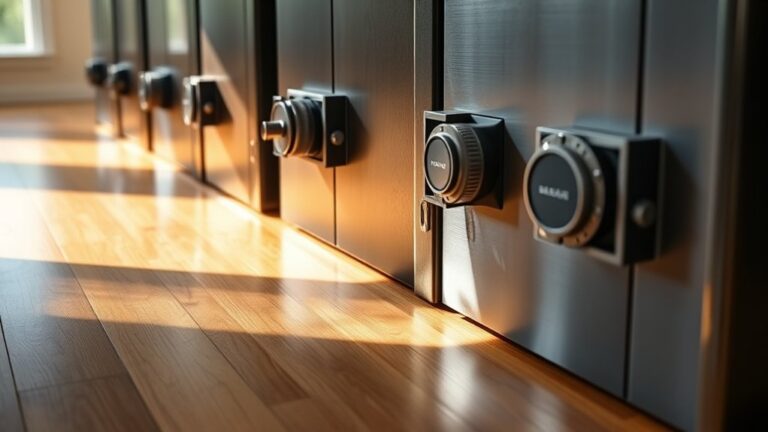
Although choosing a gun safe involves many factors, lock type and quality play a pivotal role in securing your firearms. You want a lock that balances convenience with security. Mechanical locks, including combo and simplex types, offer reliability without power dependence.
Electronic keypad locks provide fast access and programmable codes but may need backup power. Biometric locks use fingerprint recognition for speed and security but can be affected by environmental factors.
Always prioritize high lock quality with features that resist tampering and forced entry.
Consider these essential lock features:
- Biometric locks for quick, personalized access
- Mechanical locks for dependable, power-free operation
- Electronic keypad locks with backup power options
- Tamper-resistant designs to deter manipulation
- Reinforced locking bolts and anti-pry mechanisms for robust security
Construction and Material Integrity
Lock quality provides a strong foundation for securing your firearms, but the safe’s construction and materials ultimately determine how well it withstands physical attacks and fire. You want to look for thick steel sheets, ideally 1/4 inch or more, and high weld quality, like full penetration welds, to keep the structure strong.
Multi-layer designs that use fire-resistant drywall or composite materials between steel layers can really boost both burglary and fire resistance. Adding inner fire liners and poured concrete linings also helps improve durability.
| Feature | Recommendation | Benefit |
|---|---|---|
| Steel Gauge | 7 gauge outer, 10+ gauge walls | Robust protection |
| Weld Quality | Full penetration welds | Prevents structural weaknesses |
| Fire Resistance | Fire-resistant drywall, inner fire liners | Enhanced fire protection |
How to Properly Install Your Gun Safe
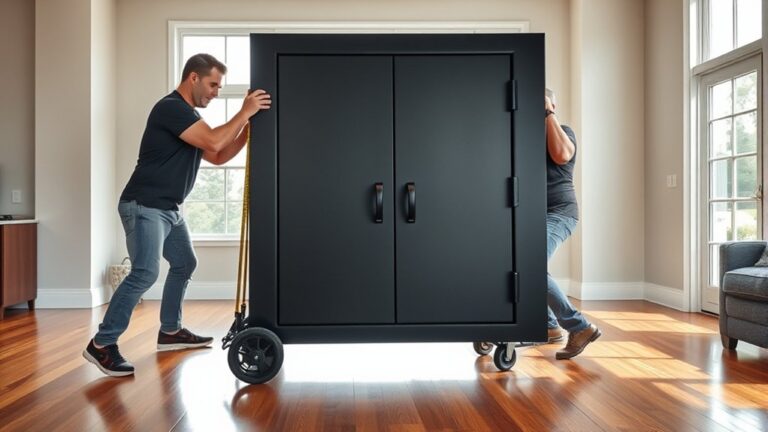
When installing your gun safe, securing it to multiple wall studs and floor joists with heavy-duty bolts is essential to prevent theft and tipping.
To guarantee a solid installation, follow these key steps:
Securely anchor the safe using heavy-duty bolts through wall studs and floor joists. Use expanding concrete anchors or heavy-duty lag bolts for concrete floor installations.
Anchor your safe with heavy-duty bolts through studs and joists or use concrete anchors for solid floors.
Confirm second-story floor load capacity with a structural engineer before installation.
Position the safe in a discreet, low-traffic area away from windows and exterior walls.
And don’t forget to regularly inspect and tighten all mounting hardware to keep everything secure.
Taking these steps will help ensure your safe stays put and protects your valuables.
Choosing a Gun Safe That Fits Your Budget
How much should you spend on a gun safe to balance security and budget? Ideally, allocate 10-30% of your firearm collection’s value. This way, you ensure cost-effectiveness without sacrificing essential features.
Cheaper safes often skimp on steel thickness, fire resistance, and security ratings. This could put your investment at risk. So, it’s important to consider these factors carefully.
Think about size too. A larger safe may cost more upfront but offers better value per cubic foot. Plus, it gives you room to grow your collection.
| Budget Range | Key Features | Recommendations |
|---|---|---|
| Under $500 | Basic steel, minimal fire resistance | Suitable for limited collections |
| $500 – $2,000 | Improved steel thickness, fire resistance | Mid-level security, good value |
| $2,000+ | Certified security ratings, thick steel, fireproof | High-end protection, future-proof |
Choose a safe that matches your budget while prioritizing security ratings and fire resistance. This ensures lasting protection for your firearms.
Final Tips for Selecting the Best Gun Safe for Your Collection
Selecting the best gun safe involves more than just sticking to a budget. It requires careful attention to security ratings, fire protection, and installation methods. To ensure secure storage and optimal burglary resistance, focus on these final tips:
Choose a safe with a security rating of UL 1037 RSC-I or higher. Prioritize fire ratings like UL 72 Class 350 for 30 minutes or 1 hour to guarantee fire protection.
Match the size and weight of the safe to your current collection and future needs.
Secure installation is crucial. Bolt the safe to multiple wall studs or concrete floors. Also, opt for thicker steel, solid welds, and heavy construction to resist forced entry.
Frequently Asked Questions
Can I Store Ammunition Safely Inside My Gun Safe?
Yes, you can store ammunition safely inside your gun safe if you follow key precautions.
Keep ammo away from heat sources and avoid placing it directly against steel walls or fire insulation.
Use a separate, sealed container within the safe to reduce risks of accidental ignition or damage.
Also, store large quantities carefully to prevent pressure buildup.
It’s important to always follow local laws and manufacturer guidelines to guarantee safety and compliance.
Taking these steps will help keep your ammo secure and in good condition.
How Do Gun Safes Affect Firearm Maintenance?
Gun safes directly impact firearm maintenance by providing a controlled environment that prevents rust, corrosion, and damage. You’ll want a fire-resistant safe with proper insulation to keep humidity and temperature stable.
This preserves your gun’s finish and lubricants, reducing wear and tear.
It’s a good idea to regularly inspect your safe’s seals and fireproof features to guarantee ongoing protection.
A well-maintained safe helps you keep your firearms in peak working condition longer.
Taking these steps really makes a difference in how long your guns stay reliable and looking good.
Are Biometric Locks Reliable in Extreme Weather?
Biometric locks can be both reliable and unreliable in extreme weather. While they offer quick access, cold temperatures may freeze sensors, and heat can damage electronics.
You’ll find high humidity may cause corrosion, reducing accuracy. However, some models include weather-resistant features.
So, if you manage the environment well and maintain the lock regularly, you can count on consistent performance even in harsh conditions.
Choose wisely and stay proactive.
What Insurance Discounts Come With Gun Safe Ownership?
You can get insurance discounts typically between 5% and 15% by owning a certified gun safe. To qualify, your safe must meet security standards like UL 1037 RSC or higher, proving resistance to forced entry.
Make sure you provide documentation and properly anchor the safe, as insurers require proof and value added security.
Registering firearms inside the safe may also release extra savings on your policy.
It’s worth checking with your insurer about specific requirements and potential discounts. A little effort in securing your guns can really pay off in savings!
Can a Gun Safe Protect Against Theft During a Home Invasion?
Yes, a gun safe can protect your firearms during a home invasion if it meets strong security standards. You should choose one with at least a UL 1037 RSC-I rating, thick steel construction, and full penetration welds.
Anchoring it securely prevents thieves from removing it.
Advanced locks like biometric or electronic systems offer quick access for you while resisting forced entry. This makes your firearms much harder to steal or misuse.
Conclusion
Choosing the perfect gun safe requires careful consideration of security, size, and sturdiness. Don’t dismiss fire resistance or essential features that fortify your firearms. Balance budget and benefits wisely, ensuring weight and worth work for you.
Proper placement and professional installation protect your prized possessions. Stay sharp, secure, and savvy. Select a safe that safeguards your collection with strength and style, giving you peace of mind every day.