How To Get A Gun Safe In Your House – Installation Guide
To get a gun safe in your house, first pick a discreet, level spot with solid flooring. Make sure the area is accessible to power if your safe requires it.
Next, clear a straight path for delivery. Protect your floors with blankets or cardboard to avoid scratches. Also, check there are no hidden utilities like pipes or wires beneath where you’ll anchor the safe.
Once the safe arrives, position it carefully. Use a level to make sure it’s straight. Secure it firmly with the right bolts to prevent any movement.
Don’t forget about ventilation and electrical safety. If your safe has electronic locks or lighting, set those up properly.
Finally, test the locks and check the stability of the safe. Make sure it’s secure and functioning correctly. Following these steps will give you strong, reliable protection. Keep going to learn every detail.
Choose the Best Location for Your Gun Safe
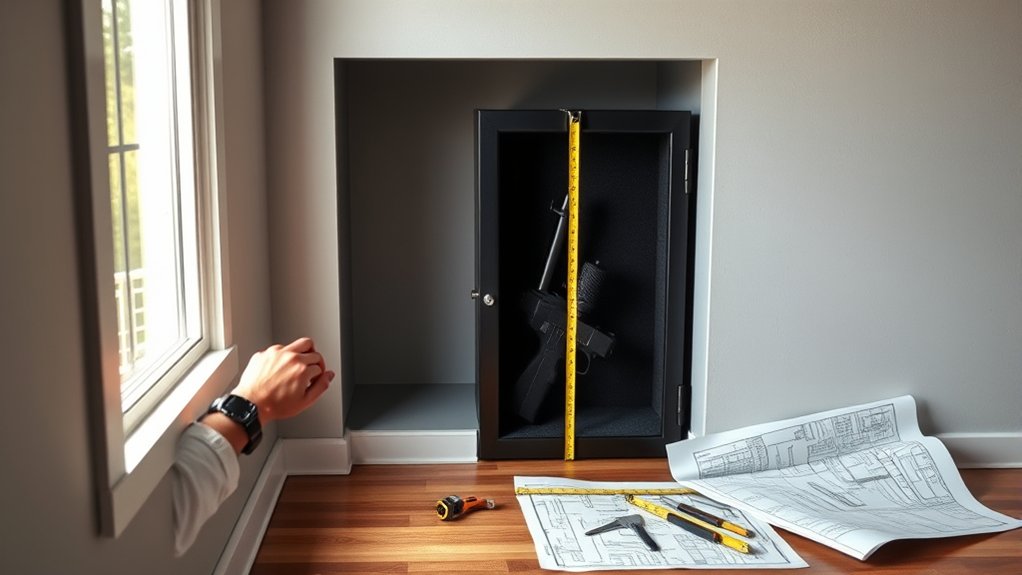
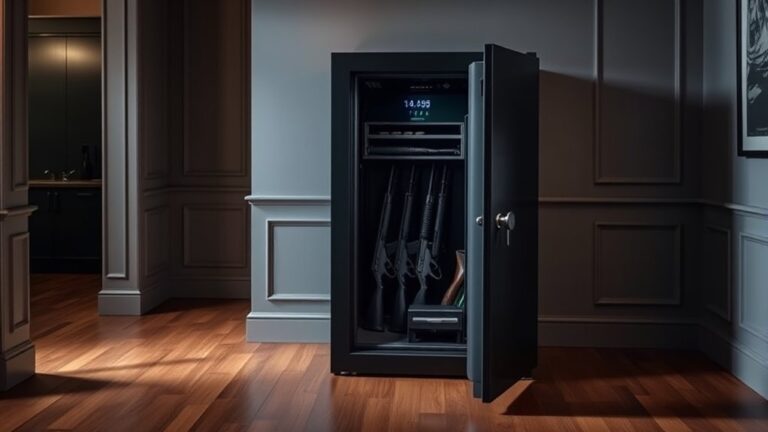
When choosing the best location for your gun safe, think about placing it somewhere discreet like a basement, garage, or a hidden first-floor room. This helps keep it out of sight and boosts security.
Pick a spot with a solid, level surface, such as a concrete slab or reinforced flooring, to support the safe’s weight.
Choose a solid, level surface like concrete or reinforced flooring to properly support your gun safe’s weight.
It’s also important to avoid areas with high humidity or poor ventilation, since moisture can damage both the safe and its contents.
If you plan to use electronic locks or dehumidifiers, position the safe near electrical outlets.
To secure it properly, choose a location away from easy access points and places with heavy foot traffic.
If there’s a wall nearby, consider anchoring the safe to it. This adds extra stability when installing your gun safe at home.
Prepare Your Home and Pathway for Installation
After selecting the perfect spot for your gun safe, it’s time to prepare your home and the pathway to that spot.
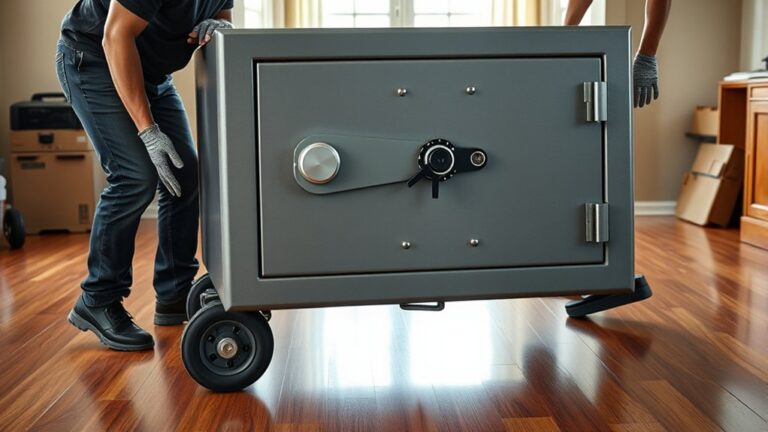
Start by clearing a wide, obstacle-free path from the delivery point to where you’ll install the safe. This helps prevent any damage and ensures everything moves smoothly.
Next, make sure to remove pets, children, and anyone unnecessary from the area. This keeps everyone safe during the installation process.
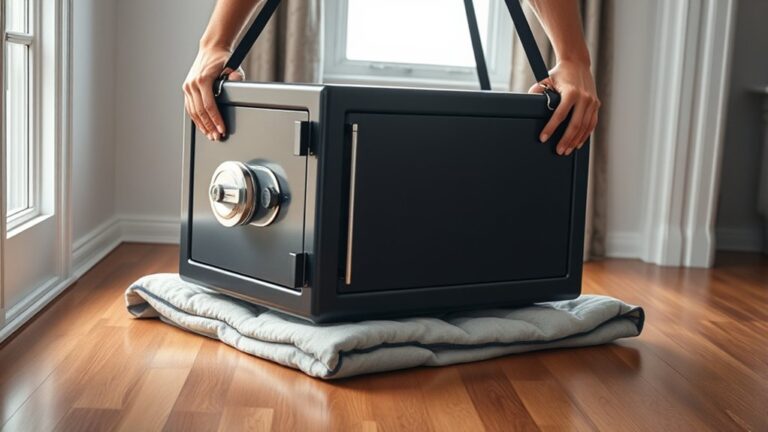
Protect your flooring along that pathway by laying down plywood or similar materials. It’s a simple way to prevent scratches or dents.
Before you start drilling, double-check that the area is level and stable. Avoid soft or uneven surfaces that could cause the safe to tip over.
Finally, be sure there are no hidden electrical wires, plumbing, or ductwork beneath the surface where you’ll be working.
Taking these steps will help make the installation safe and hassle-free, with no surprises along the way.
Position, Level, and Anchor Your Gun Safe
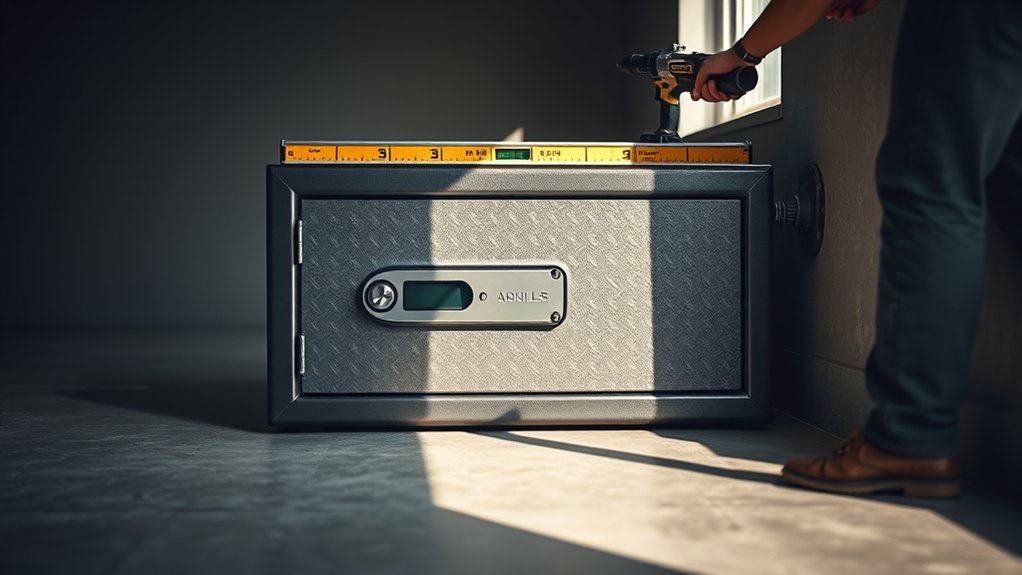
When you’re picking a spot for your gun safe, make sure it’s secure and easy to get to. It’s also important that the surface is level so everything works just right. You can use a carpenter’s level to check that it’s sitting flat before you move on to anchoring it down.
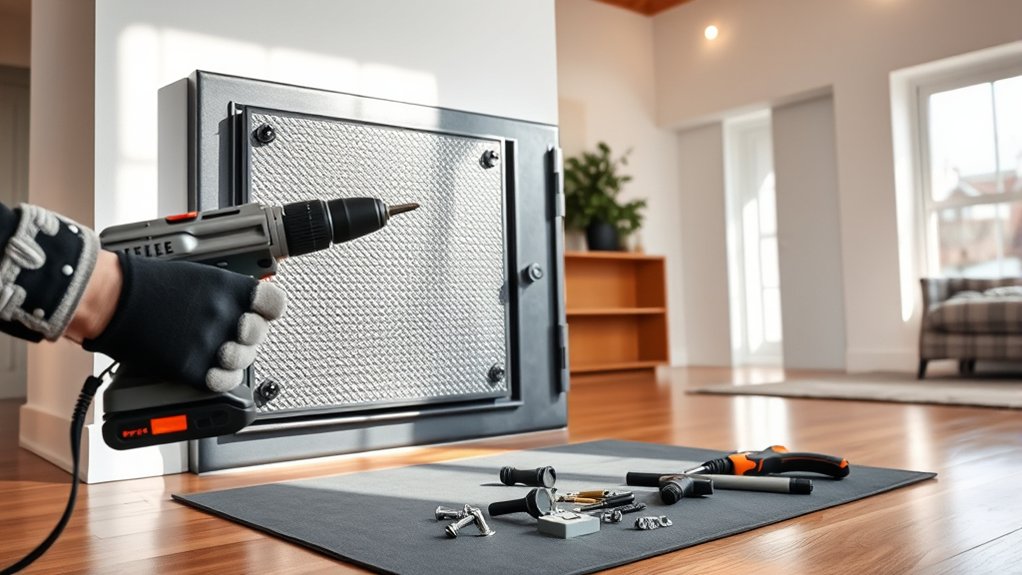
Once you’ve found the perfect spot and confirmed it’s level, go ahead and secure all four corners of the safe. This helps prevent any movement and makes it much harder for anyone to steal or tamper with it.
Taking these steps will keep your safe steady and your valuables safe.
Choosing Safe Location
Although selecting the right location for your gun safe might seem simple at first, it’s important to think about a few key things.
You want to choose a spot on a level surface, like a concrete slab or the garage floor.
Avoid areas with high humidity since moisture can cause rust and damage over time.
Securing your safe properly is crucial. Make sure to anchor it at all four corners using the right bolts for your floor type.
For concrete slabs, use concrete anchors; for wall studs, use appropriate bolts.
Check that the safe is firmly fixed so it won’t tip over or be easily stolen.
Use a carpenter’s level to verify the surface is even.
If needed, add wood shims to prevent wobbling.
Following these steps helps ensure your gun safe stays secure and works correctly.
Ensuring Proper Level
Securing your gun safe involves more than just choosing the right spot and anchoring it down. You also need to make sure it sits perfectly level.
Before you finish installing your safe, use a level to check its horizontal position in all directions. If it’s not level, place wood shims underneath to fix the tilt.
This step is really important because it helps prevent lock misalignment and ensures the safe operates smoothly.
Once you’ve positioned it correctly, tighten the anchoring bolts while making sure the safe stays stable and level.
Check that all the anchoring points are secure and holding the safe firmly in place.
A properly level and secured gun safe not only works better but also feels more stable.
It’s a good idea to recheck the level regularly, especially after installation or moving the safe.
Keeping everything aligned helps maintain proper operation and peace of mind.
Effective Anchoring Methods
When you install your gun safe, it’s really important to place it on a strong, stable foundation. This helps prevent shifting or damage over time. Properly anchoring your safe not only keeps it secure but also ensures it functions correctly.
Start by checking the foundation’s strength. If it’s concrete or stud framing, make sure it can support the weight of your safe.
Choosing the right anchor bolts is the next step. Use concrete anchors for concrete floors and wood-screw anchors for wooden subfloors.
Use a carpenter’s level to check if the safe is perfectly level. If needed, insert wood shims to avoid misalignment of locks or bolts.
Once everything lines up, fully tighten all four corner bolts to the manufacturer’s torque specifications, usually around 35 ft-lbs. This will secure your safe firmly in place.
Set Up Power and Ventilation for Your Gun Safe
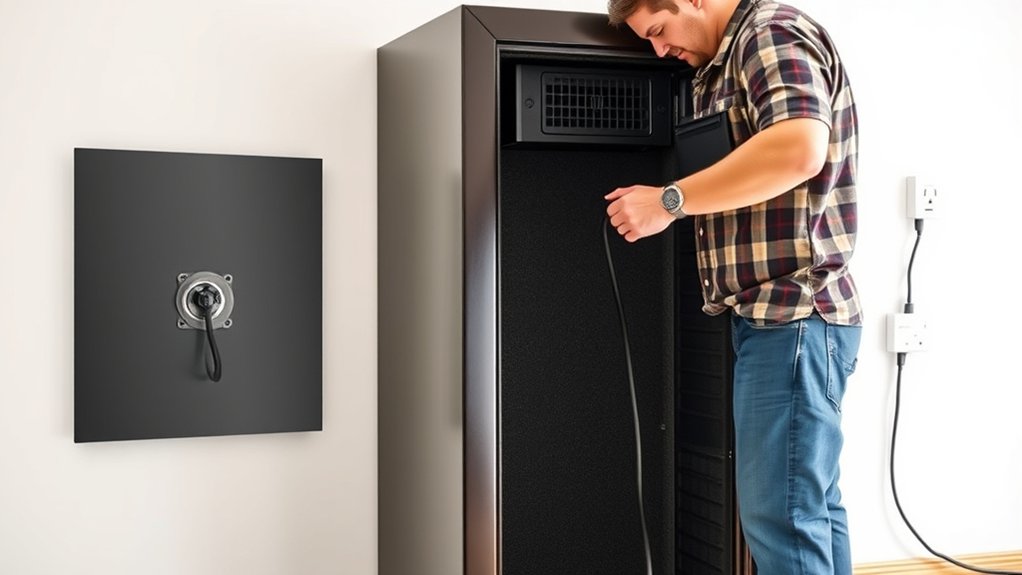
When setting up your gun safe, try to place it close to a reliable power outlet. This way, you can easily hook up lighting, dehumidifiers, or electronic locks without any hassle. Just make sure to use only high-quality extension cords for safety’s sake.
It’s also a good idea to elevate the safe slightly off the ground. This helps with airflow and keeps moisture from building up inside.
Plus, be sure to keep all ventilation gaps clear — proper ventilation is key to preventing any dampness or mold.
Lastly, don’t forget to check your power connections and vents regularly. Keeping everything in good shape helps your safe work at its best and keeps you safe from potential hazards.
Power Outlet Placement
How close should your gun safe be to a power source? For proper installation, place your safe near a grounded power outlet. This makes it easy to power lighting, electronic locks, or dehumidifiers without needing extension cords.
When planning where to put the outlet, keep a few key points in mind. First, choose an outlet on a 15-amp or 20-amp circuit that matches your safe’s power needs. This ensures it has enough capacity to handle everything plugged in.
Next, make sure the outlet won’t block the door from opening fully or interfere with any built-in ventilation features. It’s also a good idea to elevate the safe slightly using pads or hockey pucks. This helps promote airflow underneath and reduces the risk of moisture buildup.
Lastly, avoid placing the safe where ventilation gaps could be exploited for forced entry. Proper placement not only keeps your safe functional but also helps maintain security.
Safe Ventilation Needs
Setting up your gun safe’s ventilation is closely linked to choosing the right power source nearby.
To keep good airflow and control humidity, try elevating the safe slightly using materials like hockey pucks. This creates space underneath, which helps prevent moisture buildup that can cause rust.
If your safe is sitting on a concrete floor, place a moisture barrier, such as a rubber mat, underneath it. This adds extra protection against corrosion.
When designing your ventilation setup, make sure the openings allow air to circulate properly. Just be careful not to create gaps that could make your safe less secure or easier to tamper with.
Position the safe near an electrical outlet if you need to power dehumidifiers or ventilation fans. This makes it easier to keep everything running smoothly.
Balancing effective ventilation with strong security is key. It ensures your firearms stay protected and in great condition over time.
Electrical Safety Considerations
Although ensuring proper ventilation is essential, you also need to prioritize electrical safety when powering your gun safe. To set up power and ventilation correctly, follow these steps:
- Position your safe near a grounded electrical outlet to enable a secure power connection for lights, dehumidifiers, or electronic locks.
- Use a surge protector or power strip with a built-in circuit breaker. This helps shield the safe’s electrical components from voltage spikes.
- Confirm that ventilation openings remain unobstructed. Good airflow is important to prevent heat buildup inside the safe.
- Regularly inspect electrical connections and ventilation pathways. Never overload circuits, as this can increase the risk of fire.
Secure Your Gun Safe for Fire and Theft Protection
To protect your gun safe from fire and theft, it’s important to anchor it securely to the floor or wall using concrete or heavy-duty bolts.
Proper installation ensures the safe stays in place, making it harder for thieves to pry or tip it over. A well-anchored safe can resist attempts to move or damage it.
Choose a reputable, high-quality safe, like those from Champion Safe Company, for added security and fire protection.
Position your safe in a concealed, low-traffic area, away from windows and entry points. This reduces the chances of unauthorized access.
Reinforce the anchoring points with suitable hardware, and make sure the foundation can support the safe’s weight.
Regularly check and tighten the anchors to keep everything secure over time.
Taking these steps helps keep your gun safe safe from fire damage and theft.
Test Your Gun Safe and Finalize Installation
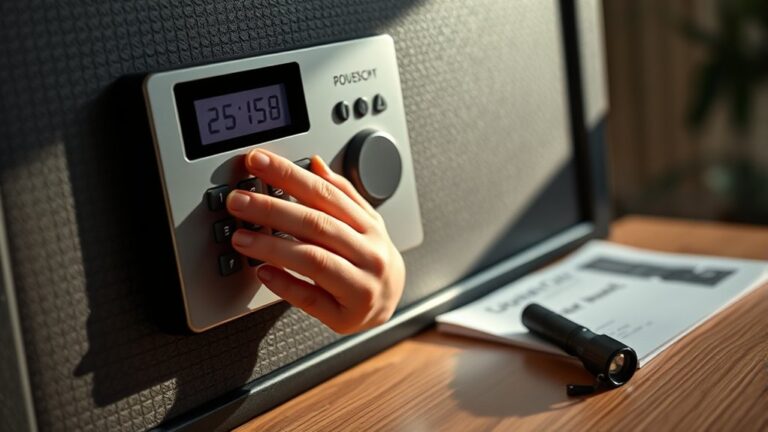
Before fully securing your gun safe, it’s important to test its lock and combination several times. This helps ensure they work smoothly and reliably.
Test your gun safe’s lock and combination multiple times to ensure smooth, reliable operation before final installation.
Next, check that the safe is level and firmly anchored. This prevents any misalignment or lock malfunctions down the line.
Perform a thorough inspection and follow these steps to finalize the installation:
- Test the lock repeatedly to make sure it operates consistently.
- Check if the safe is level. Adjust if necessary.
- Apply gentle pressure to see if the safe can be rocked or moved. It shouldn’t be able to.
- Tighten all bolts and fasteners to the manufacturer’s recommended torque.
Completing these tasks will make sure your gun safe is secure and fully functional.
Don’t forget to document your installation. Take photos of the bolt locations and anchor depths. This will be helpful for future reference and security checks.
Maintain and Troubleshoot Your Gun Safe Setup
Once you’ve installed your gun safe, it’s important to keep up with regular maintenance and troubleshooting. This helps ensure it stays reliable and secure over time.
Start by testing the lock and keypad often. Doing this regularly helps catch any issues early before they become bigger problems. Keep all lock parts and the inside of the safe clean. Dust or debris can cause problems with the operation, so wipe everything down periodically.
It’s also a good idea to check and tighten all mounting hardware and bolts. This keeps the safe secure and stable.
Don’t forget to replace the batteries as soon as you see the low-battery warning. This prevents you from getting locked out when you need it most.
If you notice any signs of tampering or damage after an attempted unauthorized access, inspect the safe right away. Address any problems immediately to keep your firearms protected.
Staying on top of maintenance and troubleshooting helps your safe stay solid and dependable. It’s the best way to make sure your setup keeps your firearms secure, just as it should be.
Frequently Asked Questions
What Types of Gun Safes Are Best for Different Firearm Collections?
You’ll want to match safe size selection to your firearm organization needs. Choose wall-mounted safes if you have a small collection.
For more extensive collections, go for large free-standing safes with adjustable shelving.
Prioritize security features like biometric access mechanisms, especially if you have high-value guns.
Fire resistance is also important if you want long-term protection for your firearms.
Compact safes are great for storing essentials, while aesthetic design can help ensure the safe fits nicely into your space.
Always strike a balance between quick access and maximum security for your collection.
Are There Legal Requirements for Owning or Installing a Gun Safe?
Better safe than sorry applies here—you must follow storage security and safety regulations for your gun safe.
Ownership laws and local ordinances often require locked safes meeting specific standards. You might also face registration requirements or need permits for installation.
To guarantee legal compliance, check your jurisdiction’s rules carefully. Ignoring these can lead to fines or liability.
Stay informed and secure your firearms responsibly.
How Do Humidity and Temperature Affect Gun Safe Contents?
Humidity and temperature directly impact your gun safe’s contents by affecting moisture control and climate regulation. Without proper temperature stability, condensation can form, leading to corrosion and damage to firearms and sensitive items.
Using a dehumidifier or silica gel packets inside the safe helps maintain a suitable storage environment. This prevents rust and mold from developing on your guns and other valuables.
Prioritize corrosion prevention by keeping humidity below 50%. This simple step ensures your firearms stay protected and functional over time.
Can I Install a Gun Safe on Carpeted or Uneven Floors?
You can install a gun safe on carpeted or uneven floors, but floor stability is really important. Carpet padding and uneven surfaces can cause the safe to shift or tip over.
To prevent this, you might need to add some reinforcement like plywood sheets underneath. This helps create a level surface for the safe to sit on securely.
Secure mounting options are also necessary to stop the safe from moving around. Removing the carpet or adding a solid base makes sure the safe stays stable.
This not only protects the locking mechanisms but also keeps your firearms secure and easily accessible.
What Insurance Benefits Come With Having a Gun Safe?
You’ll gain insurance discounts and premium benefits by installing a certified gun safe. It boosts theft protection and reduces liability, which insurers really appreciate.
Insurers often reward safety compliance with lower rates and higher coverage limits. Having a documented, securely anchored safe makes the claims process smoother if theft or damage happens.
Conclusion
Getting your gun safe properly installed is really important for protecting your firearms and making sure you can access them quickly when needed.
Imagine a homeowner who secured their safe in a concealed, anchored spot with ventilation and power. This setup helps prevent theft and protects against damage during a house fire.
By following these steps, you’ll create a secure, reliable setup that keeps your collection safe and gives you peace of mind. Regular maintenance is also key to keeping your safe functioning flawlessly.
Stay vigilant and check on your safe regularly to ensure everything remains secure and in good working order.