Where Is Concealed Carry Legal – State Laws And Restrictions
You can legally carry a concealed firearm without a permit in 27 states, but laws vary widely. Some states require permits with strict training and background checks. Others recognize out-of-state permits through reciprocity agreements.
Location restrictions often ban concealed carry in schools, federal buildings, and military areas. It’s really important to understand each state’s specific rules and where you’re allowed to carry. That way, you stay compliant and safe.
Taking the time to explore these nuances will help clarify how the laws impact your rights and responsibilities. It’s always better to know before you carry.
Variations in Concealed Carry Laws Across States
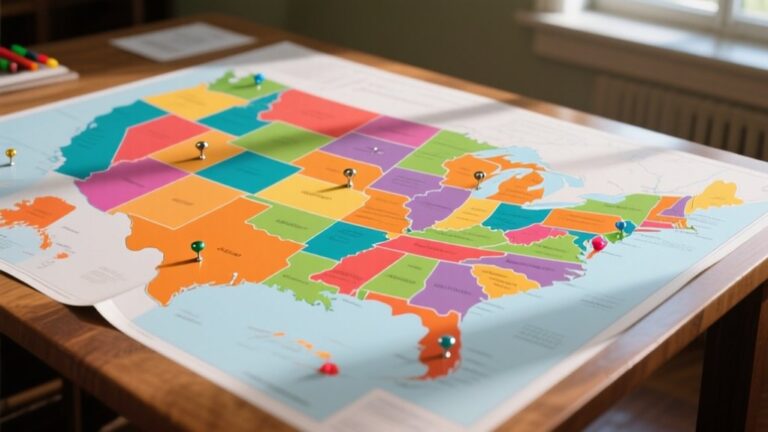
Although concealed carry laws are federally regulated to some extent, the specific rules and requirements vary widely across states. You’ll find that some states require permits with specific permit requirements, while others have adopted permitless carry, allowing residents to carry concealed firearms without a permit.
As of 2022, 27 states permit permitless carry, reflecting a significant shift in policy.
Reciprocity agreements also play a critical role, as many states recognize permits from certain other states, but these agreements vary greatly, affecting where you can legally carry.
Furthermore, restrictions on concealed carry locations, such as schools, courthouses, and federal properties, differ by state.
Training mandates, background checks, and permit durations further influence how you comply with concealed carry laws when traveling or relocating.
Understanding Concealed Carry Permits and Types
Understanding the types of concealed carry permits and how they’re issued helps you navigate the diverse regulations that states enforce. Concealed carry permits often require you to meet licensing requirements, including background checks and fees, and may involve training.
States follow either “Shall-Issue” policies, mandating permit issuance if criteria are met, or “May-Issue” policies, giving authorities discretion.
Some states allow permitless concealed carry, meaning you can carry without obtaining a permit.
Reciprocity agreements also impact where your permit is valid, as many states recognize permits issued elsewhere, expanding your lawful carry zones.
Knowing these distinctions lets you comply with state laws effectively and understand when a permit is necessary versus when permitless carry is allowed.
Concealed Carry Training and Certification Requirements
How do states guarantee that concealed carry permit holders handle firearms responsibly? Many require concealed carry training that covers firearm safety, legal regulations, and conflict avoidance.
Over half the states mandate certification requirements, including live fire exercises with minimum round counts to demonstrate proficiency.
States like California, Colorado, and Connecticut specify these rigorous standards to ensure competent handling.
If you’re an active or retired law enforcement officer or military member, you may be exempt from some civilian training requirements.
Furthermore, when your permit renewal comes up, you might need to provide proof of continued proficiency or complete refresher training.
These measures help maintain high standards, making sure you carry concealed firearms safely and legally throughout your permit’s validity.
Common Location Restrictions for Concealed Carry
You generally can’t carry a concealed weapon on most federal properties because there are strict rules that prohibit firearms in these areas.
Also, educational facilities have pretty tight restrictions—they usually ban concealed carry in schools, college dorms, and administrative buildings.
Federal Property Restrictions
Although state laws often govern concealed carry, federal property imposes strict restrictions that you must follow regardless of local regulations.
Concealed carry is generally prohibited in federal buildings such as post offices, courthouses, military bases, correctional facilities, and IRS offices.
While you can carry firearms on federal land managed by the Bureau of Land Management, restrictions apply inside structures and restrooms within federal parks.
Furthermore, federal property includes areas where the Gun-Free School Zones Act bans carry within 1,000 feet of K–12 schools, affecting some federally controlled land.
Federal regulations override state laws, meaning you can’t carry firearms in courts, military installations, or federal buildings even if your state allows it.
It’s really important to understand and follow these federal property restrictions to avoid any legal trouble when carrying concealed.
Educational Facility Limitations
Since safety is paramount in educational settings, most states prohibit concealed carry in elementary and secondary schools, including their administrative buildings. Educational facilities enforce strict concealed carry restrictions to maintain school security, designating these sites as prohibited locations.
College and university campuses often fall under campus carry laws, which typically allow concealed weapons only for registered students, faculty, or employees. These laws frequently limit permissible weapons to nonlethal options.
Furthermore, school-related events and career centers are commonly included in these restrictions, which further emphasizes controlled environments. These laws reflect a commitment to safeguarding students and staff by clearly defining where concealed carry isn’t allowed.
Understanding these limitations helps you comply with state-specific rules and contributes to a secure atmosphere within educational institutions. It’s all about keeping everyone safe and secure.
Federal Laws Affecting Concealed Carry Rights
You need to understand that federal laws set some clear limits on where you can carry a concealed firearm, no matter what your state laws say. For instance, the Gun-Free School Zones Act makes it illegal to carry within 1,000 feet of K–12 schools.
Also, places like federal buildings—including courthouses and military installations—usually don’t allow concealed carry. So, these federal rules create important boundaries that apply across the whole country and affect your concealed carry rights wherever you go.
Gun-Free School Zones
How close can you legally carry a firearm near school property? Under federal law, the Gun-Free School Zones Act prohibits carrying firearms within 1,000 feet of school property. This restriction applies to both concealed carry and open carry, aiming to keep the areas around schools safe.
Violating this federal law can lead to felony charges, including fines and even imprisonment. But there are some exceptions. Authorized personnel, people with special permits, or those who’ve written consent from school officials might be allowed to carry firearms near schools.
Enforcement of this law usually involves federal authorities prosecuting violations. So, if you’re carrying a concealed firearm, it’s really important to know these gun-free school zone rules. That way, you can avoid serious legal trouble and stay compliant with federal regulations designed to protect school property.
Federal Building Restrictions
Although federal law generally prohibits carrying concealed weapons in federal buildings such as courthouses, post offices, and military facilities, these restrictions are strictly enforced to maintain security.
When it comes to firearm restrictions in federal facilities, you need to understand a few key points. First, the Gun-Free Federal Zones Act bans firearm possession within federal buildings and the surrounding land.
Federal buildings, including courthouses and post offices, strictly forbid concealed weapons unless specific authorization is granted. Firearms are also prohibited in federal parks’ structures like restrooms and visitor centers, although some land areas may allow them.
Violating these federal law restrictions can subject you to federal felony charges. Exceptions are generally limited to law enforcement personnel.
Military Installation Prohibitions
Where can you carry a concealed firearm on military property? Federal law generally prohibits concealed carry on military installations unless the Department of Defense authorizes it. The Gun-Free Military Zones Act enforces strict firearm restrictions across most military facilities, including bases, posts, and reserve centers.
Some states have agreements allowing permit holders to carry in specific military areas, but federal law usually overrides these state laws. Concealed carry is generally forbidden in military housing, commissaries, and exchange stores unless explicitly permitted.
Violating these firearm restrictions on military property can lead to serious federal charges, including arrest and prosecution. So, to stay on the safe side, you must avoid carrying concealed firearms on military installations unless you have explicit authorization from the Department of Defense.
Which States Honor Your Concealed Carry Permit?
Because concealed carry laws vary widely, you need to know which states honor your permit before traveling. Recognition of out-of-state permits depends on state laws and reciprocity agreements, which can change. Here’s what you should consider:
Over 30 states have reciprocity, accepting concealed carry permits from other states. Missouri stands out by recognizing permits from all issuing states, offering broad reciprolicity.
Some states limit recognition to permits from specific states or impose extra requirements.
Always verify current state laws before carrying, as recognition policies frequently update. Understanding these factors guarantees you comply with each state’s concealed carry regulations and avoid legal issues when traveling with your permit.
Why More States Are Allowing Permitless Carry
As more states recognize the individual’s right to self-defense, they’re increasingly adopting permitless carry laws that allow you to carry a concealed firearm without a permit. This constitutional carry movement reduces state restrictions and reflects a broader expansion of Second Amendment rights.
Following Supreme Court rulings like NYSRPA v. Bruen, 27 states have embraced permitless carry, enabling easier firearm access without background checks or permits. While this streamlines lawful carriage, it also raises concerns about training and regulation.
| Benefit | Impact |
|---|---|
| Expanded Second Amendment | Increased states adopting constitutional carry |
| Reduced State Restrictions | Easier firearm access, fewer barriers |
| Legal Clarity | Aligns with recent Supreme Court rulings |
Special Restrictions at Schools, Government, and Polling Places
You can’t carry concealed weapons in elementary and secondary schools. The only exception is if you’re in a vehicle during drop-off or pick-up and you’re a parent or guardian.
When it comes to college campuses, things are a bit different. Usually, concealed firearms are only allowed if you’re a registered student, employee, or faculty member, and even then, they often only permit nonlethal weapons.
Now, polling places, courthouses, and government meetings tend to have stricter rules. They often prohibit concealed carry altogether.
In some areas, you might need an enhanced permit to carry in certain government locations. So, it’s important to know the specific regulations depending on where you are.
School And University Limits
When carrying concealed weapons, you must adhere to strict limitations around schools, universities, government buildings, and polling places. Specifically, concealed carry laws impose firearm restrictions in these sensitive areas.
Concealed weapons are generally prohibited on elementary and secondary school property, including all school buildings and grounds within designated school zones.
Carrying concealed weapons at college or university facilities is restricted to registered students, employees, or faculty, and typically limited to nonlethal weapons.
School-related events and functions don’t allow concealed weapons, even if you hold a permit.
Many states extend firearm restrictions to 1,000 feet beyond school property, emphasizing safety near these zones.
Understanding and complying with these rules ensures you respect legal boundaries and promote safety in educational environments.
It’s really important to stay informed and follow these guidelines to keep everyone safe.
Polling Places And Courthouses
How strictly can you carry concealed weapons at polling places and courthouses? Many states either prohibit it or require enhanced permits for concealed carry in these areas. Federal law bans firearms within 1,000 feet of K–12 schools, which covers many polling places and government buildings.
Courthouses often have strict concealed carry restrictions. Usually, you can only carry weapons there if you have court permission. If you violate these rules, you could face criminal charges or have your permit revoked.
Here’s a quick summary of typical regulations:
| Location | Concealed Carry Restrictions |
|---|---|
| Polling Places | Often prohibited or require special permits |
| Courthouses | Generally banned unless court approval given |
| Government Buildings | Restricted; permit requirements vary |
It’s important to understand and follow these rules to avoid legal trouble when carrying concealed weapons.
Carrying Concealed on Federal Land and in National Parks
Where can you legally carry a concealed firearm on federal land and within national parks? Generally, you can carry on federal land, including national parks, but concealed carry restrictions apply in specific areas and structures. Here’s what you need to know:
You may carry firearms openly or concealed on federal land like Bureau of Land Management areas, but carrying inside buildings and restrooms is prohibited.
National parks allow firearms on park grounds but ban them in designated prohibited structures, including visitor centers and restrooms.
National parks permit firearms on grounds but prohibit them inside visitor centers and restrooms.
Federal buildings such as post offices, courthouses, and military facilities strictly forbid carrying concealed firearms regardless of land status. Enforcement varies, but violating these restrictions can lead to federal charges.
Always check local rules to make sure you’re following federal land and national parks concealed carry restrictions. It’s better to be safe and informed!
Legal Consequences of Violating Concealed Carry Laws
What happens if you violate concealed carry laws? You could face serious legal consequences, including criminal charges that range from misdemeanors to felonies, depending on the offense and location. Penalties for illegal carry often involve fines, license suspension, or imprisonment. And if you’re a repeat offender, the consequences can be even harsher.
Carrying a firearm in restricted areas like federal buildings or schools can lead to federal charges and significant penalties. In some states, unauthorized carry might result in firearm seizure and permanent bans on possession.
Beyond criminal charges, you might also face civil lawsuits, lose your permits, and have restrictions placed on your future firearm rights. So, understanding these consequences is really important to avoid violations and make sure your concealed carry stays lawful and responsible.
How Concealed Carry Laws Relate to Crime and Safety
Although concealed carry laws aim to enhance personal safety, evidence shows that states with looser regulations often experience higher rates of violent crime, gun thefts, and unintentional shootings.
States with looser concealed carry laws often face increased violent crime and accidental shootings.
When you consider the data, you’ll notice some key factors influencing crime and safety. For example, states with weaker concealed carry laws see a 13-15% increase in violent crime rates.
Plus, relaxed permit requirements correlate with a 9.5% rise in gun assaults within ten years.
You’ll also find that higher rates of gun injuries, including unintentional shootings, happen where safety training is minimal.
On top of that, easier firearm access is linked to reduced police clearance rates and increased civilian shootings.
Understanding these points helps you grasp how concealed carry laws impact crime rates and public safety. It’s important to look at the whole picture when thinking about these laws and their effects.
Frequently Asked Questions
How Do Concealed Carry Laws Affect Traveling Internationally?
When you travel internationally, concealed carry laws can seriously limit your ability to carry firearms. Most countries don’t recognize U.S. permits, so you’ll probably need special authorization or permits to carry legally.
Airports and border crossings usually ban firearms, so you have to follow local laws closely. Before you travel, make sure to research the rules of your destination carefully.
This way, you can avoid any legal trouble.
Penalties for carrying without permission can be severe, including fines and even imprisonment. It’s definitely not worth the risk, so take the time to understand the regulations before you go.
Can Concealed Carry Permits Be Revoked or Suspended?
Yes, your concealed carry permit can be revoked or suspended if you break laws, fail to renew properly, or are deemed unfit.
States often require a formal process with notice and a hearing before taking action.
Common reasons include criminal convictions, domestic violence, or false information on your application.
If your permit is revoked or suspended, you’ll usually need to reapply.
You might have to retake training or qualify again to regain your rights.
It’s important to stay on top of all requirements to avoid losing your permit.
What Are the Insurance Options for Concealed Carry Holders?
You can choose specialized firearm liability insurance that covers self-defense claims, legal defense costs, and accidental injury or property damage.
Policies vary in coverage limits and premiums. Some include legal defense services, while others only cover damages.
Certain states may require or recommend such insurance for concealed carry permits.
Always review policy details carefully to make sure your coverage applies wherever you carry—whether on federal, state, or private property.
It’s important to know what’s covered before you need it.
How Do Concealed Carry Laws Impact Private Property Owners?
Concealed carry laws give you, as a private property owner, the authority to restrict or prohibit firearms on your premises. You can set clear policies banning concealed weapons.
In many states, proper signage is required to enforce this.
These restrictions often override state concealed carry permissions. That means even permit holders must comply with your rules.
This helps you control safety and liability on your property effectively. It’s a way to make sure your space stays secure and comfortable for everyone.
Are There Special Concealed Carry Considerations for Vehicles?
Yes, you need to follow specific rules when carrying concealed in vehicles. Some states require you to keep firearms locked or in a concealed compartment, while others allow permitless carry inside your car.
You must watch for restrictions in sensitive areas like school zones or private property.
Also, transporting loaded guns might demand special storage, such as locked containers. Always check local laws, as federal guidelines allow unloaded, securely stored firearms across state lines, but states can be stricter.
It’s a good idea to stay informed so you don’t accidentally break any rules.
Conclusion
You’ll find concealed carry laws vary widely, and understanding them is key. Permits differ, training matters, and restrictions pop up where you least expect.
Federal rules overlap, and schools and polling places have their own limits. National parks add another layer to consider.
Violating these laws isn’t just risky; it’s costly. So, before you carry, know the rules. Because when safety and legality coincide, your rights and responsibilities align perfectly.