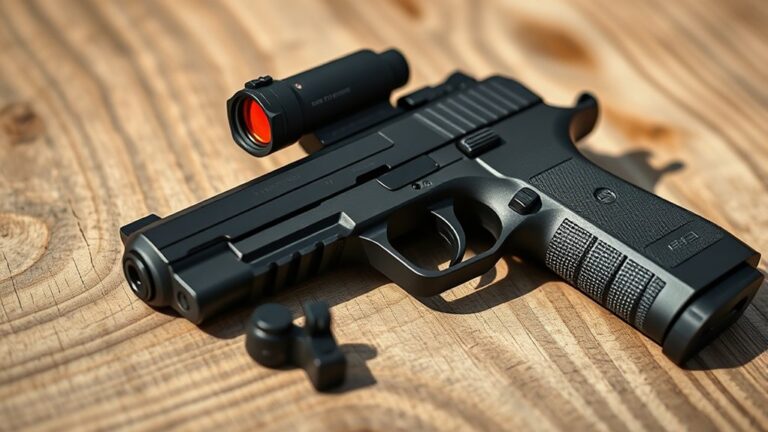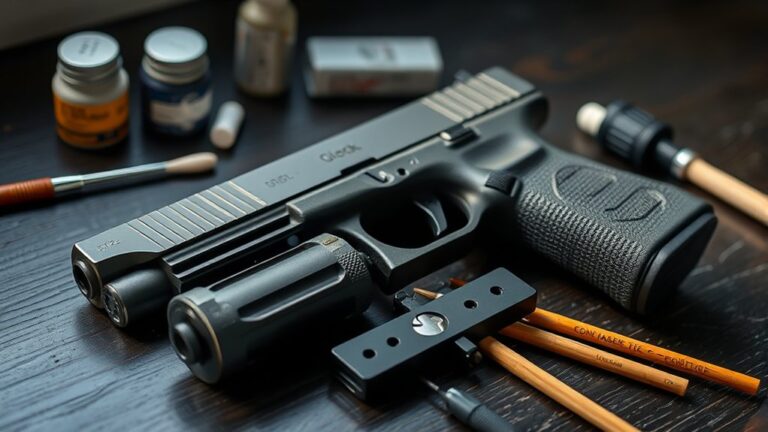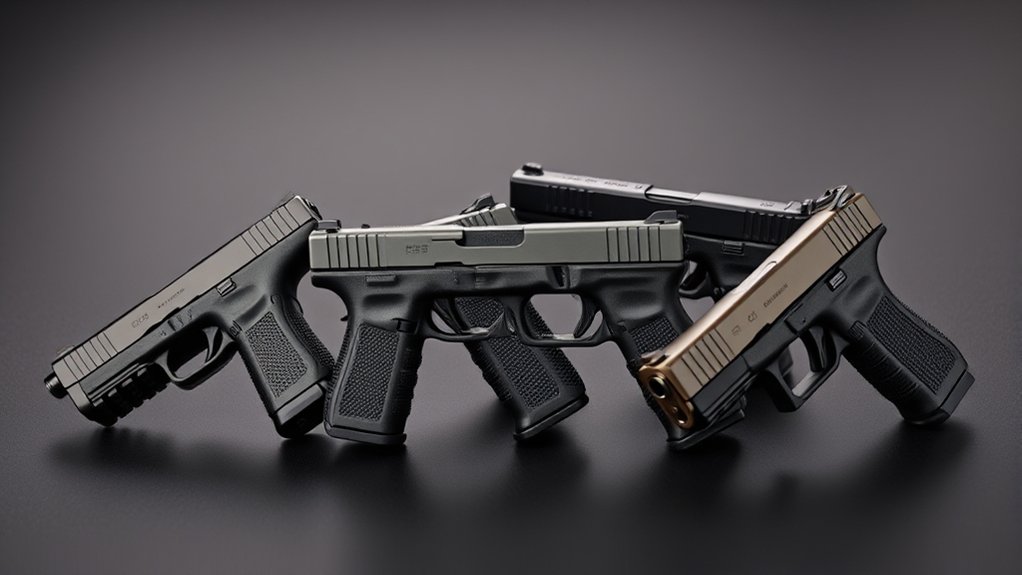
What Glock Is The Best – Top Models Compared
Choosing the best Glock really depends on what you need it for—whether it’s concealed carry, duty use, or training.
If you’re looking for something discreet, the slim and lightweight Glock 43X or the compact Glock 19 are great options.
On the other hand, if you want more firepower and capacity, full-size models like the Glock 17 are excellent choices.
Generational upgrades also matter. Newer models tend to have better ergonomics, increased durability, and more options for customization.
So, understanding the size, caliber, and your specific purpose can help you pick the most suitable Glock for your needs and preferences.
How To Choose The Best Glock: Key Factors To Consider
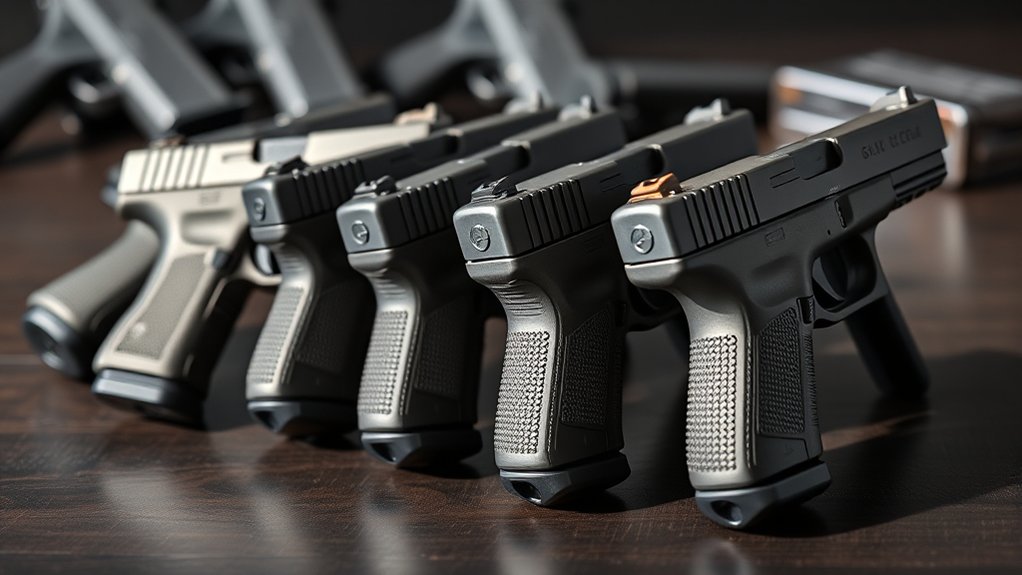
When choosing the best Glock for your needs, start by thinking about how you’ll use it most. Are you looking for something for concealed carry, duty use, or outdoor activities? Knowing this will help you pick a model with the right features.
Next, look at the caliber options. 9mm is very popular because it’s versatile and widely available. If you want more stopping power, consider .45 ACP or 10mm. These calibers pack a punch but might come with increased recoil.
Consider caliber carefully: 9mm for versatility, or .45 ACP and 10mm for more stopping power with added recoil.
Size and capacity are also important. Compact models are great for concealment, making them easier to carry discreetly. Full-sized Glocks usually have larger magazines and offer more stability when shooting.
Don’t forget to consider the generation of the Glock. Gen 5 and Gen 6 models come with ergonomic improvements, like modular backstraps and optics readiness, which can make handling easier.
Finally, think about aftermarket support and your budget. Popular models like the Glock 17 and Glock 19 have tons of customization options available.
Choosing a Glock that fits your operational needs and budget ensures you’ll be happy with your choice.
Key Features That Differentiate Glock Models: Size, Capacity, And Ergonomics
Glock models come in a variety of sizes, so it’s important to choose one that fits your needs. For example, the Glock 43X MOS is a compact option that’s easy to carry around, while the Glock 17 is a full-size model that offers a more substantial grip and handling.
The magazine capacity also varies quite a bit. You might find some models, like the Glock 42, hold as few as 6 rounds, which is great for discreet carry.
On the other hand, the Glock 17 can hold up to 17+1 rounds, giving you more firepower and fewer reloads during a shooting session.
Getting to know these differences is key to picking the right Glock for you. Whether you prioritize concealment or want more ammunition on hand, understanding size, capacity, and ergonomics will help you find the perfect balance.
Size And Carryability
Although Glock offers a variety of models, their size and carryability remain key factors that cater to different needs.
You’ll find subcompact options like the Glock 43X, which weighs just 18.7 oz and has a 3.4-inch barrel. It’s perfect for discreet concealed carry thanks to its slim 1.1-inch profile.
The Glock 19 strikes a good balance with a 4-inch barrel and a width of 1.34 inches. It offers versatility, making it suitable for both carry and home defense.
Full-sized models like the Glock 17 and Glock 20 focus on size and ergonomics. They’re designed for duty use and outdoor applications.
Recent generations feature modular backstraps and textured grips. These updates help improve ergonomics by fitting different hand sizes and increasing comfort during extended handling.
Your choice ultimately depends on matching Glock’s size and carryability to your specific needs.
Magazine Capacity Variations
Since magazine capacity directly impacts both firepower and concealability, understanding how Glock models differ in this aspect is key.
Full-size models like the Glock 17 come with a 17-round magazine. This maximizes rounds without sacrificing control, making it great for those who want more firepower.
The Glock 19 strikes a good balance. It offers 15 rounds while still maintaining a compact size that’s easy to carry and handle.
Subcompact models, including the Glock 43X MOS and the G26, usually have around 10 rounds. These are designed to be more concealable with slimmer grips, perfect for discreet carry.
On the other end, larger options like the Glock 20 and Glock 21 focus on power. They come with capacities of 15 and 13 rounds respectively, making them ideal for specialized uses.
These variations in capacity reflect Glock’s design philosophy. They let you choose a model based on what matters most to you—whether that’s firepower, concealability, or comfort.
Comparing Top Glock Models By Size And Capacity
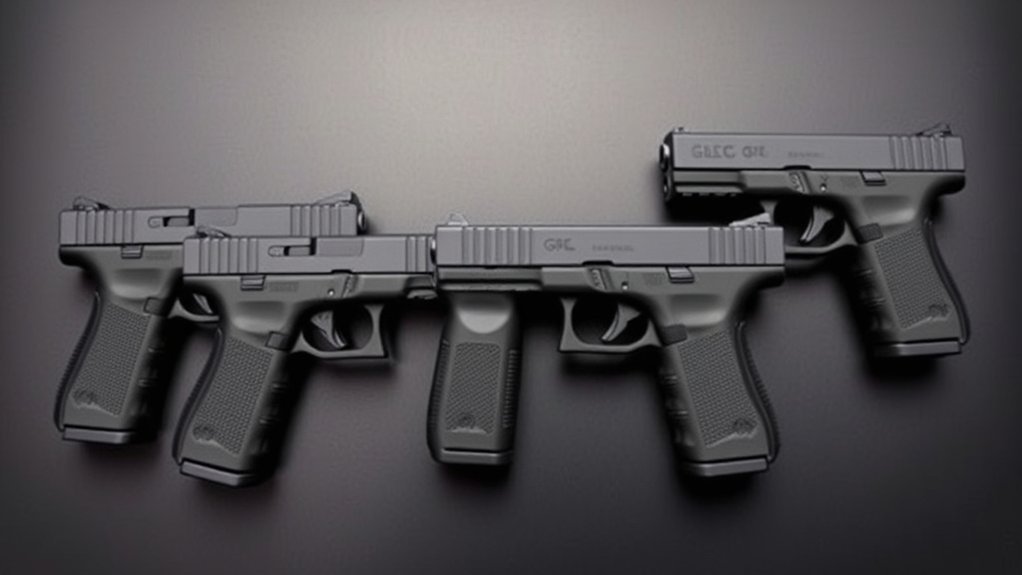
You’ll see that Glock models come in all sorts of sizes, from the slim and compact 43X MOS to the larger, full-sized 17.
Each one is designed with a particular purpose in mind, and their magazine capacities really reflect that — balancing firepower with how easy they’re to carry around.
Getting a handle on these size and capacity differences can really help you decide whether you want a firearm that’s more about discreet carry or something that offers full-size reliability when you need it most.
Size Variations Overview
How do Glock models differ when it comes to size and capacity? Glock offers a clear size spectrum, from subcompact to full-size, tailored to various needs.
Full-size models like the Glock 17 feature a 4.5-inch barrel and a 17+1 capacity. They’re ideal for duty use and provide plenty of firepower.
The Glock 20, another full-size option, has a slightly longer barrel at 4.61 inches and a 15+1 capacity. It’s great for outdoor applications where power and reliability are key.
Compact models such as the Glock 19 reduce the barrel length to 4 inches and hold 15+1 rounds. They’re a good balance between concealability and firepower, making them versatile for many situations.
Subcompact options like the Glock 43X have a 3.4-inch barrel and a 10+1 capacity. These are designed for discreet carry and everyday concealment.
Finally, the Glock 44, a lightweight training pistol, offers a 4.02-inch barrel with a 10+1 capacity. It emphasizes size efficiency, perfect for practice without sacrificing too much firepower.
Capacity Differences Explained
Why does capacity vary so much among Glock models? It mainly comes down to balancing the size of the firearm, how easy it’s to carry discreetly, and what you plan to use it for.
Larger models tend to hold more rounds because they’ve more space for bigger magazines. On the other hand, subcompact designs focus on being easy to carry and conceal, so they usually have fewer rounds.
Let’s look at some key capacity differences:
- The Glock 17 holds 17 rounds in 9mm, making it the go-to for maximum capacity in a full-size frame.
- The Glock 19 offers 15 rounds and strikes a good balance between size and firepower, making it versatile for different carry situations.
- The Glock 26 and 43X MOS both hold 10 rounds. They’re designed for concealability with slim, subcompact profiles.
Understanding how magazine capacity relates to the size of the gun can help you pick the right Glock for your needs. Whether you want more firepower or something easy to hide, it’s all about what works best for you.
Compact Vs Full-Size
Capacity differences among Glock models reflect their intended roles, but size and ergonomics also play a big part in choosing the right firearm.
Full-size Glocks like the Glock 17 shine in capacity and accuracy. They’ve a better grip ergonomics and a longer sight radius, making them ideal for duty use.
Compact models such as the Glock 19 focus on concealment. They feature shorter barrels and slimmer profiles, which means they sacrifice some capacity and grip size.
Your choice depends on what you need — whether it’s concealment or maximum capacity and accuracy.
Balancing these factors will help you pick the best Glock for your situation.
Best Glock Models For Concealed Carry And Everyday Use
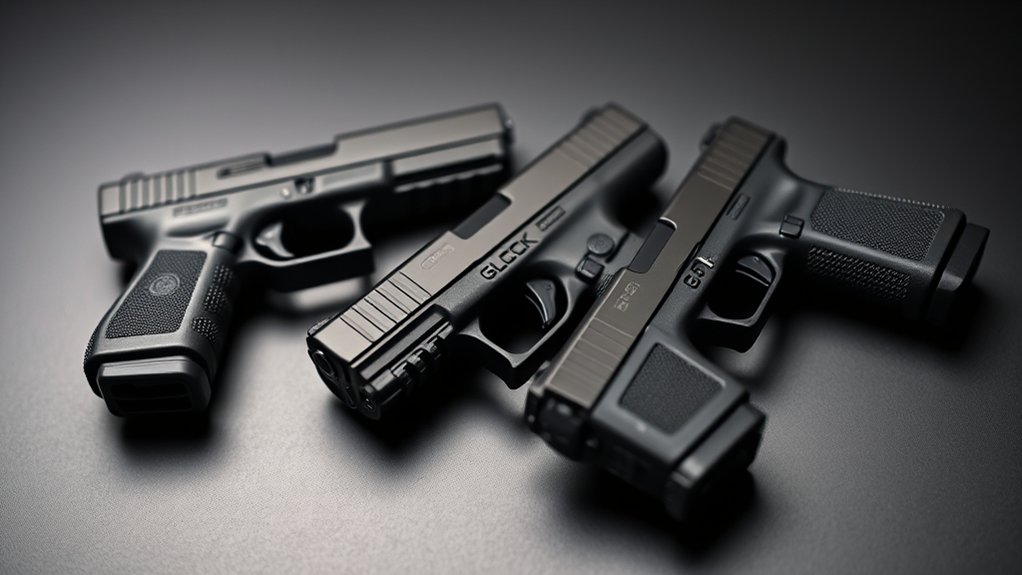
Three Glock models really stand out for concealed carry and everyday use: the Glock 43X MOS, Glock 19, and Glock 26. Each one offers unique advantages for daily carry, focusing on reliability and practicality.
Top Glock models for concealed carry combine reliability with practical daily use benefits.
The Glock 43X MOS is lightweight at just 18.7 ounces, and it has a slim profile with a 3.4-inch barrel. This makes it super easy to conceal under everyday clothing. Plus, it’s optics-ready, so you can add a sight if you want.
The Glock 19 strikes a good balance between size and capacity. It’s versatile and reliable, making it a popular choice. It also has a 15+1 round capacity and a wide range of aftermarket options for customization.
The Glock 26, often called the “baby Glock,” is perfect if you want something even smaller. It’s pocket-friendly and easy to carry discreetly. It has a 10-round capacity, making it ideal for concealed carry.
Top Full-Size Glocks For Duty And Home Defense
When choosing a reliable handgun for duty or home defense, the Glock 17 and Glock 19 are top contenders. They’re known for their durability and generous magazine capacities—17+1 and 15+1 rounds, respectively.
The Glock 17 features a 4.5-inch barrel and a full-sized frame, which helps deliver great accuracy. It’s often preferred as a duty firearm because of its reliability and precision.
The Glock 19 is a bit more compact but still offers the same dependability and capacity. It’s versatile enough for a variety of situations without sacrificing performance.
Both models come with corrosion-resistant finishes, polymer frames, and accessory rails. These features make it easy to attach tactical lights or lasers, boosting their effectiveness.
If you want more stopping power, consider the Glock 22 and Glock 21. They shoot larger calibers, like .40 S&W and .45 ACP, respectively.
These full-size Glocks are known for being tough, easy to maintain, and consistently reliable. They’re excellent choices for professional duty use or home defense scenarios.
Best Glock Models For Training And Outdoor Use
Although designed primarily for duty and defense, several Glock models excel in training and outdoor use because of their performance, durability, and manageable recoil.
While built for duty, select Glock models also shine in training and outdoor use due to reliability and ease of handling.
When comparing models for these purposes, reliability and versatility are key.
For training, the Glock 44 is a great choice. It has low recoil and uses economical .22 LR rounds, making it perfect for beginners.
For outdoor adventures, the Glock 20 and G21 stand out. They offer powerful performance and large capacities, handling rough environments with ease.
The Glock 19 strikes a nice balance, combining a manageable size with decent capacity. It’s highly adaptable for both training and outdoor use.
These models provide maximum capacity and performance tailored to your specific training and outdoor needs.
How Glock Generations Affect Performance And Features
How do Glock generations influence the firearm’s performance and features? Each Glock generation brings targeted improvements that boost reliability, ergonomics, accuracy, and customization.
For example, upgrades from Gen 3 to Gen 5 include a redesigned slide with better serrations, an improved trigger system, and increased durability. These changes directly enhance how the gun performs and how reliable it’s during use.
Gen 4 added dual recoil springs and larger magazine catches. These features promote smoother operation and help the gun last longer with less wear and tear.
Gen 5 models introduced the new Marksman Barrel, which significantly improves accuracy. They also feature a grip redesign that removes finger grooves, making the firearm more comfortable to hold.
Meanwhile, Gen 6 offers modular grip options, allowing you to customize the grip for better comfort and handling based on your preferences.
Every new generation also improves compatibility with accessories and optics. This expansion makes it easier to personalize your Glock and adapt it to different shooting needs.
Understanding these evolutionary changes can help you pick the Glock generation that best fits your shooting style and tactical requirements.
Frequently Asked Questions
What Is the Maintenance Routine for Glock Pistols?
You should follow a strict cleaning schedule, ideally after every 200-300 rounds or monthly.
Use proper disassembly instructions to access the barrel, slide, and frame.
Apply lubrication tips by oiling the recoil spring, slide rails, and trigger parts lightly.
Conduct inspection procedures to spot wear or damage, replacing parts as needed.
Always perform safety checks after reassembly.
Store your Glock in a dry, secure place following storage guidelines to guarantee longevity and reliable performance.
Are Glock Pistols Compatible With Aftermarket Accessories?
Yes, Glock pistols are highly compatible with aftermarket accessories. You can easily upgrade them with aftermarket slides, custom triggers, and grip enhancements tailored to specific models.
Sight upgrades, including optics-ready MOS options, help improve accuracy.
Magazine extensions are available to boost capacity, and slide serrations can make handling easier.
Laser attachments fit seamlessly on the accessory rails, making customization simple.
Keep in mind, compatibility might vary slightly between different generations.
However, most parts work across Glock’s standardized platform, making effective customization straightforward.
How Do Glock Pistols Perform in Extreme Weather Conditions?
Like a seasoned explorer braving unforgiving landscapes, your Glock pistol performs well in extreme cold and desert heat, maintaining flawless function. It resists coastal corrosion and works reliably in heavy rain, high humidity, and snow conditions.
Thanks to its corrosion-resistant polymer frame and Tenifer finish, your Glock thrives in arid environments and wet climates alike. You just need to keep up with regular cleaning and lubrication to ensure consistent cycling and chamber function.
What Are the Typical Repair Costs for Glock Firearms?
You can expect Glock repair costs to range from $50 to over $150, depending on what’s wrong.
Common fixes like Glock trigger upgrades or replacing Glock recoil springs usually cost between $50 and $100.
For more extensive work, such as Glock barrel replacements or Glock slide repairs, you’ll likely need to visit a professional Glock repair shop.
These shops often have Glock armorer training and may charge more than $150.
Costs can vary based on the part type and whether the Glock accessory is compatible.
It’s always a good idea to verify you’re using OEM parts for the best fit and performance.
Can Glock Models Be Customized for Left-Handed Shooters?
Yes, Glock models are great when it comes to customization for left-handed shooters. You can add ambidextrous controls like slide release options and magazine releases designed for easier operation.
Custom grip modifications also help improve comfort and control.
Plus, adjustable sights can make a big difference in accuracy.
Pair your Glock with left-handed holsters that are designed for quick draw and good retention.
All these features make sure your Glock works smoothly for left-handed users, giving you precise and user-friendly handling tailored to your needs.
Conclusion
Choosing the best Glock is like picking the right tool from a well-stocked toolbox. Each model has its own strengths, designed to suit different needs.
Think about size, capacity, ergonomics, and the features from different generations. These factors help you find the perfect Glock for concealed carry, duty, or training.
Understanding what matters most to you makes all the difference. It ensures you make an informed choice that maximizes performance and reliability every time you draw.
Your ideal Glock is out there. Just match it to your specific mission or purpose.