How To Get Concealed Carry Permit In Ca – Requirements And Application Steps
To get a concealed carry permit in California, you must be of good moral character, complete approved firearms training, and submit a detailed application with proof of residency and live scan fingerprints. After submitting your application online, you’ll attend an interview and background check.
Non-residents must meet additional criteria. You’ll also pay fees for processing and training. Stay aware of renewal and modification rules to keep your permit valid.
Keep exploring for a full step-by-step guide.
Are You Eligible for a California CCW Permit?
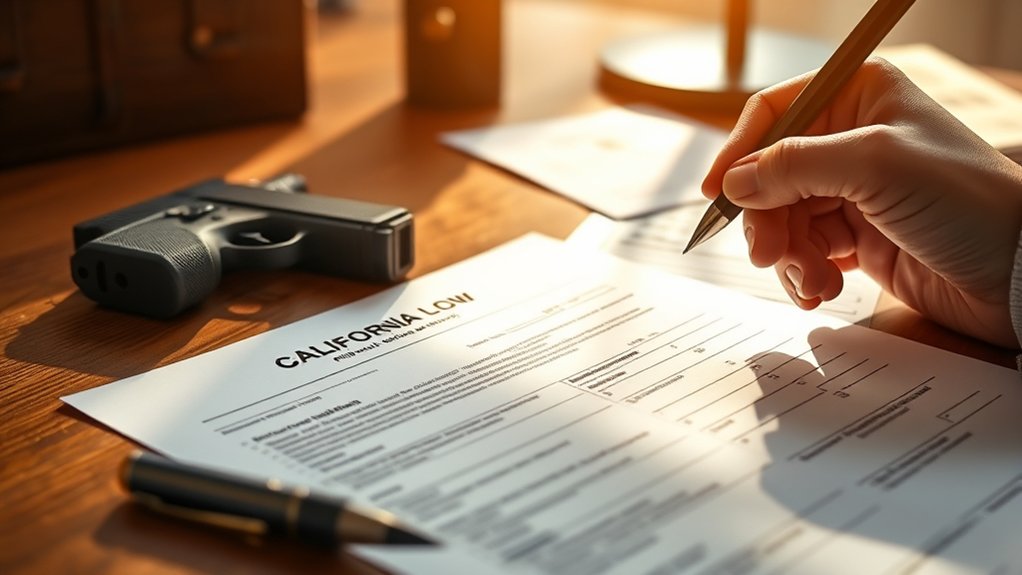
Wondering if you qualify for a California concealed carry weapon (CCW) permit? To determine your California CCW eligibility, you must be of good moral character and reside or work in the county where you apply.
Licensing disqualifications include felony convictions, certain misdemeanors, especially domestic violence offenses, and restraining orders.
Felony convictions, specific misdemeanors like domestic violence, and restraining orders disqualify applicants from obtaining a CCW permit.
Mental health issues or addiction problems that impair judgment also bar approval.
Furthermore, you must complete an approved firearms training course or provide valid proof of exemption.
Federal requirements apply alongside state laws, so consulting an attorney can clarify complex cases.
Meeting these eligibility criteria is essential before moving forward with your California CCW licensing process.
Ensuring you comply with all conditions, including firearms training, maximizes your chances of obtaining a permit smoothly and legally.
How to Submit Your California CCW Application
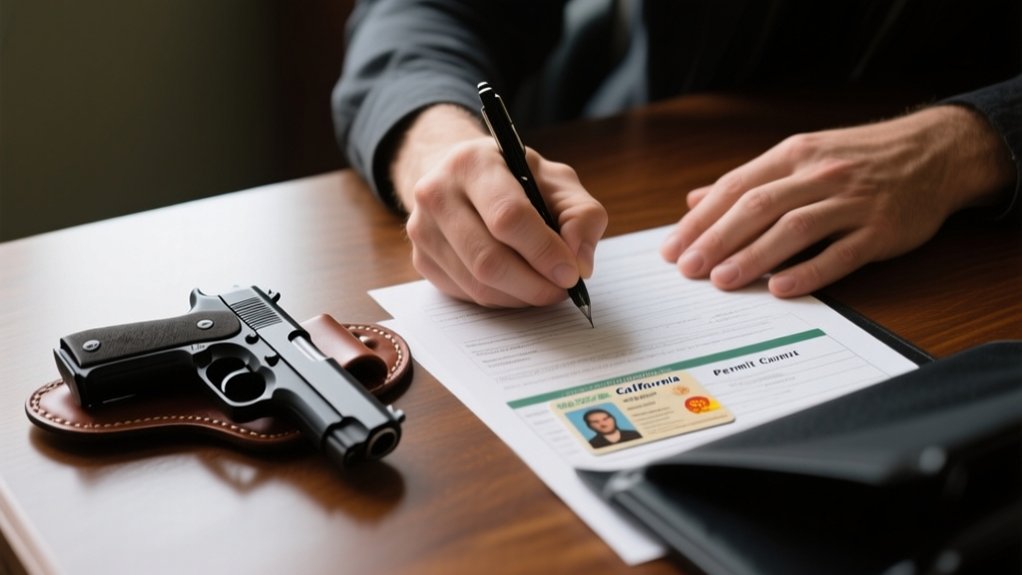
How do you submit your California CCW application correctly? You must submit your CCW application through the online CCW PRO system, where you’ll upload all required documents. This includes proof of residency, a passport-style photo, and proof of live scan completion.
Make sure your documents are complete and accurate. Any missing or incomplete information will delay processing and postpone your interview with CCW Licensing Staff.
After your documents are verified and background checks are complete, you’ll need to attend an in-person or virtual interview.
If you run into technical issues while submitting online, check the help document or reach out to support by email or phone.
Following these steps precisely will help your CCW application move forward smoothly without unnecessary delays.
Documents Needed for Your California CCW Application
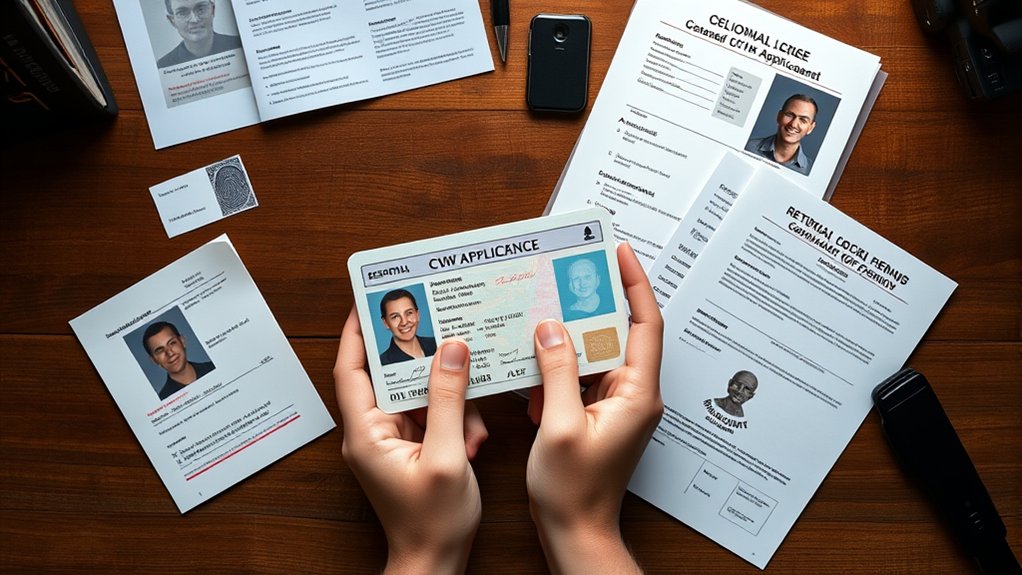
Before you submit your California CCW application, you’ll need to gather and upload several key documents to verify your identity, residency, and qualifications. Start with proof of residency, such as a utility bill, marriage certificate, or a current ID showing your address.
Gather essential documents like proof of residency before submitting your California CCW application to ensure a smooth process.
You also must provide a valid, passport-style photograph as part of the application process.
A completed live scan fingerprinting report is essential to confirm your identity and background.
Include training certificates from approved firearms courses to demonstrate your knowledge of proper handling and safety.
Depending on your situation, additional documents like proof of exemption or mental health evaluations may be required.
Make sure all these documents are accurate and complete. Doing this will help streamline your path toward obtaining your California CCW license.
It’s really about being prepared and organized to avoid any delays.
California CCW Firearms Training Requirements
Once you’ve gathered all the necessary documents, the next step is to complete the required firearms training for your California CCW application. You must complete at least 8 hours of approved firearms training, covering safety, handling, and shooting techniques.
This training includes live-fire exercises on a licensed firing range, where you’ll demonstrate proficiency with approved firearms.
For renewals, you’ll need at least 4 hours of updated training, also including live-fire practice. Certain renewal courses require certification from the Commission on Peace Officer Standards and Training (POST). Make sure your course provider is POST-certified when applicable.
After you finish the training, obtain a certificate of completion and upload it as proof during your CCW application process. Meeting these requirements is essential to move forward confidently with your concealed carry permit in California.
What Happens During Your CCW Interview and Background Check?
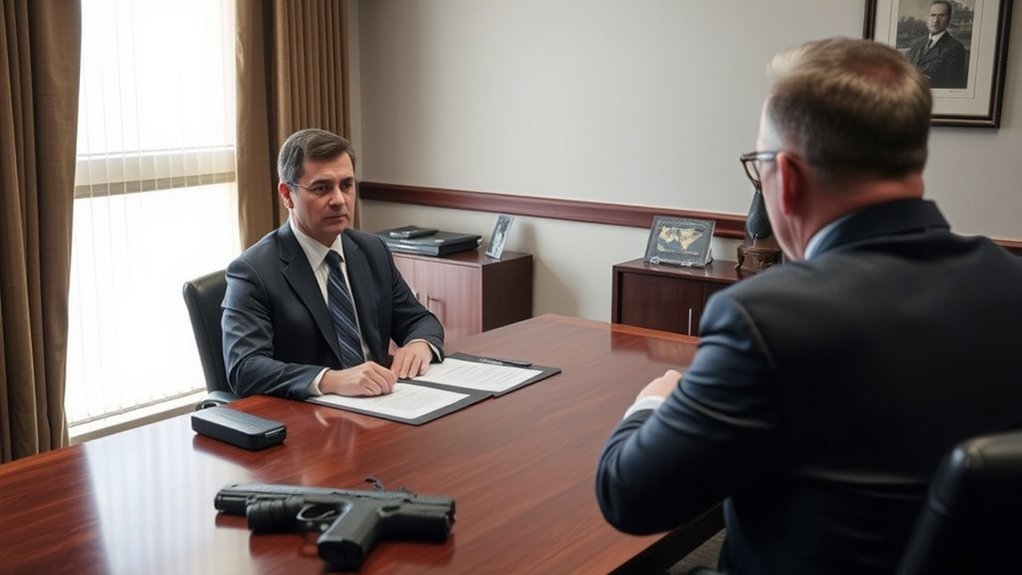
Although you’ve completed your training and gathered all necessary documents, your California CCW application isn’t complete until you undergo an interview and background check.
During the CCW interview, licensing staff verify your documentation and evaluate your suitability for carrying a firearm. They may ask about your reason for applying, firearm safety knowledge, and understanding of California gun laws.
Licensing staff confirm your documents and assess your reasons, safety knowledge, and grasp of California gun laws.
The background check thoroughly reviews your criminal history, mental health records, restraining orders, and other disqualifying factors.
Starting January 1, 2026, you can choose an in-person or virtual interview via Microsoft Teams.
Key steps during this process:
- Verification of documents and personal background by licensing staff
- Questions evaluating your firearm safety and legal knowledge
- Background check for disqualifying factors affecting eligibility
How Much Does a California CCW Permit Cost?
Understanding the costs involved is essential when applying for a California CCW permit. The initial application fees typically run around $70, but these vary by county.
After approval, some counties require an issuance fee of about $173.
Renewal fees generally range from $70 to $90, depending on the county sheriff’s office handling your permit.
Beyond these fees, you should budget for mandatory training courses, which can cost between $100 and $300, as well as fingerprinting and background check expenses.
Keep in mind that non-residents or applicants from certain jurisdictions may face higher or additional fees.
Since fees vary and can change, always verify current application fees and renewal fees directly with your local county sheriff’s office before proceeding.
Renewing or Modifying Your California CCW Permit
When it’s time to renew your California CCW permit, make sure to submit your renewal application anywhere from 30 to 90 days before it expires. You’ll also need to complete updated training, which includes live-fire exercises.
Now, if you need to modify your permit—like changing your address or updating your firearm details—you have to provide certification documents within 30 days of the change.
Also, keep in mind that renewal fees can vary depending on the county.
Plus, you’ll be required to undergo a new background check and complete the updated training again.
Renewal Application Timeline
When renewing or modifying your California CCW permit, submit your renewal application between 30 and 90 days before your current license expires. Timely renewal ensures uninterrupted legal carry privileges and helps you avoid penalties.
Your renewal application must include proof of completing a four-hour renewal class, which involves live-fire exercises.
Keep these key points in mind:
- Submit your renewal application 30-90 days before permit expiration.
- Complete the required renewal training with live-fire practice.
- Pay applicable renewal fees, which vary by county but generally start around $70.
The renewal process also involves updated background checks and re-verification of training credentials.
Staying ahead of your permit’s expiration date guarantees a smooth transition and continued compliance with California’s concealed carry regulations.
Permit Modification Process
Although renewing your California CCW permit follows a straightforward process, modifying it requires careful attention to specific rules and documentation. Permit modification lets you update your legal name, address, or firearm details. Keep in mind, there’s a limit of two firearm modifications per license term.
Address and name changes don’t count toward this limit, so you can update those without worry. To get started, submit your modification request through the online licensing portal. Make sure to include valid ID, recent training certificates, and the applicable fees within 30 days.
You also need to complete a renewal class of at least four hours. This includes live-fire exercises if they’re required for your situation.
Just be sure to stay precise with your application process to guarantee timely approval of your CCW license updates, especially when you’re dealing with firearm modifications.
Training Requirements Updates
Since maintaining your California CCW permit requires ongoing compliance, completing updated training courses is essential for both renewal and modification. Renewal applicants must complete a training course that’s at least 4 hours long, including live-fire exercises, to show proficiency and safety.
Some courses also require POST certification to meet state standards. When you’re modifying your permit, you’ll need to submit current training certificates within 30 days along with other required documents.
Here are the key training requirements:
- Complete a minimum 4-hour training course with live-fire exercises.
- Obtain POST-certified courses if applicable.
- Submit valid training certificates promptly during modifications.
Staying current with these requirements helps ensure your permit stays valid and shows your commitment to responsible firearm handling.
California CCW Permits for Non-Residents
How can non-residents obtain a concealed carry permit in California? California CCW permits are available to non-residents only under specific conditions. If you’re actively stationed or employed in California, you may apply, but you must meet strict application requirements.
You’ll need to prove you’re not disqualified by state laws, such as felony convictions or restraining orders. Also, demonstrating a valid reason like employment or partial residency in the state is essential.
As a non-resident, expect to submit extra documentation verifying your military status or employment within California.
Keep in mind, the licensing authority, usually the local sheriff or police department, has discretion over approval and may enforce varying policies regarding non-resident applicants. Understanding these factors helps you navigate the process effectively.
Frequently Asked Questions
Can I Carry a Concealed Weapon in Other States With a California CCW?
You generally can’t carry a concealed weapon in other states with just your California CCW. Reciprocity agreements vary widely, and many states don’t recognize California permits.
You’ll need to check each state’s laws before carrying to avoid legal trouble.
Some states offer permits that honor California’s, but these are limited. Always research and obtain the proper licenses for the state you plan to visit to stay compliant and safe.
It’s better to be safe than sorry when it comes to carrying concealed weapons across state lines.
What Are the Penalties for Carrying a Concealed Weapon Without a Permit?
If you carry a concealed weapon without a permit in California, you risk up to one year in county jail and a $1,000 fine.
You’ll also face misdemeanor charges that can leave a permanent mark on your record, affecting jobs and licenses.
Worse, your firearm might be confiscated, and any permits you have could be suspended or revoked.
Repeat offenses or crimes involving the weapon can escalate penalties to felony charges.
How Long Does the CCW Application Approval Process Typically Take?
The CCW application approval process in California typically takes up to 90 days after your background check is complete. You’ll be notified of approval or denial via the online portal or mail once the review finishes.
Processing times can vary based on application volume and document completeness.
To avoid lapses, submit your application or renewal well before your current permit expires. Be prepared for possible delays if additional information is requested.
Just keep in mind that sometimes things take a bit longer than expected. So, it’s always a good idea to plan ahead.
Are There Restrictions on Where I Can Carry My Concealed Weapon?
Imagine carrying your concealed weapon is like holding a delicate key. Some doors just won’t open for you.
Yes, California restricts where you can carry; government buildings, schools, and courthouses are off-limits.
Private properties might also ban concealed guns. Ignoring these rules can lead to criminal charges.
Always check local laws and posted signs before carrying, so you don’t accidentally unbolt serious legal trouble.
Stay informed, stay safe.
Can My CCW Permit Be Revoked or Suspended After Issuance?
Yes, your CCW permit can be revoked or suspended after issuance if you violate laws, misuse your firearm, or provide false information during the application.
Authorities may also take action if you engage in criminal activity or face mental health concerns.
Usually, you’ll have the right to a hearing before any action is taken.
If your permit is revoked or suspended, you can appeal through local law enforcement or the court system to protect your rights.
It’s important to stay informed and follow all regulations to avoid any issues.
Conclusion
Getting your California concealed carry permit may seem complex, but following each step carefully makes it manageable. You might wonder if California’s strict requirements mean you’re out of luck. But with the right documents, training, and preparation, you can boost your chances.
Remember, thorough background checks and interviews ensure responsible carry. Stay informed, stay prepared, and you’ll navigate the process confidently. This makes your permit a realistic goal rather than just a theory.