Do You Need A Holster To Concealed Carry – Safety Rules And Best Practices
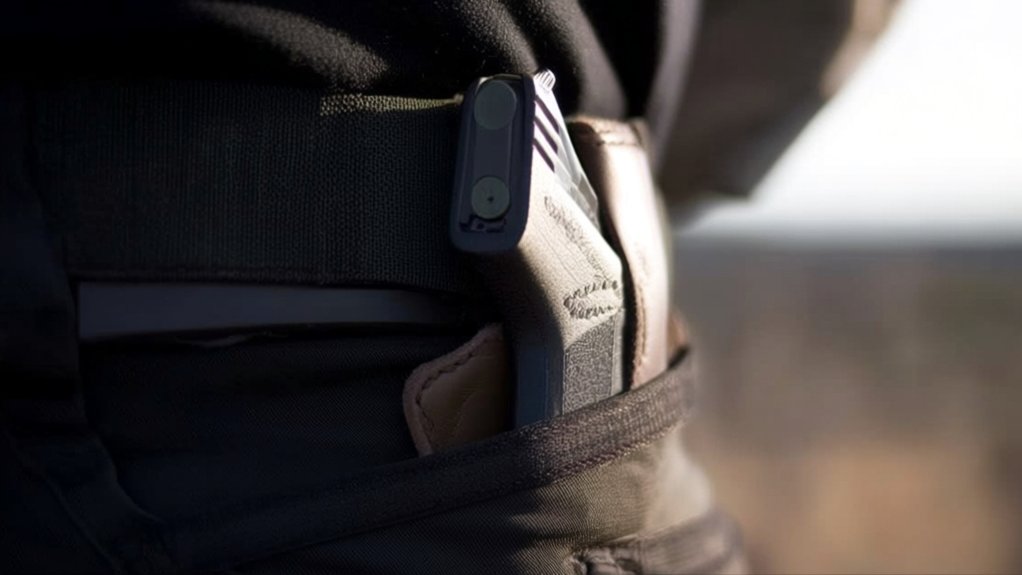
You do need a proper holster to concealed carry safely. It secures your firearm, covers the trigger guard to prevent accidental discharges, and keeps the gun stable for quick, consistent access.
Without a holster, you risk the weapon shifting, falling, or being accessed unintentionally. Choosing the right holster and maintaining it properly guarantees comfort, concealment, and safety.
Keep your setup ideal by learning how to select, adjust, and care for your holster effectively. It’s easier than you might think once you know what to look for and how to handle it.
Why Using a Holster Is Essential for Safe Concealed Carry
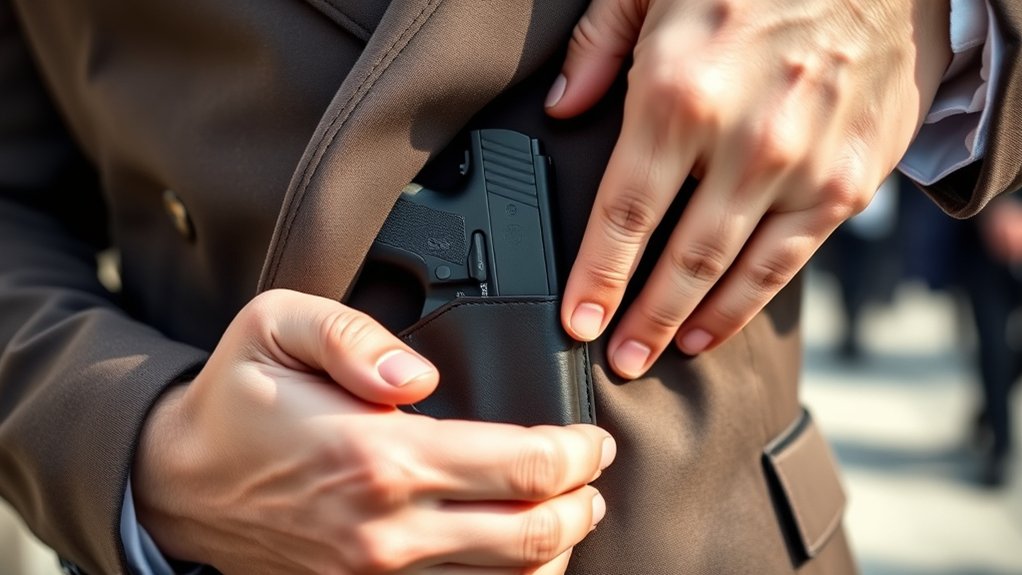
Why should you never carry a concealed firearm without a holster? Because a holster is critical for safety during concealed carry. It securely retains your firearm, preventing accidental drops or loss.
A holster is essential for safely securing your concealed firearm and preventing accidental drops or loss.
A well-designed holster covers the trigger guard, reducing the risk of unintentional discharges if the firearm is bumped or pressed against your body. It also stabilizes the firearm’s position, allowing you to draw quickly and consistently without fumbling.
Beyond safety, a holster protects your firearm from dirt and damage, ensuring reliable function every time you need it. Carrying without a holster compromises safety and control, so always use one for responsible concealed carry.
Your safety and the safety of those around you depend on it.
Risks of Carrying Without a Holster
When you carry a firearm without a holster, you’re putting yourself at serious risk when it comes to trigger safety. The trigger can easily get snagged or accidentally pressed, which is something you definitely want to avoid.
Plus, without proper retention, your firearm might shift around, fall out, or even be grabbed by someone who shouldn’t have access to it.
It’s really important to understand these dangers so you can stay in control and prevent any accidents while carrying concealed.
Trigger Safety Concerns
Although carrying a firearm without a holster might seem convenient, it considerably increases the risk of accidental discharge by exposing the trigger to unintended contact. A proper holster covers the trigger guard, safeguarding trigger safety during concealed carry.
Without this protection, the trigger can easily be pressed by clothing, gear, or movement, leading to potentially dangerous outcomes.
Consider these key risks:
- Increased chance of accidental discharge from unintentional trigger contact.
- Firearm shifting or falling without a holster, pressing the trigger accidentally.
- Lack of a trigger guard makes safe handling difficult during draw or reholstering.
- Higher legal and safety consequences from negligent discharges when carrying improperly.
Using a holster is essential to maintain trigger safety and prevent accidental discharges while carrying concealed. It’s a simple step that can save you from serious trouble.
Firearm Retention Issues
How secure is your firearm when you carry it without a holster? Without proper holster safety, you risk poor firearm retention, which increases the chances of accidental discharge and other safety hazards. Carrying without a holster means your firearm can shift, fall, or snag during daily activities.
This compromises both safety and quick access in emergencies. Plus, carrying without a holster offers little protection against unauthorized access or theft, which really undermines concealed carry security. Many jurisdictions actually require the use of a holster to prevent these risks and make sure your firearm stays secure.
To minimize safety hazards, always use a well-designed holster that covers the trigger guard and holds your firearm firmly in place. Prioritizing holster safety is essential to protect yourself and those around you. It’s a simple step that makes a big difference.
Why Retention and Trigger Protection Matter for Your Safety
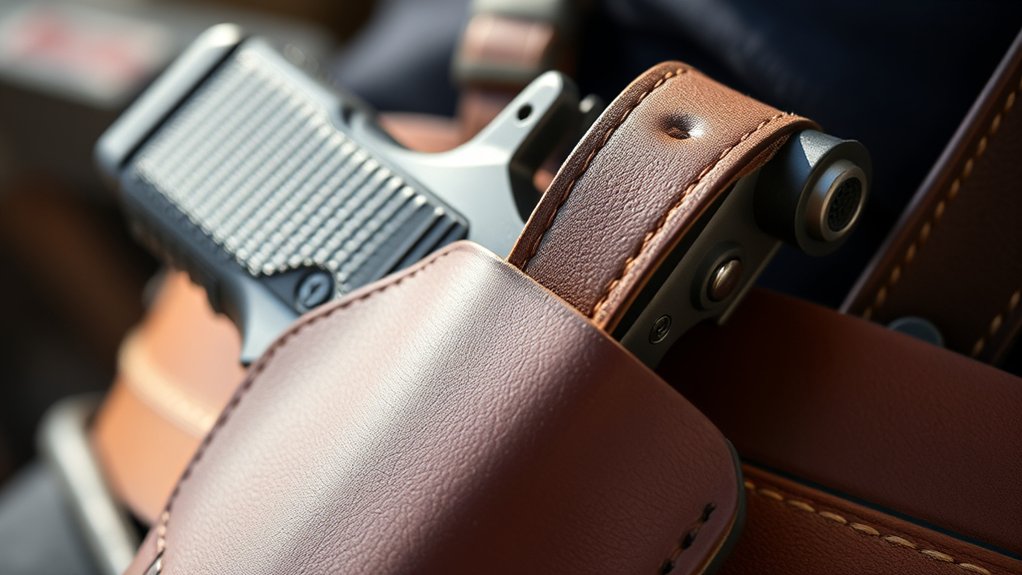
Because your safety depends on it, choosing a holster with strong retention and effective trigger protection is essential. Retention keeps your firearm securely in place, preventing unauthorized access and accidental drops.
Choosing a holster with strong retention and trigger protection is vital for your firearm safety.
Trigger protection ensures the trigger is fully shielded, stopping unintended discharges.
Here’s why retention and trigger protection matter for your safety when concealed carrying:
- Retention reduces the risk of firearm theft or loss during daily activities.
- Trigger protection prevents negligent discharges by blocking accidental trigger presses.
- Active retention mechanisms considerably lower accidental firearm incidents.
- Trigger guards keep debris away, maintaining safe handling and consistent function.
Using a holster with these features is non-negotiable for safe concealed carry and overall firearm safety. It’s really about peace of mind knowing your firearm is both secure and ready when you need it.
Picking the Best Holster for Your Gun and Carry Style
Now that you understand why retention and trigger protection matter, the next step is choosing a holster that fits your specific gun and carry style. The best holster for concealed carry provides secure retention, covers the trigger guard, and allows a smooth draw.
Consider materials like Kydex for durability and a consistent fit or leather for comfort. Your carry style, whether appendix, strong side, or behind the hip, affects comfort, concealment, and accessibility.
Look for adjustable cant and ride height features to tailor the holster to your body and clothing. A properly fitted holster minimizes firearm movement, reduces printing, and enhances retention.
This ensures your gun stays secure and safe throughout the day. Prioritize these factors to find the holster that best supports your concealed carry needs.
Comparing On-Body and Off-Body Holsters for Concealed Carry
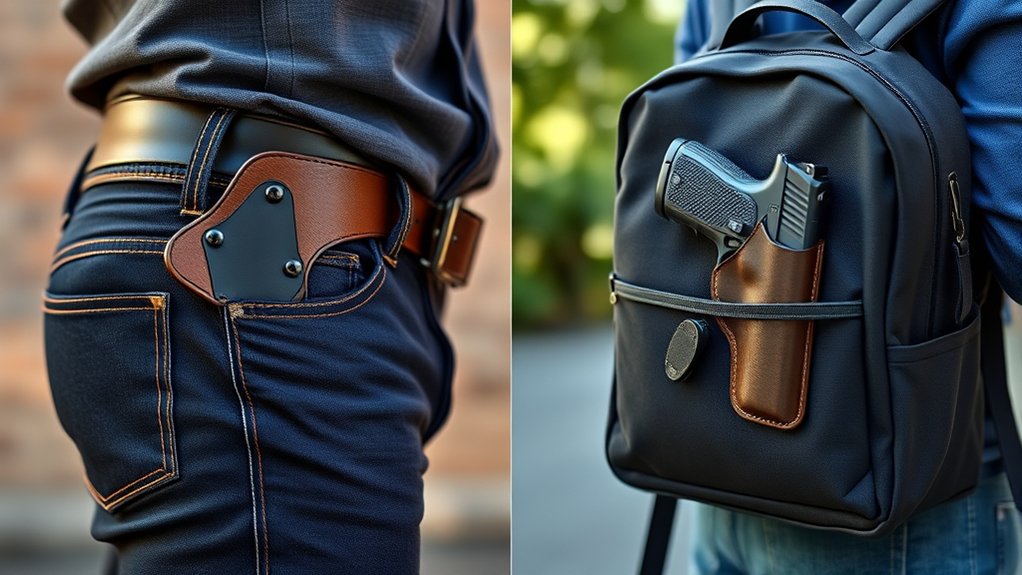
When choosing a concealed carry method, you’ll need to weigh the benefits of on-body versus off-body holsters. On-body holsters secure your firearm directly to your body, offering greater control and faster access while enhancing firearm safety.
Off-body holsters, like those in purses or bags, provide wardrobe flexibility but demand constant vigilance to avoid loss or theft.
Consider these points for effective holster selection:
- On-body holsters minimize movement and accidental dislodging.
- Off-body holsters can complicate quick access during emergencies.
- Lifestyle and clothing choices heavily influence your holster preference.
- Firearm safety is paramount; select a method that ensures secure carry.
Choose wisely to balance convenience, security, and readiness in your concealed carry routine. It’s all about what works best for your lifestyle and peace of mind.
Best Practices for Holstering and Unholstering Your Firearm
Although holstering and unholstering your firearm may seem straightforward, mastering these actions is essential for safety and efficiency. Always use a high-quality holster with proper retention to securely hold your firearm.
Master holstering and unholstering with quality retention for safety and efficiency.
When holstering, ensure the trigger guard is fully covered to prevent accidental discharge.
Practice smooth, deliberate movements during holstering and unholstering to maintain control and avoid damaging your firearm or holster.
Never move or engage in daily activities without your firearm fully holstered.
Regularly inspect and clean both your firearm and holster to guarantee smooth operation and maintain safety.
By following these best practices, you enhance your readiness while minimizing risks associated with improper holstering and unholstering techniques.
Prioritize retention and safety at every step for responsible concealed carry. It’s all about being safe and prepared.
Testing and Adjusting Your Holster for Comfort and Access
Since comfort and accessibility directly impact your ability to draw quickly and safely, testing and adjusting your holster is essential. You need to verify the holster fit is secure yet allows smooth access.
To optimize comfort and access, focus on these key steps:
- Test your holster at home and on the range wearing typical clothing to check concealment and real-world comfort.
- Adjust the cant, ride height, and retention to improve draw speed and comfort.
- Record your draw times and comfort levels after each holster adjustment to evaluate effectiveness.
- Periodically reassess fit and positioning, especially after clothing or usage changes.
Regular testing and fine-tuning ensure your holster performs reliably. This way, you balance comfort with immediate access when it matters most.
Maintaining Your Holster to Keep It Safe and Reliable
You should regularly clean your holster by following the manufacturer’s guidelines to keep it free from any residue that might affect how it performs.
It’s a good idea to check it often for signs of wear, damage, or loose stitching to make sure it stays secure and reliable.
Taking proper care of your holster not only helps prevent safety risks but also extends its lifespan.
Holster Cleaning Tips
Even the best holsters can lose their effectiveness without proper care, so maintaining yours is essential for safety and reliability. Proper holster maintenance ensures consistent retention and smooth draws. Here are key holster cleaning tips to keep yours in top shape:
First, perform regular holster inspections to catch wear or damage early. It’s a simple step that can save you trouble down the line.
When cleaning leather holsters, be gentle. Use a damp cloth and apply leather conditioner every now and then to keep the material from cracking.
For Kydex or plastic holsters, mild soap and water do the trick. Just avoid harsh chemicals since they can degrade the materials.
Don’t forget to tighten retention screws and any adjustable parts. This helps maintain a secure fit and ensures you get a proper draw every time.
Inspecting Wear And Tear
Although holsters are built to endure daily use, regular inspection for wear and tear is essential to keep them safe and reliable. Conduct a thorough holster inspection to identify any holster wear, such as cracking, fraying, or fading, which can compromise its integrity.
Pay close attention to retention and attachment points to guarantee your firearm stays securely in place without excessive movement.
Damage to holster components requires immediate replacement or repair to maintain safety. Don’t overlook the trigger guard coverage. Confirm it remains properly positioned to prevent accidental engagement.
Incorporate holster maintenance into your routine by cleaning according to manufacturer guidelines to remove dirt and debris.
Prioritizing safety inspection preserves both your holster’s function and your firearm’s control during concealed carry.
Avoiding Common Holster Mistakes That Compromise Safety
When selecting and using a holster, it’s really important to pay close attention to fit and placement to keep things safe. Avoid those common holster mistakes that can compromise firearm retention and increase safety risks. A proper holster makes sure your firearm stays secure and helps reduce the chances of accidental discharge.
To stay safe, keep these points in mind:
To stay safe, always prioritize secure holster fit, proper placement, and regular condition checks.
- Choose a holster with a snug fit so your firearm doesn’t separate from it.
- Position the holster for easy, safe access without printing.
- Regularly check your holster for any wear or damage that might affect retention.
- Never carry without a holster because that raises the risk of accidentally engaging the trigger.
Following these tips makes a big difference in safe firearm handling.
Frequently Asked Questions
Can I Carry a Firearm Holstered While Swimming or Exercising?
You shouldn’t carry a firearm holstered while swimming or exercising. It’s unsafe because moisture and vigorous movement can damage your gun and compromise holster retention. Sweat and water increase corrosion risks, too.
Plus, physical activity makes quick access difficult. Instead, it’s better to remove your firearm and store it securely before these activities.
Always prioritize safety and proper maintenance. That way, you avoid accidents and make sure your firearm works reliably when you need it.
Are There Legal Restrictions on the Types of Holsters I Can Use?
Imagine carrying your firearm like a knight with his trusty sword. Your holster must be just as reliable.
Yes, there are legal restrictions on the types of holsters you can use for concealed carry. Many states require your holster to cover the trigger guard and offer proper retention.
Homemade or soft fabric holsters might be prohibited.
How Do I Clean My Firearm Without Removing It From the Holster?
You can clean your firearm in the holster by carefully using a cleaning brush or cloth that fits without damaging the holster material. Avoid getting solvents or oils on the holster, as they can degrade it.
Focus on accessible areas, but always make certain your firearm is unloaded and safe before starting.
For thorough cleaning, though, it’s best to remove the firearm to prevent damage and ensure you reach all parts properly. Taking it out gives you better access and helps keep both your gun and holster in good shape.
Can a Holster Interfere With Body Scanners or Security Checkpoints?
Yes, a holster can interfere with body scanners or security checkpoints, especially if it has metal parts. Metal holsters often trigger alarms, which can lead to additional screening.
So, you’ll want to choose non-metallic or plastic holsters to reduce this risk.
Properly concealing your firearm under clothing also helps avoid detection.
But keep in mind, security personnel may still perform visual or manual inspections.
Always be prepared for possible checks, regardless of what the scanners show.
What Should I Do if My Holster Causes Skin Irritation or Discomfort?
Feeling itchy or sore where your holster sits? Don’t ignore it. Switch to a holster made from hypoallergenic materials like leather or Kydex to ease irritation.
Make sure it fits properly. Too tight can cause chafing. Adding a thin layer of clothing between your skin and holster can give you extra protection.
Keep your holster clean and dry to avoid sweat buildup. You can also try holster pads or gel inserts to boost comfort during long wear. Give these a shot and see what works best for you!
Conclusion
You wouldn’t drive a car without a seatbelt, so don’t carry a firearm without a holster. A quality holster is your guardian, ensuring trigger protection, retention, and quick access when you need it most.
By choosing the right holster and practicing safe habits, you turn a potentially dangerous situation into responsible self-defense. Remember, safety isn’t just a rule; it’s the shield that keeps you and those around you secure.