Top 12 Best Mountain Hunting Jacket for Extreme Outdoor Use
Facing cold winds at high altitudes, many hunters realize their jacket just isn’t cutting it. A poorly chosen jacket often falls short in warmth, doesn’t handle wet conditions well, or restricts movement during a long climb.
The best mountain hunting jacket avoids these pitfalls by combining weather resistance with comfort and durability, essential for tracking game in rough terrain.
Key features to focus on include waterproof and breathable materials like Gore-Tex or similar membranes rated at least 10,000 mm water column to keep moisture out without overheating. Fit should allow layering underneath but remain close enough to avoid catching on branches or gear.
Insulation type and weight also matter, often with synthetic fill that keeps warmth even when damp and dries faster than down. Practical details such as adjustable hoods, ample pockets, and ease of cleaning round out what makes a jacket truly suited for mountain hunting.
Need a Quick Check?
| Image | Product | Price |
|---|---|---|
Our Top Picks 1  | KUIU Guide PRO Jacket | Check Price |
Our Top Picks 2  | SITKA Mountain Jacket | Check Price |
Our Top Picks 3  | SITKA Mountain Evo Jacket | Check Price |
Our Selected Top 12 Mountain Hunting Jacket for Every Budget
This list includes jackets designed for mountain hunting with various features suited to different weather conditions and terrains. Each jacket is reviewed for how well it performs, who it fits best, and its advantages and disadvantages to help you find the right option for your needs.
1. KUIU Guide PRO Hooded Soft Shell Jacket
Feels quiet and protective in cold, rugged environments, the KUIU Guide PRO Hooded Soft Shell Jacket suits mountain hunters needing warmth and camouflage. Its main strength is blending cold weather suitability with a camo pattern that fits hunting demands without extra bulk.
Putting it on is straightforward thanks to the regular fit and hooded collar, which helps shield against wind and chill. Wearing it day to day works well due to the long sleeves and anorak silhouette that cover more body. The jacket’s Valo camouflage pattern helps stay unnoticed in varied mountain terrain during all seasons.
Built for cold climates, the material blocks wind and cold air efficiently while maintaining comfort. The jacket holds up well against rough use but tightening the fit can be limited by the regular style. The hood offers good protection, though some note it lacks adjustability.
It manages balance between warmth and mobility.
The jacket often receives praise for its cold weather protection and camouflage effectiveness, helping hunters remain unnoticed. Common criticism involves the hood’s lack of adjustment options, which can reduce effectiveness in harsh wind conditions. The regular fit sometimes leaves wearers wishing for a more tailored, snug feel to better retain heat.
Those hunting in cold mountain environments who prefer a regular fit and value camouflage will appreciate this jacket. Those seeking tighter fits or customizable hoods for extra wind protection should consider alternatives with those specific features. The jacket excels most where warmth and blending in matter more than precise fit adjustments.
Pros
- Camouflage pattern suited for mountain hunting
- Long sleeves and hooded collar for added coverage
- Regular fit allows layering underneath
- Designed for cold weather conditions
Cons
- Limited hood adjustability
- Fit may feel loose for those wanting snug layers
| Specification | Details |
|---|---|
| Color | Valo |
| Style | Modern |
| Sleeve Type | Long Sleeve |
| Fit Type | Regular |
| Coat Silhouette Type | Anorak |
| Climate Suitability | Cold Weather |
2. SITKA Mountain Hunting Jacket
Designed for hunters tackling cold mountain environments, this quilted jacket offers solid insulation in a performance fit. It suits those needing quiet mobility and reliable warmth during fall hunts, with its Optifade Open Country pattern helping blend into natural surroundings.
Putting on the jacket fits snugly around the arms and torso, thanks to its performance fit and band collar. The long sleeves cover well without excess bulk, making it easier to layer underneath without restricting movement.
Its cold weather suitability means you can wear it comfortably during chilly fall mornings and afternoons without overheating.
The insulated quilting retains warmth effectively while keeping weight manageable. The solid pattern minimizes noise, important when stillness counts during hunts.
The most praised feature is the balance between warmth and mobility. Some mention the fit may feel tight on larger builds, limiting layering options.
Warmth and mobility appear consistently strong, making it dependable for fall mountain hunts. The fit tightness often restricts adding thicker layers when temperatures drop further or for larger physiques. That snug fit appeals to those prioritizing movement over loose comfort.
People focusing on mobility and camouflage in cold fall conditions will benefit most. Those needing room for multiple base layers or intending to use it in winter should consider thicker or more adjustable options.
Pros
- Quiet solid pattern for stealth
- Warmth without heavy bulk
- Snug band collar blocks cold air
- Performance fit supports layering
Cons
- Tight fit limits layering space
- Only suitable for fall cold weather
| Specification | Details |
|---|---|
| Color | Optifade Open Country |
| Style | Mountain Hunting Jacket |
| Sleeve Type | Long Sleeve |
| Coat Silhouette | Quilted |
| Fit Type | Performance Fit |
| Climate Suitability | Cold Weather |
3. SITKA Mountain Evo Hunting Jacket
Quilted construction combined with stretch fit gives the SITKA Mountain Evo Hunting Jacket durability and mobility suited for serious mountain hunters. Ideal for cold spring or summer hunts, it offers reliable insulation without weighing you down, making it a solid choice for those needing protection during cool-weather climbs.
Day-to-day use involves managing moderate insulation alongside breathability. The band collar with hood adds versatility against wind chill. The Optifade Subalpine pattern helps blend into dense mountain terrain, while the long sleeves protect against brush.
Stretch fit makes movement smooth during climbs or stalking, keeping restriction to a minimum despite the quilting.
The jacket performs well in keeping cold out and allowing active wear in cold weather. Its build feels rugged and suited for rough field conditions, although some note it can feel bulky in tighter layers.
Insulation meets expectations for its intended climate, providing warmth during mountain hunts, but a few mention the breathability could be better during strenuous activity.
Protection against cold weather stands out as the jacket’s strongest feature. Reviewers appreciate its sturdy construction and camouflage design. The clearest complaint focuses on breathability during high exertion, which sometimes leads to feeling too warm or sweaty without adequate ventilation.
Hunters needing solid warmth and durability in cool mountain conditions will find this jacket fits well. Those planning intense, high-movement hunts in warmer climates may want lighter, more breathable options to stay comfortable during heavy activity.
Pros
- Durable quilted fabric handles rugged mountain terrain
- Stretch fit offers good mobility for active hunts
- Optifade Subalpine pattern aids camouflage
- Hood and band collar shield from wind and cold
Cons
- Bulkiness can feel restrictive with additional layers
- Breathability could improve for strenuous activity
| Specification | Details |
|---|---|
| Color | Optifade Subalpine |
| Style | Hunting Mountain Evo Jacket |
| Sleeve Type | Long Sleeve |
| Coat Silhouette Type | Quilted |
| Seasons | Spring/Summer |
| Fit Type | Stretch |
4. TIDEWE Mens Hunting Jacket

Next Camo G2 color stands out most in the TIDEWE Mens Hunting Jacket, designed for hunters who need effective camouflage in fall environments. Its biggest strength lies in blending classic style with practical features that help during long mountain hunts.
Setup involves simply pulling it over your regular layers without worrying about bulk. The fit allows for natural movement while the camouflage pattern helps avoid detection. Lightweight design means it is easy to carry for hours on uneven mountain terrain.
Pockets offer handy storage for hunting essentials and weather protection keeps you comfortable through sudden temperature changes.
It performs well in keeping you concealed and warm while hunting, thanks to its camouflage and Fall collection design. Construction feels sturdy and reliable with attention to detail in stitching and fit. Most praise goes to its effective camouflage pattern and breathability.
Common complaint points to limited color options for different seasons.
Effective camouflage and a comfortable fit earn strong praise for blending into fall surroundings and lasting through long outings. Complaints focus on its limited appeal outside fall due to the single pattern and color choice. The jacket suits quiet movement and versatile layering but may need an additional option for year-round use.
Hunters pursuing game in autumn on mountain trails will find it suits their needs well. Those hunting in different seasons or needing waterproof features might want to look for another jacket with broader pattern and weather protection options.
Pros
- Effective camouflage for fall hunting conditions
- Comfortable fit allowing freedom of movement
- Lightweight design suitable for mountain terrain
- Multiple pockets for gear storage
Cons
- Limited color variety for other seasons
- Camouflage pattern may stand out in non-fall environments
| Specification | Details |
|---|---|
| Color | Next Camo G2 |
| Style | Classic |
| Occasion | Hunting |
| Collection Name | Fall |
| Pattern | Camouflage |
5. NOMAD Harvester Vx3 Hunting Jacket

Ideal for hunters who need quiet insulation and wind resistance on cold fall days, the NOMAD Harvester Vx3 Hunting Jacket excels in blending into woodland terrain while keeping you warm. Its mossy oak camo pattern and insulated quilting make it a go-to for staying stealthy and comfortable during outdoor winter activities.
Putting on the jacket feels straightforward thanks to its long sleeves and quilted design that trap warmth well. The wind-resistant feature helps cut down cold gusts, while the camouflage pattern matches dense brush and leaf-covered ground, aiding in concealment. It suits cold-weather conditions without being overly bulky, making it practical for hikes or still hunting sessions in chilly weather.
Durability and silent fabric stand out, letting the jacket hold up against rough terrain quietly. The insulated material performs well in cold weather, keeping body heat in and wind out. Some users note the fit can be a bit stiff at first, limiting arm movement slightly, but most praise the wind resistance and quietness as key benefits.
Quiet material and wind resistance receive strong praise, keeping users warm and concealed during hunts. The most frequent complaint points to some stiffness that can make movement feel limited early on, though it tends to soften with wear. The jacket’s camouflage and insulation work well together for blending in and fending off cold air.
Hunters focusing on fall and mild winter conditions who value silence and warmth will find this jacket suitable. Those facing very cold winter or needing maximum mobility might want to consider alternatives that offer lighter fabrics or more flexibility. The quilted build strikes a balance between warmth and quiet for typical mountain hunting outings.
Pros
- Quiet fabric reduces noise during movement
- Insulated for warmth in cold weather
- Wind-resistant against gusty conditions
- Mossy Oak camo blends well in woodland
Cons
- Initial stiffness restricts arm mobility a little
- Designed mainly for fall, less suited for extreme cold
| Specification | Details |
|---|---|
| Color | Mossy Oak Bottomland Camo |
| Style | Harvester Vx3 Jacket – Insulated, Wind-resistant, Quiet |
| Sleeve Type | Long Sleeve |
| Coat Silhouette Type | Quilted |
| Seasons | Fall |
| Climate Suitability | Cold Weather |
6. SITKA Kelvin LT Hooded Jacket

Cold mornings in the mountains require a jacket that keeps you warm without overheating during midday strolls. The SITKA Kelvin LT Hooded Jacket suits hunters who need reliable insulation and versatility in mild weather. Its biggest strength is lightweight warmth delivered through a quilted design that doesn’t weigh you down on long walks.
Putting the jacket on is straightforward with its regular fit and hood for added coverage. The quilted silhouette traps heat evenly across the body while being breathable enough to avoid moisture buildup.
The Subalpine color blends well with natural surroundings. Its long sleeves and design meant for all seasons make it easy to layer under heavier outerwear or wear alone during brisk days.
The Kelvin LT excels at maintaining a balanced temperature in mild mountain climates. Stitching holds up to regular use, preserving the insulation and fit.
Its quiet fabric allows you to move without alerting game, a significant advantage in hunting. The most noted drawback is limited weatherproofing, which means heavy rain can reduce comfort if not layered with a shell.
The jacket’s warm but breathable insulation receives strong praise for comfort during mild conditions. Several found it less effective in rain or snow because it lacks significant waterproof features, so layering is necessary in wet weather.
Hunters needing lightweight warmth on dry or mildly cold days will appreciate this jacket. Those requiring full rain protection or use in harsher winter conditions might want to consider options with better weatherproofing or heavier insulation.
Pros
- Lightweight quilted insulation for warmth
- Regular fit allows layering underneath
- Quiet fabric aids in stealth
- Hood adds extra protection from wind
Cons
- Not fully weatherproof in heavy rain
- Mild weather only limited for colder climates
| Specification | Details |
|---|---|
| Color | Subalpine |
| Style | Hunting |
| Sleeve Type | Long Sleeve |
| Coat Silhouette Type | Quilted |
| Seasons | All |
| Climate Suitability | Mild Weather |
7. SITKA Alpha Fleece Hooded Jacket

Optifade Subalpine coloring makes this fleece jacket ideal for mountain hunters who need camouflage in cold weather. Its regular fit with a hood is built to keep you warm while moving through brush and rugged terrain.
Putting on the Alpha Fleece Hooded Jacket feels straightforward with its simple long sleeves and standard fit. The hood sits well over your head, blocking wind without restricting vision.
You can easily layer it under a shell or wear it alone on chilly days. Moving in it doesn’t get noisy since fleece is soft and quiet.
The jacket warms well in cold conditions thanks to its Ambient 100 fabric. Build quality stands out for durability in rough outdoor use, but some find the fit a bit bulky under heavier outerwear.
The color camouflage blends naturally in subalpine zones, though it may stand out outside these environments.
Warmth and quiet movement earn most praise for this fleece jacket. A common complaint is the regular fit sometimes feels bulky when worn under additional outerwear, limiting layering options.
Hunters who spend extended periods in cold, quiet subalpine regions will find the camouflage and insulation useful. Those needing a streamlined fit for layering in varied climates might want to consider lighter or slimmer options.
Pros
- Effective cold weather warmth
- Quiet fleece material
- Camouflage suited for subalpine terrain
- Comfortable hood coverage
Cons
- Fit can feel bulky under heavier layers
- Camouflage less effective outside specific environments
| Specification | Details |
|---|---|
| Color | Optifade Subalpine |
| Style | Ambient 100 Hooded Jacket |
| Sleeve Type | Long Sleeve |
| Fit Type | Regular |
| Climate Suitability | Cold Weather |
8. ReFire Gear Mens Soft Shell Tactical Jacket
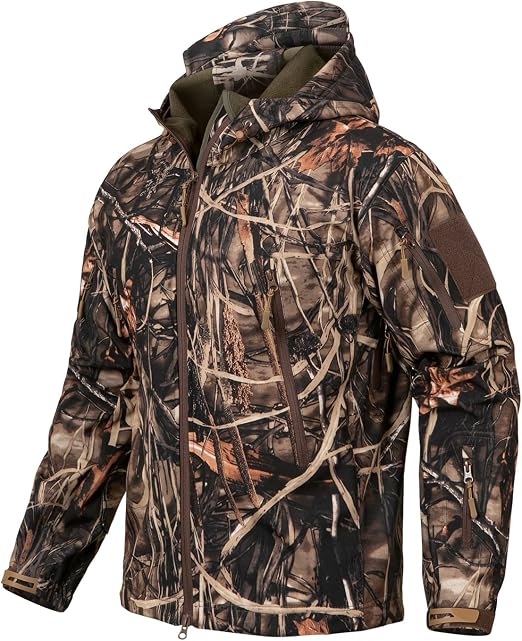
Hunters who spend long hours in cold conditions and value a quiet, weather-appropriate jacket will find the ReFire Gear Mens Soft Shell Tactical Jacket a solid option. It suits those needing a reliable outer layer with camouflage that blends well in wooded or reed-heavy environments. Its biggest strength is cold-weather protection combined with a quiet fabric that does not spook game.
Setting up the jacket means slipping into a classic anorak style with a hood for head coverage. Long sleeves and a classic fit provide comfort without restricting movement during hunts.
The Reeds Camo pattern helps maintain stealth. The jacket layers well under other gear. Use in daily cold weather is straightforward with enough warmth for extended outdoor periods without overheating.
Performance meets typical demands in cold climates by balancing insulation and breathability. The soft shell fabric cuts down on noise while moving, keeping the wearer discreet. The jacket’s build feels sturdy and well-stitched.
The strongest praise focuses on its quiet and durable material, while a common complaint centers around the fit, which some say runs a bit large or bulky for layering options.
Most praise points to the jacket’s quiet fabric that helps maintain stealth in hunting situations. The construction holds up well under typical outdoor wear. Complaints often mention the larger fit, which can make layering difficult and reduce mobility for some body types.
The jacket suits hunters prioritizing quiet movement and cold weather comfort over lightweight, high-ventilation shells. It might not be the best pick for warm weather or those needing a slim fit for flexible layering. Choosing something lighter or more breathable suits more intense activity or milder climates better.
Pros
- Quiet soft shell material reduces noise while moving
- Good cold weather insulation without excess bulk
- Reeds camo pattern matches natural environments well
- Hooded collar provides extra warmth and coverage
Cons
- Fit may feel too large or bulky for layering
- Limited ventilation options during physical exertion
| Specification | Details |
|---|---|
| Color | Reeds Camo |
| Style | Classic |
| Sleeve Type | Long Sleeve |
| Coat Silhouette Type | Anorak |
| Seasons | All |
| Climate Suitability | Cold Weather |
9. SITKA Dew Point Hooded Jacket

SITKA Dew Point Hooded Jacket stands out by combining lightweight waterproof protection with a camouflage pattern suited for subalpine environments. Designed for hunters who need reliable gear in cold weather spring or summer hunts, its main strength is balancing weather resistance with breathability without extra bulk.
Putting on the jacket is straightforward with a regular fit and long sleeves that keep coverage consistent without restricting movement. The anorak style means you pull it over your head, which helps with layering underneath. Optifade Subalpine camouflage blends well in wooded mountainous terrain, making it practical for stalking.
The hood provides extra coverage around the head and neck, important in sudden cold or wet conditions.
Its waterproof and lightweight construction lets you stay dry without sweating, important during active pursuits. The point collar adds some wind protection around the neck.
Most praise focuses on the balance between weather protection and weight, noting it moves quietly through brush. Some mention the anorak style can feel less convenient for quick removal compared to full-zip jackets.
The jacket’s quiet fabric and proper camouflage receive strong praise for hunting in subalpine settings. Users appreciate staying dry in wet conditions without feeling weighed down. The anorak design, however, is often cited as inconvenient for quick off and on moments compared to jackets with full front zippers.
Hunters who prioritize stealth and weather protection in early season cold weather will find this jacket very suitable. Those wanting easier layering with fast garment removal or insulated warmth should look into other options. The jacket’s design suits moderate cold but not harsh winter conditions.
Pros
- Lightweight yet waterproof material
- Camouflage suited for subalpine terrain
- Quiet fabric minimizes noise during movement
- Hood adds protection against wind and rain
Cons
- Anorak style makes removal slower
- Limited to cold weather; not insulated
| Specification | Details |
|---|---|
| Color | Optifade Subalpine |
| Style | Dew Point Waterproof Lightweight Hunting Jacket |
| Sleeve Type | Long Sleeve |
| Coat Silhouette Type | Anorak |
| Seasons | Spring/Summer |
| Climate Suitability | Cold Weather |
10. Guide Gear Steadfast 4-in-1 Hunting Jacket

Guide Gear Steadfast 4-in-1 Hunting Jacket suits hunters needing reliable protection in extreme cold with a loose fit and full camouflage. Its biggest strength is its adaptability through four different wear options, making it practical for various weather conditions during mountain hunting.
Using the jacket day to day is straightforward thanks to its long sleeves and hooded collar, which shield well against wind and cold. The anorak style offers an easy on/off experience without fumbling, and the Realtree Apx pattern blends effectively in rugged terrain. The loose fit allows layering beneath, important when temperatures drop sharply in mountainous environments.
It performs solidly in keeping out cold and wind on long trek days. The durable build stands up to rough use on trails, although some note the jacket feels bulky when layering heavily inside.
The camouflage works well in thick brush, but a few mention the loudness of some fabrics when moving quietly through dry leaves.
The jacket’s ability to keep warmth in extreme cold and its camouflage effectiveness earn consistent praise. Some find the material noisy in dry environments, which can reduce stealth. The fit supports layering but can feel cumbersome if heavily layered for very cold conditions.
Hunters who face fluctuating mountain weather and value warmth and camouflage will appreciate this jacket. Those who prioritize lightweight, silent fabrics for quiet stalking might prefer a different option. The loose fit suits layering but may feel too bulky for those seeking minimalist gear.
Pros
- Four-in-one design adapts to varied weather conditions
- Camouflage pattern blends well in mountainous brush
- Loose fit allows comfortable layering underneath
- Hooded collar adds extra protection from cold wind
Cons
- Fabric can be noisy when moving through dry foliage
- Feels bulky when wearing heavy layers inside
| Specification | Details |
|---|---|
| Color | Realtree Apx |
| Style | Outdoor Performance |
| Sleeve Type | Long Sleeve |
| Coat Silhouette Type | Anorak |
| Seasons | All |
| Climate Suitability | Extreme Cold |
11. SITKA Traverse Heavyweight Fleece Jacket

Wearing the SITKA Traverse Heavyweight Fleece Jacket feels solid and warm, suited for hunters spending hours in cold mountain environments. Its biggest strength lies in cold weather performance, keeping you insulated without overwhelming bulk during fall seasons.
Setting up the jacket is straightforward since it fits a regular body shape and has a long sleeve design with a band collar for extra neck coverage. The Optifade Subalpine pattern blends well in forested terrain, helping you stay concealed.
Regular care is easy as the quilted silhouette resists minor snagging from brush and branches.
The jacket excels at retaining heat in chilly conditions while allowing enough movement for tracking game on rugged trails. The material feels durable and well-stitched, though some notes mention it runs a little warm when the sun is out.
The band collar is protective but can feel slightly tight when layered under heavier coats.
The jacket keeps warmth well across long hours in cold settings and maintains good durability through typical mountain brush contact. The collar adds needed neck protection but limits movement, leading some to prefer looser options around the throat area. It adapts well to active hunting without overheating, though cautious layering is necessary during variable fall temperatures.
Hunters needing reliable warmth and camouflage in cold, forested fall environments will appreciate the design and insulation. Those hunting in milder temperatures or preferring a looser neck fit should consider lighter or alternative jackets to avoid feeling restricted or too warm. The regular fit suits typical body shapes but might not accommodate heavy layering comfortably.
Pros
- Effective insulation for cold fall weather
- Camouflage pattern tailored to subalpine terrain
- Durable quilted fabric resists brush damage
- Comfortable regular fit allows layering
Cons
- Band collar can be restrictive for some
- Can feel too warm on sunny days
| Specification | Details |
|---|---|
| Color | Subalpine |
| Style | Traverse Hunting Jacket |
| Climate Suitability | Cold Weather |
| Pattern | Optifade Subalpine |
| Fit Type | Regular |
| Seasons | Fall |
12. SITKA Stratus Windstopper Hunting Jacket

A solid choice for hunters heading into cold, windy conditions. Best suited for someone who values quiet materials and weather resistance during fall outings.
The standout feature is its windproof, water-repellent fleece material that keeps you warm without rustling noise.
Putting on the jacket is straightforward thanks to the anorak style and straight fit, allowing for comfortable layering. The removable hood adds flexibility for changing weather, and the band collar seals out drafts. Its ultra-quiet fleece fabric makes movement less noticeable in the wilderness, a crucial point during hunting season.
Daily wear in chilly weather gets reliable protection with low bulk.
It performs well in blocking wind and repels light moisture to keep you dry. Built with durable materials, it handles outdoor roughness without losing shape. Praise often highlights how quiet the fleece remains while moving.
One drawback common in feedback notes the jacket is best for dry cold rather than heavy rain, as it’s only water repellent and not fully waterproof.
Quietness during movement receives the highest praise, making it ideal for hunting where silence matters. The water repellency works well against light wetness but falls short in sustained heavy rain or wet snow conditions, which some find disappointing considering outdoor demands.
Those who hunt in cool, dry climates and need minimal noise will appreciate this jacket. It suits fall seasons best. Anyone regularly exposed to heavy rain or wet weather should consider a fully waterproof alternative to avoid discomfort during longer hunts in wet conditions.
Pros
- Windproof and water repellent fleece
- Ultra-quiet fabric for stealth
- Removable hood adds versatility
- Straight fit comfortable for layering
Cons
- Not fully waterproof, struggles in heavy rain
- Limited to fall and cold weather use
| Specification | Details |
|---|---|
| Color | Elevated Ii |
| Style | Men’s Stratus Windstopper Water Repellent Ultra-quiet Fleece Hunting Jacket With Removable Hood |
| Sleeve Type | Long Sleeve |
| Coat Silhouette Type | Anorak |
| Seasons | Fall |
| Climate Suitability | Cold Weather |
Best Mountain Hunting Jackets Comparison Table
| Product | Season Suitability | Climate Suitability | Pattern | Fit Type |
|---|---|---|---|---|
| KUIU Guide PRO Jacket | All | Cold Weather | Camouflage | Regular |
| SITKA Mountain Jacket | Fall | Cold Weather | Solid | Performance Fit |
| SITKA Mountain Evo Jacket | Spring/Summer | Cold Weather | Animal Print | Stretch |
| TIDEWE Hunting Jacket | Fall | – | Camouflage | – |
| NOMAD Harvester Vx3 Jacket | Fall | Cold Weather | Camouflage | – |
| SITKA Kelvin LT Jacket | All | Mild Weather | – | Regular |
| SITKA Alpha Fleece Jacket | – | Cold Weather | – | Regular |
| ReFire Gear Tactical Jacket | All | Cold Weather | Camouflage, Solid | Classic |
| SITKA Dew Point Jacket | Spring/Summer | Cold Weather | Camouflage | Regular |
| Guide Gear Steadfast Jacket | All | Extreme Cold | Camouflage | Loose |
| SITKA Traverse Fleece Jacket | Fall | Cold Weather | Optifade Subalpine | Regular |
| SITKA Stratus Windstopper | Fall | Cold Weather | Solid | Straight |
- Season SuitabilityAll
- Climate SuitabilityCold Weather
- PatternCamouflage
- Fit TypeRegular
- Season SuitabilityFall
- Climate SuitabilityCold Weather
- PatternSolid
- Fit TypePerformance Fit
- Season SuitabilitySpring/Summer
- Climate SuitabilityCold Weather
- PatternAnimal Print
- Fit TypeStretch
- Season SuitabilityFall
- Climate Suitability–
- PatternCamouflage
- Fit Type–
- Season SuitabilityFall
- Climate SuitabilityCold Weather
- PatternCamouflage
- Fit Type–
- Season SuitabilityAll
- Climate SuitabilityMild Weather
- Pattern–
- Fit TypeRegular
- Season Suitability–
- Climate SuitabilityCold Weather
- Pattern–
- Fit TypeRegular
- Season SuitabilityAll
- Climate SuitabilityCold Weather
- PatternCamouflage, Solid
- Fit TypeClassic
- Season SuitabilitySpring/Summer
- Climate SuitabilityCold Weather
- PatternCamouflage
- Fit TypeRegular
- Season SuitabilityAll
- Climate SuitabilityExtreme Cold
- PatternCamouflage
- Fit TypeLoose
- Season SuitabilityFall
- Climate SuitabilityCold Weather
- PatternOptifade Subalpine
- Fit TypeRegular
- Season SuitabilityFall
- Climate SuitabilityCold Weather
- PatternSolid
- Fit TypeStraight
How to Choose the Right Mountain Hunting Jacket
Key factors include weather resistance, breathability, and insulation to stay comfortable and dry during long hunts. Choosing the right fit and durable materials reduces wear and avoids replacements, saving money and preventing discomfort in challenging mountain conditions.
Material and Insulation
Some fabrics wear thin fast after just a few mountain hikes, especially in rough terrain where branches and rocks snag easily. A jacket made from nylon or polyester blends with ripstop weaving usually lasts longer and resists abrasions better.
These materials also shed water from sudden rain or snow without soaking through quickly. Look for water resistance ratings above 5,000 mm for solid protection during unpredictable weather. The outer fabric’s durability influences how often the jacket needs replacing and how it protects you from the elements.
Insulation quality defines warmth, but bulk can limit movement and add heat without benefit. Lightweight synthetic fills like PrimaLoft keep you warm when stationary or moving slowly, without the heavy padding of older jackets.
The fill power rating (400 to 600 is common for mountain conditions) tells how well the insulation traps heat. Breathability matters especially on uphill climbs to avoid sweating inside the jacket. Fabrics with a moisture vapor transmission rate (MVTR) above 10,000 g/m²/24 hr help regulate temperature so the jacket feels comfortable across changing activity levels.
Noise Level
Moving through dense bushes or dry leaves can turn loud and draw unwanted attention. Jackets made from noisy fabrics can rustle with every step. That scratchy sound often comes from stiff nylon or polyester blends and loud snaps from exposed zippers.
Seams stitched with thick or coarse thread can add to the sound, especially if they crease or rub as you move. I’ve found that jackets using softer, brushed outer layers or quiet synthetic fabrics reduce noise noticeably.
A jacket designed for stealth usually has covered or minimal zippers and flat seams to avoid that clacking or crinkling. Some models use matte finishes rather than shiny materials, which helps lessen the chance of grabbing attention with sound.
Look for jackets labeled with quiet technology or those praised for silent movement. Trying a jacket on and moving around, especially in conditions similar to your hunting environment, reveals a lot about its noise level. This trade-off matters more than many realize until that sudden rustle costs a shot.
Fit and Mobility
Hunting in rugged terrain means prioritizing gear that moves with you, not against you. Jackets that come in a wide range of sizes, including options for tall and short builds, make layering easier.
Adjustability at the waist and cuffs also helps accommodate bulky mid-layers without feeling tight or restrictive. Without this flexibility, your movements can feel chopped up, and you might find yourself constantly readjusting in cold or windy conditions, which wastes time and energy.
The cut and design play a big role in comfort during climbs or quick maneuvers. Jackets with a slightly longer back and articulated sleeves tend to follow your body’s motion better, preventing bunching or pulling. Features like adjustable cuffs and a helmet-compatible hood offer practical coverage without getting in the way of your sightlines or gear.
Good products usually specify these details in the description, and sleeves with stretch panels or gussets stand out for unrestricted arm movement.
Weather Protection
During a mountain hunt, a sudden downpour without a proper barrier can ruin a trip pretty quickly. Jackets with waterproof ratings of 10,000 mm or higher hold up well against heavy rain, keeping you dry for hours. Lesser water-resistant materials might soak through after shorter exposure, making you cold and uncomfortable.
Breathable waterproof fabrics like Gore-Tex or similar membranes prevent sweat from accumulating inside, which is crucial when moving uphill or carrying heavy gear.
Wind can cut through thin layers, so windproof membranes or tightly woven fabrics are essential for blocking chilly gusts. On days when you work hard trekking or stalking, vents with zippers under the arms or chest come in handy. They allow you to regulate moisture and prevent overheating without removing layers.
Pocket and Storage Design
A jacket with pockets placed on the chest or upper arms makes a big difference during a climb or while handling gear on rough terrain. On jackets with only hand-warmer pockets, reaching for essential items like a GPS or callsign can be tricky, especially while wearing thick gloves.
Good designs often include side or chest pockets that you can easily access without slowing down or fumbling.
Security features like waterproof zippers, reinforced flaps, or internal stash pockets prevent important items from falling out during movement. Some jackets provide plenty of storage space with at least 4-5 pockets designed to fit radios, maps, and snacks safely. Pockets lined with soft, durable material reduce noise and protect fragile gear.
Buttons or velcro tabs become a hassle in cold or snowy conditions, so smooth, gloved-friendly zippers are a practical choice for quick access.
Tips for Layering Your Mountain Hunting Jacket for Optimal Warmth
Wearing the right layers under a mountain hunting jacket makes a big difference in staying warm without overheating. Start with a moisture-wicking base layer, preferably made from merino wool or synthetic fibers.
These materials keep sweat off your skin, which prevents cold buildup during long hikes or intense activity.
Next, add an insulating layer such as a fleece or lightweight down jacket. This layer traps body heat without adding too much bulk, allowing for better movement.
Look for pieces that compress well for easy packing.
Additional tips:
- Choose a breathable mountain hunting jacket to avoid moisture buildup inside your layers.
- Use adjustable layers with zippers or ventilation options to regulate temperature as conditions change.
- Carry a windproof shell on top if your jacket isn’t wind resistant, especially in exposed areas.
Adjusting these layers depending on activity levels and weather conditions will keep you comfortable on long outdoor excursions.
Essential Care and Maintenance Practices to Prolong Your Jacket’s Lifespan
Maintaining your mountain hunting jacket begins with proper cleaning to keep its protective features intact. Avoid regular detergents, as they can strip water-repellent coatings applied to the fabric. Use specialized cleaners designed for technical outerwear, following the manufacturer’s instructions carefully.
Drying technique matters. Instead of high heat, opt for air drying or a low-temperature tumble dry. This approach helps restore any durable water repellent (DWR) finish.
Always check the care label to confirm the recommended temperature settings.
Storage plays a key role, too. Hang your jacket in a cool, dry place rather than folding it for long periods. Compression or tight storage can damage insulation and waterproof layers over time.
- Spot clean stains immediately to avoid deep setting.
- Reapply DWR treatment every few months or after several washes.
- Inspect zippers and seams regularly for signs of wear.
Following these steps will help maintain the jacket’s functionality and comfort throughout your hunting seasons.
Comparing Mountain Hunting Jackets with Alternative Outerwear Options
Mountain hunting jackets differ significantly from general outdoor outerwear, mainly in their design focus and material choices. These jackets prioritize insulation and weather resistance tailored for high-altitude conditions, often combining synthetic insulation with a durable, water-resistant shell.
Alternative outerwear such as standard hiking jackets or generic winter coats often fall short in a few key areas:
- Breathability: Mountain hunting jackets balance warmth with breathability to prevent moisture buildup during strenuous activities. Many hiking jackets offer breathability but lack sufficient insulation for cold mountain environments.
- Durability: The fabric on mountain hunting jackets typically resists abrasion from brush and rocks. Regular winter coats may tear or wear out quickly in rugged terrain.
- Camouflage and Noise: Hunting jackets often incorporate camo patterns and quieter materials, helping blend into natural surroundings and avoid alerting game.
Choosing an alternative like a ski jacket or rain shell might compromise comfort or stealth during mountain hunts, where weather and terrain demand specialized features.
People Also Asked
How Do I Choose the Right Size for a Mountain Hunting Jacket?
Choose a mountain hunting jacket that allows some layering underneath, so pick a size that is not too tight but not overly loose either. Try it on with your typical base layers to ensure comfort and full mobility without bulkiness during climbs or hikes.
What Is the Best Way to Care for a Mountain Hunting Jacket?
Regularly clean with a gentle cycle in cold water using a mild detergent designed for technical fabrics, and avoid fabric softeners as they damage water-resistant coatings. After washing, tumble dry on low heat to help reactivate any durable water repellent finish.
Are Mountain Hunting Jackets Compatible with Other Outdoor Gear?
Mountain hunting jackets are designed to work well with other gear like backpacks and harnesses, but make sure the jacket’s cut doesn’t restrict arm movement or interfere with your pack straps. Look for jackets with adjustable cuffs and hoods to accommodate layering and gear attachments.
How Long Does a Typical Mountain Hunting Jacket Last with Regular Use?
A quality mountain hunting jacket typically lasts around 3 to 5 years under regular use, depending on the terrain and how often you wear it. Repairing small tears or replacing worn-out zippers promptly can extend its lifespan significantly.
What Common Problems Should I Watch for in Mountain Hunting Jackets?
Watch for worn out waterproofing, faulty zipper closures, and seam failures as common problems. Regular maintenance includes checking zipper function and reapplying water repellent treatments to keep the jacket performing well in wet and harsh environments.
Conclusion
Choosing the right mountain hunting jacket depends mainly on durability, weather resistance, and insulation. The jacket needs to stand up to rugged terrain and changing weather while keeping you warm without overheating.
Weight also matters if you plan to hike long distances.
Consider how often you’ll use the jacket and the environment you’ll be in most. This will help you balance features with cost.
Take another look at the comparison table and the options above to find the jacket that fits your hunting style and budget best.