Top 12 Best Bullet for 223 Reloading You Need Now
Cheap or poorly chosen bullets for reloading .223 rounds often cause inconsistent accuracy or damage to the rifle barrel over time. Selecting the best bullet for 223 reloading means avoiding these issues and getting reliable performance every time you pull the trigger. This particular cartridge thrives on precise bullet weight and shape to maintain consistent velocity and trajectory at typical hunting or plinking distances.
A good bullet for .223 reloading usually falls between 40 and 77 grains, depending on intended use, with 55 grains being a common weight for balance. The bullet’s construction, such as full metal jacket or hollow point, determines how it handles pressure and expansion on impact.
Consistent diameter and proper seating depth contribute to safe chamber pressure and tighter groupings at 100 yards or more. Keeping these factors in mind makes a noticeable difference in both shooting enjoyment and firearm longevity.
Need a Quick Check?
| Image | Product | Price |
|---|---|---|
Our Top Picks 1  | Lee Pacesetter .223 Dies | Check Price |
Our Top Picks 2  | Lee Pro 6000 3-Die Set | Check Price |
Our Top Picks 3  | Lee Micrometer Bullet Seater | Check Price |
Our Selected Top 12 Bullet for 223 Reloading You Can Trust
This list covers a range of bullets suitable for 223 reloading, tailored to different shooting needs like target practice, hunting, and competition. Each review explains how the bullet performs, who might benefit from using it, and its specific advantages and drawbacks.
1. Lee Precision Pacesetter Dies .223
Lee Precision Pacesetter Dies .223 is a reloading die set suited for shooters who want precise control over cartridge resizing and bullet seating. Its biggest strength lies in durability and consistent sizing, making it a solid choice for anyone serious about handloading their .223 rounds.
Setting up involves clamping the dies into the press and adjusting to the exact case dimensions needed for your reloading specifications. The set includes three dies and accessories, which enable resizing, expanding, and seating bullets accurately. Daily operation depends largely on the alignment and smooth action of the dies, which hold up well under frequent use without excessive wear or loosening.
The metal construction is solid, contributing to reliable case resizing and bullet seating across many cycles. One key advantage is its guaranteed two-year warranty covering normal wear and breakage. Common critiques highlight that the size adjustments can feel a bit stiff at first, requiring careful tuning for optimal results.
The die set stays precise once properly set up, though initial trials may demand patience.
Durability and accuracy stand out as strong points during extended use. The two-year guarantee adds confidence in build quality. Difficulty during initial setup is common as sizing and seating require fine adjustments to avoid binding or imprecision.
Reloaders wanting long-term reliable performance with .223 rounds will find this well suited for their needs. Those looking for easier initial setup or lighter adjustments might consider alternative dies offering more forgiving tuning.
Pros
- Durable metal construction
- Includes three dies with accessories
- Two-year warranty coverage
- Precise resizing and seating control
Cons
- Initial size adjustments can be stiff
- Requires careful tuning for best results
| Specification | Details |
|---|---|
| Brand Name | Lee Precision |
| Set Name | Lee Precision .223 3-Die Set with Accessories |
| Package Dimensions | 12.192 cm x 14.732 cm x 3.81 cm |
| Model Number | 90502 |
| Warranty | Two years against wear or breakage |
2. Lee Precision 223 Rem Pro 6000 3-Die Set
Made from durable materials, this 223 Rem Pro 6000 3-Die Set suits reloaders who want a reliable, long-lasting die set for 223 Rem cartridges. Its single biggest strength is the included colored Smart Lock bushings that make die identification quick and easy during setup and use.
Setup involves mounting the dies using the Smart Lock bushings, which prevents confusing the Full Length Sizing Die, Bullet Seating Die, and Factory Crimp Die. Everyday use feels straightforward thanks to the listed components like the Universal Shell Holder and Powder Dipper, helping streamline the reload process without extra equipment needs.
Instructions and load data come in the package for convenience.
Performance stays consistent with full-length sizing, precise bullet seating, and a firm crimping option, supporting reliable cartridge assembly. The build quality holds up through repeated use without falling apart.
Clear praise highlights the ease of die identification and adjustment, while the main complaint focuses on the absence of a dedicated primer system in the package.
The colored bushings make it simple to switch dies without confusion, which saves time during loading sessions. The main drawback is the absence of a primer tool, causing extra purchases for a complete reload setup. Some find the factory crimp die can need minor tweaks to achieve perfect crimps.
A reloader looking for affordable, durable dies with clear setup guidance will appreciate this set. Reloaders needing a full primer system or sharper crimp control might consider other options better suited to their preferences.
Pros
- Colored Smart Lock bushings for quick identification
- Includes powder dipper and shell holder
- Durable and designed for repeated use
- Easy Adjust Dead Length seating die included
Cons
- No primer system included
- Some users find the crimp die less precise
| Specification | Details |
|---|---|
| Package Dimensions (L x W x H) | 6.3 x 4.92 x 1.54 inches |
| Item Weight | 0.3 kg |
| Package Weight | 0.58 kg |
| Included Components | Full Length Sizing Die, Bullet Seating Die, Factory Crimp Die, Universal Shell Holder, Powder Dipper, Instructions |
| Model Name | Lee Precision 91932: 223 Rem Pro 6000 3 Die Set |
3. Lee Precision 223 Micrometer Bullet Seater
Precise bullet seating is the focus here, ideal for handloaders who demand exact cartridge length. Its micrometer adjustment offers fine control, which suits reloaders chasing consistent accuracy. The biggest strength lies in its ability to set bullet depth with minimal runout, a key factor for repeatable results.
Setting it up involves installing the die in your press and adjusting the micrometer dial to the desired seating depth. The dead length feature locks the shell holder in place for uniform seating, reducing variability. The sliding bullet guides keep the bullet stable during seating, which feels reliable during repetitive use.
The laser-engraved micrometer scale is clear and easy to read, making small increments straightforward to dial in.
This bullet seater performs accurately thanks to its dead length seating and micrometer control. Its mostly plastic body keeps weight down but may not feel as heavy-duty as metal alternatives.
Its strongest feature is the precise and repeatable seating depth it offers. Some users mention the plastic build feels less durable compared to metal dies.
Precise seating depth control and reduced bullet runout stand out as key benefits, contributing to tighter groupings. The plastic construction, however, leads to concerns about long-term durability. The feel of sturdiness does not match all metal dies, which may affect confidence over heavy use or in harsh workshop conditions.
This tool suits reloaders focused on precision and consistent bullet seating who appreciate the easy-to-read micrometer adjustment. Those needing a more rugged die for high-volume or rough environments might prefer a full-metal alternative. Lightweight convenience is traded for sturdiness with this plastic-bodied option.
Pros
- Micrometer scale with 0.001 inch divisions
- Dead length design for consistent seating depth
- Sliding bullet guides reduce bullet runout
- Includes storage box for die protection
Cons
- Plastic body feels less durable than metal
- Heavier than many similar dies at 1 kg
| Specification | Details |
|---|---|
| Item Dimensions (L x W x H) | 4.61 x 5.83 x 1.41 inches |
| Item Weight | 1 kg |
| Material | Plastic |
| Included Components | Storage Box |
| Model Name | Precision Micrometer |
4. Frankford Arsenal Quick-N-EZ Bullet Puller

Useful for anyone who reloads and needs a reliable way to separate bullets from brass. Its biggest strength is the wide caliber range it covers using three different collets.
It works well for people who reload multiple calibers and want one tool that handles almost everything.
Setup involves attaching the right collet depending on the caliber you are working with, which means one tool can handle anything from .22 Hornet to 45-70. The included hammer delivers a firm strike that pulls the bullet free with one solid hit.
Storage is simple thanks to its compact size, and the lightweight aluminum and plastic construction makes it easy to handle without adding bulk to your reloading bench.
The device effectively pulls bullets apart from brass with minimal effort. It is built from lightweight aluminum and heavy-duty plastic, which feels sturdy enough for repeated use without much wear.
A common positive point is its simplicity and reliability. A noted downside is it does not support rimfire cartridges, limiting use to centerfire only.
Pulling bullets is straightforward with a solid “whack” from the included hammer. The wide selection of collets covers many calibers without swapping tools. Rimfire cartridges cannot be used with this puller, which limits versatility for some reloaders. The compact size keeps it from cluttering the workspace, and lightweight materials make it easy to maneuver.
This tool suits reloaders working primarily with centerfire cartridges across multiple calibers. Its broad compatibility and simple operation make it a good choice for general reloading needs. Reloaders focused on rimfire loads or who need heavier striking power for larger rounds should look elsewhere for specialized options.
Pros
- Works with a single firm strike to separate bullets
- Includes three collets for broad caliber compatibility
- Lightweight design fits easily on reloading bench
- Durable materials withstand repeated use
Cons
- Not compatible with rimfire cartridges
- Some users find the hammer a bit light for larger calibers
| Specification | Details |
|---|---|
| Dimensions | 12” L x 5” W |
| Included Accessories | 1 hammer, 3 collets, 4 o-rings |
| Caliber Range | .22 Hornet to 45-70, rimmed or rimless |
| Material | Aluminum and heavy-duty plastic |
| Compatible Cartridge Type | Centerfire only |
| Warranty | 1-year manufacturer |
5. MTM Case-Gard RS-100-24 Rifle Ammo Box

Organizing and storing rifle cartridges can quickly become a hassle without a reliable container. The MTM Case-Gard RS-100-24 fits shooters and reloaders who need a sturdy case for up to 100 rounds of .223 Rem and similar sizes. Its standout feature is durability combined with a practical design that prevents ammo from spilling or damage.
Setting up the case takes just a moment, thanks to a snap-lock latch that stays secure but is easy to open. You gently drop each cartridge into an individual compartment, keeping rounds well-separated and accessible. The textured finish aids gripping, even with gloves or oily hands, and the stackable design means it doubles as an efficient storage option on your shelf or in a safe.
This case handles its main job well, keeping ammunition protected against warping or cracking due to its virtually indestructible polypropylene body. The full-length mechanical hinge adds to lasting reliability.
A commonly noted downside is that the row dividers can feel a bit tight when loading, which requires some care to avoid bending bullet tips.
The case’s durability stands out, holding 100 rounds firmly protected inside tough polypropylene. People appreciate how well the snap-lock latch keeps rounds safe without fumbling. Tight compartments sometimes cause bullet tips to press on the walls during loading, which requires gentle handling to avoid damage.
Shooting enthusiasts who prefer organized, stable storage will find this case well-suited for daily use. Those needing a softer fit for delicate bullets or a flexible hinge might consider other options, but for safeguarding standard rifle ammo in a compact form, it fits the bill.
Pros
- Sturdy, won’t crack or warp with regular use
- Snap-lock latch secures ammo without complicated mechanisms
- Textured finish helps grip and resist scratches
- Stackable design saves storage space
Cons
- Compartments may squeeze bullets tight
- Plastic hinge, while strong, limits flexibility in rough conditions
| Specification | Details |
|---|---|
| Material | Polypropylene |
| Capacity | 100 rounds |
| Dimensions (L x W x H) | 4.75″ x 5.18″ x 2.97″ |
| Maximum Overall Length | 2.65″ |
| Weight | 7.2 ounces |
| Warranty | 25 years |
6. Lee Precision Challenger 40th Anniversary 3-Die Set

Lee Precision Challenger 40th Anniversary 3-Die Set features an O frame press with a 4-inch opening that provides easy hand clearance, ideal for reloaders wanting quick die changes without losing precision. Its Breech Lock Quick Change system speeds up die swaps while keeping adjustments consistent.
Setup feels straightforward thanks to the ergonomic lever with an improved priming position, avoiding uncomfortable postures at the bottom stroke. The 4-inch opening provides enough space to handle cases comfortably.
Changing dies takes only a twist and does not require dialing the die in again, saving time during reloading sessions. Its aluminum parts reduce weight without compromising strength.
Reloading with this set delivers consistent case sizing, decapping, and bullet seating. The O frame press design is noted for strength at an accessible weight of about 3.14 kg, making it sturdy without being cumbersome.
The most praised feature is how the die changes remain precisely adjusted even after multiple swaps. Some users mention the lever can feel stiff initially, requiring a break-in period.
Quick die changes hold their adjustment well, speeding up the reloading process. The most common negative is that the lever needs to loosen up after some use to move smoothly. This break-in is typical with mechanical presses of this type.
Reloaders handling a decent volume of .223 rounds will appreciate its combination of strength and convenience. Those needing dies for multiple calibers or who prefer a lighter lever action might consider other kits geared to those priorities.
Pros
- Strong O frame supports heavy use
- Breech lock allows instant die changes
- Large 4″ opening provides ample clearance
- Ergonomic lever reduces user fatigue
Cons
- Lever feels stiff before break-in
- Only compatible with .223 Remington dies included
| Specification | Details |
|---|---|
| Opening Size | 4 inches |
| Package Weight | 3.14 kg |
| Material | Aluminum |
| Model Name | Lee Precision 92139 |
| Included Components | 3-Die Set for .223 Remington Breech Lock |
7. Lee Precision 223 Remington Pro 4000 Press Kit

Reloading enthusiasts who want a flexible, no-fuss setup for 223 Remington rounds will appreciate this press kit. It suits reloaders who prefer manual control with options for automation. The standout feature is its quick cartridge changeover without any adjustments, simplifying shifts between calibers and primer sizes.
Setting up involves installing the appropriate breech lock bushings and priming arms, all clearly color-coded for ease. Daily use benefits from the auto case placer that positions brass precisely without tweaking. The built-in primer disposal tube keeps spent primers contained, making cleanup straightforward.
The ergonomic wood grip roller handle offers comfortable lever operation, especially during extended sessions.
The press handles 223 Remington rounds efficiently, feeding, resizing, and priming with reliable consistency thanks to its modular components built from durable polypropylene and metal parts. Quick change features reduce downtime. A frequent compliment notes how easy it is to adjust for different calibers with the included hex wrench and tool storage.
A common downside involves its weight at 6.23 kg, which may challenge portability for some reloaders.
Quick, tool-free caliber changes receive strong praise for streamlining the reloads without stopping workflow. The ergonomic handle and primer disposal system add convenience during long pressing sessions. However, the weight of over 6 kg and some concern about the polypropylene parts feeling less sturdy appear frequently, especially where portability and ruggedness matter.
This press fits well for reloaders with a dedicated workspace prioritizing speed and flexibility across calibers. Reloaders who value lighter, all-metal setups for field use or travel might look for a different model. It works best in a home shop where size and weight are less of an issue.
Pros
- No adjustments needed for cartridge changeover
- Auto case placer improves feeding consistency
- Built-in primer disposal makes cleanup easier
- Ergonomic wood grip reduces hand fatigue
Cons
- Weighs 6.23 kg, limiting easy transport
- Polypropylene material can feel less solid than all-metal
| Specification | Details |
|---|---|
| Item Dimensions (LxWxH) | 20.2 x 9.6 x 7 inches |
| Package Weight | 6.23 kg |
| Material | Polypropylene |
| Included Components | Press kit with bushings, priming arms, hex wrench, primer disposal tube |
| Color | Black |
8. Hornady Custom Grade 223 Rem 2-Die Set

Hornady’s Custom Grade 223 Rem 2-Die Set stands out with its precision machining and built-in taper crimp, fitting reloaders who want exact control without extra crimping steps. It suits those handling 223 Remington cartridges who value smooth adjustments and reliable bullet seating from handcrafting and polished dies.
Setup involves mounting the full length sizer die with the Zip Spindle, which prevents slippage while tightening for consistent resizing. The floating bullet alignment sleeve in the seating die guides each bullet precisely before seating and applies a crimp, eliminating the need for a separate crimping die. Comes with a plastic storage box that keeps components organized at the bench.
Functioning for resizing, decapping, and seating runs smoothly with no separate tools needed for crimping. Machining matches chamber specs tightly, improving reload accuracy. The dies feel sturdy and polished, helping each round align well.
Most praise focuses on the ease of spindle adjustment, while a noted downside is the 2-die set limits some reloading steps compared to larger sets.
Steady spindle lock and precise bullet alignment streamline the reloading process, creating consistent rounds without additional crimp equipment. The package’s limitation to two dies means some manual work remains, which may slow batch reload sessions. The solid construction and polished finish help reduce friction and wear during extended use.
Reloaders who prefer dialed-in adjustments and efficient seating with fewer tools will appreciate this set. Those needing a full suite of dies for all reloading stages or a lighter setup might find more fitting options elsewhere. It works best for reloaders focusing on precision in 223 Rem cartridges without extra die requirements.
Pros
- Built-in taper crimp removes extra die need
- Zip Spindle prevents slippage when adjusting
- Floating bullet alignment improves seating accuracy
- Polished and hand-crafted for smooth operation
Cons
- Only two dies included limits some reloading options
- Set weight on the heavier side for handling
| Specification | Details |
|---|---|
| Brand Name | Hornady |
| Set Name | New Dimension 2-Die Set |
| Caliber | 223 Remington (.224) |
| Included Components | Full length sizer die, seating die |
| Weight | 0.65 kg |
| Model Number | 546228 |
9. Bullet Reloading Tray

Fit2Print Bullet Reloading Tray serves people who reload .223 bullets and want a neat, organized workspace. It stands out for holding 50 casings securely while keeping primers and bullets within easy reach, making the reloading process straightforward and tidy.
Setting up the tray is simple thanks to dedicated compartments for primers and bullets, which keeps your gear sorted. The tray stays stable on any flat surface and avoids tipping, thanks to its precision fit for casings. Its lightweight and compact design make putting it in a drawer or taking it to the range easy.
Just remember to keep it away from heat due to the PLA material.
This tray does its job reliably by keeping each casing steady during reloading sessions. Its PLA construction feels sturdy enough for everyday use, though it is sensitive to higher temperatures.
The main positive is how organized and clutter-free the reloading workflow becomes. On the downside, some have noticed it can warp if exposed to heat or direct sunlight for too long.
Many praise the tray for drastically cutting down mess during reloading and keeping everything within arm’s reach. Its stable and firm grip on each casing helps avoid spills. Warping under heat is a clear downside, so storage conditions matter. The tray should never be left in a hot vehicle or direct sun.
Reloaders who prioritize organization and quick access to components will find this tray helpful. Lightweight design suits those who take gear to the range. Anyone needing heat resistance or a larger capacity should consider other options. It fits best in controlled home or bench setups without temperature extremes.
Pros
- Holds 50 casings with a secure, stable fit
- Integrated compartments for primers and bullets
- Lightweight and easy to carry
- Compatible with multiple brass calibers
Cons
- Material warps if exposed to heat
- Not suitable for high-temperature environments
| Specification | Details |
|---|---|
| Brand Name | Fit2Print |
| Unit Count | 1 Count |
| Material | PLA |
| Capacity | 50 casings |
| Model Number | Bullet |
10. Hornady Lock-N-Load Comparator Body
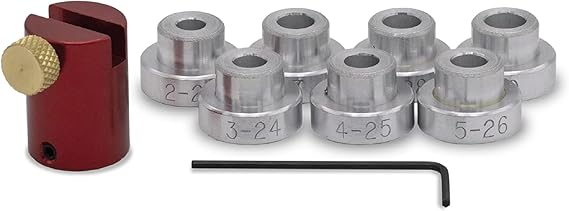
Measuring bullet seating depth with consistent accuracy makes loading rounds feel more precise. The Hornady Lock-N-Load Comparator Body fits reloaders focused on consistent cartridge lengths.
It stands out by measuring seating depth from the bullet ogive, eliminating errors common when measuring from bullet tips.
Setting up requires fitting the comparator body to your caliper and inserting the correct bullet size insert from the set. It works smoothly with calibers ranging from .224 to .308.
Day-to-day use involves swapping inserts for different bullet sizes and checking seating depth quickly. The included Allen wrench helps secure the components firmly, so measurements are repeatable without slipping.
The tool performs its main job of measuring from the bullet ogive well, providing consistent readings to reduce ammunition variance. Built from steel, the comparator is sturdy despite its light weight of 2.88 ounces.
Strong points include precise measurement and durable build. A common complaint involves needing to buy additional inserts separately for calibers outside the included sizes.
Precise measurements from the ogive improve consistency in cartridge length. The steel body holds up well over time, resisting wear from daily use. Additional inserts not included can complicate use for reloaders with uncommon bullet sizes. Setup takes some patience to align the comparator correctly, which can slow initial use.
Reloaders aiming for uniform ammo seating depth will benefit greatly from this comparator. Those who commonly work with calibers outside the included range might consider a kit with more insert options. People wanting a straightforward, rugged measuring tool without investing in extras will find it fits well in their setup.
Pros
- Measures from bullet ogive, not tip, improving repeatability
- Fits broad range of bullet calibers with included inserts
- Attaches securely to standard calipers for easy use
- Constructed from solid steel for durability
Cons
- Additional inserts must be purchased separately
- Setup requires careful alignment for accurate off-center measurement
| Specification | Details |
|---|---|
| Included Inserts | 7 (224, 243, 257, 264, 277, 284, 308 caliber) |
| Material | Steel |
| Item Weight | 2.88 ounces |
| Item Dimensions (LxWxH) | 7 x 4 x 2 inches |
| Package Weight | 0.09 kg |
| Warranty | Limited lifetime |
11. Lee Precision Gunsmithing Tools

Lee Precision Gunsmithing Tools serve anyone who reloads .223 cartridges and wants reliable case resizing with durable tools. Its standout feature is full length resizing with solid steel construction, suited for reloaders who value precision and long-term use.
Setup uses a sizing die designed for .223 Remington cases, fitting standard reloading presses. Resizing lubricant is necessary for smooth operation, which keeps the tool easy to handle without excess wear.
Its compact size means it takes minimal bench space and weighs under 7 ounces, making it easy to store or transport between reload sessions.
The tool resizes cases consistently and holds up well against repeated use due to sturdy steel construction. Green finish aids quick identification within a tool kit.
One strong praise is its durability over time. A frequent complaint comes from those not expecting to supply their own lubricant, which is required for proper function and to reduce friction.
Durability stands out as a key advantage, lasting through many reload cycles without noticeable wear. The main drawback is the necessity to provide your own resizing lubricant, which may surprise those new to full length sizing. Handling remains straightforward once lubricant use is understood.
Reloaders focused on durability and consistent case resizing will be satisfied. Those wanting a complete kit with lubricant included may need to look elsewhere. Ideal for reloaders with some experience and their own supply of case lube.
Pros
- Durable steel construction
- Compact, easy to store
- Precise full length resizing
- Easy to identify green finish
Cons
- Requires separate resizing lubricant
- Not supplied with case lube
| Specification | Details |
|---|---|
| Model Name | Lee Precision 91035: Fl Size Die 223 Rem |
| Material | Steel |
| Item Dimensions (LxWxH) | 4.9 x 1.6 x 1.5 inches |
| Item Weight | 6.88 ounces |
| Color | Green |
| Included Components | Full length resize die for .223 Remington |
12. Cartridge Gauge Reloading 223/308/9mm Cases

Alloy steel construction defines this gauge designed for measuring 223, 308, and 9mm cases. It suits reloaders who value precise case sizing and want a durable, dependable tool.
The biggest strength lies in its simplicity that makes verification quick and straightforward.
Setting up involves inserting a clean, resized case into the gauge. It feels solid in hand, with no sharp edges to contend with.
Daily use revolves around checking case dimensions against the chosen caliber size, which it handles without fuss. The straightforward design keeps it efficient for regular reloading sessions without adding extra steps.
It consistently checks case dimensions for 223, 308, or 9mm with reliable accuracy. The alloy steel build resists wear over time, supporting long-term use.
Some praise the gauge’s lifetime warranty providing lasting trust. A notable complaint involves it sometimes feeling a bit stiff to insert cases initially, which can slow quick inspections.
The tool holds up well over repeated uses thanks to its alloy steel make and has a useful lifetime warranty adding reassurance. Cases sometimes require a firm push during early use, which slows quick checks until the gauge loosens slightly.
Reloaders focused on these three calibers who want a solid, no-nonsense gauge will find it fits their needs well. Reloaders calling for other sizes or softer materials might want to explore different options better suited to those specifics.
Pros
- Made of durable alloy steel for long usage
- Supports three popular calibers in one tool
- Simple, foolproof insertion for case checking
- Lifetime warranty adds confidence in durability
Cons
- Case insertion can feel tight initially
- Limited to just 223, 308, and 9mm calibers
| Specification | Details |
|---|---|
| Material | Alloy Steel |
| Caliber Sizes | 223 / 308 / 9 mm |
| Brand Name | NJE |
| Included Components | Pack |
| Warranty | Life Time |
Best Bullets for 223 Reloading Comparison Table
| Product | Manufacturer | Item Type | Warranty | Included Components |
|---|---|---|---|---|
| Lee Pacesetter .223 Dies | Lee Precision | Gunsmithing tools | 2 years | 905026 |
| Lee Pro 6000 3-Die Set | Lee Precision | 3 Die Set | – | Lee Precision 91932 |
| Lee Micrometer Bullet Seater | Lee Precision | Bullet Seater | check with manufacturer | StorageBox |
| Frankford Quick-N-EZ Puller | Frankford Arsenal | Bullet Puller | 1 year | – |
| MTM RS-100-24 Ammo Box | – | Ammo Box | – | – |
| Lee Challenger 40th Die Set | Lee Precision | 3-Die Set | – | Lee Precision 92139 |
| Lee Pro 4000 Press Kit | Lee Precision | Press Kit | – | Lee Precision 223 Remington |
| Hornady Custom Grade 223 | Hornady | 2-Die Set | Limited Lifetime | 2-Die Set |
| Universal Bullet Reloading Tray | Fit2Print | Reloading Tray | 2 years | Reloading Tray |
| Hornady Lock-N-Load Comparator | Hornady | Comparator | Limited lifetime | 6 pack Comparators |
| Lee Gunsmithing Tools | Lee Precision | Fl Size Die | – | Lee Precision 91035 |
| Cartridge Gauge 223/308/9mm | NJE | Cartridge Gauge | Life Time | Pack |
- ManufacturerLee Precision
- Item TypeGunsmithing tools
- Warranty2 years
- Included Components905026
- ManufacturerLee Precision
- Item Type3 Die Set
- Warranty–
- Included ComponentsLee Precision 91932
- ManufacturerLee Precision
- Item TypeBullet Seater
- Warrantycheck with manufacturer
- Included ComponentsStorageBox
- ManufacturerFrankford Arsenal
- Item TypeBullet Puller
- Warranty1 year
- Included Components–
- Manufacturer–
- Item TypeAmmo Box
- Warranty–
- Included Components–
- ManufacturerLee Precision
- Item Type3-Die Set
- Warranty–
- Included ComponentsLee Precision 92139
- ManufacturerLee Precision
- Item TypePress Kit
- Warranty–
- Included ComponentsLee Precision 223 Remington
- ManufacturerHornady
- Item Type2-Die Set
- WarrantyLimited Lifetime
- Included Components2-Die Set
- ManufacturerFit2Print
- Item TypeReloading Tray
- Warranty2 years
- Included ComponentsReloading Tray
- ManufacturerHornady
- Item TypeComparator
- WarrantyLimited lifetime
- Included Components6 pack Comparators
- ManufacturerLee Precision
- Item TypeFl Size Die
- Warranty–
- Included ComponentsLee Precision 91035
- ManufacturerNJE
- Item TypeCartridge Gauge
- WarrantyLife Time
- Included ComponentsPack
How to Choose the Right Bullet for 223 Reloading
The key factors in picking the right bullet for 223 reloading are weight, shape, and quality consistency. These affect accuracy and how well the bullet performs in your specific rifle. Choosing wisely reduces the risk of jams, wear, and inconsistent shots, saving money and frustration.
Bullet Weight and Grain
Shooting with a bullet that’s too heavy or too light for your setup quickly reveals its impact on both velocity and precision. Heavier bullets typically drop speed but hit with more momentum, making them better for longer ranges or hunting.
Lighter bullets usually fly faster and flatter, which suits target shooting and short-range scenarios. The real difference becomes noticeable when groups start spreading more than expected or you struggle to hit consistently at your usual distance.
Matching the weight with your firearm’s barrel twist rate makes a clear difference in accuracy. Fast twist rates (1:7 or 1:8 inches) handle heavier bullets, typically in the 68-77 grain range, stabilizing them for tighter groups. Slower twists (1:9 or 1:10 inches) work better with lighter bullets around 45 to 55 grains.
Most common setups lean towards one or the other, so double-checking this saves a lot of troubleshooting. Knowing these numbers upfront helps avoid wasted time on loads that don’t perform well and ensures the bullet matches your shooting purpose.
Bullet Construction and Material
Shooting with bullets made from inconsistent materials quickly reveals problems. Variations in hardness or jacket thickness lead to unpredictable behavior downrange and in the barrel.
Full metal jacket types typically provide better penetration but can foul the barrel faster due to harder copper jackets. On the other hand, hollow points expand more reliably on impact but may cause slightly more fouling because of the softer lead exposed at the tip.
Soft point bullets offer a middle ground by balancing expansion and penetration, but their lead tips need proper coating to avoid excessive barrel buildup. Paying attention to construction quality matters most for long shooting sessions. Look for projectiles with consistent jacket thickness and a uniform lead core that aligns tightly with the jacket.
This consistency helps maintain accuracy shot after shot and reduces frequent cleaning needs. Barrel wear also varies; excessive fouling and harder jackets contribute to faster throat erosion.
Many shooters find bullets with copper jackets rated around 90-95% copper and a clean lead core strike the right balance for daily use.
Ballistic Coefficient and Aerodynamics
At longer ranges, even small differences in bullet shape can noticeably affect the flight path. Bullets with a low ballistic coefficient tend to drop more quickly and deviate more from the aim point due to wind. This means shots beyond 300 yards require extra calculations and adjustments.
A higher coefficient usually signals a more streamlined bullet that cuts through the air better, keeping velocity and energy up for longer distances.
Using bullets with a strong aerodynamic profile makes shooting more predictable, especially in variable wind conditions. Experienced reloaders often look for a ballistic coefficient above 0.3 when precision at 500+ yards matters.
Materials and seating depth can also tweak performance, but the shape and profile largely define how well the bullet resists drag. Ignoring this factor leads to frustrating patterns, more frequent zeroing, and less confidence on the range.
Reloading Compatibility and Ease
Choosing projectiles that match standard powder charges and primer types makes a noticeable difference during reloading sessions. Mismatched components often lead to inconsistent pressure and unpredictable velocity, which affect accuracy and safety. Ideal picks work smoothly with popular small rifle primers and typical powders like Varget or CFE 223, without requiring extensive recipe tweaking.
Staying within recommended pressure limits and using projectiles with uniform bearing surfaces ensures predictable ballistics, especially important for shooters who reload frequently with varying loads.
Uniformity in size and weight plays a critical role in the reliability of each round. Variations greater than ±0.5 grains or +/−0.001 inches in diameter can cause feeding jams or affect group sizes downrange.
Well-made options have tight tolerances, usually ±0.001 inch for diameter and ±0.2 grains for weight, which makes each reload more consistent. Handling also matters a lot. Bullets with smooth jackets and well-formed tips seat evenly without burrs or jagged edges.
This reduces the chance of tips bending or getting damaged during seating, which can otherwise lead to headaches later on during loading or shooting.
Safety and Barrel Life Impact
Many reloaders have faced barrel fouling that builds up faster than expected, often traced back to using bullets not suited for their particular rifle. Overpressure incidents can happen quietly, causing wear or even risking damage. Choosing the right bullet hardness is crucial since too soft a material can cause excessive leading, while too hard might accelerate barrel erosion.
For common rifle calibers, bullets with a Brinell hardness around 15 to 20 tend to strike a good balance. Copper-jacketed bullets with a well-established hardness rating usually pose less risk in daily shooting routines.
Not all bullets safely handle the standard pressure limits of rifles chambered for this round. Exceeding these can result in pressure signs like flattened primers or sticky cases, which often lead to unsafe shooting conditions and shortened barrel life. Bullets designed to meet SAAMI or CIP specifications usually ensure compliance with safe operating pressures.
Paying attention to bullet diameter matching barrel groove size and avoiding unusual materials like pure lead or excessively hard alloys helps maintain firearm integrity over thousands of rounds.
Optimizing Bullet Seating Depth for Improved Accuracy
Bullet seating depth plays a critical role in fine-tuning the accuracy of your .223 reloads. Seating the bullet too deep can cause excessive pressure, while too shallow a seating depth may lead to inconsistent powder burn and unreliable velocities. It helps to measure the cartridge overall length (COL) and compare it to your rifle’s chamber specifications.
Often, starting with a seating depth that places the bullet’s ogive just off the rifling lands, a distance known as the “jump”, allows for consistent bullet alignment and improved group sizes.
Key points to consider when adjusting seating depth:
- Use a bullet comparator to measure seating consistency rather than relying solely on cartridge length.
- Small increments, such as 0.005 inch adjustments, can significantly impact accuracy.
- Test your loads at different depths while noting velocity and group size to find the optimal setting.
- Be mindful that changes in seating depth can alter pressure, requiring careful observation and possibly adjusting powder charges.
Practicing consistent seating depth along with proper case preparation leads to more reliable and repeatable shot placement.
Common Reloading Mistakes to Avoid with .223 Bullets
One key mistake is inconsistent powder charges. Using different amounts of powder in each round can cause unpredictable velocities and pressures, which impact accuracy and safety.
Weigh each charge carefully and use a reliable scale for consistency.
Another common issue is seating bullets too deep or too shallow in the case. Seating depth affects overall cartridge length, which influences how the bullet engages the rifling.
Too deep, and you may increase pressure; too shallow, and feeding problems in semi-automatic rifles can occur.
Here are some more pitfalls to watch out for:
- Failing to clean cases thoroughly before reloading can lead to poor primer seating and inconsistent ignition.
- Not checking brass for cracks or deformities increases the risk of case failure during firing.
- Mixing different brands or types of powder and primers without testing can cause unpredictable performance.
Attention to these details helps maintain reliable performance and safety when reloading .223 bullets.
Comparing Jacketed and Cast Bullets for Different Shooting Applications
Jacketed bullets are often preferred for high-velocity shooting because their copper jackets reduce barrel fouling and maintain structural integrity at higher speeds. This makes them suitable for target shooting and hunting medium to large game, where consistent expansion and penetration are needed.
Cast bullets, on the other hand, offer distinct advantages at lower velocities. Typically made from lead alloys, these bullets are softer and can provide better accuracy in slower loads. They’re popular for plinking, target practice, and certain specialized hunting scenarios where reduced velocity limits barrel wear and improves shooting comfort.
- Jacketed bullets handle heat and velocity better, making them ideal for rapid-fire and longer-range shots.
- Cast bullets are more economical and easier to mold for custom weights and shapes.
- Cleaning frequency varies; jacketed bullets generally require less maintenance due to reduced fouling.
- Cast bullets may deform more in magazine-fed firearms, so they suit single-shot or revolver-style actions better.
People Also Asked
What Is the Best Way to Clean and Care for 223 Bullets?
The best way to clean 223 bullets is to use a soft brass or nylon brush with mild soapy water to remove debris without damaging the bullet surface. Avoid harsh abrasives that can deform or wear the bullet. After cleaning, dry bullets thoroughly and store them in a cool, dry place to prevent corrosion.
How Do I Size Bullets Correctly for 223 Reloading?
Bullets are sized during the case resizing step rather than by changing bullet diameter. Make sure the cartridge neck is resized properly to hold the bullet tightly without deformation. Using the correct die and checking bullet seating depth with calipers ensures consistent performance.
Are 223 Bullets Compatible with All Standard Barrel Types?
223 bullets generally work with all standard barrels chambered for .223 Remington or 5.56 NATO, but bullet type and weight must match barrel twist rate for accuracy and stability. Heavier bullets usually need faster twist rates, so check your barrel specifications before selecting bullets.
How Many Rounds Can a 223 Bullet Be Safely Reloaded?
The bullet itself can typically be used only once because the jacket can deform upon firing, affecting accuracy and safety on reuse. However, brass cases can be reloaded multiple times, often between 5 and 10, if inspected carefully for signs of wear or damage after each firing.
What Common Problems Should I Avoid When Reloading 223 Bullets?
Prevent common issues by avoiding improper bullet seating depth, which can cause pressure problems or feeding failures. Make sure the primer and powder charges are consistent, and always check for signs of damaged bullets or mismatched components before loading. Using proper tools and paying attention to detail reduces mistakes.
Conclusion
Choosing the right bullet for .223 reloading mainly depends on the intended use, such as target shooting or hunting, and the bullet weight you prefer. Accuracy and reliability are key, so focus on bullets that provide consistent performance and match the specifications of your rifle. The bullet material and construction also matter, affecting both barrel wear and terminal ballistics.
Consider how often you’ll be reloading and the available space for storage, along with your budget, to avoid overspending or running out of supplies quickly. Check the comparison table and the detailed picks above to find the bullet that aligns best with your specific needs and shooting purposes.