Top 12 Best Beginner Bushcraft Knife for Easy Outdoor Use
Handling a bushcraft knife that bends, chips, or simply feels awkward in hand can quickly turn a practical task like making kindling or carving a handle into a frustrating experience. Knowing the best beginner bushcraft knife to start with can make all the difference in tackling outdoor projects with confidence and ease. It’s a tool that should work well straight out of the box, without needing constant sharpening or adjustment.
The difference between a reliable beginner bushcraft knife and a poor one often comes down to blade steel, size, and handle design. A good knife typically features carbon or stainless steel in the 3-5 mm thickness range, offering durability without excess weight. Blade length usually sits between 3 to 5 inches, balancing control and utility.
The handle should fit comfortably in your hand and provide a secure grip, made from materials that resist moisture and are easy to clean after use outside.
Need a Quick Check?
| Image | Product | Price |
|---|---|---|
Our Top Picks 1  | BPSKNIVES Adventurer | Check Price |
Our Top Picks 2  | BPSKNIVES Bushmate 2.0 | Check Price |
Our Top Picks 3  | Gerber Ultimate Knife | Check Price |
Our Selected Top 12 Beginner Bushcraft Knife Picks for Every Need
This list includes a variety of beginner-friendly bushcraft knives that cover different needs and budgets. Each review explains how the knife performs in outdoor tasks, highlights its strengths and weaknesses, and points out who it suits best based on its features and build.
1. BPSKNIVES Adventurer Fixed-Blade Bushcraft Knife
Handling woodwork or camp chores requires a dependable knife with a sharp blade and solid grip. The BPSKNIVES Adventurer Fixed-Blade Bushcraft Knife suits beginners who want a tool that performs well outdoors and feels balanced in hand. Its full tang carbon steel blade delivers sharpness and durability right out of the box.
Setting up involves wiping off the gun oil to prevent rust, as the high carbon steel blade needs careful storage. The walnut handle is coated with Danish oil, making it resistant to moisture and dirt, which is useful during outdoor activities. The leather sheath includes a ferro rod, so carrying the knife on your belt or packing it in a backpack keeps it ready for use and fire-starting.
With a 135 mm blade hardened to 56-57 HRC, the knife cuts precisely for detailed bushcraft tasks. The walnut handle provides a comfortable grip and can be unscrewed for cleaning to remove dirt buildup.
Most praise points to its sharp edge and sturdy balance. The main complaint involves the blade needing rinsing and drying after use to avoid rust as carbon steel is prone to corrosion.
The blade remains sharp straight from the box and handles most bushcraft tasks well. The need to clean and dry the blade thoroughly after each use stands out as a routine users must maintain to keep it in good condition. The handle’s ability to come apart makes cleaning easier but requires occasional tightening.
People seeking a reliable, sharp knife with a classic wooden handle will find satisfaction here. Those unwilling to care for carbon steel blades or needing a fully corrosion-resistant knife might want to consider different materials. Its fire-starting ferro rod is a practical inclusion for outdoor enthusiasts wanting a versatile tool.
Pros
- Sharp blade with true Scandi grind out of the box
- Balanced feel for controlled cutting
- Handle resistant to moisture and dirt
- Includes ferro rod for fire-starting
Cons
- Blade requires careful drying to prevent rust
- Handle screws may loosen over time
| Specification | Details |
|---|---|
| Blade length | 5 1/3 inches (135 mm) |
| Total length | 10 inches (255 mm) |
| Blade material | High 1066 carbon steel |
| Handle material | Walnut wood coated with Danish oil |
| Blade hardness | 56-57 HRC |
| Weight with sheath and Ferro Rod | 10.2 oz (290 grams) |
2. BPSKNIVES Bushmate 2.0 Fixed-Blade Bushcraft Knife
Sharpness and size matter most for bushcraft knives, and a 3.9-inch carbon steel blade gives plenty of cutting power in a compact package. Designed for beginners who want a reliable tool for outdoor chores, this knife offers solid control through its walnut handle and the right blade thickness to handle woodwork and camp tasks.
Handling the knife daily feels comfortable thanks to a handle shaped for a secure grip, coated with Danish oil to resist moisture. The knife’s moderate weight of about 5.22 ounces without the sheath keeps it easy to carry and use for extended periods.
It fits well in hand for detailed work like carving and general camp preparation, plus the included sheath with a fire starter adds practical value for outdoor setups.
Cutting through sticks or preparing food works reliably with the 1066 carbon steel blade, known for holding a sharp edge for a very long time. The full tang construction offers strength without feeling heavy. People appreciate the strong and sturdy walnut handle.
Some note the handle can feel a little slick when wet, which could be a drawback in damp conditions.
Many find the blade’s sharpness and staying power impressive, making wood carving and camp prep straightforward. The handle’s polish and oil finish look great but can cause a less secure grip if hands get wet or sweaty. These trade-offs define daily use and handling quality sharply.
Anyone starting with bushcraft and wanting a solid fixed blade around 4 inches will appreciate this knife’s balance and sharpness. Those needing a heavier or thicker blade for batoning large logs might need a sturdier option. Its moderate weight and handle design suit hiking and small game processing well.
Pros
- Carbon steel blade stays sharp for a very long time
- Compact size suits detailed cutting tasks
- Walnut handle feels solid and fits well in hand
- Includes sheath and fire starter for outdoor use
Cons
- Handle can feel slippery when wet
- Blade width may limit heavy chopping tasks
| Specification | Details |
|---|---|
| Total Length | 8.7 inches (220 mm) |
| Blade Length | 3.9 inches (98 mm) |
| Blade Thickness | 0.11 inches (3 mm) |
| Blade Material | Carbon 1066 steel |
| Handle Material | Walnut wood with Danish oil |
| Weight (with sheath and fire starter) | 8.8 oz (250 grams) |
3. Gerber Ultimate Fixed Blade Knife
People new to bushcraft and outdoor survival benefit from a knife that covers multiple tasks without complex parts. A sturdy tool for hunting, fishing, and camping that handles cutting and survival tasks smoothly stands out here. The Gerber Ultimate Fixed Blade Knife offers a solid all-in-one package built to perform reliably in rough conditions.
Setting up the knife is simple, its sheath stores essential survival gear like a sharpener and fire starter. The handle’s textured rubber grip stays firm even when wet or dirty.
Carrying it is comfortable with a 10-inch overall length and a manageable 11.02-ounce weight. The half-serrated blade adds versatility for slicing or sawing, handy for various outdoor needs.
With a drop point stainless steel blade, the knife holds an edge well on wood and rope but is not suited for heavy batoning. Its materials feel durable, supported by a hammer pommel that adds a striking option. Positive remarks highlight the well-thought-out sheath and integrated tools, while a common critique points to the blade being shorter than some prefer for larger survival tasks.
Built-in survival tools like the firestarter and sharpener receive high marks for keeping essentials close. The blade’s size and shape suit precision work, but the length can limit efficiency in larger tasks. The grip’s secure hold in any outdoor condition gets positive attention, enhancing confidence in wet or slippery environments.
Beginners who value multi-functionality in a single tool will find this knife practical and adaptable. Outdoor enthusiasts needing a longer blade for chopping or batoning might want to consider alternatives with extended blade lengths. Those prioritizing compactness and survival features will appreciate its carefully designed sheath and gear integration.
Pros
- Includes integrated sharpener and fire starter
- Textured rubber grip stays secure when wet
- Compact size fits well in outdoor gear
- Hammer pommel adds multi-use function
Cons
- Blade length may feel short for heavy chopping
- Sheath can be bulky for some users
| Specification | Details |
|---|---|
| Blade length | 4.8 inches |
| Overall length | 10 inches |
| Weight | 11.02 ounces |
| Blade type | Half-serrated, stainless steel drop point |
| Included accessories | Sheath with sharpener, firestarter, whistle |
4. BeaverCraft Bushcraft Fixed-Blade Knife BSH4F

Strong build and practical features put this knife ahead for beginners in bushcraft. It suits those starting outdoor survival skills who need a reliable, easy-to-handle tool with fire-starting capability.
Its full-tang design stands out for strength and balance during tough outdoor tasks.
The leather sheath with two belt loops makes carrying straightforward and secure, while the built-in ferro rod adds genuine utility beyond cutting. 1066 carbon steel blade is thick enough at 3.5 mm to handle carving and chopping without bending, and the metal plating protects well against rust during damp conditions.
Jimping on the back gives good grip control in varied hand positions.
Sharpness holds up due to the 58-60 HRC hardness, allowing precise slicing and carving. Solid construction prevents any blade play, reassuring for beginners learning control.
Common praise highlights the dependable fire starter and durable blade. A frequent complaint is the sheath’s leather rubbing off on clothing after repeated use, requiring some extra care when carrying.
The fire starter integrated into the knife receives praise for working well when sparks are needed quickly. The blade sharpness stays effective after multiple uses, but the leather sheath’s rubbing can cause some inconvenience and requires caution to avoid staining clothes. The knife feels well balanced and sturdy during typical outdoor activities.
Anyone starting with bushcraft skills and needing a tough, versatile blade will find it fits well. Those wanting a low-maintenance sheath or a thinner blade might consider other options. It’s designed for hands-on tasks, carving, and reliable fire starting, making it a solid companion for camping or survival practice.
Pros
- Strong full-tang design for balance and durability
- Ferro rod included for reliable fire starting
- Blade resists rust with metal plating
- Jimping adds finger traction for control
Cons
- Leather sheath can rub off on clothing
- Blade requires maintenance to prevent surface wear
| Specification | Details |
|---|---|
| Blade Steel | 1066 Carbon Steel |
| Blade Thickness | 3.5 mm (0.14 inches) |
| Blade Hardness | 58-60 HRC |
| Handle Type | Full-Tang |
| Included | Knife, Fire Starter, Leather Sheath |
| Sheath Attachment | Two Belt Loops |
5. Morakniv Companion Fixed Blade Outdoor Knife
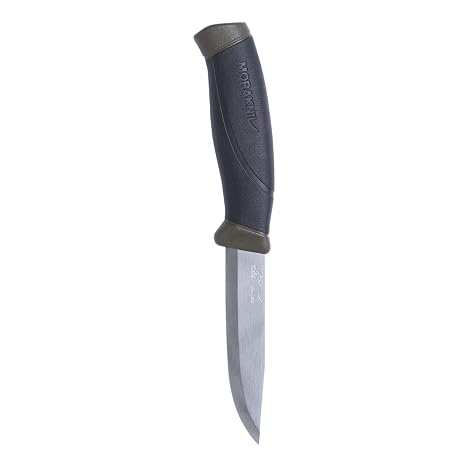
Morakniv Companion Fixed Blade Outdoor Knife suits those starting out with bushcraft or camping. It stands out for a sharp, rust-resistant blade that handles carving and food prep reliably, making it a practical choice for outdoor use.
Setting up involves simply clipping the plastic sheath to your belt or backpack. The ergonomic polymer handle offers a soft friction grip and finger guard that feels secure during use, even in wet conditions.
Its lightweight design helps avoid fatigue during long hikes or extended use around camp.
The 0.08-inch thick Sandvik 12C27 stainless steel blade cuts through wood and tinder efficiently and holds an edge well over time. The handle’s texturing prevents slips, but some find the plastic sheath less sturdy or prone to scratching. The knife’s simplicity supports straightforward maintenance and quick cleaning.
The blade’s long-lasting sharpness receives strong praise for carving and food prep outdoors. The high-friction handle adds safety in all weather conditions. Common feedback points to the protective sheath being prone to scratches and less durable for rough handling. Qualities make it suited for steady, general bushcraft use.
People new to bushcraft or requiring a straightforward, reliable blade will find satisfaction here. Those needing a bigger knife for heavy chopping or a sturdier sheath might prefer alternatives designed for tougher, extended outdoor demands.
Pros
- Sharp blade resists rust during extended outdoor use
- Comfortable handle with high-friction grip for wet weather
- Lightweight and easy to carry on belt or pack
- Simple maintenance keeps blade reliable over time
Cons
- Plastic sheath may scratch or wear under heavy use
- Blade length limited for larger chopping tasks
| Specification | Details |
|---|---|
| Blade thickness | 0.08 inch (2.0 mm) |
| Blade length | 4.1 inches (104 mm) |
| Total length | 8.5 inches (217 mm) |
| Weight with sheath | 3.9 ounces (110 g) |
| Blade material | Hardened Sandvik 12C27 stainless steel |
6. ONETIGRIS TrailForge Fixed Blade Knife

Feels well balanced and solid in hand, suited for beginners who want a reliable knife for everyday outdoor tasks. Its strongest feature is the full-tang construction, which provides strength and durability, making it a useful tool for chopping and detailed work.
Setting up involves slipping the sheath on a belt or backpack, with the PP sheath offering easy carry. The handle is comfortable with a non-slip grip from the PP+TPR composite, which handles moisture and use without cracking. Maintenance includes regular sharpening with the simple ScandiGrind edge, which lets you keep the blade sharp without complex angle adjustments.
The blade performs well for wood and rope cutting, thanks to the sharp single bevel Scandi grind shape and mid-high carbon steel edge. It handles impact and resist chipping during tougher cutting tasks. The most noted praise is its blade sharpness and impact resistance; the main complaint is the need for regular maintenance to prevent rust and keep the handle in good condition.
The sharpness and toughness of the Japanese AUS-8 steel blade stand out clearly during tasks like rope cutting or fine wood shaving. The full-tang structure adds to the durability, but the handle’s composite material can need attention to prevent cracking or material wear over time. Regular blade cleaning is advisable to maintain moderate rust resistance.
Anyone starting out in bushcraft or camping will appreciate the solid build and easy edge maintenance, making it suitable for everyday use and outdoor cooking prep. More experienced users looking for premium rust-proof materials or heavier blades for very large tasks might want to consider knives with higher-end steel or thicker blades.
Pros
- Full-tang design for extra strength
- Easy to sharpen ScandiGrind blade
- Non-slip, comfortable handle grip
- Broad blade resists chipping well
Cons
- Requires regular maintenance to avoid rust
- Handle flexibility may feel unusual to some
| Specification | Details |
|---|---|
| Blade Material | Japanese AUS-8 mid-high carbon steel |
| Blade Length | 4.06 inches / 103 mm |
| Overall Length | 8.83 inches / 224 mm |
| Blade Thickness | 0.13 inches / 3.2 mm |
| Weight | 5.65 oz / 160 g |
| Handle Material | PP+TPR composite |
7. Condor Tool and Knife Bushlore Bushcraft Knife
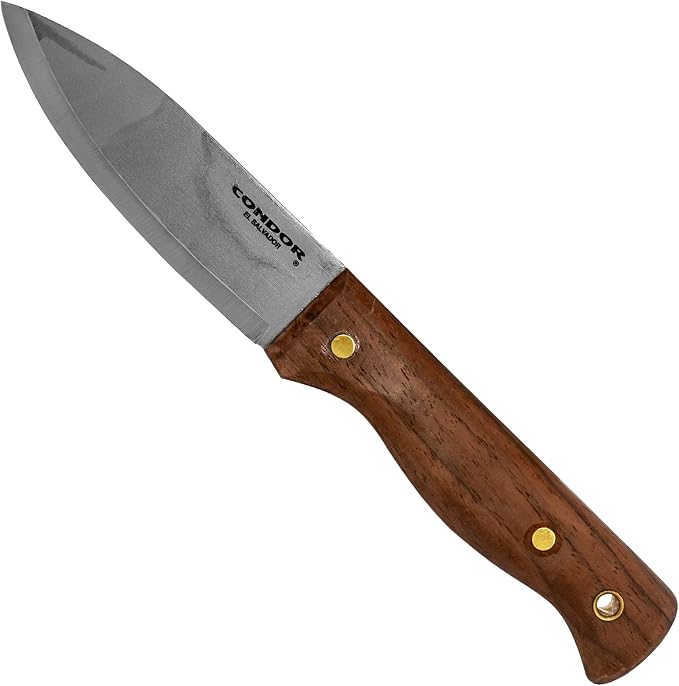
Great for beginners stepping into bushcraft, the Condor Tool and Knife Bushlore provides solid durability and a comfortable grip. Its standout feature lies in the high carbon steel blade that holds an edge well for various outdoor tasks.
Setting up involves no extra effort beyond unpacking since it arrives ready to use with a handmade leather sheath. The walnut handle fits well in your hand, allowing control during detailed carving or rougher work like cutting firewood. Carrying it is convenient and safe, thanks to the protective sheath designed to secure the blade while you’re on the move.
Designed with a 1075 high carbon steel blade and a scandi grind, this knife performs well in carving, gutting, and shelter building. The hardwood handle adds to the durability and grip comfort over long use. The strongest praise highlights its sturdy build and sharpness, while the common complaint notes the blade finish can show scratches from heavy use.
The knife is praised for its durable high carbon steel blade that holds sharpness across different outdoor activities. Scratches on the blasted satin finish appear with regular chopping but do not impact cutting performance. The handmade leather sheath effectively protects the blade during transport and storage without adding bulk.
People new to bushcraft will appreciate the manageable size and simple design which suits common camp tasks well. Those needing a larger or multitool blade, or who prefer stainless steel options, might want to consider other models for heavier duty work or corrosion resistance.
Pros
- Sharp edge holds well through various cutting tasks
- Comfortable walnut handle improves grip security
- Handcrafted leather sheath offers dependable blade protection
- Scandi grind allows precise carving and whittling
Cons
- Blade finish shows scratches under heavy use
- Handle may feel small for larger hands
| Specification | Details |
|---|---|
| Blade Material | 1075 High Carbon Steel |
| Handle Material | Walnut Hardwood |
| Blade Finish | Blasted Satin |
| Included Components | Bushlore Knife with Leather Sheath |
| Model Number | 60004 |
8. BPSKNIVES Finn Lite Puukko Fixed-Blade Knife

Carbon Steel 1066 forms the blade of this traditional-style puukko knife designed for anyone starting bushcraft or outdoor carving. Its Scandinavian grind and straightforward shape make it precise and simple to handle, which appeals most to people new to outdoor knives who want solid build and sharpness without extra fuss.
Setting up involves slipping the knife into a handmade leather sheath, which fits vertically on a belt or strap for quick access. The wooden handle fits snugly in the hand, letting you carve or cut for extended periods without discomfort.
Straight blade edges excel at fine work like creating kindling or preparing food, making small camp chores more efficient.
It slices and carves wood cleanly thanks to the sharp edge held by the 1.8-2 mm thick carbon steel blade. The wooden handle feels natural but may not be ideal in very wet conditions.
Comments praise how sharp it arrives right out of the box, though some mention rust risk from carbon steel if not dried and oiled properly after use.
The blade sharpness is noted as excellent right out of the box, making it ready for delicate carving or hard use immediately. However, the carbon steel needs careful cleaning and oiling to avoid rust, a common point brought up in feedback. The wooden handle is praised for comfort but not ideal in damp or rainy conditions.
People wanting an easy-to-handle, precise bushcraft knife for carving and light outdoor tasks will find it fits well. Those looking for a blade that requires less maintenance or handles wet conditions better might consider alternatives with stainless steel or synthetic handles.
Pros
- Razor-sharp from the start without extra sharpening
- Comfortable wooden handle for extended use
- Leather sheath allows secure, vertical belt carry
- True Scandinavian grind for precise cutting
Cons
- Carbon steel prone to rust without regular maintenance
- Wood handle can be slippery when wet
| Specification | Details |
|---|---|
| Blade Material | Carbon Steel 1066 |
| Blade Length | 80 mm (3.2 inches) |
| Blade Thickness | 1.8-2 mm (0.08 inches) |
| Total Length | 178 mm (7 inches) |
| Handle Length | 98 mm (3.8 inches) |
| Included Components | Leather sheath |
9. Hunting Fixed Blade Survival Knife with Sheath

Sharp, full tang 440C stainless steel blade stands out for durability and edge retention. Suited for beginner to intermediate outdoor enthusiasts needing a solid, reliable knife for bushcraft tasks. The balanced weight and rubber handle make it comfortable for extended use without fatigue.
Carrying the knife is straightforward thanks to the included Cordura sheath with a sturdy belt loop for close access on hikes or camps. The rubber handle offers good grip even in wet conditions, and cleaning the blade after use is simple due to the satin finish that resists rust and staining.
Blade thickness and quality steel make it effective for cutting, carving, and basic survival tasks. The knife feels well-built, with no wobble in the handle or blade. A strong point is how it holds an edge during repeated use.
Some found the sheath’s retention a bit tight, making quick drawing slower at times.
The blade is praised for holding its edge well during outdoor tasks, making it dependable for cutting and carving. The sheath keeps the knife secure but sometimes requires extra effort to draw, slowing down quick use moments. Grip comfort stands out positively, but some find the handle size less suited for smaller hands.
A person wanting a strong, straightforward knife for camping or bushcraft with decent weight and grip will appreciate this tool. Those needing faster sheath access or a slimmer handle might look for alternatives better tailored to quick deployment or smaller grips.
Pros
- Strong full tang blade for durability
- Comfortable rubber handle grip
- Includes solid Cordura sheath with belt loop
- Moderate weight aids control and portability
Cons
- Sheath retention can be too tight for quick access
- Handle can feel a bit bulky for small hands
| Specification | Details |
|---|---|
| Blade Material | 440C Stainless Steel |
| Blade Length | 4.45 in |
| Overall Length | 8.86 in |
| Weight | 7.05 oz |
| Handle Material | Durable Rubber |
| Sheath Material | Cordura |
10. FLISSA Survival Tactical Bowie Knife
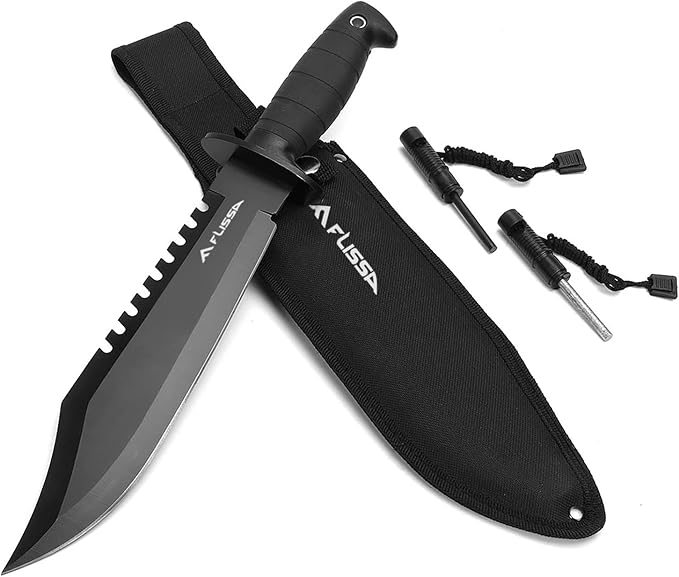
Ideal for camping or survival training, the FLISSA Survival Tactical Bowie Knife offers a strong, durable build with a long 10-inch blade. It suits anyone needing a solid fixed blade knife for tough outdoor tasks.
Its main strength lies in a sharp, rust-resistant stainless steel blade paired with a practical sheath and fire-starting tool.
Unpacking includes the knife with a rubber handle designed for a secure grip even in wet conditions. The sheath attaches easily to a belt with a quick-release fastening for safe carry. The built-in fire starter adds convenience when outdoors.
Daily sharpening works well with the included sharpener to maintain blade performance.
The 15-inch knife performs strongly in cutting, hunting, and survival scenarios thanks to the clip point blade’s sharpness and saw back. The stainless steel blade resists rust after wet use. The soft rubber handle keeps grip secure, but some find the knife a bit heavy at 16.8 oz.
The sheath is practical but not padded, so care is needed carrying it.
Sharpness and durability stand out with a blade that holds its edge well and resists rust, praised for outdoor use. Some users note the knife’s weight as a drawback during long treks, making it less comfortable for continuous carry.
The knife fits well for campers, hunters, and survivalists who want a long, reliable blade with fire-starting tools included. Those seeking a lighter tool or softer sheath options might prefer a different model designed for easier all-day carry.
Pros
- Rust-resistant stainless steel blade
- Non-slip rubber handle
- Includes fire starter and sharpener
- Heavy-duty, belt-ready sheath
Cons
- Weight may feel heavy for long carry
- Sheath lacks extra padding for blade protection
| Specification | Details |
|---|---|
| Overall Length | 15 inches |
| Blade Length | 10 inches |
| Blade Thickness | 5/32 inch |
| Weight | 16.8 oz |
| Blade Material | Stainless Steel |
| Handle Type | Soft Rubber |
11. Morakniv Companion Carbon Steel Fixed-Blade Knife

Finding a reliable but simple knife for camping, fishing, or hiking can be challenging. The Morakniv Companion Carbon Steel Fixed-Blade Knife fits well into everyday outdoor use with its strong 1095 carbon steel blade.
It suits people who need a straightforward, durable knife without extra features getting in the way.
Setup means sliding the knife into a plastic sheath with a belt clip, so carrying it on a belt or backpack strap is quick. The handle’s soft friction grip helps hold the knife steady even when hands are wet or cold. The 4.1-inch blade size strikes a balance between control and cutting power, making it comfortable for various tasks outdoors.
The thick 0.08-inch carbon steel blade holds an edge well and cuts through wood, rope, and fish with ease. The polymer handle includes a finger guard for safety and feels solid in hand. Some reports mention the blade’s edge requires regular sharpening, but the blade’s strength and stability during use get consistent praise.
Performance praised highly focuses on blade strength and cutting ability, especially in wood and outdoor tasks. Most users note the carbon steel blade requires attention to maintain sharpness. The handle grips well even in damp conditions, which adds to safe regular use.
Anyone new to bushcraft or needing a solid, basic cutting tool will find this knife reliable and easy to manage. Those seeking a low-maintenance blade or slimmer sheath might explore other options with stainless steel or different carry designs. This tool excels at straightforward outdoor utility tasks without extras.
Pros
- Strong carbon steel blade holds sharp edge well
- Ergonomic polymer handle with finger guard for safety
- Lightweight sheath with belt clip included
- Blade thickness adds durability and cutting strength
Cons
- Blade edge needs frequent sharpening
- Polymer sheath may feel bulky on smaller belts
| Specification | Details |
|---|---|
| Blade thickness | 0.08 inch (2.0 mm) |
| Blade length | 4.1 inches (104 mm) |
| Total length | 8.5 inch (217 mm) |
| Net weight with sheath | 3.9 ounces (110 g) |
| Blade material | 1095 carbon steel |
12. Morakniv Carbon Steel Fixed-Blade Bushcraft Knife

4.3 inches of carbon steel blade thickness tuned for durability and sharpness fits well for anyone starting bushcraft. The blade’s tungsten DLC coating stands out as the biggest strength, providing good resistance to rust and wear in damp outdoor environments. It suits beginners looking for a reliable, straightforward knife for general bushcraft tasks.
Setting it up includes attaching the black plastic sheath to your belt via its loop, keeping it handy and secure during hikes or camp chores. The high-friction rubber grip on the handle makes feeding wood or blade work feel controlled and steady. The fire starter feature ground into the spine means you can easily produce sparks without needing extra tools, saving time and effort when building a fire.
Cutting and carving feel precise thanks to the 3.2 mm blade thickness paired with a razor-sharp edge. The knife holds up well under repeated use, with the carbon steel blade sharpened to a fine edge but prone to surface rust if not dried properly. Its most praised feature is the handle’s comfort and grip.
The main complaint involves the black plastic sheath which some find less durable under heavy use.
The grip on the handle receives consistent praise for comfort and control, helping with precision work in the outdoors. The main point of concern lies with the sheath, as it can show wear and damage under tougher conditions, which may affect long-term carrying security.
Those new to bushcraft looking for a durable, sharp blade with ergonomic handling will find this knife very practical. People planning to work in consistently wet or rugged settings might consider a sheath upgrade or a different model with more weatherproof sheath materials.
Pros
- Solid carbon steel blade with corrosion resistance
- Spine prepared for striking fire starter
- Ergonomic, rubberized handle for secure grip
- Belt loop sheath keeps knife accessible
Cons
- Blade needs regular drying to avoid rust
- Plastic sheath may wear out faster than expected
| Specification | Details |
|---|---|
| Blade length | 4.3 inches (109 mm) |
| Blade thickness | 0.125 inch (3.2 mm) |
| Total length | 9.1 inches (232 mm) |
| Weight with sheath | 5.7 oz. (162 g) |
| Blade coating | Tungsten DLC anti-corrosive black |
Best Beginner Bushcraft Knives Comparison Table
| Product | Recommended Uses | Included Components | Warranty | Manufacturer |
|---|---|---|---|---|
| BPSKNIVES Adventurer | Bushcrafting, Outdoor, Camping, Fishing | Sheath with Ferro Rod | – | BPS Knives |
| BPSKNIVES Bushmate 2.0 | Bushcrafting, Outdoor, Camping, Fishing | Sheath | – | BPSKNIVES |
| Gerber Ultimate Knife | Bushcrafting, Camping, Carving, Fishing | Knife, Sheath, Sharpener, Firestarter, Whistle | Limited Lifetime Warranty | Gerber |
| BeaverCraft BSH4F | Camping, Hiking, Survival, Carving | Knife, Fire Starter, Leather Sheath | – | BeaverCraft |
| Morakniv Companion | Military, Outdoor | Companion MG Army Model | – | Industrial Revolution |
| ONETIGRIS TrailForge | Outdoor | Sheath | – | ONETIGRIS CAMPING |
| Condor Tool Bushlore | Camping | Bushlore Knife | Manufacturer Warranty | Condor |
| BPSKNIVES Finn Lite | Camping, Hiking | Sheath | – | BPS Knives |
| Hunting Survival Knife | Camping, Kitchen, Military, Outdoor | Sheath | – | Grand Way |
| FLISSA Tactical Bowie | Camping, Hiking, Hunting | Knife, Vagina, Blade, Lighter | – | FLISSA |
| Morakniv Companion Carbon | Bushcrafting | Companion MG Carbon Steel | Limited Lifetime Manufacturer’s Warranty | Industrial Revolution |
| Morakniv Carbon Bushcraft | Bushcrafting | Indrev Morakniv Bushcraft Black | Manufacturer Warranty | Industrial Revolution |
- Recommended UsesBushcrafting, Outdoor, Camping, Fishing
- Included ComponentsSheath with Ferro Rod
- Warranty–
- ManufacturerBPS Knives
- Recommended UsesBushcrafting, Outdoor, Camping, Fishing
- Included ComponentsSheath
- Warranty–
- ManufacturerBPSKNIVES
- Recommended UsesBushcrafting, Camping, Carving, Fishing
- Included ComponentsKnife, Sheath, Sharpener, Firestarter, Whistle
- WarrantyLimited Lifetime Warranty
- ManufacturerGerber
- Recommended UsesCamping, Hiking, Survival, Carving
- Included ComponentsKnife, Fire Starter, Leather Sheath
- Warranty–
- ManufacturerBeaverCraft
- Recommended UsesMilitary, Outdoor
- Included ComponentsCompanion MG Army Model
- Warranty–
- ManufacturerIndustrial Revolution
- Recommended UsesOutdoor
- Included ComponentsSheath
- Warranty–
- ManufacturerONETIGRIS CAMPING
- Recommended UsesCamping
- Included ComponentsBushlore Knife
- WarrantyManufacturer Warranty
- ManufacturerCondor
- Recommended UsesCamping, Hiking
- Included ComponentsSheath
- Warranty–
- ManufacturerBPS Knives
- Recommended UsesCamping, Kitchen, Military, Outdoor
- Included ComponentsSheath
- Warranty–
- ManufacturerGrand Way
- Recommended UsesCamping, Hiking, Hunting
- Included ComponentsKnife, Vagina, Blade, Lighter
- Warranty–
- ManufacturerFLISSA
- Recommended UsesBushcrafting
- Included ComponentsCompanion MG Carbon Steel
- WarrantyLimited Lifetime Manufacturer’s Warranty
- ManufacturerIndustrial Revolution
- Recommended UsesBushcrafting
- Included ComponentsIndrev Morakniv Bushcraft Black
- WarrantyManufacturer Warranty
- ManufacturerIndustrial Revolution
How to Choose the Right Beginner Bushcraft Knife
Choosing the right beginner bushcraft knife depends on blade size, steel quality, and handle comfort. A well-balanced blade with durable steel lasts longer, while a comfortable grip reduces hand fatigue during tasks. Getting these features right prevents frequent replacements and makes outdoor activities easier.
Blade Material and Edge Retention
Spending a weekend camping or on a long hike quickly reveals the importance of a blade that won’t rust or lose its edge after cutting wood or rope repeatedly. Some steels get dull fast, forcing frequent sharpening and risking damage to your project or delays in essential tasks like food prep.
A blade made from corrosion-resistant carbon steel or stainless steel offers a solid balance. The edge retention of the blade directly affects how long it stays sharp through sustained use, which reduces the need to carry sharpening tools or stop working.
Daily handling often exposes these blades to moisture, dirt, and rough surfaces. Sharpeners like ceramic rods or stones can quickly restore a moderately dull edge if the steel is designed for easy maintenance.
Look for steel with Rockwell hardness ratings between 55 and 60; this range typically maintains a sharp edge longer while still allowing straightforward sharpening in the field. Staying practical means choosing materials and edge qualities that fit your actual outdoor routine rather than fancy specs that require professional care.
Blade Size and Shape
Handling a blade that’s too long in dense woods or during delicate carving tasks can quickly lead to fatigue and even accidents. A blade length around 3 to 4 inches feels just right for most outdoor work, it offers enough reach for cutting branches or preparing kindling, yet maintains precise control when shaping wood.
Longer blades often become cumbersome and less practical in tight spots, while shorter ones might require more effort for bigger cuts.
Blade shape directly affects how the knife performs daily. Drop point and Scandinavian grinds are common for these tasks since they provide sturdy tips for carving and a wide belly for slicing. Thickness also matters; blades about 3 to 4 millimeters thick strike a balance.
Thinner blades slice well but can bend or chip under heavy use. Thicker blades handle tough jobs but feel clunky for fine work.
Knowing this helps avoid knives that are either too fragile or too bulky for everyday outdoor chores.
Handle Comfort and Grip
Extended bushcraft sessions can turn a poorly designed handle into a painful experience. Many beginner knives cut corners on grip comfort, which leads to hand cramps or slipping during precise work like carving or preparing meals.
Handles shaped to fit the palm, typically between 4 to 5 inches long, help distribute pressure evenly and reduce fatigue. Materials such as rubberized or textured micarta surfaces provide a secure hold, especially in damp or muddy environments where a smooth wooden handle might become dangerously slick.
Choosing a handle with the right circumference also matters, as hands vary significantly in size. A too-thin or oversized grip compromises control and confidence during tough tasks.
Some knives offer slightly contoured or oval handles, which conform better to fingers, improving overall control. Look for non-slip materials with subtle texture and ergonomic shaping to avoid re-gripping every minute or risking accidental slips that can ruin a trip or cause injury.
Safety Features and Locking Mechanisms
A folding knife with a poorly designed locking system can fold shut unexpectedly during use. That can cause serious cuts or force you to stop mid-task. A reliable locking mechanism holds the blade firmly in place, preventing accidents.
Mechanical locks like liner locks and frame locks tend to offer solid security. Look for knives with metal components at the locking point, as plastic parts wear faster and can fail.
Fixed blades don’t have locks, but the handle design is crucial. Textured grips or finger guards reduce slip risks. A good quality sheath is just as important for safe storage and transport.
Thick leather or reinforced nylon often work well. The sheath should hold the knife tightly enough so it doesn’t fall out but still allows a smooth, quick draw.
Look for strong stitching and durable rivets; these give a clue about overall durability after repeated use.
Weight and Portability
Carrying a knife that weighs more than 7 ounces can quickly turn a long day outdoors into a tiring one. The extra weight in your pocket or on your belt adds up, especially when combined with other gear.
Lightweight knives, typically in the 3 to 5-ounce range, are much easier to carry comfortably for hours. Wearing or holding a heavy blade all day leads to unnecessary hand and arm fatigue, which dulls your precision and control.
Striking the right balance between a lightweight design and solid construction means choosing knives with full tang blades made from high-carbon steel or 1095 steel for durability without excessive mass. Knives approximately 7 to 10 inches in total length stay compact enough to carry easily but provide enough blade for common tasks.
Also, look for ergonomic handles made from materials like micarta or G10 that offer good grip without adding bulk. Quick access matters, so a sheath with secure retention and belt options improves convenience on the move.
Proper Maintenance and Care for Longevity of Your Bushcraft Knife
Steel blades require consistent cleaning after each use to prevent rust and corrosion, especially if exposed to moisture or sap from wood. Wiping the blade dry and applying a light coating of oil can protect the metal surface effectively. Keeping the handle dry and free from dirt also contributes to overall durability.
Sharpening is critical, not just to maintain cutting performance but to reduce the risk of accidents caused by dull edges. Use a sharpening stone or ceramic rod, matching the original blade angle.
Regular touch-ups prevent the need for aggressive sharpening later, which can wear down the blade unnecessarily.
Additional care tips include:
- Always store the knife in a sheath that allows air circulation to avoid moisture buildup.
- Avoid cutting on hard surfaces like rocks or concrete to preserve the blade’s edge.
- Inspect the knife periodically for loose handle construction or cracks, especially after heavy use.
Simple, consistent maintenance extends the life of a bushcraft knife and keeps it ready for reliable daily use in the outdoors.
Comparing Fixed Blade and Folding Knives for Beginner Bushcrafters
Fixed blade knives usually offer more strength and durability because the blade is a single piece of metal extending into the handle. This makes them reliable for heavy tasks like chopping wood or batoning. They are also easier to clean since there are no moving parts where dirt or sap can get trapped.
Folding knives, on the other hand, are compact and easier to carry. They fit comfortably in a pocket and typically have a locking mechanism to keep the blade secure during use.
However, their folding design can make them less sturdy for demanding outdoor activities and more complicated to maintain because of the joints.
For someone just starting in bushcraft:
- Fixed blades offer consistent performance and can handle tougher tasks.
- Folding knives provide convenience and portability for lighter duties.
- Fixed blades often require a sheath for safe carrying, adding bulk.
- Folding knives are quicker to deploy but may struggle with heavy-duty work.
Choosing between these comes down to how much you prioritize strength over convenience during your activities.
Essential Safety Tips to Avoid Injuries While Using a Bushcraft Knife
Keeping your fingers clear of the blade’s path is crucial when using a bushcraft knife. Always cut away from your body and hands to reduce the chance of slips causing injuries.
A firm grip on both the knife and the object you’re working on ensures better control and precision. Avoid using excessive force; a sharp blade will do the job smoother and with less effort.
Pay attention to the following safety points:
- Wear gloves if handling rough materials, but make sure they don’t reduce your grip quality.
- Set up a clean and stable workspace; uneven surfaces can cause accidental slips.
- Store the knife securely in a sheath immediately after use to prevent accidental cuts.
- Keep the blade sharp, as dull knives require more pressure and increase the risk of accidents.
- Never try to catch a falling knife; instead, step back and let it fall.
Following these steps helps maintain safety and confidence during bushcraft activities.
People Also Asked
How Do I Properly Care for a Beginner Bushcraft Knife?
Keep the blade clean and dry after use to prevent rust, and regularly apply a light coat of oil. Sharpen the knife properly with a whetstone or sharpener to maintain its edge. Avoid cutting hard materials that can chip the blade.
What Size Bushcraft Knife Is Ideal for Beginners?
A blade length between 3.5 and 4.5 inches works well for beginners, offering enough control while handling various tasks. This size balances precision and strength, making it easier when whittling or preparing food. Check the handle fit too for firm grip during use.
Are Beginner Bushcraft Knives Safe to Use for Camping?
A beginner bushcraft knife can be safe for camping when used correctly and handled carefully. Always cut away from your body and secure the knife in a sheath when not in use. Practicing basic cutting skills before heading out will reduce the risk of accidents.
How Long Does a Typical Beginner Bushcraft Knife Last?
A typical beginner bushcraft knife can last for several years if maintained properly with regular sharpening and cleaning. Usage frequency and the tasks performed affect its longevity. Avoid prying or twisting the blade as it can cause damage that shortens its lifespan.
What Common Problems Should I Expect with a New Bushcraft Knife?
Common problems include the blade dulling quickly if not sharpened properly, the handle loosening after extended use, and rust forming if the knife is stored wet. Some knives also have thin blades that may chip more easily when used on hard materials.
Conclusion
Choosing a beginner bushcraft knife comes down to a few key factors: blade durability, ease of handling, and versatility. You want something sturdy enough for carving and small chopping tasks but not too heavy or bulky.
A comfortable handle that fits your grip well makes longer use easier and safer. Also, a simple, reliable blade shape works best for various outdoor tasks.
Consider how much space you have to carry the knife, your budget, and how often you expect to use it. A lighter knife may be better for frequent hikes, while a heavier one suits car camping. Check the comparison table and detailed picks above to find the option that aligns with your needs.
Matching the knife to your routine makes a noticeable difference in enjoyment and effectiveness.