What Glock Do Police Use – Common Duty Models Explained
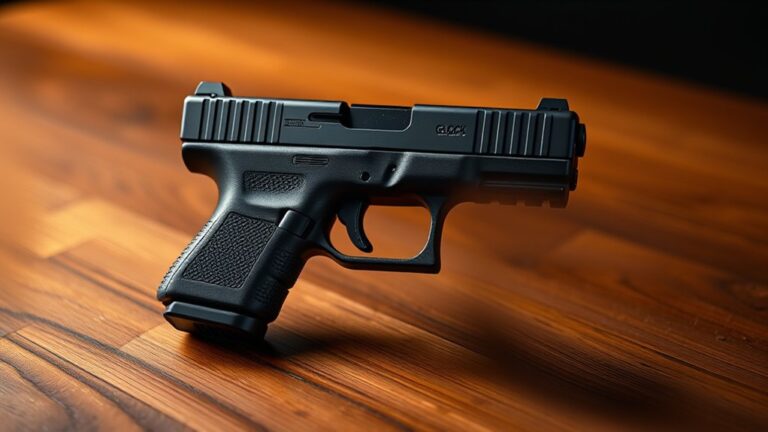
You’ll find police officers favor Glock 19 and Glock 17 pistols for duty because of their reliability, manageable recoil, and solid magazine capacities.
Most departments now prefer 9mm over .40 S&W or .45 ACP because it offers better control and ammo availability. A smaller, more compact option like the Glock 26 is often used as a backup firearm.
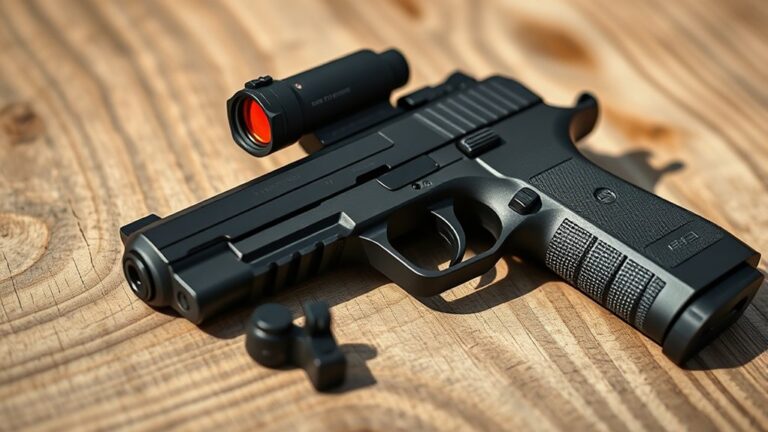
MOS variants are popular too because they allow quick mounting of optics, which can be a big help during high-pressure situations.
Gen5 upgrades bring improved ergonomics and increased accuracy, making these models even more appealing for law enforcement.
Keep exploring to understand why these choices fit law enforcement needs so well.
Why Police Officers Choose Glock Pistols
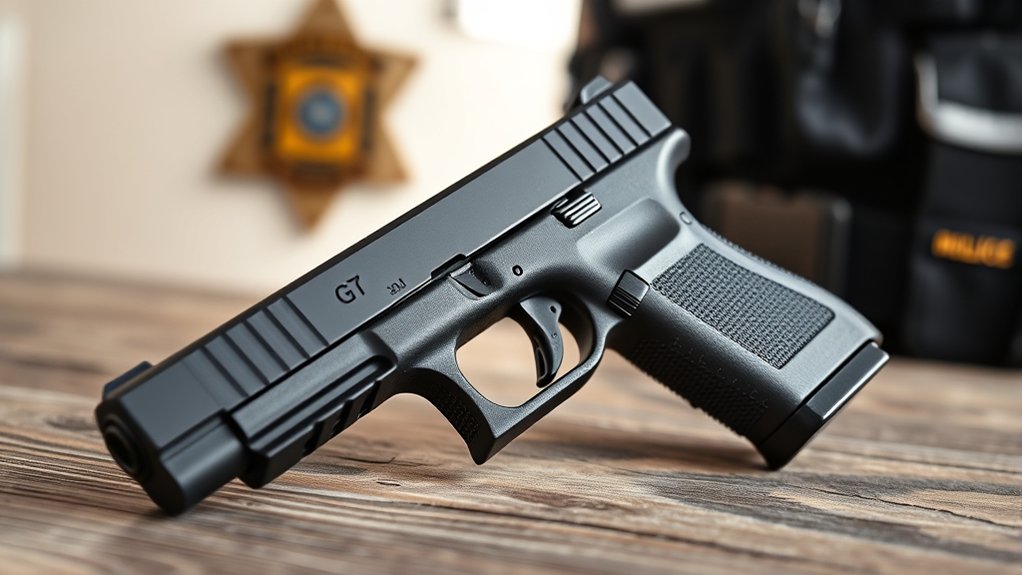
Why do so many police officers choose Glock pistols for duty? The main reason is their unmatched reliability and proven performance when it really counts.
Glock models, especially the Gen 5 Glock 19, combine durability with a lightweight polymer frame that can handle tough conditions. You’ll find that they’re easy to maintain, which is a big plus for officers on the go.
There’s also a huge ecosystem of accessories made specifically for police firearms—like holsters and magazines—that fit Glock pistols perfectly. Many agencies stick with Glocks to keep things simple for training and logistics.
Their parts are consistent across different models, which reduces downtime and keeps officers ready for action. When lives are on the line, Glock’s reputation for dependable performance and adaptability makes it the top choice for law enforcement.
Choosing the Right Glock Caliber for Duty: 9mm, .40 S&W, or .45 ACP
When selecting a Glock for duty, you’ll want to think carefully about which caliber best fits your operational needs.
In law enforcement, 9mm has become the go-to choice. It offers lower recoil and higher magazine capacity, which are big advantages in the field.
Plus, with recent advances in ammunition technology, 9mm rounds are more reliable than ever. It’s a solid option for a dependable duty pistol.
While .40 S&W used to be popular because of its stopping power, many agencies are shifting away from it. The goal is to reduce recoil and improve control, making it easier to shoot accurately.
Many agencies are moving away from .40 S&W to reduce recoil and enhance shooting accuracy.
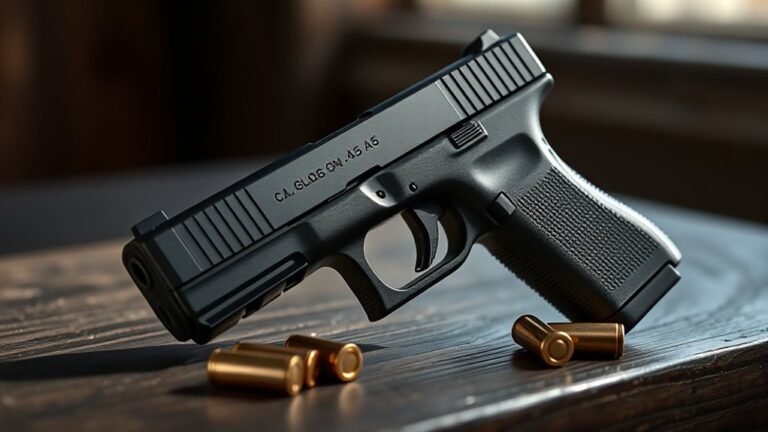
The .45 ACP, like in the Glock 21, still appeals to departments that prioritize terminal ballistics. They want that extra punch, even if it means having fewer rounds in the magazine.
Ultimately, choosing the right caliber comes down to balancing recoil management, ammo availability, and what your mission demands.
Making the right choice ensures your duty pistol performs well when it counts most.
Key Glock Duty Models for Police
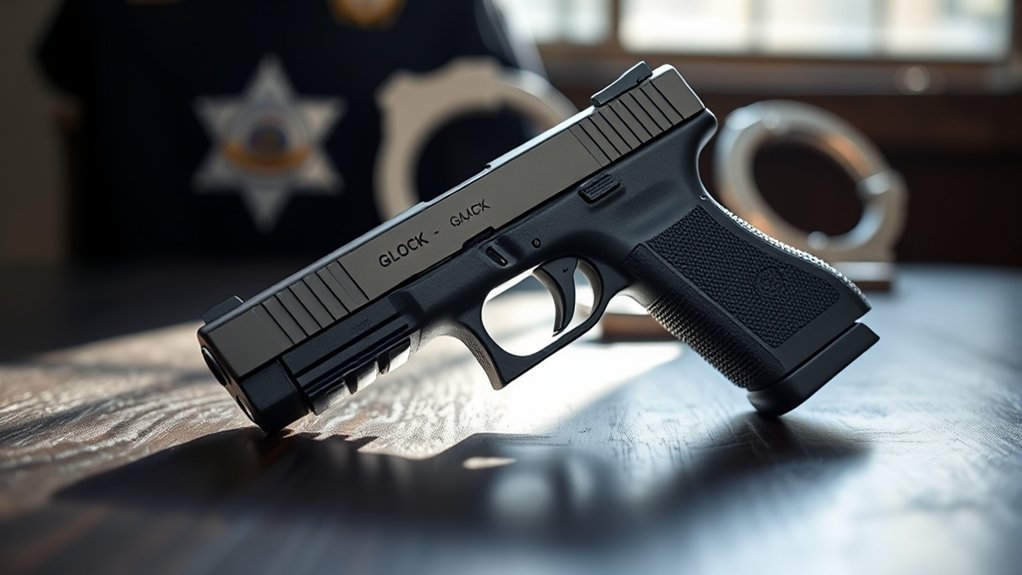
Which Glock models stand out as top choices for police duty? The Glock 19 is the go-to duty pistol for many law enforcement agencies. Its compact size, reliability, and ease of use make it a favorite.
Many departments also rely on the Glock 17. It’s a full-sized model known for its durability and larger magazine capacity. It’s perfect for officers who need a bit more firepower.
While the Glock 22 in .40 S&W was once common, most departments have shifted to 9mm models like the Glock 19. The 9mm offers better performance and less recoil, which officers appreciate.
The Glock 26 is mainly used as a backup or off-duty firearm. Its small size makes it easy to conceal, which is a big plus for officers needing a discreet option.
Recently, the Glock 45 has been gaining popularity for duty use. It combines features of the Glock 17 and 19, offering an ergonomic design and versatility. Many officers see it as a strong contender among the key Glock duty models for police.
Glock Gen4 vs Gen5: What’s Different for Duty Use?
When you’re looking at the Glock Gen4 versus the Gen5 for duty use, you’ll see some pretty noticeable differences in their design and how they feel in your hand.
The Gen5 steps up the game with better accuracy and quicker reloads, making it more efficient for duty carry. Plus, it still works with most Gen4 accessories, so you don’t have to worry about compatibility.
Getting a good grip and comfortable handling is key, and that’s where the Gen5 really shines.
Knowing these differences can help you pick the right model that’s reliable and built for the demands of duty use.
Design and Ergonomics
Although both Glock Gen4 and Gen5 models are trusted duty pistols, the Gen5 introduces several key design and ergonomic improvements that boost performance and comfort for law enforcement officers.
One notable change is that the Gen5 eliminates the finger grooves found on the Gen4. This creates a more ergonomic grip that fits better across different hand sizes. The grip texture differences are subtle, but the Gen5 has a slightly more aggressive surface, which helps you maintain a secure hold, especially under stressful conditions.
The Gen5 also adds an ambidextrous slide stop lever. This makes it easier to operate regardless of whether you’re right- or left-handed. Plus, it features an integrated flared magwell that speeds up magazine changes—something the Gen4 doesn’t have.
All these refinements make the Gen5 feel more intuitive and comfortable during long shifts. They’re small changes, but they really improve the overall handling and user experience.
Performance and Reliability
Because duty pistols demand both accuracy and durability, Glock’s Gen4 and Gen5 models tackle these needs with different engineering choices.
The Gen4 features a dual recoil spring assembly, which helps improve reliability. It reduces felt recoil and boosts durability, making it ideal for extended duty use.
On the other hand, the Gen5 introduces a Marksman Barrel and an ambidextrous slide stop. These upgrades enhance performance by improving accuracy and making operation easier.
Both generations are highly reliable, but the Gen5’s refined barrel and slide design deliver more consistent precision in duty conditions.
Plus, the flared magwell on the Gen5 allows for faster reloads, which can be crucial in critical situations.
Whether you value proven durability or improved accuracy, both Glock generations provide dependable performance tailored for demanding duty scenarios.
Accessory Compatibility
How do Glock Gen4 and Gen5 models differ in accessory compatibility for duty use? Both support standard Glock accessories, but Gen5 pistols have an improved slide design that makes it easier to mount newer optics.
Gen5 models are often optics-ready right out of the box, so you don’t need additional adapters. This makes attaching accessories quicker and more straightforward.
The removal of finger grooves on the Gen5 grip also provides a more customizable fit, which can help with accessory compatibility.
Plus, the new nDLC finish on the Gen5 improves durability and resistance to corrosion—important features for daily duty use.
The ambidextrous slide stop and marksman barrel in Gen5 pistols further enhance usability and accuracy.
How Glock Subcompact and Slimline Models Serve Officer Needs
You’ll notice that Glock’s subcompact models really focus on being easy to carry and conceal, all while still being super reliable. That makes them perfect for officers who want a dependable sidearm for off-duty situations.
On the other hand, slimline models like the Glock 48 are designed with a slimmer grip and better ergonomics, which means they’re easier to handle—especially for officers with smaller hands. These designs are all about meeting specific duty and personal carry needs with practicality and precision.
Slimline Model Benefits
While many officers focus on firepower, those with smaller hands often find standard-sized duty pistols uncomfortable. Glock slimline models like the G36 and G48 solve this problem by featuring a thinner grip and slide.
These slimmer designs improve ergonomics quite a bit. They reduce trigger reach and slide width, helping you maintain better control and comfort during use. Plus, the slim profile makes concealed carry much easier.
The reduced grip thickness and shorter barrel length mean these pistols aren’t as bulky. The G36, introduced in 1999, was the first single-stack .45 ACP designed for compact, easy handling.
The G48 continues this tradition with a 4.17-inch barrel and a grip that’s a quarter inch thinner than the Glock 19.
Subcompact Concealability Features
Why do many officers prefer Glock subcompact and slimline models for concealed carry? The main reason is their excellent concealability.
Glock subcompact pistols like the G27 and G43 have shorter barrels and smaller grip frames. This makes them perfect for discreet carry without sacrificing firepower.
For example, the G27 holds nine rounds and has a compact design that’s great for off-duty or backup use.
Slimline models like the G48 reduce grip thickness by about ¼ inch, which improves comfort, especially for officers with smaller hands.
These Glocks also support rugged sights and tactical accessories, ensuring they’re durable and versatile.
When combined with appendix or inside-the-waistband holsters, these subcompact models offer the perfect balance of concealment and readiness for law enforcement.
Glock MOS Variants for Police Duty
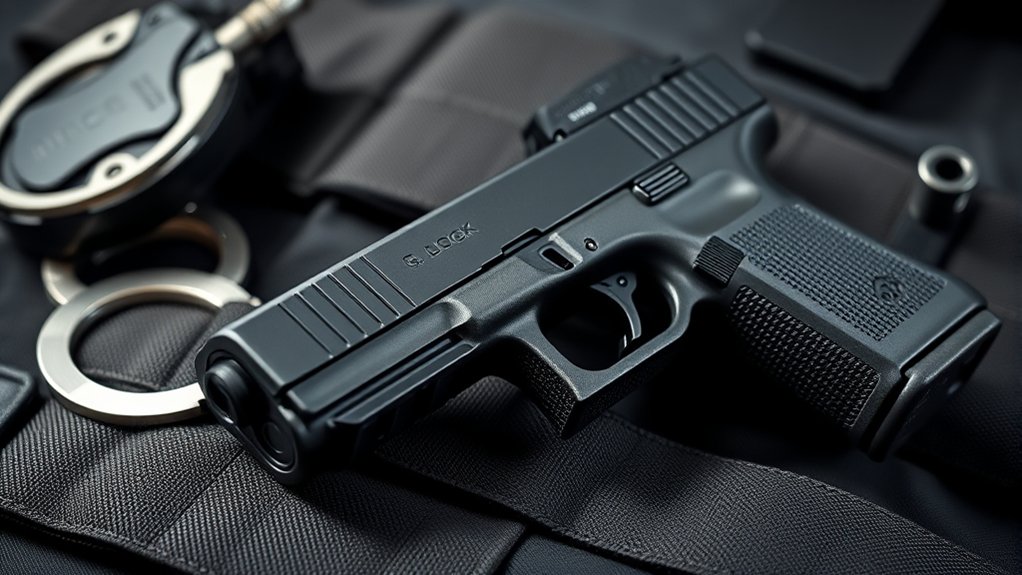
How do Glock MOS variants boost police duty performance? These models, like the G19 MOS and G17 MOS, come with factory-milled slides that let you mount optical sights directly—no need for extra adapter plates.
This design supports popular optics such as Aimpoint Acro, Steiner MPS, and Trijicon RMR. It makes target acquisition faster, which is crucial for law enforcement officers in the field.
The rear slide is robust and integrates durable sights while staying compatible with various accessories.
Internally, Glock MOS variants share recoil springs and firing mechanisms with standard models. This makes maintenance and logistics simpler for your department.
Choosing a Glock MOS as your duty weapon means you get Glock’s trusted reliability combined with the convenience of optics readiness. It helps improve your efficiency and effectiveness during operations.
These features make Glock MOS variants a top choice for modern police duty.
Essential Accessories and Customizations for Glock Duty Pistols
Because law enforcement officers rely on their Glock duty pistols in critical moments, equipping these firearms with essential accessories and customizations is vital to maximize performance and reliability.
You should consider optics mounts compatible with popular red dot sights like Aimpoint Acro, Steiner MPS, or Trijicon RMR. These often require MOS or direct-mill slides for proper fitting.
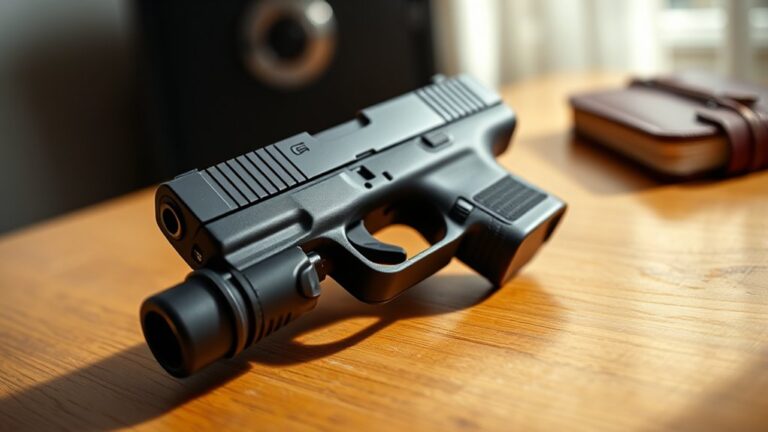
Adding weapon lights and lasers can really boost your tactical versatility. Just remember to always follow your department’s safety guidelines when installing and using these accessories.
For holsters, opt for rugged Kydex models designed specifically for Glock pistols. This guarantees durability, retention, and concealability, making sure your gear stays secure.
Customizations like extended magazine releases, aftermarket trigger kits, and stippled grips can make a big difference. They enhance ergonomics and help improve shooting accuracy.
Choosing the right accessories and modifications ensures your Glock duty pistol performs at its best, ready to meet the demanding requirements of law enforcement duty.
Frequently Asked Questions
How Often Do Police Officers Need to Clean Their Glock Pistols?
You need to clean your Glock pistols every 200 to 500 rounds, but keep in mind that how often you do it depends on how much you shoot and the conditions you’re in.
Regular maintenance routines are key. This includes quick field strips after each shift and more thorough cleanings weekly.
Doing this helps prevent carbon buildup and keeps your pistol functioning smoothly. Staying consistent with cleaning is really important for the lifespan and reliability of your firearm.
Make sure to also check and lubricate your Glock during these routines. Proper care ensures your gun performs at its best, especially in demanding law enforcement situations.
What Is the Typical Lifespan of a Glock Used in Law Enforcement?
You can expect a Glock used in law enforcement to last between 10,000 and 20,000 rounds, depending on your maintenance schedule and officer training.
Firearm durability really depends on regular inspections and proper care. Keeping up with these routines can extend your Glock’s lifespan well beyond the standard range.
Focus on maintaining the internal components, as they tend to wear out faster than the frame or slide. Consistent upkeep makes a big difference.
Stick to your training and maintenance routines. Doing so helps ensure your Glock stays reliable and serviceable for many years to come.
Are Glock Pistols Covered by Police Department Warranties?
Don’t worry if you think warranty coverage is limited; most police departments actually provide extensive warranties for Glock pistols.
These warranties cover defects and are designed to keep your firearm reliable. They often align with strict maintenance schedules to ensure everything stays in top shape.
Replacement policies are usually part of the deal, so any faulty parts get fixed or swapped out quickly.
Agencies often negotiate specialized agreements to make sure your Glock stays mission-ready.
Always check your department’s specific warranty terms to fully understand what’s covered.
How Do Glock Pistols Perform in Extreme Weather Conditions?
You’ll find Glock pistols excel in weather resilience, performing reliably even in extreme temperature performance tests.
Cold weather testing shows they operate flawlessly in sub-zero conditions down to -20°F. Thanks to corrosion-resistant finishes and sealed internal components, they resist moisture, rain, and snow without jamming.
Their polymer frames and robust design guarantee consistent firing and cycling. This makes them dependable tools, no matter how harsh the environment gets.
Can Officers Use Personal Glock Pistols on Duty?
About 70% of officers carry personal Glock pistols on duty, but you’ll need department approval first.
Your personal ownership means your Glock must meet strict training requirements and pass agency testing.
Expect to make custom modifications, like adding night sights or approved holsters, to guarantee safety and reliability.
Once registered and compliant, you can confidently use your own Glock, blending personal preference with professional standards seamlessly.
Conclusion
When it comes to duty pistols, Glock is like the modern Excalibur in law enforcement. It’s trusted, reliable, and versatile.
Whether you choose a 9mm Gen5 or a .40 S&W Gen4, you’re selecting a weapon built to meet the demands of the job. These models are designed to perform without any compromises.
By understanding Glock’s different models, calibers, and custom options, you’re better prepared. You get more than just a sidearm—you gain a legacy of accuracy and performance. It’s a combination that’s hard to beat in the field.