Does Glock Make A 22 – Model Availability Explained
You won’t find a Glock 22 chambered in .22 LR because that model number is reserved for .40 S&W pistols.
Instead, Glock offers the Glock 44, which is a .22 LR model designed specifically for training and recreational use. It mimics the Glock 22’s ergonomics, but with low recoil and cost, making it a great option for practice.
Glock’s model numbers are based on caliber and size, so they separate rimfire options like the Glock 44 from their centerfire models.
Understanding this is helpful in clarifying Glock’s lineup and what to expect from future developments.
Why Glock Has No Model 22
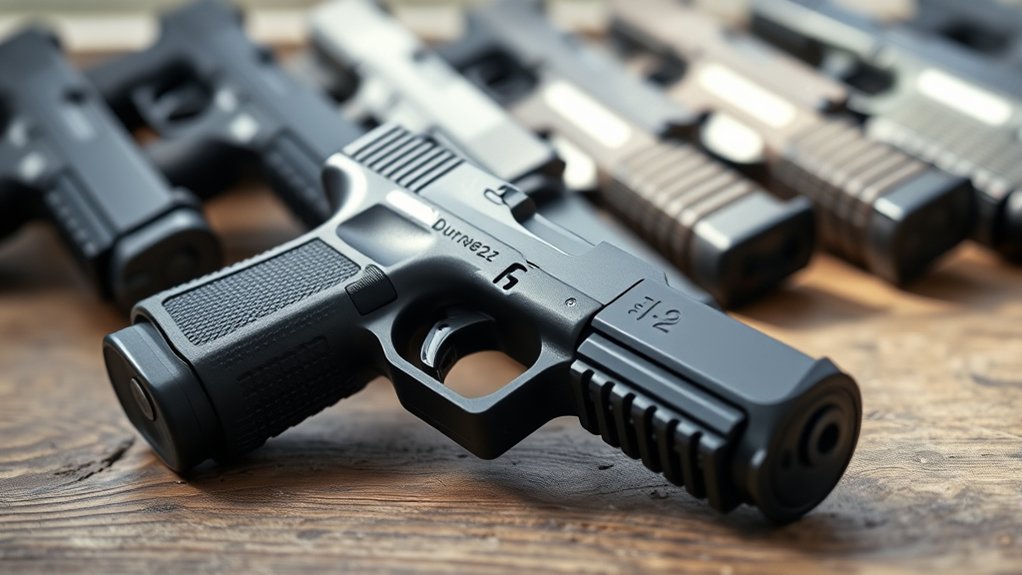
Why doesn’t Glock offer a Model 22 chambered in .22 LR? The reason comes down to Glock’s strict model numbering system. Their system directly relates to the caliber and size of the pistol within their lineup.
The Model 22 you’re familiar with is chambered in .40 S&W, which is a centerfire cartridge. Glock mainly assigns model numbers to their centerfire pistols, so rimfire calibers like .22 LR don’t fit into this scheme.
Since .22 LR is a rimfire cartridge, it falls outside of Glock’s typical model categories. Instead, Glock has dedicated models like the Glock 44 for rimfire shooting.
The Glock 44 is specifically designed for training and recreational use.
Because of this focus on centerfire calibers for their main lineup, Glock doesn’t have a Model 22 in .22 LR. It simply doesn’t align with their established model numbering system.
Glock Model Numbering Explained
Understanding Glock’s model numbering system helps explain why certain calibers match up with specific model numbers. Glock model numbers usually reflect the firearm’s caliber or series lineage. For example, the Glock 22 is chambered in .40 caliber, while the Glock 19 is in 9mm.
Models that share frames, like the Glock 22 and Glock 23, mainly differ by caliber. But keep in mind, the numbering isn’t always strictly linear. For instance, the Glock 45 shows how a model can represent design evolution within a series rather than just caliber.
Here’s a quick look at some examples:
| Model Number | Caliber | Firearm Series |
|---|---|---|
| Glock 17 | 9mm | Full-size |
| Glock 19 | 9mm | Compact |
| Glock 22 | .40 S&W | Full-size |
| Glock 23 | .40 S&W | Compact |
| Glock 45 | 9mm | Hybrid (19x/17) |
This system makes it easy to identify a Glock’s model and caliber at a glance.
The Glock 44: Glock’s .22 LR Training Option
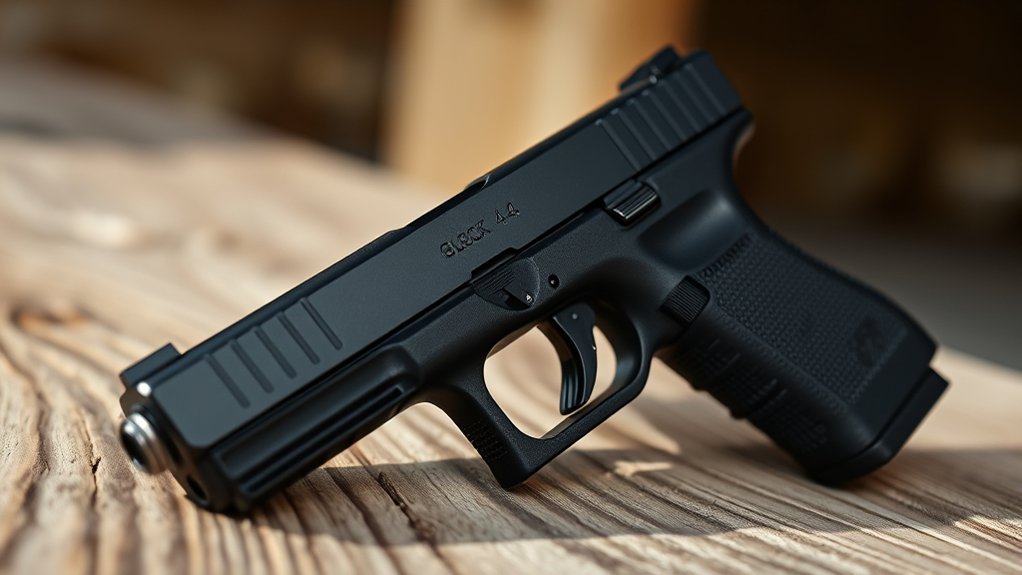
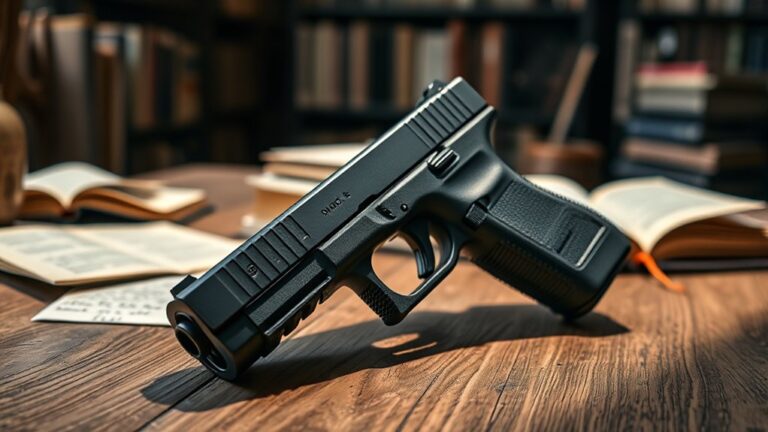
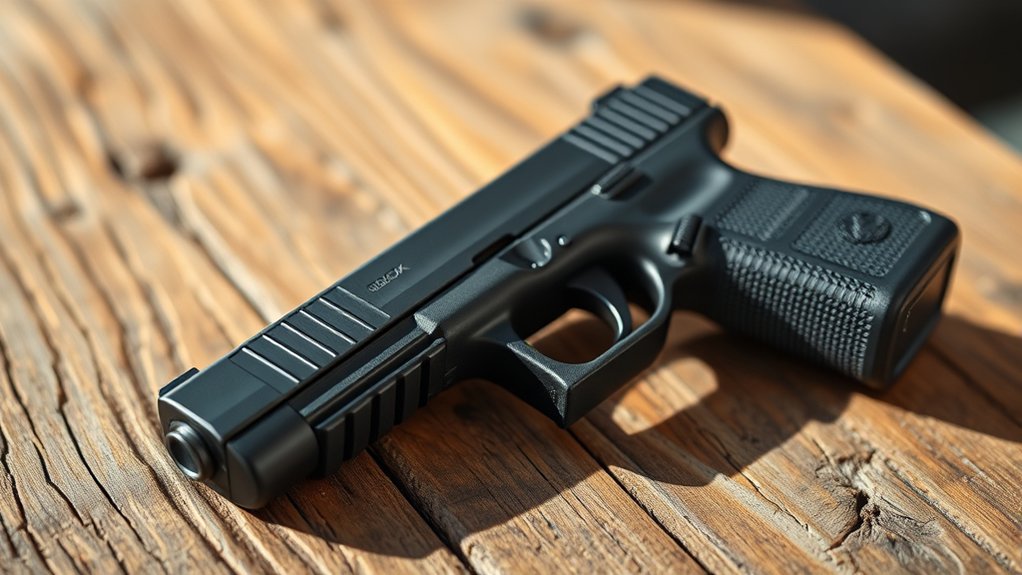
The Glock 44 is a great choice if you’re looking for a lightweight, reliable pistol for training. It has a polymer frame and a 4.02-inch Glock Marksman Barrel, which helps keep recoil minimal—making it easier to stay on target.
What’s really handy is its design, which closely mirrors the Glock 19. That means if you’re already familiar with Glock’s style and controls, you’ll find it easy to switch between this .22 LR model and your centerfire Glock.
It also features ambidextrous controls and comes with a 10-round magazine, making it a practical and approachable option for practice and training.
Glock 44 Features
How does Glock’s latest .22 LR model fit into your training routine? The Glock 44 offers a compact, lightweight platform with a polymer frame that weighs just 16.64 ounces. This makes it perfect for extended training sessions without causing fatigue.
Chambered in rimfire .22 LR, it mimics the ergonomics of the Glock G19, making it easier to transition between calibers. Its 4.02-inch Glock Marksman Barrel delivers improved accuracy and durability, even when shooting dirtier rimfire ammo.
You’ll like the adjustable rear sights, which allow for precise zeroing. That’s a feature you don’t see often in many other .22 pistols.
The Glock 44’s striker-fired mechanism and ambidextrous safety keep Glock’s reputation for reliability and ease of use.
With a 10-round magazine, it strikes a good balance between capacity and size.
Training Benefits
Why choose the Glock 44 for your training regimen? The Glock 44 offers some great training benefits by providing a low-recoil, budget-friendly platform. It closely mimics the handling of larger Glock models like the G19, which is a big plus.
Its lightweight polymer frame and familiar controls make it easier to develop muscle memory and refine your technique. Plus, with minimal recoil management challenges, you can focus more on your shooting fundamentals.
Using practice ammunition helps cut down training costs, so you can practice more often without breaking the bank. This allows for frequent, high-quality training sessions that really build your skills.
The Glock 44’s reliable accuracy supports drills in marksmanship and trigger control. This means the skills you develop transfer well to centerfire pistols.
Its 10-round magazine and accessory compatibility also help create realistic training scenarios.
All of these features combine to enhance your preparedness and make training more effective. Incorporating the Glock 44 into your routine helps maximize training efficiency without sacrificing performance.
It’s an essential tool for anyone serious about firearms training.
Models Comparable to a Glock 22
If you’re looking for models similar in size and function to the Glock 22, you’ll find a few good options. The Glock 17 and Glock 31 are popular choices, offering calibers like 9mm and .357 SIG. They’re pretty much similar in dimensions and magazine capacity, so handling and performance feel pretty consistent across them.
For training purposes, the Glock 44 is a great pick. It’s a reliable .22 LR pistol that mimics the ergonomics of the Glock 22, but with much less recoil. That makes it easier to practice with without sacrificing the feel of the larger Glock models.
Similar Caliber Alternatives
While the Glock 22 is known for its reliability in .40 S&W, there are several other models that offer similar performance and handling in either the same or different calibers.
The Glock 23 is a great example. It shares the same .40 S&W chambering and has nearly identical dimensions. That makes it a direct alternative if you’re looking for a similar feel, but with a slightly smaller magazine capacity.
If you’re into 9mm, the Glock 19 is a popular choice. It’s compact, easy to handle, and often favored for concealed carry and training purposes. Its ergonomic design makes it comfortable for extended shooting sessions.
For training, the Glock 44 in .22 LR is an excellent option. It mimics the size and trigger feel of the Glock 22, making practice more affordable and less recoil-heavy.
There’s also the Glock 35, which is designed for competition shooters. It features a longer barrel and is chambered in .40 S&W, giving you a bit more accuracy for target shooting.
Size And Function Comparison
Although the Glock 22 is considered a full-sized, .40 S&W pistol popular with law enforcement, there are several models that closely match its size and function. These offer good alternatives if you’re looking for something similar but tailored to different needs.
The Glock 17, for example, shares almost identical dimensions but differs in chambering—it’s a 9mm instead of .40 S&W. It’s a great option if you want a similar size but prefer the lower recoil or higher magazine capacity of 9mm rounds.
Moving to larger calibers, the Glock 20 and Glock 21 maintain full-sized profiles. The Glock 20 is chambered in 10mm Auto, while the Glock 21 uses .45 ACP. They offer higher calibers with similar ergonomics, making them suitable choices if power is a priority.
If concealment is important, the Glock 23 is a good pick. It has the same .40 S&W chambering but comes in a smaller frame, making it easier to carry discreetly.
For those who want a mid-sized option, models like the Glock 19X and Glock 45 are worth considering. They slightly reduce the size of the full-sized pistols but still offer the same capacity and handling.
With this variety of models, you can find a Glock that closely matches the performance and size of the Glock 22, tailored to your specific needs.
Training And Practice Options
Because the Glock 22 is widely used for duty and training thanks to its robust design and .40 S&W chambering, choosing the right practice models is really important. You want guns that match in size, caliber, and handling to keep your training consistent.
Glock doesn’t make a direct .22 caliber version of the Glock 22. But the Glock 44 is a great choice for practice because of its lower recoil and affordability. It’s perfect for mastering fundamentals without the kick of larger calibers.
The Glock 23 is another option. It shares the same .40 caliber as the Glock 22 but is more compact. This makes it a good alternative for simulating duty conditions in a smaller package.
Model availability really influences your choices when it comes to caliber and size. Picking the right gun can make your training more effective and enjoyable.
Choosing Glock Models by Caliber and Use
When choosing a Glock model, it’s important to think about caliber and what you’ll use it for. These factors directly impact how the gun performs and whether it’s a good fit for your needs.
For example, the Glock 22, chambered in .40 S&W, is popular among law enforcement. It offers a good balance of stopping power and magazine capacity.
Glock models are designed for different roles. The Glock 19, in 9mm, is versatile and great for general use.
Meanwhile, the Glock 44 in .22 LR is ideal for training and practice.
Knowing the differences in calibers helps you pick the right pistol. Whether you need it for duty, concealed carry, or competition, matching your needs with the right Glock makes all the difference.
The Glock lineup is diverse, so you can find a model that fits your specific use. Reliability and ergonomic design are built into each, tailored to your caliber preference.
Glock Variations for Different Shooters
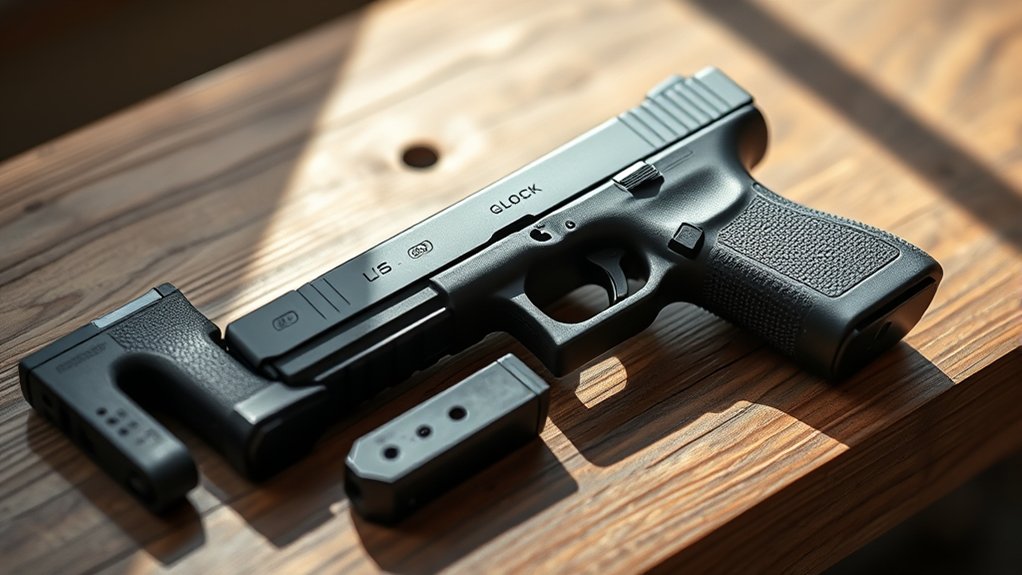
Glock designs its pistols to meet the needs of a wide range of shooters by offering various sizes and configurations. You’ll find Glock models tailored for concealed carry, duty, and recreational use, ensuring top performance based on what you need.
Their firearm variations strike a good balance between concealability, capacity, and ergonomics. Plus, they don’t sacrifice accessory compatibility, so you can customize your gun easily.
Consider these key Glock variations:
- Compact and subcompact models like the Glock 43 and 43X are perfect for concealed carry thanks to their slim profiles.
- Full-sized pistols such as the Glock 17 and 19 are versatile and favored by law enforcement.
- Specialized models, like the Glock 44 in .22 LR, are great for training and beginners.
Features like modular grip sizes and ambidextrous controls make these guns more user-friendly across different preferences.
These options help you find a Glock that fits your specific operational needs perfectly.
Future Glock Models to Replace a Glock 22
Although the Glock 22 remains a reliable choice for many shooters, upcoming developments suggest new models may soon supplement or replace it.
Future Glock models are expected to feature redesigned safety features, including updated trigger bars. These improvements aim to prevent unauthorized auto sear conversions, making the guns safer and more compliant with evolving legal standards.
Upcoming Glock models will include enhanced safety features to prevent unauthorized modifications and ensure legal compliance.
Glock may also expand its caliber options beyond the traditional .40 S&W. Rumors suggest larger calibers like .50 AE could be on the table, possibly with models like the rumored “Glock 49” or “Glock 50.”
While the Glock 44 currently serves as a .22 LR platform, a dedicated replacement or supplement to the Glock 22 could arrive. Such a model might offer better ergonomics and safety features.
Staying informed about these advancements is important. It helps you understand Glock’s direction in model updates and caliber diversification.
Frequently Asked Questions
What Is the Price Range of Glock Pistols Similar to a Glock 22?
You’ll find Glock models similar to the Glock 22 priced between $500 and $700, depending on pistol calibers and features. Full-sized and compact options, like the Glock 17 or 19, fall within this range.
When choosing a Glock, think about what fits your needs best. Whether for concealed carry or home defense, there are reliable options available in this price range.
Higher-end competition models might cost more, but standard choices offer dependable performance without breaking the bank.
Prioritize firearm safety and shooting accuracy by selecting models that suit your specific requirements.
Are Glock Pistols Compatible With Aftermarket Accessories?
You’d think every Glock would fit every accessory out there, but it’s not that simple.
You can customize your Glock with sight upgrades and grip modifications, but aftermarket parts often vary by generation.
Gen 3 and Gen 4 models share many customization options, making it easier to find compatible accessories.
However, Gen 5’s changes can limit fitment, so it’s important to double-check.
Always verify parts carefully to ensure everything works perfectly. Precision matters when upgrading your Glock’s accessories.
How Does Glock’s Warranty Work for Their Handguns?
When you use Glock’s warranty, it covers manufacturing defects that affect your pistol’s durability, trigger mechanism, or safety features.
To make a claim, just contact an authorized service center and provide proof of purchase. It’s pretty straightforward.
Keep in mind, the warranty doesn’t cover damage caused by misuse or improper maintenance. So, it’s important to keep your firearm well-maintained and handle it properly.
Glock will repair or replace faulty parts quickly, making sure your handgun stays reliable and safe under warranty.
What Are the Common Maintenance Tips for Glock Pistols?
You should establish regular cleaning routines, focusing on barrel maintenance to remove powder residue and dirt.
Use recommended lubrication techniques on slide rails and trigger mechanisms to guarantee smooth function and prevent wear.
Perform thorough safety checks by inspecting recoil springs and firing pins for any damage.
Don’t overlook magazine care—check feed lips and followers for cracks, and replace magazines if needed.
Store your Glock in a cool, dry place.
Make sure to maintain it after every 500 to 1,000 rounds fired to keep it in good shape.
Where Can I Find Authorized Glock Dealers Near Me?
Over 90% of Glock purchases come through authorized dealers, which helps ensure everything stays legal and safe.
You can find authorized Glock dealers near you by using Glock’s official dealer locator tool online. It’s quick and easy to use.
This tool verifies dealer credentials, so you know you’re buying from a trusted source. It also provides accurate info on what’s in stock and the services they offer.
Always double-check that the dealer is authorized. This way, you avoid unlicensed sellers and stay compliant with local laws.
It’s the best way to make sure you’re handling your firearm responsibly and safely.
Conclusion
You won’t find a Glock 22 because it simply doesn’t exist. Glock’s model numbering skips right over it.
Instead, Glock offers accurate alternatives like the Glock 44 for .22 LR training. They also have other calibers designed to meet your specific needs.
Don’t waste your time hunting for a phantom model. Focus on Glock’s expertly engineered options that deliver unmatched reliability and performance.
In the world of Glock, precision and innovation are key. There’s no room for guesswork or missing models.