Can I Carry My Concealed Weapon Across State Lines – Reciprocity Rules Explained
You can carry your concealed weapon across state lines only if both states recognize each other’s permits through formal reciprocity or similar laws. Rules vary widely. Some states accept all out-of-state permits, while others require their own license or don’t acknowledge permits at all.
Permitless carry states complicate matters further. They often limit reciprocity, so it’s important to check the laws before you travel. You must also follow local restrictions and federal bans on certain locations.
Understanding these details ensures you stay compliant and responsible when traveling with a concealed weapon. Take the time to explore the nuances so you can carry legally and safely.
Understanding Concealed Carry Reciprocity: How States Recognize Permits
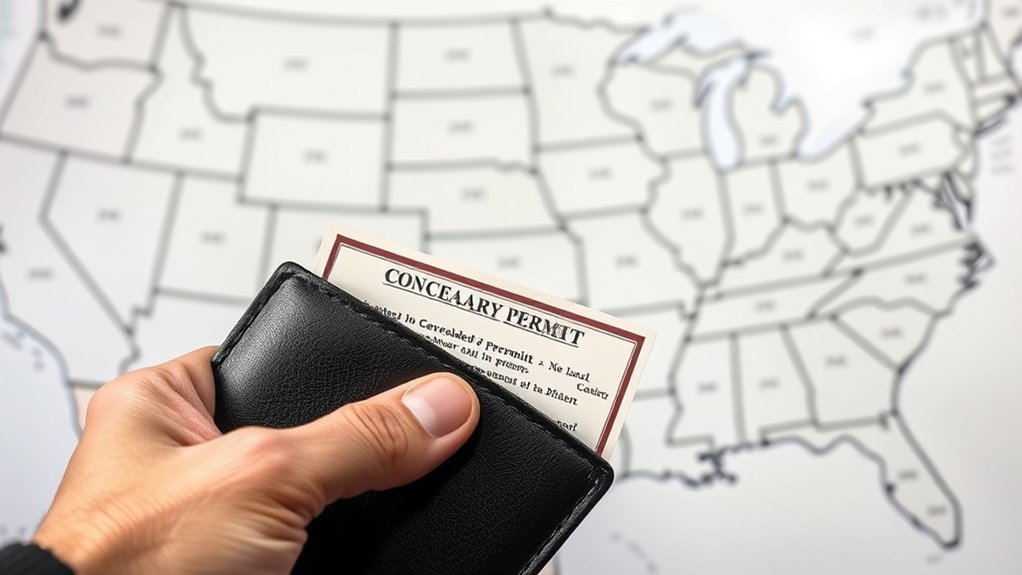
Although concealed carry laws vary widely across the country, understanding how states recognize out-of-state permits is essential for anyone who carries a concealed weapon.
Concealed carry reciprocity means some states recognize your permit from another state, but this recognition isn’t uniform. Some states recognize all out-of-state permits, while others only honor permits meeting similar permit requirements or none at all.
Concealed carry reciprocity varies; some states accept all permits, others only those with similar requirements.
Reciprocity agreements can be formal or unilateral, often based on comparable safety standards.
Furthermore, some states have adopted permitless carry, eliminating the need for permits altogether.
Because concealed weapon laws differ, you must check each state’s specific recognition of permits before traveling.
Staying informed about concealed carry reciprocity and states recognizing permits ensures you comply with all applicable concealed carry laws and avoid legal complications.
It’s always better to be safe and know the rules before you hit the road.
States That Recognize North Carolina and Illinois Concealed Carry Permits
When you hold a North Carolina concealed carry permit, you benefit from broad recognition across multiple states. North Carolina recognizes permits from all other states and has established reciprocity agreements accordingly. This means you can carry concealed in many states that reciprocate North Carolina’s permit recognition.
In contrast, Illinois doesn’t recognize out-of-state concealed carry permits. You need to obtain an Illinois-specific license to carry concealed legally.
Illinois permits, while valid in a limited number of states, don’t enjoy widespread reciprocity.
States recognition varies markedly between North Carolina and Illinois permits. So, you must verify each state’s reciprocity status before traveling.
Understanding these reciprocity agreements helps you comply with permit recognition laws and carry concealed legally across state lines.
Restrictions on Concealed Carry When Traveling Out-of-State

Since concealed carry laws vary widely across states, you must understand the specific restrictions before traveling with a concealed weapon. Many states impose concealed carry restrictions in locations like schools and federal buildings, regardless of your out-of-state permits. Some states don’t recognize permits from other states, so carrying without permit recognition can lead to legal penalties.
Private property restrictions also limit where you can carry across state lines.
| Restriction Type | Description | Impact on Travelers |
|---|---|---|
| Permit Recognition | States vary in recognizing out-of-state permits | Illegal carry if unrecognized |
| Location Restrictions | Schools, courthouses, federal buildings | Carry prohibited |
| Private Property Rules | Business/ campus policies override permits | Must obey posted restrictions |
Make sure you know the state laws thoroughly to avoid serious legal consequences. It’s better to be safe than sorry when you’re on the road with a concealed weapon.
Impact of Permitless Carry States on Concealed Carry Reciprocity
Understanding state-specific restrictions on concealed carry is only part of the challenge. The growing number of permitless carry states adds another layer of complexity to carrying across state lines.
States like Alaska, Arizona, and Idaho allow permitless carry, eliminating permit requirements within their borders. But this can complicate reciprocity. Many of these states don’t recognize out-of-state concealed carry permits, which limits interstate recognition and affects your legal rights when crossing into states with stricter concealed weapon laws.
This patchwork creates challenges for law enforcement and makes reciprocity agreements more complicated. Even in permitless carry states, you still have to comply with the destination state’s concealed carry laws.
Common Location Restrictions for Concealed Carry Out-of-State
Where can you legally carry a concealed weapon when crossing state lines? Even with out-of-state permits and reciprocity agreements in place, concealed carry restrictions vary a lot depending on where you are. Federal law prohibits firearms in certain areas no matter what state laws say.
You also have to pay attention to local signs on private property because they can restrict carrying too. Some key restricted places include law enforcement and correctional facilities, government buildings and courthouses where state or federal employees work, and school grounds or campuses. Public events like parades usually have restrictions as well.
There are also areas banned under federal law, like national parks or military sites, where carrying a concealed weapon isn’t allowed. Knowing these common location restrictions will help you stay compliant and safe when carrying concealed out-of-state.
It’s always a good idea to double-check if your permit is recognized in the state you’re visiting. Plus, local rules might limit your carry rights beyond what reciprocity agreements cover.
How to Verify Concealed Carry Reciprocity Before Traveling
Before you hit the road, it’s a good idea to check each state’s reciprocity agreements to make sure your permit will be recognized where you’re going. You can do this by visiting official state websites or looking at reciprocity maps—they’re super helpful for confirming the legal requirements and any restrictions that might apply.
It’s also really important to stay updated on any changes since laws can shift.
And don’t forget to carry your valid permit along with proper ID. Doing these things will help you stay compliant and safe while traveling.
Checking State Reciprocity
Since reciprocity agreements can change frequently, you should always verify which states recognize your concealed carry permit before traveling. State recognition of out-of-state permits varies, and not all states recognize each other’s permits under reciprocity agreements.
To carry a concealed firearm lawfully, confirm that your permit complies with the destination state laws and that your home state’s concealed carry permits are accepted.
Check these key points before travel:
- Review official state government websites or the National Conference of State Legislatures (NCSL) for updated reciprocity maps.
- Verify whether your permit meets specific state requirements, including training or age restrictions.
- Understand that some states don’t recognize any out-of-state permits. Plan accordingly.
- Always carry your valid permit and identification to avoid legal complications.
Confirming Legal Requirements
To confirm legal requirements for carrying a concealed weapon across state lines, you need to verify the current reciprocity agreements and regulations of both your home state and your destination. Check if your out-of-state permit is recognized by consulting official state websites or law enforcement resources.
Use reliable online tools to review permit validity and licensing details. Contact your state’s department of justice for updates on reciprocity and changes in concealed carry laws. Remember, local restrictions may differ within states, so make sure to familiarize yourself with specific city or county rules.
| Step | Action | Resource Type |
|---|---|---|
| 1. Check Reciprocity | Review reciprocity agreements | State government websites |
| 2. Verify Permit Validity | Confirm out-of-state permit recognition | Law enforcement portals |
| 3. Consult Licensing Info | Contact licensing authority | State DOJ or licensing |
| 4. Use Online Tools | Utilize permit lookup tools | Official online databases |
| 5. Understand Local Laws | Research city/county restrictions | Local government sites |
Your Legal Responsibilities When Carrying Concealed Out-of-State
When you carry a concealed weapon across state lines, you must always have your valid concealed carry permit and government-issued ID on hand. Understanding your legal responsibilities is vital, especially since reciprocity laws vary widely among states.
Always comply with local law and carry your permit openly when required.
Respect local regulations and visibly carry your permit when the law mandates it.
If stopped by law enforcement, disclose your concealed carry status promptly and never brandish or use your weapon unless instructed. Remember, some locations strictly prohibit carrying despite reciprocity agreements.
- Carry both your valid concealed carry permit and government-issued ID at all times
- Disclose your permit to law enforcement during any official encounter
- Avoid carrying in restricted places like schools, courthouses, or federal buildings
- Familiarize yourself with the out-of-state laws and restrictions before traveling
Following these rules guarantees you carry responsibly and legally across state lines. It’s always better to be prepared and informed before you hit the road.
Where to Find Official Resources on Concealed Carry Reciprocity
Where can you find reliable information on concealed carry reciprocity? Start with state government websites, like the Ohio Attorney General’s or North Carolina Department of Justice sites. They provide official resources on reciprocity agreements and concealed carry laws.
The Bureau of Alcohol, Tobacco, Firearms and Explosives (ATF) also offers valuable links related to firearm regulations across states.
Many states publish which permits they recognize on law enforcement or legislative agency portals. For the most current and precise details, you can directly contact state law enforcement agencies or check their official online platforms.
Also, organizations like the National Rifle Association (NRA) provide updated guides and maps on reciprocity rules.
Relying on these government and official agency sources helps you stay informed about which states recognize your concealed carry permit.
Frequently Asked Questions
Can I Carry Concealed in a Vehicle Across State Lines?
Yes, you can carry a concealed weapon in a vehicle across state lines, but only if your permit is recognized by the state you’re traveling through.
Always check each state’s specific laws, as some require firearms to be locked in a container or trunk. Violating these rules can lead to serious legal trouble.
To stay compliant, verify reciprocity agreements and storage requirements before you hit the road.
It’s always better to be safe than sorry when it comes to crossing state lines with a firearm.
Make sure you’re fully informed so your trip goes smoothly.
Do Reciprocity Agreements Cover Concealed Carry of Knives or Other Weapons?
Think of reciprocity agreements like a bridge built only for firearms. Knives and other weapons don’t get to cross. You can’t rely on these agreements to carry concealed knives or stun guns across state lines.
Each state paints its own rules for non-firearm weapons, so you must check local laws carefully. Don’t assume your firearm permit covers everything.
Knives and other gear often follow separate, stricter paths.
Stay informed and compliant. It’s always better to double-check than to get caught off guard.
How Does Temporary Travel for Business Affect Concealed Carry Rights?
When you travel temporarily for business, you need to carry your concealed weapon and permit at all times, following the destination state’s laws. If the state recognizes your permit, you can legally carry.
Just be sure to avoid restricted locations like certain private businesses.
Always carry your permit and ID with you. It’s really important to thoroughly understand local regulations. That way, you’ll stay compliant and steer clear of legal issues during your business trip.
Are There Insurance Implications for Carrying Concealed Out-Of-State?
Yes, carrying concealed out-of-state often affects your insurance coverage. Many policies exclude liability protection when you’re outside your home state unless it’s explicitly stated.
So, you really need to review your policy terms carefully and contact your insurer before traveling.
Some states even require proof of insurance to carry legally. Failing to confirm these details could leave you exposed to denied claims or legal issues.
It’s always best to verify coverage and local requirements beforehand to avoid any surprises.
Can Non-Resident Permit Holders Apply for Concealed Carry in Another State?
Yes, you can apply for a concealed carry permit as a non-resident in certain states like Idaho, Nevada, and Virginia that offer non-resident licenses.
You’ll need to meet eligibility criteria including background checks, training, and age requirements similar to residents.
Keep in mind, states like Illinois don’t issue non-resident permits, so your options vary.
Always verify the specific state’s rules before applying to guarantee compliance and understanding of renewal processes.
Conclusion
Before traveling with your concealed weapon, remember that over half the states don’t fully recognize out-of-state permits. This can lead to serious legal trouble if you’re not careful.
Understanding reciprocity, restrictions, and your responsibilities is vital to stay compliant and safe. Always verify the specific laws of your destination beforehand.
Taking these steps guarantees you respect state regulations and protect yourself from unintended consequences while carrying concealed across state lines.