Do You Need A Concealed Carry License – Laws And Permit Requirements
You need a concealed carry license in most states to legally carry a hidden firearm, but 13 states allow permitless carry with no formal training or permit required. Licenses often require background checks, age verification, and safety training. Even with permitless laws, restrictions still apply in certain locations.
Obtaining a license offers benefits like multi-state reciprocity and faster firearm purchases. Understanding these nuances helps you stay compliant and aware of your rights and responsibilities. It’s important to know the rules wherever you are, so you can carry safely and legally.
State Requirements for Concealed Carry Licenses
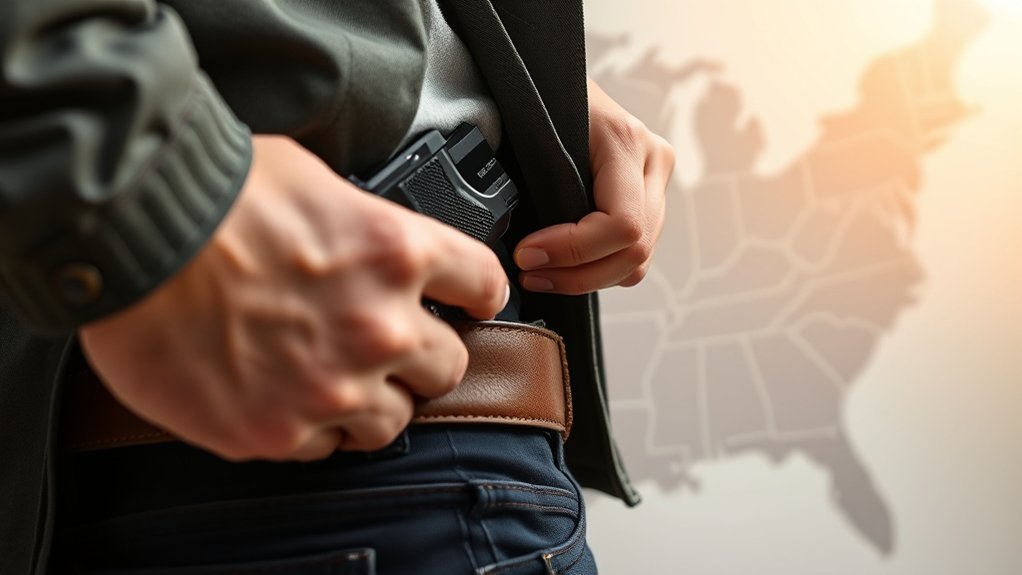
How do state requirements shape the process of obtaining a concealed carry license? In most states, you have to meet specific permit requirements. This usually means completing firearm training and passing a thorough background check.
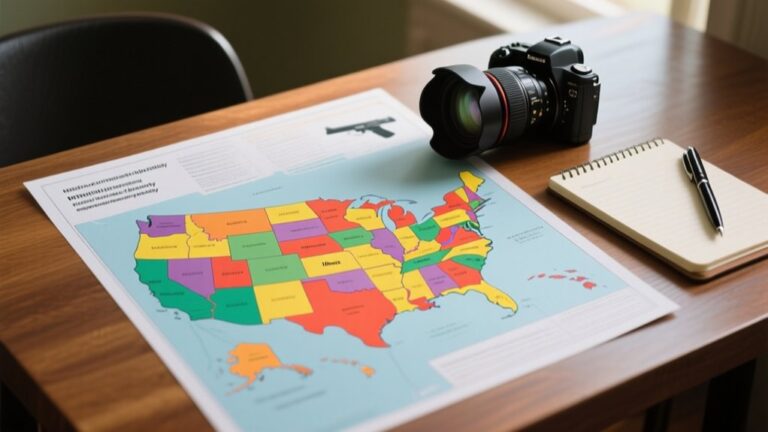
About 21 states require a permit for concealed carry. These often include live-fire training to make sure you’re proficient.
On the other hand, 13 states allow permitless carry. That means you can carry without getting a license or going through formal training.
Some states, like Pennsylvania and South Carolina, let you carry concealed but don’t explicitly require training.
Where permit systems are strict, you’ll also find eligibility rules about age, criminal history, and mental health.
Knowing these state-specific requirements helps you follow the right steps to legally get a concealed carry license when you need one.
Who Qualifies for a Concealed Carry License?
To qualify for a concealed carry license, you generally need to be at least 21 years old and have no disqualifying factors like felony convictions or active protective orders. You’ll also need to pass a background check.
In some states, you might have to complete safety training, too. It’s important to remember that specific restrictions and exceptions can vary depending on where you live.
For example, Texas has some unique age allowances you should be aware of.
Eligibility Criteria Overview
Although requirements vary by state, you generally need to be at least 21 years old to qualify for a concealed carry license. There are some exceptions for younger applicants under specific conditions.
To establish license eligibility, you must pass a thorough background check. This review looks at your criminal history, mental health records, and often includes fingerprinting. This process makes sure you meet the legal standards for concealed carry.
Many states also require completion of safety training or firearms courses. These courses help demonstrate responsibility and knowledge of relevant laws.
However, some states with permitless carry laws may waive training requirements.
Understanding these eligibility criteria is essential before applying. Following the background checks and training requirements directly affects your ability to lawfully carry concealed and avoid application denial.
Disqualifications And Restrictions
Because public safety is a primary concern, certain individuals are disqualified from obtaining a concealed carry license. You won’t meet license requirements if you have felony convictions or specific non-violent felonies within the past ten years.
Recent substance abuse, violent misdemeanors, ongoing criminal charges, or a criminal background involving domestic abuse battery in the last decade also disqualify you.
If you were found not guilty by reason of insanity for violent crimes or suffer from mental or physical impairments that hinder safe firearm handling, you can’t qualify.
Furthermore, carrying a concealed weapon under a protective order that prohibits firearm possession is illegal and bars you from licensure.
Understanding these disqualifications helps ensure only eligible individuals obtain concealed carry licenses, maintaining community safety. So, it’s important to know where you stand before applying.
What Permitless Concealed Carry Means for Your License
How does permitless concealed carry impact your need for a license? Permitless carry lets you carry a concealed weapon without getting a license, as long as you meet certain eligibility criteria.
That said, the rules for lawful concealed carry stay the same whether you have a license or not. Even though a license isn’t required in these states, it does come with some perks like reciprocity and faster firearm purchases.
The rules for lawful concealed carry remain unchanged, but licenses offer benefits like reciprocity and quicker firearm purchases.
You still need to follow all legal restrictions, including where you can’t carry and other laws. It’s really important to stay informed about your responsibilities.
Key points to contemplate:
- Permitless carry removes mandatory licensing for eligible individuals
- Concealed carry rules apply equally with or without a license
- Licenses facilitate cross-state reciprocity
- Licensed holders may access same-day firearm purchases
- Personal responsibility and legal compliance remain essential
Key Legal Differences Between Licensed and Unlicensed Concealed Carry
What distinguishes licensed concealed carry from unlicensed carry primarily involves legal requirements and privileges. When you carry with a license, you must obtain a permit, pass a background check, and complete safety training.
In contrast, unlicensed concealed carry, permitted in some states like Florida, doesn’t require these steps.
You’ll also find that licensed carriers must meet specific eligibility criteria, while unlicensed carriers face fewer restrictions.
Importantly, a license grants reciprocity benefits, allowing you to legally carry across multiple states.
Licensed carriers must disclose their permit to law enforcement when stopped, a requirement not imposed on unlicensed carriers.
However, some states still restrict unlicensed carry in certain places, even with permitless laws.
Understanding these differences helps you navigate concealed carry laws effectively.
Benefits of Having a Concealed Carry License
Although carrying without a license is legal in some states, obtaining a concealed carry license offers significant advantages that enhance your legal protections and convenience.
With a concealed carry license, you gain access to key benefits that unlicensed carriers might miss. These include reciprocity, allowing you to carry your firearm in multiple states that recognize your license.
A concealed carry license unlocks reciprocity, enabling legal firearm carry across multiple recognizing states.
You can also enjoy same-day firearm purchases without additional background checks. Plus, there are exemptions from certain restrictions, like carrying in specific federal or private buildings.
Having a license also serves as proof of compliance with legal requirements and firearm safety training. It provides expanded legal protections and carrying privileges in states such as Texas.
Securing a concealed carry license not only simplifies firearm ownership but also guarantees you’re protected and compliant under various state laws. This helps maximize your lawful carrying options.
Understanding Concealed Carry Reciprocity Agreements
When you carry a concealed firearm across state lines, understanding reciprocity agreements becomes essential to staying compliant with local laws. Reciprocity agreements allow states to recognize valid concealed carry permits issued by other states. This means you can carry a firearm legally outside your home state.
For example, Louisiana accepts permits from states with which it has reciprocity. But each state’s laws vary, affecting which permits are recognized and where you can carry.
Some states, like Texas, have broad reciprocity. Others restrict or don’t honor out-of-state permits.
Since state law governs these agreements, you must verify current reciprocity arrangements before traveling. This will ensure your concealed carry permit is valid and help you avoid legal issues when carrying a firearm in another state.
It’s always better to double-check than to assume.
Places Where Concealed Carry Is Always Restricted
Since carrying a concealed weapon involves significant responsibility, you must be aware of locations where concealed carry is unequivocally restricted. Florida firearm laws clearly define prohibited locations to prevent violations and ensure public safety. Carrying concealed is illegal in certain areas regardless of your license status.
Key concealed carry restrictions include police stations, detention facilities, and courtrooms. Polling places and legislative meetings are also off-limits. In addition, school and college campuses, plus athletic events unrelated to firearms, prohibit concealed carry.
You can’t carry concealed in airport passenger terminals or licensed alcohol establishments either. Federal law-prohibited areas and nuisance locations per section 823.05 are also included in the list.
Violating these concealed carry restrictions results in a second-degree misdemeanor. Understanding these prohibited locations helps you comply with the law while carrying concealed. This way, you avoid legal consequences and promote responsible firearm ownership.
Background Check & Training for Licenses
While concealed carry laws vary widely across states, most require applicants to pass background checks and complete safety training before issuing a license.
For example, Ohio mandates at least 8 hours of training, a written exam, and a federal background check to obtain a concealed carry license.
Louisiana conducts thorough background investigations, including criminal history and fingerprinting, to confirm eligibility.
Texas requires background checks and training but recently introduced permitless carry for those 18 and older, eliminating these permit requirements for some.
States like Florida maintain strict background check and training protocols as part of their licensing process.
Meanwhile, Alaska and Arizona have removed these prerequisites entirely under permitless carry laws.
What Happens If You Carry Without a Required License?
If you carry a concealed firearm without the required license, you could run into some serious legal trouble. This might mean fines, getting arrested, or even facing prosecution.
Law enforcement has the authority to confiscate your weapon and could begin criminal proceedings depending on the local laws.
Plus, breaking these licensing rules might make it harder for you to get permits or keep your firearm rights in the future.
Legal Penalties Overview
When you carry a concealed firearm without the required license in Florida, you face serious legal consequences classified as a second-degree misdemeanor.
Florida’s firearm laws impose strict legal penalties to deter unlawful carry and ensure public safety. If you violate these laws, you can expect fines imposed based on the severity of the offense.
You might also face potential jail time as determined by the court. Criminal charges can affect your record, and there’s a real chance your firearm privileges could be suspended or revoked.
Law enforcement will also increase scrutiny to enforce compliance.
Understanding these legal penalties shows why it’s so important to follow concealed carry regulations. You have to take individual responsibility seriously to avoid penalties tied to unlawful carry.
Staying within the scope of Florida’s firearm laws helps protect your rights and keeps you out of trouble.
Enforcement Procedures Explained
Because carrying a firearm without the required license violates state laws, law enforcement officers have clear authority to step in. If you’re caught carrying illegally, officers can ask to see your ID and proof that you meet the license requirements.
If you can’t show a valid concealed carry permit, your firearm might be taken away. You could also get a citation or even be arrested. Penalties differ by state but often include fines, court appearances, and sometimes jail time.
Also, carrying in restricted places can lead to more serious charges. That means the consequences can get a lot worse. Knowing how enforcement works is really important to stay out of legal trouble.
Officers actively enforce concealed carry rules to keep everyone safe and make sure folks follow the licensing laws.
Impact On Future Rights
Carrying a firearm without the required license directly affects your future rights and legal standing. Violating license requirements triggers law enforcement action and potential criminal prosecution, which can impact your ability to carry legally later on.
Here’s what you risk if you carry without a license:
- Criminal prosecution, including misdemeanors or felonies depending on the jurisdiction
- Arrest and fines, especially in restricted areas like schools or police stations
- Permanent criminal record, which can hinder future license eligibility
- Suspension or revocation of existing firearm rights
- Loss of reciprocity privileges across states
It’s really important to understand and comply with license requirements. Unlawful carrying doesn’t just bring immediate penalties; it also puts your future rights to carry firearms legally at risk.
How to Apply for a Concealed Carry License
How do you start the process of obtaining a concealed carry license? First, make sure you meet the minimum age requirement of 21.
Next, complete the mandatory training course, which covers firearm handling, child access prevention, and safe storage.
Then, gather the necessary documents for your application process, including valid identification, proof of residency, and fingerprints.
Submit your application to the state licensing authority along with the applicable fee.
Your fingerprints and records will undergo a thorough background check, which may involve the FBI.
After you submit everything, just wait for the licensing authority to review and approve your application.
Once approved, your concealed carry license will be valid for a set period, usually five years.
After that, you’ll need to renew it if you want to keep carrying legally.
Frequently Asked Questions
Can I Carry Concealed While Traveling Through Multiple States?
You can carry concealed while traveling through multiple states only if each state recognizes your permit through reciprocity agreements. States vary widely, so you must check the specific laws of every state you’ll pass through.
Some allow permitless carry, others require a valid license, and reciprocity isn’t universal.
Always verify each state’s requirements before your trip to stay compliant and avoid legal trouble. It’s better to be safe than sorry when it comes to carrying concealed across state lines.
Planning ahead can save you a lot of headaches.
Are There Specific Firearm Types Allowed for Concealed Carry?
About 70% of concealed carry permits involve handguns, which are the most common firearm type allowed.
You can carry specific firearms like handguns, electronic devices, tear gas guns, knives, and billies concealed. However, machine guns are explicitly prohibited.
Make sure you follow state laws and carry proper identification when carrying these weapons. Restrictions vary by state, so always check local regulations before carrying concealed.
It’s always better to be safe and informed!
How Does Concealed Carry Affect Homeowner’s Insurance Policies?
Carrying a concealed firearm can increase your homeowner’s insurance premiums because insurers see it as a higher liability risk. You’ll need to disclose your concealed carry status to avoid claim denials or policy cancellations.
Some policies exclude coverage related to firearms, while others offer special endorsements for gun owners. It’s a good idea to review your policy carefully and talk with your insurer.
That way, you can make sure you have the right coverage and understand any cost changes.
What Should I Do if My Concealed Carry License Is Lost or Stolen?
If your concealed carry license takes an unexpected detour, you should promptly notify the issuing agency, like your local sheriff’s office. File a police report to create an official trail, preventing misuse.
Then, apply for a replacement license with required identification and fees. Keep a personal record of all documents and monitor your background to catch any unauthorized activity.
Acting swiftly guarantees your rights remain secure and your records accurate. Don’t wait—taking these steps quickly can save you a lot of trouble down the road.
Can Employers Prohibit Concealed Carry on Their Private Property?
Yes, your employer can prohibit concealed carry on their private property. Even if you have a valid concealed carry license, you must follow the employer’s rules.
They can post signs or notify you that firearms aren’t allowed.
State laws generally support employers’ rights to set these restrictions. So, if you plan to carry at work or on company property, make sure you know and comply with your employer’s specific policies.
Conclusion
So, you want to carry concealed without a license? Sure, just stroll into a courtroom and explain that to the judge. It’s like bringing a water pistol to a wildfire.
While permitless carry might sound like a free-for-all, knowing your state’s rules and getting licensed is your legal armor. Skip it, and you’re playing a dangerous game where ignorance isn’t bliss. It’s a fast track to fines, arrests, or worse.
Choose wisely.