What States Does Florida Concealed Carry Cover – Reciprocity Guide
If you hold a Florida concealed carry permit, you can legally carry in states like West Virginia, Wyoming, Nevada, Delaware, and New Mexico, which fully recognize your permit. However, some states honor it with restrictions, and others such as California, New York, and Illinois do not recognize it at all.
Age, residency, and specific state laws also affect reciprocity. Understanding these variables and compliance requirements is key to lawful travel with your permit.
Explore further to navigate these complexities confidently.
Overview of Florida Concealed Carry Reciprocity
How does Florida’s concealed carry reciprocity influence your ability to carry concealed outside the state? Florida is a shall-issue state, issuing concealed carry licenses to both residents and non-residents through the Florida Department of Agriculture.
These permits are recognized by several states, including Delaware, Nevada, New Mexico, West Virginia, and Wyoming, depending on existing reciprocity agreements.
Recognized in states like Delaware, Nevada, New Mexico, West Virginia, and Wyoming through reciprocity agreements.
However, each state independently determines whether and how it honors Florida’s permits. This can lead to full recognition, restricted recognition, or no recognition at all.
Because reciprocity agreements can change frequently, you should always verify the current status before traveling.
Understanding Florida’s concealed carry reciprocity helps you stay compliant with different state laws. It also helps you avoid legal issues when carrying concealed outside Florida’s borders.
Impact of Age and Residency on Florida Concealed Carry Permit Reciprocity
Reciprocity agreements between Florida and other states hinge on several factors, including age and residency requirements. Your ability to carry concealed in other states with a Florida permit depends largely on whether those states recognize your permit and enforce similar age criteria.
Generally, Florida issues permits to individuals 21 and older, aligning with most states’ minimum age for reciprocity.
However, Florida’s allowance for service members and honorably discharged veterans aged 18+ to carry concealed introduces complexities. Some states with stricter age limits may refuse reciprocity for permit holders under 21.
Residency also plays an essential role. Florida’s reciprocity primarily benefits residents and non-residents holding valid Florida permits or recognized out-of-state permits.
Understanding these age and residency conditions helps you navigate the varying reciprocity landscape effectively. It’s really about knowing the rules in each state so you’re not caught off guard.
Staying informed makes carrying concealed across state lines a lot simpler.
States That Fully Recognize Florida Concealed Carry Permits
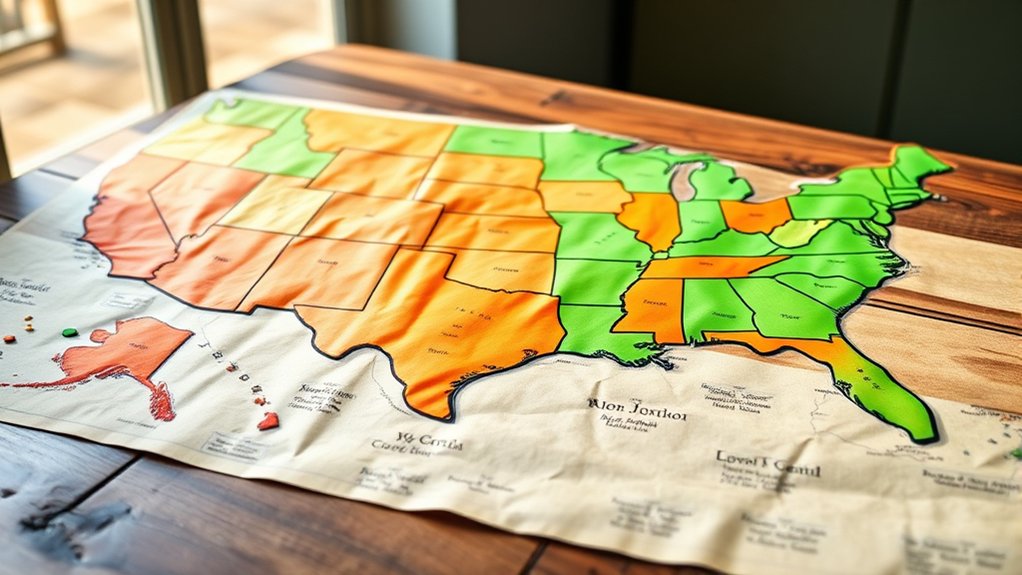
You can carry concealed without needing any extra permits in several states that fully recognize Florida concealed carry licenses. Some of these states include Delaware, Nevada, New Mexico, West Virginia, and Wyoming.
Usually, these states honor both resident and non-resident Florida permits, but keep in mind there might be specific requirements or restrictions you’ll need to follow.
It’s always a good idea to double-check the current reciprocity rules before you travel since these agreements can change over time.
States With Full Reciprocity
Several states fully recognize Florida concealed carry permits, allowing you to carry legally without obtaining additional permits. This full reciprocity means you can exercise your concealed carry rights in these states as long as you comply with local laws. Reciprocity agreements guarantee Florida’s permits are honored equally, simplifying travel and legal carrying for permit holders.
However, you should always verify current reciprocity status before traveling, as changes can occur.
| State | Reciprocity Status |
|---|---|
| West Virginia | Full Recognition |
| Wyoming | Full Recognition |
| Nevada | Full Recognition |
| Delaware | Full Recognition |
| New Mexico | Full Recognition |
These states offer consistent recognition, making your concealed carry permit valid without additional endorsements. So, it’s definitely a good idea to check out these options if you’re planning to travel around with your permit.
Requirements For Recognition
Understanding what it takes for a state to recognize Florida concealed carry permits helps clarify where and how you can legally carry outside Florida.
States like Delaware, Nevada, West Virginia, and Wyoming fully recognize Florida permits under formal reciprocity agreements or mutual statutory recognition.
Typically, recognition applies to residents holding valid Florida concealed carry permits, though some states extend this to non-residents as well.
However, certain states impose restrictions, only honoring permits for residents or limiting specific carry conditions.
Since reciprocity laws frequently change, you must verify each state’s current recognition status through official sources before carrying concealed firearms across state lines.
Staying informed guarantees your compliance with varying requirements for recognition and helps you avoid legal complications when exercising reciprocity rights outside Florida.
States That Honor Florida Permits With Restrictions
Although Florida concealed carry permits are widely recognized across the country, many states impose specific restrictions that affect how you can legally carry.
States like Delaware, Nevada, and West Virginia honor Florida permits but often with limitations on carry locations or permit types.
Colorado and New Mexico require reciprocity agreements or recognize only non-resident permits, meaning your Florida permit may not be valid under all circumstances.
Similarly, Virginia, Pennsylvania, and New York accept Florida concealed carry licenses but restrict where and how you carry.
Because reciprocity terms vary and change frequently, you must verify the current status before traveling.
Understanding these nuanced restrictions guarantees you comply with local laws and avoid legal complications while exercising your concealed carry rights outside Florida.
States That Do Not Recognize Florida Concealed Carry Permits
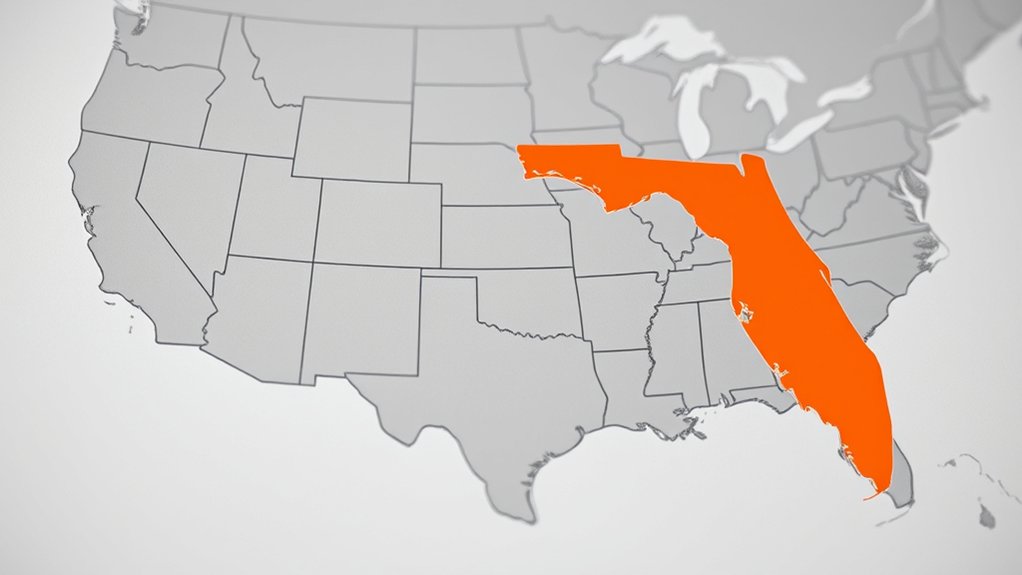
You should know that a few states don’t recognize Florida concealed carry permits. Places like California, New York, and Illinois are on that list.
It’s not just those states either—jurisdictions with tough gun laws, like the District of Columbia and Hawaii, also don’t accept Florida permits.
States Prohibiting Florida Permits
While Florida’s concealed carry permits offer broad recognition, several states explicitly refuse to honor them, limiting where you can legally carry. States like California, New York, New Jersey, Rhode Island, and Illinois don’t recognize Florida’s permits, reflecting their strict firearm regulations.
Furthermore, states such as Hawaii and Massachusetts, with stringent restrictions or bans on concealed firearms, also prohibit Florida permits. Reciprocity agreements don’t apply in these cases, as some jurisdictions explicitly ban carrying with out-of-state permits.
Additionally, the District of Columbia and certain U.S. territories maintain independent firearm laws that exclude Florida’s concealed carry credentials.
You should always verify current laws before traveling, since non-recognition status can change and might vary by local jurisdictions. This can affect the legality of your concealed carry across state lines.
Key Non-Recognition Locations
Certain states stand out as clear exceptions in honoring Florida concealed carry permits, directly impacting where you can legally carry. Key non-recognition locations include California, New York, New Jersey, Rhode Island, Illinois, Oregon, and Hawaii. All of these refuse to recognize Florida’s concealed carry licenses.
Furthermore, places like New York City, Chicago, and Washington D.C. impose strict bans or require local approval regardless of reciprocity agreements.
The main reason behind these non-recognition policies lies in varying state-specific reciprocity frameworks and firearm regulations. These rules limit out-of-state permit validity.
Understanding these exceptions is really important. Carrying in these states without following their rules can lead to legal trouble.
Impact On Florida Holders
Although Florida concealed carry permits offer broad privileges within the state, their legal power substantially diminishes in states that refuse to recognize them. When you hold a Florida license to carry, reciprocity gaps create critical limitations outside Florida’s borders.
In states like California, New York, and Rhode Island, your Florida permit doesn’t grant concealed carry rights. This means you have to navigate different legal frameworks, which can be tricky.
Key impacts include:
- You must obtain a local permit or forgo concealed carry in non-recognition states.
- You must comply strictly with each state’s specific firearm laws, which often restrict or prohibit carrying without a valid in-state license.
- You should verify reciprocity status before traveling to avoid legal penalties.
Understanding these constraints is essential to responsibly exercise your rights while traveling. So, always check the rules before you hit the road.
Critical Legal Differences in Concealed Carry Laws Across States
Understanding the critical legal differences in concealed carry laws across states is essential if you plan to carry a firearm outside Florida. States vary widely in permit requirements. Some allow permitless carry, while others mandate permits and training.
Age limits for concealed carry differ, typically ranging from 18 to 21, with exceptions for military personnel.
Restrictions on locations where you can carry—like schools, government buildings, or private property—also vary.
Importantly, reciprocity agreements impact whether your Florida concealed carry permit is recognized, but not all states honor out-of-state permits.
Background check procedures and prohibited firearm types differ too, which can complicate legal compliance.
To carry lawfully, you have to understand these nuances. Concealed carry rights aren’t uniform across jurisdictions, and not following the rules can lead to serious legal trouble.
What Florida Reciprocity Means for Non-Residents Carrying Firearms
When you carry a Florida concealed carry license as a non-resident, your ability to legally carry firearms in other states depends on whether those states recognize Florida’s permit. Reciprocity varies considerably, so you must verify each state’s recognition policies.
Some states honor Florida’s permits through formal agreements, while others extend unilateral recognition. And some don’t recognize them at all. It can get pretty confusing.
States may honor Florida permits via agreements, unilateral recognition, or not at all, making it confusing.
To navigate this complexity, focus on three key aspects: First, confirm the validity of your Florida concealed carry license in the state you plan to visit.
Next, verify if that state recognizes Florida’s permit via written reciprocity or unilateral acceptance.
Finally, understand that some states specifically allow only Florida non-resident permits, which affects your eligibility.
Being informed about reciprocity ensures you carry firearms legally across jurisdictions.
Tips for Staying Compliant When Traveling With a Florida Concealed Carry Permit
Since laws regarding concealed carry vary widely across states, you should always verify the reciprocity status of your Florida permit before traveling. Check official state resources frequently, as reciprocity agreements can change.
When you carry a concealed firearm, keep your Florida permit visible or easily accessible, and understand each state’s restrictions on signage and permitted carrying locations.
Note that some states prohibit concealed carry in government buildings, schools, or private property, even if they recognize your Florida permit.
Moreover, comply with state-specific rules concerning vehicle carry, open carry, and law enforcement notification. Staying informed about these nuances ensures you remain compliant and avoid legal complications.
Regularly updating yourself on reciprocity and individual state statutes is essential for responsible and lawful concealed carry across state lines.
It might seem like a lot, but staying on top of these details really pays off when you’re on the road.
Frequently Asked Questions
How Do I Apply for a Florida Concealed Carry Permit?
To apply for a Florida concealed carry permit, you must be at least 21 and complete a state-approved firearms training course.
Submit a completed application, fingerprints, and required fees to the Florida Department of Agriculture and Consumer Services.
You’ll undergo a background check to confirm eligibility.
If you’re a military member or veteran aged 18 or older, you may qualify with additional criteria.
Make certain you meet all statutory requirements before applying.
Just double-check everything so your application goes smoothly.
What Are the Fees for Obtaining a Florida Concealed Carry License?
You might be surprised by the total cost to get your Florida concealed carry license. The application fee is $97 if you’re a resident, or $117 if you’re not. Don’t forget the fingerprinting fee, which is around $42.
You’ll likely spend $50 to $150 on required firearms training, too. If you want your license faster, expedited processing costs extra.
Renewals run $45 every seven years, keeping your license valid.
How Long Is a Florida Concealed Carry Permit Valid?
Your Florida concealed carry permit is valid for five years from the issuance date. You need to renew it before it expires to keep your legal carrying privileges. Renewal involves a background check and paying a fee.
The expiration date is clearly printed on your license card. If you don’t renew on time, your permit becomes invalid, and carrying concealed could be unlawful.
Can I Carry a Concealed Firearm in Florida Without a Permit?
Certainly, you can carry concealed in Florida without a permit if you’re 21 or older, thanks to recent legislative changes. This permitless policy allows possession in most places but prohibits it in sensitive spots like schools or government buildings.
Still, you have to strictly follow all legal limitations and restrictions to avoid penalties. It’s really important to stay informed about evolving regulations to make sure your concealed carry remains both lawful and responsible.
What Training Is Required to Get a Florida Concealed Carry Permit?
To get a Florida concealed carry permit, you must complete at least 8 hours of firearms training. This training covers safety, laws, and handling. You need to learn from a certified instructor, and the course must include a live-fire demonstration or qualification.
If you’re military or an honorably discharged veteran, you’re exempt from the training as long as you provide proof of service. These requirements make sure you’re competent and knowledgeable before carrying concealed.
It’s all about being prepared and responsible. So, taking the time to complete the training really helps you carry safely and confidently.
Conclusion
Exploring Florida concealed carry reciprocity is like driving on an unfamiliar highway. You need clear signs to avoid wrong turns. With over 30 states recognizing Florida permits in some form, understanding each state’s unique rules is essential.
Just like a GPS guides you through complex routes, staying informed helps you carry responsibly and legally. Remember, compliance isn’t just about legality. It’s also about safety and respect for the diverse laws you’ll encounter on your journey.