How Long Is A Concealed Carry Permit Good For – Expiration And Renewal Guide
Your concealed carry permit is typically valid for five years, though this varies by state. You’ll find the expiration date clearly marked, and timely renewal, usually beginning about 90 days before expiration, is essential to avoid lapses.
Renewal requires submitting fees, documents, and sometimes additional proofs like training or fingerprints. Processing generally takes 4–6 weeks. During this time, your current permit remains valid.
Understanding state-specific policies will help you maintain continuous coverage and stay fully compliant. Explore further to master every renewal detail.
How Long Is a Concealed Carry Permit Valid?

Most concealed carry permits remain valid for five years, though the exact duration depends on your state’s regulations. Your concealed carry permit is valid for the period specified on your license, with the expiration date clearly indicated. Some states even issue lifetime permits, but most require license renewal every few years.
As a permit holder, you need to complete the renewal process before your permit expires so you don’t have to reapply from scratch. The renewal application usually involves submitting updated information and paying a renewal fee.
Many states now offer renewal online, which makes the process a lot easier.
You might get a renewal reminder about three months before your permit expires, but it’s your responsibility to keep track of your expiration date. Renewing on time ensures you keep your legal carry rights without any interruptions.
When Should You Start Your Concealed Carry Permit Renewal?
Knowing when to begin your concealed carry permit renewal can save you from lapses in legal carry status. You should start the renewal process about 90 days before your permit expiration. Many states allow renewing early within this renewal window, helping you avoid late fees or permit expiration.
Starting early also accounts for application review and processing time, which reduces the risk of delays. Some states have specific renewal windows ranging from 60 to 120 days, so be sure to check your local regulations.
| Renewal Window Start | Purpose | Benefit |
|---|---|---|
| 90 days before | Submit application | Avoids permit expiration |
| 60 days before | Meet state deadline | Prevents late fees |
| 120 days before | Early renewal option | Ensures uninterrupted validity |
| Permit expiration | Final renewal date | Last chance to renew |
What Fees and Documents Are Needed to Renew Your Permit?
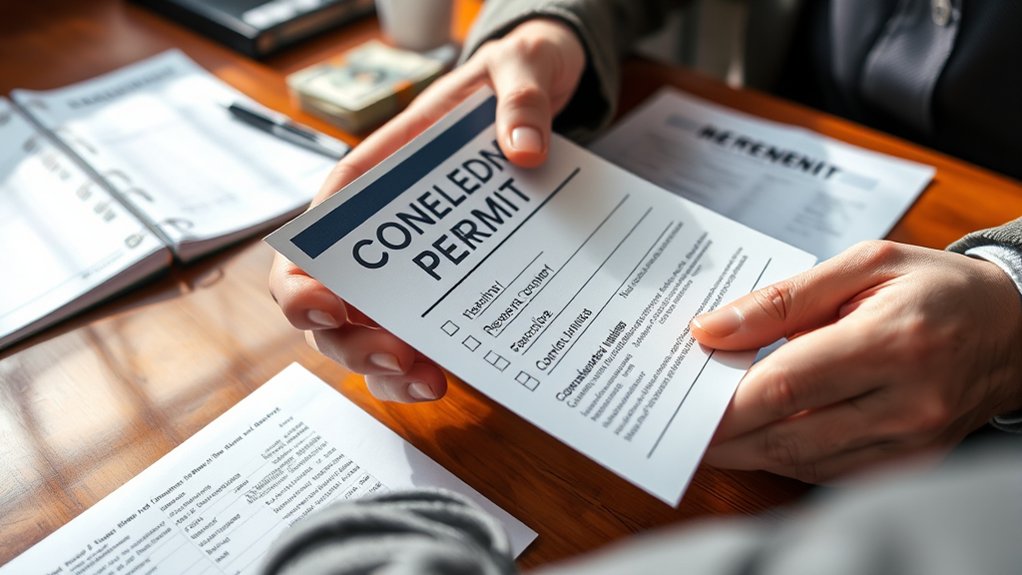
You’ll need to pay a renewal fee, which varies by state—usually anywhere from $20 to over $100.
Along with the fee, you’ll want to have some important documents ready, like a valid photo ID, proof of residency, and a completed application.
Some states might also ask for extra items, such as proof of training or a recent photograph.
Renewal Fees Breakdown
Although renewal fees differ markedly across states, understanding the exact costs and required documents is essential for a smooth permit renewal process. Renewal fees for a concealed carry permit can range from $20.75 to $125 or more, with some states offering lifetime permits.
Most states require you to submit a renewal form, proof of training, and a background check. Online renewals often include a convenience fee, while mail-in or in-person renewals demand completed forms and payment methods like checks or credit cards.
| State Example | Renewal Fee & Convenience Fee |
|---|---|
| Utah | $20.75 + $0.75 convenience fee |
| Others | $125+ application fee |
| Lifetime | Varies by state, no renewal needed |
Be sure to meet your renewal deadline and comply with all renewal requirements. Don’t wait until the last minute—it’s better to be early and prepared.
Required Renewal Documents
Renewal fees are just part of what you’ll need to submit when renewing your concealed carry permit. To complete the renewal process successfully before your license expires, you have to provide all the required documents promptly.
Usually, you’ll need a completed renewal form filled out accurately, payment of the applicable renewal fee, and a recent passport-quality color photograph. You might also need proof of training or refresher courses if your state requires it, along with supporting paperwork like a copy of your current permit.
Submitting these documents ensures you’re following your state’s specific renewal process. So, make sure you gather and organize everything ahead of time to avoid any delays.
Your completed application package, including the renewal form and all supporting documents, must be sent to the agency or address your state specifies.
Renewal Methods for Concealed Carry Permits
When your concealed carry permit nears expiration, you can typically renew it online, in person, or by mail, depending on your state or county regulations. These renewal methods vary, so it’s vital to understand the specific renewal window, which often starts 90 days before expiration, and the renewal requirements in your jurisdiction.
The renewal process usually involves submitting documentation and paying a renewal fee that ranges from $20 to over $100. Sometimes, you might also need to complete a background check.
Some states require updated photographs, fingerprinting, or proof of firearm proficiency, while others waive additional training.
Online renewal offers convenience, but if your state mandates in-person verification or mail renewal, you’ll need to follow those protocols precisely. Staying informed on these renewal methods guarantees a smooth, timely renewal of your concealed carry permit.
What Happens After You Submit Your Concealed Carry Permit Renewal?

After you submit your concealed carry permit renewal application, it goes through a thorough background check and processing phase before it gets approved. This processing usually takes about 4 to 6 weeks, depending on your state or county. During this time, your current permit stays valid, so you can carry legally without any interruptions.
Once your permit is approved, a new one is issued and mailed directly to you. If there’s any problem with your renewal application—like if it’s incomplete or you don’t qualify—you’ll get a notification explaining what went wrong and what you need to do next. This might mean reapplying or even appealing the decision.
After approval, your new permit is mailed; if issues arise, you’ll receive instructions to reapply or appeal.
Here are a few key points to keep in mind:
- Submitting your renewal triggers a detailed background check.
- The processing period usually lasts several weeks.
- Your current permit stays valid while you wait.
- You’ll get your new permit in the mail once approved.
- If your application is incomplete or denied, you’ll be notified with next steps.
Common Reasons Concealed Carry Permits Are Denied or Expire
Although obtaining a concealed carry permit can be straightforward, various factors can lead to its denial or expiration. Your application may be denied if you have recent criminal convictions, especially violent crimes or domestic violence misdemeanors. Disqualification also occurs with recent mental health treatments, substance abuse issues, or court findings indicating likely unlawful weapon use.
Failure to complete mandatory training or firearm safety courses often results in permit denial or expiration.
Furthermore, providing false information or neglecting to update your address can cause your license to be revoked or suspended. If you miss the renewal deadline, your permit expires, and you’ll need to reapply.
Staying compliant with all requirements is essential to avoid having your concealed carry permit denied, revoked, or expired. So, make sure you keep everything up to date and follow the rules closely to keep your permit valid.
How to Avoid Gaps in Your Concealed Carry Permit Coverage
Keeping your concealed carry permit valid takes more than just avoiding disqualifying factors. You need to be proactive about managing your renewal timelines.
To avoid gaps in your permit coverage, you have to act early and follow a clear renewal process. Here’s how to make sure your coverage stays continuous and valid:
- Start your renewal application at least 90 days before your permit expires.
- Keep track of your state’s specific renewal deadlines and any grace periods they offer.
- Most permits are valid for five years, so plan your renewal accordingly.
Renew promptly to avoid having to reapply and meet initial qualification requirements if your permit expires.
Also, check if your state provides de facto extensions during the renewal process to keep your coverage active.
Frequently Asked Questions
Can I Carry Concealed Without a Permit in Texas?
No, you generally can’t carry concealed without a permit in Texas unless you qualify for specific exemptions.
If you don’t have a valid License to Carry (LTC), carrying a concealed handgun is illegal and considered a Class A misdemeanor.
However, certain law enforcement officers and individuals with specific legal exemptions can carry without a permit.
Always check current laws and respect private property restrictions where concealed carry may be prohibited.
Is My Permit Valid in Other States?
Your permit’s validity varies by state because each has different reciprocity agreements. You’ll want to check if the state you’re visiting recognizes your permit specifically. It’s not automatic, so don’t assume it works everywhere.
Also, make sure your permit hasn’t expired or been revoked. That can affect whether it’s accepted at all.
Always take a moment to review each state’s laws and reciprocity status before carrying concealed across state lines.
Staying informed protects you from legal issues and helps you carry responsibly wherever you go. It might take a little extra effort, but it’s worth it for your peace of mind.
What Happens if I Lose My Permit?
When you lose your permit, remember “an ounce of prevention is worth a pound of cure.” You should promptly report the loss to the issuing authority and request a replacement.
You’ll likely need to submit an application, provide ID, and pay a fee.
Some states might require a new background check.
It’s a good idea to keep a digital or physical backup to avoid delays.
Replacement processing usually takes a few weeks, so act quickly to stay compliant.
Are There Restrictions on Where I Can Carry Concealed?
Yes, you face restrictions on where you can carry concealed. Schools, government buildings, and private properties with no-gun signs are off-limits.
Bars, restaurants serving alcohol, and places of worship usually prohibit concealed carry.
Airports, courthouses, and college campuses often have strict bans unless you have explicit authorization.
You also can’t carry while under the influence of alcohol or drugs.
Always check local laws, as restrictions vary by jurisdiction.
Can a Permit Be Suspended or Revoked After Renewal?
Think of your concealed carry permit like a fragile glass. Renewing it doesn’t make it unbreakable.
Yes, your permit can be suspended or revoked after renewal if you violate laws, engage in criminal activity, or face disqualifying issues like substance abuse.
Authorities may act on new evidence, but you’ll get a formal hearing to contest it.
Once revoked, you must start fresh, meeting all eligibility criteria again to regain your permit.
Conclusion
To keep your concealed carry permit valid, start the renewal process early, ideally 60 days before expiration. For example, John, a permit holder in Texas, avoided legal trouble by renewing on time. He submitted all required documents and paid fees promptly.
Missing deadlines or incomplete applications can cause delays or denials. This risks gaps in your coverage. So, stay proactive and follow your state’s specific rules.
Make sure to maintain continuous permit validity. That way, you can carry confidently and legally.