Is Concealed Carry Legal – Laws And Permit Requirements
You can legally carry a concealed weapon in many U.S. states, but permit requirements vary widely. Some states require permits with background checks and training, while others allow permitless carry. However, they still set restrictions on where and how you can carry.
Federal and state laws work together to define specific rules and penalties for violations. It’s important to understand these nuances and your eligibility. Knowing how the laws impact public safety and enforcement protocols also matters.
There are more details that clarify these complex regulations. So, taking the time to learn about them can really help you stay compliant and safe.
Which States Require a Permit for Concealed Carry?
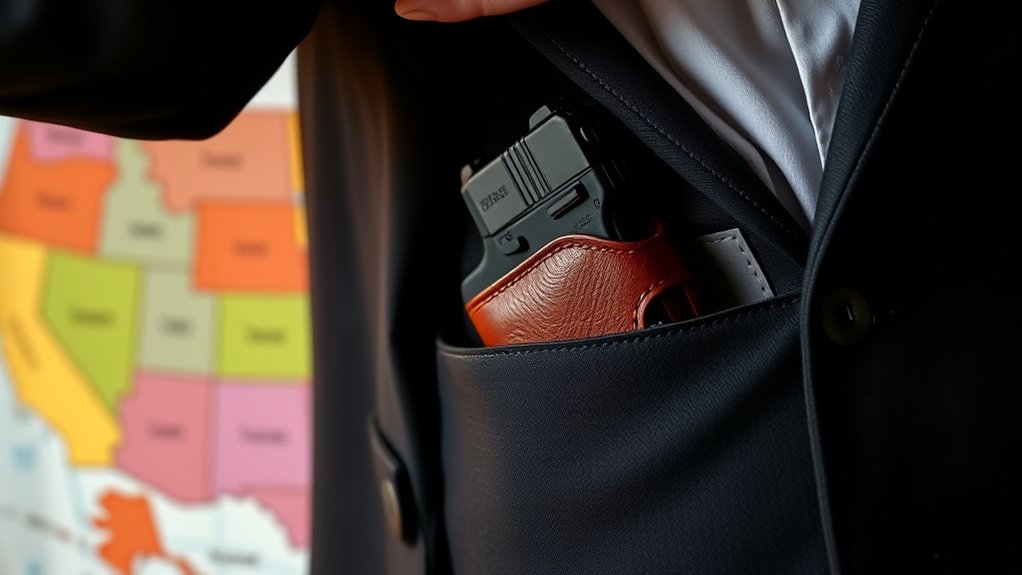
Which states require a permit for concealed carry? Currently, 21 states, including California, Colorado, and Illinois, mandate permits for concealed carry in public. These states have clear permit requirements involving licensing, background checks, and often firearm safety training.
Twenty-one states, like California and Illinois, require permits, background checks, and safety training for concealed carry.
Their firearm laws emphasize regulated, lawful concealed carry, guaranteeing individuals meet strict criteria and renewal procedures.
In contrast, 29 states, such as Alabama, Arizona, and Texas, allow permitless carry, eliminating the need for licensing or background checks for concealed firearms.
Understanding these distinctions is vital if you want to comply with local laws. While permit-required states prioritize controlled access through formal processes, permitless carry states offer broader freedom but with varied legal implications.
You must verify specific state regulations to confirm lawful concealed carry practices.
Who Can Legally Carry a Concealed Weapon?
Who can legally carry a concealed weapon varies a lot by state, reflecting different rules and approaches. In some states like Florida, you can carry concealed without a license if you meet certain criteria for permit requirements.
Other states, like Alabama and Alaska, let most adults carry concealed without many restrictions.
Usually, you have to be at least 21 years old to carry legally, though there are some exceptions. People convicted of felonies or those under domestic protective orders are generally not allowed to have concealed weapons.
License holders often have specific exemptions, such as law enforcement and military personnel. It’s important to understand who qualifies under these laws because each state defines eligibility differently.
They try to balance public safety with individual rights when it comes to concealed carry rules.
Types of Weapons Classified as Concealed Weapons
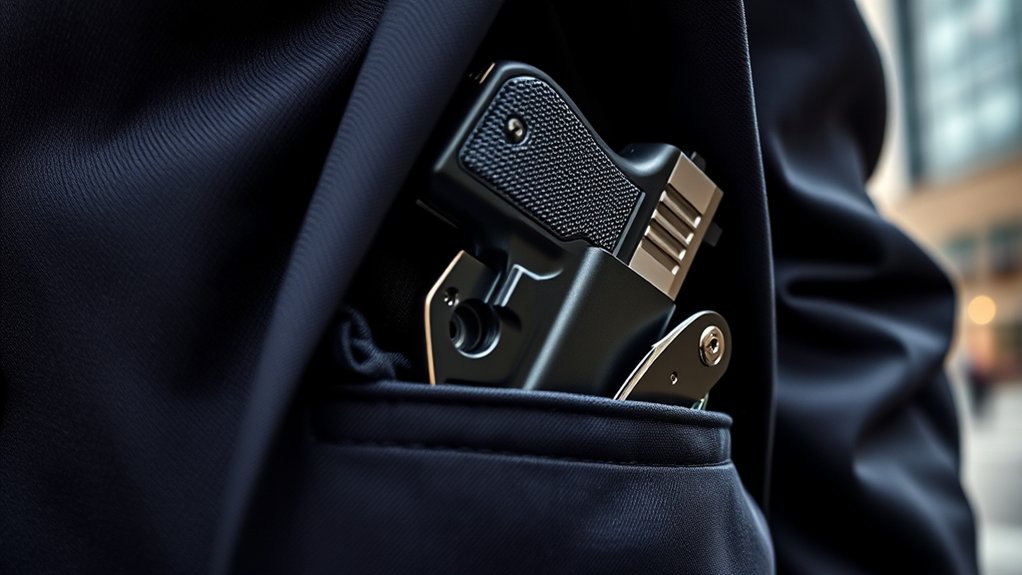
Although many associate concealed weapons solely with handguns, the legal definition actually covers a variety of items, including electronic devices, tear gas guns, knives, and billies, as outlined in Florida law. When you think about weapon classification, it’s important to realize that concealed weapons aren’t just firearms.
Electronic devices designed for self-defense and certain knives fall under this category when carried hidden from view. But keep in mind, machine guns are explicitly excluded from permitless carry provisions.
Understanding these distinctions helps you comply with legal requirements and avoid unintentional violations. Proper classification affects whether you need a permit or qualify for permitless carry.
Understanding Permitless Concealed Carry Laws and Where They Apply
When states like Florida, Alaska, Arizona, and Texas allow permitless concealed carry, they let you carry a concealed firearm without a license, as long as you meet the same eligibility criteria required for a permit.
Permitless carry means you skip the licensing requirements and often the mandatory safety training too.
Permitless carry allows you to bypass licensing and frequently the required safety training as well.
However, firearm laws still restrict concealed firearms in sensitive areas. Also, private property owners can prohibit carrying with posted signs.
While these states remove the licensing barrier, they still keep eligibility standards in place to ensure responsible possession. It’s important to understand where permitless carry applies because, even with relaxed rules, legal boundaries remain.
You need to follow restrictions that protect public safety and respect private property rights. Remember, permitless carry doesn’t mean you have unrestricted access to concealed firearms.
Where Can’t You Carry a Concealed Firearm?

Where exactly can you not carry a concealed firearm? Concealed carry restrictions limit legal carry in sensitive locations and prohibited areas to ensure public safety and compliance with firearm laws. You cannot carry in law enforcement facilities, courthouses, schools, or places serving alcohol.
Furthermore, private property owners can restrict firearms through posted signs or explicit consent.
| Location Type | Examples | Reason for Restriction |
|---|---|---|
| Law Enforcement | Police stations, jails | Security and safety |
| Government Buildings | Courthouses, legislative offices | Controlled access |
| Educational Sites | Schools, colleges | Protecting minors |
| Public Events | Athletic events, bars | Alcohol and crowd safety |
| Private Property | Posted or owner-restricted areas | Property rights enforcement |
Understanding these helps you navigate and respect firearm laws effectively. It’s always best to check local regulations before carrying concealed in any location.
Safety and Training Requirements for Concealed Carry Permits
Because concealed carry involves significant responsibility, many states require applicants to complete thorough firearm safety training before issuing a permit. These training requirements often include both classroom instruction and live-fire exercises to guarantee you grasp safe firearm handling and understand the legal framework of concealed carry laws.
For instance, states like California, Massachusetts, and Illinois mandate at least 16 hours of classroom time plus 2 hours of live-fire training. You’ll typically need to provide proof of this training when applying for a concealed carry permit, especially for new licenses issued after specific dates, such as September 1, 2022, in New York.
While existing permit holders mightn’t always need to retake courses for renewal, demonstrating responsible firearm handling remains a consistent priority within these training protocols. It’s all about making sure everyone stays safe and informed.
Getting and Renewing Concealed Carry Permits
You’ll need to meet age requirements and complete specific firearm safety training before you can apply for a concealed carry permit.
Once you have your permit, it usually lasts between 3 to 5 years.
When it’s time to renew, you might have to go through additional background checks or even take some more training.
Knowing how all this works helps you stay on the right side of state laws throughout the life of your permit.
Permit Application Process
How do you navigate the process of obtaining or renewing a concealed carry permit? The application process requires you to submit documentation, complete firearm safety training, and undergo background checks.
States often mandate in-person interviews and character references, with requirements varying locally.
Some jurisdictions include live-fire exercises to assess proficiency.
For permit renewal, which typically occurs every 3 to 5 years, you may need to repeat background checks and safety training. Although, some states waive training if you’ve already completed it.
Furthermore, certain areas allow you to add specific firearm types, like semi-automatic rifles, to your permit through local authorities.
Understanding these steps ensures you maintain legal access to concealed carry privileges and comply with evolving regulations efficiently and responsibly.
Renewal and Recertification
When should you begin the renewal process for your concealed carry permit? Typically, permit renewal occurs every 3 to 5 years, depending on state and local laws. To guarantee uninterrupted legal carry, start renewal well before expiration.
Renewal and recertification often require completing a background check to confirm eligibility. You may also need to meet any updated training requirements, especially regarding firearm safety. Submitting updated personal information is usually necessary, too.
Plus, you might have to demonstrate continued proficiency or compliance depending on your jurisdiction’s rules.
Some states have shortened renewal periods from 5 to 3 years, which means you’ll need to recertify more often. While many places don’t require additional training during renewal, others do mandate refresher courses.
Training and Certification
Although requirements vary by state, most jurisdictions mandate completion of firearm safety training before issuing a concealed carry permit. This often includes live-fire exercises to guarantee practical proficiency.
This training helps make sure you understand safe handling and the legal responsibilities tied to concealed carry permits.
For example, in New York, you must provide proof of safety training, attend an interview, and submit character references for both issuance and license renewal.
Recertification typically happens every three to five years. Some states might waive additional firearm training during renewal.
If you’re active or retired military or law enforcement, training requirements may be modified based on your prior experience.
While some states impose updated safety or testing standards at renewal, others maintain licenses without expiration or further firearm training.
This shows there are lots of different approaches to training and certification nationwide.
Legal Penalties for Violating Concealed Carry Laws
If you carry a firearm in places where it’s not allowed, you could be charged with a misdemeanor. That might mean facing fines or even criminal prosecution.
Law enforcement agencies expect you to follow all the rules, especially in sensitive areas like schools and courthouses.
Misdemeanor Charges Explained
How seriously can violating concealed carry laws impact you? Misdemeanor charges often follow illegal carry in prohibited areas, with legal penalties designed to enforce concealed carry restrictions strictly. Carrying a firearm where it’s not allowed, like courthouses or schools, can lead to second-degree misdemeanor charges.
Here are some key points to think about:
Misdemeanor penalties often involve fines, probation, or up to 60 days in jail. Firearm violations carry consequences regardless of intent. And if you keep offending, charges might get upgraded to higher misdemeanors or even felonies.
Penalties vary by state but always enforce restrictions on prohibited areas. Understanding these legal penalties helps you avoid serious consequences tied to firearm violations. It’s all about making sure you stay on the right side of concealed carry laws.
Enforcement And Individual Responsibility
Where do the lines of responsibility and enforcement blur when it comes to concealed carry violations? You must recognize that individual responsibility plays a pivotal role under concealed carry laws.
Law enforcement strictly enforces legal penalties for violating restrictions, such as carrying firearms in unauthorized locations like courthouses or polling places.
Even unintentional breaches can lead to criminal charges, license suspension, or revocation. Additionally, failing to secure your firearm properly during transport or storage risks unlawful legal access by minors or prohibited persons, triggering additional consequences.
Since enforcement varies by state and locality, you need to thoroughly understand your jurisdiction’s specific restrictions.
Ultimately, adherence to concealed carry laws and proactive compliance mitigate legal penalties and ensure responsible firearm possession.
Interaction Between Federal and State Concealed Carry Laws
Although federal laws like 18 U.S.C. §§ 926B and 926C establish baseline regulations for firearm transfers and concealed carry, state laws primarily determine where and how you can carry concealed weapons. Federal laws provide a framework, but state permit laws dictate the specifics, creating nuanced legal interactions.
You have to navigate variations such as states requiring permits versus those allowing permitless carry. There are also reciprocity agreements that enable cross-state permit recognition. Plus, federal laws set minimum standards without overriding state restrictions.
Recent legal shifts post-Bruen have affected concealed carry regulations too. Understanding these layers is critical because federal laws influence but don’t control your concealed carry rights. State laws, shaped by local policies and court decisions, govern your actual ability to carry concealed.
Common Myths and Facts About Concealed Carry Laws
You might think that permitless carry means you can carry a firearm anywhere, but that’s not the case. There are still certain places where carrying isn’t allowed, no matter if you have a permit or not.
It’s really important to know these rules so you don’t accidentally run into legal trouble. So, let’s break down where you can and can’t carry under the current laws.
Permitless Carry Clarifications
While permitless carry laws let you carry concealed weapons without a license, they don’t remove all restrictions or change background check requirements for buying firearms. Permitless carry makes it clear that licensing requirements still matter where they apply, and responsible carrying standards are still in place.
Keep in mind, permitless carry doesn’t get rid of concealed weapon licenses; some states still issue them. Also, firearm restrictions, including background checks, stay the same even with permitless carry.
Certain places like schools and courthouses still don’t allow concealed weapons, even under permitless carry. And the rules for carrying responsibly with permitless carry are pretty much the same as those for getting a license.
Knowing these differences helps you follow the law and be a responsible firearm owner.
Restricted Carry Locations
Even though concealed carry laws let you carry firearms in many places, there are clear legal restrictions that prohibit carrying in specific locations like schools, courthouses, police stations, and government buildings. These spots are often called sensitive areas and they remain off-limits no matter what your permit status is.
Federal law explicitly bans firearms in certain areas, which means these rules apply regardless of state concealed carry laws or permit requirements.
On top of that, private property owners can restrict firearms on their property by putting up signs or giving explicit notice.
How Permit Law Changes Affect Public Safety and Crime
Although proponents argue that relaxed permit laws enhance personal safety, evidence indicates that weakening concealed carry regulations correlates with increased violent crime rates, including homicides and gun assaults. When you examine changes in concealed carry laws and permit requirements, several impacts on public safety and crime emerge.
States easing firearm access see a 13-15% rise in violent crime rates. Lax permit requirements contribute to an 18% drop in crime clearance rates by law enforcement. Increased legal gun availability leads to more gun thefts, fueling criminal activity.
Expanded public carry laws coincide with more police shootings of civilians.
These findings suggest that loosening permit laws challenges public safety and complicates law enforcement efforts rather than reducing crime. So, it’s not just about making it easier to carry a gun—it’s about how those changes affect everyone’s safety.
Frequently Asked Questions
How Do Concealed Carry Laws Affect Travel Between States?
Concealed carry laws affect your travel by requiring you to understand and comply with each state’s specific regulations. Reciprocity agreements vary, so your permit mightn’t be recognized everywhere.
Some states allow permitless carry, which can make it tricky to know what’s legal as you cross borders.
You must carry your permit, follow storage rules, and avoid restricted areas to prevent violations.
Staying informed helps you avoid legal trouble and guarantees responsible firearm transport during travel.
It’s always a good idea to double-check the laws before you hit the road.
Can Employers Ban Concealed Carry on Private Property?
Yes, employers can ban concealed carry on private property they own or control. You need to follow their policies, which often include clear signage or explicit communication.
Some states require posted signs to enforce these bans, while others accept verbal rules.
There might be exceptions for law enforcement or licensed security.
Ignoring these rules can lead to disciplinary action or termination. So, it’s always a good idea to check and respect your employer’s firearm policies.
Are There Special Rules for Carrying Concealed Firearms in Vehicles?
You might think you can stash a concealed firearm anywhere in your vehicle, but that’s not true. Special rules require you to keep your firearm unloaded, locked, and stored in a tamper-resistant container while transporting it.
You can’t just leave it in the glove compartment unless it’s locked.
These regulations guarantee safety and prevent unauthorized access. So, you should always secure your firearm properly during transport to comply with the law.
It’s all about keeping things safe and following the rules.
How Do Concealed Carry Laws Impact Gun Owners With Prior Convictions?
Concealed carry laws often restrict your ability to carry if you have prior convictions. Felony or domestic violence convictions usually disqualify you from obtaining a permit.
Even in permitless carry states, certain convictions can bar you from carrying concealed firearms in public.
You might need additional background checks or legal relief, like expungement, to regain eligibility.
It’s important to understand your state’s specific laws to avoid legal consequences. Knowing the rules can save you a lot of trouble down the road.
What Insurance Options Exist for Concealed Carry Permit Holders?
You have several insurance options as a concealed carry permit holder. Specialized firearm liability policies cover legal defense, damages, and injuries from accidental or self-defense incidents.
Costs vary by coverage, state laws, and your background, typically ranging from $100 to several hundred dollars annually.
Though not mandatory, these policies offer financial protection and peace of mind. Plus, firearm organizations often provide group plans or discounted rates for members with active permits.
It’s worth checking out what’s available to find a plan that fits your needs and budget.
Conclusion
Understanding concealed carry laws can feel like decoding a secret language, but knowing state requirements and restrictions is essential. You need to know who can legally carry, where you can’t, and how federal and state laws work together to avoid severe penalties.
Remember, permitless carry doesn’t mean you’re off the hook. Staying informed helps you protect yourself responsibly. It also ensures public safety isn’t compromised by misunderstandings or myths.