How To Hold A Rifle For Long Range Shooting – Proper Technique Guide
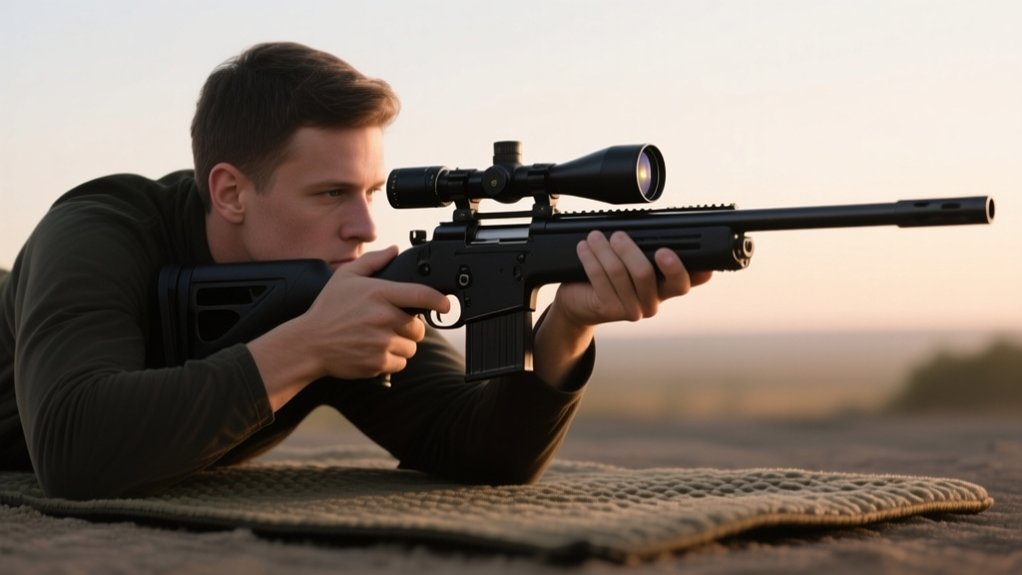
You hold your rifle with a firm yet relaxed grip, keeping your support hand forward on the forend to maintain control and absorb recoil. Position your body directly behind the rifle and align your shoulders perpendicular to the target. Keep a consistent cheek weld for proper sight alignment.
Use bone support and steady breathing to reduce movement. Mastering these basics sets a strong foundation. Exploring further will help you refine your technique for greater accuracy.
Why Proper Rifle Hold Matters for Long-Range Shooting
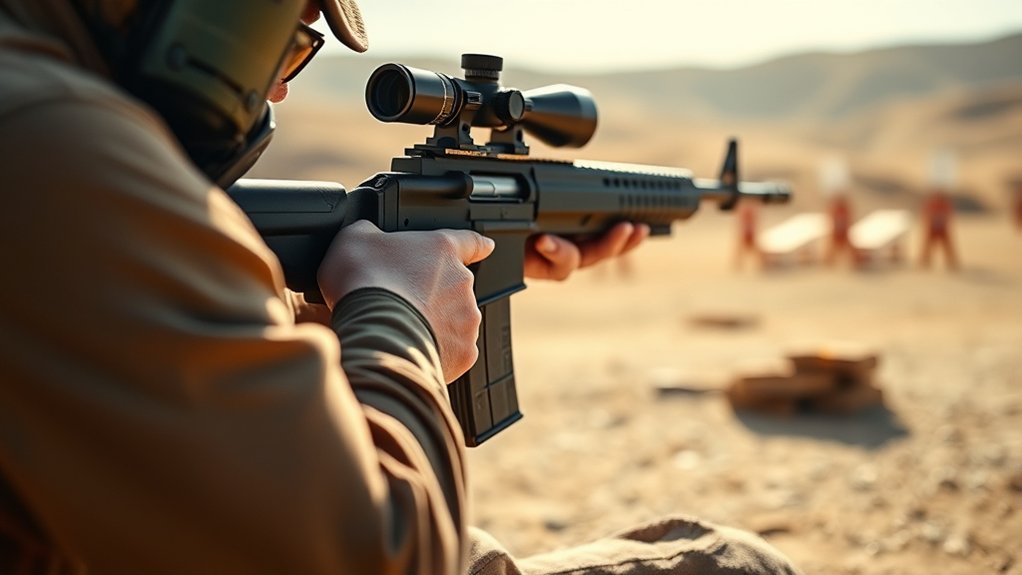
Stability is the foundation of accurate long-range shooting, and how you hold your rifle plays a critical role in achieving it. A proper rifle hold minimizes movement, letting you place shots consistently, especially at extended distances.
You’ll want to rely on bone support rather than muscle tension to maintain stability and reduce fatigue during prolonged shooting sessions. Establishing a firm shoulder pocket connection and a consistent cheek weld helps align your eye perfectly with the optic, giving you a clear sight picture.
Your grip should be relaxed yet secure, allowing subtle adjustments without introducing unwanted motion.
Practicing different shooting positions in real conditions will build your adaptability, so you’re ready to maintain precision no matter the scenario.
How to Get a Stable Rifle Grip and Forend Control
To get a stable rifle grip and forend control, start by holding the forend firmly but without excess tension. This helps you maintain control while minimizing movement.
Position your support hand further forward on the forend to boost stability and reduce upward motion during recoil.
Use shooting bags or bipods to stabilize the rifle, letting your bones support the weight instead of relying solely on muscle strength. This approach improves recoil management and keeps your shots consistent.
Maintain a steady cheek weld and shoulder contact to keep the rifle aligned throughout.
Practice adjusting your grip pressure on the forend to find the balance that works best for you. Developing a stable rifle grip and mastering forend control are essential steps toward accurate long-range shooting.
Setting Up Your Body Position for Maximum Stability
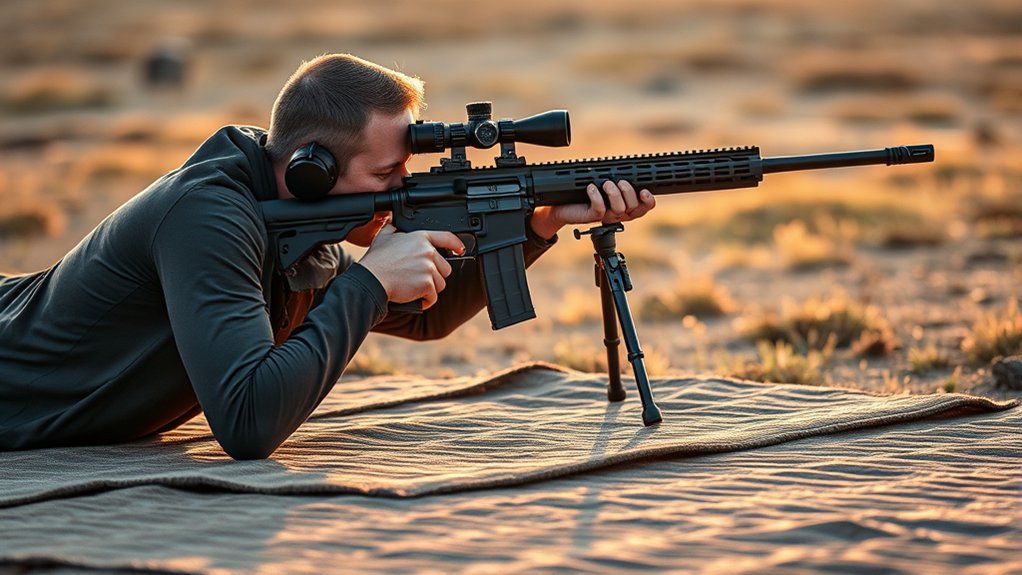
To set up your body for maximum stability, start by positioning yourself directly behind the rifle. Make sure your shoulders are aligned perpendicular to the target. This helps create a solid foundation.
Next, use your bones to support the rifle. You can do this by flexing your strong-side leg while keeping your weak-side leg straight. This way, you’re building a stable base to work from.
And don’t forget about your elbows. Optimizing their placement is key to reducing movement and maintaining your balance throughout the shot.
It all comes together to help you stay steady and accurate.
Aligning Body With Target
One key step in long-range shooting is positioning your body directly behind the rifle, creating a straight line from your shoulder to the target. This alignment minimizes lateral movement and enhances stability, which is essential for long shots.
To set your shooting position effectively, keep your shoulders perpendicular to the line of fire to avoid “blading” and misalignment. Also, maintain a consistent cheek weld for proper eye alignment with your optic.
Position your legs shoulder-width apart, distributing weight evenly to absorb recoil. Use natural supports like rocks or logs to stabilize your stance.
Finally, focus on steady trigger control, making sure your body alignment supports smooth, controlled shots.
Leveraging Bone Support
Aligning your body with the target sets the foundation, but gaining maximum stability comes from leveraging your skeletal structure. Rely on bone support rather than muscular tension to hold a stable shooting position.
Position the buttstock closer to your body’s center and keep your shoulders perpendicular to the shot line. Using shooting aids like bags or bipods helps transfer rifle weight onto your bones, reducing fatigue and improving control.
This setup lets you focus on a smooth trigger pull without unnecessary muscle strain. Getting low and using natural terrain enhances stability further.
Practicing prone or seated positions with this focus builds a repeatable stance. When your bones carry the load, your breath control and trigger pull become more precise, boosting your long-range accuracy consistently.
Optimizing Leg And Elbow
Although your upper body plays an essential role, your legs and elbow provide the foundation for maximum stability when shooting long range. Setting up the right position guarantees you stay stable and control recoil efficiently.
Focus on your elbow placement and leg stance to minimize movement and improve accuracy.
- Position your legs shoulder-width apart to create a stable base.
- Flex your strong-side leg, bearing weight on your thigh; keep the weak-side leg straight.
- Place your elbow directly under the rifle, resting it firmly on a solid surface like a shooting bag.
- Use a bipod or rest to support the barrel for consistency and reduce fatigue.
- Maintain a consistent cheek weld for proper eye alignment and a steady sight picture.
Optimizing your leg and elbow position enhances stability for precise long-range shooting.
Aligning Your Rifle and Body for Accurate Shots
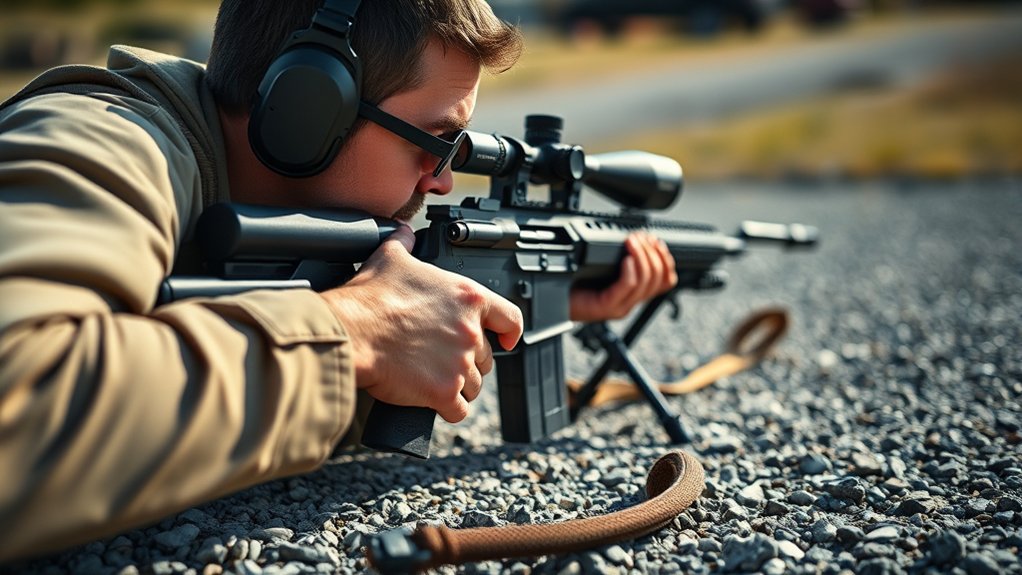
When you position your body directly behind the rifle, you create a stable foundation that reduces crosshair wobble and improves accuracy. Align your shoulders perpendicular to the target, maintain a consistent cheek weld, and position your eye 1-2 inches from the optic.
Flex your strong-side leg while keeping the weak-side leg straight, with your feet spread for stability. Support the butt firmly against your shoulder and use a bipod or shooting rest to support the barrel. These steps enhance recoil absorption and reduce muscle fatigue, which is critical for good shooting.
Remember to practice dry firing regularly to refine your shooting technique and body alignment.
| Action | Benefit |
|---|---|
| Support the butt | Enhances stability |
| Hold your breath | Minimizes movement |
| Align shoulders | Reduces crosshair wobble |
| Use bipod/rest | Steadies aim, reduces fatigue |
Breathing Techniques That Steady Your Aim
Because controlled breathing directly impacts your shot stability, mastering breath control is essential for long-range shooting. Your breathing pattern influences your ability to maintain control and achieve precision shooting.
Controlled breathing is crucial for shot stability and precision in long-range shooting.
To steady your aim, follow these key techniques:
Inhale slowly, exhale halfway, then pause before the trigger squeeze. Avoid holding your breath too long to prevent jitters and increased heart rate.
Recognize inconsistent vertical shot placement as a sign of poor breath control. Practice breath control exercises to build consistency and enhance performance.
Sync your breathing pattern with your trigger squeeze to improve focus and accuracy.
Mastering Smooth Trigger Control for Precision
Mastering smooth trigger control plays an essential role in achieving precision during long-range shooting. To shoot accurately, use the pad of your index finger to squeeze the trigger with a steady, straight-back pressure. Avoid jerking the trigger, which can throw off your shot placement.
Maintain a firm grip on the stock and keep your sight picture undisturbed by applying consistent pressure. Follow through by holding the trigger back even after the shot breaks; this prevents flinching and reinforces good habits.
Practicing dry firing helps you develop trigger control without recoil distractions and lets you feel the trigger reset for quicker follow-ups.
Managing Recoil Without Losing Your Sight Picture
Smooth trigger control sets the foundation for accuracy, but managing recoil effectively guarantees you don’t lose your sight picture after the shot.
To excel at long-range shooting, you need to control the rifle’s movement and stay aligned with your target.
Focus on keeping firm shoulder contact with the rifle stock to minimize movement. Use a relaxed but controlled forend grip to absorb recoil.
Adopt a breathing technique: inhale, exhale halfway, hold before firing.
Position your body with legs shoulder-width apart to naturally absorb recoil.
Consider recoil-reducing accessories like a muzzle brake or recoil pad.
How Shooting Accessories Can Help You Hold Steady
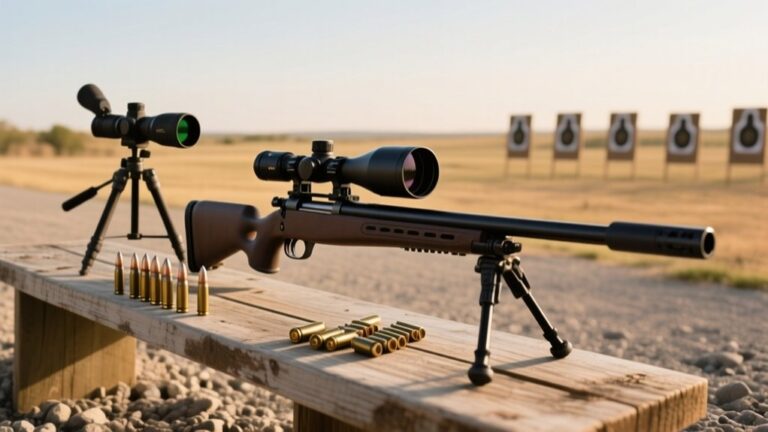
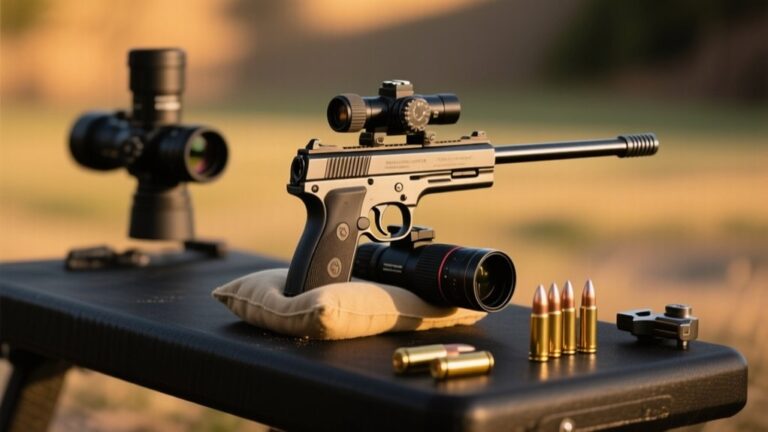
A variety of shooting accessories can greatly improve your ability to hold steady during long-range shots. Shooting bags provide essential support, letting you make fine adjustments while reducing muscle fatigue.
Bipods anchor your rifle to the ground, minimizing movement and boosting accuracy, especially during long sessions. As a rifle shooter, you’ll benefit from recoil management devices like muzzle brakes, which reduce recoil impact. This allows quicker follow-up shots and keeps your sight picture steady.
These tools combine to help you maintain control and precision when holding your rifle. By integrating shooting bags, bipods, and recoil management devices into your setup, you’ll find it easier to stay steady and consistent, enhancing your overall shooting performance in demanding long-range scenarios.
Fine-Tuning Your Rifle Hold for Different Conditions
You’ll want to adjust your grip pressure depending on the conditions to keep the rifle steady without over-tightening. It’s all about finding that sweet spot.
Also, pay close attention to how you control the forend—small changes here can really improve your stability.
Another thing to consider is your body position. Make sure it matches the terrain and shooting angle.
That way, you’ll stay balanced and more accurate overall.
Adapting Grip Pressure
Although grip pressure might seem like a minor detail, it plays an important role in stabilizing your rifle and maintaining accuracy, especially at long ranges. Mastering this aspect of shooting fundamentals guarantees your shots stay consistent regardless of conditions.
When adapting grip pressure, consider these points:
Adjust grip pressure based on rifle weight and caliber. Heavier rifles need firmer grips, while lighter rifles require a more relaxed hold. Keep your grip consistent to avoid shot variability, which is vital at long distances.
Use your support hand gently on the rifle’s forend to manage recoil and maintain sight alignment. Also, modify grip pressure when shooting in the prone position, especially on uneven terrain.
Practice grip adjustments during dry fire and live fire to build muscle memory and control.
Adjusting Forend Control
When you adjust your forend control, you reduce rifle movement during the shot. This is essential for hitting targets accurately at long distances. By fine-tuning how you grip the rifle’s stock and applying the right tension, you stabilize the rifle to minimize sway and recoil impact.
Experiment with different forend holds, like a firm grip or a relaxed touch, to see how each affects shot placement. Using supports such as a bipod, sandbag, or resting the forend on a solid surface can also help stabilize the rifle under varying conditions.
Regular practice adjusting your forend control lets you adapt quickly to changing environments. This ensures steadier shots and improved accuracy.
Mastering this subtle adjustment is key to consistent long-range shooting success.
Positioning For Stability
Because stability directly impacts shot accuracy, you need to position your rifle and body carefully for each shot. Fine-tuning your hold guarantees a stable platform that maximizes precision.
Focus on these key positioning tips for ideal stability:
- Position your cheek firmly against the rifle’s stock to maintain a consistent cheek weld and enhance sight alignment.
- Use a stable shooting platform like a bipod or shooting bags to minimize movement.
- Align your body directly behind the rifle with shoulders perpendicular to the target to reduce crosshair wobble.
- Experiment with prone or supported sitting positions to find what offers the most stable hold in different conditions.
- Keep a firm but relaxed grip on the rifle, allowing micro-corrections without adding tension that disrupts stability.
Mastering these elements will improve your rifle positioning and shot consistency.
Common Rifle Hold Mistakes and How to Fix Them
Anyone can make common mistakes in their rifle hold that reduce accuracy and consistency, but you can fix these issues with some simple adjustments. Keep your grip firm yet relaxed to avoid tension that disrupts your shot.
Maintain a consistent cheek weld to guarantee reliable sight alignment. Avoid crossed arms; instead, use a traditional forend hold to control recoil better. Stable body alignment is essential. Use bone support, not muscle tension, to stay steady.
Don’t forget follow-through; stay focused on the target after the shot.
| Mistake | Problem | Fix |
|---|---|---|
| Tight grip | Shot inconsistency | Relax grip, keep it firm |
| Crossed arms | Recoil destabilization | Use traditional forend hold |
| Inconsistent weld | Variable sight alignment | Consistent cheek weld on stock |
| Poor alignment | Unstable shooting position | Use bone support, maintain posture |
| No follow-through | Missed shot confirmation | Maintain position, focus after shot |
Frequently Asked Questions
What Type of Rifle Sling Is Best for Long-Range Shooting?
For long-range shooting, you want a sling made from durable material like high-quality nylon or leather for stability.
Look for secure attachment points that won’t shift under tension.
Adjustability features are essential so you can fine-tune tension and length for comfort and precision.
A sling with a comfort design, including padded sections or wide straps, helps reduce fatigue during extended sessions, letting you focus on your shot without distractions.
How Does Rifle Weight Affect Hold Stability Over Time?
Rifle weight affects your hold stability by challenging your endurance, testing your grip techniques, and influencing your shooting stance.
Heavier rifles often improve rifle balance, making it easier to steady your aim, but they can tire you faster. This can disrupt breathing control and cause muscle fatigue.
Lighter rifles reduce fatigue but may sacrifice balance, making your hold less stable over time.
Finding the right weight helps you maintain consistent grip, breathing, and stance throughout long-range shooting sessions.
Can Different Ammunition Impact Rifle Hold and Accuracy?
Yes, different ammunition can impact your rifle hold and accuracy.
Bullet type affects recoil management, so heavier or faster bullets might challenge your stability more.
Velocity changes how your rifle reacts shot to shot, influencing your ability to maintain a consistent hold.
Also, inconsistent trajectory affects your aiming point, making it harder to predict where the bullet lands.
Choosing ammo with reliable velocity and trajectory consistency helps you keep a steady hold and improve accuracy.
What Role Does Eye Dominance Play in Aiming?
Eye dominance plays an essential role in aiming by guiding your visual focus strategies for better accuracy. You should start with a dominant eye assessment to identify which eye leads.
Using proper eye alignment techniques guarantees your sight picture is clear.
If your dominant eye differs from your shooting side, make shooting stance adjustments to align your body correctly. This helps you maintain consistent aim and shoot more precisely.
How Often Should I Practice to Improve My Rifle Hold?
Oh sure, just pick up your rifle once a year and expect perfect hold!
In reality, you need consistent practice frequency, ideally several times a week, to really master grip adjustments and body positioning.
Don’t forget fatigue management; overdoing it can ruin your form.
By practicing often but smartly, you build muscle memory and stay sharp.
Conclusion
Mastering your rifle hold can boost your long-range accuracy dramatically. Studies show that shooters who focus on proper grip and body alignment improve their hit rate by up to 40%.
By practicing stable grip, breathing, and recoil management, you’ll build consistency and confidence. Remember, even small adjustments make a big difference.
Keep refining your technique, use helpful accessories, and avoid common mistakes. Your precision depends on how well you hold your rifle. Make every shot count!