Can You Wear Shorts To A Shooting Range – Clothing Rules Explained
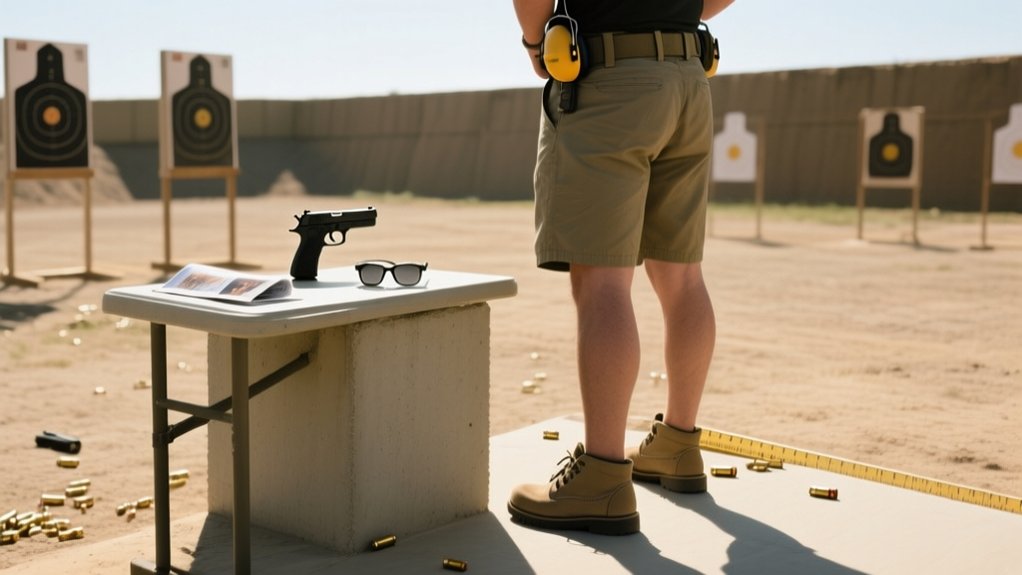
You can wear shorts to some shooting ranges, but many require long pants for safety. Shorts might expose your legs to hot brass burns and debris. So if you choose them, pick durable cargo styles that cover enough skin and fit securely.
Always check the range’s dress code first, as rules vary. Closed-toe shoes are a must regardless. If you want to stay comfortable and safe while shooting, there’s more to contemplate about your clothing and gear.
Shorts at the Shooting Range: When Are They Allowed?
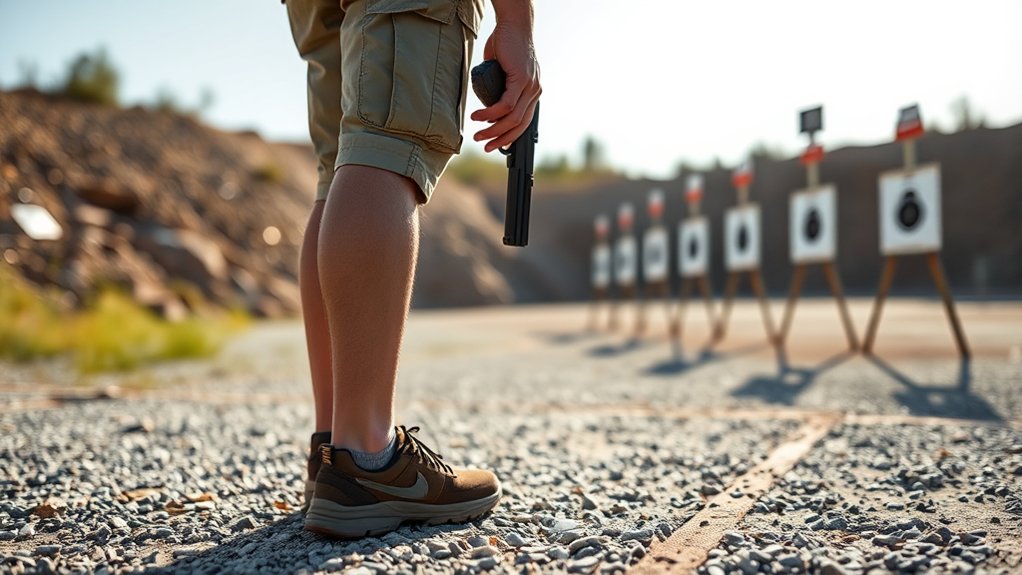
When can you wear shorts at a shooting range? It depends on the range’s dress code, so you should always check their specific rules before showing up. Some ranges allow shorts during hot weather, but they often require an appropriate length; very short shorts mightn’t meet their standards.
Range safety is the top priority, and many facilities prefer full-coverage pants because they protect your skin from hot brass and other debris.
If shorts are permitted, choose flexible, breathable fabrics to stay comfortable and maintain mobility.
Remember, following the dress code isn’t just about comfort. It’s about keeping yourself safe while you focus on shooting.
Why Long Pants Are Safer at the Shooting Range
Although you might prefer shorts for comfort, long pants offer essential protection at the shooting range. They shield your legs from hot brass, which can cause painful burns if it lands on exposed skin.
Wearing long pants also guards you against debris like dirt and lead particles commonly found in shooting environments. Many ranges require long pants to maintain strict range safety standards and reduce injury risks for everyone.
Long pants protect you from debris and help meet safety standards, reducing injury risks at the range.
Furthermore, when you shoot in prone positions, long pants provide better coverage and comfort, letting you move freely without worry.
Especially indoors, where conditions can vary, long pants enhance both your safety and comfort.
Choosing long pants isn’t just about rules. It’s a smart way to protect yourself while enjoying the range safely.
Choosing the Right Shorts for the Shooting Range
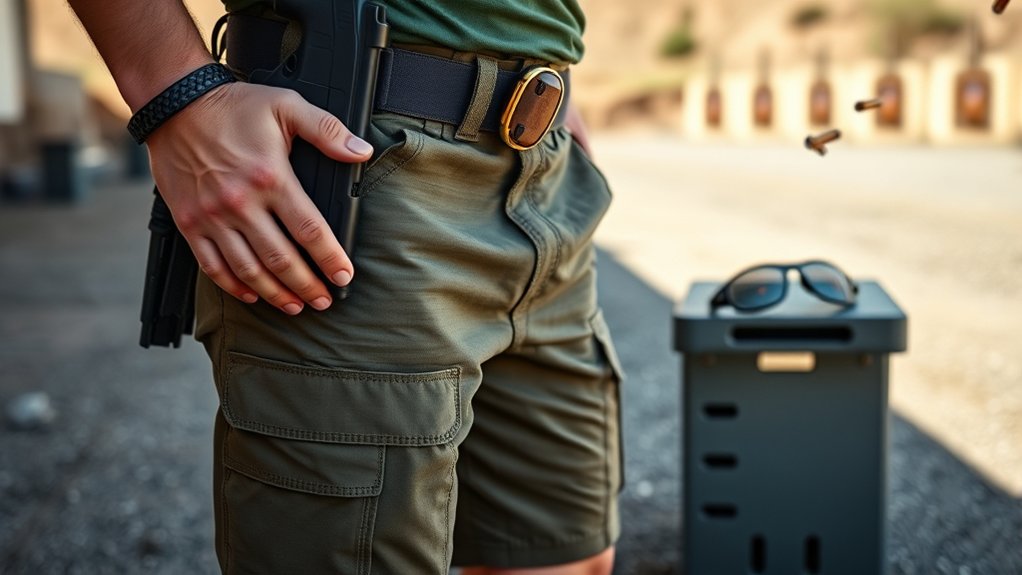
If your shooting range allows shorts, choosing the right pair is essential for both safety and convenience. When you wear shorts, opt for comfortable cargo shorts made of durable material to guarantee flexibility and range safety.
Cargo shorts provide handy pockets for magazines or tools, keeping essentials within easy reach. Avoid shorts that are too short, as they don’t adequately protect against hot brass ejected during shooting.
Ensure your shorts fit securely and have sturdy belt loops if you plan to carry a holster.
Always check your range’s dress code, since many require full-length pants for safety, especially when shooting prone.
Footwear Essentials for Shooting Range Safety
Three key features define the best footwear for shooting ranges: protection, comfort, and grip.
When it comes to footwear essentials, closed-toed shoes are a must for range safety. They shield your feet from hot brass and debris, keeping injuries at bay.
To choose the right shoes, keep these points in mind:
- Protection: Always wear closed-toed shoes. No sandals or open footwear allowed.
- Comfort: Opt for athletic sneakers or lightweight hiking boots to stay comfortable during long sessions.
- Grip: Make certain your shoes have good traction to maintain a solid stance, which is vital for accuracy and safety.
Also, designate specific shoes for the range to avoid bringing lead particles home.
Following these guidelines will keep you safe and steady on your feet.
What Shooting Range Dress Codes Mean for Your Outfit
You’ll need to follow specific dress codes to stay safe and comfortable on the range. That means wearing long pants, closed-toed shoes, and shirts with high necklines to protect against hot brass and other hazards.
Getting a handle on these clothing rules makes it easier to pick the right outfit every time you head out to shoot.
Range Dress Code Basics
Because safety and comfort are top priorities, shooting ranges often require you to follow specific dress codes that include closed-toe shoes, long pants, and appropriate tops.
To wear appropriate clothing and respect the range dress code, especially at indoor shooting ranges, keep these basics in mind:
- Always wear closed-toe shoes and long pants to protect your legs and feet from hot brass and debris.
- Choose long-sleeved shirts with crew necks or high necklines to shield your skin from burns.
- Minimize jewelry and consider wearing a hat to prevent snagging and deflect hot casings.
Checking the specific dress code of your range before you go guarantees you’re prepared and won’t be denied entry.
Clothing Restrictions Explained
Although it might seem flexible, shooting range dress codes often enforce strict clothing restrictions to keep you safe and comfortable. You’ll usually find that wearing long pants is mandatory, as they protect your legs from hot brass and debris, which are key safety concerns at any range.
Shorts are generally discouraged, though some ranges may allow them in hot weather. It’s best to check their specific dress code before you go. Open-toed shoes and low-cut shirts are also typically prohibited to guarantee proper coverage.
Following these clothing restrictions isn’t just about rules. It helps you move freely and focus on your shooting.
Safety And Comfort Rules
When choosing your outfit for a shooting range, safety and comfort should guide every decision. Many ranges require you to wear full-coverage pants to protect your skin from hot brass and debris.
Here are three key safety and comfort rules to follow:
- Always wear long pants, especially if you’ll be shooting prone, to shield your legs and guarantee comfort.
- Choose clothing that allows unrestricted movement. Tactical or soft range pants offer the flexibility and functionality you need.
- Avoid open-toed shoes and low-cut shirts, as these don’t meet safety standards and can expose you to injury.
Check your range’s specific dress code.
But when in doubt, pants are the safest choice to protect yourself while staying comfortable.
How to Protect Your Eyes, Ears, and Skin at the Range
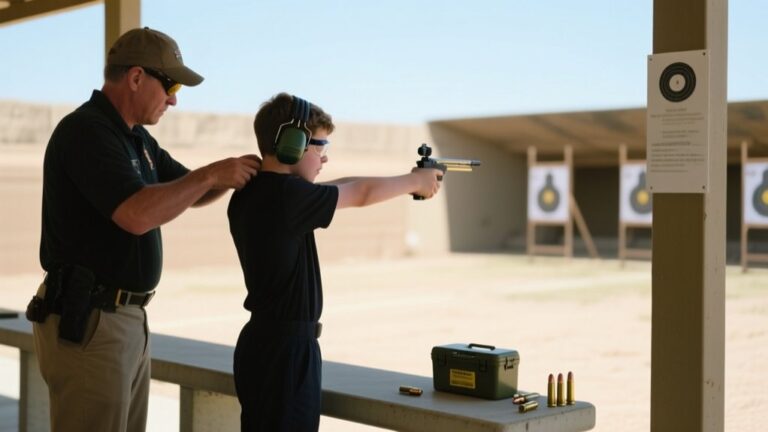
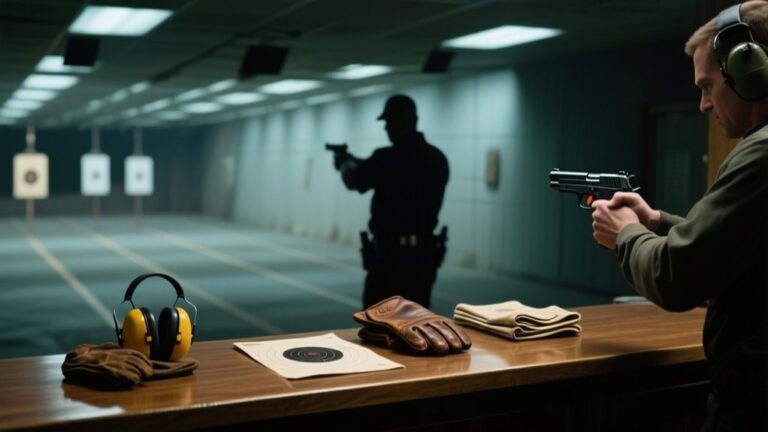
You’ve got to protect your eyes with safety glasses that meet ANSI Z87.1 standards. They’re essential to guard against flying debris.
And don’t forget your ears—wear reliable ear protection like foam plugs or earmuffs. This is especially important indoors, where the noise can get really intense.
When it comes to your skin, cover up with long sleeves and pants. This helps you avoid burns from hot brass casings.
Plus, choosing breathable fabrics will keep you comfortable while you’re at the range.
Essential Eye Protection
Because flying brass and debris can cause serious eye injuries, you must wear proper eye protection at the shooting range.
Whether you’re at an indoor range or outdoors, your eye protection is an essential part of your range gear.
Here’s how to keep your eyes safe:
- Choose impact-resistant shooting glasses that meet or exceed ANSI Z87.1 standards for reliable protection.
- Wear a hat with a brim to help deflect hot casings and reduce glare, enhancing your vision and safety.
- Always check your eyewear for scratches or damage before use to guarantee maximum clarity and protection.
Effective Ear Safeguards
Protecting your eyes at the range goes hand-in-hand with safeguarding your hearing. Effective ear protection is vital to prevent damage from loud gunfire. You can choose foam earplugs or electronic earmuffs, but for indoor ranges, using both offers maximum safety.
This dual protection reduces the risk of hearing loss substantially. Alongside ear protection, don’t forget to wear your eye protection to shield against flying brass and debris. Both are essential range equipment.
Properly maintaining and wearing these pieces guarantees you stay safe and ready for every shot.
Skin Coverage Tips
Although eye and ear protection are essential, covering your skin properly is just as important to stay safe at the range.
Here are key skin coverage tips to keep in mind:
- Wear long pants to shield your legs from hot brass and potential scrapes, especially when shooting prone.
- Choose crew neck or high-neckline shirts to protect your chest and neck from hot shell casings. Avoid V-necks or low-cut tops.
- Use eye protection like safety glasses or goggles to guard against flying debris.
Combine this with a baseball cap to deflect hot casings away from your face and neck.
Clothing and Footwear to Avoid at the Shooting Range
When you head to a shooting range, you shouldn’t wear open-toed shoes like sandals or flip-flops since they leave your feet vulnerable to hot brass and debris. For safety, always choose closed-toe footwear that protects your feet adequately.
Avoid shorts, as many ranges discourage them, especially when you shoot prone. Long pants shield your legs from burns and scratches.
Stay away from low-cut shirts because hot shell casings can easily burn exposed skin.
Heavy clothing isn’t a good idea either since it restricts movement and causes overheating, both of which can compromise your safety.
Finally, skip baggy clothing because it can snag on equipment, creating hazards.
Instead, opt for fitted clothing that balances protection and mobility, ensuring you stay safe and comfortable while handling firearms.
Frequently Asked Questions
Can I Wear Shorts With Pockets for Carrying Ammunition?
Yes, you can wear shorts with pockets for carrying ammunition, but prioritize pocket accessibility and ammunition safety. Make certain the pockets are secure and easy to reach so you don’t fumble while handling ammo.
Also, consider comfort. Choose shorts that fit well and won’t restrict your movements.
Are There Specific Shorts Brands Recommended for Shooting Ranges?
You might think any shorts will do, but for shooting ranges, brands like 5.11 Tactical and Propper stand out. They offer shorts durability that handles rough conditions and fabric breathability to keep you cool.
Plus, they follow length guidelines that protect your legs without restricting movement. Choosing these brands guarantees comfort and safety, so you won’t have to worry about shorts wearing out or feeling uncomfortable during your session.
How Do Weather Conditions Affect Shooting Range Clothing Choices?
Weather conditions directly influence your shooting range clothing choices.
Temperature impact means you’ll want breathable fabrics to stay comfortable and avoid overheating or chilling.
In hot weather, choose lightweight, moisture-wicking materials.
Colder conditions call for layering options to maintain warmth without restricting movement.
Always pick clothes that balance protection and comfort.
Adjust your layers based on the temperature impact and fabric breathability to keep your focus sharp during shooting sessions.
Is It Okay to Wear Sandals or Flip-Flops at the Range?
No, you shouldn’t wear sandals or flip-flops at the range. Safety footwear is essential to protect your feet from hot brass casings and accidental drops.
Wearing closed-toe shoes shows good range etiquette and helps prevent injuries.
While comfort is important, you can find safety footwear that’s both comfortable and practical.
Prioritize your safety by choosing appropriate shoes, so you can focus on shooting without worrying about foot protection.
Can Shorts Cause More Sunburn Risk During Outdoor Shooting Sessions?
Yes, wearing shorts during outdoor shooting sessions can increase your risk of sunburn.
To stay safe, incorporate sun protection strategies like applying broad-spectrum sunscreen, wearing a wide-brimmed hat, and using UV-protective clothing or arm sleeves.
Always follow skin safety tips by reapplying sunscreen regularly and seeking shade during breaks.
These outdoor shooting precautions help protect your skin while you focus on your shooting skills without discomfort or damage.
Conclusion
Think of the shooting range like a fortress. You wouldn’t wear sandals to a battle, right? Shorts can sometimes fit the role, but long pants act like armor, shielding you from unexpected sparks and debris.
Choosing the right gear means you’re not just a visitor but a guardian of safety. So gear up wisely, protect your senses, and respect the range’s rules because your safety is the strongest shield you’ll carry.