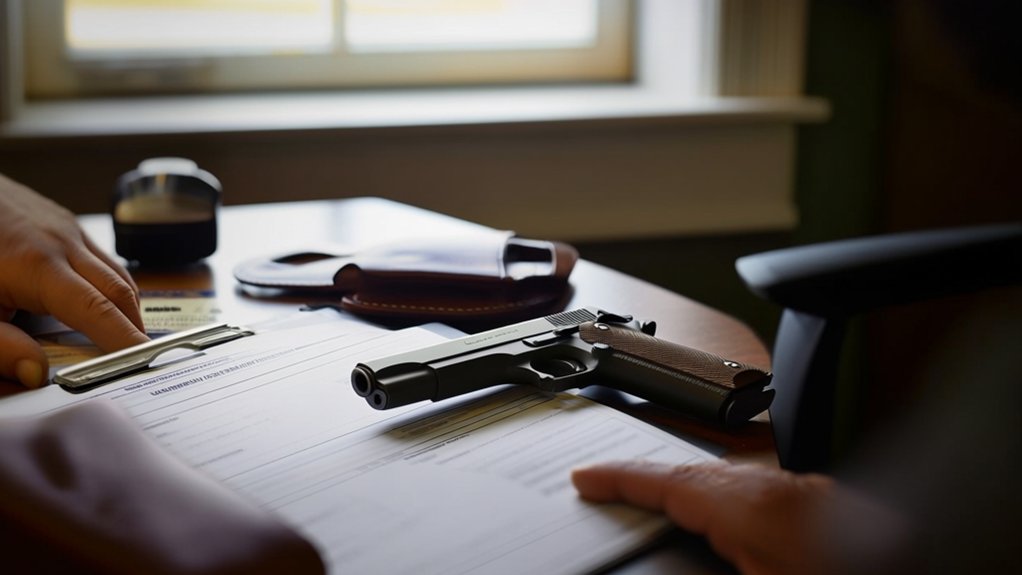
How To Get Concealed Carry – Permit Steps And Requirements
To get your concealed carry permit, you must be at least 21, have no disqualifying criminal or mental health history, and meet residency requirements. You’ll need to complete certified firearm safety training and gather documents like your ID, proof of training, a recent photo, and fingerprints.
After that, submit your application with the required fee, either in person or by mail. Make sure you keep track of renewal deadlines and update your address promptly to stay compliant.
Understanding these steps will help you be prepared to carry legally and confidently. It’s really about staying organized and knowing what’s expected along the way.
Key Takeaways
- Ensure you meet eligibility criteria: at least 21 years old, no disqualifying convictions, and lawful state residency of at least 30 days.
- Obtain and complete a certified firearm safety course, such as NRA or hunter safety, to prove handgun competency.
- Submit a completed application with required documents, including ID, proof of training, fingerprints, and a recent photo, either in person or by mail.
- Pay the application fee, typically between $40 and $90, and apply at sheriff’s offices or approved online portals during designated hours.
- Monitor application status, respond to any delays or denials, and prepare for renewal by submitting timely updates and fees before permit expiration.
Eligibility Requirements for a Concealed Carry Permit
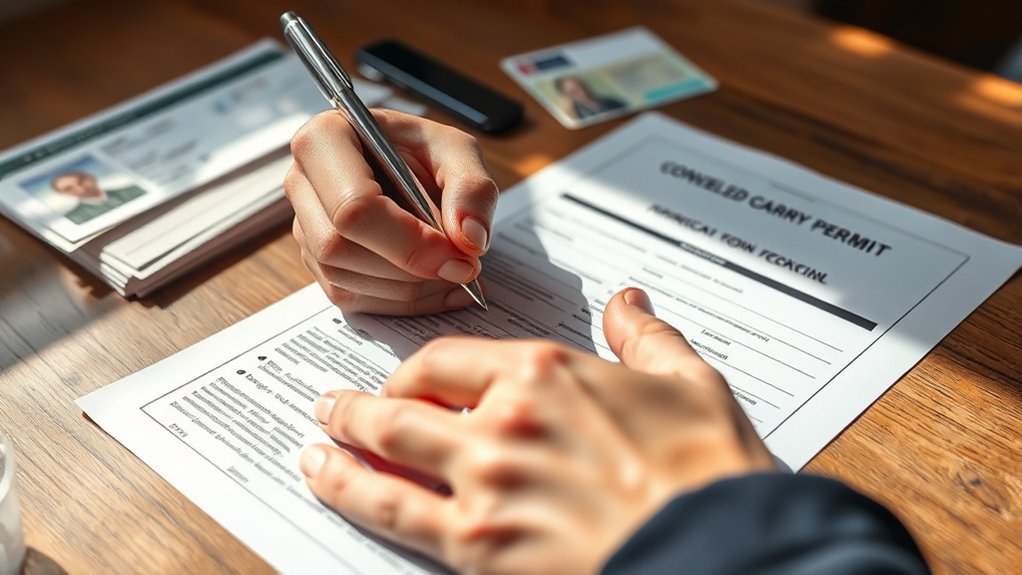
Before you apply for a concealed carry permit, you need to meet specific eligibility requirements. Understanding this background information is vital to guarantee you qualify.
You must be at least 21 years old, although provisional permits allow individuals 18 and older.
Legal considerations prevent anyone with felony convictions or crimes of violence from obtaining a permit. Additionally, unresolved domestic violence or recent alcohol and drug offenses disqualify applicants.
If you’ve been adjudicated mentally incompetent or committed for certain mental health reasons, you’re ineligible.
Typically, lawful residents and U.S. citizens who meet all federal and state criteria can apply.
Staying informed about these eligibility standards helps you avoid wasted time and assures your application stands on solid legal ground.
How to Apply for Your Concealed Carry Permit

To apply for your concealed carry permit, the first step is to get the official application. You can find this at your local sheriff’s office or on their government website. It’s a good idea to double-check that you meet all the eligibility requirements before moving forward.
Next, make sure you complete any required training. This is important because it ensures you understand the responsibilities that come with carrying a concealed weapon.
Don’t forget to gather all the necessary documents, like proof of residency and identification, to avoid any delays.
When you have everything ready, you’ll need to submit your application. You can usually do this either in person or by mail. Just remember to pay the applicable fee at the time of submission.
After that, it’s a matter of waiting for approval or any further instructions from the authorities.
Application Locations And Methods
Although application processes vary by state, you can usually submit your concealed carry permit application in person at local sheriff’s offices or county law enforcement agencies. These locations often have set hours, typically 8:00 am to 5:00 pm, so plan your visit accordingly.
Beyond in-person submissions, many states provide online application methods through official government websites. This option offers convenience and faster processing.
Some jurisdictions also accept mailed applications, requiring you to send all necessary documentation and fees to a designated address.
To guarantee you choose the correct location options and application methods, verify details on your state or county law enforcement website before applying.
Following these steps carefully will help you navigate the process smoothly and avoid common pitfalls.
Eligibility And Requirements
When you apply for a concealed carry permit, you’ll need to meet specific eligibility criteria designed to guarantee responsible firearm ownership. You must be at least 21 years old, or 18 if applying for a provisional permit.
You also can’t have any felony convictions, crimes of violence, or recent offenses involving alcohol, narcotics, or controlled substances.
Applicants who’ve been adjudicated mentally incompetent are disqualified unless that decision has been reversed.
You’ll need proof of firearm safety training from a certified instructor. Along with that, you’ll have to provide a valid government-issued ID, a recent photograph, and fingerprints taken by a trained technician.
There’s also a residency requirement, meaning you must have lived in the state for at least 30 days before applying.
Keep in mind, some individuals may be exempt from needing a permit. But even if you qualify for an exemption, you still have to follow all firearm safety and legal standards to carry concealed.
Fees And Payment Process
Since the application process requires a fee, you should prepare to pay between $40 and $90, depending on your state and applicant category. Payment methods typically include checks or money orders made payable to the issuing agency, such as the Bureau of Criminal Identification or your local sheriff’s office.
You must submit these fees at the time of application, whether you apply in person or by mail, to guarantee your request is processed.
Renewal fees generally mirror the initial costs and must be paid before your permit expires.
Keep in mind, some jurisdictions offer fee discounts for military members, seniors, or applicants with qualifying conditions. It’s a good idea to verify your state’s specific payment methods and eligibility for discounts to avoid delays during the application process.
Proving Handgun Competency for Your Concealed Carry Permit
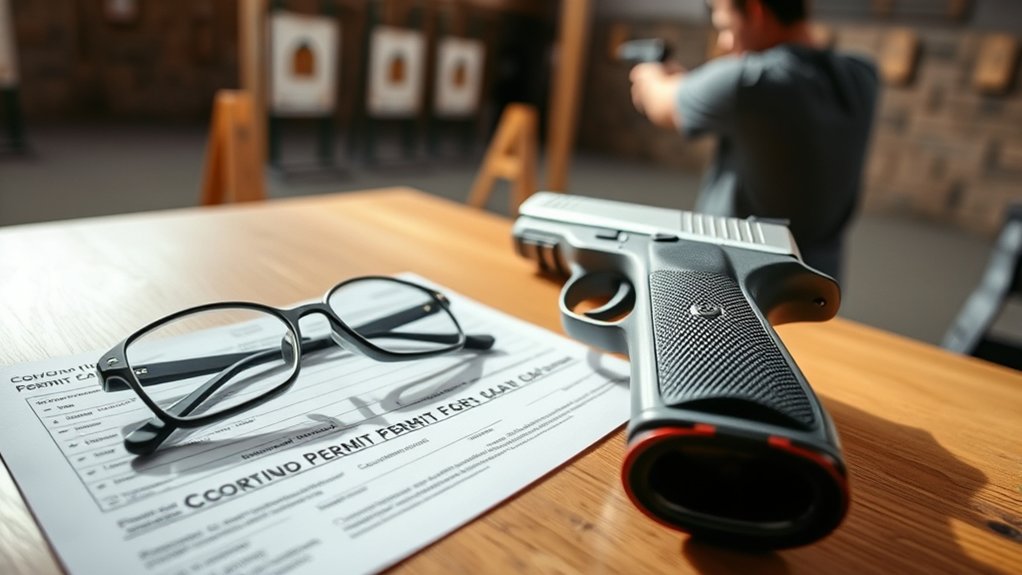
How can you prove your handgun competency to qualify for a concealed carry permit? You’ll need to demonstrate firearm safety and shooting proficiency through approved channels.
Completing certified firearms safety courses, such as those offered by the NRA, USCCA, or hunter safety programs, is a common method.
You must provide certificates, instructor affidavits, or documented participation in shooting competitions that verify your safe handling skills.
Some jurisdictions require a practical shooting demonstration or range test to directly assess your proficiency.
Military service with an honorable discharge often substitutes for formal training.
Certifications from law enforcement, educational institutions, or private organizations also typically satisfy competency requirements.
Meeting these standards guarantees you handle your handgun responsibly and safely, which is essential for obtaining your concealed carry permit.
Fees and Payment for Your Concealed Carry Permit
Although fees vary depending on residency, you’ll need to pay $52 if you’re a Utah resident or $87 if you’re applying as a non-resident for your concealed firearm permit. These fees cover processing costs and must be paid when submitting your application.
Payment methods are limited to checks or money orders made payable to the Utah Bureau of Criminal Identification.
Keep in mind that fees are non-refundable and non-transferrable, even if your permit isn’t issued. While fee exemptions are rare, it’s important to verify if you qualify before submitting payment.
Additional charges, up to $10, may apply if you need to replace or update your permit with a new address.
Make sure your payment is accurate to avoid delays in processing your application. It’s always better to double-check everything before sending it in. That way, you can keep the process moving smoothly.
Help If Your Concealed Carry Permit Application Is Delayed or Denied
If your concealed carry permit application is delayed or denied, you should promptly contact the issuing agency to get updates and clarify processing times. Confirm that all required documents and certifications were accurately submitted, as missing or incorrect information often causes delays.
For application troubleshooting, carefully review any denial reasons provided. If you’re eligible, submit an appeal within the designated timeframe, addressing specific concerns.
Should disqualifying factors like recent convictions or mental health issues cause denial, work on resolving these before reapplying.
While this process is separate from permit renewal, staying proactive is essential. If you’re uncertain how to proceed, seek guidance from a qualified attorney who can help you understand your options and next steps.
Taking these actions will improve your chances of a successful application.
How to Renew Your Concealed Carry Permit on Time
To maintain uninterrupted legal protection, you’ll want to renew your concealed carry permit well before it expires. Typically, this means between 30 and 180 days in advance. Pay close attention to expiration dates and set renewal reminders to avoid missing your deadline.
Submit your renewal application through your state’s designated online portal or in person at the issuing agency, depending on local requirements. Be prepared to pay the renewal fee, usually between $40 and $75, and provide any necessary supporting documents.
Some states may require updated training or background checks, so check your state’s specific procedures.
Staying organized and proactive with renewal reminders guarantees you submit all paperwork on time. This helps prevent permit lapses or disqualification and keeps your concealed carry privileges intact without interruption.
Changing Your Address and Updating Your Concealed Carry Permit
When you change your address, you need to notify the issuing authority within the required timeframe, which is usually 30 days. This helps keep your concealed carry permit valid.
To update your address, submit a written notice or an official form along with a copy of your current permit. The issuing agency will verify your permit before issuing a replacement with the new address.
There is usually a small processing fee for this replacement, often up to $10. Make sure to update your address because failing to do so can result in your permit being suspended or invalidated.
| Step | Requirement |
|---|---|
| Notification Period | Within 30 days |
| Submission | Written notice + current permit copy |
| Verification | Permit verification by agency |
| Fee | Up to $10 processing fee |
Frequently Asked Questions
Can I Carry Concealed in Other States With My North Carolina Permit?
You can carry concealed in other states with your North Carolina permit if that state recognizes your permit through state reciprocity. Always verify each state’s current reciprocity status and specific permit recognition before carrying.
It’s a good idea to double-check the rules because they can change. So, before you travel, make sure you know where your permit is valid. That way, you’ll avoid any legal trouble.
What Types of Firearms Are Allowed for Concealed Carry Under This Permit?
You can carry handguns like revolvers or semi-automatics, but not fully automatic firearms. Firearm classifications and ammunition restrictions vary, so you need to check local laws carefully to guarantee compliance and avoid surprises.
It’s always a good idea to stay updated on the rules because they can change. When in doubt, double-check with your local authorities to make sure you’re following the law correctly.
Are There Specific Places Where Concealed Carry Is Prohibited in North Carolina?
Yes, you can’t carry concealed firearms in public transportation, public parks, courthouses, schools, or government buildings.
You also can’t carry in places of worship during services or bars where alcohol is served. This helps ensure safety and keeps you in line with North Carolina laws.
How Do Mental Health Records Affect My Concealed Carry Permit Eligibility?
Coincidentally, your mental health record restrictions can directly impact your concealed carry permit. If you’ve had recent treatment or involuntary commitments, you might be disqualified or face revocation. So, be honest and confirm your records support eligibility.
Can I Carry Concealed While Intoxicated or Under the Influence of Drugs?
You can’t carry concealed while intoxicated or under drugs due to strict legal restrictions and serious safety concerns.
Violating these laws risks criminal charges and permit suspension, so always stay sober to protect yourself and others.
Conclusion
Charting the path to your concealed carry permit may seem like crossing a guarded gate. But with clear steps and proper preparation, you’ll open the door smoothly.
By meeting eligibility, proving competency, and staying on top of renewals and updates, you guarantee your rights remain firmly in your hands. Stay diligent, follow the process closely, and you’ll carry not just a permit, but the confidence that comes with responsibility.