What States Have Concealed Carry – Laws And Permit Requirements Explained
You’ll find that 21 states require permits for concealed carry. These often demand background checks and safety training, including live-fire exercises in states like California and Hawaii.
Meanwhile, 29 states allow permitless concealed carry with fewer restrictions. Federal laws favor law enforcement but don’t extend reciprocity to civilians, which means permit recognition depends on the state you’re in.
Strict permit laws tend to enhance public safety, while looser rules can increase risks. Understanding these details helps you carry responsibly and stay compliant with evolving regulations.
Key Takeaways
- 21 states require permits for concealed carry, including background checks and mandatory safety training.
- 29 states allow permitless concealed carry, often with fewer restrictions and no required safety courses.
- States like California and Hawaii mandate live-fire training as part of permit issuance.
- Reciprocity agreements vary, with 28 states recognizing permits from other states under specific conditions.
- Most states restrict carrying firearms in sensitive places like schools, hospitals, and courthouses for safety.
Concealed Carry Permit States vs. Permitless States
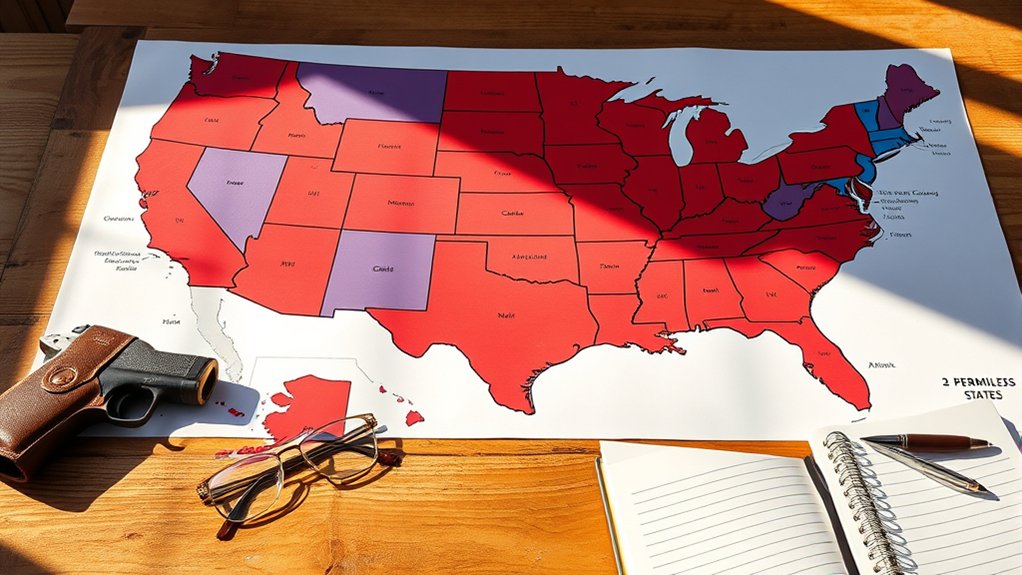
While concealed carry laws vary widely across the United States, you’ll find that 21 states require a permit to carry a concealed firearm. These states enforce background checks, firearm safety training, and often live-fire testing before issuing a license. These permit requirements emphasize responsible concealed carry by making sure applicants meet safety and legal standards.
In contrast, 29 states have adopted permitless carry laws. This means you can carry concealed firearms without obtaining a permit or completing safety training. Permitless states generally impose fewer restrictions and often skip background checks and handling tests.
This fundamental difference between permit and permitless states affects your access to concealed carry rights. It also influences the safety protocols you need to follow and the reciprocity agreements that determine where your permit is recognized across the country.
Training and Live-Fire Requirements for Concealed Carry
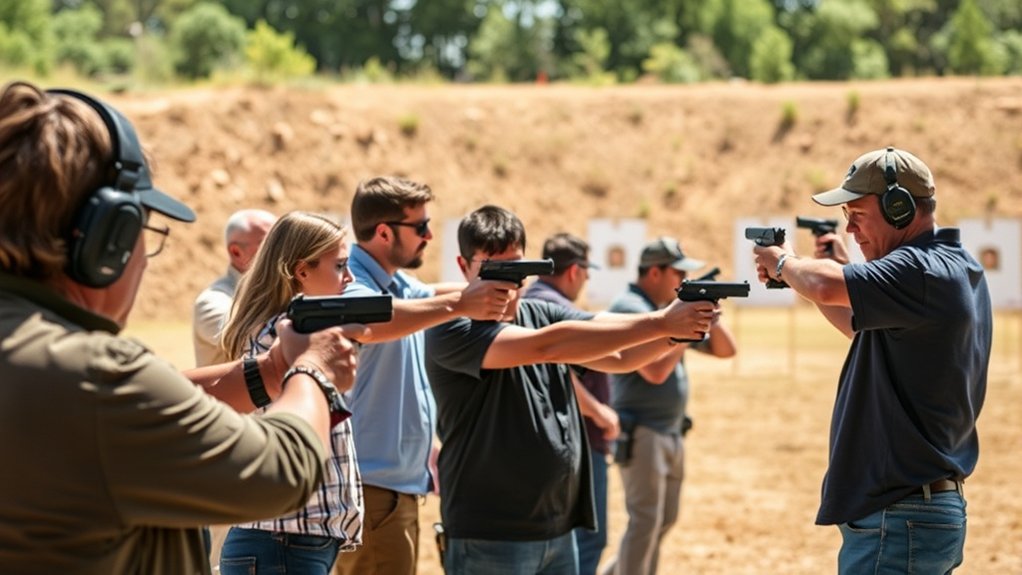
Because responsible firearm handling is essential for concealed carry, many states require applicants to complete safety training that often includes live-fire exercises.
States like California, Colorado, Connecticut, Delaware, and Hawaii mandate firearm safety courses incorporating live-fire training before issuing permits.
Several states require live-fire training as part of their firearm safety courses for concealed carry permits.
Delaware’s process covers handling, storage, laws, conflict resolution, and requires firing at least 100 rounds.
Rhode Island demands a handgun qualification certification, typically involving a firing test to demonstrate proficiency.
Over half the states with concealed carry laws emphasize safety training to guarantee competence and responsible firearm handling.
However, some states, including Pennsylvania and Montana, have policies without explicit live-fire training details, reflecting varying standards across jurisdictions.
Understanding these requirements helps you comply with state-specific concealed carry laws.
How Federal Law Affects Concealed Carry Policies
Although concealed carry laws vary widely among states, federal law sets key provisions that affect how these laws work across state lines. Federal preemption allows qualified law enforcement officers and retired officers, with proper identification, to carry concealed firearms nationwide under 18 U.S.C. §§ 926B and 926C. This overrides conflicting state restrictions.
This guarantees uniformity for law enforcement personnel but doesn’t extend the same privileges to civilians.
There’s proposed legislation like the Concealed Carry Reciprocity Act of 2025 that aims to require states to recognize permits issued by other states. That could potentially supersede individual state standards.
If that happens, federal influence might compel states to accept permits from places with less stringent safety and training requirements. This could impact public safety and the authority of state-level concealed carry policies. It’s a complex issue with a lot at stake.
Concealed Carry Reciprocity: Where Your Permit Works
You need to understand how reciprocity agreements affect where your concealed carry permit is valid across state lines. Some states recognize permits from others based on training standards. So, if your permit meets those standards, you might be good to go in another state.
Then, there are multi-state permits that make carrying in multiple jurisdictions a lot simpler. Instead of juggling different permits, one can cover you in several places.
On top of that, don’t forget about federal land carry rules. They can override state restrictions, which means where you can legally carry might change once you step onto federal property. It’s definitely something to keep in mind.
Reciprocity Agreement Overview
When traveling with a concealed carry permit, understanding reciprocity agreements is essential to knowing where your permit is legally recognized. Reciprocity allows a permit issued in one state to be valid in others with mutual agreements. However, permit validity varies based on state licensing standards and specific requirements like safety training and background checks.
Some states accept all out-of-state permits, while others restrict recognition to permits from states with similar regulations. The U.S. Concealed Carry Reciprocity Act of 2025 aims to standardize these rules nationwide.
| State A | State B | Reciprocity Status |
|---|---|---|
| Texas | Arizona | Full recognition |
| California | Nevada | No recognition |
| Florida | Georgia | Conditional recognition |
| New York | New Jersey | No recognition |
| Ohio | Indiana | Full recognition |
Multi-State Permit Recognition
Because concealed carry laws vary widely across the United States, understanding multi-state permit recognition is essential for permit holders who travel frequently. Permit recognition depends heavily on state agreements, with 28 states currently recognizing permits issued by other states.
These agreements typically require that the issuing state’s licensing standards, including safety training and background checks, align closely with those of the recognizing state.
Not all states accept every permit; some only honor permits from states with comparable regulations. This system helps make legal concealed carry across state lines easier, but you still need to check each state’s specific recognition policies before you travel.
While federal proposals aim to standardize permit recognition nationwide, right now, legal reciprocity depends on individual state agreements and their criteria for honoring out-of-state permits. So, it’s always good to stay updated on current rules before hitting the road.
Federal Land Carry Rules
Although concealed carry laws vary by state, federal land carry rules add another layer of complexity for permit holders. When carrying on federal lands such as national parks, your rights depend on state laws and reciprocity agreements.
Some states permit carry without a permit on federal property, while others require you to hold a valid state-issued permit.
The Concealed Carry Reciprocity Act of 2025 aims to standardize permit recognition nationwide. This will impact how you carry on federal lands.
Legal terminology around reciprocity determines whether your permit is accepted outside your home state.
Remember, while law enforcement officers have broader federal allowances, civilians must comply with both federal and local firearm storage and carry regulations.
It’s always a good idea to verify current rules before carrying on federal property. Stay informed to avoid any trouble.
Impact of Concealed Carry Laws on Public Safety
You’ll notice that crime rates tend to go up in states with weaker or permitless concealed carry laws. This is partly because more untrained individuals are carrying firearms.
Having training requirements and background checks really helps reduce gun-related homicides and accidental injuries.
Plus, location restrictions play a role too—they help control where firearms are carried, which impacts overall public safety.
Crime Rates and Carry
When states loosen concealed carry laws, crime rates tend to rise, especially when it comes to handgun homicides and violent offenses. Research shows there’s about an 11% increase in handgun homicides. Violent crimes also go up by roughly 13-15% in states where permit requirements are weakened or where permitless carry is allowed.
These changes pose challenges to gun safety because they lead to more unintentional injuries and gun thefts. Law enforcement ends up facing greater risks too. When more people have access to concealed weapons without proper controls, it often means more police shootings involving civilians.
On the flip side, states that enforce strict permit and training laws generally see lower homicide and firearm injury rates. So, it seems clear that loosening concealed carry regulations can put public safety at risk. It raises violence levels and makes it harder for law enforcement to keep order and protect communities.
Training and Safety Impact
The rise in handgun homicides and violent crimes linked to loosened concealed carry laws highlights the importance of training and safety standards in firearm regulations. You need to understand how firearm safety and training effectiveness directly influence public safety outcomes.
States requiring thorough training, like California and Colorado, show measurable benefits. Mandated live-fire instruction ensures permit holders handle guns competently. Strong training requirements correlate with lower accidental discharges.
On the other hand, weakening permit rules, including training, corresponds to an 11% increase in handgun homicides. Permitless carry without training raises risks of unintentional injuries and fatalities. It’s clear that proper training matters a lot when it comes to keeping communities safer.
Location Restrictions Effects
Although concealed carry laws vary widely, most states set clear restrictions on where you can carry firearms, especially in sensitive places like schools, courthouses, and hospitals. These location restrictions aim to enhance public safety by minimizing the risk of firearm-related injuries and unintended discharges.
When you carry a concealed weapon, it’s essential to follow storage safety guidelines during firearm transportation to prevent accidents.
States that allow firearms in more public or high-risk areas often see increased violent crime and police shootings. This is linked to easier access and less regulation.
Where to Learn More About Concealed Carry Laws
If you want to fully understand concealed carry laws and your responsibilities, the USCCA website offers a wealth of detailed resources and educational content. It helps debunk common concealed carry myths and clarifies gun registration rules.
You can access lessons on firearm safety and legal rights to carry responsibly. Plus, learn about state-specific laws and reciprocity agreements to avoid legal pitfalls. There are also online courses covering live-fire training and safety protocols.
You’ll find guidance on federal and state restrictions, including where you can and can’t carry. These resources equip you with precise knowledge, ensuring you comply with laws and protect yourself lawfully.
Relying on credible, updated information is essential for any concealed carrier. So, take advantage of these tools to stay informed and confident.
Resources for Staying Updated and Prepared
Staying informed about concealed carry laws means having access to reliable, up-to-date resources that support your ongoing education and preparedness. The USCCA website offers exhaustive tools, including firearm safety lessons and legal guidance, to help you maintain both gun safety and legal compliance.
By subscribing, you get access to the “Learn & Prepare” section, which provides detailed educational materials on self-defense, firearm handling, and your legal rights.
Subscribing grants access to comprehensive resources on self-defense, firearm safety, and understanding your legal rights.
Plus, the platform delivers timely updates on changes in state gun laws, so you always stay current with evolving regulations.
With over 876,000 members, USCCA supports responsible firearm ownership by offering personalized support, legal protection, and training resources.
All of these are designed to keep you informed, compliant, and prepared for safe concealed carry practices.
Frequently Asked Questions
Can Non-U.S. Citizens Obtain Concealed Carry Permits?
You generally can’t get concealed carry permits as a non-citizen unless you meet specific non-citizen eligibility criteria, like legal residency.
Also, permit reciprocity varies, so your permit might not be valid across all states. It’s something to keep in mind if you plan to travel with your permit. Always check the local laws before carrying concealed.
How Do Concealed Carry Laws Affect Carrying in National Parks?
Steering through national park regulations is like threading a needle. Your concealed carry depends on state permits and firearm restrictions.
You have to follow specific rules because federal law defers to states. This means you need to stay compliant to avoid penalties or confiscation.
It can get confusing, but knowing the rules helps you carry safely and legally in national parks. Just make sure you check the laws for the state where the park is located.
Are There Restrictions on Carrying Concealed in Private Businesses?
Yes, private business restrictions often apply, and you’ll need to watch for concealed carry signage. Some states require clear signs to prohibit carrying, while others let businesses ban concealed carry without posting notices.
What Penalties Exist for Carrying Without a Permit in Permit-Required States?
If you carry without a permit in permit-required states, you face fines, jail, or felony charges. Permit reciprocity won’t protect you. Failing background checks bars legal permits, increasing penalties and restricting future firearm rights.
How Do Concealed Carry Laws Apply to Individuals Under 21 Years Old?
You’ll face youth restrictions and age limitations in most states. Many require you to be 21 for concealed carry permits.
Some allow under-21s with special permissions, while permitless states often don’t impose age limits.
Conclusion
If you think concealed carry laws are a simple checklist, think again. Navigating permits, training, and federal rules is like decoding a secret map. Knowing which states require permits, which don’t, and where your permit is honored can feel overwhelming.
But with precise knowledge and constant updates, you can confidently carry while staying legal. Don’t underestimate how vital staying informed is. It’s your key to responsible and lawful concealed carry everywhere you go.