Do You Need A Concealed Carry Permit – State Laws And Requirements
Whether you need a concealed carry permit depends on your state’s laws. Some states allow permitless carry but with conditions and location restrictions. Others require permits that involve background checks and training.
Permits usually grant broader access and reciprocity across states. But all states restrict carry in certain places like schools and government buildings. So, it’s important to know the specific rules where you live.
Understanding eligibility and legal responsibilities is key to carrying responsibly and legally. Take some time to explore how these variations might affect your options and compliance. It’ll help you stay safe and within the law.
Key Takeaways
- Some states allow permitless concealed carry, while others require permits involving background checks and safety training.
- Permit requirements include minimum age, residency, and mental health eligibility criteria varying by state.
- Licenses offer broader access, reciprocity benefits, and legal protections across multiple states.
- Concealed carry is prohibited in sensitive places like schools, courthouses, airports, and private properties.
- Staying informed on state-specific laws and restrictions ensures legal compliance and responsible firearm use.
Understanding Permitless vs. Permit-Required Concealed Carry
Although laws vary widely across the country, you’ll find that some states allow you to carry a concealed weapon without a permit, known as permitless carry, while others require you to obtain a license. If you live in or visit permitless carry states, you must still follow concealed carry etiquette, such as respecting private property rules and avoiding restricted areas.
States with permit requirements often mandate training, live-fire practice, and background checks before issuing a license. These steps help ensure that licensed carriers are prepared and responsible.
Training, live-fire practice, and background checks ensure licensed carriers are prepared and responsible.
Regardless of the law, practicing proper firearm storage tips is vital to guarantee safety and prevent unauthorized access. Understanding these distinctions helps you comply with local regulations while responsibly carrying your firearm.
It’s all about balancing legal awareness with safe handling practices.
States Requiring Permits for Concealed Carry
When you carry a concealed weapon in one of the 21 states requiring permits, you must complete specific steps designed to promote safety and responsibility. These states, including California, Colorado, Connecticut, Delaware, and Hawaii, enforce licensing procedures that prioritize gun safety.
Typically, you’ll undergo thorough background checks, complete firearm safety training, and participate in live-fire exercises before receiving a permit.
Additionally, these states often impose restrictions on where you can carry concealed weapons, such as prohibiting them in schools and government buildings.
The structured licensing procedures help guarantee responsible carry and correlate with lower handgun homicide rates.
Understanding these requirements is essential if you plan to carry concealed in these jurisdictions.
Failing to comply can result in legal consequences and compromise public safety. So, it’s really important to know the rules before you carry.
Permitless Concealed Carry States: Eligibility and Restrictions
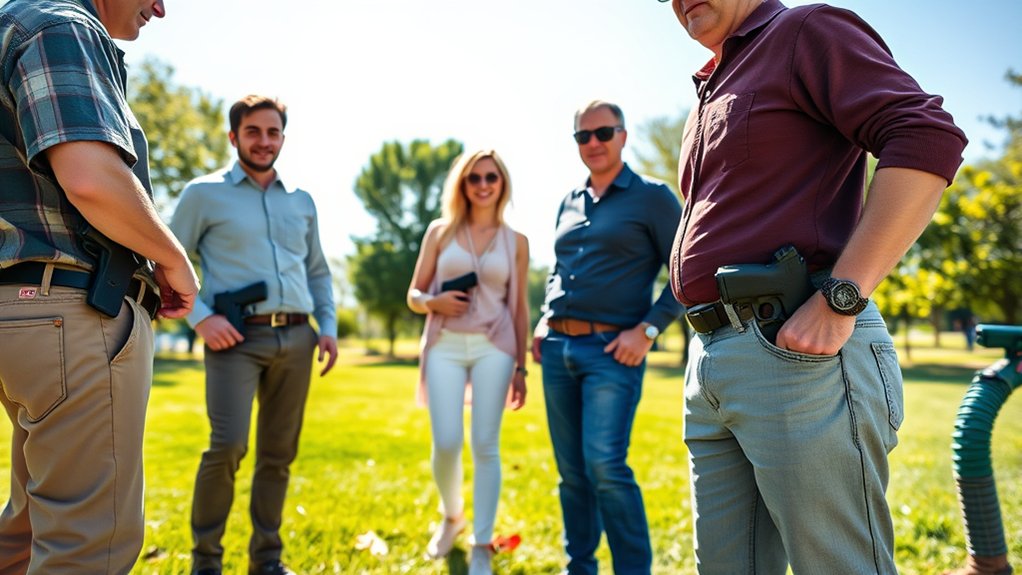
Since several states have adopted permitless concealed carry laws, you can carry a concealed weapon without obtaining a permit if you meet specific eligibility criteria, such as age and residency requirements.
States like Alaska, Arizona, and Idaho generally require you to be at least 18 or 21 years old, depending on local statutes.
While permitless carry removes the need for formal background screening or firearm training, restrictions still apply in sensitive locations such as schools, government buildings, and private properties that prohibit weapons.
Proper firearm storage remains your responsibility to prevent unauthorized access.
If you’re an out-of-state visitor, some permitless carry states honor valid licenses from other states under reciprocity agreements.
It’s essential to understand these eligibility and restriction nuances to carry legally and safely in permitless states.
Training and Background Checks for Concealed Carry Permits
Because concealed carry permits grant legal permission to carry firearms, states enforce strict training and background check requirements to guarantee public safety. You’ll typically need to complete firearm safety courses that meet state-specific training standards. These often include live-fire exercises to show you can handle a gun safely and competently.
Concealed carry permits require strict training and background checks to ensure safe and responsible firearm handling.
States vary quite a bit. Some require formal safety classes, while others have less defined training protocols.
During the permit application process, expect thorough background checks to screen for any disqualifying criminal records or mental health issues.
In some places, mental health evaluations and detailed investigations are part of the approval process.
Meeting these requirements helps ensure you handle firearms responsibly and legally. So, it’s important to understand these training and background check rules before you apply for a concealed carry permit in your state.
Concealed Carry Restrictions and Prohibited Places
You can’t carry a concealed weapon in lots of sensitive places, like courthouses, schools, and federal airports—even if you have a permit.
On top of that, private property owners and businesses have the right to ban firearms on their premises. If you ignore these rules, you could face serious legal trouble.
Restricted Carry Locations
Where exactly can you carry a concealed weapon? State laws and federal regulations define restricted carry locations you need to know about. Many states prohibit concealed carry in courthouses, police stations, detention centers, and schools.
Federal law bars firearms in federal buildings, airports, and certain military zones, no matter what your permit status is.
Also, private property owners can prohibit concealed carry on their property, even if your state allows permitless carry.
Public events like polling stations, legislative meetings, and non-firearm-related sports events usually don’t allow concealed weapons.
Some states also restrict carrying concealed in certain parts of bars or other alcohol-serving places, as well as in designated nuisance or restricted areas.
Knowing these location-specific rules is super important so you carry legally and avoid any trouble tied to restricted carry locations.
Legal Consequences Enforcement
Understanding the legal consequences tied to carrying firearms in restricted or prohibited areas helps clarify the seriousness of these regulations. You must guarantee legal compliance by avoiding carrying in places like courthouses, detention facilities, schools, and federal properties such as airports.
Enforcement procedures are strict, with law enforcement officers authorized to impose penalties for violations. Key consequences include second-degree misdemeanor charges for carrying in prohibited locations.
You might also face criminal charges or fines for carrying on private property where firearms are banned. And there’s the risk of arrest when carrying in nuisance places or police stations.
Failing to comply can lead to severe legal consequences. This really emphasizes the importance of understanding and adhering to concealed carry restrictions to avoid enforcement actions.
How Permit Rules Impact Public Safety and Crime Rates
Although concealed carry permit laws vary widely across states, their impact on public safety and crime rates is significant and measurable. When you live in a state with stricter permit requirements, you generally see lower firearm-related homicides and violent crimes. These laws often include mandatory firearm safety training and live-fire practice, which boost community awareness and promote responsible carry.
On the other hand, relaxed or permitless carry laws correlate with an 11% rise in handgun homicides and a 13-15% increase in violent crimes.
By emphasizing safety and training standards, states reduce accidental discharges and unsafe handling. This directly improves public safety.
Your state’s permit rules influence both access to firearms and overall crime dynamics. So, it’s essential to understand how these regulations shape community security.
Comparing Concealed Carry Laws in Texas, Florida & Georgia
Permit requirements and their enforcement vary markedly across states, shaping how firearm regulations affect public safety. When comparing Texas, Florida, and Georgia, you’ll notice distinct approaches.
Texas and Florida permit carry without a license under certain conditions, but licenses offer reciprocity and access to restricted areas.
Texas and Florida allow some license-free carry, but licenses enable broader access and reciprocity.
Georgia removed the license mandate for carrying loaded firearms in public.
All three states enforce strict firearm storage regulations and prohibit carrying in sensitive locations like schools and courthouses, regardless of permit status.
Eligibility criteria differ, focusing on age, mental health, and criminal background. These factors influence who the concealed carry community can legally engage.
Understanding these nuances helps you navigate the legal landscape effectively and responsibly within the concealed carry community.
Frequently Asked Questions
How Do I Renew a Concealed Carry Permit in Idaho?
You renew your concealed carry permit in Idaho by submitting a renewal application in person at your county sheriff’s office.
You’ll need to pay any required fees and provide current ID. There’s no retesting needed unless your renewal is delayed over 90 days.
What Fees Are Associated With Obtaining a Concealed Carry License?
You’ll face fees galore. Application, background checks, fingerprinting, and mandatory gun safety training sometimes cost up to $150 or more.
Renewal fees drop but still cover updated background checks and safety course costs. These fees vary by state.
Can Non-Citizens in the Armed Forces Carry Concealed Without a Permit?
You can carry concealed without a permit in some states because of military permissions, but restrictions for non-citizens can vary.
It’s super important to check state laws carefully. Some states require permits no matter your armed forces status or citizenship.
Are There Specific Firearm Types Prohibited for Concealed Carry in Idaho?
Yes, Idaho firearm restrictions prohibit carrying fully automatic weapons and machine guns concealed. While handguns, rifles, and shotguns are generally allowed, prohibited weapons like these aren’t covered under concealed carry laws and remain banned.
How Is Firearm Familiarity Assessed During the Permit Application?
About 75% of states require you to complete firearm training to assess firearm familiarity. You’ll demonstrate knowledge of safety protocols through written tests, live-fire exercises, or approved courses.
This process ensures you handle firearms responsibly during the permit process. It’s all about making sure you know what you’re doing and can stay safe.
Conclusion
You might think carrying concealed without a permit offers more freedom, but states that require permits make sure you get thorough training and background checks. This helps keep everyone safer.
Permitless carry laws do make it easier to access, but they often have restrictions about where you can carry. Knowing the difference between these approaches helps you understand your state’s rules better.
That way, you can carry confidently and responsibly, balancing your right to self-defense with protecting the community. In the end, knowing the law is really the key to carrying smart and staying safe.