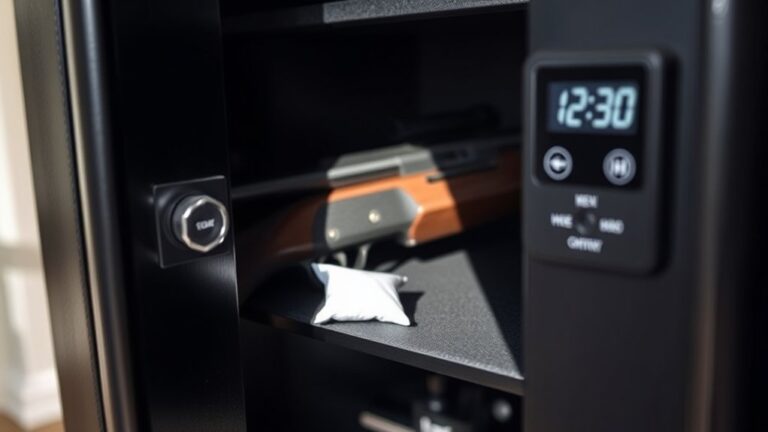
How To Pick A Gun Safe Lock – Lock Mechanism Explained
To pick a gun safe lock, you first identify its lock type. Common types include mechanical dial, pin tumbler, wafer, or disc detainer. You’ll need a tension wrench along with picks suited to the internal mechanism.
Apply gentle, consistent tension to feel pin or wafer feedback. Simpler locks like wafers or warded ones are easier to manipulate. However, disc detainers require more advanced skill.
Mastering tool control and technique comes with practice. Digging into these details will help you understand effective strategies and the right tools to use. Keep at it, and you’ll get the hang of it.
Key Takeaways
- Identify the lock type (mechanical dial, electronic, biometric) to choose the correct picking method and tools.
- Pin tumbler locks require aligning pins at the shear line using tension wrenches and pick hooks.
- Raking provides faster manipulation for simpler locks, while single pin picking demands precision and tactile feedback.
- Use specialized tools like wafer picks or skeleton keys for wafer and warded locks commonly found in safes.
- Practice on transparent or training locks to develop feel, tension control, and improve success rates without damage.
How to Pick a Gun Safe Lock: Basics and Tools
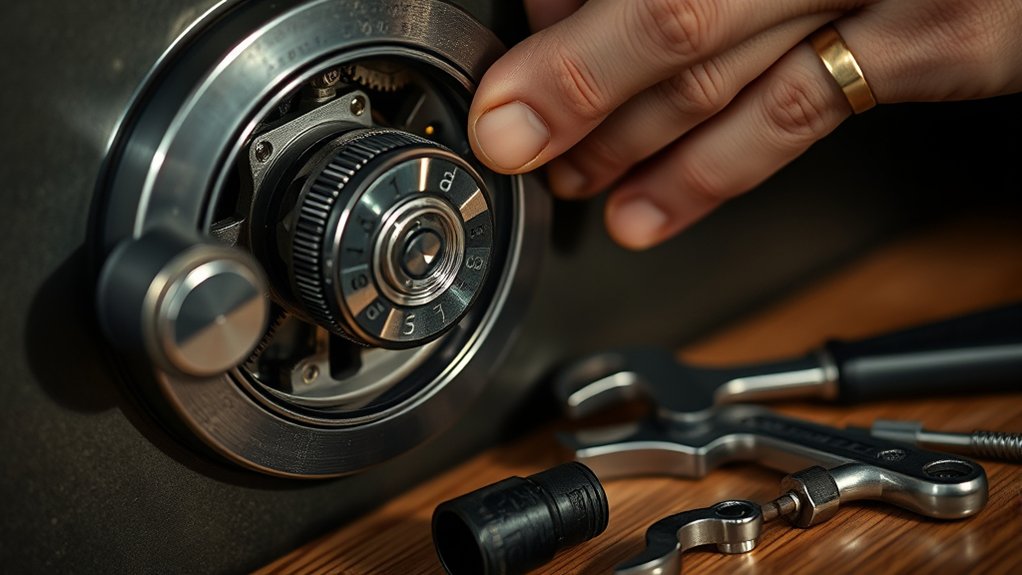
Although picking a gun safe lock demands patience, you can streamline the process by equipping yourself with the right tools: a tension wrench and a pick or hook tailored to the lock’s mechanism.
Understanding the specific internal mechanism, whether pin tumblers or disc detainers, guides your choice of tools and picking method.
Knowing the lock’s internal mechanism directs your tool selection and picking approach for better success.
When you apply gentle, consistent tension with the wrench, you create the necessary feedback to detect when pins or wafers set.
Picking techniques like raking use rapid, sweeping motions, while single pin picking demands precise, deliberate manipulation of individual components.
Mastering these methods requires focused practice, as each lock’s complexity affects how quickly you develop skill.
Common Gun Safe Lock Types Explained
When selecting or attempting to pick a gun safe lock, understanding the common lock types is essential to choosing the right approach. Each lock mechanism demands a distinct method because of its design and security features. So, it helps to focus on these primary types.
First, there’s the mechanical dial lock. This kind relies on rotating wheels to align notches, which disengages the bolt once the correct combination is dialed. Precision and tactile feedback are really important here.
Next up are electronic safe locks. These use digital codes to trigger an internal mechanism that releases the bolt. They often allow programmable combinations, which means you’ll need electronic bypass techniques.
Finally, biometric fingerprint locks authenticate access through enrolled fingerprints. They offer quick, keyless entry but require specialized tools if you want to bypass them.
Knowing these lock mechanisms lets you tailor your picking strategy effectively. That way, you avoid wasting effort on methods that just won’t work.
Picking Pin Tumbler, Wafer, and Warded Locks
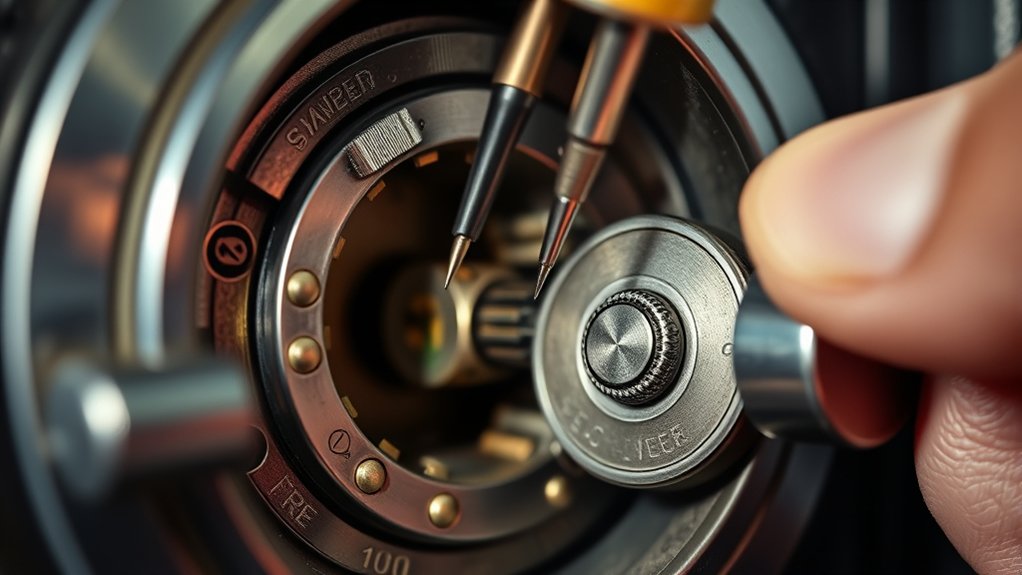
Understanding the basic mechanisms behind common safe locks sets the stage for mastering how to pick pin tumbler, wafer, and warded locks.
Pin tumbler locks rely on aligning pins at the shear line, which you manipulate using single pin picking or raking with picks and tension wrenches.
Wafer locks function by lifting flat wafers with a key. You can bypass these using specialized wafer picks or tension tools.
Warded locks depend on internal barriers, requiring bent wire or skeleton keys to navigate around wards.
While wafer and warded locks are generally easier to pick due to simpler lock mechanisms, pin tumbler locks demand more skill and precision.
How Disc Detainer Locks Affect Gun Safe Security and Picking
Because disc detainer locks rely on the precise alignment of multiple rotating discs and a sidebar, they present a formidable challenge to anyone attempting to pick them. Their internal mechanism demands exact disc positioning to retract the sidebar, greatly enhancing security safes’ resistance to lock picking.
Disc detainer locks require precise disc alignment to retract the sidebar, making them extremely difficult to pick.
You’ll face these key factors: a complex internal mechanism with multiple rotating discs, the necessity of specialized tools and expert knowledge for manipulation, and high tolerance against physical and picking attacks.
Disc detainer locks elevate gun safe security by creating a substantial barrier to unauthorized access. Unlike simpler locks, their design resists traditional lock picking techniques.
To bypass them, you really need to understand the intricate disc arrangement and how the sidebar functions. It’s not something you can just fiddle with casually.
Essential Tools for Picking Gun Safe Locks
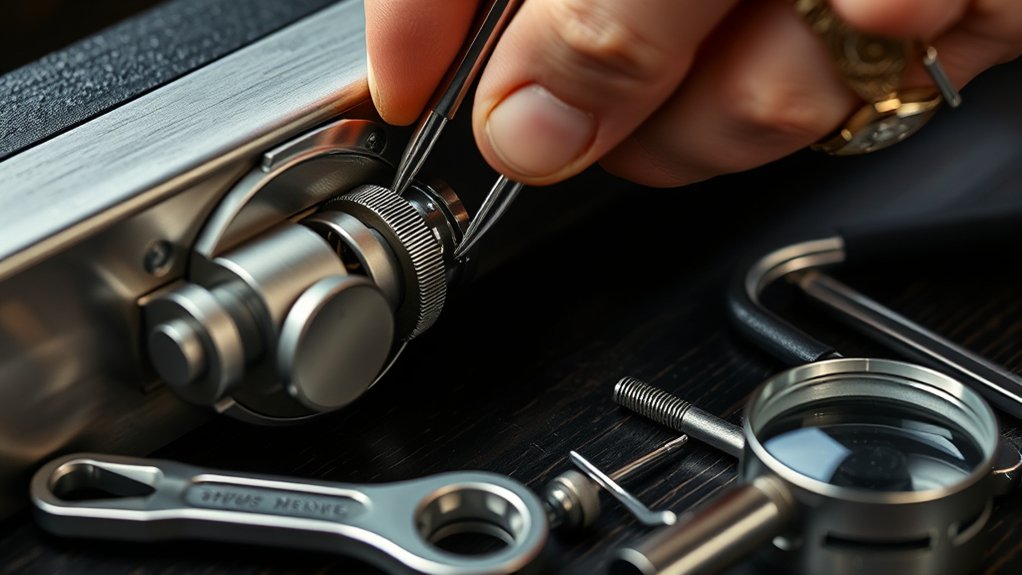
Disc detainer locks demand specialized knowledge and tools to manipulate their complex mechanism. The same principle applies broadly to gun safe locks.
To effectively engage various lock mechanisms, you need precise lock picking tools, including tension wrenches to apply consistent torque. High-quality lock pick sets typically include hooks, rakes, and diamond picks crafted from durable stainless steel or alloys. This ensures control and longevity.
Depending on the safe’s lock type, specialized tools like wafer picks or warded lock bypass tools become essential. Developing tactile sensitivity through practice on transparent lock models enhances your ability to manipulate pins, wafers, or wards accurately.
Your success hinges on using the right tension wrenches and lock pick sets tailored to the specific lock mechanism you face. So, having the proper tools and practicing consistently really makes all the difference.
Step-by-Step: How to Pick a Mechanical Gun Safe Lock
When you approach a mechanical gun safe lock, start by applying light tension with your wrench to the keyway. You want just enough rotational force to engage the pins without binding them.
To pick the lock mechanism effectively, focus on controlled, deliberate actions.
First, insert the pick and carefully lift each pin to the shear line. Pay attention for subtle feedback that tells you a pin is set.
Keep consistent tension to hold the pins in place, and work through all the pins one by one.
Once all the pins align at the shear line, increase tension slightly to turn the wrench and open the lock.
Precision with tension and feel is really important when working with mechanical safe locks. Don’t force any components; instead, be patient and make subtle adjustments to manipulate the lock successfully.
Alternative Ways to Open Gun Safes Without Picking
If you find that picking a mechanical gun safe lock isn’t feasible or practical, there are several alternative methods to help you gain access without relying solely on lock manipulation.
One option is drilling through the lock cylinder using progressively larger bits. Keep in mind, though, this can cause significant damage to the safe.
Another way is manual unlocking by breaking a glass panel or window, which lets you directly reach the lock mechanism.
You might also consider disassembling the safe, like removing hinges or the door, to bypass the lock entirely. But be aware, these methods can be invasive and risky.
Often, hiring a professional locksmith is the smartest choice. They’ve specialized tools and the know-how to open gun safes without causing unnecessary damage. This way, both the safe and its contents stay protected.
Safety and Legal Considerations When Picking Gun Safe Locks
Although picking your own gun safe lock can be legal in many areas, you must verify local laws before proceeding to avoid serious legal consequences. Understanding the safety and legal considerations surrounding lock manipulation is essential to protect yourself from liability.
Keep these three points in mind:
- Confirm you have explicit authorization to open the safe; unauthorized attempts can be criminal.
- Use lock picking solely on safes you own or are legally permitted to access.
- Familiarize yourself with local regulations regarding lock manipulation to ensure compliance.
Law enforcement often views lock picking as a skill, not a crime, when used lawfully. So, prioritize safety and legal considerations to avoid misunderstandings.
Always approach lock picking with responsibility, respecting authorization boundaries and applicable laws.
Frequently Asked Questions
How Do Biometric Gun Safe Locks Compare to Mechanical Ones in Security?
Biometric gun safe locks offer quick, keyless access but can be vulnerable to fingerprint replication or system glitches. You’ll appreciate their convenience with multiple user profiles, yet their security depends heavily on sensor quality and encryption.
Mechanical locks, on the other hand, provide robust physical security and resist electronic hacking or power failures. If you prioritize reliability and durability over speed, mechanical locks generally deliver stronger, more consistent protection.
What Are Common Electronic Lock Vulnerabilities in Gun Safes?
You’ll find common electronic lock vulnerabilities include weak or default passwords that hackers easily guess.
Power failures or dead batteries can disable the lock, leaving your safe exposed if there’s no backup.
Electronic locks can also fall prey to signal jamming or interference, which might allow unauthorized access.
Ultimately, poorly designed or low-quality locks often succumb to mechanical or electronic tampering.
This can seriously undermine your gun safe’s overall security.
Can Environmental Factors Affect Gun Safe Lock Performance?
Yes, environmental factors can greatly influence your gun safe lock’s performance. Extreme temperatures cause metal parts to expand or contract, which can disrupt smooth operation.
High humidity and moisture promote rust or corrosion, impairing movement and damaging electronic circuits.
Freezing conditions can lock up components or lubricants, making turning difficult.
Dust, dirt, and sand may infiltrate mechanisms, causing jams or accelerated wear.
Regular maintenance helps mitigate these effects and guarantees reliable function.
How Often Should Gun Safe Locks Be Maintained or Serviced?
You should inspect, clean, and test your gun safe locks every six months.
Replace batteries in electronic locks annually or whenever indicators show low power.
If your mechanical locks feel inconsistent, it’s a good idea to calibrate or adjust them.
Also, try to schedule professional servicing once a year or right after any tampering or malfunction.
Staying consistent with maintenance helps your lock perform reliably.
It safeguards your valuables and keeps your peace of mind intact.
Are There Smart Gun Safes With Remote Access Features?
Yes, you can find smart gun safes with remote access features that let you lock or gain entry to them via smartphone apps. These safes use Bluetooth or Wi-Fi connectivity and include security measures like multi-factor authentication and encryption to protect your access.
However, you should be cautious. Some models might be vulnerable to hacking if you don’t use strong passwords or keep the software updated regularly.
Always prioritize safes with robust security protocols.
Conclusion
Picking a gun safe lock is like steering through a complex maze. You need the right tools, knowledge, and patience to succeed. Understanding lock mechanisms, from pin tumblers to disc detainers, sharpens your approach and improves your chances.
Always weigh alternative methods and respect legal boundaries. The consequences can be serious. With careful preparation and precision, you’ll open the mystery without compromising safety or legality.
Approach each lock analytically and with authority.