Where To Put Gun Safe – Best Placement Ideas
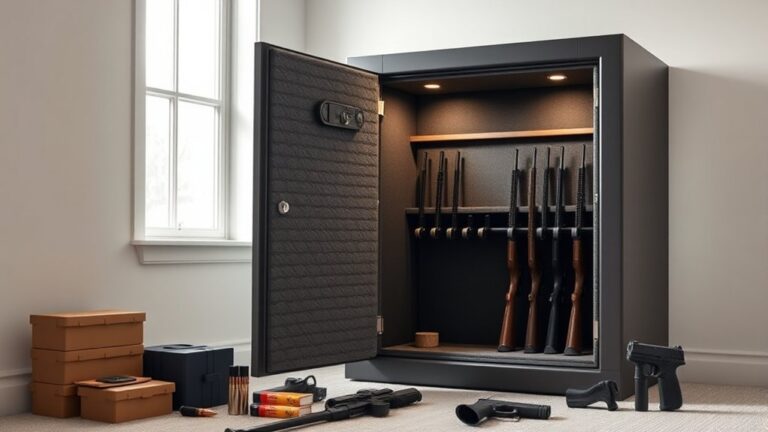
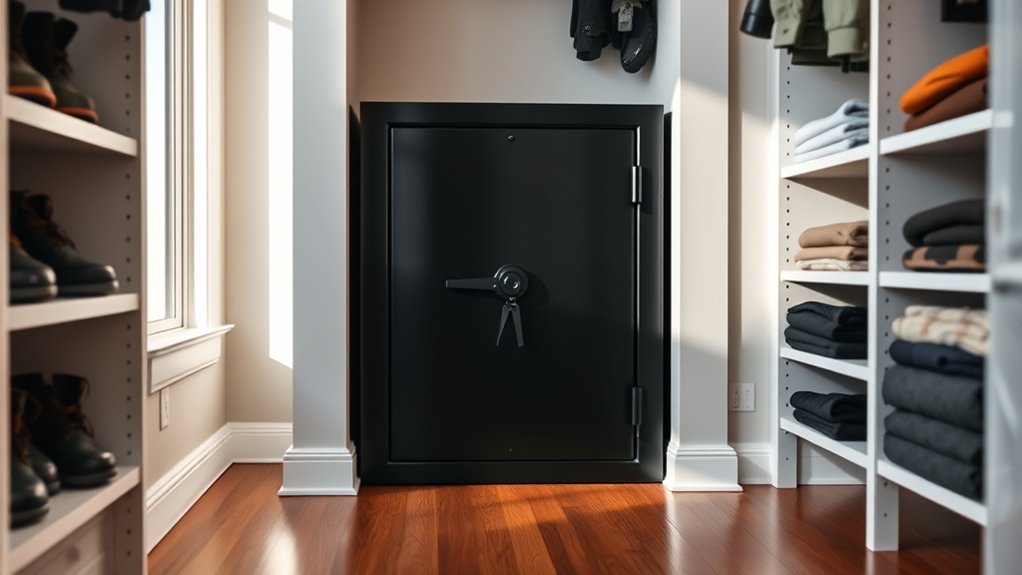
You’ll want to place your gun safe where security and quick access meet, like a concealed corner near your bedroom or a sturdy closet. Bolt it down on multiple sides for tamper resistance. Avoid humid or flood-prone spots, and steer clear of fire hazards.
Concealing it behind furniture adds discretion, while mounting on reinforced floors ensures stability. Integrating your safe with home security systems boosts protection. For an all-encompassing approach to secure, accessible placement, keep exploring these proven strategies.
Key Takeaways
- Place gun safes in master bedrooms or closets for quick, discreet access near common escape routes.
- Secure safes in corners, bolted on three sides, to enhance tamper resistance and stability.
- Conceal safes behind furniture or inside closets to reduce visibility and theft risk.
- Avoid humid, flood-prone, or fire-prone areas like bathrooms, garages, or kitchens to protect firearms and safes.
- Ensure safes are mounted with heavy-duty hardware on reinforced flooring with accessible pathways for future relocation.
Balancing Security and Quick Access
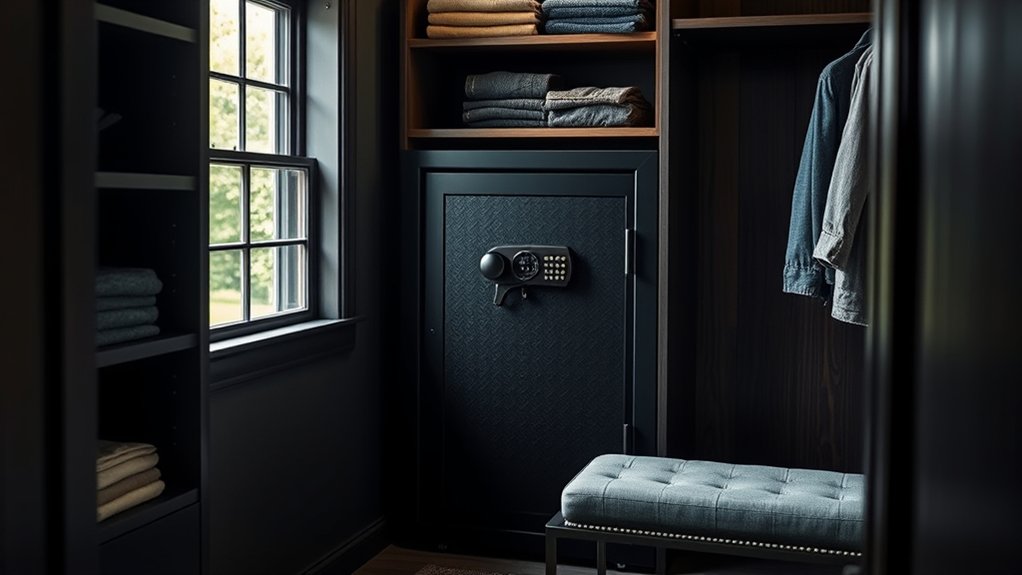
Where should you place your gun safe to strike the perfect balance between security and quick access? You want a location that conceals the safe from intruders while allowing you to retrieve your firearm swiftly in emergencies.
Position the safe in a corner, bolted down to enhance security without compromising accessibility.
Place your gun safe in a corner and bolt it down for security without losing quick access.
Placing it behind furniture, inside closets, or in hidden compartments reduces visibility, but make sure you can reach it quickly.
Consider quick-access safes equipped with biometric or electronic locks; they offer rapid retrieval without sacrificing protection.
Regularly reassess the placement to confirm it remains discreet to potential thieves yet accessible during a crisis.
Striking this balance ensures your gun safe protects your firearms effectively while giving you the quick access you need when seconds count.
Best Rooms for Gun Safe Placement
Finding the right room to place your gun safe plays a significant role in balancing security with quick access. For ideal home security, consider locations that combine concealment and convenience. The master bedroom offers quick reach, while closets and hidden wall safes reduce visibility to intruders.
Basements provide enhanced security for larger safes but may delay access. Kitchens or utility rooms position firearms near exits and daily activity. Guest rooms often go unnoticed during break-ins, adding another layer of security.
| Room | Advantages |
|---|---|
| Master Bedroom | Quick access, bedside or under bed |
| Closets | Discreet, less targeted |
| Basement | Secure, conceals large safes |
| Kitchen/Pantry | Near exits, frequent use |
Select your placement based on your home’s layout and security needs. It’s all about finding the right balance between safety and convenience for your situation.
Why Corners and Concealed Spots Are Best for Gun Safe Placement
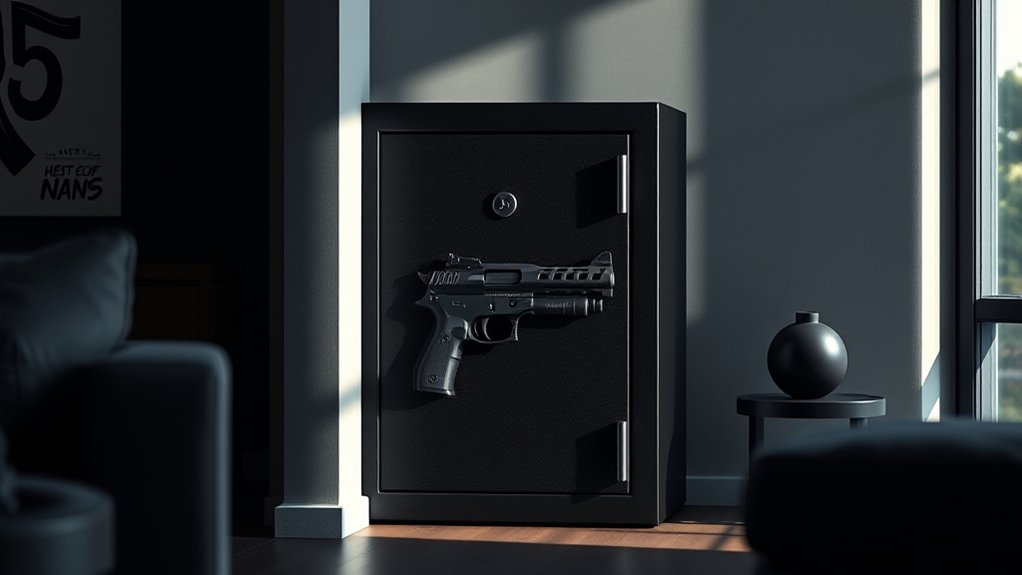
Although many spots in your home might seem suitable, placing your gun safe in a corner or a concealed area considerably enhances its security and stability.
Corners allow you to bolt the safe on three sides, increasing its resistance to tampering and providing solid structural support for heavy safes.
Choosing a concealed spot, such as behind furniture or in a hidden alcove, makes your safe less visible and harder for intruders to locate quickly.
This discretion not only reduces the risk of theft but also keeps the safe out of reach of children.
By prioritizing corners and concealed spots, you maximize both the physical security and the subtlety of your gun safe’s placement.
This way, it stays protected without drawing unwanted attention.
Mounting and Installation Strategies
You’ll want to focus on securely mounting your gun safe with heavy-duty bolts to prevent theft and guarantee stability. It’s really important to make sure it’s firmly anchored so it doesn’t budge.
Also, plan for proper access during installation. Think about door clearance and whether you can easily reach the mounting points—these small details make a big difference.
And don’t forget to think ahead about future relocation. You’ll want to avoid any complications if you ever need to move the safe later on.
Secure Mounting Techniques
When securing your gun safe, bolting it firmly to the floor or wall with heavy-duty anchors is essential to prevent theft or tipping. Use tamper-proof bolts and strong hardware that resist forced removal.
Position your safe on steel plates or plywood to evenly distribute its weight and avoid floor damage.
For heavy safes, mount them perpendicular to support beams or on reinforced flooring to guarantee structural integrity.
Concealing the safe behind furniture or inside closets can also enhance security by limiting visibility and access.
These secure mounting techniques not only safeguard your firearm collection but also help protect your home’s structure.
Make sure to prioritize precision and durability in every step to maximize protection and peace of mind.
Taking these simple but effective steps really makes a difference.
Installation Accessibility Tips
Securing your gun safe with the right mounting techniques is only part of the equation. Guaranteeing easy accessibility during installation plays a key role in a successful setup.
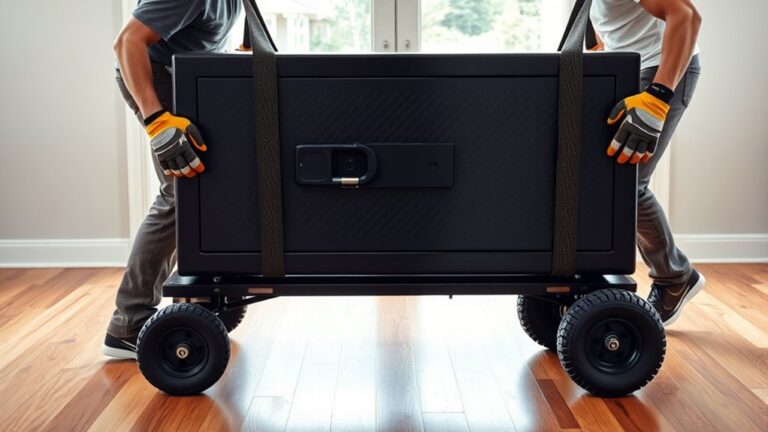
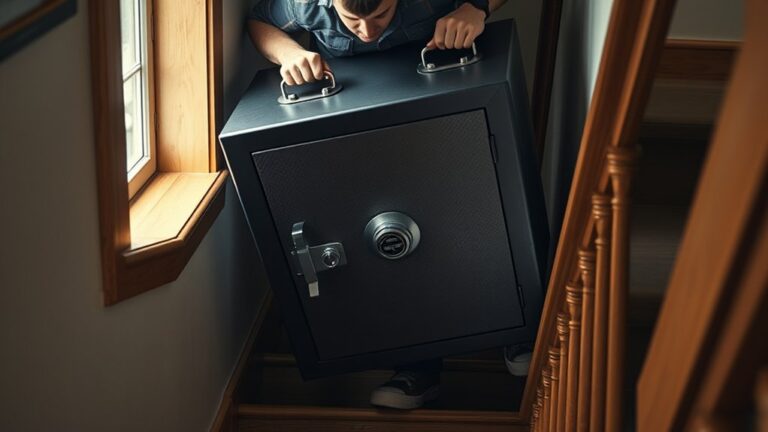
When choosing the placement, consider installation accessibility tips such as selecting a location with wide doorways, hallways, and staircases to accommodate the safe’s size and weight.
Avoid tight corners or narrow entry points that complicate transport. It’s also important to assess the structural integrity of floors, especially on upper levels.
If needed, use support beams or consult a structural engineer to make sure everything is solid.
Your chosen site must offer secure anchoring points to prevent theft or movement. At the same time, it should allow space for future adjustments.
These installation considerations ensure your gun safe is both secure and accessible, making the whole installation process smoother without compromising safety or structural soundness.
Future Relocation Planning
Although installing your gun safe securely is essential, planning for future relocation is just as important. This helps you avoid costly and difficult moves later on.
When choosing your safe’s spot, prioritize accessible doorways, hallways, and staircases to make transport easier.
Mount it near support beams or load-bearing walls to maintain structural integrity during moves.
Using modular or removable brackets is a smart move—they keep the safe secure now but allow for simple removal later.
Also, pick mounting surfaces that let you disassemble with minimal damage.
Be sure to assess your safe’s size and weight carefully. This way, you can guarantee it’s something you can move without heavy equipment.
It’s all about making future moves as smooth as possible!
Avoiding Moisture and Temperature Risks
Because moisture and temperature fluctuations can cause significant damage, you should place your gun safe in a climate-controlled area away from bathrooms, laundry rooms, or humid garages. Moisture encourages rust and compromises your firearms’ integrity.
To avoid these risks, choose a stable location with moderate temperature to prevent condensation. Keep the safe away from heating sources and direct sunlight.
If humidity is unavoidable, use dehumidifiers or moisture-absorbing products inside or near the safe.
Also, make sure to regularly inspect the safe for moisture buildup or rust, especially in areas that are prone to it.
Protecting Your Gun Safe From Fire and Natural Disasters
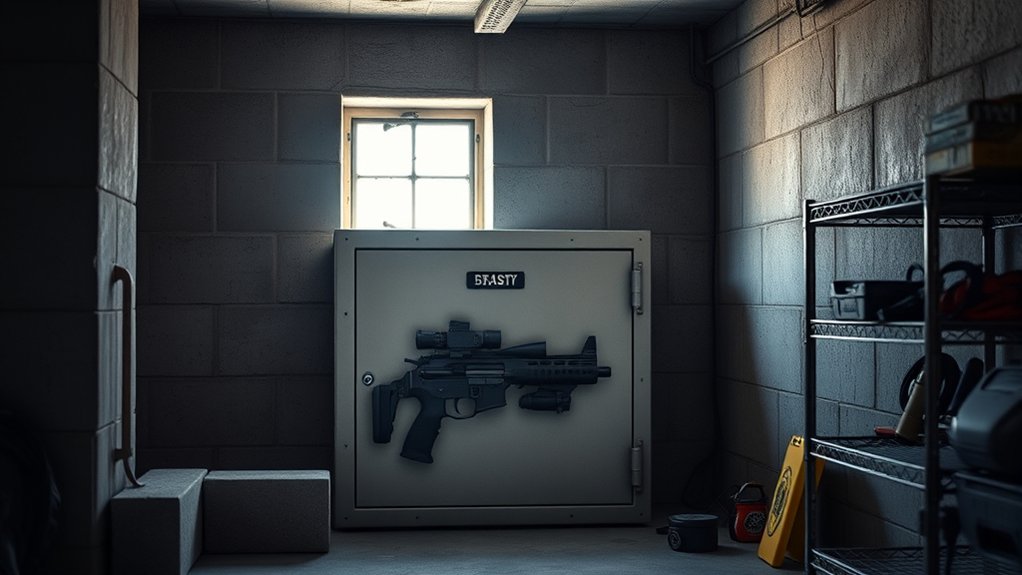
You’ll want to place your gun safe in a spot where it’s surrounded by fire-resistant materials. It’s also a good idea to keep it away from any potential disaster hazards.
Take some time to think about risks like flooding or heat sources nearby before you decide on the perfect location.
Plus, don’t forget to plan for emergency access — that way, firefighters can get to or remove the safe quickly if the need arises.
Fire-Resistant Placement Options
Where should you place your gun safe to maximize its fire resistance? To protect your fire-resistant safe effectively, consider these key placement tips:
First, position it in a fire-resistant room that’s built with fireproof materials. This will really help enhance protection during a fire.
Also, keep it away from heat sources like fireplaces, furnaces, and water heaters. You want to avoid heat damage and condensation as much as possible.
Try to avoid basements that are prone to flooding or have high humidity. These conditions can undermine the safe’s fire-resistant properties over time.
It’s also a good idea to install fire suppression systems or keep fire extinguishers nearby. This adds an extra layer of safety just in case.
Following these guidelines will help ensure your fire-resistant safe maintains its integrity. That way, your valuables stay secure even during a fire emergency.
Disaster Risk Assessment
Maximizing your gun safe’s protection goes beyond just fire resistance. Evaluating risks from various disasters is equally important. Conduct a thorough disaster risk assessment to identify hazards like fire, flood, and moisture exposure.
Avoid placing safes in bathrooms, laundry rooms, or humid garages to prevent rust. Also, stay clear of flood-prone basements, especially in flood zones. Position your safe in stable-temperature areas surrounded by fire-resistant materials.
Make sure it’s securely anchored and accessible for emergency responders. Taking these steps can really help protect your investment.
| Disaster Type | Risk Factor | Recommended Action |
|---|---|---|
| Fire | High temperature damage | Use fireproof safes, fire barriers |
| Flood | Water damage, flooding | Avoid basements, use elevated spots |
| Moisture | Rust, corrosion | Avoid humid areas |
This disaster risk assessment will safeguard your investment effectively.
Emergency Access Planning
How quickly can you access your gun safe during an emergency? Planning for emergency access is critical to protecting your firearms from fire and natural disasters. Here’s what to take into account:
Position the safe near bedrooms or common escape routes for quick, easy access. Avoid fire-prone areas like kitchens; opt for fire-resistant safes to enhance protection.
Install fire suppression systems or keep portable extinguishers nearby to guard against flames and smoke.
If you live in a flood-prone area, avoid basements or securely anchor the safe to prevent water damage.
Also, choose a location that allows firefighters easy access to your safe if needed.
Prioritizing these steps ensures your safe remains both secure and accessible when seconds count.
How to Connect Your Gun Safe With Home Security
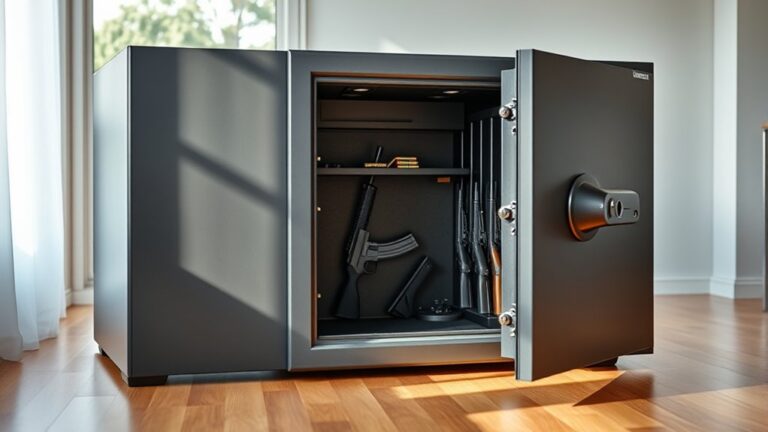
Although securing your gun safe physically is essential, connecting it to your home security system considerably enhances protection by providing real-time alerts and remote monitoring capabilities. You can integrate your gun safe with smart home hubs or alarm panels, ensuring you get immediate notifications if unauthorized access is attempted.
Position the safe within your security camera’s view and add motion sensors nearby to trigger alerts and activate cameras. Coordinating your safe’s placement with existing alarm zones guarantees all-encompassing coverage. Regularly updating system settings and access permissions keeps your security network effective.
Gun safes offer peace of mind by combining physical security with advanced technology, creating a robust defense against theft or misuse.
| Integration Method | Purpose | Benefit |
|---|---|---|
| Smart Hub | Real-time alerts | Instant notifications |
| Security Cameras | Remote monitoring | Visual verification |
| Motion Sensors | Access detection | Immediate alert activation |
| Alarm Zones | Full coverage | Enhanced breach protection |
Meeting Legal and Insurance Requirements for Gun Safe Placement
Integrating your gun safe with home security systems improves protection, but you also need to make sure its placement aligns with legal and insurance requirements. Meeting these rules keeps you safe from penalties and helps your insurance coverage stay intact.
To do this well, try these steps:
- Check local laws on firearm storage and security standards before picking a spot.
- Keep a record of your safe’s placement and security features. This helps prove you’re following the rules if you ever need to make a legal or insurance claim.
- Look over your homeowner’s insurance policy for any firearm storage restrictions and adjust where you place your safe accordingly.
- Choose a place that meets fire safety standards. It’s even better if you use fire-resistant safes or fire suppression systems.
Working with security pros can help you find the best spot, making sure you’re fully compliant with the law and getting the best insurance benefits.
Frequently Asked Questions
What Types of Locks Are Safest for Gun Safes?
The safest locks for your gun safe are biometric locks because they use unique fingerprint data, making unauthorized access extremely tough. You should also consider combining biometric with mechanical combination locks for added security. Mechanical locks are reliable and immune to hacking.
Electronic keypad locks offer convenience but can fail without backup power. Smart locks add remote control but depend on strong encryption.
A multi-layered locking system gives you the best protection against unauthorized entry.
It’s all about layering your security. Using different types of locks together can really boost your safe’s defense against anyone trying to break in.
Can I Store Ammunition Separately From the Firearm?
Yes, you should store ammunition separately from firearms to enhance safety and reduce accidental discharge risks. Keep ammo in a locked, secure container away from your gun safe.
Ideally, store it in a cool, dry area to prevent corrosion.
This separation also helps prevent unauthorized access, especially by children or intruders. Following this practice aligns with many safety guidelines and legal requirements.
Plus, it gives you peace of mind and better control over both your firearms and ammunition.
How Often Should I Change My Gun Safe’s Lock Combination?
You should change your gun safe’s lock combination every 6 to 12 months to keep it secure.
If you suspect someone else knows the code or if there’s been a security breach or personnel change, change it immediately.
Keep a log of when you last updated the combination to stay on schedule.
Regularly updating your code minimizes the risk of unauthorized access and helps protect your firearms effectively.
It’s a simple step that can make a big difference in keeping your valuables safe.
Are Biometric Gun Safes More Reliable Than Traditional Locks?
Biometric gun safes are like having a trusted gatekeeper who knows you by touch alone. They’re generally more reliable than traditional locks.
With over 99% fingerprint recognition accuracy, they cut down on false negatives and prevent lock picking or guessing combos.
However, dirt or moisture can trip them up. So, they usually include backup keys or keypads.
You get quick, secure access, but always keep a backup plan handy.
What Maintenance Is Needed to Keep My Gun Safe Operational?
You need to regularly check your gun safe’s locking mechanism and hinges to guarantee smooth, secure operation.
Clean both interior and exterior with rust-preventive materials.
Test electronic or biometric locks periodically to confirm reliability.
Also, inspect for rust, moisture, or damage, and address problems immediately.
Maintain stable humidity and temperature to prevent corrosion and firearm damage.
Staying proactive with these steps keeps your safe fully operational and your firearms protected.
Conclusion
When weighing where to put your gun safe, balance security with swift access. Choose corners or concealed spaces to curb curiosity and complicate criminal attempts. Mount meticulously, mind moisture, and mitigate fire risks to maintain your safe’s strength.
Sync your safe with your security system and satisfy legal standards to safeguard smoothly. Smart, strategic placement prevents problems and protects possessions. It provides peace and preparedness in your personal protection plan.